Reviewed · PRIVATE
8 Days Private Romania Tour from Bucharest
Romania reveals itself best from the road, and this eight-day circuit covers a remarkable sweep of the country. You move from Wallachian castles and Transylvanian squares to Maramureș villages, Bukovina’s painted monasteries, and the Carpathian mountain passes. The variety is the main attraction. So is the private format, which lets your guide adjust the pace and add local stops.
I like the flexibility and the chance to travel with a dedicated English-speaking guide-driver, including Nicolas, who is described as punctual, friendly, well prepared, and fond of jokes. I also like the mix of famous sights and less obvious places such as Ciocănești and the Popa Museum. The trade-off is clear: you will spend many hours in the car, and entrance fees, hotels, food, and drinks are extra.
In This Review
- Key points to know before booking
- What this private Romania tour really offers
- Day 1: Curtea de Argeș, Poienari, Sibiu, and the Transfăgărășan
- Day 2: Salt mines, Cluj, and Surdești’s wooden tower
- Day 3: Humor at Săpânța and the cost of communism
- Day 4: Maramureș craftsmanship and the road to Bucovina
- Day 5: Bucovina’s painted monasteries
- Day 6: Bicaz Gorges, Red Lake, and the Popa Museum
- Day 7: Sighișoara, Viscri, and Brașov
- Day 8: Bran, Peleș, and Sinaia
- Price, inclusions, and the real value
- Who should book this tour?
- FAQ
- Where does the Romania tour begin?
- How long does the tour last?
- Is this a private tour?
- Is an English-speaking guide included?
- Are hotels included?
- Are meals and drinks included?
- Are entrance fees included?
- Can the daily itinerary be changed?
Key points to know before booking
- Romania in one long circuit: Cover Bucharest’s surrounding regions, Transylvania, Maramureș, Bucovina, Moldavia, and the Carpathians in eight days.
- A genuinely private trip: Your car or minibus is reserved for your own family or friends, with room to adjust the daily plan.
- Big mountain-road days: The Transfăgărășan Highway, Tihuța Pass, and Bicaz Gorges bring some of the country’s best driving scenery.
- Exceptional church art: See Voroneț, Humor, Sucevița, and Moldovița, known for their painted exterior walls and fortified settings.
- More than Dracula: Bran Castle and Poienari connect to the Vlad the Impaler story, but monasteries, communist history, crafts, and village life add more depth.
- A cost to plan for: The listed price is $2,825.81 per person, but accommodation, meals, beverages, and attraction tickets are not included.
What this private Romania tour really offers
This is not a relaxed, stay-in-one-place holiday. It is a country circuit built around movement. Each day links several sights, often with mountain roads between them. That makes the tour useful if you have limited time and want to see far more than Bucharest, Brașov, and Bran.
The private car changes the experience in practical ways. You are not tied to a large group’s fixed rhythm, and the plan can be changed even after the tour begins. Your English-speaking guide-driver handles driving, parking, fuel, and road tolls, while also explaining the places you see.
The tone matters, too. Nicolas is specifically praised for being on time, friendly, prepared, and entertaining. That can make a long transfer easier, especially when the day includes several hours on winding roads.
The itinerary is ambitious. You may enjoy the sense of progress as Romania’s regions change around you, but you should not expect every stop to receive a slow, unhurried visit. Most monastery visits last 45 minutes, and several major attractions receive about two hours.
A few more Bucharest trips to weigh up
- Castles of Transylvania: Private Day Trip from Bucharest
★ 4.5 · 248 reviews - Dracula’s Castle, Peles Castle and Brasov – Private Day Trip from Bucharest
★ 5.0 · 211 reviews - Best of Bucharest | Private Walking Tour
★ 5.0 · 199 reviews
Day 1: Curtea de Argeș, Poienari, Sibiu, and the Transfăgărășan
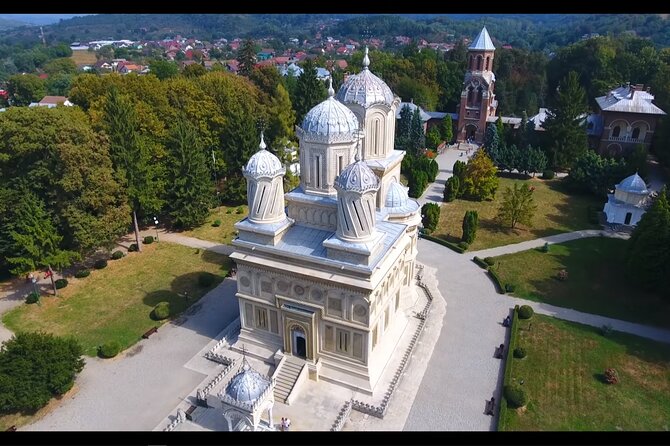
The opening day goes straight into Romania’s royal and mountain story. At Curtea de Argeș Monastery, you see one of the country’s important royal burial places. The nearby old town also includes the remains of the Wallachian princely court and the 13th-century Royal Church.
Allow about 30 minutes at the monastery stop. That is enough for an introduction and photographs, but not a long study of every detail. Admission is not included, so keep a little cash or a payment method ready for ticketed sights.
Poienari Fortress is a very different stop. These ruins sit high above the Argeș River on a cliff at the foot of the Carpathians. Vlad the Impaler repaired the older fortress and used it as one of his strongholds. The story says he escaped the Ottoman capture of 1462 through a secret mountain passage.
The visit is scheduled for two hours. The important practical point is that Poienari is a ruined fortress in a high position, not a furnished castle with polished rooms. You are going for the setting, the climb or approach, and the link to Vlad’s real life rather than the Dracula fiction used at Bran.
Sibiu brings you back to an inhabited historic center. Big Square, the Evangelical Cathedral, and the old town give you a compact look at a city shaped by centuries of German, Hungarian, and Romanian influence. With an hour here, you can get your bearings, walk the square, and take in the architecture.
The day ends with the Transfăgărășan Highway, Romania’s famous high mountain road. It stretches for more than 150 kilometers, reaches 2,042 meters, and crosses the mountain through the tunnel at Lake Bâlea. The road is fully open only from June through October, so the timing of your tour matters. The scheduled two-hour visit lets you enjoy the road and mountain views, but weather or seasonal closure can affect this part of the plan.
Day 2: Salt mines, Cluj, and Surdești’s wooden tower
Salina Turda is one of the trip’s most unusual stops. Far below ground, former salt mines named Iosif, Terezia, and Rudolf show how salt was extracted over a long period. You can see old machinery, including the crivac, or gepel, a salt mill, an altar cut into the salt wall, and the woodwork of the Stairway of the Rich.
The saline air is often presented as helpful for respiratory problems such as allergies or asthma. Treat that as an added feature, not a medical promise. The main reason to visit is the combination of industrial history, underground space, and striking mining structures. Two hours gives you time to see the principal areas. Admission is extra.
At Cluj-Napoca’s Alexandru Borza Botanical Garden, the schedule allows 90 minutes. The garden is paired with a city setting that includes Baroque, Renaissance, and Gothic buildings, some dating to the 17th century. If you like gardens, architecture, or a break from driving, this is a useful change of pace.
The day closes at Surdești Wooden Church, a remarkable 18th-century building with a tower reported at 54 meters, and described in the tour material as a 72-meter wooden landmark. The differing measurements suggest that you should focus on the church’s scale and craftsmanship rather than one exact figure. The 45-minute stop is short, but the building gives you a strong first look at Maramureș’s wooden religious architecture.
Day 3: Humor at Săpânța and the cost of communism
The Merry Cemetery in Săpânța offers a rare mix of color, humor, and mourning. Painted crosses describe the lives and deaths of local people through short, humorous poems. It is not simply a pretty cemetery. It reflects a local way of facing death with candor and, sometimes, a sharp joke.
You have an hour here. Read the carvings slowly if you can. The meaning is in the small details, and the cemetery rewards attention more than a quick photograph.
The Memorial of the Victims of Communism and of the Resistance in Sighet gives the day a much darker center. The two-hour visit helps explain the suffering created by Romania’s totalitarian regime and the efforts made to resist it. This is one of the most valuable historical stops because it moves the tour beyond medieval rulers and picturesque villages.
At Săpânța-Peri Monastery, you see another important wooden church in a dendrology park. The site connects to a much older religious tradition, with a monastery founded in 1391 and dedicated to the Archangel Michael. The present setting and church are best appreciated after the more intimate experience at the Merry Cemetery.
This day is emotionally varied. You begin with folk humor, confront political imprisonment and oppression, and end with a religious monument. I like that balance, though the subject at the memorial may require more concentration than the lighter stops around it.
Same mountains, a completely different day out:
- Bucharest: Dracula’s Castle, Peles Castle, & Brasov Old Town
★ 4.5 · 17,858 reviews - Bucharest: Dracula Castle, Peles Castle & Brasov Old Town
★ 4.6 · 10,891 reviews - Bucharest: Dracula’s Castle, Peleș Castle & Brașov Day Trip
★ 4.5 · 5,919 reviews - Bucharest: Palace of Parliament Tickets and Guide
★ 4.3 · 3,182 reviews
Day 4: Maramureș craftsmanship and the road to Bucovina
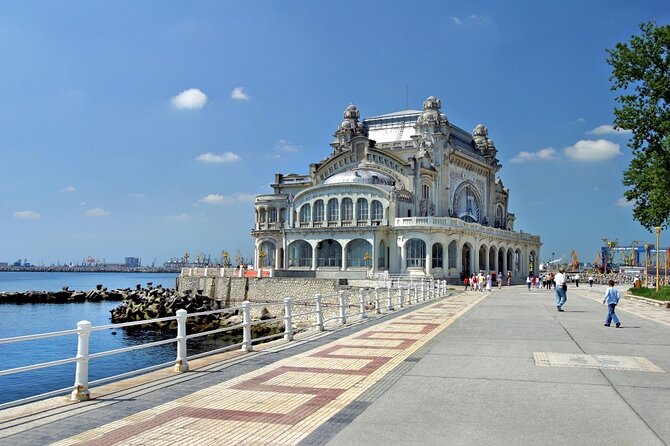
Barsana Monastery is among the most visually striking stops in Maramureș. Its wooden church reaches about 57 meters and rises within a carefully arranged monastery complex. The planned 45 minutes gives you time to walk the grounds, look at the timber work, and appreciate the setting without turning the stop into a full morning.
Next comes Tihuța Pass, also known as Borgo Pass. The road crosses the Bârgău Mountains between Moldavia and Transylvania at about 1,201 meters. It was first built between 1812 and 1817, later paved, and is now a working mountain route. Trucks can slow the journey, so the three-hour allowance is sensible.
This is one of the days when the private vehicle has real value. A guide-driver who knows the roads can make the transfer feel like part of the tour rather than dead time. Still, road conditions and traffic can affect the schedule, and you should be comfortable with long stretches in a car.
Ciocănești provides a memorable village stop. Houses are decorated with elaborate patterns that resemble painted eggs, making the commune one of northern Romania’s most colorful places. The hour here is enough to look around and take photographs. It is also a good reminder that Romania’s visual character is not limited to castles and church walls.
Day 5: Bucovina’s painted monasteries

Day 5 is the artistic high point for many people. Voroneț Monastery was built by Stephen the Great in 1488, reportedly in only three months and three weeks. Its exterior frescoes are known for a powerful blue shade called Voroneț blue, and the church is often compared with the great painted chapels of Europe.
You have 45 minutes, so arrive ready to focus. Look closely at the painted scenes and the way the walls turn the church into a picture book of religious stories. Admission is extra.
Humor Monastery continues the painted-church theme, but its fortified form adds a defensive side. The earlier church on the site was destroyed, and the later monastery survived for centuries. Again, 45 minutes is enough for a clear impression but not an exhaustive visit.
Sucevița Monastery is another major highlight. Its fortified church has exterior paintings that remain vivid, and its biblical scenes help explain why the site is listed as a UNESCO cultural landmark. I would treat this as one of the stops where a guide’s explanations matter most, since the walls contain more detail than you can absorb at a glance.
Moldovița Monastery combines Byzantine, Gothic, and Moldavian elements. Its interior and exterior murals are the reason to come, while the fortified layout gives the church a sense of protection and permanence. Four monasteries in one day may feel repetitive if religious art is not your interest. If it is, this is an unusually efficient way to compare styles, colors, and settings.
The Lucia Condrea Egg Museum adds a completely different form of local art. The museum contains more than 5,500 decorated eggs arranged across two floors and 56 display cases. The visit lasts 90 minutes, giving you time to see the range of patterns and technique. It is a smart final stop because it connects the painted monasteries with a living decorative tradition.
Day 6: Bicaz Gorges, Red Lake, and the Popa Museum
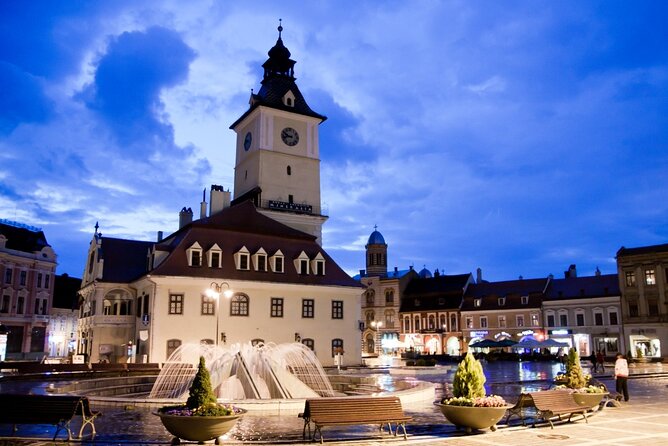
Bicaz Gorges delivers one of the strongest road experiences of the tour. The route follows about eight kilometers of ravines, with rock walls on one side and steep drops on the other. The gorge links the historical regions of Moldavia and Transylvania, and it is also known as a rock-climbing area.
The drive is the attraction here, so the private car is especially useful. You can pause for views when the schedule and road conditions allow. The area is also noted for the wallcreeper, an uncommon bird that lives on cliffs, though seeing one is not guaranteed.
Nearby Red Lake sits at about 980 meters. It formed after a landslide in the 19th century, though the precise year and cause remain debated. The planned 45-minute stop is enough to see the lake, traditional cabins, and surrounding mountain setting.
The Popa Museum in Târpești offers a more personal look at Romanian folk art. Sculptor Nicolae Popa founded the museum in his own home in the 1970s. His life included wartime injury, imprisonment under the communist regime, and the loss of his personal possessions. The hour-long visit gives context to his work and to the effort to preserve Romanian cultural values through art.
This is a good example of the tour’s range. In one day, you get dramatic geology, a mountain lake, and a small house museum shaped by one artist’s life.
Day 7: Sighișoara, Viscri, and Brașov
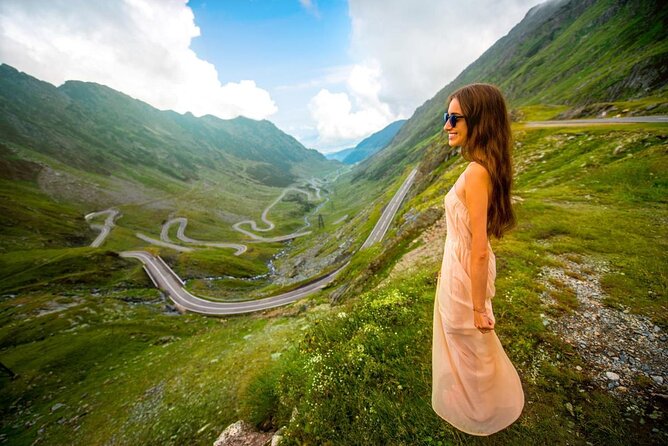
Sighișoara’s Clock Tower is the gateway to one of Romania’s best-preserved medieval citadels. The old fortress has remained inhabited for more than 700 years, and the two-hour visit includes the Clock Tower and Arms Museum.
The town is linked to Vlad the Impaler as his birthplace, but it is more rewarding when you see it as a living medieval settlement rather than only a Dracula stop. Walk the citadel streets, study the fortified buildings, and give yourself time to notice the scale of the place.
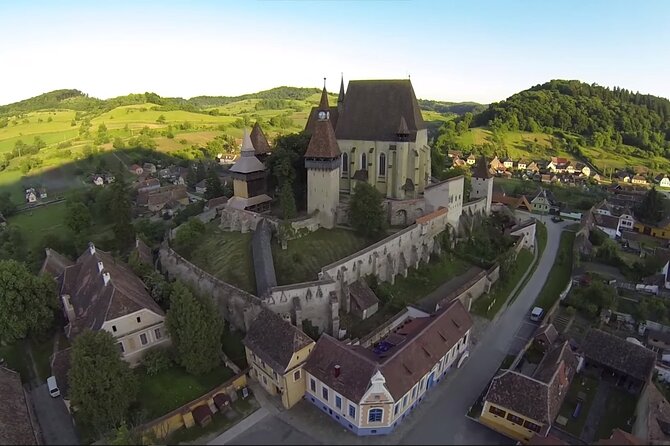
Viscri offers a quieter rural contrast. The village dates to the 12th century and is known for its fortified church. Prince Charles’s visits and the work of the Mihai Eminescu Trust helped bring attention and new activity to the village. Two hours allows a proper look instead of a rushed roadside photograph.
Brașov’s Council Square, Piața Sfatului, gives you a final urban stop. The square has hosted markets since the 14th century and is surrounded by historic houses from the 18th and 19th centuries. The two-hour visit should leave enough time to walk, eat, and enjoy the square’s architecture.
Day 8: Bran, Peleș, and Sinaia
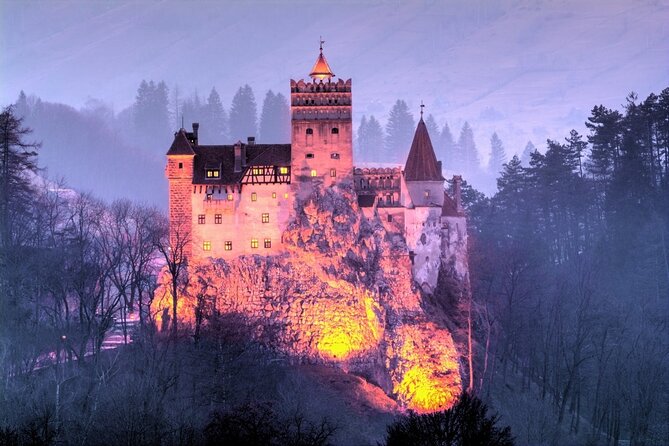
Bran Castle is the tour’s biggest nod to Dracula. Its appearance helped create the popular belief that it inspired Bram Stoker’s fictional castle, although the connection belongs more to legend and resemblance than to a documented link.
The castle visit lasts two hours, and the area outside adds a food stop. You can try handmade cheeses, plum or pear brandy, ham, and sausages. These tastings are not listed as included, so budget separately.
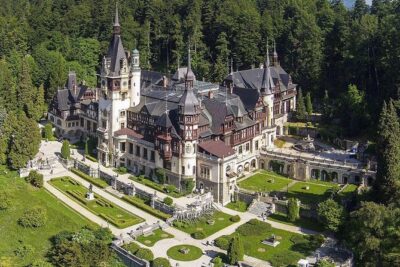
Peleș Castle shifts from myth to royal history. It was the Romanian royal family’s summer residence and is one of the country’s most important castles. Two hours is a useful amount of time for the visit, but admission is separate. Check the day’s timing with your guide, since castle visits can be more structured than outdoor stops.
Sinaia Monastery completes the circuit. Founded in 1695 by Prince Mihail Cantacuzino and named after Saint Catherine’s Monastery on Mount Sinai, it remains an active Orthodox monastery with 13 monks. The 30-minute stop is brief, but it provides a calm religious counterpoint to the royal castle nearby.
Price, inclusions, and the real value
At $2,825.81 per person, this is a major travel purchase. Its value depends on how you price time, comfort, and private transport. You are not just paying for sightseeing. The price covers a private car or minibus, an English-speaking licensed guide-driver, fuel, parking, road tolls, guide accommodation and meals, wireless internet in the vehicle, and help selecting hotels to fit your budget.
The price does not cover your own accommodation, meals, drinks, or entrance tickets. That distinction matters. Romania can offer good value once you are there, but you should calculate the full cost before booking rather than treating the listed amount as the complete holiday price.
I see the strongest value for families or friends who would otherwise need to arrange a complicated multi-region route themselves. A private vehicle also avoids the difficulty of reaching remote monasteries, mountain passes, villages, and small museums by public transport.
Who should book this tour?
Book it if you want to see a broad slice of Romania in one trip and prefer a private guide-driver to handling the roads yourself. It suits people who enjoy medieval towns, religious art, local history, mountain scenery, and unusual cultural stops.
It is also a good match for families and small groups. Group discounts may improve the per-person value, and the private format keeps the experience limited to your own party.
Think twice if you dislike long drives, frequent hotel changes, or short visits at individual sights. This is an active sightseeing circuit, not a slow retreat. You should also confirm the Transfăgărășan’s seasonal access before you commit to dates.
Free cancellation is available when you cancel at least 24 hours before the local start time. Changes made within that final 24-hour period are not accepted, and the amount paid is not refunded for a late cancellation.
FAQ
Where does the Romania tour begin?
The tour is based in Bucharest, Romania, and pickup is offered.
How long does the tour last?
The experience lasts approximately eight days.
Is this a private tour?
Yes. Only your own group participates, using a private car or minibus.
Is an English-speaking guide included?
Yes. A private, licensed English-speaking guide-driver is available throughout the tour. Nicolas is the guide named in the supplied information.
Are hotels included?
No. Accommodation is not included, although the guide can recommend hotels according to your budget.
Are meals and drinks included?
No. Your meals, beverages, and accommodation are separate expenses.
Are entrance fees included?
No. Entrance fees for the listed attractions are not included.
Can the daily itinerary be changed?
Yes. The private format allows substantial flexibility, including changes after the tour has started.
Just added around Bucharest
- Village Museum Bucharest Guided Tour★ 5.0 · 6 reviews
- Bucharest: Dealu Mare Winery Private Trip with Wine Tasting★ 4.9 · 6 reviews
- Winery touring & private wine tasting – one day private tour★ 5.0 · 3 reviews
- Transylvania Tour: Dracula’s Castle, Peles Palace & Brasov★ 5.0 · 19 reviews
- Discover Medieval Transylvania Small Group Tour – 7 days★ 5.0 · 4 reviews
- Bucharest Airport Transfer To Constanta Mamaia★ 5.0 · 3 reviews
- Airport Henri Coanda (Otopeni) to Bucharest – Private Transfer – Driver★ 5.0 · 5 reviews
- Gems of Transilvania: Brasov,Sighisoara,Sibiu,Viscri and more★ 5.0 · 6 reviews
Private, compared.

Castles of Transylvania: Private Day Trip from Bucharest
Read our review →
Dracula’s Castle, Peles Castle and Brasov – Private Day Trip from Bucharest
Read our review →
Bucharest Panoramic Sightseeing – Private City Tour
Read our review →
THERME “Take It Easy” Pack: Full Spa Access + Private Transfers
Read our review →
Piatra Craiului National Park Private Hiking Tour from Brasov
Read our review →
4h Bucharest Private Tour (2h by Car and 2h Walking in Old Town)
Read our review →