Reviewed · TOURS
Bucharest Old Centre Tour
Bucharest’s Old Centre packs five centuries into a short walk. You’ll pass the ruins of the Princely Court linked to Vlad the Impaler, old inns, Orthodox churches, the National Bank, and the lanes of Lipscani while a local guide explains how the city changed around them. The history comes at street level, not from behind a museum window.
I like the choice of morning or afternoon departures, and I like that selected central hotels can arrange pickup and drop-off. A guide such as Alina can add local memory to the walk, pointing out places you might miss alone. The main drawback is the one-hour limit: you’ll get a useful orientation, but not time for long visits inside every site. Wear sturdy shoes, since the old flagstones can be uneven.
In This Review
- Key points at a glance
- Why this one-hour walk helps you read Bucharest
- Starting at the National Museum of Romanian History
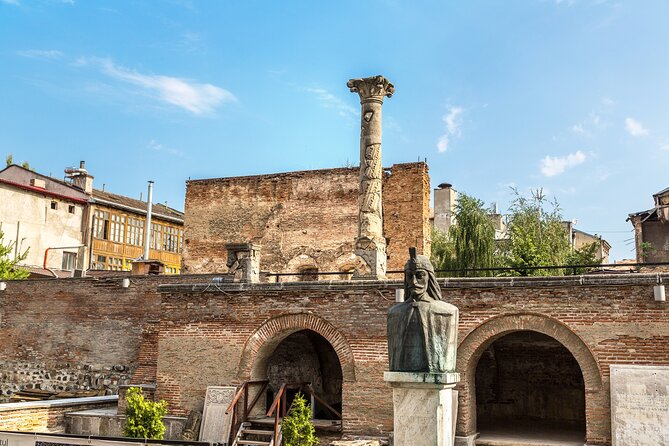
- The Princely Old Court and Vlad the Impaler
- St Anton Church, the Wallachian rulers’ church
- Bucharest’s old inns and the business of travel
- Lipscani Street, the old centre’s main artery
- The National Bank and the remains of Șerban Vodă Inn
- Stavropoleos Monastery and the final historic layer
- What the guide adds to the route
- Price, timing, and practical value
- Who should book this Old Centre walk?
- Should you book the Bucharest Old Centre Tour?
- FAQ
- How long does the Bucharest Old Centre Tour last?
- Where does the tour start and end?
- Is hotel pickup available?
- What does the tour include?
- Is this a private tour?
- Can I cancel for a full refund?
Key points at a glance
- Vlad the Impaler’s former court: See the remains of one of Bucharest’s oldest buildings and hear about its connection to the Wallachian ruler.
- A compact walk through Lipscani: Cover the Old Centre’s main historic lanes without committing half a day.
- Several old inns in one route: Learn about Gabroveni Inn, Linden Tree Inn, and the ruins of Șerban Vodă Inn.
- Local perspective: A guide such as Alina can bring personal familiarity with the area and explain its different eras.
- Easy central meeting point: Start at the National Museum of Romanian History, with pickup available from selected central hotels.
- Private format: Only your group takes part, which allows room for questions and a more personal pace.
Why this one-hour walk helps you read Bucharest
Bucharest can seem hard to piece together at first. Its old streets mix grand nineteenth-century buildings, Orthodox churches, former trading inns, newer cafés, and fragments of medieval Bucharest. A self-guided stroll can show you the buildings, but it may not explain why an old court, an inn, a bank, and a church sit so close together.
This tour gives you that connecting thread. In about an hour, you walk through the old centre with a local guide who explains both the city’s past and its present. That makes the experience best used as an introduction. I would take it near the beginning of a Bucharest visit, then return later to the places that catch your eye.
The walk is private, so only your group participates. That matters more than it might seem. You can ask about a detail on a doorway, pause for a photograph, or request more explanation about Romania’s rulers without trying to catch a guide’s voice in a large crowd.
Still, keep your expectations sensible. This is not a long museum tour or a detailed architectural survey. The stated duration is about one hour, and the route covers several locations. You’ll hear the key stories and get your bearings, but you should not expect extended interior visits or a slow examination of every monument.
Other Bucharest days worth putting on the list:
- Bucharest: Dracula’s Castle, Peles Castle, & Brasov Old Town
★ 4.5 · 17,858 reviews - Bucharest: Dracula Castle, Peles Castle & Brasov Old Town
★ 4.6 · 10,891 reviews - Bucharest: Dracula’s Castle, Peleș Castle & Brașov Day Trip
★ 4.5 · 5,919 reviews
Starting at the National Museum of Romanian History
The official meeting point is the National Museum of Romanian History at Calea Victoriei 12. The building itself is the former Post Office, and the tour includes an explanation of its history. This gives the walk a useful opening: you begin with a major civic building before turning into the lanes of the old centre.
Pickup and drop-off are offered from selected central hotels. If your hotel qualifies, that removes some early-trip friction. If not, you meet at the museum and finish back there, so you have a clear point for planning the rest of your day.
The tour is offered in the morning or afternoon. I prefer the morning if you want to use the walk to plan your sightseeing. The afternoon can work well if you have spent the first part of the day at a museum or arrived in Bucharest later.
The meeting point is central, but check the pickup details at booking. Hotel service is limited to selected hotels, not every address in Bucharest.
The Princely Old Court and Vlad the Impaler
The Old Centre’s most striking early stop is the ruined Old Princely Palace, also called the Princely Old Court. It is one of Bucharest’s oldest buildings and was once a residence of Vlad the Impaler, the Wallachian ruler whose name has become tied to the Dracula story.
The value here is not just the famous name. The ruins offer a glimpse of Bucharest before the modern city took shape. Your guide can explain the court’s role and place Vlad within the history of Wallachia rather than leaving him as a spooky legend.
The remains are also a reminder of the city’s uneven survival. Bucharest has lost or altered many old buildings through fires, earthquakes, redevelopment, and political change. A fragment of wall or foundation can therefore tell you something about what disappeared as well as what remains.
You will see the site rather than spend a long period studying it. If medieval architecture is your main interest, you may want a separate visit or more time in the area after the tour. For a first look, though, this is an effective anchor for the walk.
St Anton Church, the Wallachian rulers’ church
Near the old court is St Anton Orthodox Church. It was associated with the Wallachian rulers and sits at the heart of the Old Centre. Its location helps you understand how closely religion, government, and daily trade were once tied together.
I find churches especially useful on short city walks because they add a human scale to political history. Rulers may dominate the story, but a church shows where people worshipped, marked important occasions, and maintained local traditions.
Your guide explains the church’s history rather than simply pointing out its exterior. The available information does not promise a full interior tour, so treat this as a historical stop along the route, not a dedicated church visit. Dress and behave respectfully if you enter a religious space.
The pairing of St Anton Church with the Princely Court is one of the strongest parts of the walk. In only a few minutes, you move from the seat of Wallachian power to a church connected with the same ruling world.
Same mountains, a completely different day out:
- Bucharest: Palace of Parliament Tickets and Guide
★ 4.3 · 3,182 reviews - Bucharest: Day Trip to Dracula Castle, Peles Castle & Brașov
★ 4.4 · 3,049 reviews - Bucharest to Dracula Castle, Peles Castle and Brasov Guided Tour
★ 4.5 · 2,933 reviews - Bucharest: Palace of Parliament Tickets and Guided Tour
★ 4.4 · 1,877 reviews
Bucharest’s old inns and the business of travel
The route then turns to the old inns that helped make this part of Bucharest a centre of trade and movement. You hear about Gabroveni Inn, Linden Tree Inn, the city’s oldest and most famous inn, and the ruins of Șerban Vodă Inn.
These places matter because inns were more than places to sleep. They served merchants, stored goods, connected visitors with local trade, and helped form the city’s commercial life. Once you know what to look for, a narrow lane or courtyard can make more sense. The Old Centre was not simply a collection of attractive old façades. It was a working district shaped by commerce.
The route includes another ancient inn in the oldest part of Bucharest. The supplied details do not identify every building by a modern address, so the guide’s explanation is important here. You are relying on local interpretation to connect scattered remains and names with the larger story.
This is also where the one-hour schedule creates a tradeoff. You can hear about several inns, but you will not have time to linger at each one. If historic trade routes and urban buildings interest you, write down the names and return later for a slower look.
Lipscani Street, the old centre’s main artery

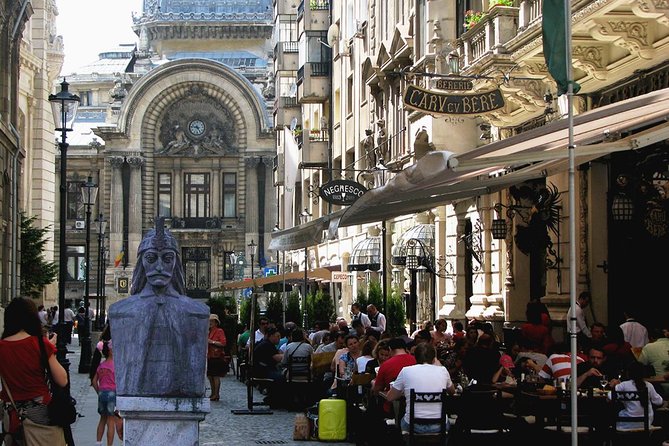
Strada Lipscani is the heart of the Old Centre and one of the walk’s liveliest sections. It brings the historical stories into a present-day setting, with people moving through the lanes and businesses occupying old buildings.
The street is useful for orientation. Once you know that Lipscani is a central spine of the district, it becomes easier to explore nearby streets on your own. The guide can also help you see beyond the cafés and shopfronts to the older pattern of trade and movement beneath them.
Expect the character of an active central district, not a preserved medieval village. The old centre has been restored and reused, and the atmosphere changes with the time of day. That contrast is part of Bucharest’s appeal. The past is present, but it shares the street with modern city life.
Because this is a walking tour, you can absorb the area at street level. I like that better than being driven between monuments. You see the distances between sites and understand how the court, inns, church, bank, and monastery fit into the same compact quarter.
The National Bank and the remains of Șerban Vodă Inn
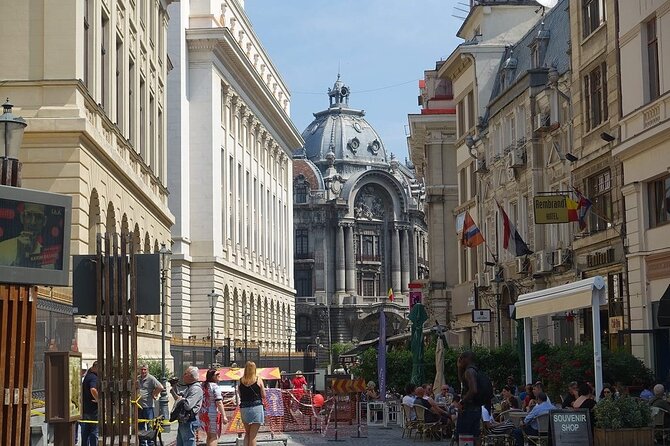
The National Bank of Romania provides a sharp change of mood. Its grand architecture reflects a later period of state power and finance, while the nearby ruins of the former Șerban Vodă Inn point back to the older commercial district.
That contrast is one of the route’s best teaching moments. Bucharest’s story is not a straight march from old to new. Different periods sit beside each other, sometimes in the same block. A bank can occupy a place close to an inn where merchants once stayed, and the city’s financial importance takes on a longer perspective.
You will hear about the bank’s interesting history and see its grandeur from the outside. The tour does not list an interior visit, so do not book this expecting access to banking halls. The outside view and the nearby ruins are enough to show the sharp shift in scale and purpose.
The remains of Șerban Vodă Inn also reinforce a practical lesson: old Bucharest is often understood through fragments. A good guide helps you imagine the missing building without pretending the ruins are more complete than they are.
Stavropoleos Monastery and the final historic layer
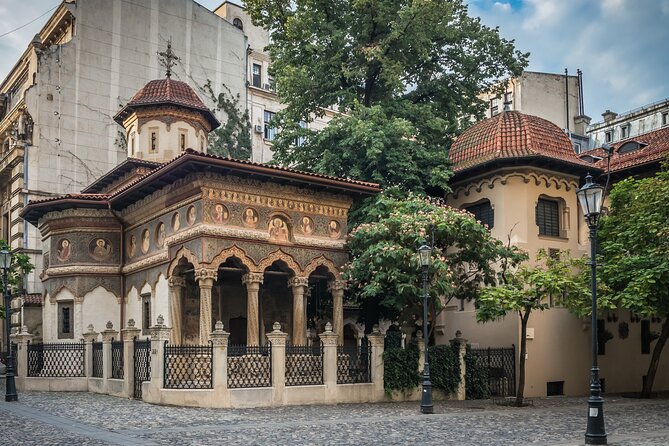
Stavropoleos Monastery was built in 1724 and brings the walk to one of its most memorable religious sites. Its age and setting make it an important part of the Old Centre, and the tour explains its history rather than treating it as a quick photo stop.
The monastery adds another period to the route. You have already heard about the medieval court, Wallachian rulers, merchant inns, nineteenth-century civic power, and modern street life. Stavropoleos helps fill in the eighteenth-century chapter.
Give this stop the attention it deserves, even within a short tour. The listing does not promise a long interior visit, so the exact amount of time on site can depend on the day and the guide. If you want to pray, examine details quietly, or take your time with the architecture, return later on your own.
For me, the monastery is a fitting closing point because it leaves you with more than a royal story. Bucharest’s past also belongs to religious communities, traders, craftsmen, office workers, and ordinary residents who used these streets over many generations.
What the guide adds to the route
The guide is the main reason to choose this experience over a self-led walk. The route itself is compact, and you could find many of the major sites with a map. The harder part is understanding what each place meant and how the pieces connect.
Alina is one guide associated with this experience. If she leads your walk, you can expect a personal connection to the area, since she grew up nearby. Her approach is described as funny, passionate, and well informed about the different eras of Bucharest. That combination is useful on a short tour, where a dry list of dates would quickly become a blur.
A local guide can also point out places you would not know to seek out. That is especially valuable around the inns and old lanes, where the significance may not be obvious from the street. You should use the private format to ask direct questions about the buildings, the city’s changes, and what is worth revisiting later.
The guide quality appears to be the strongest part of the experience. Since a particular guide is not guaranteed, I would treat Alina’s involvement as a possibility rather than a promise. The tour does include a local, professional guide, which gives you the basic service you need even if the personality and depth vary by guide.
Price, timing, and practical value
At $16.77 per person, this is a modestly priced introduction to central Bucharest. The value is strongest if you want context quickly, have only a short time in the city, or prefer asking questions to studying a map and guidebook.
The price is less compelling if you want lengthy visits inside monuments. Food and drinks are not included, and the walk lasts about one hour. You are paying mainly for the guide’s time, local interpretation, and the convenience of a private route, not for entrance tickets or a full afternoon program.
The tour is booked, on average, about 30 days ahead. That does not guarantee that you must reserve far in advance, but it does suggest planning ahead if your dates are fixed. Confirmation is normally sent at booking, though reservations made within one day of departure are confirmed as soon as possible and depend on availability.
Children can participate if accompanied by an adult, and most people can take part. The route is on foot, so sturdy shoes are a sensible choice. The old flagstones may be uncomfortable in thin soles or poor footwear.
You can cancel for a full refund up to 24 hours before the start time. Changes or cancellations made less than 24 hours ahead are not accepted for a refund. The activity also depends on good weather. If poor weather cancels it, you are offered another date or a full refund.
Who should book this Old Centre walk?
I would recommend it to first-time visitors who want a clear introduction before exploring alone. It also suits you if you enjoy political, religious, and commercial history in one route, or if you prefer a private walk to a large group tour.
It works well for a short Bucharest stay because the meeting point is central and the one-hour length leaves most of the day free. The morning departure is useful for planning, while the afternoon option gives you flexibility around museums and other sightseeing.
Families can book it, provided children are accompanied by an adult. The private format may help if you need to adjust the pace or keep questions focused.
I would hesitate only if you need wheelchair-friendly details, extensive indoor access, or a full historical tour lasting several hours. Those features are not specified. I would also choose a longer experience if you want time to study every inn, church, and ruin in detail.
Should you book the Bucharest Old Centre Tour?
Book it if you want a short, private orientation with real historical connections rather than a checklist of photo stops. The Princely Court, St Anton Church, old inns, Lipscani Street, National Bank, Șerban Vodă ruins, and Stavropoleos Monastery give you a strong first map of central Bucharest.
The best reason to choose it is the guide. A local personality such as Alina can make the city’s different eras easier to understand and may reveal details you would pass by alone. At $16.77, that added context is good value for a one-hour walk.
Just bring sturdy shoes and keep the scope in mind. This is the opening chapter of your Bucharest sightseeing, not the whole book. Book it early in your stay, listen closely, then return to the places that deserve more time.
FAQ
How long does the Bucharest Old Centre Tour last?
The walking tour lasts approximately one hour.
Where does the tour start and end?
It starts at the National Museum of Romanian History, Calea Victoriei 12, Bucharest. The activity ends back at the meeting point.
Is hotel pickup available?
Pickup and drop-off are offered from selected central hotels only.
What does the tour include?
The tour includes a local professional guide and hotel pickup and drop-off when available from selected hotels. Food and drinks are not included.
Is this a private tour?
Yes. Only your group participates in the activity.
Can I cancel for a full refund?
You can cancel at least 24 hours before the start time for a full refund. Cancellations or changes made less than 24 hours before the start time are not accepted for a refund. If poor weather causes the tour to be canceled, you are offered another date or a full refund.
Just added around Bucharest
- Village Museum Bucharest Guided Tour★ 5.0 · 6 reviews
- Bucharest: Dealu Mare Winery Private Trip with Wine Tasting★ 4.9 · 6 reviews
- Winery touring & private wine tasting – one day private tour★ 5.0 · 3 reviews
- Transylvania Tour: Dracula’s Castle, Peles Palace & Brasov★ 5.0 · 19 reviews
- Discover Medieval Transylvania Small Group Tour – 7 days★ 5.0 · 4 reviews
- Bucharest Airport Transfer To Constanta Mamaia★ 5.0 · 3 reviews
- Airport Henri Coanda (Otopeni) to Bucharest – Private Transfer – Driver★ 5.0 · 5 reviews
- Gems of Transilvania: Brasov,Sighisoara,Sibiu,Viscri and more★ 5.0 · 6 reviews
Tours, compared.
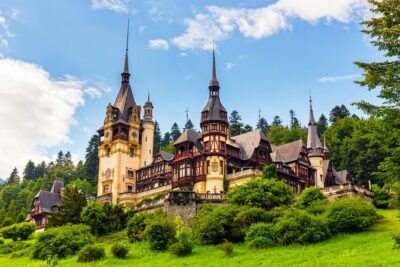
Bucharest to Dracula Castle, Peles Castle and Brasov Guided Tour
Read our review →
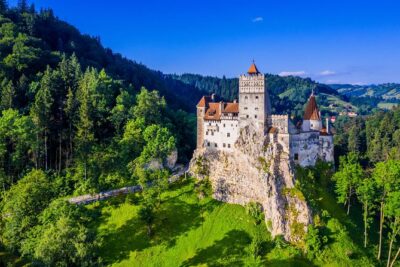
Transylvania and Dracula Castle Full Day Tour from Bucharest
Read our review →
Peles Castle, Bran Castle, & Brasov Old Town Tour
Read our review →
Small-group tour Bran, Rasnov, and Peles Castles
Read our review →