Reviewed · PRIVATE
Bucharest: Private Three Neighborhoods Tour by Vintage Car
Bucharest is easiest to understand from the back seat of an old Dacia. This private tour uses a restored 1970s or 1980s Dacia 1310 to connect three sharply different neighborhoods, from Cotroceni villas to communist apartment blocks and Ferentari’s poor streets. It is less a standard monument tour than a moving lesson in how Romanian society is arranged.
I like two things right away: the car gives you a memorable way to see ordinary streets, and the guide focuses on social life, not just dates and grand buildings. Guide Mihai earned particular praise for his friendly manner, strong local knowledge, and careful driving. The main drawback is the car itself: it has no air conditioning, power steering, automatic transmission, ABS, or GPS, and the tour is not suited to children under 10, pregnant women, or people with mobility limitations.
In This Review
- Key points to know
- Why an old Dacia changes the way you see Bucharest
- Cotroceni, where villas meet national power
- Drumul Taberei and the everyday apartment-block city
- Ferentari, poverty, and the need for respect
- Rahova and the return to Bucharest’s major symbols
- What the $126 price means for a private group
- Practical details before you climb into the Dacia
- Who will get the most from this Bucharest tour?
- Should you book the three-neighborhood Dacia tour?
- FAQ
- How long does the Bucharest vintage-car tour last?
- Is hotel pickup and drop-off included?
- What type of car is used?
- Can participants drive the Dacia?
- How many people fit in one vehicle?
- Which neighborhoods does the tour visit?
- Is the tour suitable for children?
- Does the Dacia have air conditioning and modern driving features?
Key points to know
- The Dacia 1310 is the attraction: You ride in a fully restored Romanian car from the 1970s or 1980s, not a modern sightseeing vehicle.
- Three neighborhoods, three social settings: Cotroceni represents the bourgeoisie, Drumul Taberei the average Romanian household, and Ferentari the city’s poorest residents.
- The tour runs about 3.5 hours: You receive hotel pickup and drop-off within Bucharest, with water and a souvenir included.
- The experience is private: Three people fit in one car. Larger parties can travel in a convoy.
- You see Bucharest beyond the center: Stops include Bragadiru Palace, Cotroceni Palace, Rahova Market, Toporași Street, and the Palace of the Parliament.
- This is an observational tour: Ferentari is presented as a place of hardship, so approach the visit with respect rather than treating poverty as a photo prop.
Why an old Dacia changes the way you see Bucharest
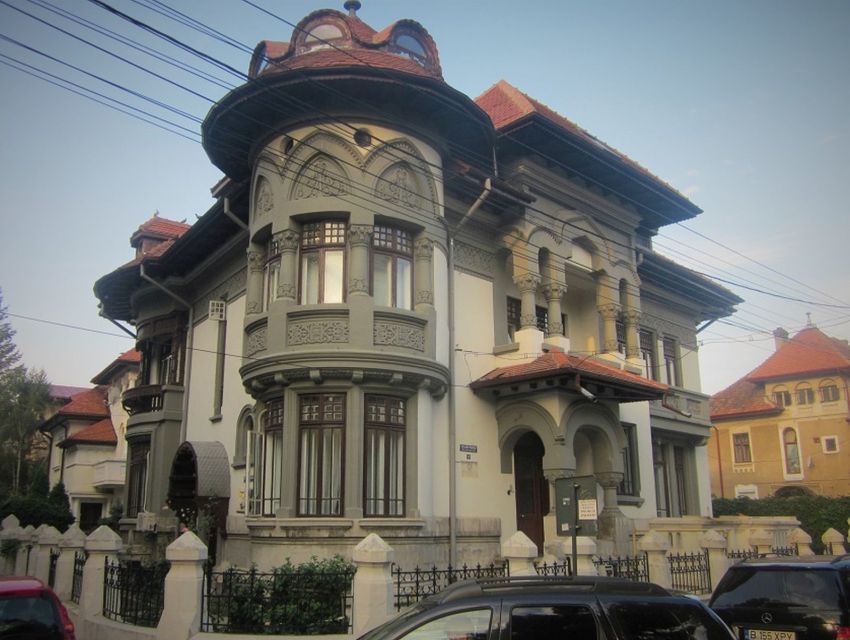
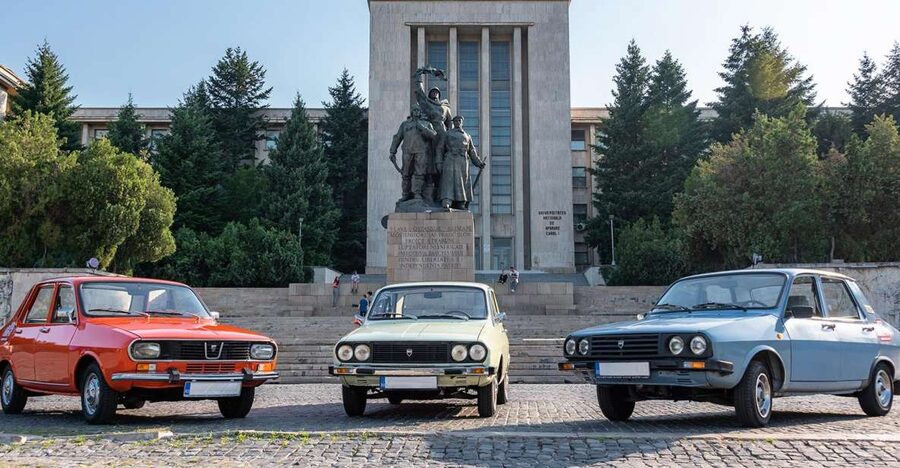
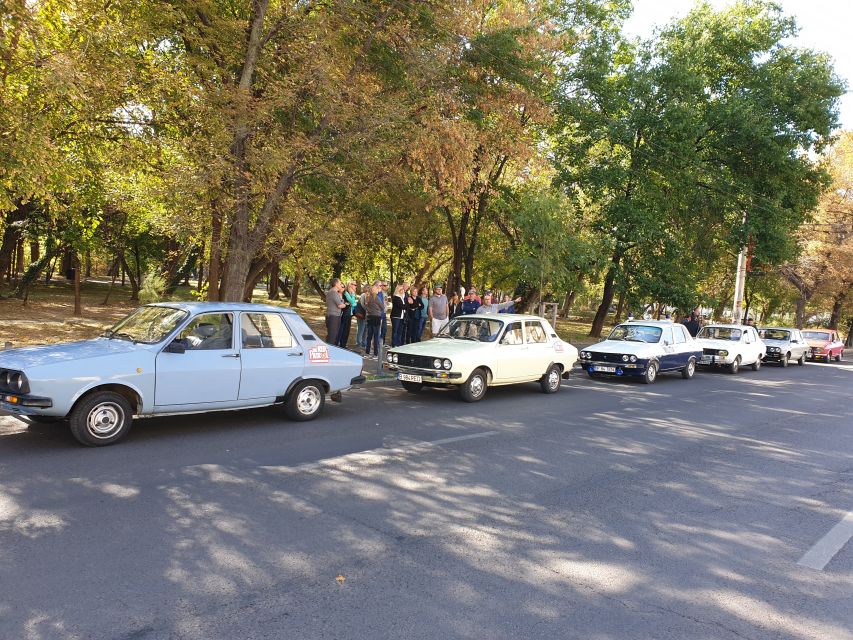
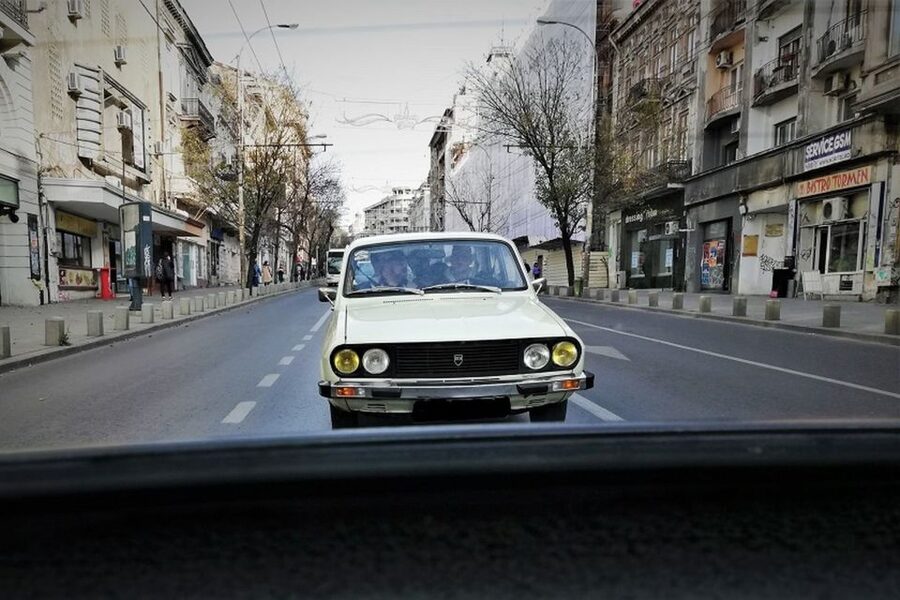
The Dacia 1310 was a familiar Romanian car for decades. Riding in one gives the tour a useful sense of place before the guide says a word. You are not simply passing through Bucharest in a sealed vehicle while checking off sights. The car connects the tour to everyday Romanian life, especially the decades when Dacias filled the roads.
That also means you should set your comfort expectations correctly. The vehicle meets current traffic safety regulations, but it remains an old-style car. There is no air conditioning, ABS, GPS navigation, power steering, or automatic gearbox. During winter, the car is heated. In warmer weather, the lack of air conditioning may matter, especially on a three-and-a-half-hour ride.
You do not drive the Dacia yourself. Your English-speaking local guide handles the car and leads the tour. That is a practical benefit on unfamiliar streets, though anyone hoping for a hands-on classic-car experience should know this is a passenger ride.
The private format is especially useful here. You can ask why one neighborhood looks different from another, pause for explanations, and take photos without keeping pace with a large group. The standard arrangement is three people per vehicle. If your party is larger, the operator can organize a convoy.
A few more Bucharest trips to weigh up
- Castles of Transylvania: Private Day Trip from Bucharest
★ 4.5 · 248 reviews - Dracula’s Castle, Peles Castle and Brasov – Private Day Trip from Bucharest
★ 5.0 · 211 reviews - Best of Bucharest | Private Walking Tour
★ 5.0 · 199 reviews
Cotroceni, where villas meet national power
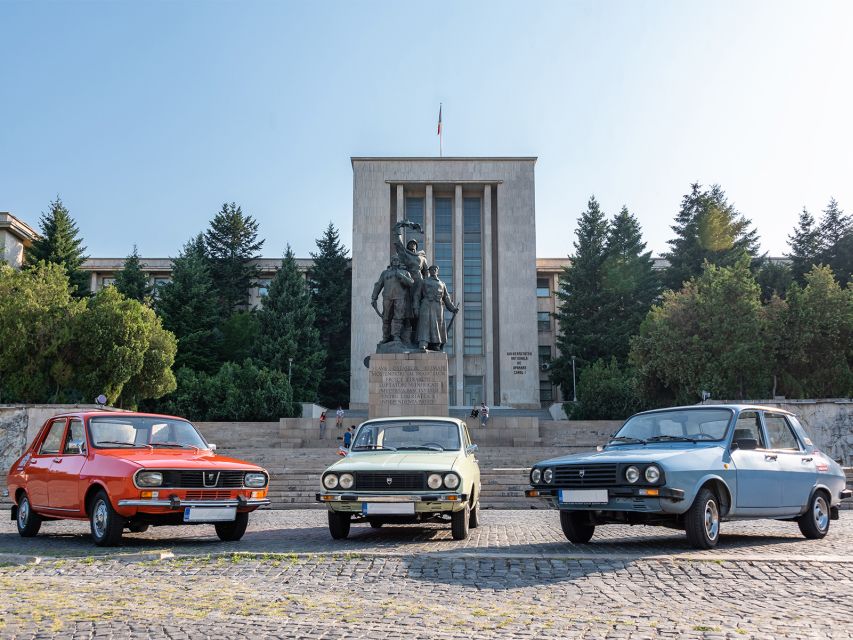
The first part of the route introduces Cotroceni, one of Bucharest’s villa districts. Here, the tour shifts from the familiar image of communist apartment blocks to streets associated with the 19th-century and present-day bourgeoisie.
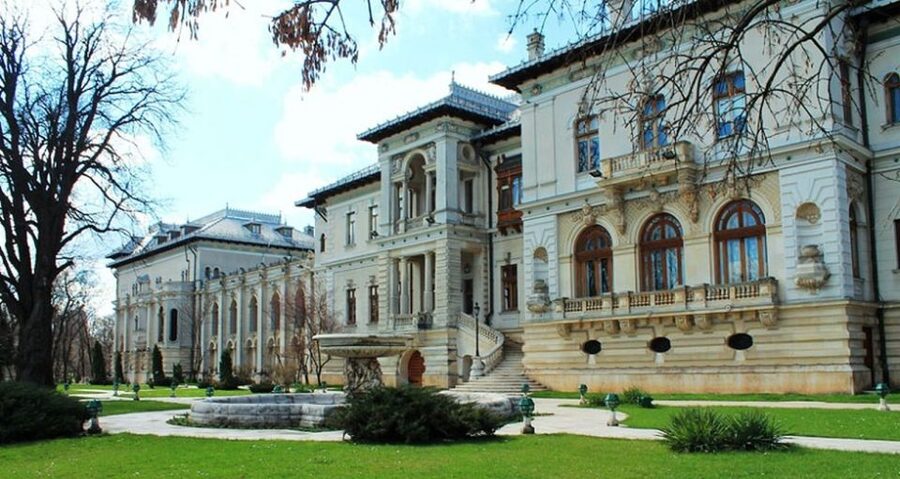
The stops around Bragadiru Palace, the Costache Negri Fountain, and Cotroceni Palace give the guide several ways to explain the district. You have time for photos and guided commentary, rather than a quick drive-by. The Cotroceni Presidential Palace is an important visual reference, while the Military Academy Building and the Botanical Garden help show the area’s mix of government, education, gardens, and private residences.
The villas are likely to be the most immediately appealing part of this section. They offer a look at Bucharest’s older residential character, with a scale and style quite different from the huge blocks waiting in Drumul Taberei. I like this contrast because it prevents you from reducing Bucharest to either grand old buildings or communist concrete. The city contains both, often within a short drive.
The 30-minute stop at Bragadiru Palace is the longest listed pause on the route. You also spend time at the fountain, Cotroceni Palace, and the park known as La Broscuțe. Expect short visits, stories, and photo opportunities rather than long interior tours. The information provided does not promise entry into the palaces, so think of these as exterior sightseeing stops.
For photographers, Cotroceni should be the easiest section of the tour. Villas, formal buildings, and public spaces offer subjects without the ethical concern that comes with photographing people in hardship. Still, listen to the guide before assuming every building or resident welcomes a close-up photograph.
Drumul Taberei and the everyday apartment-block city
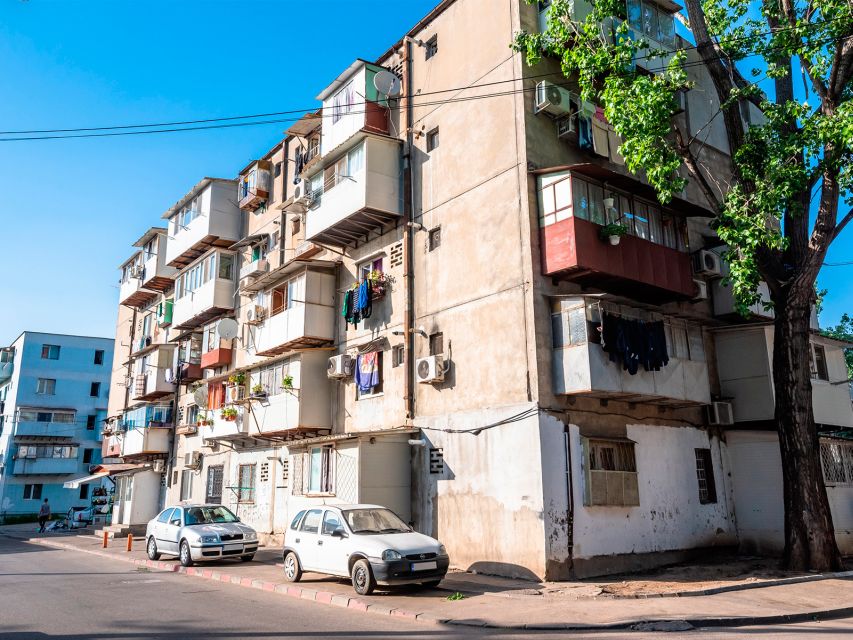
Drumul Taberei gives the tour its middle chapter. It represents the average Romanian setting, with enormous communist blocks of flats, a peasant market, and Orthodox churches used by local residents.
This is the part many visitors miss when they stay near Bucharest’s historic center. Grand streets can tell you about national ambition, but apartment blocks and markets tell you more about normal routines. The guide uses the neighborhood to discuss how average Romanians live, shop, worship, and move through the city.
The 20-minute stop in Drumul Taberei is not long, but it is enough to break up the drive and hear the neighborhood explained on foot. You should expect a look at the housing and public life of the district, not a museum-style presentation. The huge blocks may appear plain at first, yet they are central to understanding the scale of communist urban planning.
The peasant market is another useful detail. It brings the tour down from politics and architecture to food, shopping, and local habit. The wording of the experience does not promise a tasting or shopping time, so do not book this expecting a food tour. You are there to see the market as part of the neighborhood and hear how it fits into ordinary life.
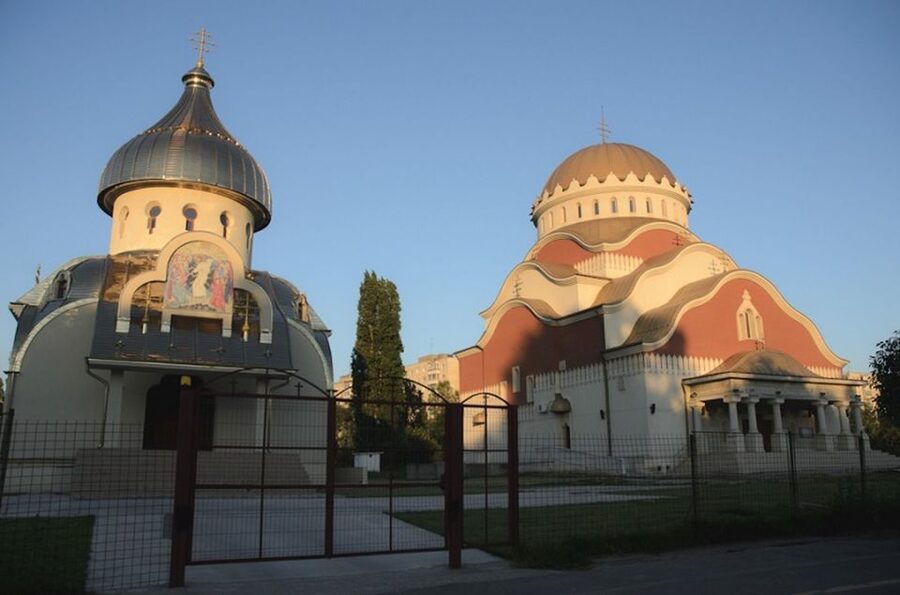
The Orthodox churches add another layer. They show that religious practice remains part of daily community life, even in a district shaped by state-planned housing. You may find this section less visually dramatic than Cotroceni or the Dacia itself, but it is arguably the most useful for understanding Bucharest beyond its postcard sights.
Ferentari, poverty, and the need for respect
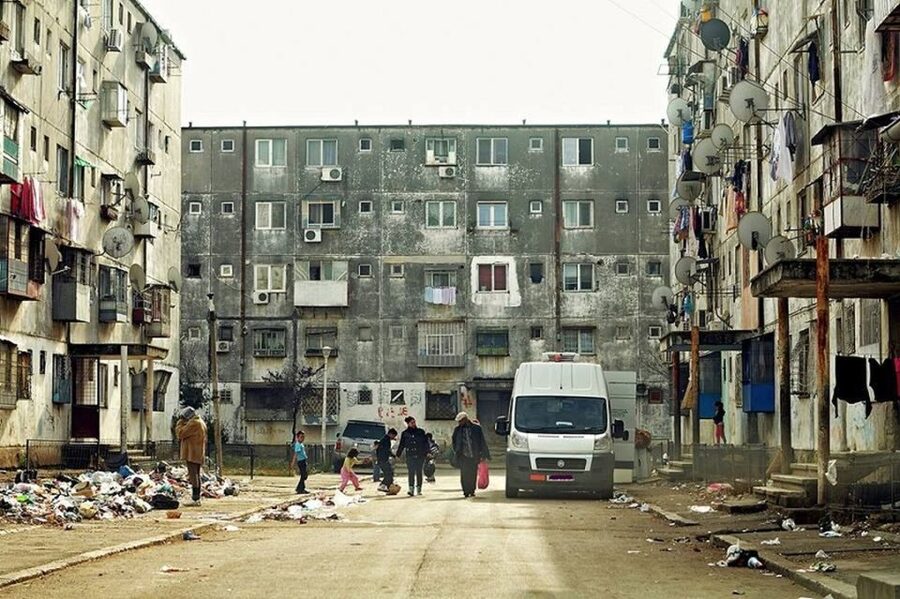
The final neighborhood is Ferentari, described as a poor area with ghetto-style buildings and severe social problems. The route includes Piața Rahova and Toporași Street, with a combined set of short stops before continuing toward the Palace of the Parliament.
This is the most sensitive part of the experience. Ferentari is presented as a place where you learn about the everyday struggles of Romania’s poorest and most excluded residents. That subject can add real depth to a city visit, but it should not be treated as entertainment or as a hunt for shocking photographs.
The tour describes the area as highly photographic and uses the nickname Machala city. I would treat that language carefully. Buildings and streets can help you understand inequality, yet residents are not scenery. Ask before photographing people, avoid intrusive images, and listen to the guide’s explanation rather than drawing quick conclusions from what you see through a car window.
The brief 10-minute stop on Toporași Street suggests that this will be a focused look, not a long walking visit. That may be a positive feature. You receive context without being left to wander through an unfamiliar district, and the guide can explain what the streets mean within the larger city.
Ferentari may be the tour’s most important stop, but it is also the reason this experience will not suit everyone. If you want a light vintage-car outing with architecture and cheerful anecdotes only, choose a conventional city tour. If you want a more honest look at class differences, this section gives the ride its purpose.
Same mountains, a completely different day out:
- Bucharest: Dracula’s Castle, Peles Castle, & Brasov Old Town
★ 4.5 · 17,858 reviews - Bucharest: Dracula Castle, Peles Castle & Brasov Old Town
★ 4.6 · 10,891 reviews - Bucharest: Dracula’s Castle, Peleș Castle & Brașov Day Trip
★ 4.5 · 5,919 reviews - Bucharest: Palace of Parliament Tickets and Guide
★ 4.3 · 3,182 reviews
Rahova and the return to Bucharest’s major symbols
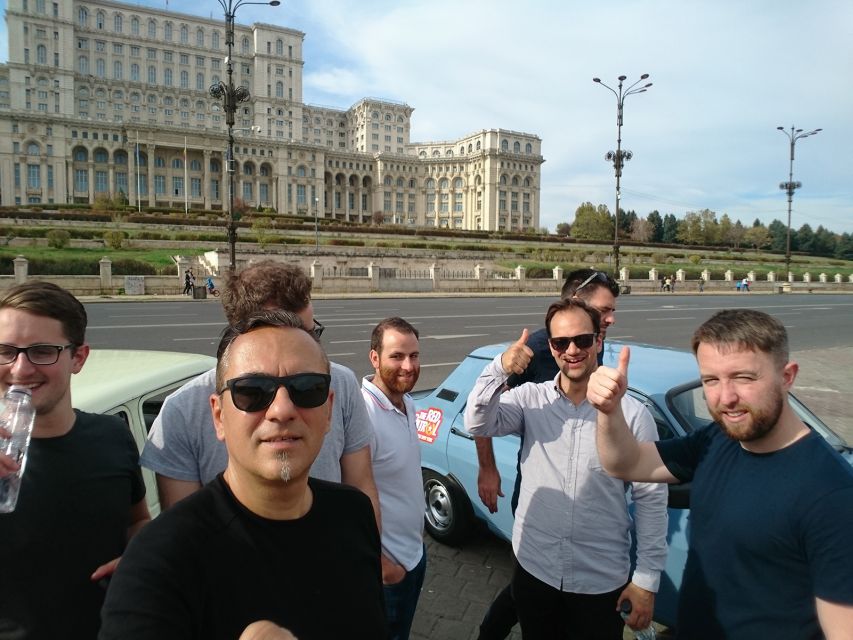
After the neighborhood visits, the route includes the Palace of the Parliament. The 20-minute stop provides a strong visual ending because the building represents state power on a scale that feels very different from the intimate streets of Cotroceni, Drumul Taberei, and Ferentari.
The tour does not include an interior visit to the palace. You should expect a guided photo stop and sightseeing from the outside. That is enough to connect the building to the social story of the day, but it is not a substitute for a dedicated Parliament tour if you want to see the interiors.
Piața Rahova adds another urban reference before the final return. Together, Rahova and the Palace of the Parliament show how grand national projects sit alongside busy residential areas and ordinary commercial streets. The route is not built around a single historic center. It keeps shifting your view of Bucharest, which is exactly why the private car matters.
Hotel pickup and drop-off in Bucharest simplify the day. You do not need to find a meeting point or arrange separate transport back after the final stop. The advertised duration is 3.5 hours, though the full description allows roughly three to four hours, so leave some flexibility in your schedule.
What the $126 price means for a private group
At $126 per person, this is not the cheapest way to see Bucharest. The value depends heavily on group size and what you want from a city tour.
For one person, the price pays for a private car, hotel pickup and drop-off, a professional local guide, water, a souvenir, and a specialized route that is difficult to reproduce independently in a vintage Dacia. For three people sharing the car, the price feels easier to justify because you are buying a private experience rather than a seat on a large coach.
You are also paying for interpretation. The neighborhoods are not famous monuments that explain themselves. Cotroceni, Drumul Taberei, and Ferentari become worthwhile because the guide links buildings, housing, markets, and streets to different social groups. A standard historical tour can tell you about Bucharest’s past; this ride adds a social view of present-day life.
The price is harder to defend if your priority is maximum comfort, extensive interior access, or a long walking tour. You do not get air conditioning, and the listed stops are generally brief. The Dacia is the point, but it is also the limitation.
A flexible booking policy improves the value. You can cancel up to 24 hours before departure for a full refund, and reserve now while paying later. Starting times vary, so you need to check availability when booking.
Practical details before you climb into the Dacia
Wear comfortable shoes. Although much of the experience happens in the car, you will get out for several photo stops and short guided walks.
Large bags and oversize luggage are not allowed. Smoking, alcohol, drugs, and pets are also prohibited. Children under 10 cannot join, and the tour is not suitable for pregnant women, wheelchair users, or people with mobility impairments.
The tour is conducted in English. Confirmation normally arrives at booking, although reservations made within five days of travel may receive confirmation within 48 hours, subject to availability. That timing matters if you are arranging a tight Bucharest schedule.
The car carries three people. A larger group can request a convoy, but the experience may feel less intimate when split among several vehicles. If the old-car element is your main reason for booking, ask how the convoy will be organized before you commit.
Bring a phone or camera if you want photographs with the Dacia, but keep the social purpose of the route in mind. The car itself is an easy subject. Photos of residents, particularly in Ferentari, deserve more care.
Who will get the most from this Bucharest tour?
I would choose this tour for a first-time visitor who has already seen the central monuments or wants a second look at Bucharest beyond the old town. It is also a good match for anyone interested in communist-era housing, class differences, Romanian cars, and the practical shape of modern city life.
The experience suits couples, friends, or a small family group with children aged 10 and over. Private transport makes it easier to ask questions and adjust the conversation to your interests. A person who enjoyed a traditional historical city tour may find this a useful companion, since the emphasis here is on social conditions rather than a simple timeline of rulers and events.
I would hesitate if you need step-free access, a spacious modern vehicle, or strong climate control. The lack of air conditioning is a real consideration in hot weather. You also should not choose it if you want to drive the Dacia, since participants ride as passengers only.
The tone of the Ferentari section matters. This is not a poverty safari. You should book it only if you are ready to hear about hardship with some humility and restraint. The reward is a less polished but more grounded picture of Bucharest.
Should you book the three-neighborhood Dacia tour?
Book it if you want a private, unusual Bucharest experience that goes beyond central landmarks. The restored Dacia, the return to your hotel, and the three-part social route give the tour a clear identity. The English-speaking guide, with Mihai specifically praised for his friendly and careful work, can make the difference between a simple drive and a useful city lesson.
Skip it if your ideal day requires modern-car comfort, interior palace visits, or a gentle sightseeing route without difficult subjects. The vehicle is old by design, the stops are short, and Ferentari calls for respect.
For the right visitor, the $126 price buys more than transport. It gives you a way to see Bucharest through its housing, streets, markets, and social divisions, with the city’s most recognizable old car carrying you between them.
FAQ
How long does the Bucharest vintage-car tour last?
The tour lasts about 3.5 hours. The full description allows roughly three to four hours, including pickup, sightseeing stops, and return to your accommodation.
Is hotel pickup and drop-off included?
Yes. Pickup and drop-off from accommodation in Bucharest are included.
What type of car is used?
You ride in a fully restored Dacia 1300 or 1310 from the 1970s or 1980s.
Can participants drive the Dacia?
No. Participants are passengers, and the professional guide drives the car.
How many people fit in one vehicle?
The standard arrangement is three people per vehicle. A convoy can be arranged for larger groups.
Which neighborhoods does the tour visit?
The main neighborhood sections are Cotroceni, Drumul Taberei, and Ferentari. The route also includes places such as Bragadiru Palace, Piața Rahova, Toporași Street, and the Palace of the Parliament.
Is the tour suitable for children?
Children under 10 are not allowed. The tour is suitable only for children aged 10 or older, subject to the other restrictions.
Does the Dacia have air conditioning and modern driving features?
No. The car does not have air conditioning, ABS, GPS navigation, power steering, or automatic transmission. It is heated during winter and meets necessary traffic safety regulations.
Just added around Bucharest
- Village Museum Bucharest Guided Tour★ 5.0 · 6 reviews
- Bucharest: Dealu Mare Winery Private Trip with Wine Tasting★ 4.9 · 6 reviews
- Winery touring & private wine tasting – one day private tour★ 5.0 · 3 reviews
- Transylvania Tour: Dracula’s Castle, Peles Palace & Brasov★ 5.0 · 19 reviews
- Discover Medieval Transylvania Small Group Tour – 7 days★ 5.0 · 4 reviews
- Bucharest Airport Transfer To Constanta Mamaia★ 5.0 · 3 reviews
- Airport Henri Coanda (Otopeni) to Bucharest – Private Transfer – Driver★ 5.0 · 5 reviews
- Gems of Transilvania: Brasov,Sighisoara,Sibiu,Viscri and more★ 5.0 · 6 reviews
Private, compared.

Castles of Transylvania: Private Day Trip from Bucharest
Read our review →
Dracula’s Castle, Peles Castle and Brasov – Private Day Trip from Bucharest
Read our review →
Bucharest Panoramic Sightseeing – Private City Tour
Read our review →
THERME “Take It Easy” Pack: Full Spa Access + Private Transfers
Read our review →
Piatra Craiului National Park Private Hiking Tour from Brasov
Read our review →
4h Bucharest Private Tour (2h by Car and 2h Walking in Old Town)
Read our review →