Reviewed · TOURS
Darkside Tour of Bucharest – small group
Bucharest’s darker past is not locked away in a museum. It lies in Bellu Cemetery’s crypts and tombstones, in the streets where revolutionaries faced gunfire, and in the city center where protest movements began. This small-group tour links those places with stories of murder, romance, dictatorship, folklore, and political violence.
I like the way the tour combines a beautiful cemetery with recent political history. I also like that you use the subway and walk between sites instead of sitting in a bus. The main drawback is its subject matter: stories about death, repression, prostitution, and violent protests will not suit every mood, and the walking can be tiring in hot weather.
In This Review
- Key points to know before you book
- Why Bucharest’s dark side makes sense as a walking tour
- Starting near the National Theatre at 3 p.m.
- Bellu Cemetery: the tour’s most memorable hour
- University’s Square and the history of protest
- Calea Victoriei and Bucharest’s scandalous past
- Revolution Square and the fall of Ceaușescu
- What the guides do best
- Is $48.39 a fair price?
- Who should take this tour?
- My advice on booking
- FAQ
- How long does the Darkside Tour of Bucharest last?
- What time does the tour begin?
- Where does the tour start?
- Where does the tour end?
- What places are visited?
- Is subway transportation included?
- Is food included?
- Is hotel pickup available?
- How large is the group?
- Is the tour suitable for children?
- What happens if bad weather cancels the tour?
- Can I cancel for a full refund?
Key points to know before you book
- Bellu Cemetery is the star of the tour: Allow yourself time to look closely at its monuments, tombs, and unusual memorials.
- The focus reaches from old legends to 1989: You hear about dark stories from the medieval era, early 20th-century Bucharest, communism, and the Revolution.
- Small groups keep the discussion personal: The tour accepts no more than 12 people, leaving room for questions.
- Guides bring different personalities: Vlad, Elena, Alex, Andra, Bogdan, and Irina are among the guides praised for clear storytelling, humor, and local insight.
- The tour runs from 3 p.m. for about three hours: It begins near the National Theatre and finishes at Revolution Square.
- A snack and subway ride are included: Hotel pickup, drinks, and additional food are not.
Why Bucharest’s dark side makes sense as a walking tour
Many first-time visitors see Bucharest as a city of grand boulevards, old churches, Belle Époque buildings, and Communist-era blocks. This tour adds the human stories that explain why the city can feel both elegant and unsettling.
You move through several periods rather than studying one event in isolation. The route connects old death rituals and cemetery folklore with the scandals of interwar Bucharest, then moves into the Romanian gulag, Nicolae Ceaușescu’s dictatorship, the 1989 Revolution, and the protests that followed.
That range is the tour’s greatest strength. You are not simply shown a dark monument and told a ghost story. You are given a sense of how power, fear, poverty, desire, and resistance shaped Bucharest.
The small group matters here. With a maximum of 12 people, you should be able to hear the guide clearly and ask about Romanian customs, superstitions, or political events. The guides have included Vlad, Elena, Alex, Andra, Bogdan, Irina, and Alania. The tone can vary by guide, but the strongest qualities are clear: strong command of Romanian history, easy English, personal anecdotes, and a willingness to discuss difficult subjects without turning the tour into a lecture.
Other Bucharest days worth putting on the list:
- Bucharest: Dracula’s Castle, Peles Castle, & Brasov Old Town
★ 4.5 · 17,858 reviews - Bucharest: Dracula Castle, Peles Castle & Brasov Old Town
★ 4.6 · 10,891 reviews - Bucharest: Dracula’s Castle, Peleș Castle & Brașov Day Trip
★ 4.5 · 5,919 reviews
Starting near the National Theatre at 3 p.m.
The meeting point is outside the Ion Luca Caragiale National Theatre at Bulevardul Nicolae Bălcescu 2. This is a central location near public transport, but you should allow a little extra time to find the exact meeting spot, especially if you are new to Bucharest.
The start time is 3 p.m. That timing gives you the morning and early afternoon for museums, markets, or a general city walk. It also means much of the tour takes place later in the day, when the central streets may feel less hurried. The tour is listed at about three hours, though walking, subway travel, and group questions can affect the pace.
The route is not a sightseeing loop that returns to its starting point. It begins in the central area, travels by subway to Bellu Cemetery, and finishes at Revolution Square in front of the Ministry of Internal Affairs. Plan your evening from the final stop, not from the National Theatre.
Bellu Cemetery: the tour’s most memorable hour
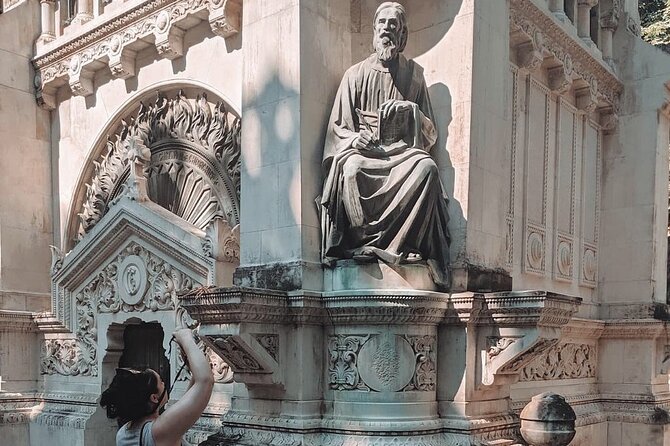
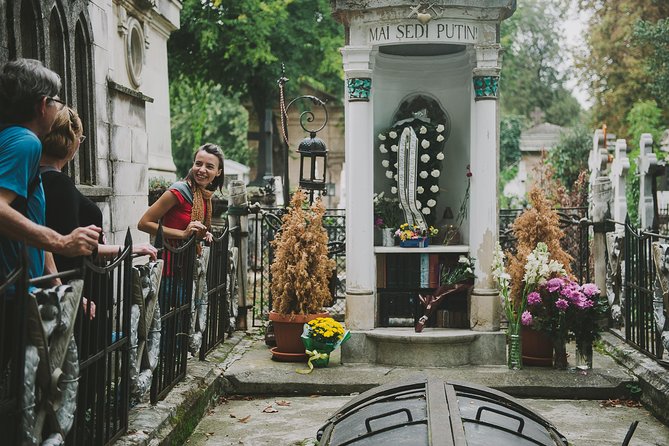
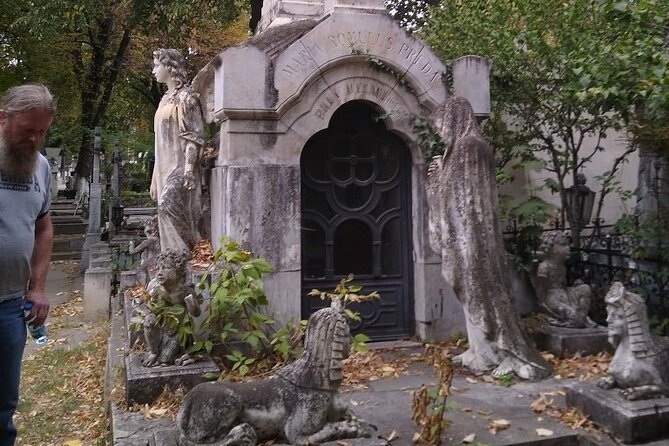
The first major stop is Bellu Cemetery, also known as Cimitirul Șerban Vodă-Bellu. It is described as Bucharest’s first modern graveyard, and the tour spends about an hour here.
This is not just a quick walk past famous graves. The cemetery provides space for stories about love, family, status, unusual architecture, and unresolved mysteries. You can expect the guide to use tombs and memorials as starting points for tales about the people buried there.
Bellu is also visually different from Bucharest’s broad avenues. The monuments and crypts create a quieter setting, with details that are easy to miss if you walk through alone. Several guides have made the cemetery the emotional center of the experience, and it is easy to understand why. The setting gives the darker stories a physical shape.
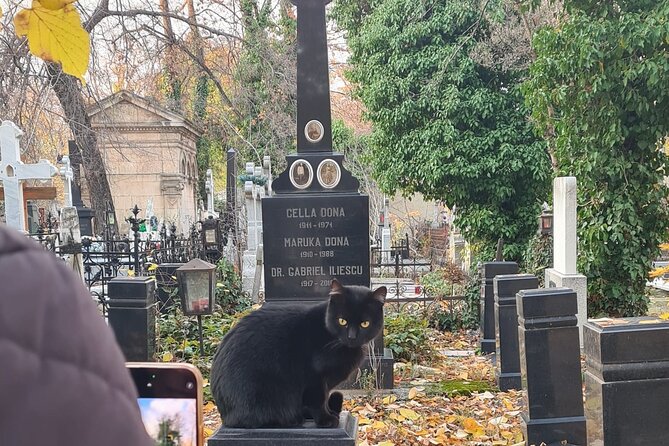
The tone is not relentlessly grim. Elena, in particular, has been praised for combining vivid stories with a touch of humor. One especially memorable thread involves a memorial connected with a woman and her cats. Another guide stopped briefly to feed cats along the way, a small act that gave the walk a more personal and humane feel.
Admission to the cemetery is included at no extra cost. The tour also provides a street snack during the experience, though the exact snack can vary. One guide brought a pretzel, and another supplied water during a very hot day. Food and drinks beyond what is specified are not included, so bring water, especially in summer.
The practical issue is the weather. Bellu is an outdoor visit, and the tour requires a moderate level of physical fitness. Comfortable shoes are a sensible choice. If the afternoon is extremely hot, the cemetery portion may feel longer than expected, even though it is the most rewarding part for many people.
University’s Square and the history of protest
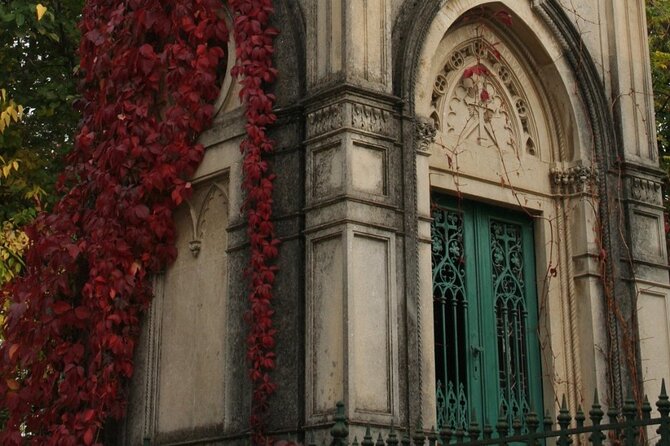
After Bellu Cemetery, the tour returns to the city center and continues to University’s Square. This stop lasts about 20 minutes, but its importance is much larger than the clock suggests.
The square is presented as a starting point for several major protest movements in Romania’s recent past. Here you learn about people who fought during the 1989 Revolution, those who wanted a more Western future after communism, and the clashes with miners in the 1990s.
The tour also links the square to Romania’s later anticorruption protests. That connection helps you see Bucharest as a city where political memory remains part of daily life. The square is not treated as a distant historical site. Its meaning reaches from the fall of Ceaușescu to arguments about democracy and public trust in the years that followed.
This section will appeal most to people who want context. If you only want spooky tales, the cemetery and Calea Victoriei may be your favorite parts. If you want to understand how Romania changed after 1989, University’s Square gives the tour a necessary second layer.
The guide’s role is especially important here. Alex, for example, has been praised for explaining the Romanian Revolution in a clear and thoughtful way. The best guides leave room for questions, since this part of Romanian history can be politically sensitive and difficult to reduce to a few simple facts.
Same mountains, a completely different day out:
- Bucharest: Palace of Parliament Tickets and Guide
★ 4.3 · 3,182 reviews - Bucharest: Day Trip to Dracula Castle, Peles Castle & Brașov
★ 4.4 · 3,049 reviews - Bucharest to Dracula Castle, Peles Castle and Brasov Guided Tour
★ 4.5 · 2,933 reviews - Bucharest: Palace of Parliament Tickets and Guided Tour
★ 4.4 · 1,877 reviews
Calea Victoriei and Bucharest’s scandalous past
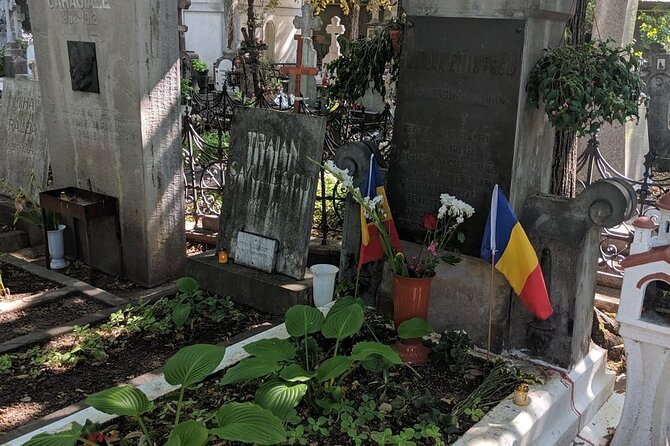
The Calea Victoriei portion lasts about 40 minutes and moves the story back to the early 20th century. This was a period when Bucharest had a reputation for nightlife, luxury, social ambition, and scandal before the Communist regime took control.
One striking detail is the scale of the sex trade in 1927, when roughly 12,000 prostitutes and escorts were working in Romania. The tour uses this setting to introduce figures such as Zaraza, a beautiful Roma dancer whose story became part of Bucharest’s urban folklore.
This is a useful reminder that Bucharest’s past is not only about rulers and battles. It is also about performers, lovers, criminals, social outsiders, and people trying to make a living in a rapidly changing city. Calea Victoriei provides an appealing backdrop because its architecture still suggests the city’s early 20th-century ambitions.
The subject can be handled in different ways by different guides. The most effective approach is neither prudish nor sensational. Guides such as Elena and Andra have been praised for making difficult material engaging while keeping the larger history in view.
You should also expect some walking through busy central streets during this part. The tour is designed to reveal details on foot, but it is not a formal architectural tour. The buildings and avenues support the stories rather than replace them.
Revolution Square and the fall of Ceaușescu
The tour ends at Revolution Square, or Piața Revoluției, in front of the Ministry of Internal Affairs. This is the most emotional stop and the place where the communist story reaches its conclusion.
Here the guide discusses the Romanian gulag, the hardships of life during the 1980s, Nicolae Ceaușescu’s dictatorship, and the shootings of December 22, 1989. Innocent people died while confronting the Securitate, the secret police. The square became a symbol of the regime’s collapse.
This is where the earlier stops begin to fit together. The cemetery showed private loss and memory. University’s Square showed protest and resistance. Revolution Square places those themes inside the final days of a dictatorship.
You may find this section sobering. The tour does not treat the 1989 Revolution as a clean, simple victory. The focus on victims and the fear faced by ordinary people gives the event a human scale. Guides have also discussed how communist rule affected local families and daily life, making the past feel close rather than safely remote.
If you have already taken a standard Communist-era Bucharest tour, this stop may repeat some broad facts. The difference here is the darker angle and the connection to personal stories, violence, and unanswered questions.
What the guides do best
The guide can make or break a history walk, and this experience appears to rely heavily on strong individual storytellers. Vlad has been praised for his English, anecdotes, enthusiasm, and ability to answer questions. Elena has been noted for combining history, folklore, humor, and personal or family insight.
Alex is a good fit if the Revolution and political history interest you. Andra has been praised for keeping the tour exciting while explaining historical facts clearly. Bogdan has earned strong praise for his explanations of Bucharest and Romania, while Irina has been described as both informative and entertaining.
You cannot necessarily choose your guide, so book for the route and theme rather than for one specific person. Still, these names help set expectations. You should expect an English-speaking local guide who may add personal observations, food suggestions, photographs, or explanations of local customs.
The tour also seems comfortable with questions. That matters because the route includes subjects that need explanation: Romanian superstitions, the social world of interwar Bucharest, the relationship between communism and ordinary life, and the changes that followed 1989.
Is $48.39 a fair price?
At $48.39 per person, this is not the cheapest way to spend three hours in Bucharest. You can walk through the city center on your own for free, and Bellu Cemetery itself has no admission charge.
The value comes from the structure and interpretation. The price includes a local guide, subway transportation, and a street snack. More important, it gives you access to stories and connections that would be difficult to assemble on your own, especially inside Bellu Cemetery and at the Revolution sites.
For a small group capped at 12 people, the price is easier to justify than it would be for a large coach tour. You are paying for concentrated storytelling rather than entry tickets. If you enjoy history, folklore, political memory, and unusual city walks, I think the cost is reasonable.
If you mainly want major landmarks, polished architecture, or a relaxed introduction to Bucharest, you may get better value from a general city tour. This is a specialist experience. Its worth depends on your interest in the subject.
The tour is booked an average of 32 days ahead, so advance planning is sensible, especially if your visit dates are fixed. Free cancellation is available up to 24 hours before the start time. The experience requires good weather, with a different date or full refund offered if poor weather causes cancellation.
Who should take this tour?
I would recommend it to adults and older teens who want to understand Bucharest beyond its postcard sights. It suits people who enjoy cemeteries, folklore, crime stories, difficult political history, and local voices.
It is not recommended for children aged 15 and under. The subject matter includes death, prostitution, state violence, secret police activity, and shootings. Even older children may find the material heavy.
You should also be comfortable walking for much of the afternoon and using the subway. Service animals are allowed, and the meeting area is near public transport. Since the tour is not designed around hotel pickup, you need to reach the National Theatre on your own and arrange your own way onward from Revolution Square.
My advice on booking
Book this tour if you want Bucharest to feel more human, complicated, and honest. The combination of Bellu Cemetery, interwar scandal, protest history, and the fall of communism gives you a side of the city that a standard sightseeing route often misses.
I would especially choose it early in a Bucharest visit if you want context for later walks. After hearing about the Revolution and the 1990s protests, University’s Square and Revolution Square will mean more when you pass them again.
Skip it if you want a light afternoon, dislike stories about death and political violence, or have difficulty walking outdoors. For everyone else, the cemetery alone is a strong reason to go, while the final stop at Revolution Square gives the tour its lasting weight.
FAQ
How long does the Darkside Tour of Bucharest last?
The tour lasts approximately three hours.
What time does the tour begin?
The tour begins at 3 p.m.
Where does the tour start?
It starts at the Ion Luca Caragiale National Theatre, Bulevardul Nicolae Bălcescu 2, Bucharest.
Where does the tour end?
It ends at Revolution Square, Piața Revoluției, in front of the Ministry of Internal Affairs.
What places are visited?
The route includes Bellu Cemetery, University’s Square, Calea Victoriei, and Revolution Square.
Is subway transportation included?
Yes. Subway transportation is included in the experience.
Is food included?
A street snack is included. Other food and drinks are not included unless specifically stated.
Is hotel pickup available?
No. Hotel pickup and drop-off are not included.
How large is the group?
The tour has a maximum of 12 travelers.
Is the tour suitable for children?
It is not recommended for children aged 15 and under.
What happens if bad weather cancels the tour?
If poor weather causes cancellation, you will be offered a different date or a full refund.
Can I cancel for a full refund?
Yes. You can cancel at least 24 hours before the start time for a full refund.
Just added around Bucharest
- Village Museum Bucharest Guided Tour★ 5.0 · 6 reviews
- Bucharest: Dealu Mare Winery Private Trip with Wine Tasting★ 4.9 · 6 reviews
- Winery touring & private wine tasting – one day private tour★ 5.0 · 3 reviews
- Transylvania Tour: Dracula’s Castle, Peles Palace & Brasov★ 5.0 · 19 reviews
- Discover Medieval Transylvania Small Group Tour – 7 days★ 5.0 · 4 reviews
- Bucharest Airport Transfer To Constanta Mamaia★ 5.0 · 3 reviews
- Airport Henri Coanda (Otopeni) to Bucharest – Private Transfer – Driver★ 5.0 · 5 reviews
- Gems of Transilvania: Brasov,Sighisoara,Sibiu,Viscri and more★ 5.0 · 6 reviews
Tours, compared.
Bucharest to Dracula Castle, Peles Castle and Brasov Guided Tour
Read our review →
Transylvania and Dracula Castle Full Day Tour from Bucharest
Read our review →
Peles Castle, Bran Castle, & Brasov Old Town Tour
Read our review →
Small-group tour Bran, Rasnov, and Peles Castles
Read our review →