Reviewed · BUCHAREST TOURS
Eastern Orthodox Church Art in Bucharest
Bucharest’s old churches are easy to miss. Some sit beside busy streets, some hide behind unremarkable entrances, and all still serve local worshippers. This 2.5-hour walking tour links six of them into a clear lesson in Orthodox art, from medieval frescoes to 19th-century church design.
I like the small-group limit of 10, which gives you room to ask questions, and I like the way the route mixes famous places such as Stavropoleos Monastery with churches even locals can struggle to find. The main consideration is that these are active churches, not museums, so modest dress, quiet behavior, and flexibility around services are essential.
In This Review
- Key points at a glance
- Why Bucharest’s churches deserve a closer look
- Saint Anton and the Old Princely Court
- Saint George Km0 and a major Romanian painter
- Saint Elijah, an Orthodox basilica that is easy to miss
- The Lady’s Church and old surviving frescoes
- Stavropoleos Monastery and a change of mood
- Saint Cyprian and the final church listing
- What the guide adds to the experience
- The human side of visiting active churches
- Is $57 a fair price?
- Who should book this church art walk?
- Should you book it?
- FAQ
- How long does the Eastern Orthodox Church Art tour last?
- What churches are included?
- What languages are available?
- How large is the group?
- Where is the meeting point?
- What should I wear and bring?
Key points at a glance
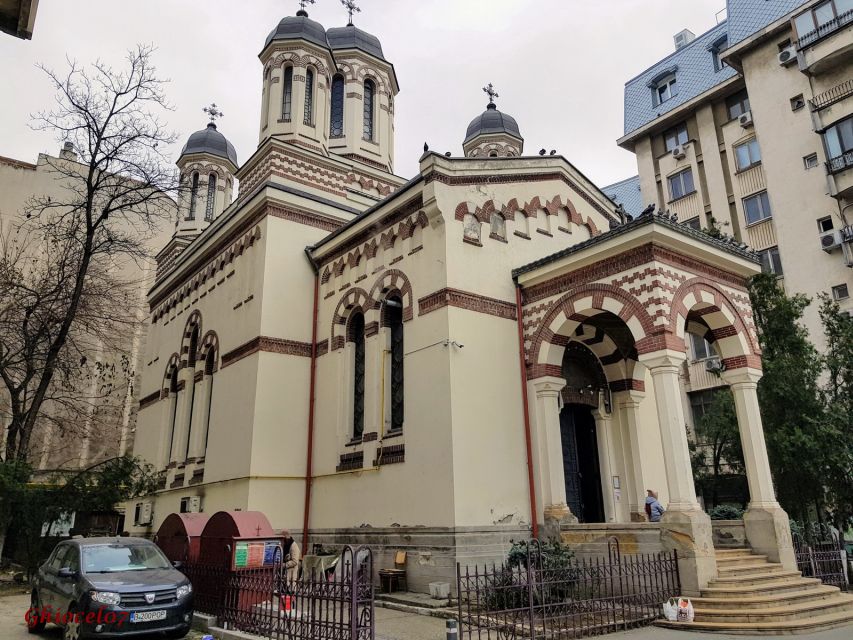
- Six working Orthodox churches: Visit Saint Anton, Saint George Km0, Saint Elijah, the Lady’s Church, Stavropoleos Monastery, and Saint Cyprian.
- A close look at church art: Learn how Byzantine images, icons, frescoes, and church interiors carry religious meaning.
- A route through central Bucharest: Begin near the Old Princely Court and continue along Lipscani Street.
- A small group of no more than 10: This suits visitors who want to ask detailed questions without joining a large crowd.
- Guiding in three languages: Tours are offered in English, Spanish, and Romanian, with Helen named in the strongest personal feedback and Elena mentioned in Spanish-language comments.
- Active places of worship: Wear comfortable shoes and conservative clothing. Short skirts, sleeveless shirts, tight or ripped clothing, pets, and strong fragrances are not allowed.
Why Bucharest’s churches deserve a closer look
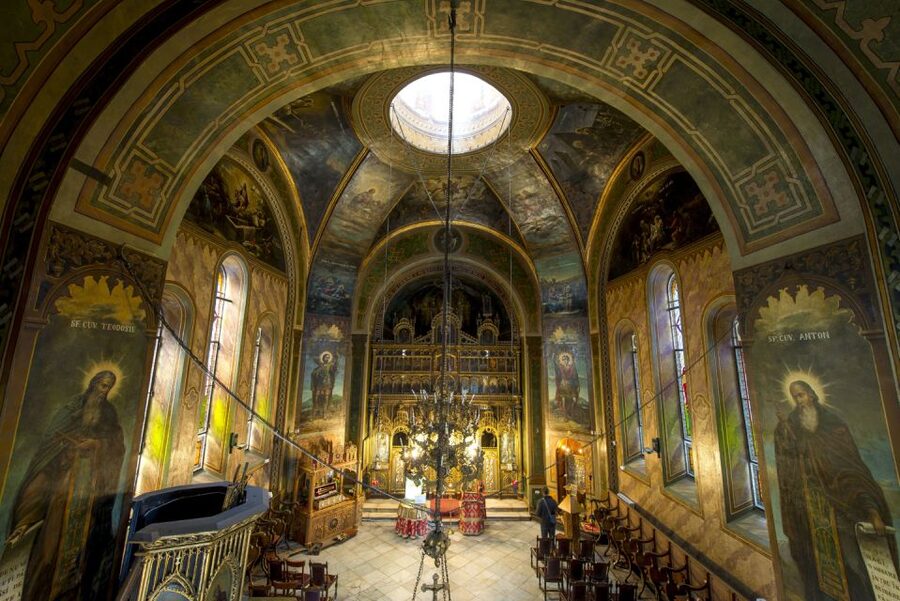
Bucharest can feel young and rough-edged in places, but its Orthodox churches preserve an older city beneath the modern one. This tour begins near the Old Princely Court, placing you close to the Wallachian rulers who shaped the city before modern Romania existed.
I like this starting point because it gives the art a setting. You are not simply moving from one attractive interior to another. You are seeing how faith, royal power, local tradition, and imported Byzantine ideas met in Wallachia.
The churches also reward slow looking. A painted wall may show biblical scenes, saints, donors, or symbolic details that make more sense once your guide explains how Orthodox worship uses images. If you normally glance into a church and move on, the explanations help you understand what you are seeing.
The tour costs $57 per person. That is not a bargain-priced city walk, but the value depends on how much you want to learn. You are paying for a specialist-led route through six places, not simply admission to a single monument. Since no food or drinks are included, part of the price goes toward the guiding and the carefully chosen stops.
Other Bucharest days worth putting on the list:
- Bucharest: Dracula’s Castle, Peles Castle, & Brasov Old Town
★ 4.5 · 17,858 reviews - Bucharest: Dracula Castle, Peles Castle & Brasov Old Town
★ 4.6 · 10,891 reviews - Bucharest: Dracula’s Castle, Peleș Castle & Brașov Day Trip
★ 4.5 · 5,919 reviews
Saint Anton and the Old Princely Court
The first stop is Saint Anton Church, near the Old Princely Court and the meeting point at the Anton icon shop. This location gives the walk an immediate link to Bucharest’s medieval past.
Saint Anton is a useful introduction because the tour begins with a church rather than a broad lecture. You can start noticing the features that return throughout the morning or afternoon: painted surfaces, Orthodox devotional imagery, and the relationship between a church interior and ongoing worship.
The meeting point is specific, but you should still allow time to find the icon shop in front of the church. Comfortable shoes matter here. The entire experience is a walking tour through central Bucharest, and standing on hard streets while looking into several churches can become tiring.
Do not expect a museum-style opening. Since the churches remain active, access and timing can depend on worship, ceremonies, or local church activity. Your guide may need to keep the group quiet or adjust the order of the stops.
Saint George Km0 and a major Romanian painter
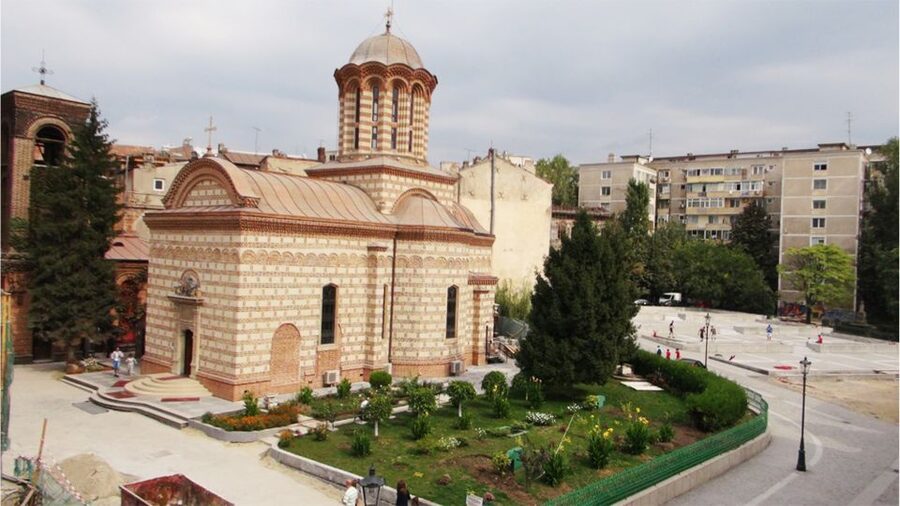
The next stop is Saint George Km0 Church on Lipscani Street. Its central location makes it an easy place to pass without understanding its importance, which is exactly why a guided visit helps.
Here you see a fresco made by one of Romania’s greatest church painters. The tour uses this work to connect the visual language of Orthodox art with Romanian artistic history. You can look beyond the general impression of color and ornament and ask who painted the work, what the images mean, and how the style fits into Romanian church tradition.
The Lipscani setting also gives you a sense of how old religious buildings sit within modern Bucharest. Cafes, bars, shops, and restaurants are close by, but the church interior follows a different rhythm. That contrast is one of the pleasures of this route.
If you enjoy art but do not know much about Orthodox Christianity, this stop should be especially useful. The guide can explain the difference between a decorative mural and an image made for worship, while also placing the work within the broader Byzantine tradition.
Saint Elijah, an Orthodox basilica that is easy to miss
Saint Elijah is one of the tour’s less obvious stops. It is an Orthodox basilica and one of only two in Bucharest, according to the tour information.
That detail gives the visit a clear purpose. You are not only collecting pretty interiors. You are learning how unusual church types and local building traditions fit into Bucharest’s religious story.
Saint Elijah is also described as difficult to find even for locals. This is where a small guided group has a real advantage. You do not need to spend part of your day trying to identify an entrance or wonder if you are standing in front of the right building.
The tradeoff is that the route may feel less polished than a standard monument circuit. Some stops are included because they reward close attention, not because they are famous attractions with large signs. If you prefer only major landmarks, this tour may feel too specialized. If you like places with a strong local character, Saint Elijah is one of the better reasons to book.
Same mountains, a completely different day out:
- Bucharest: Palace of Parliament Tickets and Guide
★ 4.3 · 3,182 reviews - Bucharest: Day Trip to Dracula Castle, Peles Castle & Brașov
★ 4.4 · 3,049 reviews - Bucharest to Dracula Castle, Peles Castle and Brasov Guided Tour
★ 4.5 · 2,933 reviews - Bucharest: Palace of Parliament Tickets and Guided Tour
★ 4.4 · 1,877 reviews
The Lady’s Church and old surviving frescoes
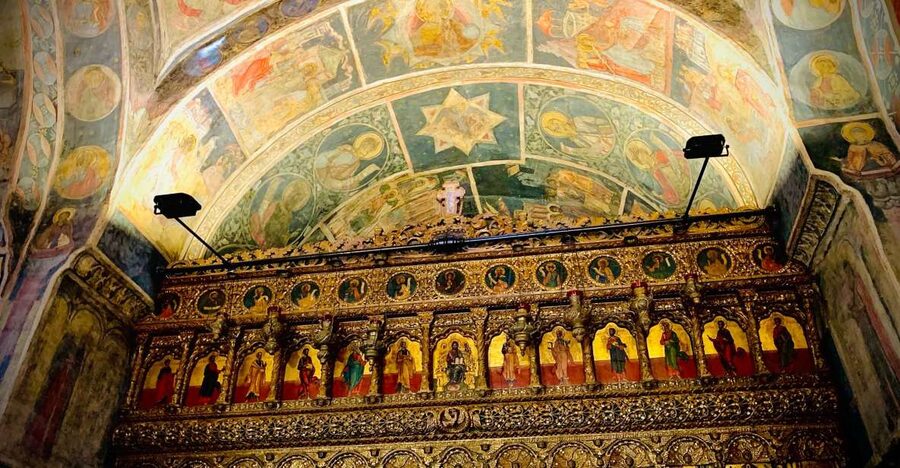
The Lady’s Church brings you closer to some of the oldest preserved original frescoes in Bucharest. For many visitors, this may be the artistic high point of the walk.
Old frescoes can be difficult to read without context. Time, repairs, smoke, and changing layers of paint affect what remains. A guide can point out which areas are original, explain how the images were arranged, and help you see why preservation matters.
I would pay close attention here rather than rushing to take photographs. The value is in noticing age, technique, and survival. The church gives you a direct link to Bucharest before the city’s modern rebuilding changed so much of its appearance.
As with every stop, keep your voice low and your clothing respectful. The Lady’s Church is still a place of worship. You may be sharing the space with people who came to pray, light a candle, attend a service, or take part in a family ceremony.
Stavropoleos Monastery and a change of mood
Stavropoleos Monastery is the best-known name on the route, and it provides a change of scale and mood after the harder-to-find churches. Its eclectic design makes it memorable, but the tour’s focus remains church art and worship rather than a quick photo stop.
I like having Stavropoleos in the middle or later part of the route because you can compare it with what you have already seen. After several older Orthodox interiors, the monastery’s combination of architectural influences becomes easier to place.
This is also the stop where the tour may feel most appealing to first-time Bucharest visitors. It is central, visually distinctive, and close to the city’s busiest old-town streets. Yet it works better when you arrive with some background. The earlier churches give you a vocabulary for looking.
Keep in mind that a famous church is still an active religious site. Crowds, services, or ceremonies may affect how long you can stay inside. The guide’s role is not only to explain the art but also to help the group behave properly in a working place of worship.
Saint Cyprian and the final church listing
Saint Cyprian appears in the included stops and completes the six-church list. The route information also refers to Saint Demetrios as the last stop, describing it as a 19th-century neo-Baroque church.
Because both Saint Cyprian and Saint Demetrios are named in the supplied tour details, I would confirm the exact final stop when booking or at the meeting point. This is a small but useful point. If you have a particular interest in 19th-century design, you will want to know if Saint Demetrios is included on your departure.
Saint Cyprian adds another active Orthodox setting to the walk. Taken with the other churches, it helps show that Bucharest’s religious architecture is not one single style. The route moves between medieval survivals, Byzantine-influenced art, basilica design, eclectic work, and later neo-Baroque architecture.
That variety is the tour’s real strength. You get a sequence of contrasts rather than six versions of the same building.
What the guide adds to the experience
The guide is the difference between a church walk and an art-focused tour. Helen is named directly in the strongest personal feedback, and she is described as flexible, personable, and able to explain Romanian Orthodox art and the Orthodox Church in general. Spanish-language feedback refers to Elena, so the guide name may vary by language or departure.
The guiding style appears to be particularly useful for visitors who want more than dates and building names. You can ask about Byzantine art, Orthodox practice, Romanian religious history, and the role of frescoes in worship.
The tour also appears able to adjust to individual needs. One departure was adapted for a person using crutches and another using a walking stick, with help getting back to the hotel afterward. That does not make the route fully accessible for every mobility level, so you should discuss your needs before booking, but it does show a willingness to adjust the pace where possible.
One warning deserves space. A Catholic participant described the guide as condescending after revealing their faith. That is a serious concern for anyone approaching the tour from another Christian tradition or from a secular point of view. The experience is built around Orthodox religious places, so you should expect a faith-aware presentation, but respectful treatment of different beliefs is important. If this issue matters to you, ask about the guide and tone before reserving.
The human side of visiting active churches
One memorable detail from the tour’s feedback is an unexpected family christening. The group was invited to share sweets and drinks with the family. This is not a promised part of the itinerary, and you should not book expecting it, but it shows the kind of contact that can happen when you visit living churches rather than sealed historic monuments.
That distinction matters. In a museum, you control the pace and the room belongs to the visitor. In an active church, local worship comes first. You may need to wait, stand quietly, or accept that an interior cannot be viewed in full during a service.
Dress accordingly. Wear clothing that covers your shoulders and knees, and avoid tight, ripped, or strongly scented clothing. The restrictions are not decorative rules. They reflect the fact that you are entering places where people pray.
Is $57 a fair price?
At $57, this is a specialist walking tour rather than a basic introduction to Bucharest. The strongest value comes from the number of churches and the access to explanations that would be hard to gather alone, especially for Saint Elijah and the Lady’s Church.
The group limit of 10 also matters. A large group would make small interiors awkward, while a small group lets you ask about a painting or architectural feature before moving on. If the group is not full, the experience may feel close to a private tour. One person had a departure with only the guide, and the visit even included time at an icon shop.
There is no meal, drink, transport, or stated museum admission included. The route is a walking experience, so compare the price with what you want from your day. I think it is fair for visitors who care about Orthodox art and Romanian history. If you only want a quick introduction to the Old Town, spend less on a general orientation walk and visit one church on your own.
Who should book this church art walk?
I would choose this tour if you enjoy religious art, architecture, local history, or smaller sights that do not explain themselves. It is also a good fit if you have already seen Bucharest’s major secular landmarks and want to understand another side of the city.
The tour suits both religious and nonreligious visitors, provided you approach the churches with respect. You do not need to be Orthodox, but you should be comfortable entering active places of worship and hearing the guide explain Orthodox belief and practice.
It may not suit you if you dislike walking, have difficulty standing for extended periods, or want a purely secular art tour. The exact route may also change around services or ceremonies, and the published details should be checked because they name both Saint Cyprian and Saint Demetrios as possible final stops.
The tour is offered in English, Spanish, and Romanian. Bring comfortable shoes, leave pets behind, and skip strong perfume. Food and drinks are not provided, but the central route has cafes, bars, and restaurants if you want a break before or after the walk.
Should you book it?
Book this if you want to see Bucharest’s Orthodox art as part of living religious practice, not as a string of empty historic interiors. Saint George, the Lady’s Church, and the less obvious Saint Elijah give the route real substance, while Stavropoleos adds a famous architectural stop.
I would be more cautious if you want a relaxed sightseeing stroll with little religious explanation, or if you are uncomfortable with the possibility of services changing the timing. Also confirm the final church and ask about the guide’s approach if you have concerns about religious background.
For the right audience, $57 buys a focused look at a part of Bucharest many visitors miss. Wear respectful clothes, bring questions, and expect the churches themselves, not food or entertainment, to be the main event.
FAQ
How long does the Eastern Orthodox Church Art tour last?
The tour lasts 2.5 hours.
What churches are included?
The included churches are Saint Anton Church, Saint George Km0 Church, Saint Elijah, the Lady’s Church, Stavropoleos Monastery, and Saint Cyprian Church. The tour details also mention Saint Demetrios as a final stop, so confirm the exact route before departure.
What languages are available?
The live tour guide is available in English, Spanish, and Romanian.
How large is the group?
The tour is limited to 10 participants.
Where is the meeting point?
Meet in front of the Anton icon shop, near Saint Anton Church and the Old Princely Court.
What should I wear and bring?
Bring comfortable shoes and wear modest clothing. Short skirts, sleeveless shirts, tight clothing, ripped clothing, strong fragrances, and pets are not allowed.
Just added around Bucharest
- Village Museum Bucharest Guided Tour★ 5.0 · 6 reviews
- Bucharest: Dealu Mare Winery Private Trip with Wine Tasting★ 4.9 · 6 reviews
- Winery touring & private wine tasting – one day private tour★ 5.0 · 3 reviews
- Transylvania Tour: Dracula’s Castle, Peles Palace & Brasov★ 5.0 · 19 reviews
- Discover Medieval Transylvania Small Group Tour – 7 days★ 5.0 · 4 reviews
- Bucharest Airport Transfer To Constanta Mamaia★ 5.0 · 3 reviews
- Airport Henri Coanda (Otopeni) to Bucharest – Private Transfer – Driver★ 5.0 · 5 reviews
- Gems of Transilvania: Brasov,Sighisoara,Sibiu,Viscri and more★ 5.0 · 6 reviews
Bucharest Tours, compared.
Dracula’s Castle, Peles Castle, & Brasov Old Town
Read our review →
Dracula Castle, Peles Castle & Brasov Old Town
Read our review →
Dracula’s Castle, Peleș Castle & Brașov Day Trip
Read our review →
Day Trip to Dracula Castle, Peles Castle & Brașov
Read our review →
Bucharest to Dracula Castle, Peles Castle and Brasov Guided Tour
Read our review →