
Reviewed · BRASOV TOURS
Expedition in Fagaras Mountains from Brasov (Private Tour!)
The main attraction here is simple: you spend six days high on the Fagaras crest, crossing Romania’s highest peaks instead of ticking off one short mountain walk. Moldoveanu, at 2,544 meters, is the high point, but the sharp ridges, glacial lakes, and rough sections between peaks make the whole route the real prize.
I like the private format, since your guide can keep the pace suited to your group. I also like the route’s variety: forest paths on the first day, exposed ridges near Moldoveanu and Negoiu, the Transfagarasan views, and quiet camps beside high lakes. The catch is serious: you carry your tent, food, and sleeping bag, then walk five to eight hours a day at altitude.
In This Review
- Key points to know before booking
- What this six-day Fagaras expedition really involves
- Day 1: From Sambata de Sus into the high country
- Day 2: Moldoveanu, Romania’s highest summit
- Day 3: High ridges, memorial history, and Capra Saddle
- Day 4: Vanatoarea lui Buteanu and the Transfagarasan
- Day 5: Negoiu and the Custura Saratii ridge
- Day 6: The long way back to Brasov
- Camping, food, and what you carry
- The guide and the private format
- Who should book this mountain crossing?
- Practical value, safety, and cancellation
- Should you book it?
- FAQ
- How long does the expedition last?
- Is the tour private?
- What is included in the price?
- Do I need to bring food and a sleeping bag?
- What equipment is compulsory?
- When is the best time to go?
Key points to know before booking
- Moldoveanu and Negoiu in one route: Reach Romania’s highest peak and its second-highest peak during the same six-day crossing.
- Five nights of camping: The tent is supplied, but you carry it, along with food, a sleeping bag, and personal gear.
- A private English-speaking guide: A licensed mountain guide leads only your group and can change the route if weather turns bad.
- The toughest section is Custura Saratii: The ridge between Cleopatra Saddle and Serbota includes the hardest marked part of the Fagaras crest, with exposed terrain and cables or chains in tricky places.
- July through October is the best window: Snow, storms, and cold can still affect high ridges, so the route is never completely routine.
- This is an endurance trip, not a casual holiday: You need very good hiking experience, waterproof boots, warm clothing, and confidence on mountain terrain.
What this six-day Fagaras expedition really involves
The Fagaras Mountains form the highest section of the Romanian Carpathians. Eight of Romania’s fourteen peaks above 2,500 meters are here, including Moldoveanu, Negoiu, Vistea Mare, Lespezi, and Vanatoarea lui Buteanu.
The route follows much of the main ridge, usually between 2,000 and 2,500 meters. That matters because you gain long views, but you also spend much of the day above the tree line, where wind and weather can change quickly. You are not simply walking from village to village with a light daypack.
The trip costs $1,155.66 per person. That is a substantial price, but it covers six days, private transport at the start and end, a supplied tent, and a licensed English-speaking mountain guide. Food, drinks, sleeping bags, and personal equipment are extra, so you should calculate the full cost before booking.
I see the price as most reasonable for an experienced hiker who wants a guided crossing and does not want to plan the route, transfers, or mountain logistics alone. It is less attractive if you only want one summit or a comfortable base with day walks.
A few more Brasov trips to weigh up
- Piatra Craiului National Park Private Hiking Tour from Brasov
★ 5.0 · 116 reviews - Brasov Private Tour: Transfagarasan road & Poienari Fortress
★ 5.0 · 71 reviews - Peles Castle, Bran Castle & Rasnov Fort. Private Tour from Brasov
★ 5.0 · 71 reviews
Day 1: From Sambata de Sus into the high country
Pickup begins at 8:00 a.m. in Brasov, followed by a transfer of about one hour to the Sambata de Sus area. There is a practical food stop on the way, which is important because meals are not included and you must carry your provisions for the trek.
The hike starts at Complex Sambata, at about 670 meters. The path follows the Sambata Valley toward the Valea Sambetei Mountain Hut at 1,401 meters, then climbs higher to Fereastra Mare a Sambetei at 2,188 meters.
From that saddle, the route climbs strongly west-southwest over Slanina Peak, at 2,268 meters. You then descend to Fereastra Mica a Sambetei, at 2,191 meters, where you camp.
This first day lasts about six hours. It gives you a clear taste of the trip: a long climb from the lower forest into open mountain country, followed by a high camp rather than a night in a village or hut.
The name Fagaras is linked to fagar, an old word for a large beech forest. Lower parts of the range once had oak forest too. Around Dumbrava Vadului, oak trees still grow among spring daffodils known locally as coprine. You will not see all of that on the ridge crossing, but it helps explain the change from woodland to bare alpine slopes during the first day.
Day 2: Moldoveanu, Romania’s highest summit
Day two is the symbolic center of the expedition. From Fereastra Mica a Sambetei, you climb to Portita Vistei at 2,380 meters, then continue to Vistea Mare Peak at 2,527 meters.
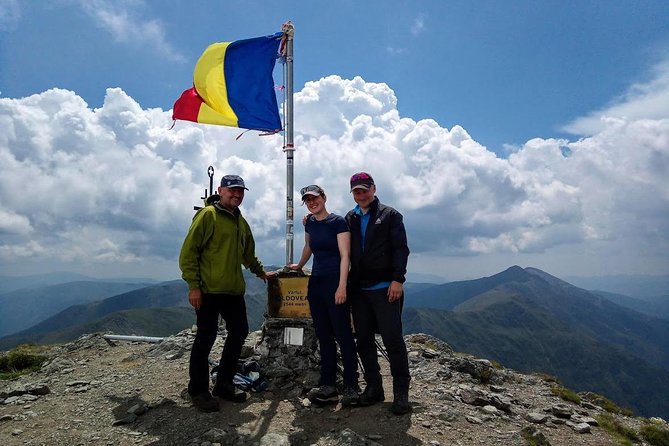
From Vistea Mare, the route reaches Moldoveanu in about 30 minutes along what is described as the highest sharp ridge in the country. Moldoveanu rises to 2,544 meters, the highest point in Romania and the Carpathian chain.
The summit itself is only part of the appeal. The approach gives you a sense of how narrow and exposed high mountain ridges can feel. If you are uneasy with steep drops or need to use your hands on rough ground, this is where you need to stay focused and follow the guide’s instructions.
After Moldoveanu, you return to Vistea Mare and continue toward Podragu Saddle at 2,307 meters. The day ends near Iezerul Podul Giurgiului, a glacial lake at 2,264 meters. The total walking time is about seven hours, with camping again.
The Fagaras range has more than 42 peaks between 2,400 and 2,500 meters. That helps put this day in context. Moldoveanu is the headline summit, but you are moving through a long chain of high points rather than climbing one isolated mountain.
Day 3: High ridges, memorial history, and Capra Saddle
Day three covers about seven hours, starting from Iezerul Podul Giurgiului. The route reaches Mircii Peak at 2,461 meters, then passes the Nerlinger Memorial at 2,287 meters.
The memorial dates from 1934 and recalls Richard Nerlinger and Herta Ruzicka, who died on June 30 of that year. It is a sober reminder that this crest is serious mountain terrain, not simply a scenic walking trail.
The route continues through Fereastra Zmeilor and Fereastra Mica a Portitei Arpasului at 2,175 meters before climbing to Capra Saddle at 2,315 meters. You camp at the end of this section.
This is one of the less famous days, but I consider it important for the rhythm of the trip. You are no longer focused only on reaching a famous summit. The reward is the steady succession of ridges, saddles, rock formations, and high passes.
The main drawback is that the days are long and the camps are basic. You should be ready to arrive tired, prepare food with the guide’s cooking heater, and organize your sleeping gear without expecting hotel-style comfort.
Same mountains, a completely different day out:
- From Brasov: Small-group tour Bran, Rasnov, and Peles Castles
★ 5.0 · 949 reviews - Carpathian Wilderness: A Wildlife Experience from Brașov
★ 5.0 · 398 reviews - From Brasov: Tour of Castles and Surrounding Area
★ 5.0 · 363 reviews - Free walking tour of Brasov in English
★ 4.9 · 302 reviews
Day 4: Vanatoarea lui Buteanu and the Transfagarasan
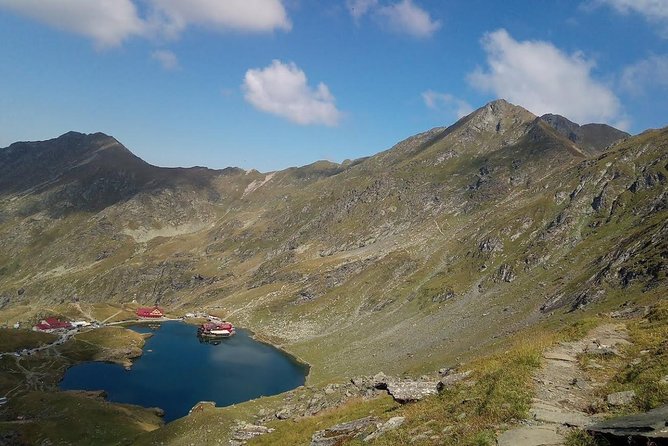
Day four is shorter, at about four hours of main trekking. From Capra Saddle, you cross Laitel Peak at 2,390 meters and descend to Caltun Lake at 2,135 meters, where you camp.
There is also time for a short hike of about one hour to Vanatoarea lui Buteanu, a 2,507-meter summit. This is one of the eight Fagaras peaks above 2,500 meters, and it gives you another worthwhile summit without adding a full hard day to the schedule.
The special feature here is the view toward the Transfagarasan Highway. The road is known by grand nicknames such as the Road to the Sky and the Road to the Clouds. From the mountains, you can appreciate its dramatic route through the high passes and slopes.
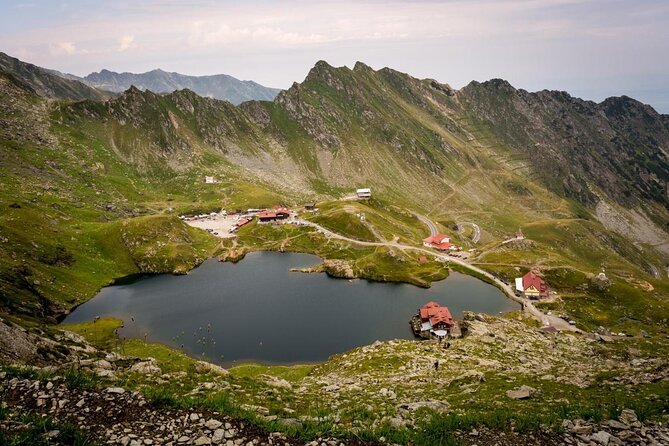
The highway is also part of the practical appeal of the trip. The opening and closing transfers use mountain roads, including the Balea Lake road, so you get a strong contrast between remote foot travel and one of Romania’s best-known road journeys.
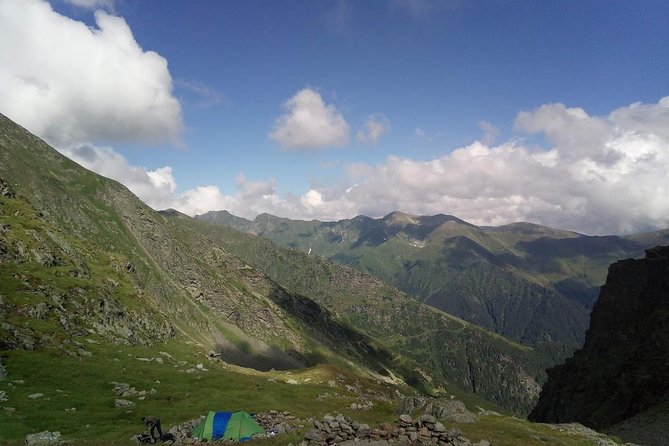
Caltun Lake makes a memorable camp setting, but you should not confuse a scenic location with easy conditions. You still sleep in a tent, and cold, wind, or wet weather can make the night demanding.
Day 5: Negoiu and the Custura Saratii ridge
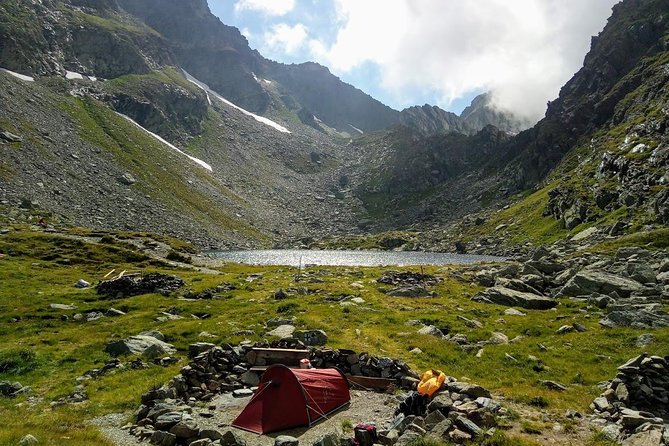
Day five is the hardest and longest day, at about eight hours. From Caltun Lake, the route crosses Strunga Doamnei at 2,342 meters and climbs to Negoiu Peak at about 2,538 meters.
Negoiu is Romania’s second-highest summit. The broad views in all directions are a major reward, but getting there requires a sustained day in high terrain. After the summit, you descend northwest, pass Negoiu Mic at 2,485 meters, and reach Cleopatra Saddle at 2,355 meters.
The most demanding section follows. Between Cleopatra Saddle and Serbota Peak lies Custura Saratii, described as the hardest marked section of the main Fagaras ridge. Exposed sections use chains or cables, and you need a good head for heights, careful footwork, and enough energy late in the day.
This is the point where a private guide has real value. A guide such as Bogdan, who has led this route, can help you judge the terrain and keep the group moving safely through awkward sections. One account of the trip specifically praised his calm handling of exposed ground and his mountain experience.
After Serbota Peak at about 2,331 meters, the route continues over Scara Saddle, Scara Peak, and finally to Avrig Lake at 2,007 meters. You camp there after the longest day of the expedition.
Do not treat the eight-hour estimate as a guarantee. The route may change because of weather, and your group’s pace, breaks, and conditions on the ridge will affect the timing. Your fitness needs to cover not only the walking distance but also the accumulated fatigue from four previous days.
Day 6: The long way back to Brasov
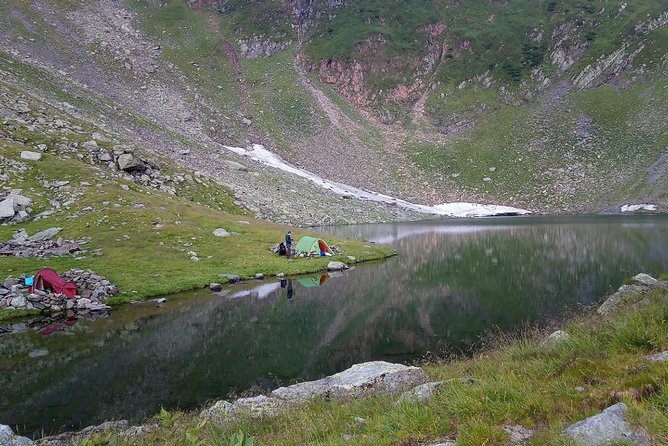
The final day starts at Avrig Lake and passes through Portita Avrigului at 2,178 meters and Suru Saddle at 2,133 meters. From there, you descend to Suru Mountain Hut at 1,450 meters and continue to Sebesu de Sus village.
The walking time is about six hours. A transfer of roughly two hours then returns you to Brasov.
This last stage is more than a simple exit. After several days above 2,000 meters, the descent back toward the village marks a real change in pace and setting. You finish with tired legs, but also with a clear sense that you have crossed a large section of the range rather than visited a single viewpoint.
The return drive through mountain country adds to the experience, though you should allow for a full day rather than planning an important evening commitment in Brasov.
Camping, food, and what you carry
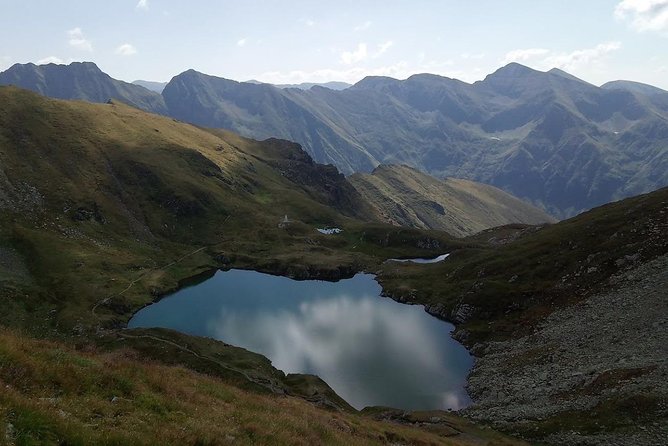
The supplied tent is useful, but it does not mean the trip is fully equipped. You carry the tent, food, and sleeping bag yourself. Food and drinks are not included, and the guide has a heater for cooking.
Fresh water is available from springs along the route, so you do not need to buy bottled water for the entire expedition. You should still follow the guide’s instructions about where to fill up and carry enough for each section.
The compulsory equipment list is not decorative. You need waterproof hiking boots, waterproof clothing, warm clothes, a sleeping bag, gloves, sun cream, sunglasses, and walking poles. The information also specifies a tent and hut among the required equipment, although a tent is included, so confirm exactly what you must bring before departure.
A sleeping bag is not included. That single detail can affect comfort more than many people expect, since high camps can feel cold even during the July to October season.
The guide and the private format
The activity is private, so only your group participates. That is a major advantage on a route where pace and confidence can vary greatly.
The guide is a licensed English-speaking mountain guide. Bogdan is specifically associated with the six-day expedition, while Valentin led a shorter Valea Sambetei hike and was praised for professional guiding, a friendly manner, and arranging a monastery visit when the group finished early. Those names suggest the operator uses local guides who know both the mountains and the surrounding Brasov area, but you should confirm your assigned guide when booking.
The private setup can also make the trip more demanding. You do not have a larger group setting the pace or sharing the load. If your party is slow, the day may stretch. If everyone is fit, you may have more flexibility for short stops and summit attempts.
Who should book this mountain crossing?
I would recommend it to experienced hikers who want a serious multi-day route and are comfortable carrying a loaded pack. You should already have experience with long mountain days, steep climbs, exposed ridges, and camping away from road access.
It suits you if Moldoveanu and Negoiu matter, if you want the Transfagarasan from above, and if you prefer a private guide to independent route planning. It is also a strong choice for a small group that wants a physical challenge with transfers handled at both ends.
I would not choose it for a first mountain trip, a relaxed summer break, or anyone who dislikes carrying gear. The six-day length, altitude, weather risk, and Custura Saratii section make this a poor match for casual walkers.
The best period is July through October. Even then, conditions can change, and the route may be altered. The operator also requires strong physical fitness and may not proceed if you arrive without the compulsory equipment.
Practical value, safety, and cancellation
The strongest value comes from combining a difficult route with a private licensed guide, tent, and transport from Brasov. You are paying for mountain judgment and logistics as much as for scenery.
The experience has a five-star rating from three published reviews, including praise for safe transport, scenic mountain roads, serious hiking, and guides who inspired confidence on exposed sections. That is encouraging, but the small number of ratings means you should judge the trip mainly by its clear demands, not by its score.
Bring your own mask, and note that hand sanitizer is provided and vehicles are cleaned after tours. Cancellation terms are strict close to departure: cancel at least six full days before the start for a full refund, two to six days before for a 50 percent refund, and less than two full days before for no refund. All cut-off times use local time.
Should you book it?
Book this expedition if you want Romania’s highest mountains in one sustained crossing and you have the fitness, equipment, and mountain experience to carry it through. The private guide, strong route, and end-to-end transfers make the high price easier to justify for the right person.
Skip it if you want comfort, short walks, or a flexible holiday. For a gentler introduction, the four-hour Valea Sambetei hike led by Valentin is a better starting point. For a serious hiker ready for six days of ridges, lakes, camps, and demanding summits, this Fagaras route offers a genuinely memorable challenge.
FAQ
How long does the expedition last?
The experience lasts approximately six days, with walking days of about four to eight hours and transfers at the beginning and end.
Is the tour private?
Yes. Only your group participates in this private tour or activity.
What is included in the price?
The price includes a tent, transfers on day one and day six, and a licensed English-speaking mountain guide.
Do I need to bring food and a sleeping bag?
Yes. Food, drinks, and a sleeping bag are not included. You must carry your food, tent, and sleeping bag during the trek.
What equipment is compulsory?
You need waterproof hiking boots and clothing, warm clothes, a sleeping bag, gloves, sun cream, sunglasses, and walking poles. The operator states that the hike cannot go ahead without the required equipment.
When is the best time to go?
The optimal period is July through October. The route can still change because of weather conditions, and you need very good hiking experience and endurance.
Just added around Brasov
- Transfagarasan Highway and Bran Castle Day Trip From Brasov★ 5.0 · 13 reviews
- Brasov Old Town Guided Tour With Electric Scooters★ 5.0 · 10 reviews
- Tour of the 3 Castles: Bran, Rasnov and Peles in Spanish (native Spanish guide).★ 5.0 · 17 reviews
- Transfagarasan Highroad Tour from Brasov (warm season)★ 4.5 · 19 reviews
- Transfagarasan Highway and Balea Lake E-Bike Tour★ 4.5 · 19 reviews
- Bran Castle, Bear Sanctuary, and Rasnov Fortress Half Day Tour★ 5.0 · 16 reviews
- One day tour Transfagarasan road , Balea waterfall, Balea lake★ 5.0 · 3 reviews
- Small-group day trip to the unique volcanic lake in Eastern Europe★ 5.0 · 4 reviews
Brasov Tours, compared.
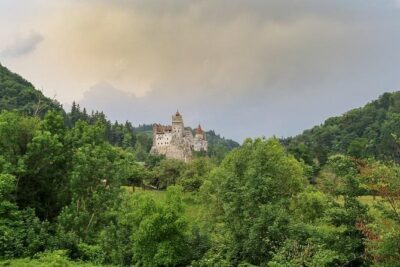
Small-group tour Bran, Rasnov, and Peles Castles
Read our review →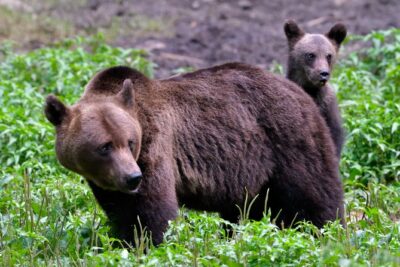
Carpathian Wilderness: A Wildlife Experience from Brașov
Read our review →
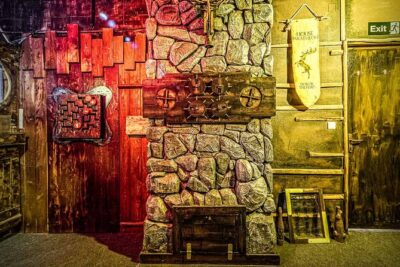
Save King’s Landing – In search of Wildfire | Escape Room Brasov
Read our review →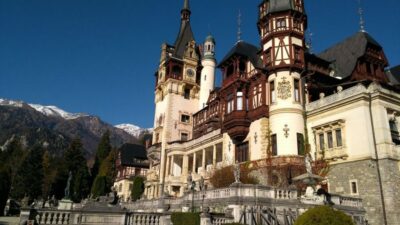
Peles Castle, Bran Castle & Rasnov Fortress Day Tour
Read our review →
Small Group Tour to Viscri Church Sighisoara Town Rupea Fortress
Read our review →
Bear Sanctuary, Dracula Castle, and Râşnov Fortress
Read our review →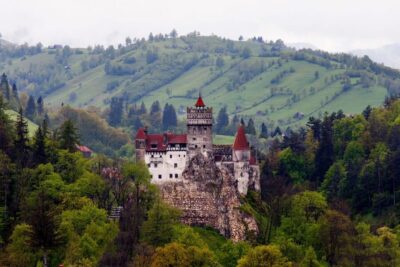
Browse the lists this tour appears in