Reviewed · GUIDED
Explore Bucharest Step by Step With A Local Guide
Bucharest makes the most sense on foot, where a speech that helped end communism, a candlelit avenue, an Orthodox monastery, and an enormous government building all fit into one morning. This small-group walk links the city’s major landmarks from Revolution Square to Constitution Square, giving you a clear first look at central Bucharest.
I like the low price, $16.87 per person, and the cap of 10 people. I also like the local touch: guides Doina and Dorin are described as warm, energetic, and willing to stay longer to answer questions. The main drawback is simple: this is a walking tour with no included interior admissions, and the route can take closer to four hours when the guide adds extra sights.
In This Review
- Key points to know before you book
- Revolution Square begins the Bucharest story
- Calea Victoriei shows old Bucharest at street level
- The University of Bucharest adds a civic landmark
- Macca Villacrosse Passage gives you a quick Old Town turn
- Stavropoleos Monastery is the quietest pause
- Hanul cu Tei preserves an old inn plan
- Manuc’s Inn links trade, lodging, and city life
- Constitution Square ends beside the Palace of Parliament
- What the $16.87 price really buys you
- A small group makes the history easier to follow
- The guide can add local help beyond the monuments
- Who will get the most from this walk
- Timing, weather, and the right expectations
- Should you book Explore Bucharest Step by Step?
- FAQ
- Where does the tour begin?
- Where does the tour end?
- What time does the tour start?
- How long does the experience last?
- Is the tour offered in English?
- What happens if the weather is poor?
Key points to know before you book
- A route through several eras: Follow Bucharest from the 1989 uprising to its 18th-century churches, 19th-century inns, and communist-era civic buildings.
- A small group of up to 10: The limited size should make it easier to ask questions and hear the guide in busy parts of the center.
- Doina and Dorin may lead the walk: Both are praised for clear explanations, friendly service, and giving more time than the scheduled three hours.
- No admission fees are listed: The value comes from the walking route and local explanation, not entry into paid attractions.
- A useful start for a first visit: The 10:00 a.m. departure gives you a city orientation before exploring Bucharest on your own.
- Free cancellation up to 24 hours ahead: Poor weather can also lead to a new date or full refund.
Revolution Square begins the Bucharest story
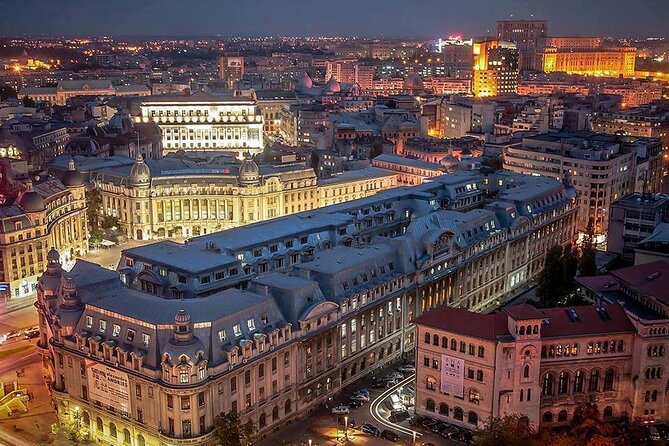
The meeting point is Revolution Square, Piața Revoluției, at 10:00 a.m. This is the right place to begin because the square carries one of the city’s most important modern stories.
On December 21, 1989, Nicolae Ceaușescu gave his last speech here. What began as a public address turned into a popular revolt, helping bring Romania’s communist regime to an end. Your guide can give this event a human scale that a quick photograph cannot. You are not simply looking at an open square. You are looking at a place where public confidence in the old government broke apart.
The planned time here is about 20 minutes. That is enough for an introduction and some questions, though it is not a long political history lesson. If 20th-century Romania is your main interest, you may want to ask for more detail early in the walk.
Because the tour begins outdoors, wear shoes that can handle several hours on pavement. The activity requires good weather, so keep the forecast in mind when choosing your date.
A few more Bucharest trips to weigh up
- Bucharest: Palace of Parliament Tickets and Guide
★ 4.3 · 3,182 reviews - Bucharest to Dracula Castle, Peles Castle and Brasov Guided Tour
★ 4.5 · 2,933 reviews - Bucharest: Palace of Parliament Tickets and Guided Tour
★ 4.4 · 1,877 reviews
Calea Victoriei shows old Bucharest at street level
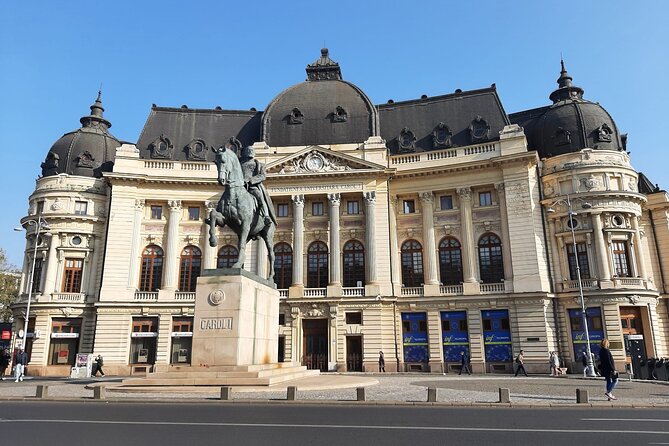
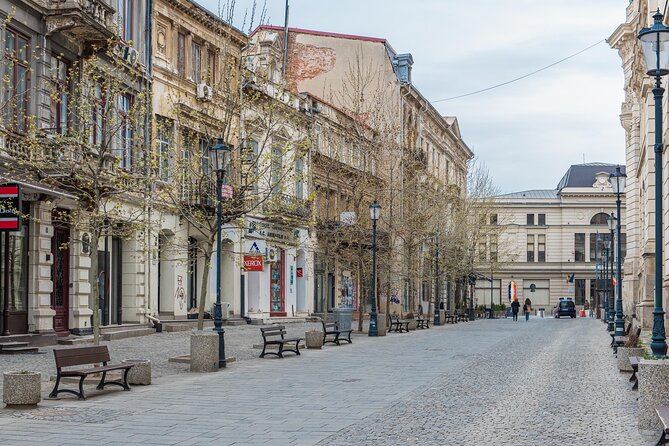
From Revolution Square, the walk continues along Calea Victoriei, or Victoria Avenue. This is one of Bucharest’s oldest roads and remains one of its key avenues.
One detail makes the avenue especially memorable: it was the first street in Bucharest lit by candles at night, beginning in July 1814. That small fact hints at the city’s long shift from a regional settlement to a modern European capital.
You have about 20 minutes here. The guide’s job is not just to point out a grand street, but to help you read the buildings and public spaces around it. Ask about the changes visible along the avenue, especially if you want to understand how Bucharest moved from older architecture toward the modern city you see now.
This section also helps with orientation. After walking Calea Victoriei, you will have a better sense of how the central districts connect. It is a useful first morning route because it moves through major sights without asking you to spend time figuring out the map.
The University of Bucharest adds a civic landmark
The University of Bucharest is a short stop of about 10 minutes. Its building is described as one of the city’s emblematic structures, so the visit is mainly about the exterior and its role in Bucharest’s central streetscape.
Ten minutes may feel brief, but that is appropriate for a stop that does not include a listed interior visit. You can take photographs, hear the background, and continue without using up too much time.
I appreciate stops like this because they keep the walk moving. A city tour can become tiring when every building gets a long lecture. Here, the university works as a compact architectural and civic marker between the grand avenue and the Old Town.
Macca Villacrosse Passage gives you a quick Old Town turn
The Macca Villacrosse Passage is one of the more distinctive stops. It is described as a small Vittorio Emanuele-style gallery in Bucharest’s Old Town, offering a covered passage with a different feel from the surrounding streets.
The planned visit lasts about 10 minutes. That is enough to walk through, look up, and take in the design. It is also a good place to ask your guide how this passage fits into the older commercial center.
Do not expect a major museum visit here. The appeal is the change of pace and the compact setting. After the open space of Revolution Square and the broad line of Calea Victoriei, a narrow historic passage makes Bucharest feel more layered.
Same mountains, a completely different day out:
- Bucharest: Dracula’s Castle, Peles Castle, & Brasov Old Town
★ 4.5 · 17,858 reviews - Bucharest: Dracula Castle, Peles Castle & Brasov Old Town
★ 4.6 · 10,891 reviews - Bucharest: Dracula’s Castle, Peleș Castle & Brașov Day Trip
★ 4.5 · 5,919 reviews - Bucharest: Day Trip to Dracula Castle, Peles Castle & Brașov
★ 4.4 · 3,049 reviews
Stavropoleos Monastery is the quietest pause
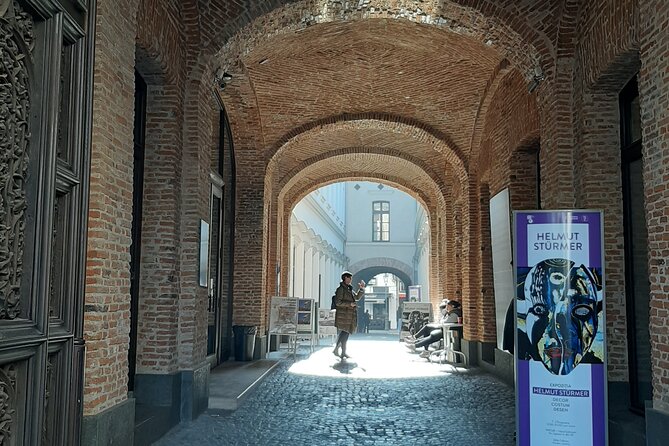
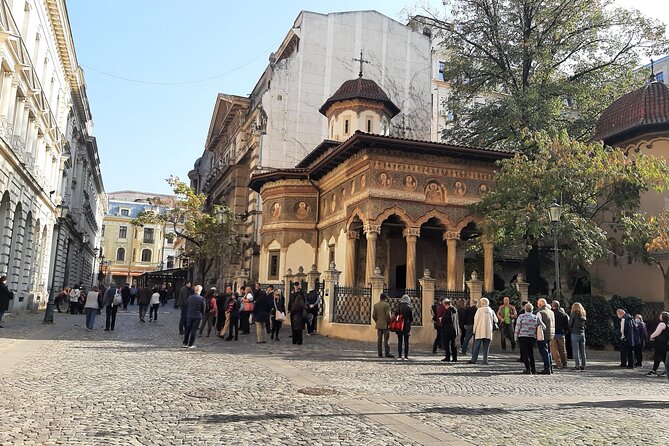
Stavropoleos Church, also called Stavropoleos Monastery, is an Eastern Orthodox monastery built in the 18th century by a Greek monk. The stop lasts around 15 minutes.
This is one of the most worthwhile pauses on the route for anyone interested in religious architecture. The monastery gives you a chance to see a different side of Bucharest, away from political squares and large civic buildings. Its age also helps connect the modern city to earlier periods of local life.
The tour information lists free admission, but it does not promise a private visit or a long interior tour. Be respectful if services or quiet prayer are taking place. Your guide can provide the setting and background, while the short stop lets you appreciate the church without turning the walk into a specialist architecture class.
If you enjoy smaller historic places more than monumental buildings, this may be one of your favorite stops. It is a useful reminder that Bucharest’s story is not only about Ceaușescu and the Palace of Parliament.
Hanul cu Tei preserves an old inn plan
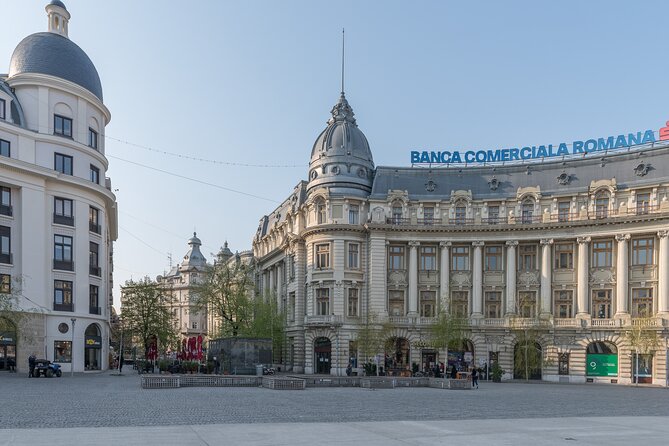
Hanul cu Tei is presented as the only historic inn in Bucharest to have kept its original shape. The visit takes about 10 minutes.
The phrase original shape matters. An old inn is not simply a pretty building. It points to the way commerce and lodging once worked in the city, when courtyards and connected buildings formed important meeting places for merchants and local business.
You will not spend long here, so listen for the details that explain how the inn functioned. This is another exterior-focused stop, with no separate admission charge listed. The value comes from seeing the structure in its urban setting and learning why it matters.
For me, this is the kind of stop that improves a walking tour. It may not be the most famous address in Bucharest, but it gives context to the Old Town beyond restaurants and nightlife.
Manuc’s Inn links trade, lodging, and city life
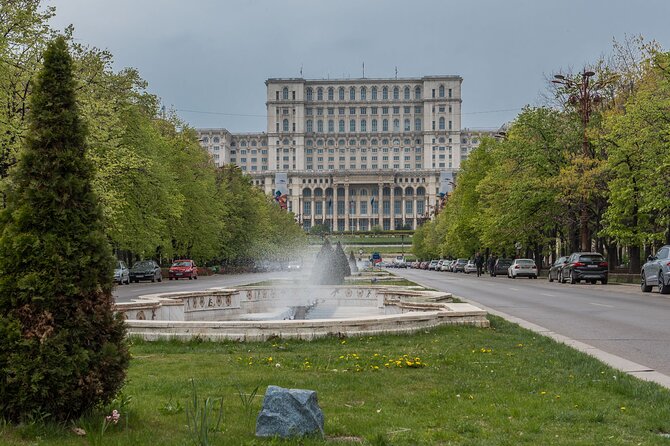
Manuc’s Inn, or Hanul lui Manuc, receives another 10-minute visit. It is described as the oldest operating hotel building and as the most important commercial complex in Bucharest during the middle of the 19th century.
That makes it a strong companion to Hanul cu Tei. Together, the two inns help you picture Bucharest as a commercial center, not just a capital filled with government offices. Manuc’s Inn also gives you a chance to compare two historic lodging and trading spaces within the same central route.
Again, the listed experience does not include a paid interior entry. You are paying for the guide’s explanation and the chance to see these places efficiently. If you want to return later for a longer look, the morning walk will help you identify where they are.
This stop is especially useful if you like practical urban history. The story is about how people moved, traded, stayed overnight, and met one another, not only about kings and official monuments.
Constitution Square ends beside the Palace of Parliament
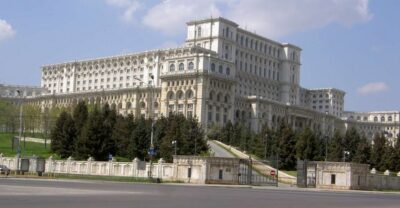
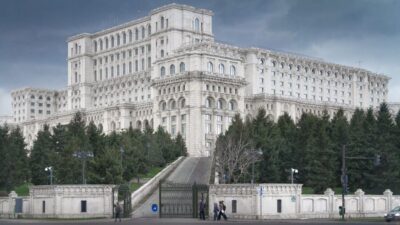
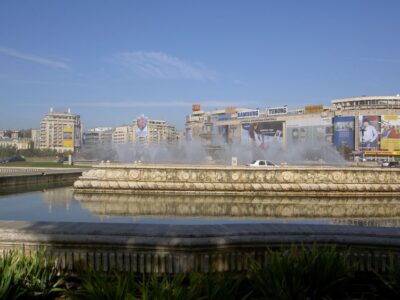
The final stop is Constitution Square, Piața Constituției, after roughly 15 minutes there. The square faces the Palace of Parliament, described as the second-biggest administrative building in the world.
The scale changes sharply here. Earlier stops focus on passages, churches, avenues, and inns. Constitution Square opens the view toward one of Bucharest’s most imposing communist-era projects. The contrast gives the whole route a satisfying shape, moving from the 1989 revolt to the physical legacy of the regime that revolt helped end.
The tour ends here rather than returning to Revolution Square. That is helpful if you plan to continue toward the Palace of Parliament or explore another part of central Bucharest. It also means you should plan your next activity from Constitution Square, not from the starting point.
The listed stop lasts 15 minutes. You will have time to take in the building and hear its basic context, but a full Palace of Parliament visit is not part of this walking experience. If entering the building is important to you, treat this tour as an introduction and make separate plans.
What the $16.87 price really buys you
At $16.87 per person, this is inexpensive for a three-hour guided walk, especially with a maximum of 10 people. You are not paying for transport, meals, or ticketed attractions. You are paying for a route that connects eight major points and for someone to explain what you are seeing.
That distinction matters. If you want a private car, museum entry, or a polished sightseeing package, this is not that kind of activity. If you want a compact introduction to the central city, the price is strong.
The value improves when the guide gives extra time. Doina is described as friendly, energetic, helpful, and willing to continue beyond the scheduled end. Dorin is also described as eager to show as much as possible. One account describes a four-hour walk with continuous explanations of churches, buildings, and attractions.
You should not assume every departure will last four hours. The official duration is about three hours. Still, the guide’s willingness to answer questions and add useful sights can make this feel like more than a fixed route.
A small group makes the history easier to follow
The group limit is 10 people. That is a practical middle ground. You get the social ease of a shared tour without the crowd of a large coach group.
A small group also matters in city streets. At Stavropoleos Monastery or in Macca Villacrosse Passage, the guide can keep the group together more easily. You should also have a better chance of asking about a building or event that catches your attention.
The experience is offered in English and comes with a mobile ticket. It begins near public transportation, which makes the central meeting point practical. Most people can participate, and one family specifically managed the walk with a small child in a stroller.
That does not mean every pavement section will be effortless for every stroller or mobility aid. The route is a city walk, and the supplied details do not promise step-free access. If you have specific mobility needs, ask the provider before booking.
The guide can add local help beyond the monuments
The strongest part of this experience is likely to be the person leading it. Doina is praised for answering questions, helping with practical needs, and knowing local shop and restaurant owners. That kind of local connection can matter more than another paragraph of dates and names.
One useful example is restroom help. The guide was able to direct a family to a suitable place, which is the sort of small service that can save time and stress during a long morning walk.
You also get a guide who can respond to your interests. Ask about the communist period at Revolution Square, older trade at the inns, or the relationship between the Palace of Parliament and Constitution Square. The guide’s explanations are where the tour can move beyond a checklist of landmarks.
The feedback gives particular weight to enthusiasm and clear historical explanation. That is good news if you want a lively introduction. It also means you should be ready for plenty of talking. If you prefer to explore in silence with an audio guide, this may feel more guided than you want.
Who will get the most from this walk
I would choose this tour early in a Bucharest stay. The route covers enough ground to give you a mental map, while the end point leaves you positioned near a major sight and other central areas.
It suits you best if:
- You are visiting Bucharest for the first time.
- You want the main central landmarks explained in one morning.
- You enjoy political, religious, architectural, and commercial history together.
- You prefer a small group to a large sightseeing crowd.
- You want a low-cost introduction before deciding what deserves a longer visit.
- You appreciate a guide who can answer practical questions as well as historical ones.
It may suit you less if you want extensive time inside buildings. The listed stops are brief, and no paid entry is included. You should also think twice if hot, rainy, or uncertain weather would make several hours outdoors unpleasant.
Timing, weather, and the right expectations
The start time is 10:00 a.m., and the planned duration is about three hours. The eight stops range from 10 to 20 minutes, with walking between them. That creates a steady rhythm rather than long periods in one place.
Book with weather in mind. The experience requires good conditions, and a cancellation for poor weather leads to a different date or a full refund. You can also cancel for a full refund if you do so at least 24 hours before the start time. Changes or cancellations inside that window are not accepted for a refund.
Since the tour is booked an average of 18 days ahead, planning early may help if your schedule is tight. The group is small, and popular morning slots may not remain open close to your visit.
Bring a phone with the mobile ticket available, comfortable shoes, and enough water for a walk that may run longer than the three-hour estimate. Those are simple preparations, but they make the experience easier.
Should you book Explore Bucharest Step by Step?
Yes, if you want a friendly, affordable introduction to central Bucharest with a strong mix of modern political history and older city life. The route is especially useful because it does not isolate the Palace of Parliament from the rest of Bucharest. It connects that huge communist-era project with Revolution Square, historic streets, Orthodox architecture, and old commercial inns.
The $16.87 price is hard to fault for a small-group walk, provided you understand what is included. You get outdoor sightseeing and a local English-speaking guide, not a ticketed tour of the Palace of Parliament or a series of long interior visits.
Book it early in your stay, ask questions as you go, and allow extra time at the end in case the guide extends the walk. Choose it for context, orientation, and personal attention. Skip it only if you need a fully indoor activity, guaranteed short timing, or extensive access inside Bucharest’s buildings.
FAQ
Where does the tour begin?
It begins at Revolution Square, Piața Revoluției, in Bucharest.
Where does the tour end?
It ends at Constitution Square, Piața Constituției, facing the Palace of Parliament.
What time does the tour start?
The scheduled start time is 10:00 a.m.
How long does the experience last?
The tour lasts approximately three hours, although guides may spend extra time with the group.
Is the tour offered in English?
Yes. English is the listed tour language.
What happens if the weather is poor?
The experience requires good weather. If it is canceled because of poor weather, you will be offered another date or a full refund.
Just added around Bucharest
- Village Museum Bucharest Guided Tour★ 5.0 · 6 reviews
- Bucharest: Dealu Mare Winery Private Trip with Wine Tasting★ 4.9 · 6 reviews
- Winery touring & private wine tasting – one day private tour★ 5.0 · 3 reviews
- Transylvania Tour: Dracula’s Castle, Peles Palace & Brasov★ 5.0 · 19 reviews
- Discover Medieval Transylvania Small Group Tour – 7 days★ 5.0 · 4 reviews
- Bucharest Airport Transfer To Constanta Mamaia★ 5.0 · 3 reviews
- Airport Henri Coanda (Otopeni) to Bucharest – Private Transfer – Driver★ 5.0 · 5 reviews
- Gems of Transilvania: Brasov,Sighisoara,Sibiu,Viscri and more★ 5.0 · 6 reviews
Guided, compared.
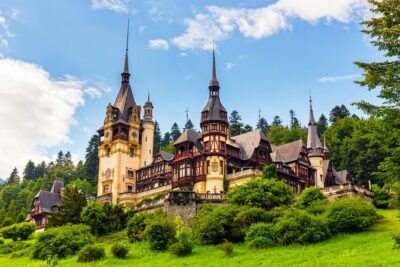
Bucharest to Dracula Castle, Peles Castle and Brasov Guided Tour
Read our review →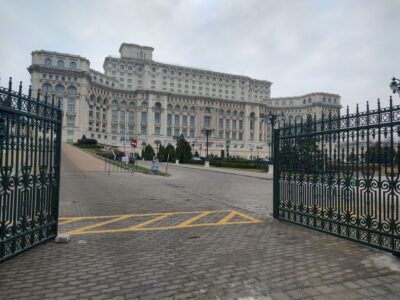
Dracula Castle, Peles Castle & Brasov Guided Tour
Read our review →