
Reviewed · CRUISES & BOAT TOURS
Orsova: Entire Area Boat Tours with Audio Guide
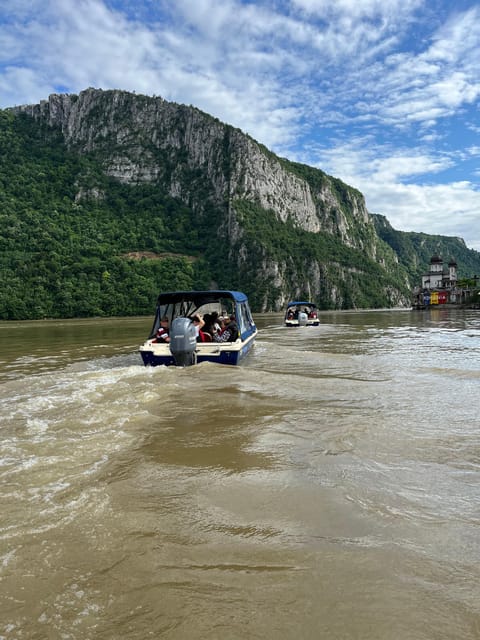
The most striking part of this Orșova boat trip is the way the Danube squeezes between steep mountain walls at the Cauldrons, then opens onto layers of Roman, medieval, and modern history. Decebalus Rock and the ancient Tabula Traiana give the route its headline sights, but the caves and vanished island add much-needed variety. I especially like the photo stops and the small private-group format, which makes a 140-minute cruise feel more personal than a large sightseeing boat. The main consideration is that the visit inside Veterani Cave costs extra and is led by another guide, not the boat company.
I also like the extra downstream section toward the Iron Gates and the former site of Ada-Kaleh. The island itself lies about 30 meters underwater, so you are seeing its story rather than its buildings. The boat has a sunroof, life jackets, and room for 14 people, but the booking price is $392 for up to six people, so it makes the best financial sense when shared by a full group.
In This Review
- Six things to know before you book
- Orșova and the start at Cerna Bay
- Trajan’s Plaque and the Roman frontier
- Decebalus Rock and the big photo moment
- Mraconia Monastery beside the water
- Veterani Cave and the extra-cost visit
- Ponicova Cave, the river’s unusual passage
- Széchenyi Plate and the work behind the river route
- Iron Gates and the route downstream
- Ada-Kaleh, an island beneath the Danube
- Comfort, group size, and the $392 price
- Who will enjoy this cruise most
- Should you book the Orșova boat tour?
- FAQ
- Where does the boat tour start?
- How long does the tour last?
- How much does the tour cost?
- What landmarks will I see?
- Is the tour private?
- Is an audio guide included?
- What language does the host speak?
- Does the price include the Veterani Cave visit?
- Are food and drinks included?
- What should I bring?
Six things to know before you book
- The Cauldrons are the scenic heart of the cruise: Expect mountain walls, narrow river passages, and changing views as the boat moves from Orșova toward the gorge.
- Decebalus Rock is a major photo stop: The enormous modern carving of the Dacian king is described as Europe’s tallest rock sculpture and the world’s third-largest rock monument.
- You get more than one famous sight: Tabula Traiana, Mraconia Monastery, Veterani Cave, Ponicova Cave, Széchenyi Plate, Iron Gates, and Ada-Kaleh all feature along the route.
- Veterani Cave requires extra planning: Admission costs about $2, and the cave visit lasts around 20 minutes if security conditions allow the boat to use its pontoon.
- The group size can be intimate: The boat carries 14 people, while the advertised booking is private for groups of up to six.
- The audio guide fills in the gaps: English, Hungarian, Spanish, and German are available, while the host or greeter speaks English and Romanian.
Orșova and the start at Cerna Bay
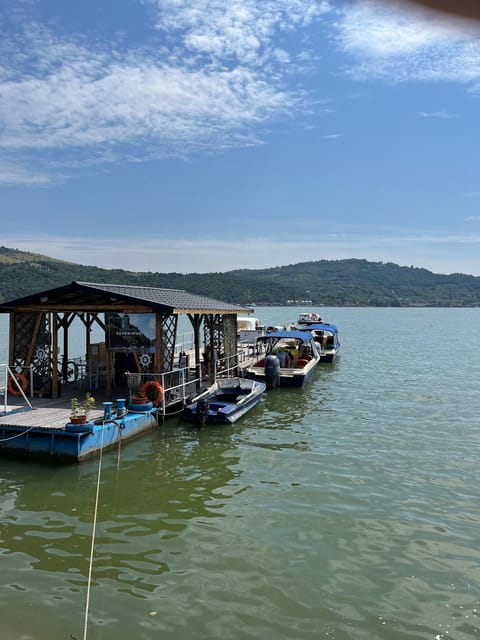
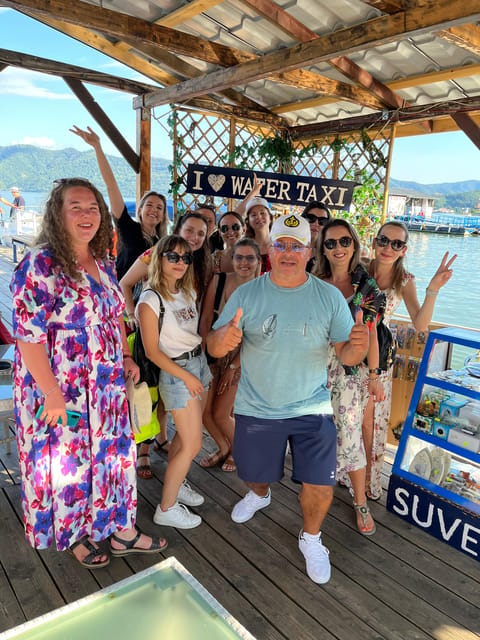
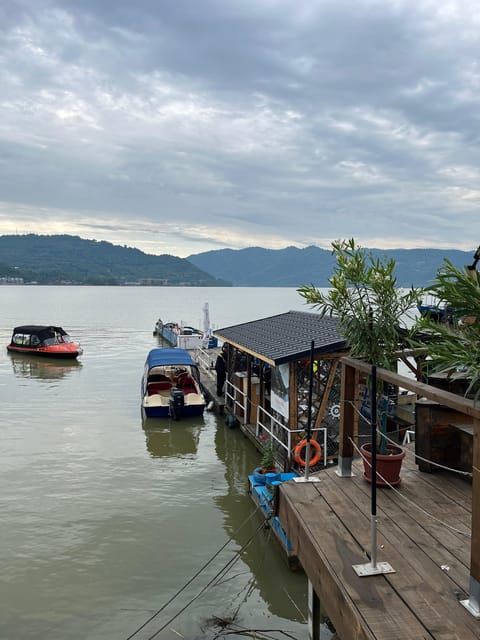
Your meeting point is the WT pier, a wooden platform beside the shore walking path. Look for the black-roofed pontoon and two banners with the company logo. It is close to Hotel Apolodor, which makes the departure point fairly easy to identify once you reach the waterfront.
Orșova’s present-day waterfront owes much to the Iron Gates I Dam, completed in the early 1970s. The dam changed the river and created Cerna Bay, giving the city a calm starting point for boat trips into the Danube gorge. You begin on this quieter water before the route turns toward the more dramatic rock walls.
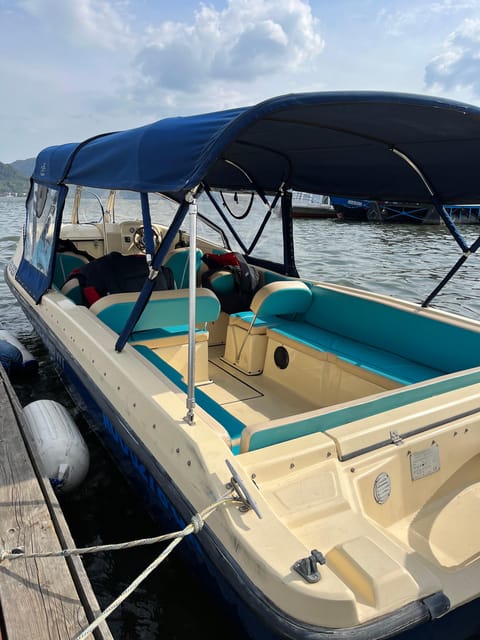
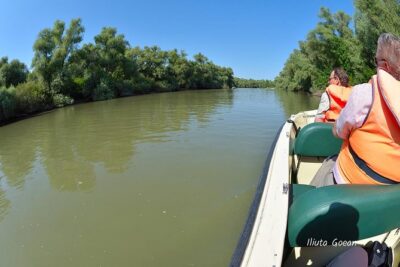
The boat has a sunroof, useful on bright days, and an engine designed for a smooth ride. Life jackets are provided for everyone. Bring sunglasses, sunscreen, comfortable clothing, and shoes with a secure sole. The operator also suggests carrying headphones and cash. Food and drinks are not included, so plan ahead rather than expecting refreshments on board.
The cruise lasts 140 minutes, or about two hours and 20 minutes. That is enough time for sightseeing and photo stops without turning the day into an all-day expedition. Still, you should keep your schedule flexible. The cave visit and the additional downstream section can affect how the timing feels.
A few more Romania trips to weigh up
- Sibiu Old Town Exploration Game and Self-Guided Tour
★ 4.5 · 82 reviews - Sighisoara Fortress Quest: Exploration Game and Tour
★ 4.5 · 33 reviews - King Matia Secret Treasure Exploration Game in Cluj-Napoca
★ 4.5 · 30 reviews
Trajan’s Plaque and the Roman frontier
One of the first historical stops is Trajan’s Plaque, also known as Tabula Traiana. This Roman inscription has watched over the Danube for more than 2,000 years. It commemorates the road built under Emperor Trajan during Rome’s campaigns in the region.
Seeing it from the river gives you useful context. The Danube was not just a pretty waterway. It formed a major border and transport route for the Roman Empire, and the cliffs made movement along this section difficult. The boat pauses for photographs and narration, allowing you to focus on the carved stone rather than trying to catch it as you pass.
The audio guide is especially useful here because the plaque can be hard to read from the water. The commentary is available in English, Hungarian, Spanish, and German. The host or greeter communicates in English and Romanian, so you should be comfortable using the recorded narration for much of the historical detail.
Decebalus Rock and the big photo moment
Decebalus Rock is the visual high point for many people. Carved into a cliff above the Danube, the face honors Decebalus, the last king of Dacia. The sculpture was completed in the modern era, but its subject connects directly to the Roman story introduced at Trajan’s Plaque.
The scale is hard to judge until you see the boat below it. The monument is promoted as Europe’s tallest rock sculpture and the world’s third-largest rock monument. Even if you are more interested in scenery than ancient politics, this is the kind of sight that earns a long look.
The boat pauses here for photographs and sightseeing. Keep your camera ready before the stop, since the best angle may appear as the boat approaches. A sunny day will bring out the contrast between the pale carving, dark rock, and river, but the open-air setting also means glare can be strong. Sunglasses are not just a comfort item.
Mraconia Monastery beside the water
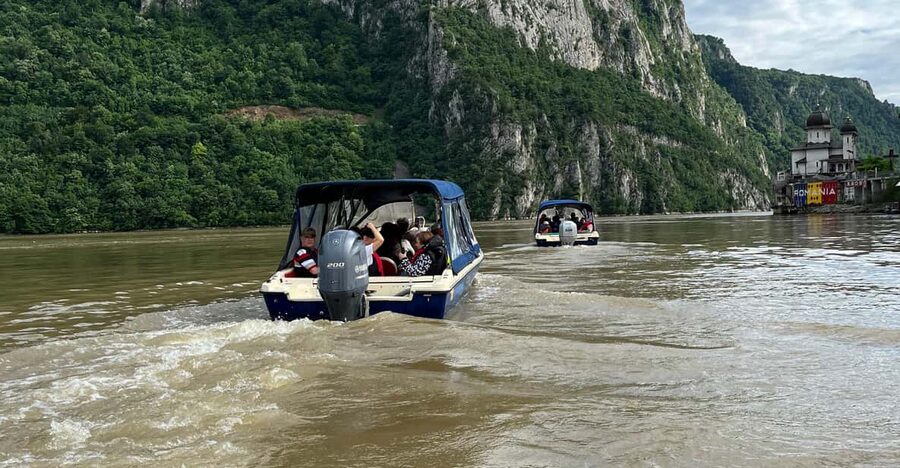
Mraconia Monastery brings a quieter change of mood. Its location beside the Danube makes it one of the most memorable views on the route, with the building framed by water and mountain slopes.
This stop is mainly for sightseeing, photographs, and the audio guide rather than a long visit on land. That distinction matters. You should think of the monastery as part of a moving river portrait, not as a full monastery tour with extended interior access.
I like this section because it gives your eyes a break from the larger rock monuments. The tour moves between nature, engineering, military history, and religious heritage instead of repeating the same type of view. If you enjoy taking photographs, the monastery is one of the places where the setting matters as much as the building.
Same mountains, a completely different day out:
- Bucharest: Dracula’s Castle, Peles Castle, & Brasov Old Town
★ 4.5 · 17,858 reviews - Bucharest: Dracula Castle, Peles Castle & Brasov Old Town
★ 4.6 · 10,891 reviews - Bucharest: Dracula’s Castle, Peleș Castle & Brașov Day Trip
★ 4.5 · 5,919 reviews - Bucharest: Palace of Parliament Tickets and Guide
★ 4.3 · 3,182 reviews
Veterani Cave and the extra-cost visit
Veterani Cave has a more practical and military past. It was used as a strategic hideout, giving the stop a different feel from the open river viewpoints. The cave visit takes about 20 minutes, but it is not fully covered by the boat ticket.
Admission costs approximately $2, paid at the entrance. Access also depends on security conditions at the cave pontoon. If the landing cannot be used, you receive the audio guide from the boat instead. All passengers must agree to the cave visit, so a private group should decide in advance whether everyone wants the extra stop.
The cave tour itself is led by guides who are not part of the boat company. That arrangement is worth understanding before you pay. The boat operator takes you to the area and provides the main river tour, while the separate cave guides handle the interior visit.
Bring cash for the entrance fee. Also wear shoes that feel secure on uneven surfaces. The operator does not permit oversize luggage or large bags, which is sensible for a small boat and a cave landing. Alcohol and drugs are not allowed.
Ponicova Cave, the river’s unusual passage
Ponicova Cave is another cave stop, but its appeal is different. It has a through-and-through formation, creating a natural passage linked to the river. The western section, identified as Peștera Ponicova West, is visited for photographs and guided sightseeing.
This stop shows how water has shaped the gorge over time. You are not simply looking at a dark opening in a cliff. The cave is part of the river system, and its unusual form helps explain why this stretch of the Danube feels so irregular and dramatic.
The available information does not promise a long land excursion here, so you should expect a focused visit rather than a full cave expedition. The boat’s audio guide supplies background as the group takes in the view. If caves are your main reason for booking, keep that limitation in mind. If you want several short encounters with different natural features, Ponicova fits the program well.
Széchenyi Plate and the work behind the river route
The Széchenyi Plate honors engineering achievement in the Danube gorge. It is easy to focus on cliffs and monuments and forget how hard it was to build roads, river works, and transport routes through this terrain. This marker shifts attention to the people who changed how the river could be used.
The stop is for photographs, sightseeing, and narration. It does not appear to include a lengthy shore visit. That is typical of this cruise: you see a lot, but each stop is measured in minutes rather than hours.
For me, this is one reason the audio guide matters. Without context, a plaque on a rock can pass as just another historical marker. With an explanation, it becomes part of the larger story of Roman roads, military movement, river engineering, and the modern dam.
Iron Gates and the route downstream
The Iron Gates section adds scale to the trip. The dam is one of the major engineering features of the Danube, and viewing it from the water connects the modern river to the older landmarks you have already seen.
The itinerary includes a downstream extension close to the Iron Gates. The operator describes this as an extra 40-minute sightseeing section with more views and historical information. It also includes the former location of Ada-Kaleh. This is important when comparing the tour with a shorter Cauldrons-only cruise: you are paying for more than the narrow gorge and its best-known monuments.
The extra section may be the reason the advertised duration and the stop-by-stop timing need careful reading. Ask about the exact schedule when booking if you have a tight connection afterward. The trip starts and ends at the same Orșova pier, but the route packs several sights into a relatively short window.
Ada-Kaleh, an island beneath the Danube
Ada-Kaleh gives the route its most poignant story. The former island had a Turkish character and was known for its Ottoman past, but it disappeared beneath the reservoir after the Iron Gates project. Today, the island is about 30 meters underwater.
You will not see preserved streets or buildings during this cruise. Instead, you receive historical information while looking across the water above the lost island. That absence is the point. The stop helps you think about what large dams provide, and what they erase.
I find this more meaningful than another quick monument stop because it links engineering with memory. The modern river you see is also a record of places that no longer exist. The audio guide can provide the background while the boat moves through the area, making this a reflective part of an otherwise active sightseeing trip.
Comfort, group size, and the $392 price
The advertised cost is $392 for a private group of up to six people. That is a serious price for a two-hour-and-20-minute outing, but the calculation changes if you fill all six places. At full capacity, the cost works out to about $65 per person. For two people, it becomes $196 each, so couples should compare it with other local boat options before booking.
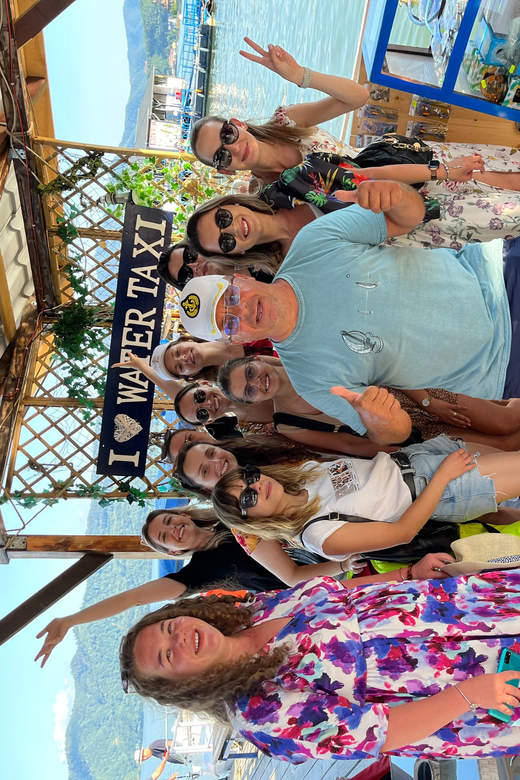
The private format is the main value. You are not paying only for transport. You get a round-trip cruise, a multilingual audio guide, photo pauses at eight main attractions, and the chance to share the boat with your own small group. The 14-seat boat also leaves room for a less crowded feel than a large sightseeing vessel, though the maximum advertised private group is six.
Several practical limits keep the price from being all-inclusive. Food and drinks are not provided. Transportation to Orșova’s pier is also your responsibility. Veterani Cave requires its own entrance payment, approximately $2, and the cave guide is separate.
The boat has a sunroof and life jackets, which cover basic comfort and safety. The operator has run tours in the area since 2005, giving the company long experience with this stretch of river. A recent booking issue was resolved quickly according to the available customer feedback, but that also reinforces my advice to read exactly what the booking includes and confirm the starting time.
Who will enjoy this cruise most
I would choose this trip for a family group, two or three couples traveling together, or a small circle that wants a private setting. The mix of caves, monuments, mountains, and water keeps the route moving, and the short stops work well if your group has different interests.
History fans get Roman landmarks, Dacian heritage, Ottoman memories, military caves, and dam construction. Nature lovers get the Danube Cauldrons and the steep rock scenery. Photographers benefit from repeated pauses rather than a nonstop ride.
This is not a good choice for pregnant women, people with back problems, people with mobility impairments, wheelchair users, or anyone recovering from recent surgery. The boat and cave access may require movement on and around a pontoon, and the operator specifically excludes these groups.
You should also reconsider the trip if you want a slow, silent cruise. The audio guide is a central part of the experience, and the itinerary is full. This is a sightseeing circuit with many stories, not a long drifting ride with no commentary.
Should you book the Orșova boat tour?
Book it if you have a group of four to six, want the full Cauldrons route, and value seeing both famous sights and less obvious stories such as Ada-Kaleh. The private format, sunroof, life jackets, photo stops, and four audio-guide languages make the package practical, especially for a mixed group.
I would be more cautious if you are a couple traveling alone, since $392 is much harder to justify between two people. Confirm the cave fee, the possible 40-minute downstream section, and the exact departure time before paying. If your group is happy with those terms, this is a strong way to connect Orșova’s scenery with the human history along the Danube.
FAQ
Where does the boat tour start?
It starts at Debarcader WT in Orșova, on a wooden platform beside the shore walking path. Look for a black-roofed pontoon and two banners with the company logo, near Hotel Apolodor.
How long does the tour last?
The listed duration is 140 minutes, or about two hours and 20 minutes.
How much does the tour cost?
The price is $392 per private group of up to six people.
What landmarks will I see?
The route includes Trajan’s Plaque, Decebalus Rock Sculpture, Mraconia Monastery, Veterani Cave, Ponicova Cave, Széchenyi Plate, the Iron Gates, and the former site of Ada-Kaleh.
Is the tour private?
Yes. The booking is for a private group, with up to six people. The boat itself can accommodate 14 passengers.
Is an audio guide included?
Yes. The audio guide is available in English, Hungarian, Spanish, and German.
What language does the host speak?
The host or greeter speaks English and Romanian.
Does the price include the Veterani Cave visit?
No. The entrance fee is approximately $2. The cave visit depends on security conditions at the pontoon and is led by guides who are separate from the boat company.
Are food and drinks included?
No. You need to arrange your own food and drinks.
What should I bring?
Bring comfortable shoes, sunglasses, sunscreen, comfortable clothing, headphones, and cash. Oversize luggage and large bags are not allowed. Life jackets are provided on board.
Just added around Romania
- Winery touring & private wine tasting – one day private tour★ 5.0 · 3 reviews
- Village Museum Bucharest Guided Tour★ 5.0 · 6 reviews
- Bucharest: Dealu Mare Winery Private Trip with Wine Tasting★ 4.9 · 6 reviews
- Turda Salt Mine, Gorge & Rimetea Village (private from Cluj)★ 5.0 · 5 reviews
- Private tour to Turda Salt Mine, Rimetea and Alba Iulia★ 4.8 · 5 reviews
- PRIVATE 4-5h speedboat tour to the village Mila23★ 5.0 · 3 reviews
- Transylvania Tour: Dracula’s Castle, Peles Palace & Brasov★ 5.0 · 19 reviews
- Turda salt mine and Corvin Castle day tour from Cluj★ 5.0 · 9 reviews
Cruises & Boat Tours, compared.
Danube Delta – Private Tour with Boat Trip & Traditional Lunch
Read our review →
Boat Trip to Caraorman Forest – Danube Delta (6–7 hours)
Read our review →
Danube Delta: Boat Tour Through the Water Lily Reserve
Read our review →
Danube Delta PRIVATE boat trip to Letea Forest (guided tour)
Read our review →
Danube Delta PRIVATE boat trip to Mila23 Village (guided tour)
Read our review →
Browse the lists this tour appears in