Reviewed · PRIVATE
Private 8 Day Romania UNESCO Tour
The best thing about this tour is its reach. In eight days, you move from Bucharest’s grand avenues to Saxon towns, wooden churches, painted monasteries, mountain roads, and village homes where traditional life is still part of the day. The UNESCO focus gives the trip a clear purpose, but the local meals, crafts, and rural stays keep it from feeling like a checklist.
I especially like the two nights in rural villages and the chance to visit craftsmen instead of seeing Romania only through city windows. I also like the private format: your guide travels with you, explains the places as you go, and can answer questions along the road. The tradeoff is simple: this is a busy tour with several long driving days, and entrance tickets, most lunches, and some dinners cost extra.
In This Review
- Key points to know before booking
- Why this route gives you a useful picture of Romania
- Day 1: Bucharest, Cozia, Sibiu, and a village dinner
- Day 2: Corvin Castle and Alba Iulia’s defensive walls
- Day 3: Cluj-Napoca and the wooden churches of Maramures
- Day 4: Merry Cemetery and Maramures traditions
- Day 5: Crossing to Bucovina and the painted monasteries
- Day 6: Voronet, Bicaz Gorge, and Red Lake
- Day 7: Sighisoara, Saschiz, Prejmer, and Brasov
- Day 8: Bran, Peles, and the return to Bucharest
- What the $2,315.49 price really covers
- Who should book this private Romania tour
- Should you book it?
- FAQ
- Where does the tour start and finish?
- What time does the tour start?
- How long is the experience?
- Is this a private tour?
- What accommodation is included?
- Are meals included?
- Are entrance tickets included?
- Which UNESCO places are visited?
- Does the tour include local food and craft experiences?
- What is the cancellation policy?
Key points to know before booking
- Eight days, seven nights: The route begins and ends in Bucharest, with hotel and pension stays across Transylvania, Maramures, Bucovina, and central Romania.
- UNESCO sites with local context: See Sighisoara, Prejmer, wooden churches, the Merry Cemetery, and Bucovina’s painted monasteries.
- Private guide and vehicle: Only your group participates, with transport by car or minibus and hotel pickup at 9:00 AM.
- Real village experiences: Ride a horse-drawn wagon near Sibiu, visit workshops, see a traditional household, and stop at a seasonal sheepyard.
- Castles and royal landmarks: Corvin Castle, Bran Castle, and Peles Castle give the route plenty of architectural variety.
- Budget for extras: About 85 euros in entrance fees are not included, along with most meals and tips.
Why this route gives you a useful picture of Romania
Romania is too varied for a single city break. Bucharest has grand 19th and 20th century buildings, while Transylvania brings medieval citadels and fortified churches. Farther north, Maramures preserves wooden architecture and customs, and Bucovina is known for monasteries whose painted walls still show their original colors.
This tour links those regions without making you arrange separate trains, hotels, and local guides. That is the main value of a private circuit. You do give up some free time, but you gain a route that would be awkward to build on your own in only eight days.
The schedule is active. Several days include two to four hours in the vehicle, with stops at churches, museums, workshops, and old towns. I would choose this trip if you prefer seeing a lot of a country and do not mind early starts, changing hotels, and full sightseeing days.
A few more Bucharest trips to weigh up
- Castles of Transylvania: Private Day Trip from Bucharest
★ 4.5 · 248 reviews - Dracula’s Castle, Peles Castle and Brasov – Private Day Trip from Bucharest
★ 5.0 · 211 reviews - Best of Bucharest | Private Walking Tour
★ 5.0 · 199 reviews
Day 1: Bucharest, Cozia, Sibiu, and a village dinner
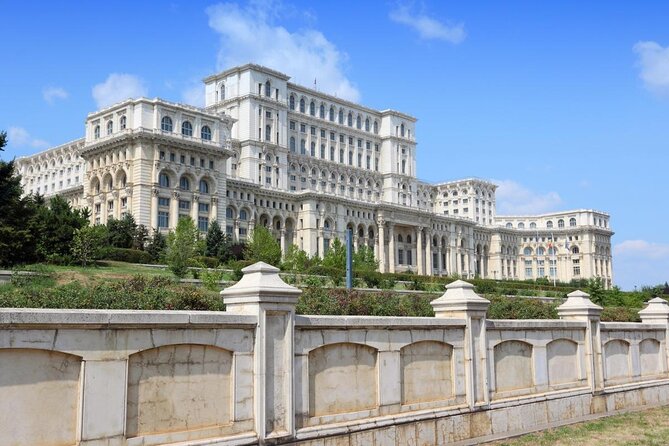
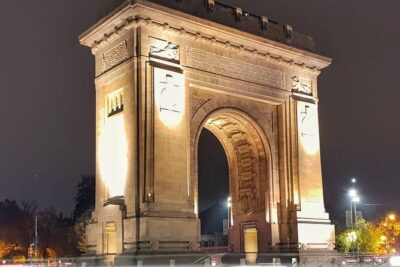
Pickup is at your Bucharest hotel at 9:00 AM. The day begins with a panoramic look at the capital, including the Parliament Palace, Revolution Square, the Romanian Athenaeum, the former Royal Palace, the Arch of Triumph, and Victoriei Avenue.
The city tour is a useful introduction because Romania’s recent past is never far from view. Revolution Square is tied to the 1989 anti-communist uprising, while the former Royal Palace now houses the National Art Museum. The panoramic format means you should expect an overview rather than lengthy interior visits.
The route then heads toward Cozia Monastery, built in the late 14th century. It is associated with Mircea the Old, an important Wallachian ruler, and gives you an early look at Romanian church architecture. The stop lasts about 45 minutes, so you will have time to see the setting and main features without expecting a long museum visit.
In Sibiu, the pace changes to a walking tour of the old district. This former Transylvanian Saxon center has a pleasing medieval layout, with the Big Square, Small Square, Staircase Tower, Liar’s Bridge, cathedrals, walls, and fortifications. The walking portion lasts about two hours, followed by shorter visits to the Roman Catholic and Orthodox cathedrals.
The day ends in Sibiel, a village outside Sibiu. A horse-drawn wagon ride and homemade dinner offer a welcome change from monuments. You spend the night in a local guest house, which is one of the most distinctive parts of the whole trip. Bring an open mind about rural lodging, since this is a local pension rather than a standard city hotel.
Day 2: Corvin Castle and Alba Iulia’s defensive walls
Corvin Castle near Hunedoara is one of Romania’s most dramatic medieval buildings. It was built in the 15th century and served as a residence for Transylvanian governors. Towers, courtyards, and stone defenses give the visit a strong visual impact, even if you are not a serious castle enthusiast.
The castle visit lasts about an hour. Its entrance fee is extra, so keep some Romanian lei or euros available for the paid sights along the route.
Alba Iulia offers a different kind of history. Roman ruins point to the city’s ancient past, while the Vauban-style fortification system reflects a later military age. You also see the Orthodox Cathedral and Catholic Cathedral. The city is known as the place of the Union, an important reference in the formation of modern Romania.
You finish the day in Cluj-Napoca, with accommodation at a four-star hotel such as the Napoca Hotel or a similar property. This is a useful contrast with the village stay: you alternate between rural pensions and urban hotels instead of spending the entire week in one type of lodging.
Day 3: Cluj-Napoca and the wooden churches of Maramures
Cluj-Napoca is Transylvania’s largest city, and the morning walking tour covers Union Square, St. Michael’s Cathedral, Museum Square, the Orthodox Cathedral, National Theatre, and the statue of Matei Corvin. The Gothic St. Michael’s Cathedral receives a separate 30-minute visit.
After Cluj, the tour turns north toward Maramures. This is one of the route’s strongest regional shifts. The cities and castles give way to villages, wooden churches, folk customs, and local workshops.
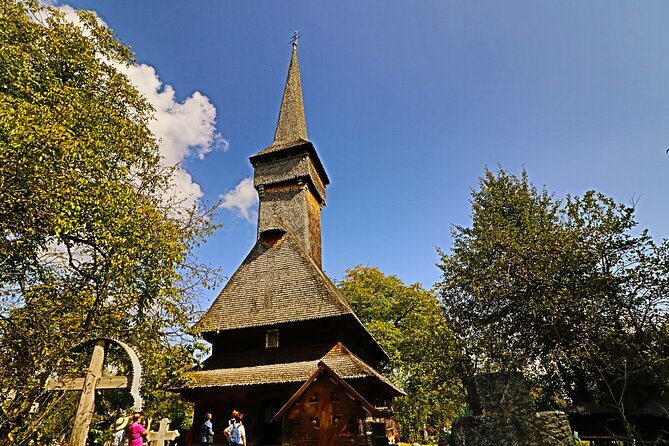
Surdesti Wooden Church, a UNESCO site, dates from 1766. Its 54-meter tower is especially notable, and the church is often described as one of Europe’s tallest old wooden churches. At Desesti, you see another UNESCO wooden church, the Church of the Holy Paraskeva, with local frescoes and a setting tied to the surrounding village life.
The day also includes opportunities to meet a weaver, wood carver, or mill worker, depending on the precise local arrangements. These visits matter because they explain how the objects and buildings fit into daily life. You are not just looking at old woodwork behind a barrier.
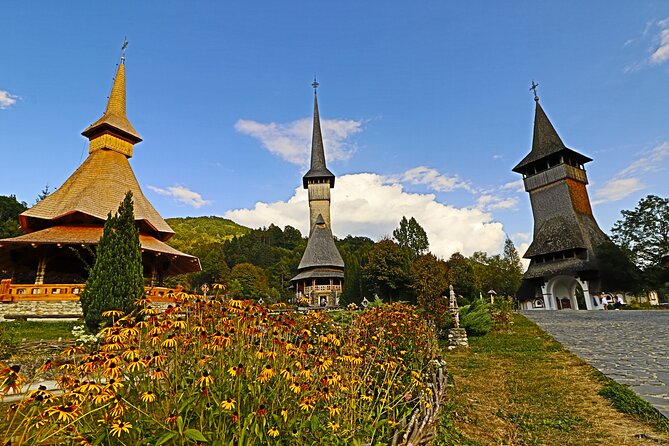
At Barsana Monastery, the architecture follows the regional wooden building tradition. An optional woodcarver visit may be added. The day ends in Botiza, where you visit a local household and, depending on the season, a sheepyard. Dinner and lodging are at a local pension.
Same mountains, a completely different day out:
- Bucharest: Dracula’s Castle, Peles Castle, & Brasov Old Town
★ 4.5 · 17,858 reviews - Bucharest: Dracula Castle, Peles Castle & Brasov Old Town
★ 4.6 · 10,891 reviews - Bucharest: Dracula’s Castle, Peleș Castle & Brașov Day Trip
★ 4.5 · 5,919 reviews - Bucharest: Palace of Parliament Tickets and Guide
★ 4.3 · 3,182 reviews
Day 4: Merry Cemetery and Maramures traditions
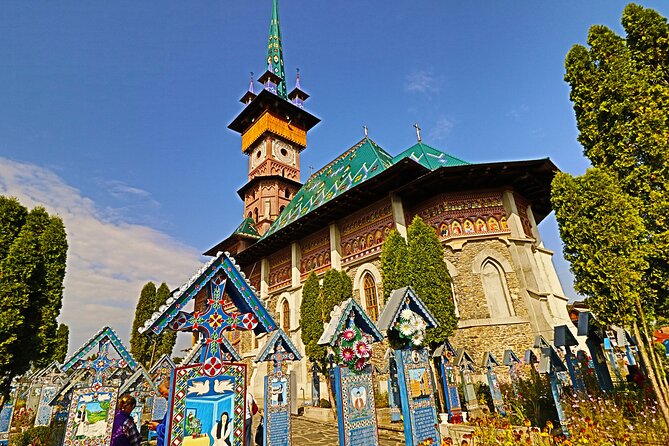
Sapanta’s Merry Cemetery is one of the most unusual stops in Romania. Its colorful tombstones use carved scenes and humorous poems to describe the lives and deaths of the people buried there. The approach to death is direct, personal, and sometimes funny, which makes the cemetery memorable for reasons beyond its bright colors.
Nearby, Sapanta-Peri Monastery has a wooden tower listed at 78 meters and described as the tallest wooden church in the world. The present monastery was founded in 1997 to revive the tradition of an older monastery whose location is now in Ukraine.
The route passes through Sighet, the area’s largest town. A visit to the Communist Prison Museum is optional. If recent political history interests you, this would add useful weight to the rural and religious sights. If you prefer to keep the day focused on village traditions, you can skip it.
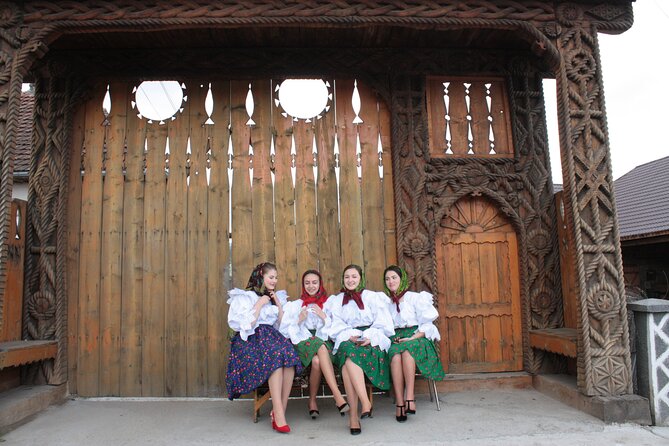
In Dragomiresti, the Maramures Woman Museum presents household customs and local ways of living. The carved wooden gate at the entrance is part of the experience, since its symbols give your guide a chance to explain the meaning of Maramures gate designs.
Bogdan Voda Wooden Church, dating from the early 18th century, brings another UNESCO church and its painted wooden frescoes. You return to Botiza for free time, dinner, and another night at the local pension. Two rural nights in the same area reduce the usual hassle of packing every morning.
Day 5: Crossing to Bucovina and the painted monasteries
The drive into Bucovina crosses the Carpathians and is one of the most scenic sections of the tour. The village of Ciocanesti is known for decorated houses and painted egg traditions. The optional local museum visit is short, but the village itself is worth watching from the vehicle and during the stop.
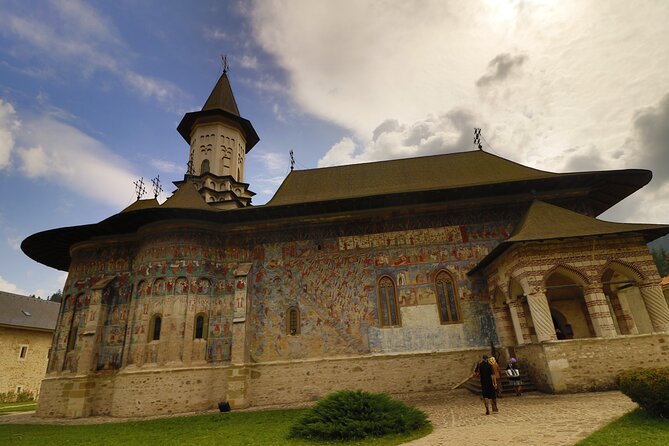
Moldovita Monastery dates from 1532 and was founded under Prince Petru Rares. Its fortress-like walls, towers, and exterior frescoes show how religious buildings also served as protected compounds. The murals are the main reason to pay attention here, since the color and subject matter continue across the outside walls.
At the International Painted Egg Museum, you get a closer look at the techniques and designs behind a Bucovina craft tradition. This is a good stop for anyone who likes decorative arts and wants more than a quick photograph of a church.
Sucevita Monastery is another fortified complex, with towers, buttresses, and defensive walkways. It is often considered the grandest of Bucovina’s painted monasteries, though the appeal depends on how much you enjoy comparing religious art and architecture from one site to the next.
The day ends at a family workshop in Marginea, where black pottery is made using an old method. That visit adds a practical element to the monastery stops. You see a living craft rather than only preserved buildings.
Day 6: Voronet, Bicaz Gorge, and Red Lake
Voronet Monastery is the morning highlight. Founded in 1488 by Stephen the Great, it is famous for its blue background and its striking Last Judgment fresco. The color is the feature most people remember, but the larger value is seeing how painting covers the exterior architecture as part of the building itself.
The route then crosses the Carpathians again, toward Bicaz Gorge and Red Lake. These stops break up the sequence of churches and historic towns with dramatic natural scenery. Bicaz Gorge is narrow and rocky, while Red Lake offers a calmer mountain setting.
You finish in Sighisoara, with a brief first look at the town before a fuller walking tour the next morning. The driving makes this another long day, but the change in scenery helps. If you prefer slow travel with long café stops, this section may feel rushed.
Day 7: Sighisoara, Saschiz, Prejmer, and Brasov
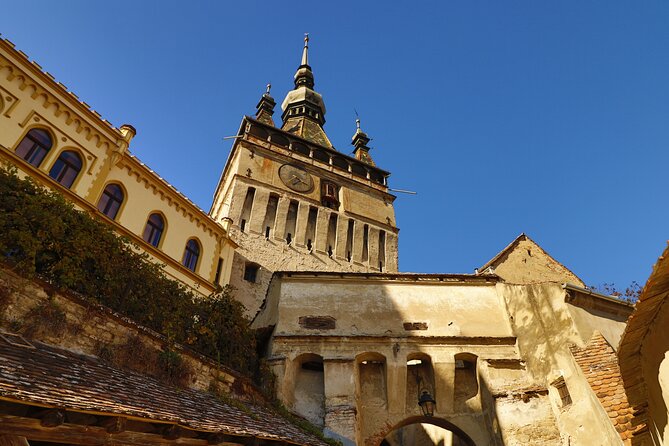
Sighisoara is one of the best-preserved medieval towns in Europe. The citadel was built by German Saxon settlers in the 13th century, and the walking tour covers two hours of towers, lanes, and historic buildings. The old town’s compact size makes it easy to explore on foot, though the cobbled surfaces and uphill sections call for comfortable shoes.
At Saschiz, a local producer offers tastings of homemade jam, chutney, and syrup. This is a small stop, but it brings the route back to food and rural enterprise after several major monuments.
Prejmer’s fortified church shows how worship and defense were joined in medieval Transylvania. The church dates from the 13th century and is a UNESCO site. Its defensive design is more interesting when your guide explains why a religious community needed walls, storage areas, and protected spaces.
Brasov’s historic center gets a two-hour walking tour. The route includes Council Square, the Black Church, the White and Black Towers, Weaver’s Bastion, and Catherine’s Gate. The Black Church is Romania’s largest Gothic cathedral, with a separate visit of about 30 minutes. Weaver’s Bastion adds another look at the city’s medieval defenses.
Brasov is a good overnight base for the final morning, but the program leaves little time for independent wandering. If you want extra time for the city’s cafés or museums, ask about adding a night before or after the tour.
Day 8: Bran, Peles, and the return to Bucharest
Bran Castle is the famous Dracula stop. The 14th-century Gothic castle controlled access into Transylvania and later became linked with Bram Stoker’s fictional vampire. The building’s actual history is more useful than the legend, but the Dracula connection explains its popularity.
The visit lasts about 90 minutes, and the entrance ticket is extra. Expect a popular attraction with a strong storytelling element, not a quiet archaeological site.
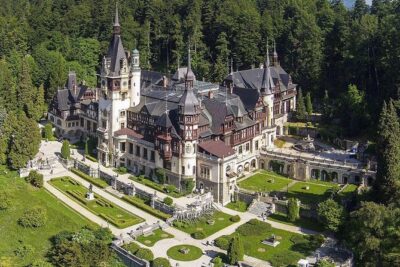
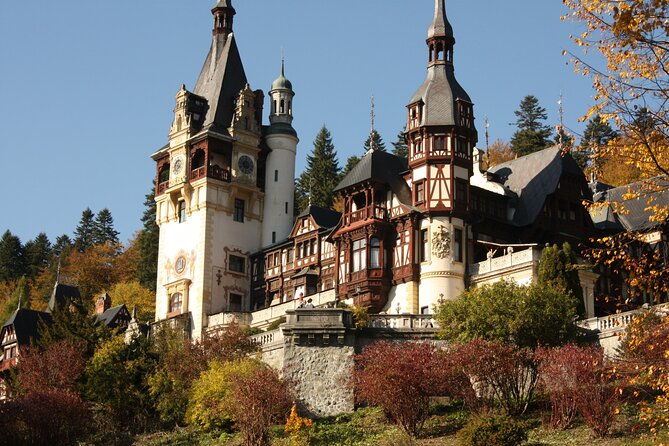
Peles Castle near Sinaia was the summer residence of Romania’s kings and is one of the tour’s most elegant buildings. The visit also lasts about 90 minutes. Compared with Bran’s defensive character, Peles gives you royal interiors and a more refined architectural setting.
The tour returns to Bucharest at about 4:00 PM, with drop-off at your hotel or the airport. The airport option is useful, but confirm your flight time carefully because traffic and the mountain road can affect the margin.
What the $2,315.49 price really covers
The price is high for a Romania tour, but it includes seven nights of accommodation, seven breakfasts, three dinners, a private guide, and a private car or minibus. It also covers the horse-drawn village tour, craft visits, and jam, chutney, and syrup tasting.
You still need to pay for most lunches, other meals, tips, and entrance fees. The estimated admission total is about 85 euros. When you add those costs, the trip is not a cheap sightseeing circuit.
The value comes from the private transport and the route design. Romania’s northern churches and villages are spread across large distances, and arranging this combination independently would require careful planning. You also get a guide for the whole journey rather than hiring someone for a separate walking tour in each city.
The strongest praise attached to this experience centers on the guide’s friendly, flexible approach and the way the tour goes beyond standard city stops. That matters on long drives and in villages, where context makes the difference between simply seeing a wooden church and understanding why it matters.
Who should book this private Romania tour
I would recommend it to you if you want a broad first visit to Romania, especially if UNESCO sites, medieval architecture, religious art, and rural customs all appeal. It also suits couples or small groups who value a private vehicle and direct access to a guide.
The tour is less suitable if you want a relaxed schedule, long stays in each city, or full control over your meals and lodging. The route covers a lot of ground, and some stops are short. The rural pensions are part of the appeal, but you should prefer local character over predictable hotel service.
The cancellation terms are practical but strict near departure: you receive a full refund only when canceling at least three full days before the start time. Confirmation is sent within 48 hours, subject to availability. Most people can participate, and pickup is offered from Bucharest hotels.
Should you book it?
Book this tour if your ideal Romania trip includes painted monasteries, wooden churches, castles, medieval towns, mountain roads, and home cooking in village settings. The private format and well-planned northward route save you time and give the countryside proper attention.
Skip it if you want to settle into one or two bases and explore slowly. For an active introduction to Romania with strong cultural variety, two rural nights, and some of the country’s most important UNESCO places, the price can make sense, provided you budget for the extra admission fees and meals.
FAQ
Where does the tour start and finish?
The tour starts and ends in Bucharest. Pickup is offered from your Bucharest hotel, and the final drop-off can be at a Bucharest hotel or the airport.
What time does the tour start?
The guide meets you at your hotel at 9:00 AM on the first day.
How long is the experience?
The tour lasts approximately eight days and includes seven nights of accommodation.
Is this a private tour?
Yes. Only your group participates, with a private tour guide and transport by car or minibus.
What accommodation is included?
Seven nights are included in double or twin rooms. The tour uses local guest houses and pensions in rural areas, along with city hotels such as the four-star Napoca Hotel in Cluj-Napoca or a similar property.
Are meals included?
Seven breakfasts and three dinners are included. Other meals and services not specifically listed are extra.
Are entrance tickets included?
Most entrance tickets are not included. The estimated total for entrance fees is about 85 euros.
Which UNESCO places are visited?
The route includes UNESCO sites such as the wooden churches of Surdesti, Desesti, and Bogdan Voda, Sapanta’s Merry Cemetery, Bucovina’s painted monasteries, Sighisoara’s historic center, and the fortified church at Prejmer.
Does the tour include local food and craft experiences?
Yes. You receive a homemade dinner in the Sibiu area, dinners at the Botiza pension, a horse-drawn wagon ride, visits to local craftsmen, a traditional household visit, a possible seasonal sheepyard visit, black pottery, painted eggs, and jam, chutney, and syrup tasting.
What is the cancellation policy?
You can receive a full refund if you cancel at least three full days before the experience start time. Cancellations or changes made less than three full days before the start are not accepted for a refund.
Just added around Bucharest
- Village Museum Bucharest Guided Tour★ 5.0 · 6 reviews
- Bucharest: Dealu Mare Winery Private Trip with Wine Tasting★ 4.9 · 6 reviews
- Winery touring & private wine tasting – one day private tour★ 5.0 · 3 reviews
- Transylvania Tour: Dracula’s Castle, Peles Palace & Brasov★ 5.0 · 19 reviews
- Discover Medieval Transylvania Small Group Tour – 7 days★ 5.0 · 4 reviews
- Bucharest Airport Transfer To Constanta Mamaia★ 5.0 · 3 reviews
- Airport Henri Coanda (Otopeni) to Bucharest – Private Transfer – Driver★ 5.0 · 5 reviews
- Gems of Transilvania: Brasov,Sighisoara,Sibiu,Viscri and more★ 5.0 · 6 reviews
Private, compared.

Castles of Transylvania: Private Day Trip from Bucharest
Read our review →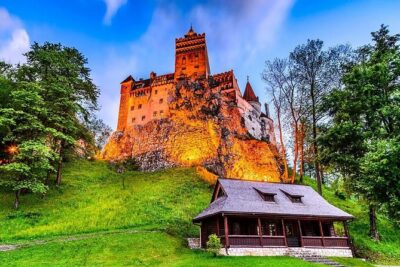
Dracula’s Castle, Peles Castle and Brasov – Private Day Trip from Bucharest
Read our review →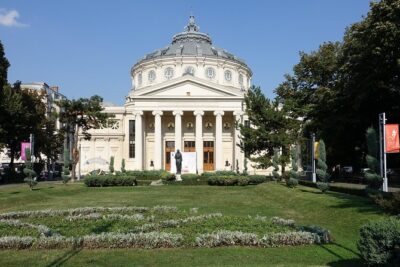
Bucharest Panoramic Sightseeing – Private City Tour
Read our review →
THERME “Take It Easy” Pack: Full Spa Access + Private Transfers
Read our review →
Piatra Craiului National Park Private Hiking Tour from Brasov
Read our review →
4h Bucharest Private Tour (2h by Car and 2h Walking in Old Town)
Read our review →