Reviewed · PRIVATE
Private: RedPatrol Bucharest Contrasts Tour in a Vintage Car
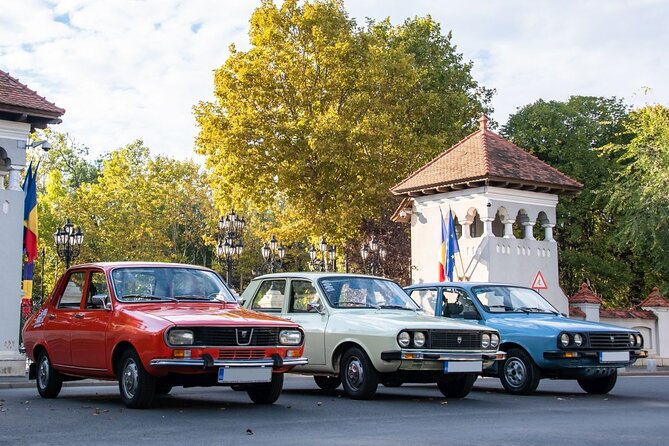
Bucharest makes more sense when you see its sharp changes street by street. This private tour carries you from royal villas and Cotroceni gardens to communist apartment blocks, ruined factories, Ferentari, and the huge Palace of Parliament in a restored Dacia 1300, the boxy Romanian car that defined daily life in the 1970s and 1980s.
I like two things here: the route shows parts of Bucharest that a standard old-town walk misses, and the guide gives those places a political and social backstory. Guides such as Mihai and Ivan Crinu have been praised for being friendly, funny, and clear, which matters when the subject turns from grand palaces to poverty and factory collapse.
The main drawback is the car itself. A classic Dacia has no air-conditioning, ABS, GPS, power steering, or automatic gearbox. It is part of the fun, but you should expect a warm, hands-on ride rather than modern comfort.
In This Review
- Why this Bucharest tour is different
- A restored Dacia starts the story
- Uranus and the unfinished communist city
- Fântână and Cotroceni’s royal side
- Drumul Taberei and everyday communist housing
- Ferentari, factories, and the cost of transition
- Piața Rahova and the city’s social divide
- Broscuțe Park and the Stalinist chapter
- The Palace of Parliament and the price of power
- What the private format adds
- Who should book it
- Should you book the RedPatrol Contrasts Tour?
- FAQ
- How long does the Bucharest Contrasts Tour last?
- What is included in the price?
- Is this a private tour?
- Will I drive the Dacia?
- What kind of car is used?
- Are children and pets allowed?
- Can I cancel for a refund?
Why this Bucharest tour is different
- A restored Dacia is the time machine: You ride in a fully restored 1970s or 1980s Dacia 1300 or 1310, but you do not drive it.
- The route crosses social divides: Cotroceni, Drumul Taberei, Ferentari, and the old industrial districts show how Bucharest changed under monarchy, communism, and capitalism.
- Ferentari gets serious attention: You visit Piața Rahova and a peasant market, then hear how a workers’ district changed after the socialist factories closed.
- The Palace of Parliament has a human story: The stop explains the mass demolition that cleared a large section of Bucharest for Ceausescu’s monumental project.
- It is genuinely private: Your group travels with its own guide and driver, with pickup and drop-off at Bucharest addresses.
- The tour suits curious adults: Red Patrol does not allow children under 10 or pets, and the old car is better for people who value character over climate control.
A restored Dacia starts the story
The car is not just transport. The Dacia 1300 was a familiar part of Romanian life during the communist period, and riding in one gives the tour a physical link to the era being discussed. Red Patrol uses fully restored classic cars that meet current traffic safety regulations, but they retain the feel of their time.
That means no automatic gearbox, no air-conditioning, no ABS, no GPS, and no power steering. In winter, the cars are heated. In warmer months, you should dress lightly and accept that the old-fashioned cabin is part of the experience.
Hotel pickup and drop-off are included from addresses in Bucharest. This is useful because the route covers several separated districts, and you avoid figuring out public transport between them. The tour lasts about three to four hours, depending on the pace of the stops and the traffic.
The price is $126.43 per person. That is not a budget sightseeing ride, but this is a private activity with a dedicated driver-guide, door-to-door transport, bottled water, and a personalized gift. For two people, it is best viewed as a half-day private city lesson rather than a simple car rental or transfer.
The experience is offered in English. It is also commonly booked well ahead, with an average booking lead time of 132 days, so I would not leave it until the last few days of a Bucharest stay if your schedule is fixed.
A few more Bucharest trips to weigh up
- Castles of Transylvania: Private Day Trip from Bucharest
★ 4.5 · 248 reviews - Dracula’s Castle, Peles Castle and Brasov – Private Day Trip from Bucharest
★ 5.0 · 211 reviews - Best of Bucharest | Private Walking Tour
★ 5.0 · 199 reviews
Uranus and the unfinished communist city
The first major stop is near Academia Română in Uranus, an area marked by the vast demolition program begun under Nicolae Ceausescu in the 1980s. The plan erased homes, churches, streets, and entire communities to make room for a new political center.
The tour focuses on where that destruction stopped after the Romanian Revolution. That detail gives the place its force. You are not simply looking at an old building or a broad avenue. You are seeing the edge of a project that was interrupted before it could fully reshape the city.
One building is described as an abandoned structure intended to become a Museum of the Communist Party. That kind of unfinished site helps you picture the gap between official ambition and lived reality. The stop lasts about 20 minutes, and no admission ticket is included, so expect an exterior presentation rather than a museum visit.
This is an important early stop because it sets up the rest of the route. Bucharest’s contrasts are not random. They were created by decisions about power, housing, industry, and who had the right to remain in a neighborhood.
Fântână and Cotroceni’s royal side
The Fântână stop introduces a bourgeois neighborhood that grew in the 19th century around Romania’s first Royal Palace. It is a short, 15-minute presentation, with free admission listed.
From there, the route continues to the gardens of Cotroceni Palace. Cotroceni was built during the modern monarchy, and this part of the tour gives you a brief look at belle époque Bucharest, when the city’s wealthy and political classes were shaping a more European capital.
The contrast with Uranus is immediate. Instead of demolition and unfinished communist construction, you get villas, royal associations, formal gardens, and the visual language of pre-communist Bucharest. The tour does not treat the monarchy as a complete answer to Romania’s problems, but it shows a different idea of what the capital was meant to be.
The Cotroceni stop lasts about 30 minutes. An admission ticket is not included, so confirm with Red Patrol what access is available on your date. The gardens and surrounding district are valuable even as a short presentation, but you should not book this tour expecting a full palace interior visit.
Drumul Taberei and everyday communist housing
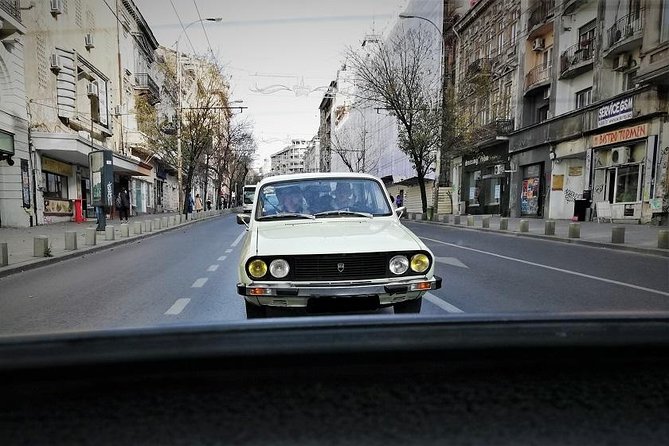
At Parcul Drumul Taberei, the focus shifts to a working-class district built around communist apartment blocks. This is not the polished, monumental face of the period. It is the practical city created for ordinary workers and their families.
You stop for photographs and stories for about 20 minutes. The tour also points out how a shopping mall was built on the ruins of a former communist canteen. That single change says a lot about the post-socialist city: shared institutional spaces gave way to private retail, while the surrounding blocks continued to house many of the same kinds of residents.
Drumul Taberei is useful because it keeps the communist story grounded. You see the scale of the housing program, but also its limits. The apartment blocks solved a massive housing need, yet they produced districts with a repetitive look and a strong dependence on shared public facilities.
The tour may also point out Orthodox churches and a traditional market along this part of the route. Those details add texture to the story. The district is not only concrete housing. It is also shopping, worship, family life, and the daily routines that continued through political change.
Same mountains, a completely different day out:
- Bucharest: Dracula’s Castle, Peles Castle, & Brasov Old Town
★ 4.5 · 17,858 reviews - Bucharest: Dracula Castle, Peles Castle & Brasov Old Town
★ 4.6 · 10,891 reviews - Bucharest: Dracula’s Castle, Peleș Castle & Brașov Day Trip
★ 4.5 · 5,919 reviews - Bucharest: Palace of Parliament Tickets and Guide
★ 4.3 · 3,182 reviews
Ferentari, factories, and the cost of transition
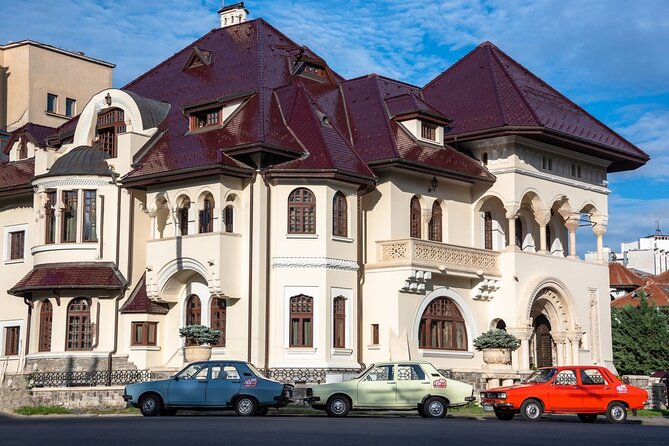
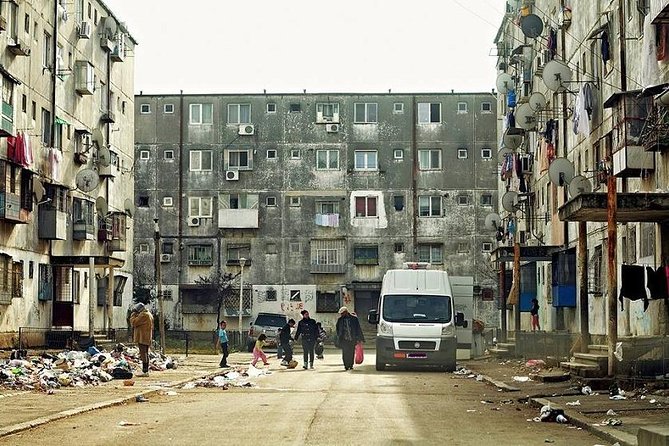
The route then moves through the former industrial area of Ferentari, including the abandoned remains of factories built during the communist period in the 1970s. These sites are not polished attractions. They are fragments of a production system that once provided jobs and gave the surrounding districts their purpose.
At the former Rocar factory, you make a brief exploration of a ruined socialist industrial area. The stop lasts about 20 minutes, and admission is listed as included. The point is less about seeing a preserved factory than understanding what happened when the factories closed after socialism collapsed.
For me, this is one of the tour’s strongest sections. It connects architecture to employment. A factory ruin is not merely an atmospheric photograph. It represents lost work, declining services, and neighborhoods forced to adjust without the economic structure that built them.
The tour handles difficult subjects, so your attitude matters. Ferentari is presented as one of Bucharest’s sharpest contrasts, with poverty, damaged blocks, and a reputation for hardship. You should look at the district with care rather than treating it as a backdrop for dramatic pictures. The value is in understanding how policy and economic change affected real communities.
Piața Rahova and the city’s social divide
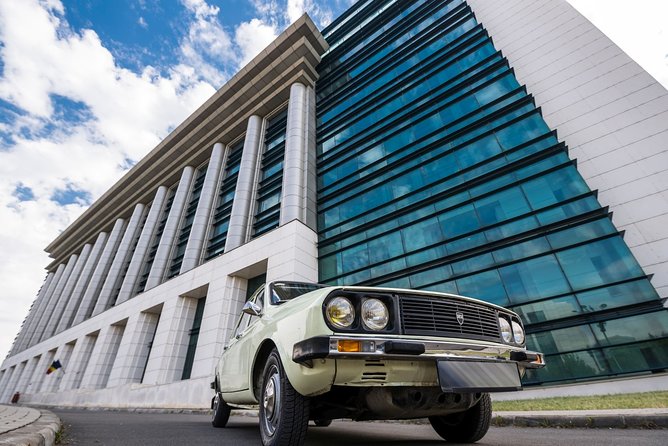
At Piața Rahova, the tour explores the Ferentari blocks and visits a peasant market. This 30-minute stop gives you a more immediate view of local life than a drive past abandoned industrial buildings.
The market is an especially useful counterpoint. It shows trade, food, and ordinary routines within a district often reduced to its problems. The guide can place those daily scenes beside the larger story of how a workers’ area became associated with severe poverty in the post-socialist 1990s.
This part may feel uncomfortable, and that is fair. The tour does not promise a cheerful version of Bucharest. It asks you to see how a city can experience rapid economic growth while some districts continue to carry the damage of factory closures, poor housing, and decades of neglect.
Because the tour is private, you can ask questions without slowing down a large group. That is a real advantage here. You can ask about the transition from communism, the different housing areas, or the meaning of the market, and the guide can adjust the explanation to your interests.
Broscuțe Park and the Stalinist chapter
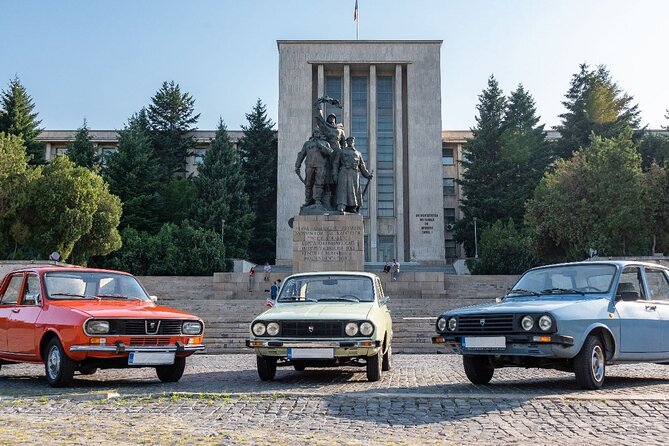
Broscuțe Park introduces the Colonel’s Quarter, described as the first Soviet occupation era neighborhood in Bucharest. The stop lasts around 20 minutes, with admission listed as included.
This is where the tour turns to the Stalinist period and the early years of Soviet influence. Instead of focusing only on Ceausescu, the guide explains how life and housing changed in the years immediately after the Second World War.
The sequence works well. You have already seen royal Bucharest, working-class blocks, industrial decline, and the effects of the 1989 Revolution. Broscuțe Park adds an earlier communist layer, showing that Romania’s socialist city was built in stages rather than by one leader alone.
Do not expect a major indoor attraction here. The value is the guide’s explanation and the way the neighborhood fits into the broader route. This is a stop for context, not a long sightseeing visit.
The Palace of Parliament and the price of power
The final major stop is the Palace of Parliament, the enormous civil building created after a section of Bucharest covering about 20 square kilometers was completely rebuilt. To make room for the project, Ceausescu’s government demolished a large historic neighborhood and displaced its residents.
The tour gives you the story of that neighborhood and the building rather than simply offering a photo opportunity. After seeing Uranus at the beginning, you can better understand the human cost behind the monumental scale.
The building is often described as the world’s largest civil building. The important point for this tour is not only its size. It is the relationship between the structure and the erased city around it. The Palace is a symbol of state power, but the empty spaces, broad approaches, and missing streets also tell a story about forced change.
The stop lasts about 20 minutes. Admission is not included, so this experience does not replace a formal interior tour of the Palace of Parliament. If entering the building is a priority, plan that separately and check its own visiting rules.
What the private format adds
A private tour changes the pace. You are not tied to a large group moving from one photo stop to the next, and you can spend more time on the places that interest you. You also have one guide who can connect the monarchy, communist planning, industrial collapse, and the post-1989 city.
The driver-guide is central to the experience. Mihai is described as professional, friendly, and good at explaining the city. Ivan Crinu is praised for giving the route a clear historical framework, including the contrast between the Academia Română building associated with communist power and the nearby Bragadiru Palace, linked to the capitalist Dumitru Bragadiru and later used as a cultural institution.
Those examples show the kind of connection you should hope for: not a list of dates, but an explanation of how politics shaped streets and buildings. The strongest part of this tour is the conversation in the car and at the stops.
The private format also makes this a better choice for adults who want to ask direct questions about Romania’s 20th century. It is less suitable if you want a relaxed scenic drive with little commentary.
Who should book it
I would choose this tour if you have already seen Bucharest’s old center and want to understand the city beyond its best-known monuments. It suits people interested in architecture, communist history, urban change, classic cars, and social issues.
It is also a good first activity if you want a quick orientation to the city’s different districts. The route crosses enough ground to show that Bucharest is not one uniform place, and the guide supplies the links between what you see.
I would think twice if you need a cool, quiet, modern vehicle. The Dacia has charm, but it lacks nearly every convenience found in a current car. I would also skip it if you want a standard palace tour, since the listed Palace of Parliament stop does not include admission.
Red Patrol does not allow children under 10 or pets. Most adults can participate, and pickup is available from Bucharest addresses. Free cancellation is allowed up to 24 hours before the start time, while later cancellations and changes are not accepted.
Should you book the RedPatrol Contrasts Tour?
Book it if you want Bucharest explained through its neighborhoods rather than reduced to a handful of famous sights. The restored Dacia is the hook, but the real value comes from the route: royal Cotroceni, communist Drumul Taberei, abandoned Rocar, Ferentari, Broscuțe Park, and the Palace of Parliament form a clear story about power and change.
At $126.43 per person, it makes the most sense for a private group that values a dedicated guide and hotel transport. You are paying for access to a difficult, scattered subject in a compact half-day format, not for entry to a string of major museums.
The best reason to book is simple: you will see the Bucharest that many city tours leave out, and you will have a classic Romanian car carrying you between the chapters.
FAQ
How long does the Bucharest Contrasts Tour last?
The tour lasts approximately three to four hours.
What is included in the price?
Hotel pickup and drop-off in Bucharest, a professional local guide and driver, transport around the city, water in the car, and a personalized tour gift are included. The cars are heated during winter.
Is this a private tour?
Yes. Only your group participates in the private activity.
Will I drive the Dacia?
No. You ride in the car, but you do not drive it.
What kind of car is used?
Red Patrol uses restored Dacia 1300 and 1310 cars from the 1970s and 1980s. They do not have air-conditioning, ABS, GPS navigation, power steering, or automatic gearboxes.
Are children and pets allowed?
Children under 10 and pets are not allowed on the tour.
Can I cancel for a refund?
You can cancel up to 24 hours before the experience start time for a full refund. Cancellations or changes made less than 24 hours in advance are not accepted for a refund.
Just added around Bucharest
- Village Museum Bucharest Guided Tour★ 5.0 · 6 reviews
- Bucharest: Dealu Mare Winery Private Trip with Wine Tasting★ 4.9 · 6 reviews
- Winery touring & private wine tasting – one day private tour★ 5.0 · 3 reviews
- Transylvania Tour: Dracula’s Castle, Peles Palace & Brasov★ 5.0 · 19 reviews
- Discover Medieval Transylvania Small Group Tour – 7 days★ 5.0 · 4 reviews
- Bucharest Airport Transfer To Constanta Mamaia★ 5.0 · 3 reviews
- Airport Henri Coanda (Otopeni) to Bucharest – Private Transfer – Driver★ 5.0 · 5 reviews
- Gems of Transilvania: Brasov,Sighisoara,Sibiu,Viscri and more★ 5.0 · 6 reviews
Private, compared.

Castles of Transylvania: Private Day Trip from Bucharest
Read our review →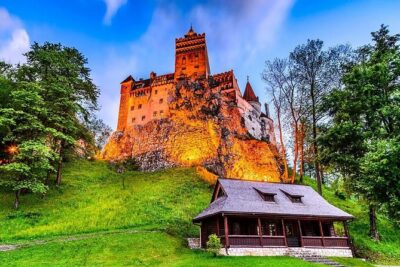
Dracula’s Castle, Peles Castle and Brasov – Private Day Trip from Bucharest
Read our review →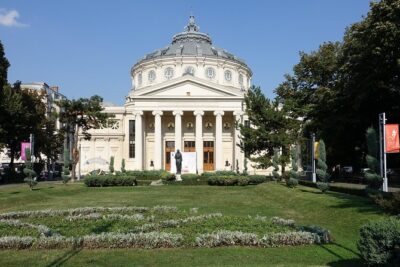
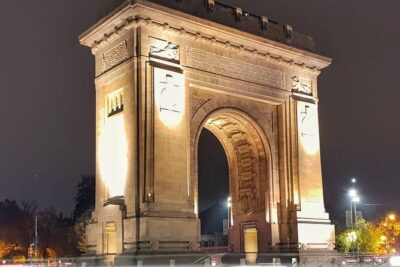
Bucharest Panoramic Sightseeing – Private City Tour
Read our review →
THERME “Take It Easy” Pack: Full Spa Access + Private Transfers
Read our review →
Piatra Craiului National Park Private Hiking Tour from Brasov
Read our review →
4h Bucharest Private Tour (2h by Car and 2h Walking in Old Town)
Read our review →