
Reviewed · DRACULA & BRAN CASTLE TOURS
Searching for Dracula: Private Day Trip from Bucharest
Poienari Fortress is the dramatic heart of this day trip, not the polished castle from Dracula films. You climb 1,480 steps to reach Vlad the Impaler’s real mountain stronghold, with the Arges gorge and Carpathian scenery opening around you. I like the private format, and I like that the route connects Vlad’s court, fortress, and religious world in one long day.
I also appreciate having hotel pickup and an English-speaking guide who can sort fact from vampire folklore. The main caution is practical: Poienari has sometimes been closed for restoration or because of bear concerns, and the trip involves a long drive plus a hard uphill climb. Confirm access before you leave Bucharest.
In This Review
- Key points to know before booking
- Why Vlad’s real places matter more than the Dracula label
- Targoviste: Vlad’s court and the first dose of medieval Wallachia
- Poienari Fortress: the climb is the point
- Curtea de Arges Monastery and the religious side of the route
- A ten-hour private day from Bucharest
- What the $141.63 price really buys you
- Who will enjoy this day most
- Practical advice for making the day work
- Should you book Searching for Dracula?
- FAQ
- How long does the tour last?
- Where can pickup take place?
- Is the tour private?
- Is transportation included?
- Are entrance tickets and lunch included?
- How difficult is the Poienari Fortress visit?
Key points to know before booking
- Poienari Fortress requires serious effort: Reaching the ruins means climbing 1,480 steps, roughly half an hour uphill for some people.
- Targoviste supplies the historical setting: You see Vlad’s actual princely court, Chindia Tower, the church, and old-book displays.
- This is a private day, not a fixed coach outing: Only your party takes part, with pickup and return to your Bucharest accommodation.
- Guides can shape the day: Gabriel, Claudiu Sorin, and Diana are named guides praised for history, culture, flexibility, and friendly service.
- The price buys convenience: At $141.63 per person, the value depends on group size, since private transport and guiding cost more than a shared excursion.
- Closures can change the plan: Entrance fees are extra, and two or more stops have occasionally been unavailable.
Why Vlad’s real places matter more than the Dracula label
The title promises Dracula, but the strongest part of the outing is the chance to separate a historical ruler from a fictional count. Vlad III, often called Vlad the Impaler, ruled Wallachia in the 15th century. His connection to these places is real, even though the modern Dracula story blends history, fiction, and later popular culture.
That distinction gives the day a useful shape. At Targoviste, you begin with administration and power. At Poienari, you see a defensive fortress in a remote mountain position. At Curtea de Arges, you encounter the religious and dynastic side of medieval Wallachia.
I like this route because it does not rely on one theatrical castle visit. It gives you three different settings and asks you to think about Vlad as a ruler, not simply as a horror character. Your guide is important here. The better guides explain what is documented, what belongs to later legend, and how Romanian history fits into the wider region.
The private setup also helps. You can ask direct questions, spend more time at the site that interests you, or adjust the pace within the limits of a ten-hour day. Guides named Gabriel, Claudiu Sorin, and Diana have been singled out for being friendly, clear, and flexible. Diana, in particular, is described as tailoring the day to individual needs and sharing local food and cultural details along the way.
More Dracula & Bran Castle Tours in Bucharest
- Bucharest: Dracula’s Castle, Peles Castle, & Brasov Old Town
★ 4.5 · 17,858 reviews - Bucharest: Dracula Castle, Peles Castle & Brasov Old Town
★ 4.6 · 10,891 reviews - Bucharest: Dracula’s Castle, Peleș Castle & Brașov Day Trip
★ 4.5 · 5,919 reviews
Targoviste: Vlad’s court and the first dose of medieval Wallachia
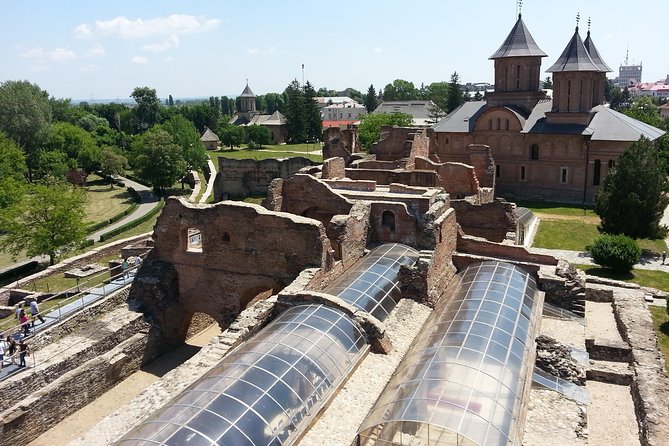
Your first stop is Targoviste, about 80 kilometers northwest of Bucharest. The town served as the capital of feudal Wallachia from the 14th through the 17th century, and Vlad the Impaler used the Princely Court as his main residence.
The visit usually takes about one hour, so expect an introduction rather than a long museum morning. The key sights include the Princely Court, the Princely Church, Chindia Tower, and a museum devoted to the printing press and old Romanian books.
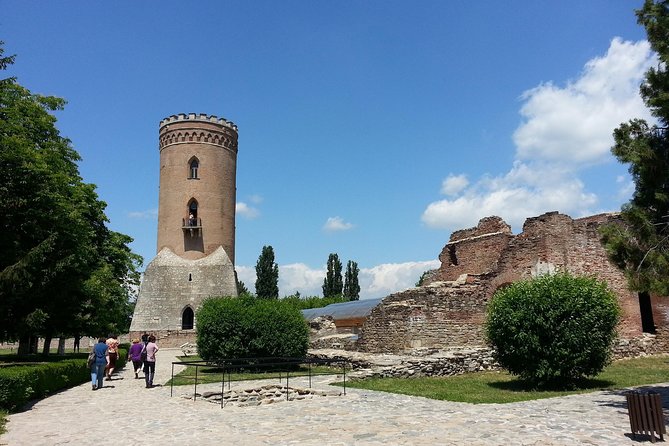
Chindia Tower is the visual marker of the complex and one of the places that helps you picture the court as a working seat of power. The church and court ruins add a more grounded sense of daily rule. Instead of imagining Vlad only in a fortress, you see the urban base from which a medieval prince governed.
The printing and old-book collection broadens the stop beyond Vlad. It points to the development of written culture in Romania and gives your guide a chance to explain the setting in terms of politics, religion, and communication.
Admission is not included, and photo or video fees may also be charged. Since the stop is short, ask your guide what is open that day before paying for every section. This matters because access can vary, and some parts of the wider route have been closed at times.
Targoviste is the gentlest walking stop of the three. It is a good place to ask your main questions before the physical challenge at Poienari. If you want a fuller museum visit, tell your guide early, though the long distance to the next stops limits how much time can be added.
Poienari Fortress: the climb is the point
Poienari Fortress is called the real castle of Dracula, though fortress is the more accurate word. It sits on a high cliff near the Arges gorges, at about 850 meters, and the approach is famous for its 1,480 steps.
This is not a casual photo stop. The climb takes time, and the uphill route can leave your legs and hamstrings complaining. One person described the walk as fun but hard, with the uphill stairs taking around half an hour. You should have a moderate level of fitness and wear shoes suited to uneven steps.
The reward is the setting. The ruins occupy a high defensive position, and the views toward the gorge and surrounding Carpathians are a major reason to make the effort. The fortress itself is a ruin, not a restored palace with furnished rooms. If you expect grand towers, intact halls, or a polished theme-park version of Dracula, you may find the remains modest.
I think the appeal comes from the combination of effort, history, and height. You work your way to a place chosen for defense and isolation. That physical act makes the story more memorable than a quick stop beside a road.
Build in time for breaks. The listed visit is about two hours, but that includes the climb, time at the top, and the return to the vehicle. You do not want to spend the whole route racing upward because the fortress closes or the driver has a strict departure time.
There is an important access warning. Poienari has been closed during restoration, and the entrance has also been affected by bear concerns. A closed gate may mean you can see the approach but cannot reach the ruins. In one case, the climb was made even though the site itself was unavailable, which made the effort feel especially frustrating.
Because the supplied information does not give a guaranteed opening schedule, contact Yolo Tours Romania before departure and ask specifically about Poienari access, restoration work, and any wildlife-related closure. Do not assume that booking the excursion guarantees entry to the fortress.
Entrance is not included in the tour price. Ask about the current admission cost and any photo or video charge before you set off.
Curtea de Arges Monastery and the religious side of the route
Curtea de Arges is on the Arges River, where the valley meets the lower Carpathians. The town’s name means the court upon Arges, a reminder that it once served as the capital of Wallachia.
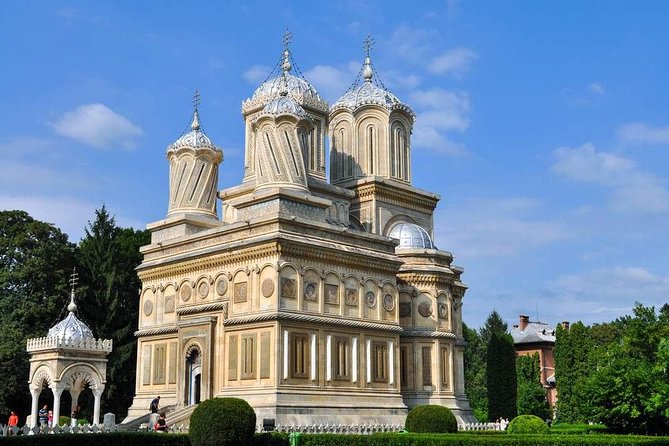
The monastery visit lasts about one hour. The Orthodox church is known for its unusual design and architecture, making this a different experience from the court and fortress. Here the route shifts from military power to faith, ceremony, and dynastic identity.
You do not need to be an architecture specialist to enjoy the stop. Look closely at the shape of the church and let your guide explain what makes it unusual. The setting also gives the day a welcome change of pace after Poienari’s steep stairs.
Curtea de Arges has also been affected by closures according to the supplied trip details. Ask what will be open before you leave Bucharest. If the monastery is unavailable, the guide may suggest another stop, but you should not assume that a replacement will offer the same experience.
The three locations work best together. Targoviste gives you the princely base. Poienari shows the remote defensive refuge. Curtea de Arges presents a ceremonial and spiritual center. Remove one of those pieces and the day becomes less complete, especially if the missing stop is Poienari.
Same mountains, a completely different day out:
- Bucharest: Palace of Parliament Tickets and Guide
★ 4.3 · 3,182 reviews - Bucharest: Day Trip to Dracula Castle, Peles Castle & Brașov
★ 4.4 · 3,049 reviews - Bucharest to Dracula Castle, Peles Castle and Brasov Guided Tour
★ 4.5 · 2,933 reviews - Bucharest: Palace of Parliament Tickets and Guided Tour
★ 4.4 · 1,877 reviews
A ten-hour private day from Bucharest
Pickup begins at 7:30 a.m. from any hotel or apartment rental in Bucharest. Your guide meets you in the hotel lobby or outside your accommodation building, then drives you in an air-conditioned car or minibus.
The early start is necessary. The route covers a large part of southern Romania, and road time takes up a substantial portion of the ten-hour outing. One account described a four-hour drive before reaching Poienari, so bring water, a snack, and something to occupy you during the longer stretches.
Private transport is one of the clearest advantages. You do not need to rent a car, navigate unfamiliar roads, or work out the order of distant sights. You can also ask for explanations as the countryside changes, rather than simply watching the road from a large coach.
Vehicle comfort deserves attention. One person found the coach seat too tight, especially when the front seat was reclined. If you are tall or have long legs, ask at booking what vehicle is planned. A private car may be comfortable for a small party, while a minibus gives more room for a larger group but may feel cramped depending on the seating layout.
The tour is private, so only your group participates. That is useful if your party wants to move at its own pace or has different interests. It also means the quoted $141.63 per person may make more sense for two or more people sharing the cost than for a solo visitor.
Lunch is not included. A guide may recommend or arrange a local restaurant, and Claudiu was able to include a meal at a local place during one outing. Still, budget separately for food and do not treat a restaurant stop as guaranteed unless you confirm it.
What the $141.63 price really buys you
At $141.63 per person, this is not the cheapest way to see a single Romanian attraction. The value comes from the package of private pickup, an air-conditioned vehicle, an English-speaking guide, and a full day reaching places that are awkward to connect without a car.
For a couple or small group, the cost can be reasonable because you are paying for a private vehicle and guide rather than just a seat on shared transport. For one person, it is a larger outlay, so Poienari access becomes especially important. If the main fortress is closed, the value drops sharply for anyone booking only to reach Vlad’s mountain stronghold.
The cost does not include entrance tickets, photo or video fees, or lunch. Add those expenses before comparing this with a self-drive plan. A rental car might look cheaper at first, but you would still need fuel, parking, route planning, and the time required to find each site.
The guide is where this experience can earn its price. Gabriel is described as welcoming and willing to let the day unfold at a comfortable pace. Claudiu Sorin is praised for helping create a full experience, while Diana is described as warm, fluent in English, and able to adjust the plan as the day develops.
That personal contact is valuable in Romania, where dates, rulers, religious traditions, and Dracula lore can blur together for a first-time visitor. A good guide gives the places meaning instead of leaving you with ruins and a few photos.
Who will enjoy this day most
I would choose this tour if you want Vlad the Impaler’s real sites and do not want to drive. It suits history fans, people interested in Romanian culture, and anyone who prefers a private guide to a fixed group schedule.
It is also a good match if you like active sightseeing. Poienari demands a long stair climb, and the day includes plenty of road time. You should have moderate physical fitness and be comfortable with a full ten-hour schedule beginning early.
You may want a different plan if you want a relaxed day with short walks and long meals. The itinerary is ambitious, and the fortress approach can be tiring. It is also less suitable if you need guaranteed access to every listed stop, since closures have affected Poienari and Curtea de Arges.
Families and older visitors should think carefully about the steps. A private tour gives you more control over breaks, but it does not remove the climb. Ask the provider what alternatives exist if someone in your party cannot reach the fortress.
Practical advice for making the day work
Wear shoes with good grip, especially for Poienari. Bring water, a light snack, sun protection, and a small amount of cash for admissions, food, or fees if needed.
Start with a clear conversation about the fortress. Ask if Poienari is open, if the steps are accessible, and if any bear-related restriction is in place. Also ask whether Curtea de Arges and the Targoviste museums are open on your date.
Keep your expectations focused. You are not visiting a lavish Dracula castle. You are seeing a historic court, a rugged ruined fortress, and an unusual Orthodox monastery. The power of the day comes from the settings and the connections between them.
The free cancellation policy gives you some protection if plans change. You can cancel up to 24 hours before the local start time for a full refund. Changes or cancellations made inside that window are not accepted for a refund, so check the access situation well before the deadline.
Should you book Searching for Dracula?
Book it if Poienari is high on your list and you want private transport from Bucharest. The climb is demanding, the drive is long, and site closures are a real concern, but the route offers a far more grounded look at Vlad the Impaler than a standard fictional Dracula outing.
I especially like the mix of Targoviste’s court, Poienari’s mountain ruins, and Curtea de Arges Monastery. Before paying, confirm that the fortress is open and ask about the vehicle, lunch arrangements, and entrance costs. If the answers are clear, this can be one of the most memorable history days you take from Bucharest. If Poienari is closed, consider postponing or changing the program rather than accepting a long trip for a view of a locked gate.
FAQ
How long does the tour last?
The experience lasts approximately 10 hours and starts at 7:30 a.m.
Where can pickup take place?
Pickup is offered from any hotel or apartment rental in Bucharest. The guide meets you in the hotel lobby or in front of your accommodation building.
Is the tour private?
Yes. Only your group participates in the activity.
Is transportation included?
Yes. Hotel pickup and drop-off are included, along with transportation in an air-conditioned car or minibus.
Are entrance tickets and lunch included?
No. Entrance fees, photo and video fees, and lunch are not included in the tour price.
How difficult is the Poienari Fortress visit?
You should have a moderate level of physical fitness. Reaching the fortress involves climbing 1,480 steps to a site at about 850 meters. Access can also be affected by restoration work or bear-related closures.
More 1-Day Tours in Bucharest
- Dracula’s Castle, Peles Castle and Brasov Day Trip from Bucharest
★ 4.5 · 1,804 reviews - Small-Group Day Trip to Dracula’s Castle, Brasov and Peles Castle
★ 4.5 · 935 reviews - Bucharest: Dracula’s Castle, Peles Castle & Brasov Day Trip
★ 4.6 · 585 reviews - Bucharest: Salt Mine Guided Day Trip to Slănic
★ 4.6 · 559 reviews
Just added around Bucharest
- Village Museum Bucharest Guided Tour★ 5.0 · 6 reviews
- Bucharest: Dealu Mare Winery Private Trip with Wine Tasting★ 4.9 · 6 reviews
- Winery touring & private wine tasting – one day private tour★ 5.0 · 3 reviews
- Transylvania Tour: Dracula’s Castle, Peles Palace & Brasov★ 5.0 · 19 reviews
- Discover Medieval Transylvania Small Group Tour – 7 days★ 5.0 · 4 reviews
- Bucharest Airport Transfer To Constanta Mamaia★ 5.0 · 3 reviews
- Airport Henri Coanda (Otopeni) to Bucharest – Private Transfer – Driver★ 5.0 · 5 reviews
- Gems of Transilvania: Brasov,Sighisoara,Sibiu,Viscri and more★ 5.0 · 6 reviews
Dracula & Bran Castle Tours, compared.
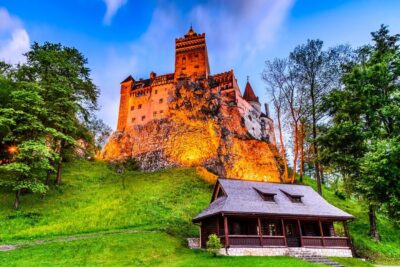
Dracula’s Castle, Peles Castle, & Brasov Old Town
Read our review →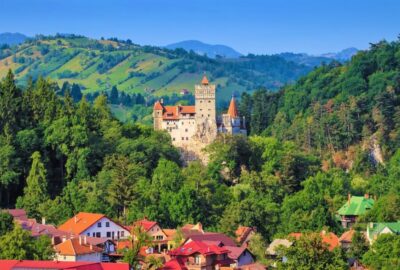
Dracula Castle, Peles Castle & Brasov Old Town
Read our review →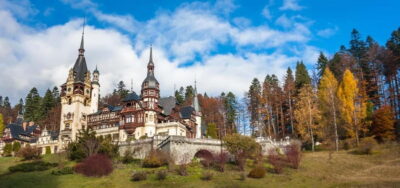
Dracula’s Castle, Peleș Castle & Brașov Day Trip
Read our review →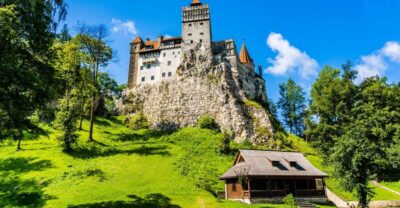
Day Trip to Dracula Castle, Peles Castle & Brașov
Read our review →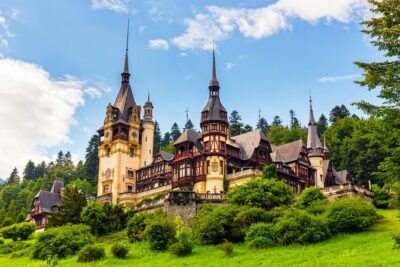
Bucharest to Dracula Castle, Peles Castle and Brasov Guided Tour
Read our review →
Dracula’s Castle, Peles Castle and Brasov Day Trip from Bucharest
Read our review →
Transylvania and Dracula Castle Full Day Tour from Bucharest
Read our review →
Browse the lists this tour appears in