Reviewed · BUCHAREST TOURS
Slavery in Romania Myths and Truths About Gypsies
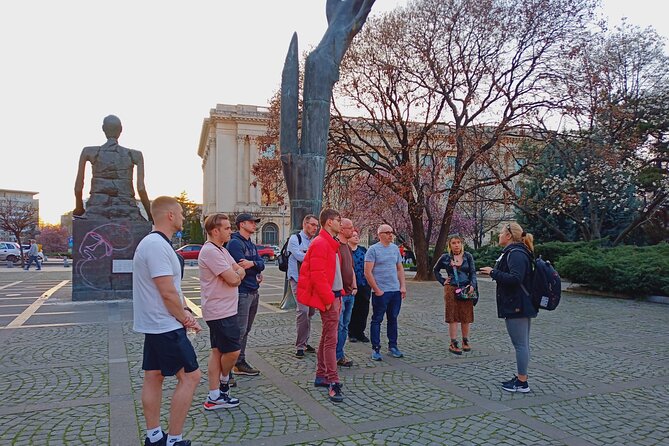
The most unusual thing about this Bucharest walk is its focus on Roma history in Romania, a subject many city tours barely touch. With English-speaking guide Mihai, you move from grand landmarks and political figures to the Holocaust Memorial and a small craft shop where Roma artisans’ work is sold.
I like the route for two reasons: it links national history to individual lives, and it ends with something practical and human at Mesteshukar ButiQ. The tour also keeps its group to 15 people, which should make discussion easier. The main drawback is that three hours on foot can feel demanding, and coffee is not included during the short break.
In This Review
- Key points to know before booking
- Why this Bucharest tour offers a different story
- The Athenaeum sets the artistic tone
- Iuliu Maniu and the politics behind the story
- Palatul Stirbei brings in the 19th century
- Cismigiu Park gives the walk breathing room
- Gheorghe Lazăr National College and the value of education
- The Holocaust Memorial is the emotional center
- Kogălniceanu connects writing, politics, and public memory
- MBQ ends the walk with living craft
- What three hours and $127.37 mean in practice
- Walking, weather, and group size
- Who will get the most from this experience
- Should you book the Roma history walk?
- FAQ
- Where does the tour begin?
- What time does the tour start?
- Where does the tour end?
- How long does the experience last?
- Is the tour offered in English?
- How large can the group be?
- Is food or a drink included?
- Can I cancel for a full refund?
Key points to know before booking
- Roma history runs through the whole walk: The stops connect slavery, education, politics, World War II, and modern cultural work.
- Mihai leads the English tour: A previous booking specifically praised his command of Romanian Roma history and the way he connected sites across Bucharest.
- The Holocaust Memorial is a serious stop: You learn about the persecution of Roma during World War II and the often overlooked Romanian chapter.
- The route uses free public places: The Athenaeum, Cismigiu Park, statues, streets, and memorials require no admission ticket.
- The finish is hands-on and local: MBQ offers handmade objects produced by Roma craftspeople, including jewelry.
- Plan for steady walking: The advertised three hours includes the time between stops, with a moderate fitness level recommended.
Why this Bucharest tour offers a different story
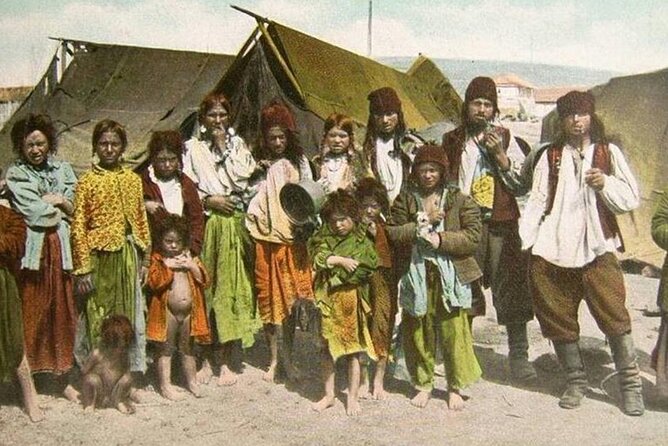
Bucharest is easy to read as a city of grand buildings, elegant avenues, and shifting political power. This walk asks you to read it another way. Its subject is the history of Roma people in Romania, including centuries of enslavement, public attitudes, education, wartime persecution, and cultural survival.
That makes the tour more than a string of photo stops. A statue or palace matters here because of the people and policies connected to it. The guide’s job is to explain those links without reducing Roma culture to a museum display or a difficult chapter from the past.
The tour begins at 10 a.m. near the Ion Creangă Theatre on Piața Amzei and ends at MBQ on Bulevardul Mihail Kogălniceanu. Because the route is spread through central Bucharest, you get a walking introduction to several familiar city sights while following one clear subject.
I would choose this experience early in a Bucharest visit if you want context before exploring on your own. It gives you names, places, and historical questions that can sharpen the way you see the rest of the city.
Other Bucharest days worth putting on the list:
- Bucharest: Dracula’s Castle, Peles Castle, & Brasov Old Town
★ 4.5 · 17,858 reviews - Bucharest: Dracula Castle, Peles Castle & Brasov Old Town
★ 4.6 · 10,891 reviews - Bucharest: Dracula’s Castle, Peleș Castle & Brașov Day Trip
★ 4.5 · 5,919 reviews
The Athenaeum sets the artistic tone
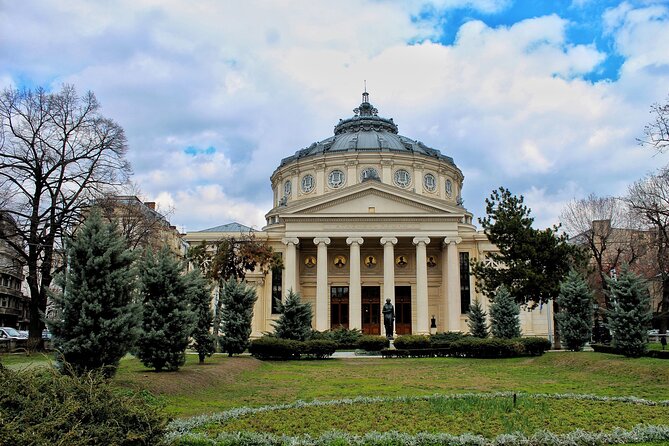
The first stop is the Romanian Athenaeum, one of Bucharest’s best-known buildings and home of the Romanian Philharmonic. You get about 20 minutes here, with no admission charge included or needed for the outdoor stop.
The building is presented as Romania’s house of art, but the point is not simply to admire its appearance. The guide uses it to introduce the artistic and national setting around the tour’s subject. That is a smart opening: you begin in a place linked with formal culture, then move toward stories that are often left out of polished accounts of national identity.
Do not expect a concert or an interior performance during this walk. The listed visit is brief, and the tour’s main work is discussion around the site. If you want to see a performance at the Philharmonic, that would be a separate plan.
Iuliu Maniu and the politics behind the story
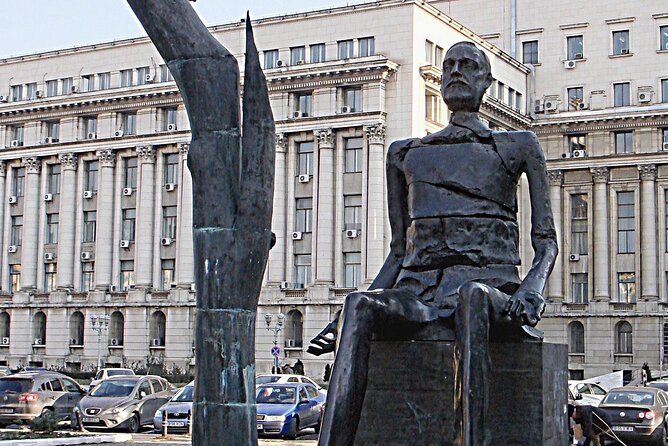
Next comes the statue of Iuliu Maniu, another 20-minute stop. Maniu was a major political figure in Romanian public life, and here he is discussed in relation to both Roma history and the creation of modern Romania.
This is where the walk begins to show its method. Rather than treating Roma history as a separate subject, it places it beside the decisions and personalities that shaped the country. Political history can feel remote when it is presented as a list of dates. A statue gives the guide a fixed point for explaining how a public figure fits into the larger story.
The statue itself is free to view. You will spend more time listening than sightseeing, so bring questions if this period interests you. The value of the stop depends on the guide’s explanation, and Mihai was specifically praised for connecting Romanian Roma history with Bucharest’s sites.
Palatul Stirbei brings in the 19th century
At Palatul Stirbei, the tour turns to the 19th century and Barbu Stirbey, one of the rulers of Wallachia. The visit lasts about 20 minutes.
This palace is important because it brings the subject into the world of rulers, estates, and social power. The tour’s title refers to slavery in Romania, and this stop gives the guide a place to discuss the people who held authority during the period when Roma people were enslaved in the principalities.
You should expect historical explanation rather than a long palace visit. The supplied details do not promise interior access, so treat this as an exterior or surrounding-area stop unless the guide tells you otherwise. That keeps expectations realistic and leaves room for the walk’s main purpose, which is interpretation.
Same mountains, a completely different day out:
- Bucharest: Palace of Parliament Tickets and Guide
★ 4.3 · 3,182 reviews - Bucharest: Day Trip to Dracula Castle, Peles Castle & Brașov
★ 4.4 · 3,049 reviews - Bucharest to Dracula Castle, Peles Castle and Brasov Guided Tour
★ 4.5 · 2,933 reviews - Bucharest: Palace of Parliament Tickets and Guided Tour
★ 4.4 · 1,877 reviews
Cismigiu Park gives the walk breathing room
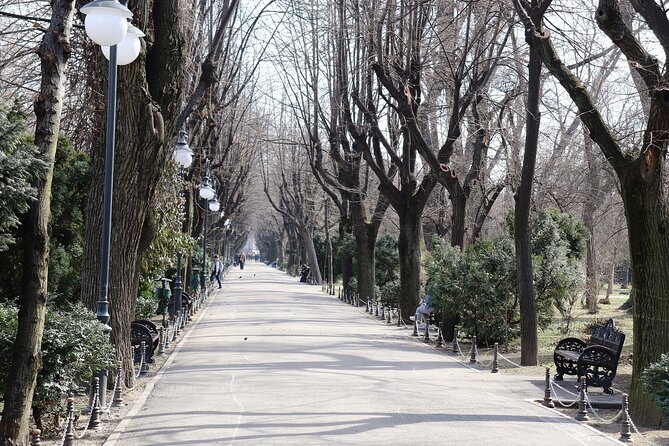
After the political and palace stops, you spend around 30 minutes walking through Cismigiu Park. It is described as Bucharest’s largest and most beautiful garden, and the tour uses several points inside and around it.
This is likely the most relaxed part of the route. You may stop near a well-known high school, the ruins of an old monastery, and a viewpoint over the park. These details give the middle of the tour variety. You are not standing beside monuments for three straight hours.
The park also helps connect public space with memory. Schools, religious ruins, and city views can seem like ordinary parts of a walk, but the guide uses them to keep the Roma story tied to daily Bucharest rather than locked inside a formal memorial.
The drawback is simple: the schedule gives only about half an hour to cover several points. You will not have time for a leisurely park visit, long photography stops, and extended historical discussion at every location. I would keep your camera ready but give priority to the guide.
Gheorghe Lazăr National College and the value of education
At the entrance to Cismigiu Park, you stop at Gheorghe Lazăr National College for about 15 minutes. The school is described as one of the best-known high schools in Bucharest, and the tour uses it to underline education as a key to opportunity.
This stop matters because it shifts the discussion from what happened to Roma people toward what can shape their future. Education is not treated as a side note. It becomes a way to think about access, social mobility, and the barriers that have affected Roma communities.
You will not be taking a school tour. The college serves as a location for the guide’s explanation, so the stop is compact and subject-focused. If you prefer tours built around interiors and major attractions, this part may feel modest. If you want social history tied to real city spaces, it earns its place.
The Holocaust Memorial is the emotional center
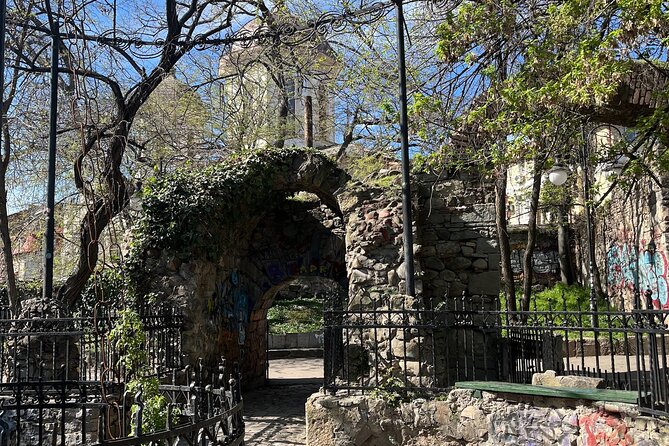
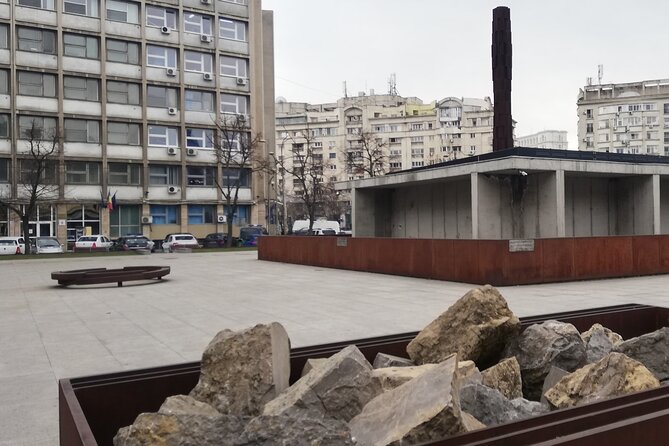
The Holocaust Memorial receives about 15 minutes, but its importance is much greater than the clock suggests. Here you learn about the persecution and suffering of Roma people during World War II, including what is often called the Forgotten Holocaust.
The memorial is described as the most impressive monument built in memory of Holocaust victims in Romania. Expect this to be the most serious point on the walk. The subject requires attention, and the brief time can feel tight if you want to reflect or ask several questions.
For me, this is the stop that gives the tour its moral weight. The story of World War II is often told through familiar political and military milestones. This memorial insists that Roma victims also belong in that account.
Because the stop is outside and free, the experience depends heavily on the guide’s words and your willingness to listen. This is not a light sightseeing break. Families should consider the subject matter before booking, particularly if younger children may find wartime persecution difficult.
Kogălniceanu connects writing, politics, and public memory
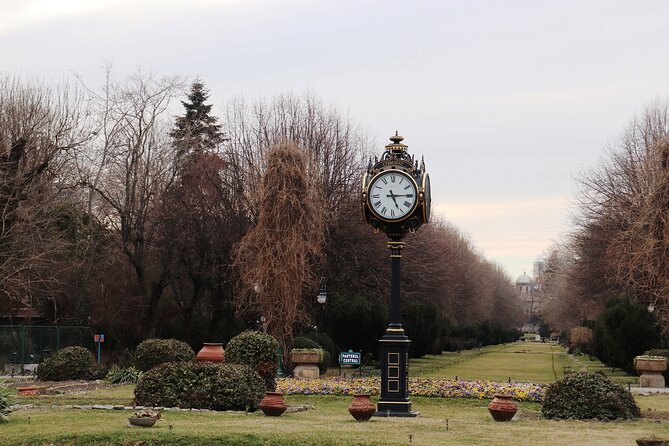
At Piața Mihail Kogălniceanu, you spend around 10 minutes learning about Mihail Kogălniceanu. He was a prominent politician and writer in Romanian history and is identified here as the first person to write about Romanian Gypsies.
The short stop shows how language and public writing can shape the way a group is seen. It also returns the tour to the people who recorded, debated, or influenced Romanian society. After the memorial, this is a useful change of focus, from remembrance to the written and political record.
Ten minutes is enough for an introduction, not a full biography. If Kogălniceanu interests you, note his name and ask Mihai for more context while the group is moving between stops.
MBQ ends the walk with living craft
The final stop is Mesteshukar ButiQ, a small shop on Bulevardul Mihail Kogălniceanu. You spend about 20 minutes there, looking at handmade pieces produced by Roma craftspeople.
This ending is one of the tour’s strongest choices. After hearing about slavery, discrimination, political history, and wartime loss, you finish with present-day skill and work. The shop gives you a direct way to see Roma craftsmanship as an active part of culture, not merely a subject from the past.
A handmade jewelry piece can also serve as a more meaningful souvenir than a generic city trinket. The stop is included in the route, but the information does not say that purchases are included in the tour price. Bring a payment method if you think you may want to buy something.
The shop is also the endpoint, so you do not need to return to the starting location. That is useful if you plan to continue exploring the Kogălniceanu area afterward.
What three hours and $127.37 mean in practice
The listed price is $127.37 per person for roughly three hours. That is a fairly serious outlay for a walking tour, especially since the landmarks are free and no museum admission is included.
The value comes from the subject, the small maximum group of 15, and the guide’s interpretation. You are paying for a focused historical route that would be difficult to reconstruct from a standard Bucharest map. The experience also includes an English-speaking professional guide and a cake snack.
I would not choose this tour for basic sightseeing alone. If your main goal is to enter the Athenaeum, tour a palace, or spend hours in Cismigiu Park, the price will feel high for what is offered. If you want a carefully connected account of Roma history, the cost is easier to justify.
Group discounts may improve the value if you are booking with companions. Coffee or tea at the short stop is extra, so allow a little money for that. The tour has free cancellation if you cancel at least 24 hours before the 10 a.m. start. Changes or cancellations made inside that window are not refunded.
Walking, weather, and group size
The route is a walking experience from beginning to end. The listed stop times add up to roughly two hours and 10 minutes, with the remaining time used to walk between locations.
A moderate fitness level is recommended. You should wear comfortable shoes and be ready for regular movement through central Bucharest. The information does not specify the distance, terrain, or indoor seating at each stop, so anyone with mobility concerns should contact the provider before booking.
The maximum group size is 15. That is small enough to make a history-heavy tour more personal than a large city outing, while still being a group experience rather than a private walk.
The starting point is near public transportation at Teatrul Ion Creangă, Sala Mare, at Strada Piața Amzei 13. The meeting time is 10 a.m. The finish at MBQ means you should plan your day around a one-way route, not a return to the theater.
A cake snack is included. Coffee and tea are not. Service animals are allowed.
Who will get the most from this experience
I would recommend this walk to you if you:
- Want to understand Roma history in the Romanian setting
- Prefer social and political history to a checklist of famous buildings
- Are comfortable discussing slavery, Holocaust persecution, and discrimination
- Like small-group walks with a clear theme
- Want to support or buy from a shop featuring Roma craftsmanship
- Have enough walking stamina for a three-hour route
I would be more cautious if you have only one short day in Bucharest and want the city’s headline attractions. The tour visits important places, but it does not promise long interior visits or major admission-based sights.
It also suits curious repeat visitors especially well. Once you have seen the main avenues and landmark buildings, this route gives you a different frame for understanding the city.
Should you book the Roma history walk?
Book it if you want a focused, serious, and human account of Bucharest that reaches beyond royal buildings and scenic squares. The strongest parts are the connections between political power, education, wartime memory, and present-day Roma craft.
The best practical tip is to treat the tour as a history seminar on foot, not a standard sightseeing circuit. Wear good shoes, allow for the emotional weight of the Holocaust Memorial, and keep some time and money available at MBQ for handmade work.
At $127.37, it is not a bargain walk based on admissions alone. It is a specialist experience. For the right reader, Mihai’s guidance, the small group, and the route’s difficult but important subject make the price worthwhile. For someone seeking only quick views of Bucharest, choose a broader city tour instead.
FAQ
Where does the tour begin?
It begins at Teatrul Ion Creangă, Sala Mare, at Strada Piața Amzei 13 in Bucharest.
What time does the tour start?
The tour starts at 10 a.m.
Where does the tour end?
It ends at Mesteshukar ButiQ, located at Bulevardul Mihail Kogălniceanu 12 in Bucharest.
How long does the experience last?
The walking tour lasts approximately three hours.
Is the tour offered in English?
Yes. A professional English-speaking guide leads the experience.
How large can the group be?
The tour has a maximum of 15 people.
Is food or a drink included?
A cake snack is included. Coffee and tea are not included.
Can I cancel for a full refund?
Yes, if you cancel at least 24 hours before the experience start time. Cancellations or changes made less than 24 hours before the start are not refunded or accepted.
Just added around Bucharest
- Winery touring & private wine tasting – one day private tour★ 5.0 · 3 reviews
- Village Museum Bucharest Guided Tour★ 5.0 · 6 reviews
- Bucharest: Dealu Mare Winery Private Trip with Wine Tasting★ 4.9 · 6 reviews
- Transylvania Tour: Dracula’s Castle, Peles Palace & Brasov★ 5.0 · 19 reviews
- Discover Medieval Transylvania Small Group Tour – 7 days★ 5.0 · 4 reviews
- Bucharest Airport Transfer To Constanta Mamaia★ 5.0 · 3 reviews
- Airport Henri Coanda (Otopeni) to Bucharest – Private Transfer – Driver★ 5.0 · 5 reviews
- Gems of Transilvania: Brasov,Sighisoara,Sibiu,Viscri and more★ 5.0 · 6 reviews
Bucharest Tours, compared.
Dracula’s Castle, Peles Castle, & Brasov Old Town
Read our review →
Dracula Castle, Peles Castle & Brasov Old Town
Read our review →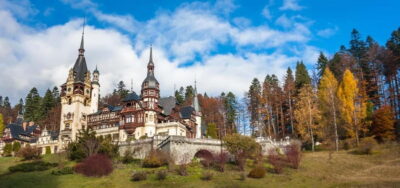
Dracula’s Castle, Peleș Castle & Brașov Day Trip
Read our review →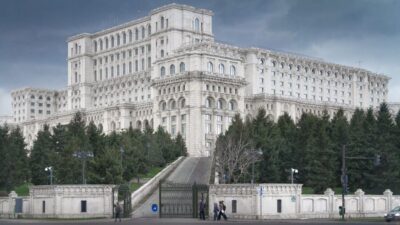
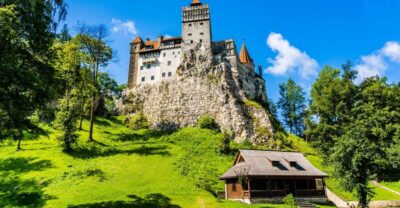
Day Trip to Dracula Castle, Peles Castle & Brașov
Read our review →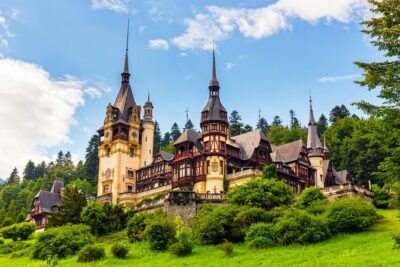
Bucharest to Dracula Castle, Peles Castle and Brasov Guided Tour
Read our review →