Reviewed · BUCHAREST TOURS
The Real Story of Gypsies – Slavery in Romania
The most striking part of this Bucharest walk is its subject: the forced enslavement of Roma people in Romania, a chapter of European history that is often reduced to a few vague lines. The route connects that past with the Holocaust in Romania, public memory, old stereotypes, and Roma craftsmanship today.
I like two things here. First, the tour puts difficult history in real places, from the former slave market near Piata Amzei to the Holocaust Memorial. Second, it ends at Mesteshukar ButiQ, where Roma-made copper goods give the story a living, human finish. The main consideration is that this is a serious, discussion-heavy walk, not a light sightseeing stroll.
In This Review
- Key points to know before booking
- Why this Bucharest walk matters
- Starting at Piata Amzei and the old slave market
- Palatul Stirbei and the people behind history
- The Romanian Athenaeum and culture’s role
- Cismigiu Park and the difference between myth and fact
- The Holocaust Memorial and Romania’s Roma victims
- The Iuliu Maniu statue and changing names
- Mesteshukar ButiQ and Roma craftsmanship today
- How the three-hour format works
- Price, timing, and what you receive
- Who should book this experience
- Should you book The Real Story of Gypsies?
- FAQ
- Where does the tour start?
- What time does the walk begin?
- Where does the tour end?
- How long does the experience last?
- Is the tour offered in English?
- How many people can join the group?
- Can I cancel for a refund?
Key points to know before booking
- A former slave market begins the story: The opening stop at Platoul Piata Amzei gives the tour a direct connection to Romania’s past treatment of Roma people.
- Seven stops cover history and present-day culture: You move from Palatul Stirbei and the Romanian Athenaeum to Cismigiu Park, the Holocaust Memorial, and a Roma craft shop.
- The walking time fills much of the three hours: The stops are short, usually about 10 to 15 minutes, with roughly 1 hour and 20 minutes spent moving through central Bucharest.
- Mihai is one guide you may meet: He is described as clear in English, willing to answer questions, and able to add useful Bucharest context.
- The group is capped at 15 people: That is a manageable size for a history walk where questions matter.
- The ending has a practical purpose: Mesteshukar ButiQ sells products made only by Roma craftsmen, including copper work.
Why this Bucharest walk matters
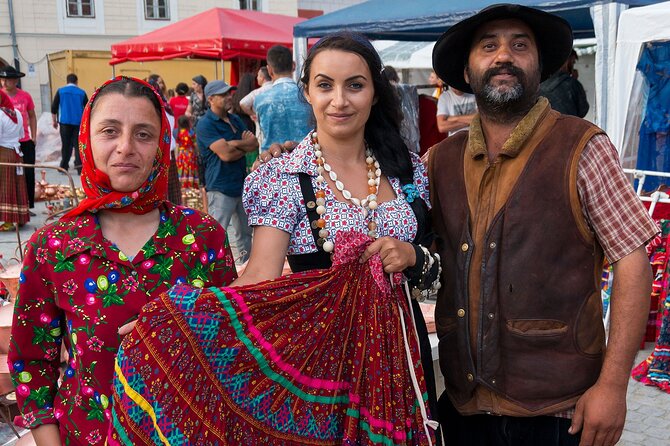
The title uses the word Gypsies, a term with a long history but one that many Roma people consider outdated or offensive. Roma is the preferred term in most modern discussion. Here, the older word matters because the walk examines how Roma people were described and treated in different periods, including a time when the word Gypsies was commonly used.
That distinction is useful from the start. You are not simply touring monuments with a Roma connection. You are looking at how language, law, public memory, and popular myths shape the way an ethnic group is seen.
The route also avoids treating Roma culture as folklore alone. It begins with enslavement, moves through persecution and genocide, and ends with working artisans. That structure gives the three hours a clear purpose. You see the damage caused by old systems, then consider how identity and skilled work continue today.
Other Bucharest days worth putting on the list:
- Bucharest: Dracula’s Castle, Peles Castle, & Brasov Old Town
★ 4.5 · 17,858 reviews - Bucharest: Dracula Castle, Peles Castle & Brasov Old Town
★ 4.6 · 10,891 reviews - Bucharest: Dracula’s Castle, Peleș Castle & Brașov Day Trip
★ 4.5 · 5,919 reviews
Starting at Piata Amzei and the old slave market
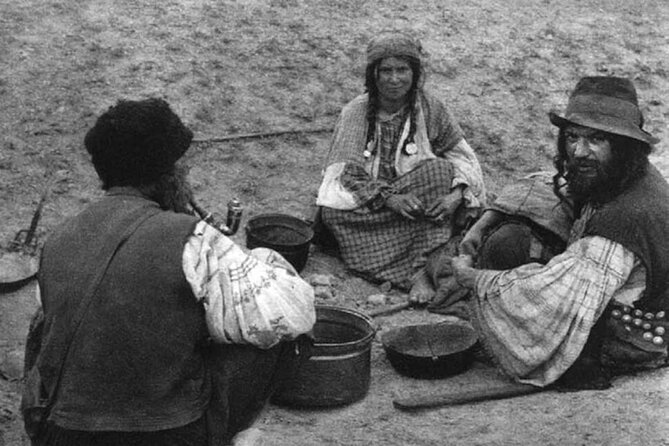
Meet at Teatrul Ion Creangă, Sala Mare, at Strada Piața Amzei 13. The meeting point is near Romana Square, a central part of Bucharest with public transportation nearby. The walk begins at 10:00 in the morning, so allow enough time to find the theater entrance and arrive ready to start.
The first stop is Platoul Piata Amzei, identified as the site of an old slaves market. You spend about 15 minutes here, with no separate admission charge. The short stop does not mean the subject is minor. It gives your guide a place to explain Romania’s system of Roma slavery and how the buying and selling of human beings affected families, social status, and later attitudes.
This is likely the most important stop for setting the tone. It replaces an abstract lesson with a physical location in the city. You are standing in an ordinary urban area, yet the ground carries a painful history that is easy to miss if you only follow Bucharest’s grand boulevards and royal buildings.
You should expect a frank discussion rather than a polished patriotic version of Romanian history. The tour’s value begins here because it asks you to connect modern prejudice with old institutions. The details provided for this stop are limited, so the depth will depend on the guide’s explanation and your questions. That makes an English-speaking guide who welcomes questions especially important.
Palatul Stirbei and the people behind history
The route then reaches Palatul Stirbei, a Bucharest palace built in 1835. You spend around 10 minutes here. The building is connected through its owner to an important moment in Roma history in Romania, so the stop links architecture with power and responsibility.
This is not presented as a palace interior tour. There is no admission ticket listed, and the focus is on the owner’s role rather than on a long architectural visit. You will probably have time to look at the building, hear the historical connection, and then move on.
I appreciate this kind of stop because it keeps the story from becoming detached from the people who held authority. The former slave market shows the system from the viewpoint of those who suffered under it. Palatul Stirbei points you toward the rulers and property owners involved in the wider structure.
The drawback is simple: 10 minutes is brief. If you are hoping for a detailed palace tour, this walk will not provide it. Think of the building as a historical marker within a larger argument, not as the main attraction.
The Romanian Athenaeum and culture’s role
The next stop brings you to the Romanian Athenaeum, one of Bucharest’s best-known cultural buildings. The visit lasts about 15 minutes and focuses on how the arts helped shape ideas about the Roma community over time.
The Athenaeum is a useful setting for that discussion. Grand cultural institutions often help define what a country considers respectable, national, and worth celebrating. A conversation here can show how Roma people have been left out of, simplified within, or viewed through the country’s official cultural story.
You will not be spending the afternoon inside the concert hall. The tour passes the building and uses its meaning as a starting point for discussion. That keeps the route moving, but it also means you should not book this experience expecting a conventional architecture tour of the Athenaeum.
This stop adds an important layer. The story is no longer only about laws and persecution. It asks how music, art, public buildings, and national pride influence the picture people carry in their minds. Those ideas can be harder to see than a monument, but they help explain why stereotypes last.
Same mountains, a completely different day out:
- Bucharest: Palace of Parliament Tickets and Guide
★ 4.3 · 3,182 reviews - Bucharest: Day Trip to Dracula Castle, Peles Castle & Brașov
★ 4.4 · 3,049 reviews - Bucharest to Dracula Castle, Peles Castle and Brasov Guided Tour
★ 4.5 · 2,933 reviews - Bucharest: Palace of Parliament Tickets and Guided Tour
★ 4.4 · 1,877 reviews
Cismigiu Park and the difference between myth and fact
Cismigiu Park is the most relaxed setting on the route. As Bucharest’s oldest and largest garden, it gives you about 15 minutes to walk through a quieter part of the city while the guide discusses truths and myths about Roma people.
The park stop provides a welcome change after the heavier material about slavery and cultural exclusion. It also lets the guide address the stories that circulate in everyday life, separating what is historically supported from what is repeated without thought.
Do not expect a long rest period. The park visit is one short part of a three-hour route, and the remaining time is used for walking between stops. Still, the change of setting matters. Difficult history can become a list of dates if you stay in formal buildings all morning. A public park brings the subject back into daily life.
For you, the key benefit is comparison. You have already heard about a former market and a palace connected to power. In Cismigiu, the focus shifts to the beliefs ordinary people inherit and repeat. That helps explain why the tour includes both documented events and popular myths.
The Holocaust Memorial and Romania’s Roma victims
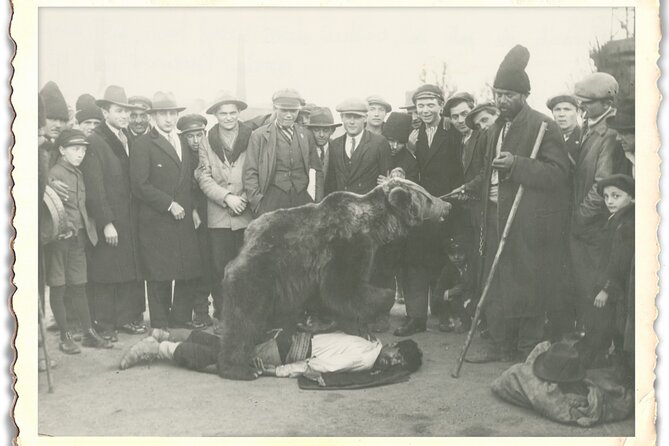
The tone turns somber at the Holocaust Memorial. The stop lasts about 15 minutes and commemorates victims of the Holocaust in Romania, including the thousands of Roma people killed through persecution and genocide.
This part deserves your full attention. The Roma experience during the Holocaust is often overlooked in general European history lessons, even though Roma communities across Europe suffered mass persecution and murder. The memorial gives the guide a place to discuss that loss within Romania’s own wartime history.
There is no admission fee listed for this stop. More important than the cost is the setting’s role in the tour. It shows that the story of Roma slavery did not end the discussion about discrimination. Different forms of persecution continued across later periods, and the memorial makes that continuity hard to ignore.
You may find this stop emotionally demanding, especially because the tour has already established the earlier history of enslavement. That is not a flaw, but it is worth knowing before you book. This experience asks you to listen carefully and sit with painful facts. It is best suited to someone who wants historical context rather than a cheerful morning of photo stops.
The Iuliu Maniu statue and changing names
At the Iuliu Maniu Statue, the guide presents another significant moment in Roma history, including the period when Roma people were still very much called Gypsies. The stop lasts about 15 minutes.
The supplied details do not identify the exact event connected with the statue, so you should ask the guide to explain the link clearly. That is a good reason to keep questions in mind as you walk. The point appears to be the relationship between public figures, political change, and the way Roma people were named and discussed.
This stop also returns to the issue of language. The older term appears in historical settings, but using Roma when speaking about people today is more respectful and accurate. A strong guide can help you understand why the words matter without turning the subject into a lecture about vocabulary alone.
As with Palatul Stirbei, the statue is a brief stop within a wider route. Its importance comes from the explanation rather than from a long look at the monument itself. If you enjoy tours that connect ordinary city landmarks to less familiar history, this is one of the route’s more useful features.
Mesteshukar ButiQ and Roma craftsmanship today
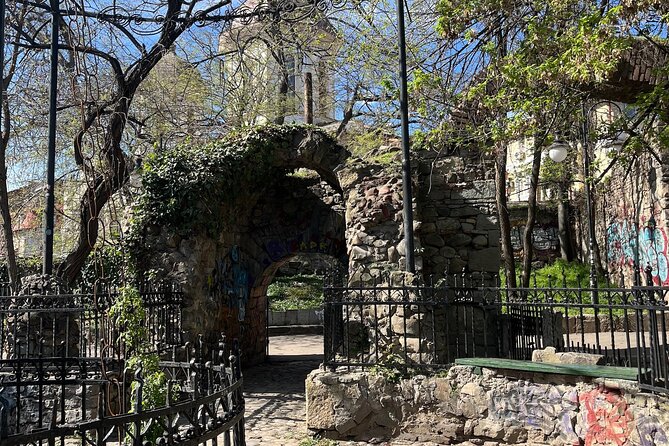
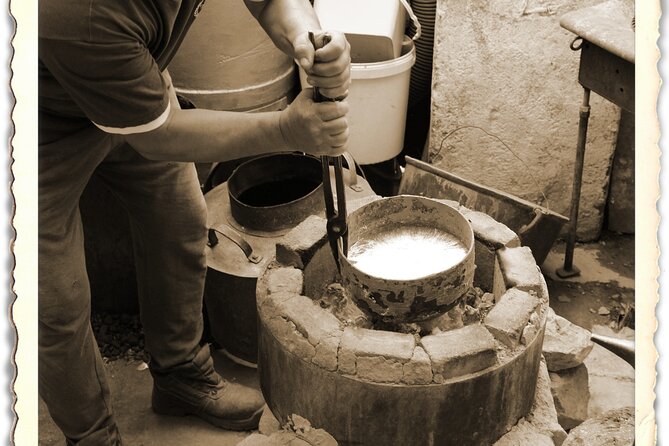
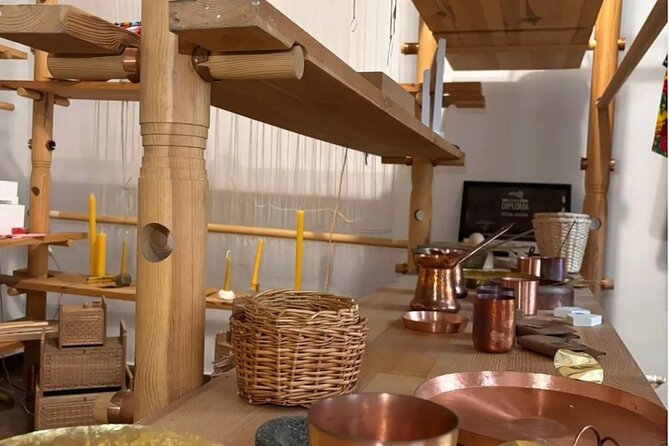
The walk ends at Mesteshukar ButiQ, at Bulevardul Mihail Kogălniceanu 12. The shop sells products made only by Roma craftsmen, and the final 15-minute stop focuses on copper work and the continuing role of Roma craftsmanship.
This ending is carefully chosen. After several stops about oppression, exclusion, and death, you finish with skill, work, and present-day culture. You are not asked to view Roma identity only through suffering. The shop gives you a chance to see handmade goods connected to living traditions.
The information provided does not promise a formal demonstration or a guaranteed purchase. You can expect to see authentic artisan products and learn about copper craftsmanship, but you should not assume that every visit includes a long workshop session.
I like the practical side of this stop. If you want a small souvenir, buying an item here supports Roma craftspeople directly, though the tour information does not list prices or specific products. Even if you do not buy anything, the shop helps complete the story. Roma culture is not frozen in a museum case or confined to historical tragedy.
The end point is also useful for planning the rest of your day. You finish away from the starting point, so check your map before leaving if you have another appointment. The tour does not include a return transfer.
How the three-hour format works
The walk lasts about three hours. The listed stops add up to roughly 100 minutes, while about 1 hour and 20 minutes is set aside for walking between them. That balance matters.
You are getting a guided city walk, not a series of indoor museum visits. The route allows you to see central Bucharest between the formal stops, and the movement gives the guide time to add context about the city. One participant specifically appreciated learning about Bucharest as well as Roma history, and that wider city context is part of the experience’s appeal.
The stops are short, ranging from 10 to 15 minutes. You will need to stay with the group and listen while standing or walking. Comfortable shoes are sensible, though the provided information does not state the walking distance or terrain.
The maximum group size is 15 people. That is small enough for a more personal discussion and gives you a fair chance to ask questions. The guide is central to the experience. Mihai is one guide associated with the walk, and he is described as clear in English, generous with his time, and happy to answer questions. The experience is offered in English.
Price, timing, and what you receive
At $30.04 per person, this is reasonably priced for a three-hour guided walk with a small maximum group. There are no separate admission charges listed for the stops, so most of what you pay goes toward the guide’s time, route planning, and historical interpretation.
The value is strongest if you want a focused subject that regular Bucharest sightseeing tours may skip. You are paying for access to a carefully connected story, not for expensive interiors or major ticketed attractions. If you prefer famous landmarks, cafes, and broad city history, another Bucharest tour may give you more of what you want.
Booking is usually done about 10 days ahead, which suggests you should reserve before your Bucharest visit if the date matters. Confirmation arrives when you book, and the tour accepts mobile tickets. Free cancellation is available up to 24 hours before the 10:00 start time. Changes or cancellations made inside that period are not accepted for a refund.
Most people can participate, and the route is near public transportation. The available information does not give specific details about wheelchair access, restrooms, or the exact walking surface, so ask the provider before booking if those details are important to you.
Who should book this experience
I would recommend this walk to you if you want to understand Bucharest beyond its grand buildings and familiar national symbols. It suits history-minded visitors, students, educators, and anyone interested in how minority communities are represented across time.
It also fits people who prefer a small group and an open conversation. The stated cap of 15 participants and the guide’s willingness to answer questions are real advantages here. Ask about the exact connection at the Iuliu Maniu Statue, the role of the Palatul Stirbei owner, and the differences between historical terms and modern usage.
I would be more cautious if you want a relaxed sightseeing walk with little emotional weight. The Holocaust Memorial and the account of slavery make this a serious morning. The short stop lengths may also frustrate you if you want to linger at each building.
Should you book The Real Story of Gypsies?
Book it if you want a direct, thoughtful look at Roma history in Romania, especially the links between slavery, public memory, genocide, stereotypes, and craftsmanship. The route is compact, the price is fair, and the ending at Mesteshukar ButiQ keeps the experience connected to Roma life today.
Skip it if you are mainly seeking interiors, major entrance-ticket sights, or a broad introduction to Bucharest. For everyone else, this is a useful addition to a city visit, provided you arrive ready for a serious conversation and make time for questions.
FAQ
Where does the tour start?
It starts at Teatrul Ion Creangă, Sala Mare, at Strada Piața Amzei 13 in Bucharest.
What time does the walk begin?
The tour starts at 10:00 in the morning.
Where does the tour end?
It ends at Mesteshukar ButiQ, Bulevardul Mihail Kogălniceanu 12, Bucharest.
How long does the experience last?
The walk lasts approximately three hours. About 1 hour and 20 minutes is allocated to walking between the stops.
Is the tour offered in English?
Yes. English is the listed language, and mobile tickets are accepted.
How many people can join the group?
The maximum group size is 15 participants.
Can I cancel for a refund?
Yes. You can cancel at least 24 hours before the local start time for a full refund. Cancellations or changes made less than 24 hours before the start are not accepted for a refund.
Just added around Bucharest
- Village Museum Bucharest Guided Tour★ 5.0 · 6 reviews
- Bucharest: Dealu Mare Winery Private Trip with Wine Tasting★ 4.9 · 6 reviews
- Winery touring & private wine tasting – one day private tour★ 5.0 · 3 reviews
- Transylvania Tour: Dracula’s Castle, Peles Palace & Brasov★ 5.0 · 19 reviews
- Discover Medieval Transylvania Small Group Tour – 7 days★ 5.0 · 4 reviews
- Bucharest Airport Transfer To Constanta Mamaia★ 5.0 · 3 reviews
- Airport Henri Coanda (Otopeni) to Bucharest – Private Transfer – Driver★ 5.0 · 5 reviews
- Gems of Transilvania: Brasov,Sighisoara,Sibiu,Viscri and more★ 5.0 · 6 reviews
Bucharest Tours, compared.
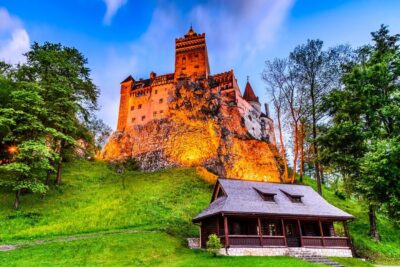
Dracula’s Castle, Peles Castle, & Brasov Old Town
Read our review →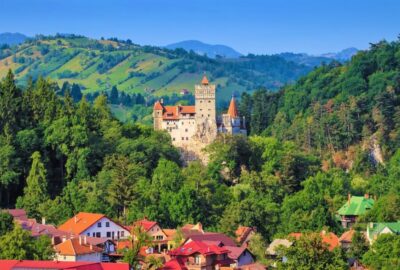
Dracula Castle, Peles Castle & Brasov Old Town
Read our review →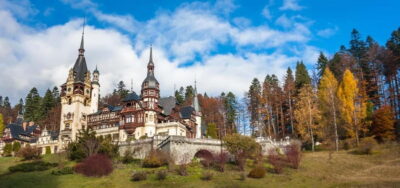
Dracula’s Castle, Peleș Castle & Brașov Day Trip
Read our review →
Day Trip to Dracula Castle, Peles Castle & Brașov
Read our review →
Bucharest to Dracula Castle, Peles Castle and Brasov Guided Tour
Read our review →