Reviewed · GUIDED
Tour guide in Iasi, Romania
Iasi reveals itself through stories, and guide Peter is the sort of host who gives each old building, monument, and famous figure a human angle. Starting at the Alexandru Ioan Cuza Statue in Union Square, you walk through several central parts of the city while tracing its development from its earliest mention to the better-documented last 250 years.
I like the small maximum of four people, which gives Peter room to adjust his pace and answer questions. I also like his use of humor, improvisation, and clear storytelling. The main consideration is that this is a walking tour with some historical uncertainty in the earliest periods, and it is not suitable for children under seven, wheelchair users, or people over 70.
In This Review
- Key points at a glance
- Starting with Cuza in Union Square
- Following Iasi through its changing periods
- Seeing several faces of the city on foot
- Peter’s style: stories, humor, and conversation
- Why the small group changes the value
- What you will take away from the walk
- Who should book this Iasi walking tour
- Meeting details, timing, and practical advice
- Is Peter’s Iasi tour worth $70?
- Should you book it?
- FAQ
- Where does the tour begin?
- How long does the tour last?
- What languages are available?
- How many people can join?
- What does the tour cover?
- What should I bring?
- Can I cancel or pay later?
Key points at a glance
- Peter’s storytelling style: Expect history explained through people, buildings, legends, and short stories rather than a dry list of dates.
- Union Square starting point: The tour begins in front of the Alexandru Ioan Cuza Statue, an easy central meeting place.
- A mostly central route: You see different sides of Iasi without spending much of the three hours on long walks between distant areas.
- A tiny group: With no more than four participants, you can ask questions and shape parts of the conversation.
- English or Romanian: Peter guides in either language, and his English was specifically praised for clarity.
- Useful after-tour advice: Peter has sent personal recommendations by WhatsApp, which can help you plan the rest of your time in Iasi.
Starting with Cuza in Union Square
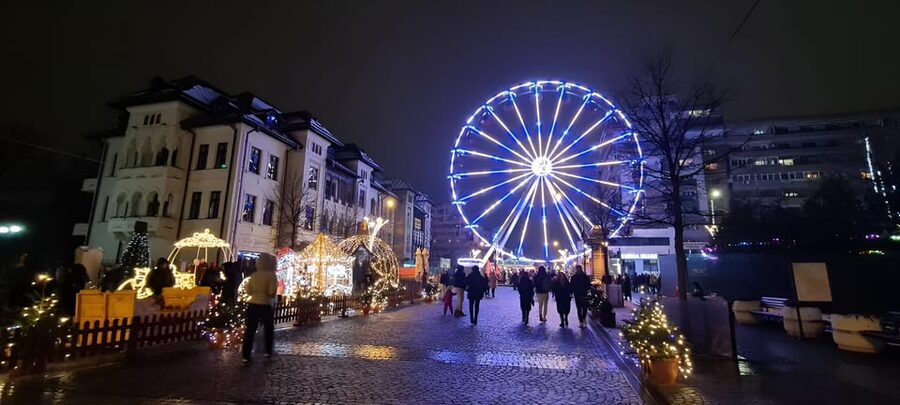
The tour begins at the statue of Alexandru Ioan Cuza in Piata Unirii, known in English as Union Square. This gives you a sensible first meeting point because the square is central, easy to identify, and tied to an important period in Romanian history.
From here, Peter sets up the story of Iasi. He explains when the city was first mentioned and then moves through the events that shaped it. For the earliest centuries, he is careful about the limits of the evidence. That is a good habit. Old cities often attract confident legends, but a guide who separates documented events from uncertain tradition is more useful than one who presents every tale as fact.
The opening also helps you understand the tour’s method. You are not simply being taken from one famous sight to another. You are learning how Iasi changed over time and how different periods left marks on its streets, buildings, and public spaces.
A few more Romania trips to weigh up
- Bucharest: Palace of Parliament Tickets and Guide
★ 4.3 · 3,182 reviews - Bucharest to Dracula Castle, Peles Castle and Brasov Guided Tour
★ 4.5 · 2,933 reviews - Bucharest: Palace of Parliament Tickets and Guided Tour
★ 4.4 · 1,877 reviews
Following Iasi through its changing periods
The historical focus is strongest from the 18th century onward, when more information is available. That means the tour gives you a clearer account of the last 250 years than of the city’s distant beginnings.
I like this approach because it keeps the story grounded. You can still hear about earlier centuries and major events before the 17th and 18th centuries, but the explanation does not pretend that every detail is equally certain. If you enjoy history but dislike inflated claims, this careful balance matters.
Peter also brings the past down to street level. Instead of treating history as something confined to museums, he connects it to houses, monuments, and places you are looking at in real time. One particularly useful feature is his habit of attaching a small story to many buildings and locations. That gives the walk a strong sense of place and helps you remember what you saw after the tour ends.
You should expect a broad city story rather than a specialist examination of one building or era. If you want an architectural survey with detailed technical terms, this may feel light. If you want a readable introduction to Iasi, the format is more appealing.
Seeing several faces of the city on foot

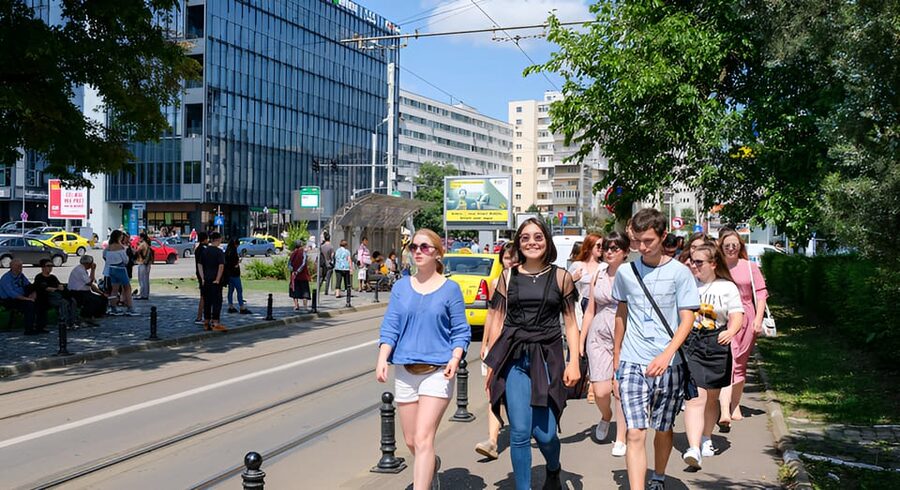
The route passes through different parts of Iasi, but it remains mostly close to the centre. That is a practical choice. Three hours sounds generous until you add explanations, questions, photographs, and pauses at monuments. A route that avoids long stretches of ordinary walking leaves more time for the actual city.
Peter describes the experience as a way to see the city’s different faces, legends, and defining periods. In practical terms, that means you should not expect one single type of sight. The walk is designed to show contrasts and changes within the central area.
Some stops may appeal to you for their architecture. Others are valuable because of the person or event linked to them. Still others help explain how the city developed. This variety keeps the pace from becoming a long lecture in one square.
There is free time for exploration and photographs. That matters because a guide-led walk can sometimes feel tightly packed, with no room to look up, frame a picture, or take in a façade at your own speed. Here, the schedule allows at least some breathing room.
The route is not described as fully accessible, and the experience is not suitable for wheelchair users. Comfortable shoes are required. Even though the walk stays near the centre, three hours on foot can be tiring, particularly if you prefer frequent seating or have mobility concerns.
Peter’s style: stories, humor, and conversation
The strongest part of this experience is the guide’s delivery. Peter is described as friendly, passionate, funny, and very well informed about Iasi’s past, buildings, and notable people.
That combination is more important than it may first sound. A city walk can contain good information and still feel flat if the guide simply recites it. Peter uses storytelling and humor to make the material easier to follow. He also relies on improvisation and conversation, so the experience is likely to feel more personal than a fixed script.
One useful detail is the repeated praise for his English. If you are visiting from abroad, clear communication makes a real difference, especially when a guide is explaining names, historical periods, and local references. The tour is offered in English or Romanian.
You also have a chance to ask questions in a small setting. With a limit of four people, Peter does not need to speak to a crowd at the back of a large group. You can ask about a building, return to a point you missed, or spend a little more time on a subject that interests you.
The guide’s communication skills are also useful outside the formal walk. Peter has provided recommendations through WhatsApp after the tour. The available information does not specify the exact recommendations, so you should treat this as a helpful personal follow-up rather than a promised restaurant or sightseeing package.
Same mountains, a completely different day out:
- Bucharest: Dracula’s Castle, Peles Castle, & Brasov Old Town
★ 4.5 · 17,858 reviews - Bucharest: Dracula Castle, Peles Castle & Brasov Old Town
★ 4.6 · 10,891 reviews - Bucharest: Dracula’s Castle, Peleș Castle & Brașov Day Trip
★ 4.5 · 5,919 reviews - Bucharest: Day Trip to Dracula Castle, Peles Castle & Brașov
★ 4.4 · 3,049 reviews
Why the small group changes the value
The four-person limit is one of the clearest advantages here. Small groups allow better eye contact, fewer interruptions, and a more flexible pace. You are less likely to miss a quiet detail because someone at the edge of a large group cannot hear.
The group size also supports improvisation. If everyone is interested in architecture, Peter can spend more time on buildings. If the group prefers political history or local personalities, the conversation can lean that way. The tour includes customized itineraries to match group interests, although the exact changes depend on what your group requests.
There is a tradeoff. A small-group experience costs $70 per person, which is not the cheapest way to walk around Iasi. The price makes the most sense if you value direct access to a local guide, a limited group, and a tailored conversation.
For a solo visitor or a couple, the cost can be reasonable because you are paying for attention rather than just movement between sights. For a group of four friends, the experience may also work well because you share the guide without the feel of a large organized excursion. If you mainly want a quick orientation and plan to read about the city on your own, the price may feel high.
The tour lasts three hours, giving you enough time to get a useful introduction without committing to a full day. One published experience lasted four hours, but the stated duration for this activity is three hours, so plan around three and allow extra time only if your group and guide agree.
What you will take away from the walk
By the end, you should have a clearer framework for understanding Iasi. You will hear when the city first appeared in written records, learn about major events through the 17th and 18th centuries, and spend more time on the better-documented story of the past 250 years.
The practical benefit is that later sightseeing becomes easier. Buildings that might otherwise blur together can begin to fit into a larger story. A monument is no longer just a photo stop. A street can show a shift in the city’s fortunes, and an old house can prompt a story about a person or period.
I also like the balance between planned explanation and free time. You receive a guided structure, but you are not rushed from one point to the next without a chance to pause. That is particularly useful at the beginning of a stay, when you want orientation but still need time to notice what appeals to you.
The tour is best treated as a starting point, not a complete education in Iasi. Three hours cannot cover every district, museum, church, or historical event. Its job is to give you context and help you decide what deserves a closer look afterward.
Who should book this Iasi walking tour
I would recommend it most strongly to first-time visitors who want a personal introduction to the city. It suits people who enjoy hearing why a place matters, not just collecting a checklist of sights.
It is also a good match for visitors who like conversation. Peter’s humor, friendly manner, and ability to explain famous people and buildings make the walk feel social as well as educational. Couples, solo visitors, and very small groups should get the most from the four-person limit.
The experience may appeal to repeat visitors too, especially if your first visit was mostly independent sightseeing. A local guide can connect places you already saw and add stories you would not find from a quick look at a map.
I would be more cautious if you have limited mobility, dislike walking for several hours, or need a fully accessible route. The age restriction also matters: children under seven cannot join, and the activity is not suitable for people over 70. These limits are unusual enough that you should check them carefully before paying.
Meeting details, timing, and practical advice
Meet in front of the Alexandru Ioan Cuza Statue in Union Square. Arrive with comfortable shoes, since the experience is on foot and includes several central areas rather than one stationary talk.
The tour is available in English and Romanian. Starting times vary, so check availability when booking. Since the group is limited to four, it is wise to choose a time that fits your schedule rather than assuming you can always move to another departure.
The booking terms are flexible. You can cancel up to 24 hours in advance for a full refund, and you can reserve now and pay later. Those terms are useful if your Iasi plans are still shifting.
The activity is provided by LPS DATE COMPANY. The tour price is $70 per person. That is a premium over walking independently, but the comparison is not quite like-for-like. Independent sightseeing gives you freedom and costs little, while this tour gives you a local interpreter, a three-hour structure, historical explanation, photography pauses, and a very small group.
Is Peter’s Iasi tour worth $70?
I think the price is justified for people who care about the guide’s personality and want a focused introduction to Iasi. The strongest value comes from Peter himself: clear English, local knowledge, personal stories, humor, and the ability to shape the conversation.
The experience has a high rating of 4.9 from 14 reviews, with praise centered on Peter’s passion, friendly manner, historical explanations, and communication. One person described the old buildings as a highlight, while another appreciated the enthusiasm and humor. That pattern suggests the guide, rather than a long list of grand attractions, is the main reason to book.
The limitations are clear. The route stays near the centre, so it will not show every side of Iasi. The early history is presented with care because firm proof is limited. The walk also excludes several age and accessibility groups, and $70 is a considerable amount if you only want basic directions.
Should you book it?
Book this tour if you want to understand Iasi through stories, buildings, and local conversation, especially on your first day or two in the city. Peter’s small-group format should give you a more personal experience than a large walking tour, and his follow-up recommendations may help shape the rest of your visit.
Skip it if you prefer exploring alone, need an accessible route, or want a low-cost overview. For everyone else, the combination of a central route, three hours, clear English, and Peter’s warm storytelling makes this a sound way to get your bearings in Iasi.
FAQ
Where does the tour begin?
The meeting point is in front of the Alexandru Ioan Cuza Statue in Piata Unirii, also called Union Square.
How long does the tour last?
The stated duration is three hours. Starting times vary, so check availability when booking.
What languages are available?
The live tour guide is available in English and Romanian.
How many people can join?
The group is limited to four participants.
What does the tour cover?
The walk covers different central parts of Iasi and explains the city’s earliest written mention, major events through the 17th and 18th centuries, and its more detailed development over the last 250 years. It also includes stories, legends, buildings, monuments, and notable people.
What should I bring?
Bring comfortable shoes because the experience is a walking tour.
Can I cancel or pay later?
You can cancel up to 24 hours in advance for a full refund. You can also reserve your place and pay later.
Just added around Romania
- Village Museum Bucharest Guided Tour★ 5.0 · 6 reviews
- Bucharest: Dealu Mare Winery Private Trip with Wine Tasting★ 4.9 · 6 reviews
- Winery touring & private wine tasting – one day private tour★ 5.0 · 3 reviews
- Turda Salt Mine, Gorge & Rimetea Village (private from Cluj)★ 5.0 · 5 reviews
- Private tour to Turda Salt Mine, Rimetea and Alba Iulia★ 4.8 · 5 reviews
- PRIVATE 4-5h speedboat tour to the village Mila23★ 5.0 · 3 reviews
- Transylvania Tour: Dracula’s Castle, Peles Palace & Brasov★ 5.0 · 19 reviews
- Turda salt mine and Corvin Castle day tour from Cluj★ 5.0 · 9 reviews
Guided, compared.


Bucharest to Dracula Castle, Peles Castle and Brasov Guided Tour
Read our review →
Dracula Castle, Peles Castle & Brasov Guided Tour
Read our review →