
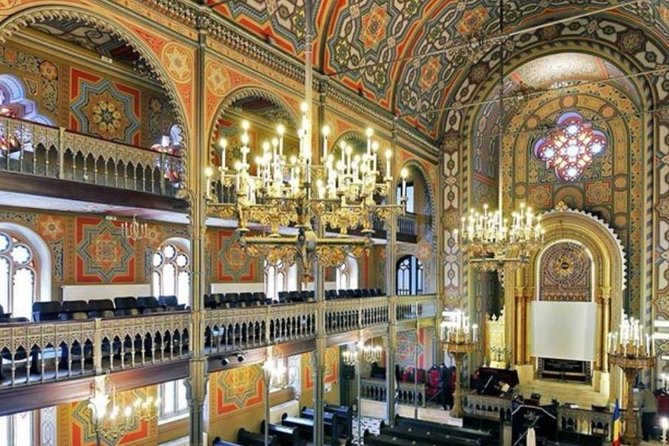
Reviewed · JEWISH HERITAGE TOURS
4h Jewish Legacy in Bucharest – Private Tour by Car and Walking
Bucharest’s Jewish story comes into focus through its surviving synagogues, a moving Holocaust memorial, and the city’s Yiddish theatre. This four-hour private tour uses a car to link the sites, then gives you time to walk through the buildings with local Jewish guides and museum staff.
I like the personal guidance from Radu and Sebastian, both praised for their strong command of Romanian and Jewish history. I also like the mix of active religious life, museum displays, and difficult wartime memory, rather than a tour limited to old façades. The main caution is access: religious holidays, rehearsals, current events, or synagogue schedules can mean that one or more stops is closed.
In This Review
- Key points to know before booking
- Why Jewish Bucharest needs a private tour
- The Choral Temple and a surviving religious life
- The Holy Union Temple and Jewish community museum
- The Holocaust Memorial and Romania’s difficult record
- The Jewish State Theatre and Yiddish culture
- What Radu and Sebastian add to the day
- How the car changes the experience
- The real value of the $130.97 price
- What can go wrong, and how to plan around it
- Who will get the most from this tour?
- Should you book the Jewish Legacy in Bucharest tour?
- FAQ
- How long is the Jewish Legacy in Bucharest tour?
- What time does the tour start?
- Is hotel pickup available?
- Is transportation included?
- Are entrance fees included?
- Can the Jewish State Theatre always be visited?
- What is the cancellation policy?
Key points to know before booking
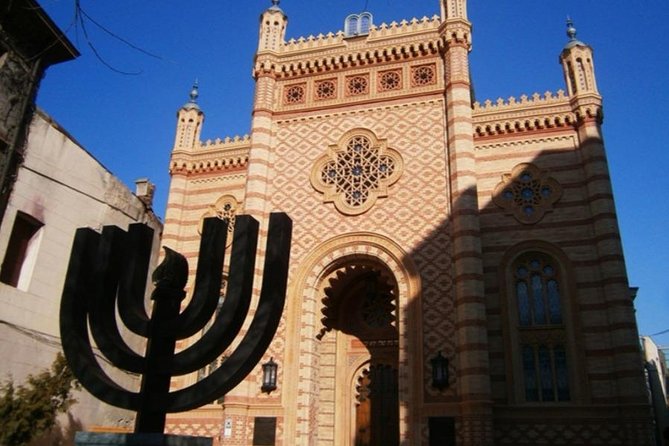
- The Choral Temple still holds services: It is one of Bucharest’s few active synagogues and may offer the most direct connection with Jewish life today.
- The Holy Union Temple now houses a museum: Exhibitions and ritual objects explain how Bucharest’s Jewish community lived and worshipped.
- The Holocaust Memorial is included without an entrance fee: Its Hebrew letters spell zachor, meaning remember.
- Radu is a frequently requested guide: He brings personal knowledge of Bucharest and has guided visitors through the city’s remaining Jewish sites.
- The Jewish Theatre is not guaranteed: You can visit only when no rehearsal is taking place, and the theatre costs 25 RON.
- Private transport saves time: Hotel pickup, air conditioning, and door-to-door travel make it easier to cover several scattered locations in four hours.
Why Jewish Bucharest needs a private tour
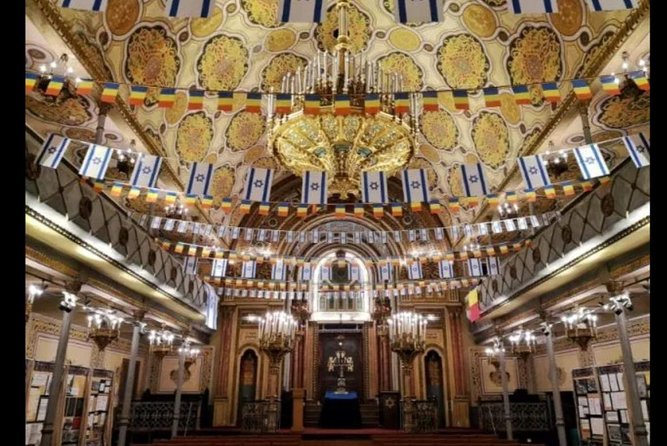
Jewish Bucharest is not presented in one compact historic quarter with a clear entrance and exit. The important places are spread through the city, and some are active religious buildings, museums, memorial spaces, or cultural institutions with changing opening conditions.
That is where the private car helps. You are not spending your short visit figuring out how to connect each address by public transport. You can move from the Choral Temple to the Jewish museum, the Holocaust Memorial, and the Jewish State Theatre while your guide explains the city around you.
I also value the private format because the subject calls for questions. You can ask about the old community, wartime persecution, present-day religious life, or Romanian Jewish culture without trying to fit into a large group’s pace. Only your own party takes part.
The tour lasts about four hours and begins at 10:00 a.m. Pickup and drop-off at your hotel are offered, which is especially useful if you want a focused morning rather than a full-day city tour.
More Jewish Heritage Tours in Bucharest
- Bucharest Jewish Heritage | Holocaust Memorial | Private Car Tour
★ 5.0 · 38 reviews - Half-Day Jewish Heritage Walking Tour in Bucharest
★ 5.0 · 20 reviews - The Jewish heritage of Bucharest – half day walking tour
★ 5.0 · 15 reviews
The Choral Temple and a surviving religious life
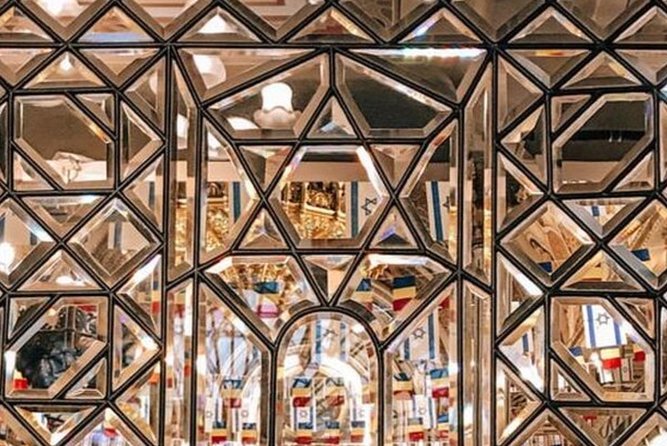
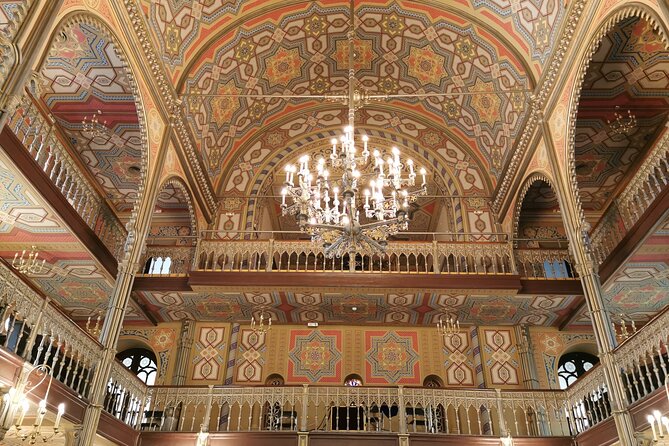
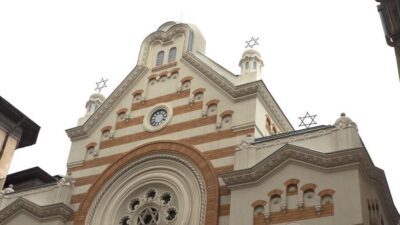
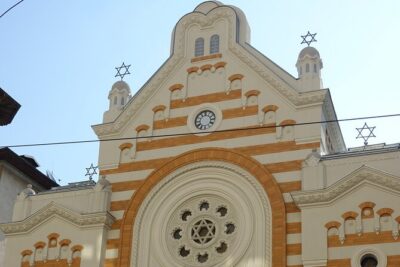
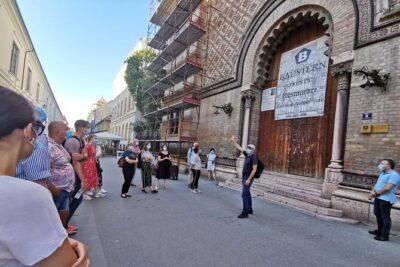
The Choral Temple is usually the emotional starting point. Its design is based on Vienna’s Leopoldstadt-Tempelgasse Great Synagogue, giving the building a grand Central European character that reflects the former importance of Bucharest’s Jewish population.
The building was badly damaged by far-right Legionaries and Nazis. It was restored in 1945, and it continues to hold daily religious services in a smaller hall. That detail matters. You are not looking only at a preserved monument. You are visiting one of the few active synagogues remaining in Bucharest and Romania.
Plan for about an hour here, though the exact visit can depend on religious observance and access. The admission fee is listed as 30 RON, about €6, and is not part of the tour price.
A Jewish guide at the temple can add context that a driver-guide alone cannot provide. One especially memorable possibility is arriving during a Torah procession, though this is not something you should expect on every departure. The point is to see the building as both a historic survivor and a working place of worship.
The Choral Temple is also a useful reminder that Jewish Bucharest is not only a story of loss. The community is smaller than it once was, but religious life has not disappeared.
The Holy Union Temple and Jewish community museum
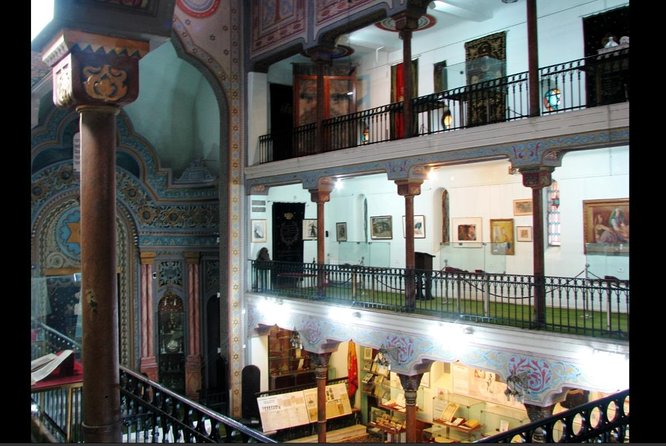
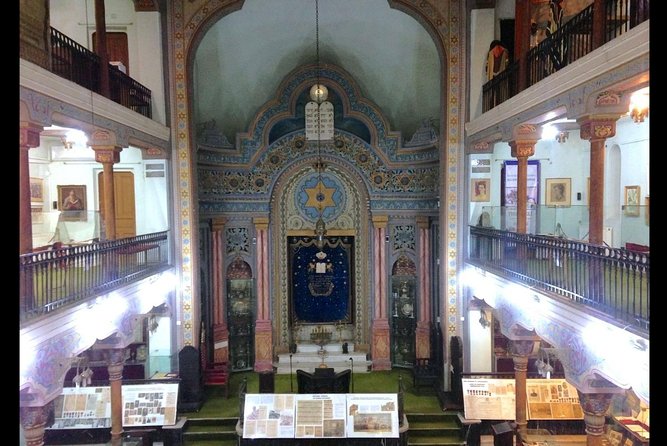
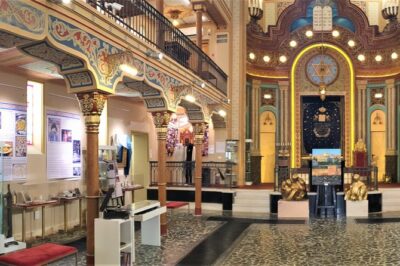
The next major stop is the former Holy Union Temple, built in 1836. Since 1978, it has served as the Museum of History of the Jewish Community.
This is likely the most useful stop if you want to understand daily life rather than only architecture. Separate displays explain how Bucharest’s Jewish community lived, worshipped, and organized itself. The museum also holds an important collection of Jewish religious objects.
Much of the liturgical collection was assembled by Moses Rosen, Romania’s chief rabbi from 1964 to 1994, who founded the museum. That gives the displays a strong link to the country’s modern Jewish leadership, not just its nineteenth-century past.
You should allow about an hour. Admission is listed as 30 RON, about €6, and is paid separately.
The museum can also soften the usual pattern of a Holocaust-focused visit. You see objects and institutions connected with ordinary religious and community life, then place the later destruction in a clearer human setting. I find that sequence more useful than beginning with dates and ending with a monument.
One practical point: the building may not function like a standard museum with completely predictable access. Your guide can help, but the tour cannot guarantee that every synagogue or religious site will open on every date.
The Holocaust Memorial and Romania’s difficult record
The Holocaust Memorial was unveiled in October 2009. It marks Romania’s official recognition of the country’s role in the genocide of Europe’s Jews.
The memorial is not a grand, decorative stop. Its power comes from its directness. A central column carries one Hebrew letter on each side. Together, the letters spell zachor, meaning remember. A hall of remembrance and plaques listing many Romanian Holocaust victims add names and human scale to the site.
Admission is free, and the visit is planned for about an hour. You should expect the tone of the tour to change here. The earlier stops show religious practice, architecture, and community life. This memorial asks you to confront what happened to that world and Romania’s responsibility for it.
Your guide’s role matters greatly at this point. Radu has been praised for speaking plainly about Romania’s part in the Holocaust, while also explaining the wider story of Bucharest and its Jewish population. That direct approach suits the memorial. You are not left with a vague statement about wartime suffering, but with a clearer understanding that Romania had its own role in the persecution and deaths of Jews.
Even if you are not Jewish, this stop gives the tour wider value. It places Romanian history in a European setting and shows why the country’s public acknowledgment took time.
Same mountains, a completely different day out:
- Bucharest: Dracula’s Castle, Peles Castle, & Brasov Old Town
★ 4.5 · 17,858 reviews - Bucharest: Dracula Castle, Peles Castle & Brasov Old Town
★ 4.6 · 10,891 reviews - Bucharest: Dracula’s Castle, Peleș Castle & Brașov Day Trip
★ 4.5 · 5,919 reviews - Bucharest: Palace of Parliament Tickets and Guide
★ 4.3 · 3,182 reviews
The Jewish State Theatre and Yiddish culture
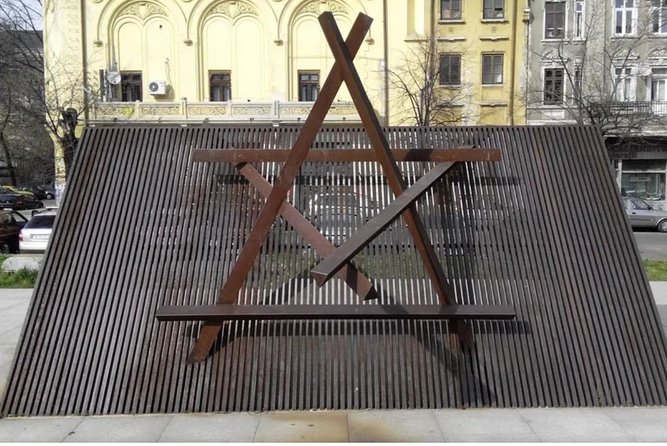
The Jewish State Theatre, or Teatrul Evreiesc de Stat, represents the cultural side of the tour. It is described as an edifice of Hebrew culture and is associated with performances in Yiddish.
A visit can be one of the most distinctive parts of the morning. Bucharest is home to the only theatre mentioned in the tour material where plays are performed entirely in Yiddish. You might spend time with someone such as Marcel, who has helped explain the theatre and its cultural role.
The theatre is not always available. It can be visited only when there are no rehearsals, so you should treat this as a possible stop rather than a firm promise. The entrance fee is 25 RON, about €5, paid separately.
Not everyone finds the theatre as rewarding as the synagogues and museum. That is a fair consideration if your main interest is religious history or Holocaust remembrance. Still, the theatre gives you another way to understand Jewish life. A community is more than its houses of worship and its tragedies. Language, performance, and public culture matter too.
If the theatre cannot be entered, your guide may explain it from outside or adjust the route. The experience is strongest when you regard the schedule as flexible.
What Radu and Sebastian add to the day
The guide is the heart of this experience. Radu has received particularly strong praise for his knowledge of Jewish history in Romania, his life in Bucharest, and his ability to connect the sites with the city you are seeing from the car.
He is also a retired chemical engineer, a detail that gives you a sense of the kind of local person who may lead the tour. He is not simply delivering a memorized script. He brings a long personal connection with Bucharest and can explain how the city has changed.
Sebastian has also been praised for making visitors feel welcome and comfortable while sharing his knowledge of his hometown. The operator may assign either guide, so you should not book on the assumption that a particular person is guaranteed unless that is confirmed directly.
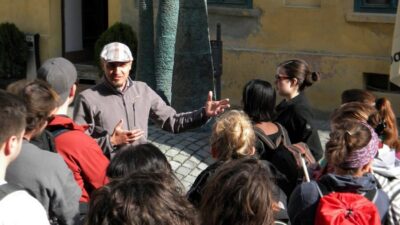
At the temples and museum, local Jewish staff or guides may provide additional explanation. That division works well. Your main guide can handle the broader story, transport, and city context, while people connected with the institutions speak about the buildings and collections.
The best guides also know when to stop talking. One strong feature of this tour is the chance to let curators and temple representatives explain their own spaces. You get both the broad map and the close-up view.
How the car changes the experience
A climate-controlled private vehicle is more than a comfort feature here. Bucharest’s Jewish sites are not presented as a single walking route, and a four-hour schedule leaves little room for wrong turns or long waits.
The car lets you see more without turning the morning into a march. You can look out at the former Jewish part of town as you move between stops, while the guide fills in the city’s connections to Jewish life.
Hotel pickup and drop-off also make the tour easy to fit into a short stay. Start time is 10:00 a.m., and the experience is near public transportation, but the included private transport is the practical choice for this particular route.
You should still expect some walking inside and around the sites. Wear shoes that are comfortable for standing, and allow the schedule to breathe. A religious service, security check, closed door, or extended conversation can change the exact timing.
The real value of the $130.97 price
At $130.97 per person, this is not a cheap sightseeing ride. The value depends heavily on your group size and your interest in the subject.
You are paying for a private four-hour experience, an English-speaking professional guide, and transport between several locations. If you are traveling with family or friends, group discounts may improve the per-person cost. The private format also means you are not paying for a general city route that spends half its time on sights you do not care about.
Entrance fees are extra. Based on the listed prices, visiting all three paid sites would add 85 RON per person: 30 RON for the Choral Temple, 30 RON for the museum, and 25 RON for the Jewish State Theatre. The Holocaust Memorial is free.
That makes the total cost worth checking before you book. If your goal is a broad introduction to Bucharest, a standard city tour will likely cover more places for less money. If your goal is Jewish Bucharest, access to a local guide and private transport gives this tour a clear reason to cost more.
The value drops if multiple sites are closed and the morning turns into a drive-by tour. Religious holidays have caused closures, and one customer received a partial refund offer after several places were unavailable. For that reason, confirm the operating conditions when possible, especially around holidays or periods of unusual synagogue restrictions.
What can go wrong, and how to plan around it
The biggest weakness is not the subject or the guides. It is the uncertain access to religious and cultural buildings.
The Mamular Synagogue is not open every day, and it is not listed as one of the four main scheduled stops. The Jewish Theatre may be closed for rehearsals. Synagogues can also close for religious holidays or other local conditions.
You should ask before booking whether the Choral Temple, the museum, and the theatre are expected to be open on your date. This will not remove every possibility of change, but it will help you decide with clear expectations.
Do not book at the last minute. One failed departure resulted from a same-day booking made at 7:30 a.m. for a 10:00 a.m. start, with no guide available. Confirmation is normally received at booking, but advance planning is the sensible choice.
The cancellation rule is simple: you can receive a full refund if you cancel at least 24 hours before the start time. Cancellations or changes made less than 24 hours ahead are not accepted for a refund.
Who will get the most from this tour?
I would choose this experience if you want Jewish history to be a central part of your Bucharest visit, not a short footnote between general city sights.
It suits you especially well if:
- You prefer a private guide to a large group.
- You want hotel pickup and air-conditioned transport.
- You care about both Jewish religious life and Romania’s wartime record.
- You value personal explanation more than a fast list of monuments.
- You have four hours available and want a focused morning.
- You are willing to accept that a synagogue or theatre may be closed.
It is less suitable if you need every advertised stop to operate exactly as planned. It may also feel expensive if you are mainly interested in architecture and do not plan to enter the paid sites.
Should you book the Jewish Legacy in Bucharest tour?
Book it if you want a serious, personal introduction to Bucharest’s Jewish past and present, and if the private format fits your budget. The combination of the active Choral Temple, Holy Union Temple museum, Holocaust Memorial, and Yiddish theatre gives you more than a collection of façades.
I would contact the operator before paying to check expected access on your date, particularly for the synagogues and theatre. If the main sites are open, the guide can turn a scattered set of addresses into a clear story about community, worship, persecution, survival, and culture.
If closures are likely, ask what replacement route or partial refund arrangement applies. With that question settled, this is one of the more focused ways to understand Jewish Bucharest in a single morning.
FAQ
How long is the Jewish Legacy in Bucharest tour?
The tour lasts approximately four hours.
What time does the tour start?
The listed start time is 10:00 a.m.
Is hotel pickup available?
Yes. Pickup and drop-off at your hotel are offered.
Is transportation included?
Yes. Private transportation in a climate-controlled vehicle and an English-speaking professional guide are included.
Are entrance fees included?
No. The listed entrance fees are 30 RON for the Choral Temple, 30 RON for the Museum of History of the Jewish Community, and 25 RON for the Jewish State Theatre. The Holocaust Memorial is free.
Can the Jewish State Theatre always be visited?
No. The theatre can be visited only when there are no rehearsals.
What is the cancellation policy?
You can cancel at least 24 hours before the start time for a full refund. Cancellations or changes made less than 24 hours before the start time are not accepted for a refund.
More Walking Tours in Bucharest
- Bucharest: City Highlights Guided Walking Tour
★ 4.9 · 1,482 reviews - Bucharest Highlights Walking Tour
★ 5.0 · 469 reviews - Bucharest: Ghost Stories & Romanian Mythology Walking Tour
★ 4.9 · 287 reviews - Bucharest: Guided Walking Tour with Romanian Snack
★ 4.9 · 228 reviews
Just added around Bucharest
- Village Museum Bucharest Guided Tour★ 5.0 · 6 reviews
- Bucharest: Dealu Mare Winery Private Trip with Wine Tasting★ 4.9 · 6 reviews
- Winery touring & private wine tasting – one day private tour★ 5.0 · 3 reviews
- Transylvania Tour: Dracula’s Castle, Peles Palace & Brasov★ 5.0 · 19 reviews
- Discover Medieval Transylvania Small Group Tour – 7 days★ 5.0 · 4 reviews
- Bucharest Airport Transfer To Constanta Mamaia★ 5.0 · 3 reviews
- Airport Henri Coanda (Otopeni) to Bucharest – Private Transfer – Driver★ 5.0 · 5 reviews
- Gems of Transilvania: Brasov,Sighisoara,Sibiu,Viscri and more★ 5.0 · 6 reviews
Jewish Heritage Tours, compared.
Bucharest Jewish Heritage | Holocaust Memorial | Private Car Tour
Read our review →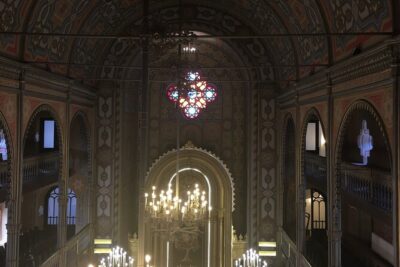
Browse the lists this tour appears in