
Reviewed · JEWISH HERITAGE TOURS
The Jewish heritage of Bucharest – half day walking tour
Bucharest’s Jewish quarter is not a preserved old neighborhood. It is a patchwork of narrow streets, communist apartment blocks, surviving synagogues, and traces of a community that once shaped the city. I like that this tour faces that complicated reality directly, and I like the way it links religious buildings with the Romanian Holocaust and the Jewish experience under communism. The guide, Razvan Trancu, is especially good at putting local history into a wider political and social setting.
The main drawback is practical: the Great Synagogue and Coral Temple are closed on weekends and religious holidays, and their opening hours can change. You should also budget 30 lei per person for each synagogue when open, plus anything you buy at the kosher snack stop.
In This Review
- Key points at a glance
- Why Bucharest’s Jewish quarter needs a guided walk
- Starting in Old Town, then moving east
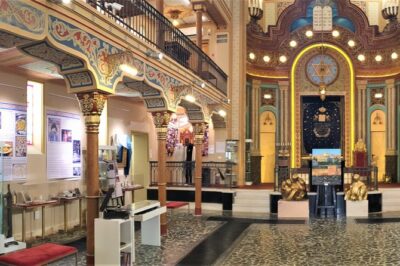
- The Jewish Museum inside a former temple
- The Great Synagogue and the Romanian Holocaust
- The Jewish State Theater and Laude-Reut
- Jerusalem Lion Square and a kosher snack break
- The Coral Temple’s Neo-Mudejar design
- Ending at Bucharest’s Holocaust Memorial
- Understanding Jewish life under communism
- How much the $318 price is worth
- Timing, weather, and what to bring
- Who will get the most from this walk
- Should you book the Jewish heritage walk?
- FAQ
- How long is the Jewish heritage tour of Bucharest?
- Where does the tour begin?
- Where does the tour finish?
- Which languages are available?
- Is the tour wheelchair accessible?
- What sites are visited?
- Are entrance fees included?
- Are the synagogues open every day?
- Is the Jewish Community Museum open on Fridays?
Key points at a glance
- The Jewish Museum occupies a former temple, giving the museum visit a direct connection to the community it explains.
- The Great Synagogue and Coral Temple show two different chapters of Jewish Bucharest, from religious life and persecution to restoration and remembrance.
- The Romanian Holocaust Memorial provides the tour’s emotional focus, with history tied to a specific place in the city.
- Razvan Trancu brings more than prepared facts, using photographs and discussions of Romanian politics, geography, and current events when useful.
- The route includes the Jewish State Theater and Laude-Reut complex, so you see cultural and educational life, not only places of worship.
- The tour suits a small group, but confirm the final group size because the information gives both up to 12 people and a limit of 7.
Why Bucharest’s Jewish quarter needs a guided walk
Bucharest does not offer a single, perfectly preserved Jewish quarter where you can stroll from one historic building to the next. Instead, the old streets are interrupted by communist-era apartment blocks and modern city life. That can make the area difficult to read on your own.
A guide gives meaning to what remains. You will see architectural fragments, former community spaces, religious buildings, and cultural institutions, then connect them to the growth, destruction, and partial survival of Jewish life in Romania.
I appreciate the route because it does not stop at attractive buildings. It covers the community before the Second World War, the Romanian Holocaust, the communist period, and the place of Jewish culture in Bucharest today. That wider frame keeps the tour from becoming a quick procession of synagogues.
The experience lasts about three hours and is conducted in English or Italian. The group is described as small, although the booking information gives two different limits: a price for a group of up to 12 and a stated maximum of 7 participants. Ask for clarification if group size matters to you.
More Jewish Heritage Tours in Bucharest
- Bucharest Jewish Heritage | Holocaust Memorial | Private Car Tour
★ 5.0 · 38 reviews - Half-Day Jewish Heritage Walking Tour in Bucharest
★ 5.0 · 20 reviews - 4h Jewish Legacy in Bucharest – Private Tour by Car and Walking
★ 4.5 · 17 reviews
Starting in Old Town, then moving east
The meeting point is at the entrance to Starbucks, followed by a short guided walk through Bucharest’s Old Town. This first section lasts about 20 minutes.
Old Town is not the Jewish quarter itself, but it helps establish Bucharest as a city shaped by different communities, trades, religions, and waves of rebuilding. From there, the walk moves toward the former Jewish neighborhood, where the contrast becomes sharper. Narrow streets sit beside tall communist apartment blocks, and the surviving Jewish buildings can feel isolated rather than grouped into a neat historic district.
That contrast is part of the lesson. You are not simply looking at old architecture. You are seeing how urban change altered the setting around it.
The Jewish Museum inside a former temple
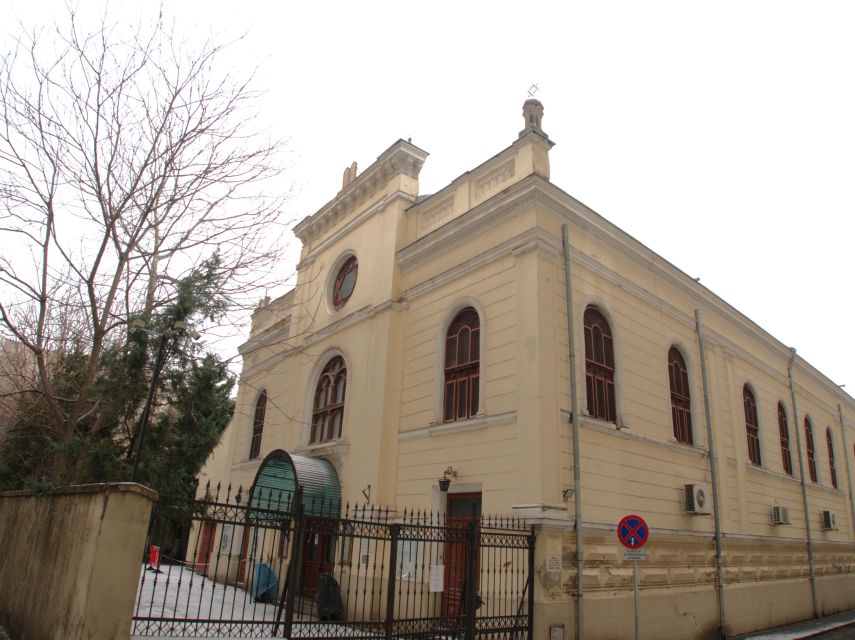
The Jewish Museum is scheduled for about 30 minutes. It is housed in an ex-temple, which makes the building itself part of the story rather than just a container for exhibits.
This stop helps you understand the community’s religious and social life before the war. It also gives the guide a place to explain how Jewish customs, organizations, education, and culture influenced Bucharest’s wider urban life.
I would give this stop your full attention even if museums are not usually your priority. The tour’s later visits make more sense when you know what was lost and what survived. The museum is closed on Fridays, so do not choose a Friday expecting every scheduled stop to be available.
The Great Synagogue and the Romanian Holocaust
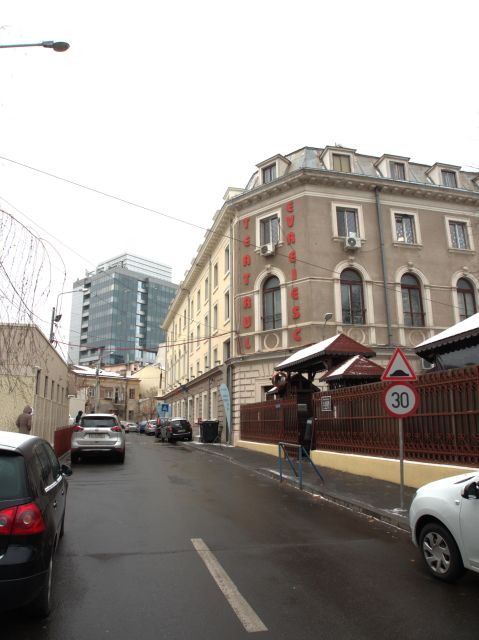
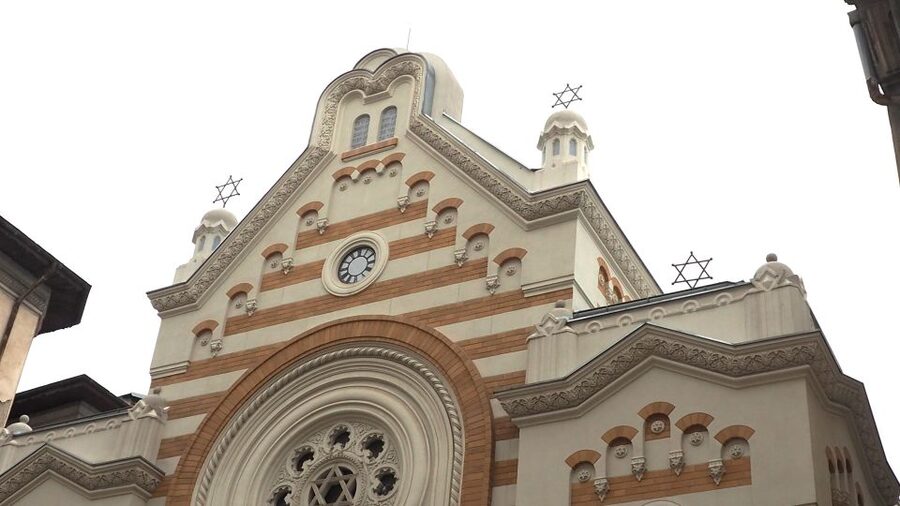
The Great Synagogue is one of the most important stops on the route, with about 30 minutes set aside for the visit. Here, the focus turns toward the Romanian Holocaust and the persecution of the Jewish population during the Second World War.
This part of the tour is serious and should be approached with time and care. The building links religious life with the history of violence that nearly destroyed much of that community. The tour does not treat the Holocaust as a distant European subject. It places Romanian Jewish suffering within Bucharest itself.
When open, the Great Synagogue charges an entrance fee of 30 lei per person, around $6. Bring cash. It may close during Rosh Hashana, Pesach, Shavuot, Yom Kippur, and Sukkot, as well as on weekends or for safety reasons. Opening hours are listed as Monday through Thursday from 9 a.m. to 2 p.m., and Friday from 9 a.m. to noon.
Those hours make the timing of your booking important. A three-hour tour is not automatically the same experience every day. Confirm the synagogue schedule before paying for the tour, especially if seeing the interior is a main reason for booking.
Same mountains, a completely different day out:
- Bucharest: Dracula’s Castle, Peles Castle, & Brasov Old Town
★ 4.5 · 17,858 reviews - Bucharest: Dracula Castle, Peles Castle & Brasov Old Town
★ 4.6 · 10,891 reviews - Bucharest: Dracula’s Castle, Peleș Castle & Brașov Day Trip
★ 4.5 · 5,919 reviews - Bucharest: Palace of Parliament Tickets and Guide
★ 4.3 · 3,182 reviews
The Jewish State Theater and Laude-Reut
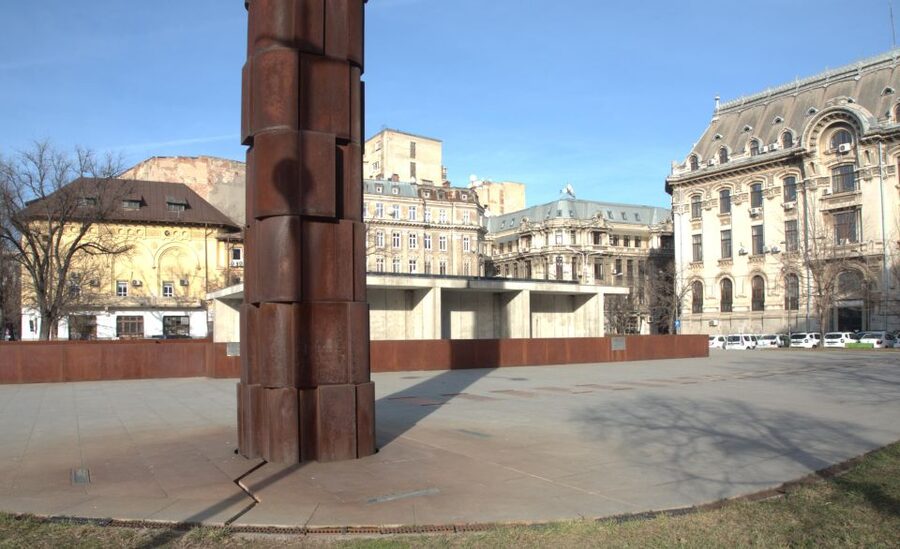
The Jewish State Theater receives roughly 30 minutes. This is an important change of mood after the synagogue and Holocaust material. The theater shows that Jewish life in Bucharest was not limited to worship. Performance, language, humor, and public culture also mattered.
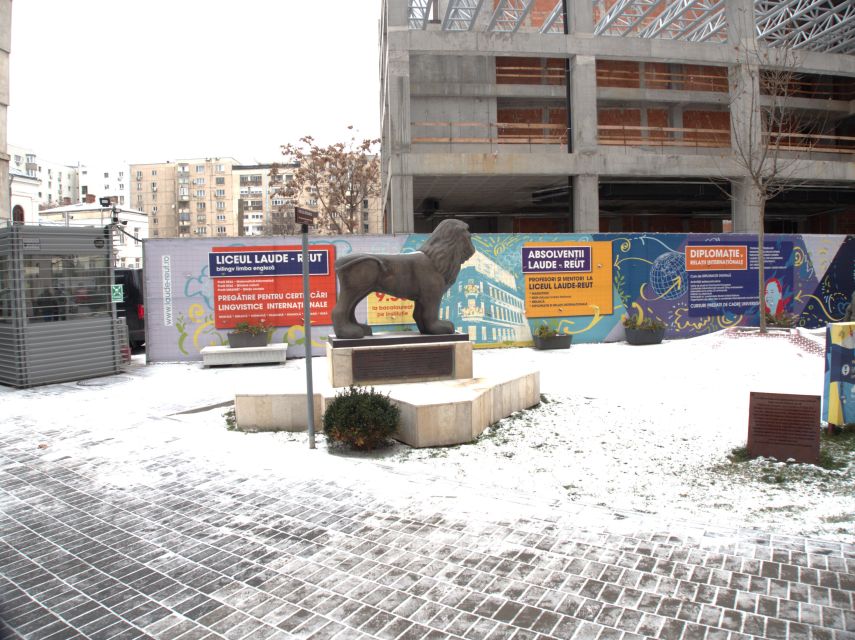
The route then passes the Laude-Reut Educational Complex, with about 10 minutes nearby. You do not have a full visit listed there, but the stop adds a modern educational dimension to the story.
I like this pairing because it prevents the tour from presenting Jewish history only through loss. You see institutions connected with culture and learning, alongside the places that recall persecution. That balance is valuable, particularly for visitors who want to understand Jewish Bucharest as a living community with a past, not only as a memorial subject.
Jerusalem Lion Square and a kosher snack break
The walk continues past Jerusalem Lion Square for about five minutes before a 30-minute break at Avraham Kosher.
The food is not included, so you should bring cash for snacks. This is a useful pause in a walking tour with several serious stops. It also gives you a chance to ask questions while the guide’s earlier explanations are still fresh.
Do not count on the snack stop as part of the tour price. Personal spending is separate, and the information provided does not specify which particular food or drink is included. Think of it as an optional local stop rather than a meal.
The break also helps the pacing. Holocaust history and the communist period require concentration, and a short pause keeps the experience from becoming a blur of dates and buildings.
The Coral Temple’s Neo-Mudejar design
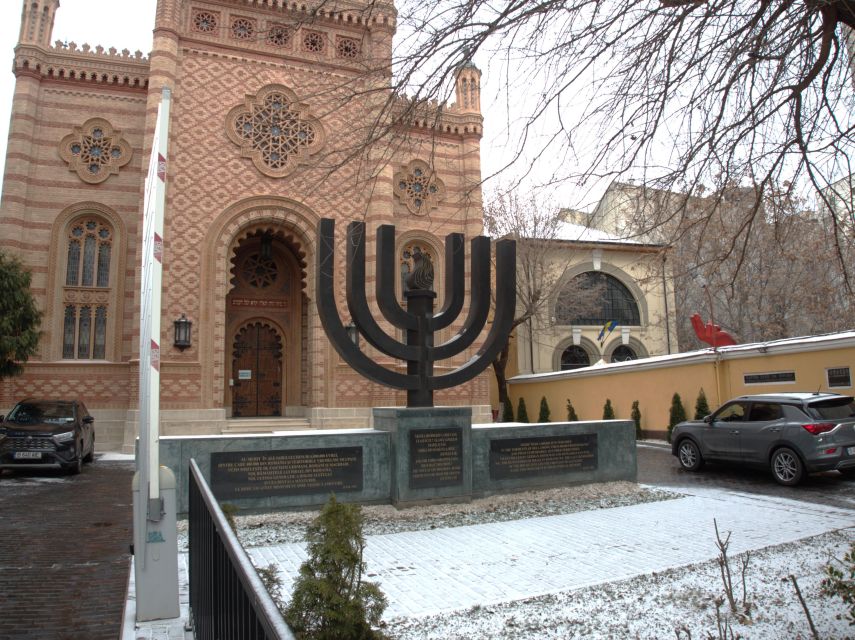
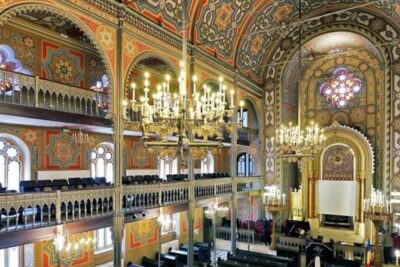
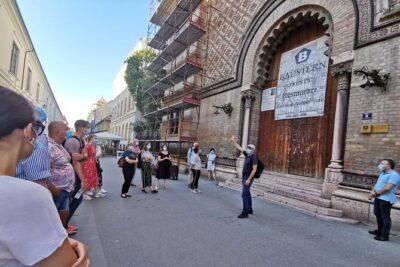
The Coral Temple is scheduled for about 20 minutes and offers the route’s most striking architectural moment. Its Neo-Mudejar style sets it apart from the surrounding city, and the building has more than 150 years of history.
The temple has recently been restored, so this is the place to pay close attention to architectural detail. The visit also shows the former confidence and public presence of Bucharest’s Jewish community. Unlike a museum display, the building lets you sense that religious life once occupied a prominent place in the city.
The Coral Temple charges the same 30 lei entrance fee per person when open. It closes for the major Jewish holidays listed above, and visiting hours are generally Monday through Thursday from 9 a.m. to 2 p.m., with Friday hours from 9 a.m. to noon.
The temple and Great Synagogue are both subject to schedule changes. High temperatures can affect opening hours, and security decisions connected with events in Israel may lead to temporary closures. Contact the provider before booking if either interior visit is essential for you.
Ending at Bucharest’s Holocaust Memorial
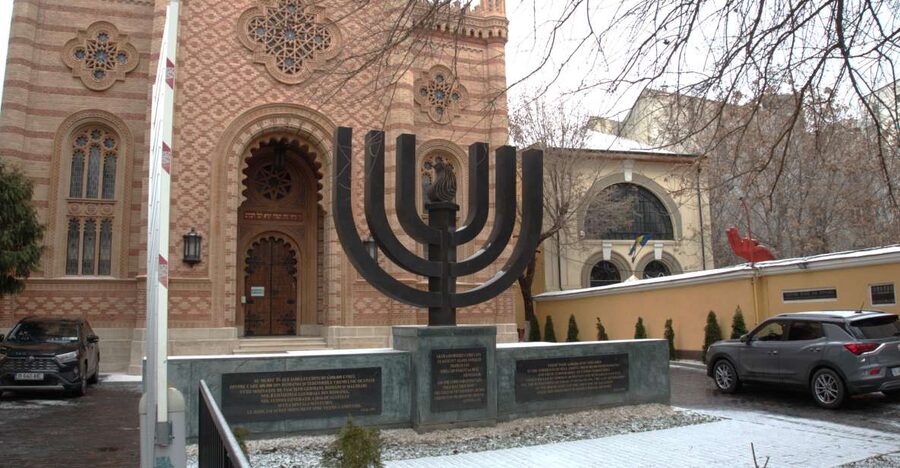
The tour ends at Bucharest’s Holocaust Memorial, after a scheduled visit of about 20 minutes. This gives the route a clear emotional and historical finish.
Ending here works well because the memorial gathers together the themes introduced earlier: the former community, wartime persecution, the destruction of Jewish life, and the responsibility to remember it. You are not left at a synagogue with the story unfinished.
The memorial is also a useful final place to pause rather than rush straight back into sightseeing. If you have questions about the Romanian Holocaust or the later communist period, this is a natural time to raise them.
Understanding Jewish life under communism
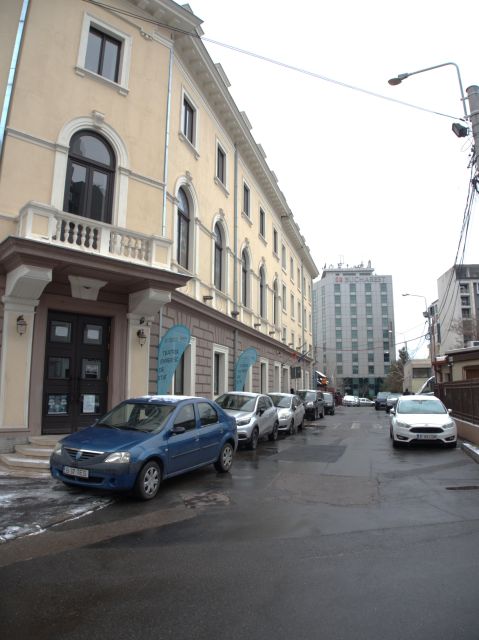
One of the best reasons to choose this tour is its attention to the communist regime. Many city walks cover prewar culture and the Holocaust, then skip directly to the present. This route includes what happened to the Jewish community during decades of communist rule.
The communist period matters because survival did not mean a return to normal life. Religious institutions, community organizations, and cultural identity existed within a state system that controlled public life. The guide connects this period to the buildings and streets you are seeing, rather than treating it as a separate political lecture.
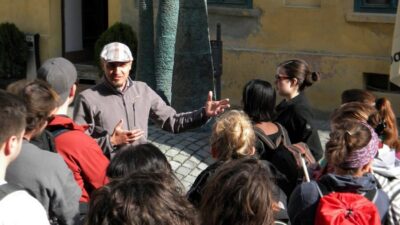
Razvan Trancu is well suited to this broader approach. He has been praised for explaining Romanian and Jewish history alongside geography, politics, and current events. He also uses photographs on an iPad to help illustrate places and changes, which is useful when the modern city has altered the original setting.
His style appears conversational rather than a fixed speech. That matters because the subject can lead in different directions depending on your interests. You can ask about religious life, architecture, Romanian politics, wartime history, or the communist period without being stuck with a one-size-fits-all presentation.
How much the $318 price is worth
The listed price is $318 per group, with the main description saying up to 12 people. At the full group size, that works out to about $26 per person before entrance fees and snacks. If the actual limit is 7 participants, the per-person cost is closer to $45.
That is a fair value for a private or very small-group specialist tour, particularly if Razvan is leading it and you want detailed historical explanation rather than a general city walk. The route includes several major Jewish sites, and the subject requires more context than a quick audio guide can provide.
The price is less attractive if you are traveling alone or with only one other person and care mainly about entering the buildings. You must add 30 lei per person at the Great Synagogue and another 30 lei at the Coral Temple when both are open. The museum, theater, memorial, and snack stop have different arrangements, with snacks and personal expenses not included.
The strongest value comes from the guide’s interpretation. You are paying for the links between sites, the explanation of the communist period, and the ability to ask questions. Confirm the group size and which interiors will be open before booking so you know what you are buying.
Timing, weather, and what to bring
The route is listed as a three-hour walk. The scheduled stops add up to close to that time, and you should allow a little flexibility because synagogue access and conversations can affect the pace.
Bring cash for entrance fees and snacks. Wear comfortable shoes, since the experience moves through city streets and includes several visits on foot. High temperatures have affected opening schedules, so a cooler morning may be the more sensible choice when times are available.
The experience is wheelchair accessible, but the route still involves walking between multiple locations. If you use a wheelchair or have mobility concerns, ask the provider how current street conditions and access at each interior site may affect your visit.
Main sites may be closed on weekends and religious holidays. The Jewish Community Museum is closed on Fridays. For the most reliable experience, choose a Monday through Thursday morning and confirm the schedule shortly before the tour.
Free cancellation is available up to 24 hours in advance, and you can reserve now and pay later. Those terms are useful when opening schedules are uncertain, but they do not replace checking whether the sites you most want to see will be open.
Who will get the most from this walk
I would choose this tour if you want Jewish Bucharest explained as part of Romanian history, not presented as a collection of isolated buildings. It is especially suited to visitors with an interest in the Holocaust, religious architecture, minority communities, urban change, or the communist period.
It also works well for anyone who prefers a guide who can respond to questions. The strong feedback about Razvan’s English, preparation, warmth, and use of photographs suggests that the human side of the tour is a major part of its appeal.
You may want a different activity if your priority is a relaxed architecture stroll with little discussion of persecution and politics. The Holocaust Memorial and Great Synagogue history give this route a serious tone. It is thoughtful rather than light sightseeing.
The tour is also less suitable if you can visit only on a weekend or during a major Jewish holiday. The outdoor portions may still be possible, but the two key synagogue interiors can be closed.
Should you book the Jewish heritage walk?
Book it if you want a focused, three-hour introduction to Bucharest’s Jewish community and are willing to plan around opening hours. The route covers the Jewish Museum, Great Synagogue, Jewish State Theater, Coral Temple, and Holocaust Memorial, while also making room for the communist period and present-day cultural life.
Before booking, confirm three things: the final group size, whether both synagogues will be open, and the extra 30 lei fee at each one. If those details work for your schedule, this is a strong choice for serious history with a local guide and a clear connection to the streets around you.
FAQ
How long is the Jewish heritage tour of Bucharest?
The tour lasts three hours.
Where does the tour begin?
It begins at the entrance door of the Starbucks meeting point.
Where does the tour finish?
The tour finishes at Bucharest’s Holocaust Memorial.
Which languages are available?
The live guide is available in English and Italian.
Is the tour wheelchair accessible?
Yes, the activity is listed as wheelchair accessible.
What sites are visited?
The route includes Old Town, the Jewish Museum, Great Synagogue, Jewish State Theater, Coral Temple, and the Holocaust Memorial. It also passes Laude-Reut Educational Complex and Jerusalem Lion Square.
Are entrance fees included?
No. The Great Synagogue and Coral Temple each charge 30 lei per person, around $6, when open. Snacks and personal expenses are also excluded.
Are the synagogues open every day?
No. The main sites may close on weekends and religious holidays. Listed visiting hours for the synagogues and temples are Monday through Thursday from 9 a.m. to 2 p.m., and Friday from 9 a.m. to noon.
Is the Jewish Community Museum open on Fridays?
No. The Jewish Community Museum is closed on Fridays.
More Walking Tours in Bucharest
- Bucharest: City Highlights Guided Walking Tour
★ 4.9 · 1,482 reviews - Bucharest Highlights Walking Tour
★ 5.0 · 469 reviews - Bucharest: Ghost Stories & Romanian Mythology Walking Tour
★ 4.9 · 287 reviews - Bucharest: Guided Walking Tour with Romanian Snack
★ 4.9 · 228 reviews
More Historical Tours in Bucharest
- Bucharest: 3-Hour Dark History Tour with a Local
★ 4.9 · 301 reviews - Bucharest: Small Group History, Art & Secrets Tour
★ 4.7 · 152 reviews - Guided Walking Tour of Historical Bucharest
★ 5.0 · 84 reviews - Private Bucharest: History & Food with Traditional Meal
★ 5.0 · 34 reviews
Just added around Bucharest
- Village Museum Bucharest Guided Tour★ 5.0 · 6 reviews
- Bucharest: Dealu Mare Winery Private Trip with Wine Tasting★ 4.9 · 6 reviews
- Winery touring & private wine tasting – one day private tour★ 5.0 · 3 reviews
- Transylvania Tour: Dracula’s Castle, Peles Palace & Brasov★ 5.0 · 19 reviews
- Discover Medieval Transylvania Small Group Tour – 7 days★ 5.0 · 4 reviews
- Bucharest Airport Transfer To Constanta Mamaia★ 5.0 · 3 reviews
- Airport Henri Coanda (Otopeni) to Bucharest – Private Transfer – Driver★ 5.0 · 5 reviews
- Gems of Transilvania: Brasov,Sighisoara,Sibiu,Viscri and more★ 5.0 · 6 reviews
Jewish Heritage Tours, compared.
Bucharest Jewish Heritage | Holocaust Memorial | Private Car Tour
Read our review →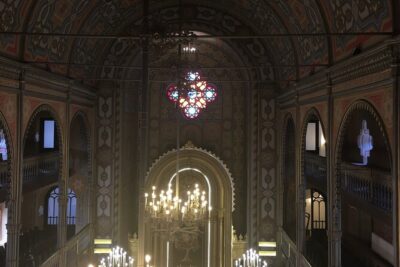
4h Jewish Legacy in Bucharest – Private Tour by Car and Walking
Read our review →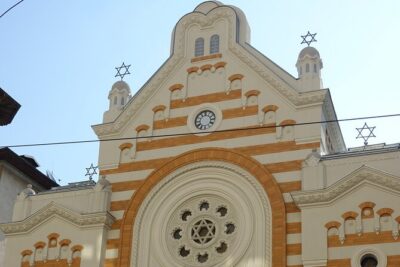
Browse the lists this tour appears in