
Reviewed · HISTORICAL TOURS
Bucharest: 3-Hour Dark History Tour with a Local
Bucharest’s darker stories are not tucked away in a museum. They sit in cemeteries, bullet-marked streets, revolution squares, and old city corners. This three-hour walk connects those places, moving from Bellu Cemetery and its ornate tombs to the violence of 1989, interwar sex work, and the fear created by Nicolae Ceaușescu’s communist regime.
I like two things here. First, the tour uses public transport to link parts of the city, so you see more than the usual historic center. Second, the guides make room for personal and local detail. Alex is praised for pointing out small things such as street art, bullet holes, and plants, while Elena, Andra, Irina, and Vlad are known for lively storytelling and practical city advice.
The main consideration is the walking. You spend much of the three hours outdoors, often standing while listening, and the tour is not suitable for anyone under 16. In cold weather, you need genuinely warm clothing, not just a stylish coat.
In This Review
- Key points at a glance
- Why Bucharest’s dark past makes a strong walking tour
- Beginning near the National Theatre
- The street lined with six cemeteries
- Bellu Cemetery: sculpture, sorrow, and folklore
- University Square and the blood of 1989
- Little Paris, brothels, and the Vampire of Bucharest
- Revolution Square and the machinery of communist fear
- What the three hours feel like in practice
- Is $55 a fair price?
- Who should book this experience?
- Should you book the Bucharest Dark History Tour?
- FAQ
- Where does the tour meet?
- How long does the tour last?
- What language is the tour in?
- What is included in the price?
- Is Bellu Cemetery included?
- Can children join the tour?
- How large is the group?
- What should I bring?
Key points at a glance
- Bellu Cemetery is the emotional center: Expect ornate funerary art, love stories, folklore, mysteries, and a look at the people who shaped Romania.
- Six cemeteries share one Bucharest street: The route places the Revolution of 1989, Jewish history, Russian military burials, and older city stories close together.
- University Square brings recent history into focus: This was a key site during the 1989 Revolution and the anticommunist student protests of the 1990s.
- The tour reaches beyond standard sightseeing: You hear about interwar brothels, famous prostitutes, and a serial killer called the Vampire of Bucharest.
- The final section deals with communist repression: Expect discussion of the Securitate, prisons, labor camps, torture, and daily life under dictatorship.
- Small groups help the conversation: The maximum is 12 people, and guides may adapt the discussion to your questions and interests.
Why Bucharest’s dark past makes a strong walking tour
Many city tours offer kings, churches, grand avenues, and the standard outline of Romanian history. This one asks a different question: what did fear, death, violence, and survival look like in ordinary Bucharest?
That approach helps you connect major events to physical places. The Revolution of 1989 is not just a chapter about the fall of Ceaușescu. It becomes a story tied to University Square and Revolution Square. Communist oppression is not treated as a vague political idea. You hear about prisons, labor camps, torture methods, surveillance, and the pressure people faced in daily life.
I also like that the tour does not stay locked in one period. It moves from old funerary customs to the elegant but morally complicated era of Little Paris, then into dictatorship and revolution. The result is a portrait of Bucharest that feels less polished, but more human.
This is not a horror attraction with actors jumping from behind monuments. The darker material comes from real people and real events. Some stories concern murder and prostitution, while others involve state violence and death. You should book it because you want context, not just spooky entertainment.
A few more Bucharest trips to weigh up
- Bucharest: Small Group History, Art & Secrets Tour
★ 4.7 · 152 reviews - Guided Walking Tour of Historical Bucharest
★ 5.0 · 84 reviews - Bucharest Jewish Heritage | Holocaust Memorial | Private Car Tour
★ 5.0 · 38 reviews
Beginning near the National Theatre
The meeting point is the main entrance of the Ion Luca Caragiale National Theatre at Bulevardul Nicolae Bălcescu 2. That is a useful central starting place, especially if you are staying around the Old Town or University Square.
You meet your English-speaking guide here before heading toward the cemetery area. Guides include Alex, Elena, Andra, Vlad, Irina, Bogi, and others, depending on the departure. The strongest pattern across the experience is a relaxed, conversational style rather than a formal lecture. Several guides ask about your interests and adjust the detail accordingly.
The group limit of 12 matters. You are still joining a small public tour, not automatically getting a private guide, but the size allows questions and makes it easier to hear outdoors. Some departures may feel almost private when few people book, although you should not reserve on that assumption.
The tour includes metro tickets for the necessary rides. That saves you the trouble of working out the local system while keeping the route practical. Bring comfortable shoes, and expect a substantial amount of walking between explanations and stops.
The street lined with six cemeteries
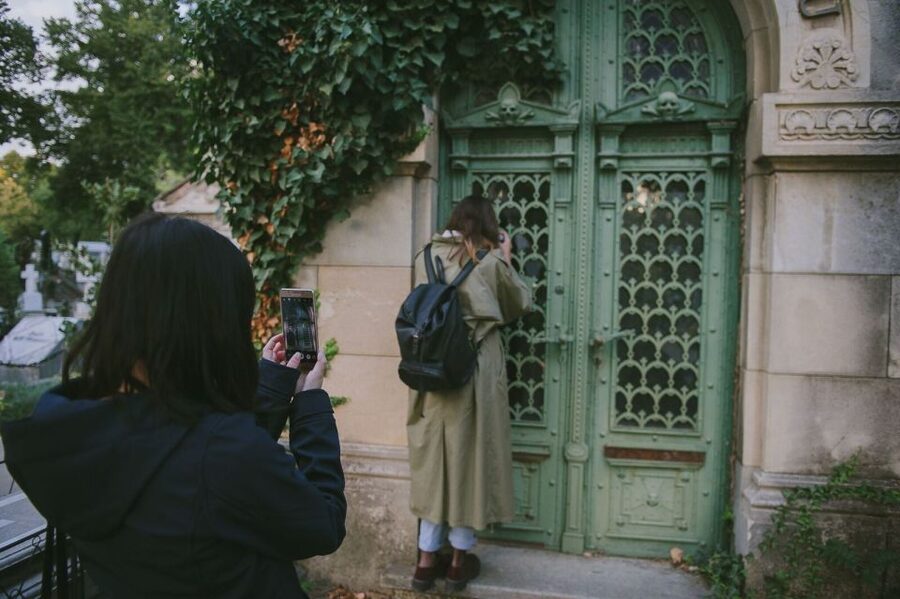
One of the tour’s most unusual details comes early: a street near the center accommodates no fewer than six cemeteries. That concentration gives the guide a compact way to explain several layers of Bucharest’s past.
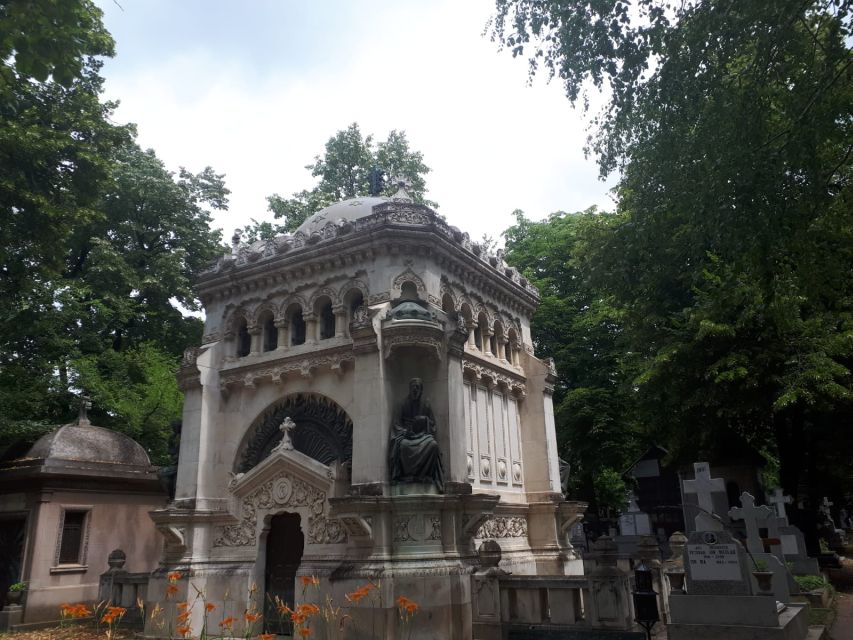
The group passes areas connected with the Cemetery of the Victims of the Revolution in 1989, the Jewish Cemetery, the Cemetery of the Russian Soldiers, and the older Bellu Cemetery. Each burial ground points to a different community or historical moment. Together, they show how war, religion, political change, and national memory occupy the same urban space.
This part is valuable because cemeteries can otherwise seem like isolated attractions. Here, you learn to read them as historical records. Names, symbols, grave design, and the location of a burial ground all tell you something about the city.
The drawback is that cemetery visits require a respectful mood. This is not a place for loud banter or casual sightseeing. The tour handles dark subjects, so some parts may feel heavy, especially when the discussion turns to people killed during political upheaval.
Bellu Cemetery: sculpture, sorrow, and folklore
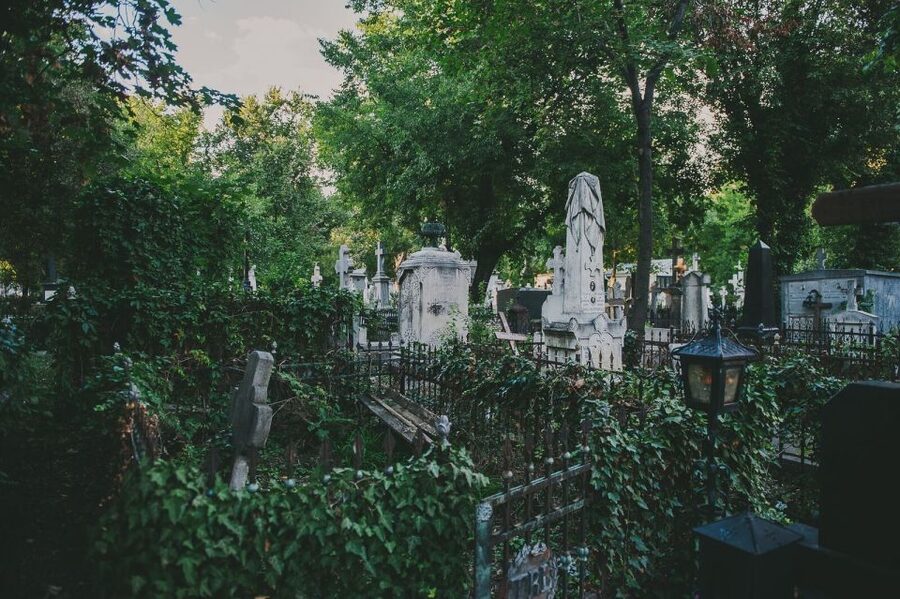
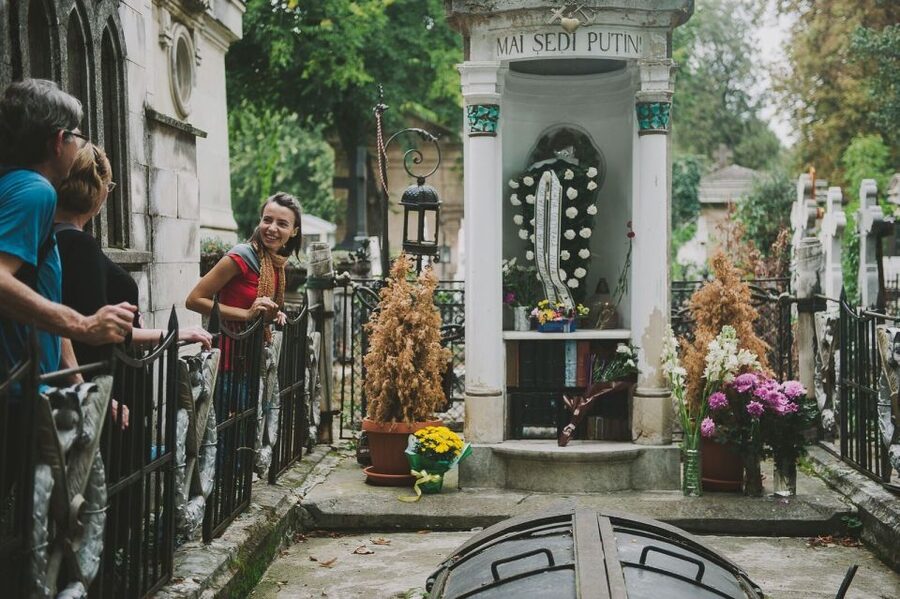
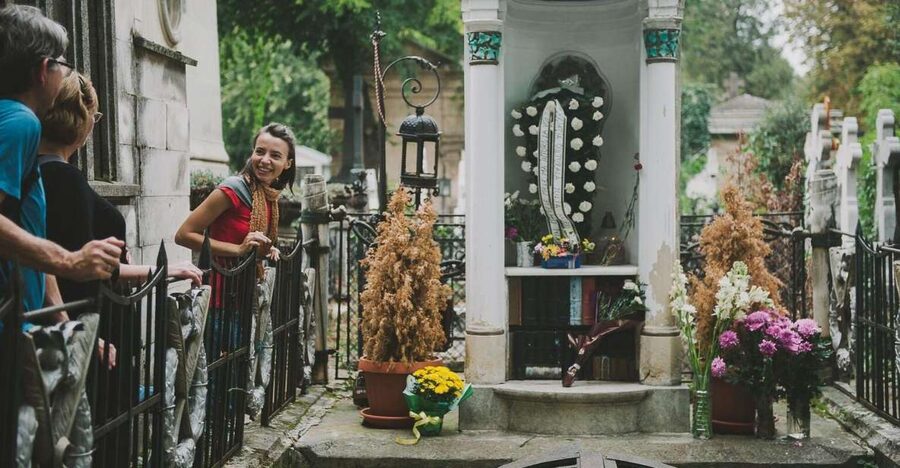
Bellu Cemetery is the tour’s main visual reward. It is a national historical monument, and the grounds contain funerary architecture that can feel more like an open-air sculpture collection than a conventional cemetery.
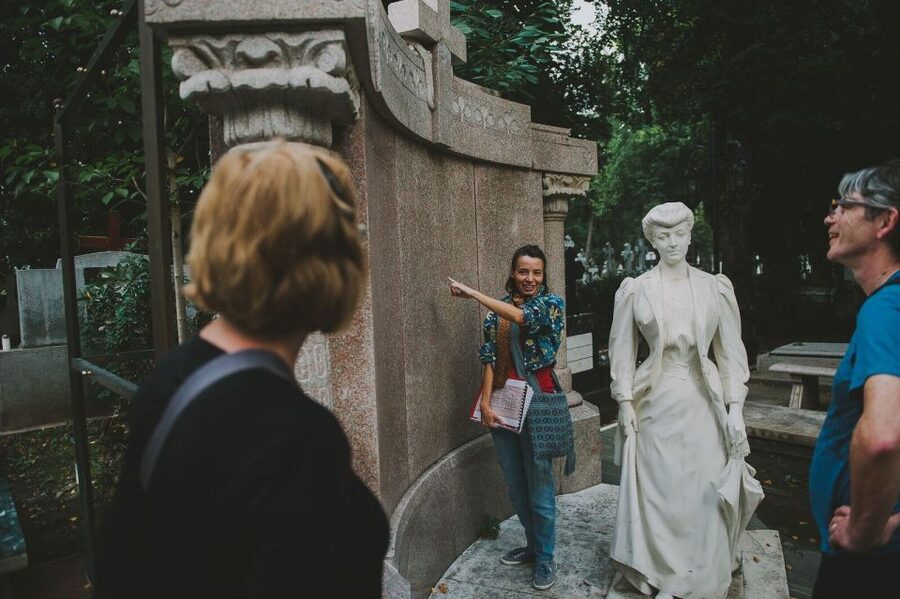
The guide explains the stories behind selected graves and monuments. You might hear sad love stories, family tragedies, sinister mysteries, and accounts connected with notable Romanians. The point is not to rush through every aisle. It is to slow down and understand how Bucharest remembers its dead.
This is where a good guide makes a real difference. Elena is especially praised for her care toward the cemetery’s cats and dogs, and other guides add details about local folklore and death customs. If you enjoy architecture, ask Alex about the tomb designs and small decorative details. His style includes attention to features many people would simply walk past.
Bellu is also a good place to see how public memory works. Grand monuments can honor national figures, while smaller graves reveal personal grief and family values. The contrast gives you a more intimate sense of Romania than a list of dates ever could.
Allow yourself to be patient here. You may spend a large portion of the tour in the cemetery, and that is intentional. If you want a fast-moving city walk with constant new sights, this section could feel slow. If you appreciate atmosphere, sculpture, and stories, it will likely be the strongest part.
Same mountains, a completely different day out:
- Bucharest: Dracula’s Castle, Peles Castle, & Brasov Old Town
★ 4.5 · 17,858 reviews - Bucharest: Dracula Castle, Peles Castle & Brasov Old Town
★ 4.6 · 10,891 reviews - Bucharest: Dracula’s Castle, Peleș Castle & Brașov Day Trip
★ 4.5 · 5,919 reviews - Bucharest: Palace of Parliament Tickets and Guide
★ 4.3 · 3,182 reviews
University Square and the blood of 1989
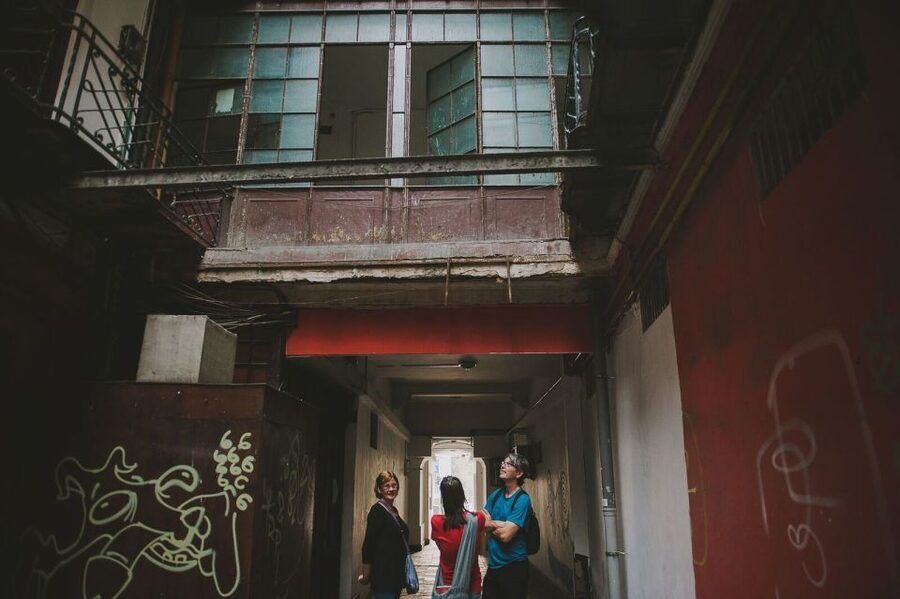
The route then turns toward University Square, one of Bucharest’s most important public spaces. Its significance comes from two separate periods of unrest: the Revolution of 1989 and the anticommunist student protests of the 1990s.
The guide explains how the square became a stage for opposition, protest, and bloodshed. You get a clearer sense of why this location matters to modern Romania and why public spaces can carry such strong political meaning.
A useful feature of this section is the personal angle. Vlad has shared memories of life under communism, while other guides bring family and local perspectives to the period. These details help you picture the uncertainty of the era: what people could say, what they feared, and how they managed ordinary life under surveillance.
Do not expect a full academic study of the Revolution in three hours. The tour gives you a strong framework and a local interpretation, but you may want to read more afterward if 1989 is your main interest. Some guides send follow-up material through WhatsApp, which can help you continue your research.
Little Paris, brothels, and the Vampire of Bucharest
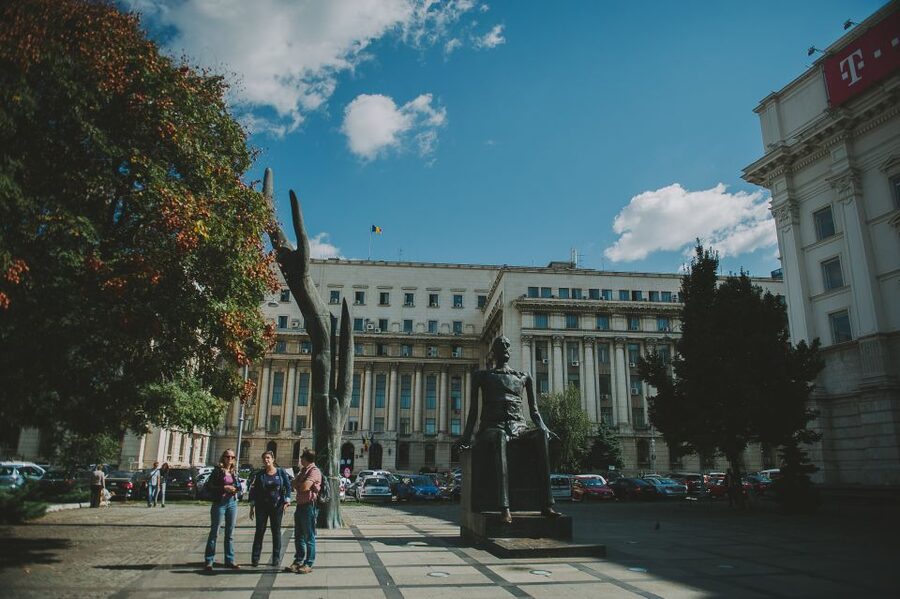
The tour then jumps back to Bucharest’s interwar era, when the city was often called Little Paris. That nickname suggests elegance, French influence, cafes, fashion, and modern city life. This walk adds a less polished side to the picture by discussing sex work and the famous prostitutes of interwar Bucharest.
You may glimpse what remains of a former brothel while hearing how the trade operated in the city. This is an interesting contrast with the grand image of Little Paris. It reminds you that a sophisticated capital also had its nightlife, inequalities, and people living outside respectable society.
The tour also introduces the serial killer nicknamed the Vampire of Bucharest, who terrorized the city at the beginning of the 1970s. This is the most conventionally sinister part of the route, and it will appeal to anyone drawn to crime stories and local folklore.
The guide’s handling matters here. The best version of this material gives you social context rather than treating real victims as entertainment. The experience is likely to suit adults who enjoy unsettling history, but it is not appropriate for younger children, and the age limit is 16.
Revolution Square and the machinery of communist fear
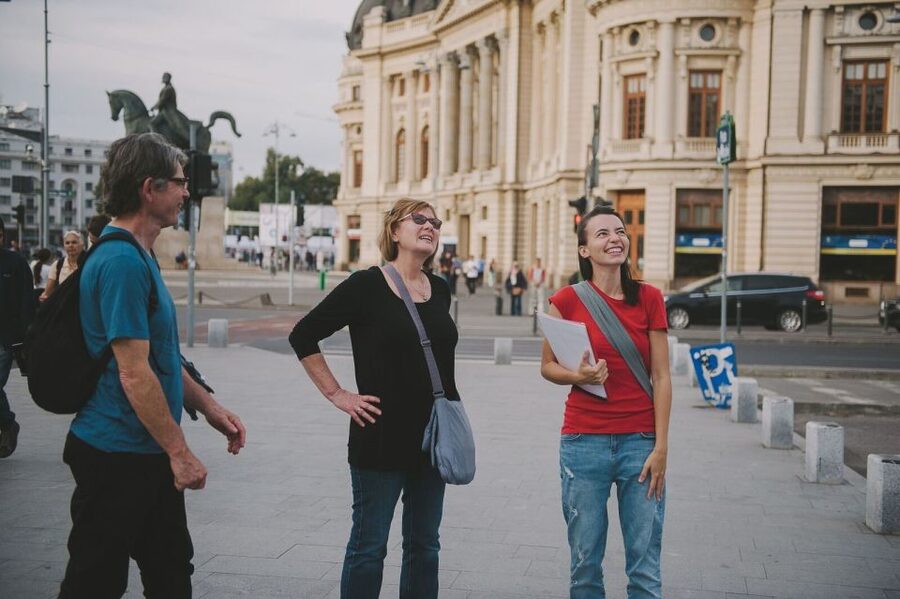
The final major stop is Revolution Square, identified as the place where the 1989 Revolution began in Bucharest. This section ties together the earlier discussion of protest and the broader system that made protest so dangerous.
You learn about Ceaușescu’s dictatorship, the Securitate, and the methods used to silence critics. The Securitate is often compared with the Soviet KGB, but the guide’s role here is to explain what its presence meant in Romanian life: suspicion, monitoring, intimidation, and the fear of saying the wrong thing.
The discussion also covers prisons, labor camps, and torture. This is difficult material, but it gives needed context to the public anger that erupted in 1989. You leave with a better understanding of why the Revolution was not simply a sudden political change. It came after years of hardship and pressure.
I appreciate that the tour focuses on survival as well as repression. How did people find food, make plans, raise families, and keep going when the state controlled so much? Those practical questions make the period easier to grasp.
This stop can be emotionally demanding. If you prefer light sightseeing, the final hour may not be a good fit. If you want to understand why Romania’s recent past still shapes public memory, it is essential.
What the three hours feel like in practice
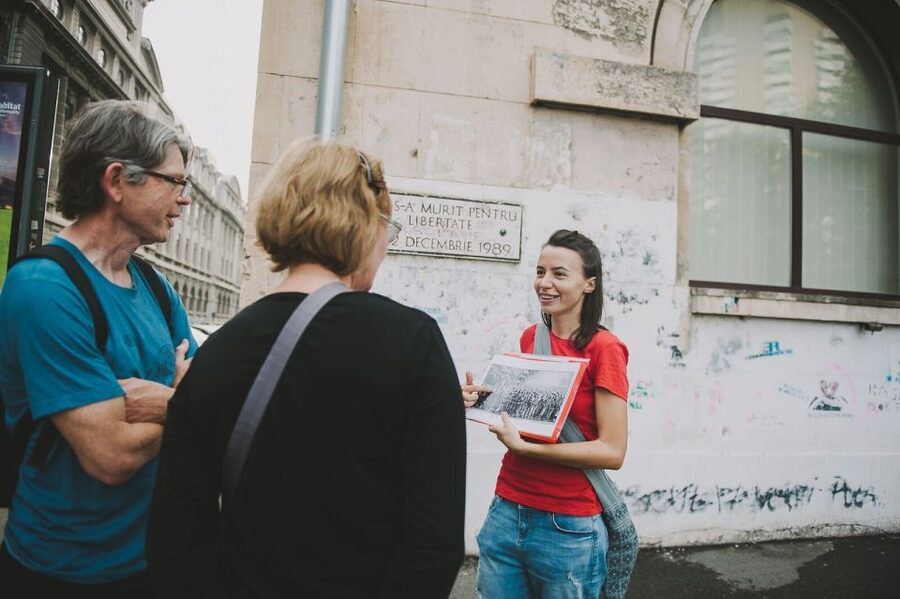
The tour lasts three hours and combines walking with metro travel. You are not sitting in a coach, so you see streets between the main stops and get a more grounded feel for the city.
The pace includes pauses for explanations, but several people note that there is a lot of walking. Comfortable shoes are a must. In winter, standing still at outdoor sites can become uncomfortable quickly. A cold-weather departure calls for layers, gloves, and a warm hat.
A traditional Romanian street snack is included. It is a small touch, not a meal, so plan to buy additional food and drinks if you need them. Guides may also suggest restaurants, cafes, and local foods for later, but personal purchases are not included.
The English is live and guide-led. That means the quality depends partly on the person leading your group. The guides named in the feedback, especially Alex, Elena, Andra, Vlad, and Irina, receive repeated praise for clear explanations, humor, warmth, and strong command of Romanian history and architecture.
Is $55 a fair price?
At $55 per person, this is not the cheapest walking tour in Bucharest. The value comes from the range of places and subjects packed into three hours.
You receive a local English-speaking guide, metro tickets, and a traditional snack. More important, you get access to a carefully connected story that would be difficult to assemble alone. Bellu Cemetery, the six-cemetery area, University Square, the interwar brothel site, and Revolution Square are not just a list of stops. The guide explains how they fit into the city’s social and political past.
The small maximum group of 12 also supports the price. You can ask questions, request more detail about architecture or communism, and receive advice for the rest of your visit. Several guides are willing to spend extra time or send useful material afterward, though you should regard that as a bonus rather than part of the guaranteed schedule.
I would compare this price with a standard private tour, not just with a free group walk. If your main goal is to see famous buildings quickly, a cheaper general tour may serve you better. If you want unusual sites, serious history, and a guide who can answer detailed questions, $55 is reasonable.
Free cancellation is available up to 24 hours before the start, and you can reserve now and pay later. That is useful if your Bucharest plans are still shifting.
Who should book this experience?
I would choose this tour for an adult or older teenager who wants more than the usual Old Town circuit. It suits you especially well if you enjoy:
- Recent political history and the fall of communism
- Cemeteries, sculpture, architecture, and folklore
- True crime and unsettling local stories
- Personal accounts of life under dictatorship
- Walking tours with room for questions
- Smaller groups and a casual guide style
It is less suitable if you want a cheerful introduction to Bucharest, dislike extended outdoor stops, or have difficulty with a long walking route. The material includes murder, prostitution, torture, and political violence, so read the theme carefully before booking.
The age limit is firm: children under 16 cannot join. The tour is also not a meal outing, and the included snack should not replace lunch.
Should you book the Bucharest Dark History Tour?
Book it if you want to understand the city through the places where people died, protested, prayed, worked, feared, and were remembered. Bellu Cemetery and the Revolution sites give the tour its strongest structure, while the brothel stories and Vampire of Bucharest add a more unusual edge.
I would book this early in your visit if modern Romanian history interests you. The guide can help you make sense of later sights, and people such as Elena, Alex, Andra, and Vlad add the kind of local detail you cannot get from a map.
Skip it if you want a short, easy stroll with little emotional weight. For the right audience, though, this is an unusually thoughtful way to meet Bucharest, with enough mystery to keep it entertaining and enough historical substance to make it matter.
FAQ
Where does the tour meet?
The meeting point is at the main entrance of the Ion Luca Caragiale National Theatre, Bulevardul Nicolae Bălcescu 2, București 010051, Romania.
How long does the tour last?
The tour lasts three hours.
What language is the tour in?
The live tour is conducted in English.
What is included in the price?
The price includes a local English-speaking guide, metro tickets, and a traditional street snack.
Is Bellu Cemetery included?
Yes. Bellu Cemetery is a central stop on the route, with discussion of its funerary architecture, stories, and mysteries.
Can children join the tour?
No. Travelers under 16 years old are not permitted to join.
How large is the group?
The maximum group size is 12 people.
What should I bring?
Bring comfortable shoes. Warm clothing is especially important in cold weather because the tour includes outdoor stops and periods of standing.
Just added around Bucharest
- Village Museum Bucharest Guided Tour★ 5.0 · 6 reviews
- Bucharest: Dealu Mare Winery Private Trip with Wine Tasting★ 4.9 · 6 reviews
- Winery touring & private wine tasting – one day private tour★ 5.0 · 3 reviews
- Transylvania Tour: Dracula’s Castle, Peles Palace & Brasov★ 5.0 · 19 reviews
- Discover Medieval Transylvania Small Group Tour – 7 days★ 5.0 · 4 reviews
- Bucharest Airport Transfer To Constanta Mamaia★ 5.0 · 3 reviews
- Airport Henri Coanda (Otopeni) to Bucharest – Private Transfer – Driver★ 5.0 · 5 reviews
- Gems of Transilvania: Brasov,Sighisoara,Sibiu,Viscri and more★ 5.0 · 6 reviews
Historical Tours, compared.

Bucharest Jewish Heritage | Holocaust Memorial | Private Car Tour
Read our review →
Private Bucharest: History & Food with Traditional Meal
Read our review →

Discover Romania’s Wine Heritage in Brasov’s Historic Center
Read our review →
Experience the History of Bran Castle and Saxon Fortifications in Burzenland
Read our review →Browse the lists this tour appears in