
Reviewed · WALKING TOURS
Bucharest : Highlights & Hidden Gems Walking Tour
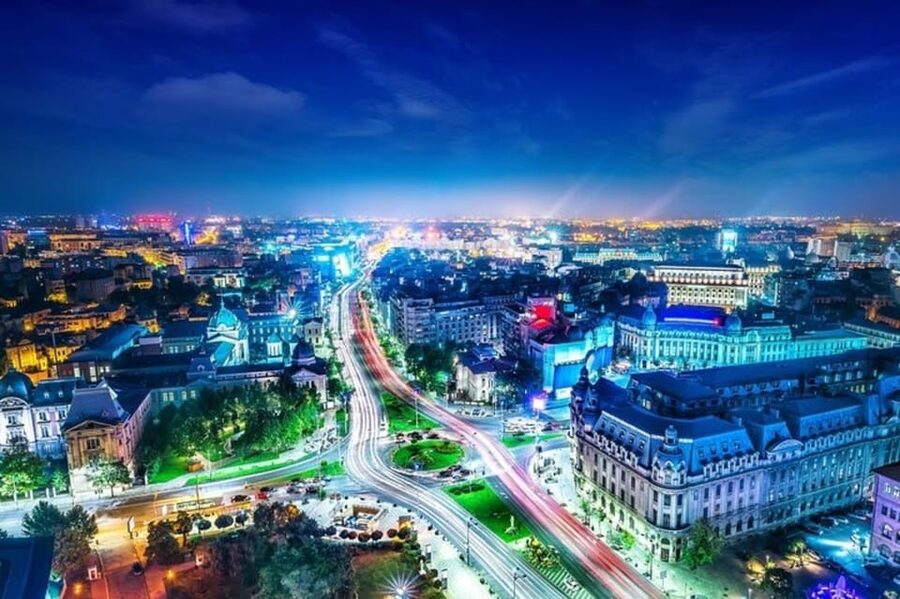
Bucharest’s story unfolds in a surprisingly short walk, from the trading courtyards of Manuc’s Inn to the grand CEC Palace, royal buildings, communist-era architecture, and leafy Cismigiu Park. The route gives you a useful first look at how the city changed from monarchy to communism and then democracy.
I like the private format, which lets you ask questions and shape the walk around your interests. I also like the mix of famous sights and less obvious passages, including Macca-Villacrosse and Hanul Gabroveni. The main drawback is timing: two hours is brisk, especially with six stops listed at about 20 minutes each, before walking between them.
In This Review
- Key points at a glance
- Starting among Bucharest’s old inns
- Macca-Villacrosse Passage and the city’s changing style
- CEC Palace and Bucharest’s financial face
- Stavropoleos Monastery, a quiet pause in the center
- From monarchy to democracy near the Royal Palace
- Cismigiu Park gives the walk room to breathe
- What two hours really gives you
- Private guiding, languages, and the value of $29
- Who will get the most from this walk
- Practical advice before you book
- Should you book this Bucharest walking tour?
- FAQ
- Where does the tour start?
- How long does the walking tour last?
- What sights are included?
- Is the tour private?
- Which languages are available?
- Is food or drink included?
- Can I cancel the booking?
Key points at a glance
- Start in Bucharest’s old trading quarter: Begin near Strada Franceză 60, close to Manuc’s Inn and the Lipscani district.
- See several architectural eras in one walk: The route links Ottoman-influenced commercial buildings, Orthodox design, royal monuments, and Stalin-era public architecture.
- Choose a guide in three languages: English, French, and Spanish are available.
- Use the private format well: Ask for local suggestions, history questions, or help with planning visits such as the Parliament.
- Expect a brisk central-city tour: The listed stops are short, so this works best as an introduction rather than a full museum visit.
- Finish in Cismigiu Park: Bucharest’s oldest park provides a calmer ending after the stone streets of the center.
Starting among Bucharest’s old inns
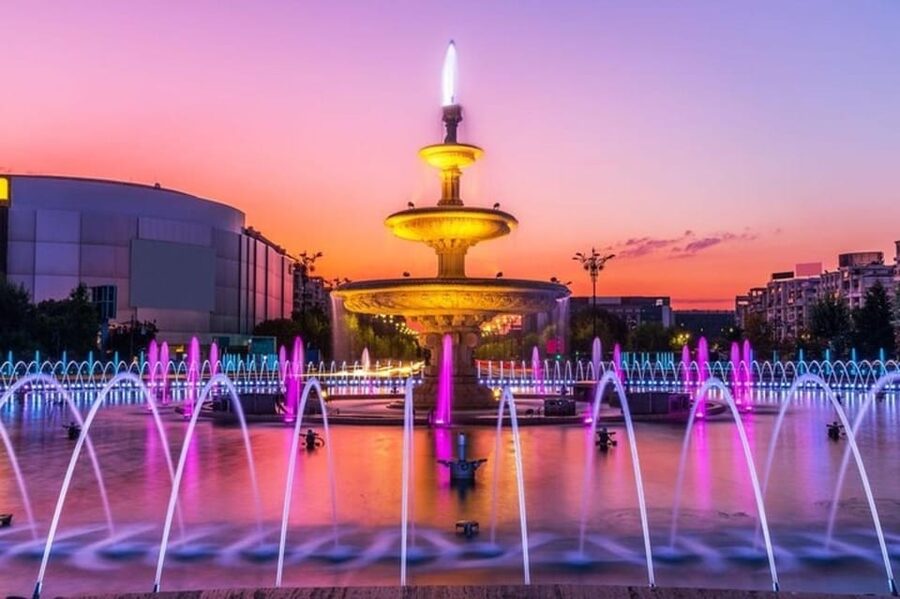
The meeting point is at Strada Franceză 60, in the historic Lipscani district. This is a sensible place to begin because you are already in the center of Bucharest, surrounded by old streets, cafés, restaurants, cultural venues, and major sights.
Your guide sets the tone here by explaining Bucharest as a trading city before moving into its later political chapters. Manuc’s Inn is especially useful for that opening lesson. Its courtyards and commercial past point to the days when merchants, goods, and travelers passed through the city on routes linking different parts of the region.
I like beginning with a place tied to everyday commerce rather than starting with a government building. You get a feel for how Bucharest functioned before the grand avenues and official monuments shaped its image. The inn also gives you an early photo stop and a clear sense of the Old Town’s scale.
Hanul Gabroveni continues the same theme. It is another reminder that this district was built around trade, lodging, and movement. Your guide can connect the two inns to the wider development of Bucharest, helping you see the Old Town as more than a collection of attractive façades.
The historic center is compact, but the paving and uneven surfaces can make the walk tiring for some people. The tour is listed as wheelchair accessible, yet it is still sensible to mention your needs when booking so the guide can help with the route.
A few more Bucharest trips to weigh up
- Bucharest: City Highlights Guided Walking Tour
★ 4.9 · 1,482 reviews - Bucharest Highlights Walking Tour
★ 5.0 · 469 reviews - Bucharest: Ghost Stories & Romanian Mythology Walking Tour
★ 4.9 · 287 reviews
Macca-Villacrosse Passage and the city’s changing style
Macca-Villacrosse Passage brings a different mood. Covered passages are practical spaces, but this one also offers strong architectural character and a welcome change from open streets. It is a good place to pause, look upward, and notice how Bucharest borrowed and adapted European design ideas.
The passage helps explain why Bucharest is sometimes described through contrasts. Within a short distance, you can move from old inns and Orthodox courtyards to elegant commercial architecture and large state buildings. The guide’s role matters here because the details are easy to pass without context.
Allow time for photographs, but do not expect a long stop. The schedule gives each main place around 20 minutes, and that includes guided explanation and sightseeing. If photography is a priority, tell your guide early. A private walk gives you a better chance of adjusting the pace than a fixed large-group tour.
This stop is also useful for getting practical advice about the rest of your stay. The experience includes suggestions for other things to do in Bucharest, so ask for help with food, museums, neighborhoods, or sights you have not yet planned.
CEC Palace and Bucharest’s financial face
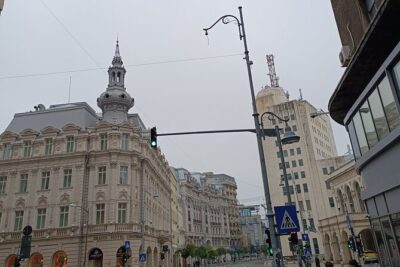
CEC Palace is one of the most memorable buildings on the route. Its grand exterior introduces Bucharest’s financial past through a style that feels formal, decorative, and designed to project confidence.
You will mainly admire it from outside on this walking tour. That is important when setting expectations: this experience focuses on street-level views and explanation, not extended interior visits. Your guide can point out the building’s role in the city’s financial development and place it beside the commercial world of the old inns.
I find this contrast one of the strongest parts of the walk. Manuc’s Inn and Hanul Gabroveni suggest trade conducted through courtyards and personal networks. CEC Palace presents a more official, institutional version of money and power. You can read part of Bucharest’s growth through those changing building types.
The stop is also well placed for a broader discussion of how Bucharest acquired its grand public face. The city does not tell its story in one neat architectural style. Instead, different periods sit close together, sometimes comfortably and sometimes not.
Stavropoleos Monastery, a quiet pause in the center
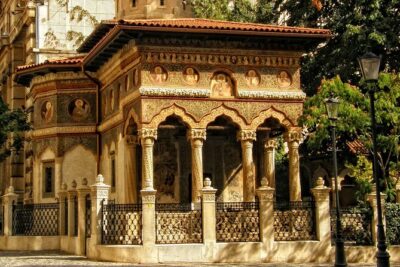
Stavropoleos Monastery is one of the most rewarding stops for travelers interested in Romanian Orthodox culture. Its architectural details offer a calmer, more intimate experience than the large public buildings nearby.
The monastery is valuable because it shows another side of the city’s past. The tour does not treat Bucharest only as a capital of rulers, banks, and political change. Here, the focus shifts toward religious art, local tradition, and the smaller scale of a historic courtyard.
Your guide can explain what makes the monastery important and place it within the story of Bucharest. You should allow your eyes to adjust from the busy streets before taking photographs. The setting rewards close attention to details rather than a quick glance from the pavement.
As with the other stops, the visit is a guided sightseeing stop rather than a scheduled long interior tour. If you want to spend extended time at the monastery, ask whether the route can be adjusted. The tour includes customization, but two hours places a practical limit on how much time can be added at any one sight.
Same mountains, a completely different day out:
- Bucharest: Dracula’s Castle, Peles Castle, & Brasov Old Town
★ 4.5 · 17,858 reviews - Bucharest: Dracula Castle, Peles Castle & Brasov Old Town
★ 4.6 · 10,891 reviews - Bucharest: Dracula’s Castle, Peleș Castle & Brașov Day Trip
★ 4.5 · 5,919 reviews - Bucharest: Palace of Parliament Tickets and Guide
★ 4.3 · 3,182 reviews
From monarchy to democracy near the Royal Palace
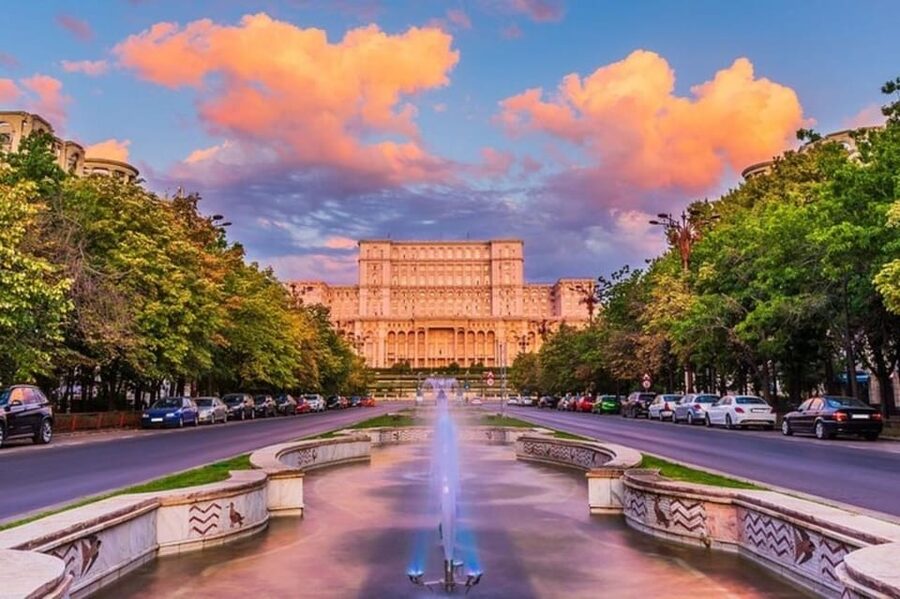
The walk then broadens from older commercial and religious buildings to the political center of modern Romania. The Royal Palace, or Palatul Regal, gives your guide a natural point for discussing the monarchy and the changes that followed.
This part of the tour is useful because Bucharest’s political history can otherwise feel scattered. A guide can connect the buildings and public spaces to the shift from royal rule to communism and later democracy. You are not simply looking at a façade. You are being shown how the city’s center reflects changes in power.
The Royal Palace also helps balance the earlier stops. Manuc’s Inn tells you about trade, Stavropoleos about faith, and the palace about the state. In one morning or afternoon, you get several ways to understand the capital.
Nearby, Sala Palatului brings the communist period into view. Its imposing Stalin-era design has a very different scale and message from the older streets and monastery. The building may not be everyone’s favorite architectural sight, but it is historically important because it shows how public space was reshaped under communist rule.
I appreciate that the route does not smooth over these contrasts. Bucharest is at its most interesting when the eras sit side by side. The tour gives you enough context to recognize that tension, even though two hours cannot cover every political event or explain every building in detail.
Cismigiu Park gives the walk room to breathe
Cismigiu Park is Bucharest’s oldest park and a fitting place to end the route. After the narrow streets, formal façades, and political landmarks, the park offers open space and a slower pace.
The 20-minute guided stop gives you time to look around and reflect on the city you have just crossed. The park is not simply a decorative ending. It adds another piece to Bucharest’s identity, showing how public recreation and green space fit into the capital’s urban life.
The route information presents Cismigiu as the final stop, although the sightseeing list can also be displayed in a different order. Since the tour is private and customizable, confirm the exact sequence with your guide if finishing in the park matters to your plans.
This is a good final stop if you want advice for the rest of the day. Your guide can suggest other activities in the city, and the central location makes it easy to continue exploring afterward. The park also gives you a natural break before another museum, meal, or walk.
What two hours really gives you
Two hours is enough to build a clear mental map of central Bucharest. You will see major landmarks, hear the broad story of the city, and learn where to return for longer visits.
It is not enough for a detailed tour of every building. The listed schedule allows about 20 minutes at each of six stops, which fills the full two hours before counting the walking time between them. In practice, the guide may adjust the timing, combine explanation with the walk, or shorten some stops.
That is not necessarily a flaw. A first-day orientation tour often works best when it keeps moving. You can identify the places that deserve a second visit and ask your guide how to fit them into your plans.
I would book this early in a Bucharest stay, especially if you are unfamiliar with the center. The advice about other sights can help you avoid wasting time later. One especially practical detail is that the guide can help you book tickets for visits you want to make, including Parliament according to Alexandra’s assistance to one guest.
Private guiding, languages, and the value of $29
At $29 per person, the price is reasonable for a two-hour private walking experience, especially if you are traveling with a small party and make good use of the customization. The value comes less from the number of buildings and more from having someone connect them into a useful story.
The tour is described as private and exclusive, with no one else in your group, while the included information also uses the phrase small group walking tour. If the exact group arrangement matters to you, confirm it at booking. Either way, the experience is designed to be more personal than a standard large walking tour.
Guides are available in English, French, and Spanish. Several individual guides have received strong praise for warmth, clear explanations, and local knowledge. Alexandra helped with Parliament tickets and history questions. Augustin was described as attentive and welcoming, while Karim was praised for his excellent knowledge and worked well with a family group. Irina was especially effective at keeping a group of four engaged and comfortable, and Zoé led a successful French-language walk.
Those details suggest you can expect different guiding personalities, but a consistent focus on explanation and personal attention. Ask questions. This is where a private tour earns its price.
Food and drinks are not included, so plan to stop at one of the nearby cafés or restaurants before or after the walk. Public transport is included when needed, except where a selected tour option says otherwise, though the main experience is on foot.
Who will get the most from this walk
I would recommend this tour to first-time visitors who want a readable introduction to Bucharest without committing to a full-day excursion. It also suits people who enjoy architecture but want political and cultural context rather than a list of dates.
Families may appreciate the private setting because the guide can adjust explanations and pace. The positive experience with a group that included parents suggests this format can work well across ages, provided everyone is comfortable with two hours of walking.
It is also a strong choice for French- or Spanish-speaking visitors who prefer to ask questions in their own language. Solo visitors and couples may find the price less compelling than a shared group tour, but the ability to customize can still make it worthwhile.
You may want something else if your main goal is interior access to museums, the monastery, or Parliament. This is primarily an outdoor orientation walk. It shows you where the sights are and explains why they matter, but it does not replace dedicated visits.
Practical advice before you book
Wear comfortable shoes and keep your schedule flexible. The center is walkable, but six sightseeing stops plus connecting streets can make the pace feel full.
Tell the guide what interests you most at the start. You can ask for more architecture, political history, religious culture, photography time, or advice for the rest of your stay. The private format is most valuable when you use it actively.
If Parliament is on your must-see list, ask about tickets as early as possible. The guide can help with desired visits, but ticket assistance does not mean admission is included in the $29 price.
Cancellation is flexible: you can cancel up to 24 hours before the tour for a full refund. You can also reserve now and pay later, which helps if your Bucharest plans are still shifting.
Should you book this Bucharest walking tour?
Book it if you want a compact, personal introduction to Bucharest’s center, with a guide who can connect old inns, Orthodox architecture, royal power, communism, democracy, and public parks.
The strongest reason to choose it is the private, adjustable format. The main caution is the tight two-hour schedule, so think of this as an orientation walk rather than a series of long visits.
For a first day in the city, I would choose it. You will leave with a better map, a clearer sense of Bucharest’s many periods, and practical ideas for what to see next.
FAQ
Where does the tour start?
The starting point is Strada Franceză 60 in Bucharest’s historic Lipscani district.
How long does the walking tour last?
The tour lasts two hours.
What sights are included?
The route includes Manuc’s Inn, Hanul Gabroveni, Stavropoleos Monastery, CEC Palace, Macca-Villacrosse Passage, the Royal Palace, Sala Palatului, and Cismigiu Park. The listed sightseeing schedule specifically includes Cismigiu Park, Macca-Villacrosse Passage, CEC Palace, Stavropoleos Monastery, Hanul Gabroveni, and Manuc’s Inn.
Is the tour private?
The experience is described as a private and exclusive tour with no one else in your group. The included information also refers to a small group walking tour, so confirm the exact group arrangement when booking if this is important to you.
Which languages are available?
Live guiding is available in English, French, and Spanish.
Is food or drink included?
No. Food and drinks are not included.
Can I cancel the booking?
Yes. You can cancel up to 24 hours in advance for a full refund. You can also reserve now and pay later.
Just added around Bucharest
- Village Museum Bucharest Guided Tour★ 5.0 · 6 reviews
- Bucharest: Dealu Mare Winery Private Trip with Wine Tasting★ 4.9 · 6 reviews
- Winery touring & private wine tasting – one day private tour★ 5.0 · 3 reviews
- Transylvania Tour: Dracula’s Castle, Peles Palace & Brasov★ 5.0 · 19 reviews
- Discover Medieval Transylvania Small Group Tour – 7 days★ 5.0 · 4 reviews
- Bucharest Airport Transfer To Constanta Mamaia★ 5.0 · 3 reviews
- Airport Henri Coanda (Otopeni) to Bucharest – Private Transfer – Driver★ 5.0 · 5 reviews
- Gems of Transilvania: Brasov,Sighisoara,Sibiu,Viscri and more★ 5.0 · 6 reviews
Walking Tours, compared.
Ghost Stories & Romanian Mythology Walking Tour
Read our review →
Walking Tour- Delightful Bucharest (Highlights, Stories, Sights)
Read our review →

4h Bucharest Private Tour (2h by Car and 2h Walking in Old Town)
Read our review →
Browse the lists this tour appears in