
Reviewed · WALKING TOURS
City Tour Sighisoara Legends & Landmarks A Walk Through Time
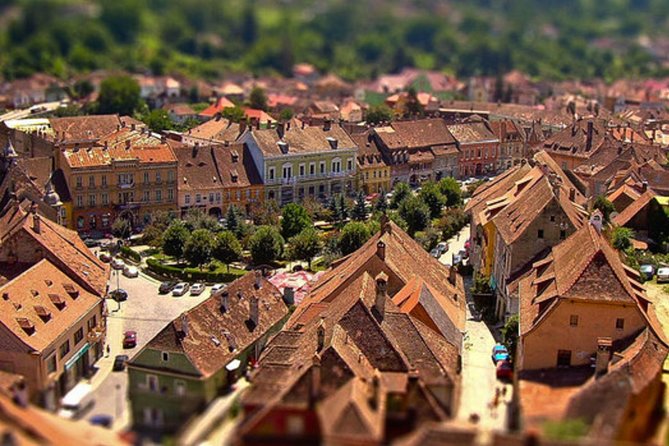
Sighișoara is the sort of town where a short walk can open onto six centuries of stories. This tour leads you through the citadel’s market square, past guild towers and colorful houses, then up the Covered Staircase to the Church on the Hill and its old cemetery. Along the way, Dracula’s real birthplace is only one small piece of the story.
I like the way the tour gives you both the famous sights and the details you might miss alone, especially architectural clues, religious symbols, and old craft traditions. I also like the guide-led pace. Peter, Petre, and Charles are all named in the feedback, and the strongest praise goes to their ability to connect Sighișoara with Transylvanian politics, education, art, and daily life.
The main consideration is that this is a walking tour on cobbled streets and uphill paths, not a casual flat stroll. The advertised length is about two hours, though an especially engaged group may spend longer, and entrance fees, including the church, are not covered in the base price.
In This Review
- Key points to know before booking
- Why a guided walk helps in Sighișoara
- Starting in the citadel at Piața Muzeului 6
- Market Place, Dracula’s Birth House, and the Clock Tower
- The Covered Staircase and the climb to Church on the Hill
- The German Cemetery and the view into local memory
- Guild towers, fortifications, and the crafts behind the walls
- Venetian House, the Deer Antler House, and overlooked details
- What the guides add to the two-hour format
- Price, group size, and what is included
- Who will get the most from this Sighișoara tour
- Should you book City Tour Sighișoara?
- FAQ
- Where does the Sighișoara walking tour begin?
- Where does the tour end?
- What time does the tour start?
- How long does the tour last?
- Is the tour offered in English?
- What is the maximum group size?
- Is a private tour available?
- Are church entrance fees included?
- What sights are included on the route?
- Can children join the tour?
- Are service animals allowed?
- Can I cancel for a full refund?
Key points to know before booking
- The Church on the Hill is the tour’s biggest climb: You use the Covered Staircase to reach one of Sighișoara’s most important historic sites.
- The guides add much more than dates: Peter, Petre, and Charles are praised for explaining architecture, religion, politics, craftsmanship, and local life.
- The route includes the famous and the easily missed: Expect Dracula’s Birth House and the Clock Tower, but also guild towers, the German Cemetery, the Venetian House, and the House with the Deer Antler.
- It is a small-group experience, but not necessarily a tiny private walk: The maximum is 30 people, with a private option available for an extra €20 per person.
- Church entry costs extra: Entrance fees and photo fees are not included, so carry some Romanian lei if you want to go inside.
- The tour suits curious walkers: You need moderate physical fitness, and children must stay with an adult.
Why a guided walk helps in Sighișoara
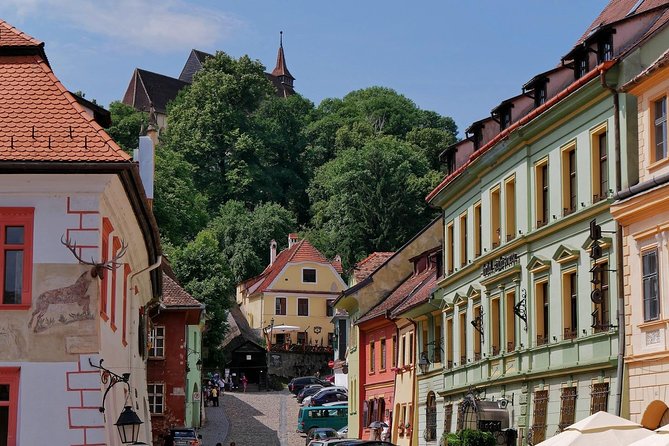
Sighișoara’s citadel is easy to admire without a guide. You can climb the streets, photograph the towers, and wander through the square on your own. The trouble is that the town’s best stories are often written in small details rather than on large signs.
A guild tower is not just a picturesque stone building. It points to the trades that shaped the town and the way defensive walls were maintained. A house facade can reveal a former owner’s status, faith, or connection to the town’s German-speaking Saxon past. A church may hold clues about local power, burial customs, and changing religious life.
That is where the English-speaking guide earns the fee. Peter is praised for bringing historical pictures and using them to explain features you are seeing in front of you. Charles is described as clear and thorough, with strong explanations of the citadel’s history and architecture. Petre is noted for connecting Sighișoara to the wider history of Romania and Transylvania, rather than keeping the discussion limited to one street.
You should not expect a scripted Dracula show. The tour includes the birthplace of Vlad the Impaler, the figure who helped inspire the Dracula legend, but the strongest focus is on documented local history, buildings, religion, and culture. That makes this a better choice for you if you want context instead of theatrical scares.
A few more Romania trips to weigh up
- Bucharest: City Highlights Guided Walking Tour
★ 4.9 · 1,482 reviews - Bucharest Highlights Walking Tour
★ 5.0 · 469 reviews - Free walking tour of Brasov in English
★ 4.9 · 302 reviews
Starting in the citadel at Piața Muzeului 6
The walk begins at Piața Muzeului 6 in Sighișoara, with the listed start time at 11:00 am. The activity returns to the same meeting point, which makes it easy to continue exploring the old town afterward without arranging a separate pickup.
Because the route is entirely a city walk, you should arrive ready for uneven paving, steps, and an uphill section. The physical requirement is listed as moderate. That does not mean an athletic excursion, but the Covered Staircase and the climb toward the Church on the Hill are real parts of the experience.
The group limit is 30 people. That is not the same as a two-person private tour, but it does keep the outing more focused than a large sightseeing group. A private option costs an additional €20 per person. If you want to ask many questions, discuss family history, or set the pace around children, the private upgrade may be worth considering.
The tour is offered in English. Morning or afternoon departures may be available, although the supplied meeting information lists 11:00 am as the start time. Check the exact departure offered on your chosen date before paying, especially if you are arranging a train, meal, or another timed activity.
Market Place, Dracula’s Birth House, and the Clock Tower
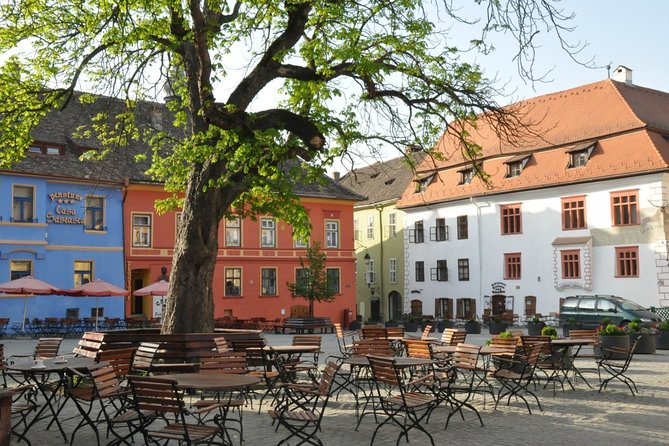
The central market area is a sensible opening chapter because it gives you the basic shape of the citadel. From here, the guide can explain how Sighișoara developed as a fortified medieval town and how its public spaces connected trade, civic life, and defense.
The colorful houses around the center make fine photographs, but do not let the scenery rush you past the details. A good guide can point out how building styles and public spaces reflect different periods. This is also where you begin to understand why Sighișoara is recognized as a UNESCO World Heritage Site.
Dracula’s Birth House brings the most familiar name into the walk. Vlad the Impaler was the historical figure behind the later Dracula connection, and his birthplace is part of the route. The useful distinction here is between the real medieval ruler and the fictional vampire. You get the local connection without needing the whole tour to revolve around a legend.
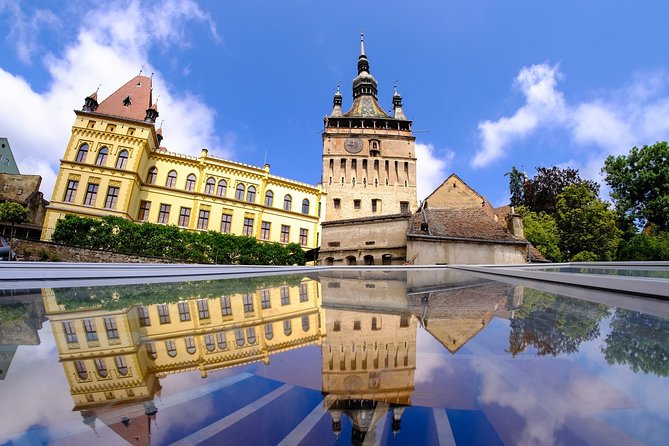
The Clock Tower is another major landmark. It is one of the clearest symbols of Sighișoara, and its position helps you read the citadel as a fortified settlement rather than a random collection of old buildings. From this point, the walk moves from headline sights toward the more layered parts of the town.
The Covered Staircase and the climb to Church on the Hill
The Covered Staircase leads uphill toward the School Hill and the Church on the Hill. Built to make the climb easier in poor weather, the staircase is one of Sighișoara’s most memorable features. It is visually striking, but it is also practical history in built form: the route links the lower citadel to the school and church above.
This is the section where comfortable shoes matter most. The steps and incline can slow the walk, and older children may need encouragement. The group pace is described as unhurried in one account, but the physical effort remains something to plan for.
The Church on the Hill is included as an interior stop, with entrance fees separate from the tour price. One account specifies an added fee of about 8 Romanian lei, including permission to take photographs inside. Fees can change, so treat that amount as a useful guide rather than a guarantee.
Inside, the value is not just the room itself. The guide can explain how the church fits into Sighișoara’s religious and civic past, and why its hilltop setting matters. The itinerary also names St Joseph Church among the interior access highlights. Since entrance charges are excluded, confirm which admission costs apply on your date and carry local currency.
Same mountains, a completely different day out:
- Bucharest: Dracula’s Castle, Peles Castle, & Brasov Old Town
★ 4.5 · 17,858 reviews - Bucharest: Dracula Castle, Peles Castle & Brasov Old Town
★ 4.6 · 10,891 reviews - Bucharest: Dracula’s Castle, Peleș Castle & Brașov Day Trip
★ 4.5 · 5,919 reviews - Bucharest: Palace of Parliament Tickets and Guide
★ 4.3 · 3,182 reviews
The German Cemetery and the view into local memory
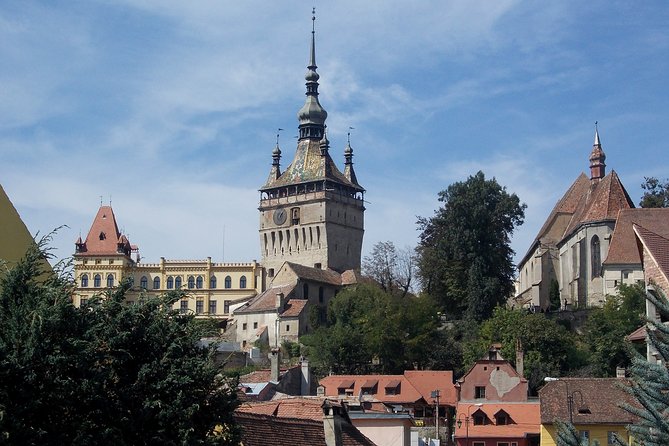
The German Cemetery adds a quieter, more reflective stop to the route. It helps place Sighișoara’s German-Saxon heritage in human terms, beyond walls and towers. Old cemeteries can be challenging for some people, so the guide checks whether you are comfortable entering before continuing.
This stop is especially useful if you want to understand the town as a lived community rather than a preserved stage set. The names, grave markers, and setting can open a discussion about religion, family, migration, and the groups that shaped Transylvania.
You may also find this part of the walk less visually dramatic than the Clock Tower or the market square. That is not a flaw, but it does change the mood. I would value it as a history stop, not as a quick photo opportunity.
The route may continue down from the hill rather than simply returning by the Covered Staircase. That alternative can give you a different view of the citadel and lead naturally toward the guild towers.
Guild towers, fortifications, and the crafts behind the walls
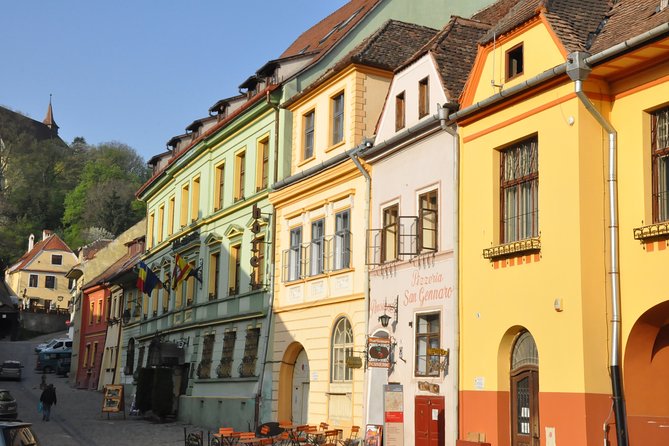
Sighișoara’s towers are among the best reasons to take a guided route. The Butchers’ Bastion and Tower, Tailors’ Tower, Furriers’ Tower, and Tin Moulders’ Tower each preserve the memory of a trade or guild tied to the town’s defense.
A guide can help you connect the names to the medieval system that organized work and protection. The towers were not merely decorative. They represented specific groups responsible for guarding sections of the settlement, and their placement tells you something about how the citadel functioned.
This is also where the tour’s slower style pays off. One of the strongest descriptions of the experience notes discussion of craftsmanship, farming practices, education, literature, and relics. Those subjects may sound broad, but they are exactly what turns a tower from a postcard image into evidence of how people lived.
The fortifications also reward careful looking. You might notice changes in stonework, narrow openings, or the way buildings meet the defensive line. I would not expect a full military history lecture in two hours, but you should come away with a clearer sense of how defense, trade, and religion were tied together.
Venetian House, the Deer Antler House, and overlooked details
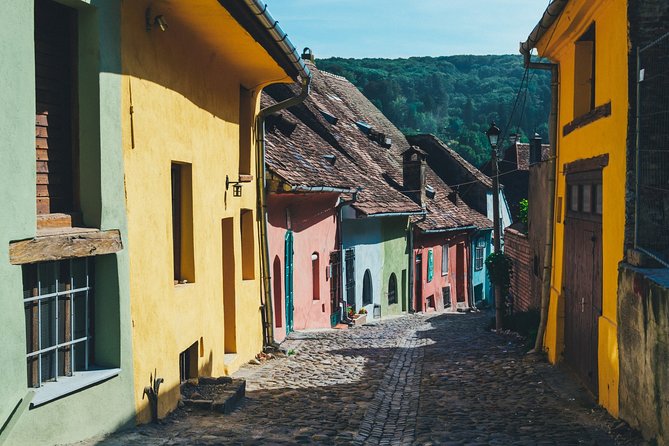
The Venetian House and the House with the Deer Antler add architectural variety to the route. These are the kinds of stops that can disappear when you explore with only a map and a checklist.
The Venetian House is notable for its appearance and name, while the House with the Deer Antler gives you a memorable visual marker in a town already full of distinctive facades. The guide’s role is to explain why these buildings matter and to help you notice features that do not announce themselves loudly.
This is also a good place for the guide’s historical images to be useful. Seeing an older view beside the building in front of you can clarify what has changed and what has survived. It gives you a stronger sense of time than taking another photograph of the same facade.
The itinerary calls the experience a mix of history, culture, and architecture, and that description fits the route. You are not simply moving from monument to monument. The walk uses buildings, streets, towers, and religious sites as pieces of a larger story.
What the guides add to the two-hour format
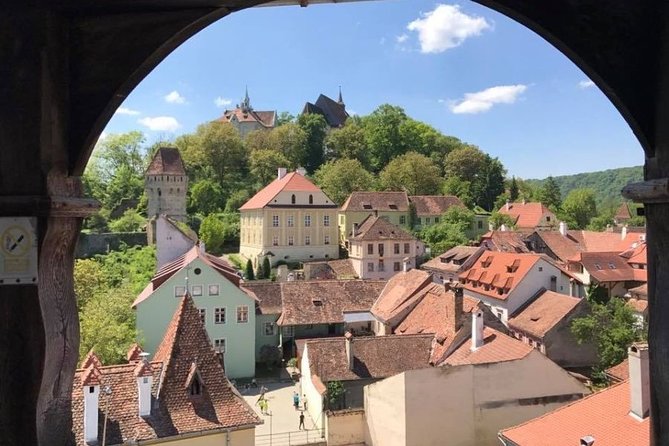
The guides receive the highest praise for their depth and range. Peter is repeatedly singled out for explaining art, religion, history, politics, and more, while Charles is described as a clear guide who gives both broad context and detailed architectural explanations. Petre is praised for telling stories that connect the children in a family group with the history around them.
That range matters because Sighișoara can otherwise feel like a narrow medieval picture. With the right explanation, the town becomes part of Transylvanian, Romanian, and European history. You may discuss communism, education, farming, literature, craftsmanship, or the meaning of religious relics, depending on your guide and the questions you ask.
The advertised duration is approximately two hours. One account describes a walk lasting three hours because the group was so interested, and another notes that Charles extended the tour rather than rushing people away. Do not count on extra time as a formal promise, but the guide may allow a natural conversation to continue if the schedule permits.
If you prefer a quick orientation with only the main facts, the intellectual range may feel like more than you need. If you enjoy asking why a building looks as it does, this is where the tour offers real value.
Price, group size, and what is included
The listed price is $46.96 per person. That is not bargain-basement pricing for a two-hour city walk, so the value depends heavily on what you want from a guide.
You are paying for an English-speaking specialist who can interpret a UNESCO-listed citadel, explain its towers and churches, and answer questions across several periods of history. For a first visit, that can be worthwhile because Sighișoara’s appeal is not only its appearance. The added context helps you make sense of the streets after the tour ends.
The base price includes the guide. It does not include entrance fees, photo fees, personal expenses, alcohol, or souvenirs. Church admission is therefore an extra cost, and the private option adds €20 per person.
Group discounts are available, but the exact savings are not given. The maximum group size is 30, so you should not assume that every departure will feel intimate. Still, the experience is described as small-group, and the guide-led format is intended to be more personal than a large coach tour.
Free cancellation is available when you cancel at least 24 hours before the local start time. Changes or cancellations inside that window are not accepted for a refund.
Who will get the most from this Sighișoara tour
I would choose this walk if you want more than photographs and a quick Dracula connection. It suits people who enjoy old buildings, local stories, religious sites, and the way politics and daily life shape a town.
Families can also do well here. Petre is specifically noted for engaging with children through stories and experiences, though children must be accompanied by an adult. The uphill route means you should judge your child’s stamina before booking.
This is a good first activity in Sighișoara because it gives you a map in your head. Afterward, you can return to the Clock Tower, market square, churches, or towers with a better idea of what you are looking at.
It may be less suitable if you have limited mobility, dislike steps, or want a fast, purely visual tour. It may also feel too academic if you are looking only for Dracula legends. The title promises legends and landmarks, but the experience leans toward serious local history.
Should you book City Tour Sighișoara?
Book it if you want an informed walk through the citadel, especially if Peter, Petre, or Charles is guiding your departure. The strongest reason to go is the guide’s ability to connect small details to larger stories about Transylvania, religion, architecture, education, and politics.
Before setting out, wear shoes suited to cobbles and stairs, bring money for church admission and photographs, and allow flexibility in case the discussion runs longer than two hours. If you want the most personal format, ask about the private supplement.
Skip it if you prefer to wander alone, do not want an uphill walk, or only want the headline sights. For most first-time visitors who value context, the price is reasonable because it turns Sighișoara from a pretty old town into a place you can read.
FAQ
Where does the Sighișoara walking tour begin?
It begins at Piața Muzeului 6, Sighișoara 545400, Romania.
Where does the tour end?
The activity ends back at the meeting point.
What time does the tour start?
The listed start time is 11:00 am. Morning or afternoon departure choices may also be available, depending on the booking option.
How long does the tour last?
The advertised duration is approximately two hours. The walk may take longer if the group discussion continues and the schedule allows.
Is the tour offered in English?
Yes. The tour includes an English-speaking, specialized guide.
What is the maximum group size?
The maximum is 30 people.
Is a private tour available?
Yes. A private tour has a supplement of €20 per person.
Are church entrance fees included?
No. Entrance fees are not included. One provided account gives a Church on the Hill admission price of about 8 lei, including interior photography, but prices can change.
What sights are included on the route?
The route includes the Citadel’s Market Place, Dracula’s Birth House, the Clock Tower, the Covered Staircase, School Hill, the Church on the Hill, the German Cemetery, several guild towers and bastions, the Venetian House, and the House with the Deer Antler.
Can children join the tour?
Yes, but children must be accompanied by an adult. The tour requires a moderate level of physical fitness.
Are service animals allowed?
Yes. Service animals are allowed.
Can I cancel for a full refund?
Yes, if you cancel at least 24 hours before the experience start time. Cancellations or changes made less than 24 hours before the start are not refunded.
Just added around Romania
- Village Museum Bucharest Guided Tour★ 5.0 · 6 reviews
- Bucharest: Dealu Mare Winery Private Trip with Wine Tasting★ 4.9 · 6 reviews
- Winery touring & private wine tasting – one day private tour★ 5.0 · 3 reviews
- Turda Salt Mine, Gorge & Rimetea Village (private from Cluj)★ 5.0 · 5 reviews
- Private tour to Turda Salt Mine, Rimetea and Alba Iulia★ 4.8 · 5 reviews
- Transylvania Tour: Dracula’s Castle, Peles Palace & Brasov★ 5.0 · 19 reviews
- Turda salt mine and Corvin Castle day tour from Cluj★ 5.0 · 9 reviews
- PRIVATE 4-5h speedboat tour to the village Mila23★ 5.0 · 3 reviews
Walking Tours, compared.
Ghost Stories & Romanian Mythology Walking Tour
Read our review →
Walking Tour- Delightful Bucharest (Highlights, Stories, Sights)
Read our review →

4h Bucharest Private Tour (2h by Car and 2h Walking in Old Town)
Read our review →
Browse the lists this tour appears in