
Reviewed · WALKING TOURS
City Tour Sighisoara Legends & Landmarks A Walk Through Time
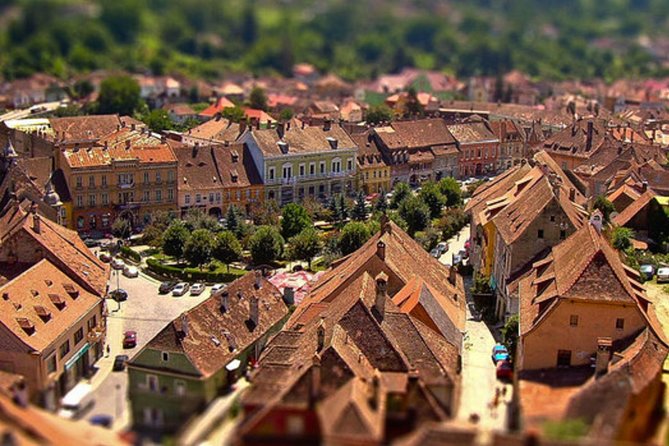
Sighișoara’s real magic is not just its Dracula connection. It is the way a small medieval citadel still feels like a lived-in town, with colored houses, steep lanes, old guild towers, and a wooden stairway leading uphill to a Gothic church. I like that this tour puts Vlad the Impaler in context, rather than treating him as a cartoon vampire. I also like the route’s variety: you see major landmarks, defensive towers, a cemetery, and less obvious architectural details in one two-hour walk.
The main drawback is the walking itself. You climb the 164 steps of the Covered Staircase and continue toward the Church on the Hill, so this is not a good choice for people with mobility impairments. Entrance fees, food, drinks, and souvenir photos are extra, and the 11:00 departure gives you little flexibility if you prefer an early or late start.
In This Review
- Key points to know before you book
- Start at Piața Muzeului beside the Monastery Church
- The Market Place reveals the citadel’s everyday life
- Dracula’s Birth House separates fact from folklore
- The Clock Tower puts Sighișoara on a grand scale
- The Covered Staircase makes School Hill memorable
- The Church on the Hill rewards the climb
- The German Cemetery adds human detail
- Guild towers explain how defense was organized
- Venetian House and the House with the Deer Antler
- How the guiding works in practice
- Is $45 good value for two hours?
- Who should book this Sighișoara walk?
- Should you book City Tour Sighișoara?
- FAQ
- How long does the Sighișoara city tour last?
- What time does the tour depart?
- Where is the meeting point?
- What language is the tour in?
- Is an entrance ticket included?
- Are food and drinks included?
- Is this tour suitable for people with mobility impairments?
- Can I book a private tour?
- What should I bring, and what is not allowed?
Key points to know before you book
- The 164-step Covered Staircase leads up School Hill and gives the tour a memorable physical challenge.
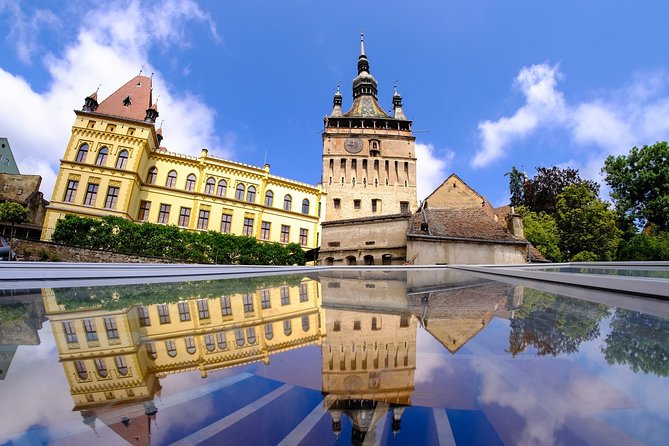
- The Clock Tower reaches 64 meters and explains Sighișoara’s power, timekeeping, and defensive history.
- Dracula’s Birth House is tied to Vlad the Impaler, but the tour looks beyond the legend to the man and the town around him.
- The German Cemetery offers a quiet way to understand the families and communities that shaped Sighișoara.
- English-speaking guides such as Peter and Charles are praised for patient answers, local insight, and flexibility.
- The $45 price covers the guide only, so budget separately for any paid entries along the route.
Start at Piața Muzeului beside the Monastery Church
The meeting point is Piața Muzeului 5, in front of the Monastery Church. Booking information also lists Piața Muzeului 6 as a possible start or end point, so check your confirmation carefully and look for the exact address before setting out.
The tour departs daily at 11:00 and lasts about two hours. That makes it easy to fit into a morning in Sighișoara, though you should allow extra time if you want to enter the Clock Tower, Church on the Hill, or other paid sights after the walk. The tour itself does not include entrance fees.
You will be walking on cobbled streets and climbing steps. Wear shoes with a firm grip, bring water, and carry an identity document, which is listed among the required items. Large bags and oversize luggage are not allowed, so leave your main suitcase at your accommodation or another secure location.
The tour is offered in English with a live guide. The company uses several guides, including Peter, Charles, Carol, Andrea, and others. Names can vary from day to day, but the strongest pattern is clear: the guide is central to the experience. This is not an audio walk where you simply follow a route and read plaques.
A few more Romania trips to weigh up
- Bucharest: City Highlights Guided Walking Tour
★ 4.9 · 1,482 reviews - Bucharest Highlights Walking Tour
★ 5.0 · 469 reviews - Free walking tour of Brasov in English
★ 4.9 · 302 reviews
The Market Place reveals the citadel’s everyday life
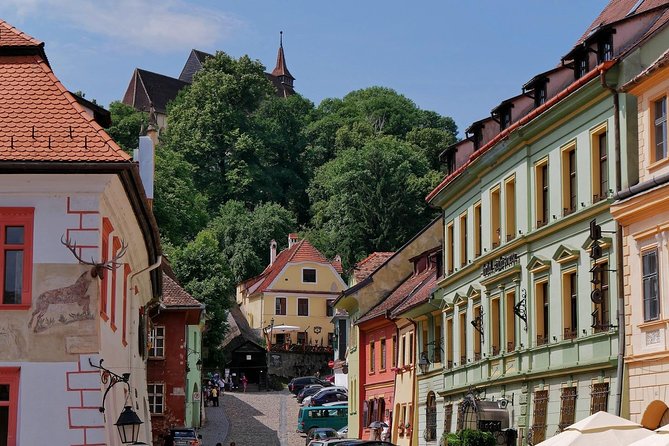
The walk moves into the heart of Sighișoara’s medieval citadel, beginning around the Market Place. This is where the town’s grand burgher houses make the best first impression. Their colored façades and close-set arrangement show how compact life inside the fortified town once was.
I like starting here because it gives you a useful base for everything that follows. The towers, churches, homes, and guild buildings are not random sights scattered through a pretty old town. They belong to a system shaped by trade, defense, religion, and local government.
Your guide can explain how Sighișoara developed as a fortified Transylvanian settlement and how the German-speaking Saxon community influenced its buildings and customs. Several people who took this tour appreciated learning about the wider region, not just the streets immediately under their feet. That wider context matters. Without it, Sighișoara can seem like a picturesque film set. With it, the houses become evidence of how people worked, worshiped, traded, and protected themselves.
This part of the walk is also a good chance to ask practical questions about the citadel. A strong guide will adjust the conversation to your interests. Peter and Charles are especially noted for explaining both the major events and small details of daily life, while Carol has been praised for adding local stories and useful background.
Dracula’s Birth House separates fact from folklore
One of the tour’s most famous stops is the house associated with Vlad the Impaler, the historical figure linked to the Dracula legend. It is now a restaurant and museum focused on Sighișoara’s past.
The important point is not simply that you can take a photograph at the birthplace. The value comes from hearing how Vlad’s real life connects to the later Dracula story, and how much the popular image leaves out. The tour presents him as part of Romanian and Transylvanian history, rather than reducing the town to a vampire theme park.
That distinction is useful if you have come to Sighișoara because of Dracula but want more than a few spooky souvenirs. The guide can place Vlad within the political world of his time and explain why his reputation became so powerful. One of the most praised parts of the tour is the way guides give more to the story than you would think, helping you understand the person and the period behind the legend.
You should not expect a long museum visit here. The tour is a walking overview, and food or drinks at the restaurant are not included. Treat the stop as a storytelling point and a chance to look closely at one of the citadel’s best-known historic buildings.
The Clock Tower puts Sighișoara on a grand scale
The Clock Tower is the citadel’s main landmark and one of its most useful orientation points. At 64 meters high, it dominates the old town and offers a panoramic view from above.
The tower also helps explain how the town worked. Its clock mechanism and historical artifacts show that timekeeping was not merely decorative. A public clock mattered to a trading town, while the tower’s height and fortified role reflected Sighișoara’s need to monitor and defend itself.
If you pay for entry, the view can add a strong visual finish to the historical explanation. You will see the compact citadel from above, then understand why the towers and walls were placed where they were. Since entrance fees are not included, decide in advance if you want to go inside. The guide can explain the tower from the outside, but the mechanism, artifacts, and panorama require a separate ticket.
The tower is also one of the best places to get your bearings. After seeing Sighișoara from street level, the high view makes the layout click. You can better understand the relationship between the Market Place, the defensive towers, and the hilltop church.
Same mountains, a completely different day out:
- Bucharest: Dracula’s Castle, Peles Castle, & Brasov Old Town
★ 4.5 · 17,858 reviews - Bucharest: Dracula Castle, Peles Castle & Brasov Old Town
★ 4.6 · 10,891 reviews - Bucharest: Dracula’s Castle, Peleș Castle & Brașov Day Trip
★ 4.5 · 5,919 reviews - Bucharest: Palace of Parliament Tickets and Guide
★ 4.3 · 3,182 reviews
The Covered Staircase makes School Hill memorable
The Covered Staircase is one of the tour’s most distinctive features. Built in the 17th century, its 164 wooden steps were designed to protect schoolchildren from harsh weather as they made their way up School Hill.
This is not just a staircase with a colorful name. The covered passage shows how the town adapted its architecture to local weather and daily needs. It also gives you a direct sense of the climb that shaped life in the citadel. You do not simply hear that the church sits uphill. You feel the effort required to reach it.
The climb is manageable for many people, but it is the clearest physical demand of the route. Take it slowly. There is no prize for rushing, and the guide can pause for questions or breathers. One guide even adapted a route for visitors who had already climbed the hill and needed to catch a train, showing the kind of flexibility that can make a walking tour work better for different abilities.
Still, do not book this experience if stairs are a serious problem. The tour is specifically listed as unsuitable for people with mobility impairments, and the cobbles add another challenge.
The Church on the Hill rewards the climb
At the top of School Hill, you reach the Church on the Hill, a Gothic church with a striking interior and medieval frescoes. Its position gives the stop a sense of arrival after the long covered staircase.
The church is valuable for two reasons. First, it adds religious and artistic depth to a tour that could otherwise focus too heavily on walls and towers. Second, it shows that Sighișoara’s story was shaped by institutions as much as by merchants and soldiers.
The interior and medieval frescoes are a reason to consider paying any applicable entrance fee, since the tour price does not include admission. Ask your guide what is open on the day. The exact access arrangements are not specified, so you should not assume every part of the church will be available during the walk.
The hilltop setting also gives you a change of mood. Down in the citadel, the route is full of narrow streets and famous façades. Here, the surroundings become quieter and more reflective. It is a good place to ask about religion, education, and the town’s German heritage.
The German Cemetery adds human detail
The German Cemetery is one of the most thoughtful stops on the route. It is not as immediately famous as the Clock Tower or Dracula’s Birth House, but it helps you understand who lived in Sighișoara and how local families shaped its institutions.
The cemetery contains the graves of influential families from the town. That makes it more than a place of old stones. Names, dates, and family connections can reveal the social structure behind the citadel’s handsome buildings.
I especially like this part of the walk because it slows the pace and moves the story away from famous men and dramatic legends. You get a clearer picture of Sighișoara as a community with generations of residents, not simply a medieval attraction preserved for photographs.
The cemetery may be uneven underfoot, and visitors should behave respectfully. Your guide can help you read the site as part of the town’s history without turning it into a rushed checklist stop.
Guild towers explain how defense was organized
Sighișoara’s towers are closely tied to the old craft guilds. The Butchers’ Bastion and Tower, Tailors’ Tower, Furriers’ Tower, and Tin Moulders’ Tower each point to a time when tradespeople had a direct duty to protect the citadel.
This is one of the best reasons to take a guided walk rather than simply wander with a map. A tower may look like an attractive stone structure, but its name tells you who maintained it, what kind of work happened nearby, and how defense was divided among the town’s trades.
The Butchers’ Bastion and Tower introduce the military side of guild life. The Tailors’ Tower and Furriers’ Tower add more examples of how occupations shaped the fortifications. The Tin Moulders’ Tower extends the pattern, helping you see the citadel as an organized working town.
You will not spend a long time inside every tower. The tour is only two hours, and admissions are separate. The payoff is the pattern: after your guide explains several towers, the walls begin to make sense as a civic project supported by working families.
Venetian House and the House with the Deer Antler
The Venetian House brings a different architectural note to the walk. Its Renaissance-style design is more elegant than the heavy defensive towers, and its story adds a layer of cultural exchange to Sighișoara.
The stop is a reminder that the citadel was not only concerned with siege defense. It was also a place where styles, wealth, and outside influences reached local streets. The tour does not treat architecture as a parade of dates. It connects façades to the people and ideas that produced them.
Near the end, you visit the House with the Deer Antler, one of Sighișoara’s most unusual medieval buildings. The antlers mounted on its façade make it easy to recognize and provide a light, memorable finish after the denser history of churches, cemeteries, and defensive towers.
This is a good final photo stop, but the real value is the way it trains your eye. Once you know to look for unusual façades, Renaissance details, guild symbols, and defensive features, you will notice much more during your own wandering.
How the guiding works in practice
The tour’s strongest feature is the guide’s role in turning a compact town into a connected story. Peter is repeatedly praised for using old photographs, explaining everyday life, and answering questions with patience. Charles is described as clear, adaptable, and particularly good at history and architecture. Carol has been praised for local stories and a friendly manner.
Those names do not guarantee who will lead your walk, but they give you a sense of the company’s guiding style. The best guides on this route do not talk down to you or rush through a fixed speech. They answer follow-up questions, adjust the pace, find shade or a place to sit when possible, and sometimes spend more than the scheduled two hours.
That flexibility is useful, but do not treat extra time as guaranteed. If you have a train, reservation, or other fixed plan, tell the guide at the start. A previous guide adapted the route and timing for visitors catching a train, but your own schedule should still include a safety margin.
The tour is in English. If you want a private walk, the listed supplement is EUR 20 per person. That may be worthwhile for families, couples, or anyone with specific interests in architecture, Romanian history, or the Dracula connection. A standard group walk is likely the better value if you are happy to share the route and conversation.
Is $45 good value for two hours?
At $45 per person, this is not the cheapest way to walk around Sighișoara. You can see the outside of many buildings for free. The price makes more sense if you want interpretation, local context, and a route that includes the hill, cemetery, guild towers, and less obvious architectural stops.
I see the tour as an orientation expense. Take it early in your stay and you will know which places deserve a second visit, where to spend your own time, and how the citadel fits into Transylvania’s wider story. Several people found that the walk changed Sighișoara from a pretty but shallow stop into a place they understood.
The value rises if you ask questions. The guides have been praised for discussing Romania beyond Sighișoara, including traditions, culture, and modern life. If you only want quick photographs, $45 may feel high. If you want a careful explanation of what you are seeing, the cost is easier to justify.
Food, drinks, entrance fees, and souvenir photos are not included. You can cancel up to 24 hours before the tour for a full refund, and you can reserve while paying later, which helps if your Romanian itinerary is still changing.
Who should book this Sighișoara walk?
I would recommend it to first-time visitors, history fans, architecture lovers, and anyone who wants more than the Dracula label. It is also a good fit for families if everyone can manage the steps, since one guide has been praised for working well with children.
You will get the most from it if you enjoy asking questions and looking closely at buildings. The tour is less suitable if you dislike hills, have limited mobility, carry large luggage, or want a relaxed café crawl instead of a focused historical walk.
The daily 11:00 start works well for many sightseeing plans, but it is the only departure time provided. If you prefer to avoid midday sun or have an early transport connection, check the schedule before booking.
Should you book City Tour Sighișoara?
Yes, if you want the citadel explained by a local English-speaking guide rather than simply photographed. The route covers the headline sights, but its best moments may be the links between them: the guilds behind the towers, the families in the cemetery, the schoolchildren who used the Covered Staircase, and the real man behind the Dracula legend.
Book it near the start of your stay so the Clock Tower, Church on the Hill, and unusual houses can guide the rest of your visit. Skip it if you cannot handle 164 steps or if you only want free outdoor sightseeing. For most active visitors, the combination of strong guiding, a well-shaped route, and useful historical context makes the $45 price fair.
FAQ
How long does the Sighișoara city tour last?
The tour lasts two hours.
What time does the tour depart?
The scheduled departure is 11:00, and the tour operates daily.
Where is the meeting point?
Meet at Piața Muzeului 5, in front of the Monastery Church. Piața Muzeului 6 is also listed as a possible starting or ending location, so check your booking details.
What language is the tour in?
The tour is conducted in English by a live guide.
Is an entrance ticket included?
No. Entrance fees are not included in the $45 tour price.
Are food and drinks included?
No. You need to pay for your own food and drinks.
Is this tour suitable for people with mobility impairments?
No. The tour is listed as unsuitable for people with mobility impairments because it includes walking on cobbled streets and climbing the 164-step Covered Staircase.
Can I book a private tour?
Yes. A private tour requires a supplement of EUR 20 per person.
What should I bring, and what is not allowed?
Bring a passport or ID card. Oversize luggage and large bags are not allowed.
Just added around Romania
- Village Museum Bucharest Guided Tour★ 5.0 · 6 reviews
- Bucharest: Dealu Mare Winery Private Trip with Wine Tasting★ 4.9 · 6 reviews
- Winery touring & private wine tasting – one day private tour★ 5.0 · 3 reviews
- Turda Salt Mine, Gorge & Rimetea Village (private from Cluj)★ 5.0 · 5 reviews
- Private tour to Turda Salt Mine, Rimetea and Alba Iulia★ 4.8 · 5 reviews
- PRIVATE 4-5h speedboat tour to the village Mila23★ 5.0 · 3 reviews
- Transylvania Tour: Dracula’s Castle, Peles Palace & Brasov★ 5.0 · 19 reviews
- Turda salt mine and Corvin Castle day tour from Cluj★ 5.0 · 9 reviews
Walking Tours, compared.
Ghost Stories & Romanian Mythology Walking Tour
Read our review →
Walking Tour- Delightful Bucharest (Highlights, Stories, Sights)
Read our review →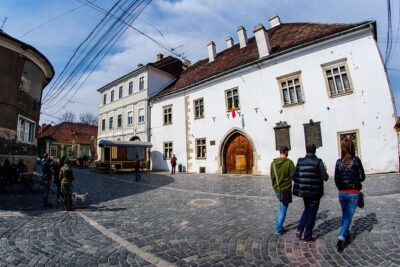

4h Bucharest Private Tour (2h by Car and 2h Walking in Old Town)
Read our review →
Browse the lists this tour appears in