
Reviewed · MARAMURES TOURS
Classic Romania Tour – small group in 8 days: Transylvania and Maramures
The best part of this eight-day private tour is its range. In one trip, you move from Bucharest’s communist-era Palace of the Parliament to Saxon villages, royal castles, an underground salt mine, and the wooden churches of Maramureș. It gives you Romania as a layered country, not just a Dracula postcard.
I like the small maximum of six people, which keeps the long drives more personal. I also like the village visits, especially Breb and Viscri, where you see homes, crafts, food, and daily life rather than only grand monuments. The main consideration is the pace: you cover a lot of ground, and several days combine long drives with walking and sightseeing.
In This Review
- Key points
- Why this Romania route works so well
- Bucharest begins with power and contradiction
- Curtea de Argeș, Cozia, and Sibiu
- Sibiel, Alba Iulia, and the Turda Salt Mine
- Cluj-Napoca and the living traditions of Maramureș
- Wooden churches and Târgu Mureș
- Biertan and Sighișoara, two different medieval moods
- Brașov, Bran Castle, and the royal road to Bucharest
- Hotels, transport, meals, and physical effort
- Who should book this tour?
- FAQ
- How long is the Classic Romania Tour?
- Where does the tour begin and end?
- What is the maximum group size?
- Is airport transportation included?
- What type of transportation is used?
- Is the Palace of the Parliament included?
- Are meals included?
- What physical fitness level is required?
Key points
- Eight days, seven hotel nights: Bucharest, Sibiu, Cluj-Napoca, Sighetu Marmației, Târgu Mureș, Brașov, and Bucharest.
- A maximum of six people: Private transport and a personal guide make schedule changes easier.
- Romania beyond Dracula: See Curtea de Argeș, Cozia, Alba Iulia, Biertan, Sighișoara, and Maramureș churches.
- Real village encounters: Breb includes an authentic house visit, local food, and fruit liqueurs. Viscri includes a horse-drawn carriage ride and homemade cake.
- Strong castle pairing: Bran Castle delivers the Dracula legend, while Peleș Castle offers royal interiors and mountain scenery.
- Important seasonal changes: Cozia may be replaced by the Transfăgărășan road from mid-June to early November, and the Palace of the Parliament is currently replaced by Spring Palace until June.
Why this Romania route works so well
Romania rewards a trip that connects its regions. Bucharest can feel grand, chaotic, and marked by the communist period. Transylvania adds medieval churches and fortified towns. Maramureș feels slower and more traditional, with wooden homes, handmade crafts, and food made from local garden produce.
This tour links those places without asking you to arrange a string of trains, taxis, and rural transfers. Your guide handles the driving in a modern car or minivan, and accommodation is arranged in centrally located hotels. That matters here because many of the most appealing stops are villages and monuments scattered far from major rail routes.
The price is $2,339.64 per person, based on two people sharing a double room. That is not a budget tour, but it includes seven hotel nights, breakfast, private transport, an English-speaking guide, airport transfers, one traditional lunch, a folk-show dinner, and a horse-drawn carriage ride. Some monument entrance fees are not included, so you should check the final cost before booking.
The small group size is a real advantage. With no more than six people, your guide can explain details without shouting across a coach, and the group is better placed to handle a reasonable schedule change. Valentin Val Nan, named as one of the guides for this experience, has also adjusted plans for guests who wanted to add Constanța and Histria. That suggests useful flexibility, though any major detour should be arranged before you count on it.
More Transylvania Tours in Bucharest
- Transylvania and Dracula Castle Full Day Tour from Bucharest
★ 4.5 · 1,589 reviews - Castles of Transylvania: Private Day Trip from Bucharest
★ 4.5 · 248 reviews - 2-Day Medieval Transylvania with Brasov,Sibiu and Sighisoara Tour from Bucharest
★ 4.5 · 145 reviews
Bucharest begins with power and contradiction
Day one starts with a city tour of Bucharest, where Western European architecture, Eastern European influence, and the marks of communist rule sit close together. The Old Town is the liveliest introduction, with historic buildings, narrow streets, restaurants, and nightlife. It is a good place to get your bearings, but the area can feel noisy and untidy rather than polished.
The planned visit to the Palace of the Parliament needs special attention. The building is famous for its size and for the human and financial cost of its construction under Nicolae Ceaușescu. At present, it cannot be visited because it is closed until June, and the tour replaces it with Spring Palace.
That substitution changes the first day. Spring Palace offers another look at the communist period, but it is not the same experience as walking through the vast marble rooms of the House of the People. Confirm the operating status and replacement plan for your departure date.
You spend the night in Bucharest. The day is listed at about six hours, including the included admission ticket noted in the schedule.
Curtea de Argeș, Cozia, and Sibiu
The road west begins with Curtea de Argeș Monastery, set at the foot of the Carpathian Mountains. Its religious and architectural importance makes it a fitting first stop outside the capital, especially if you want to understand Romania through its Orthodox traditions as well as its castles.
The route then follows the Olt Valley to Cozia Monastery. This section is about scenery and medieval art, with the road offering a quieter view of Romania than the larger cities. From mid-June to early November, the schedule says Cozia is replaced by a drive on the Transfăgărășan, one of the country’s best-known mountain roads. That seasonal swap may appeal to you if mountain roads are a priority, but confirm road access and the exact plan.
Sibiu is one of the tour’s strongest city stops. Its Main Square brings together the Brukenthal Museum, the Roman Catholic Cathedral, and the city’s carefully preserved central buildings. You continue to Huet Square and the Evangelical Church, then cross the Bridge of Lies after passing through the famous stair passage.
I like this first Transylvanian overnight because Sibiu is compact enough to explore on foot but substantial enough to show the region’s Saxon and multicultural past. The walking tour involves uneven old streets and stairs, so comfortable shoes are sensible.
Sibiel, Alba Iulia, and the Turda Salt Mine
Day three starts in Sibiel, a small village presented as one of Transylvania’s best-preserved rural areas. The visit is short, but it gives you a chance to compare village life with the urban character of Sibiu. Do not expect a full-day rural stay here. Think of it as a brief, useful stop on the way to larger sights.
Alba Iulia provides a sharp change of scale. The Alba Carolina Fortress covers a huge area and is surrounded by 12 kilometers of walls. Its star-shaped Vauban design reflects its later military role, while the site also carries traces of an earlier Roman fort and medieval fortress.
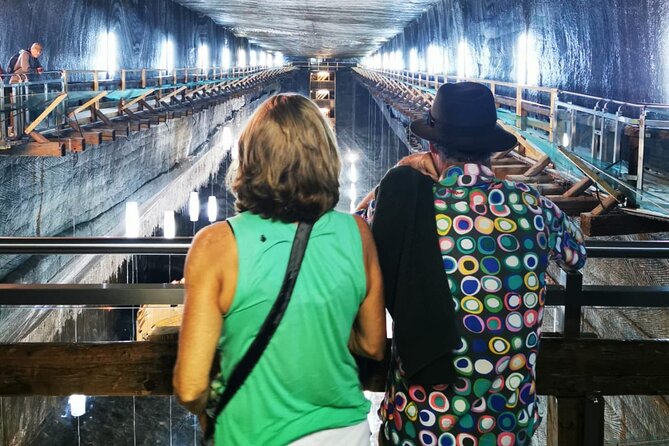
The Turda Salt Mine is perhaps the most surprising stop of the entire tour. You descend into a subterranean world cut from salt, with long galleries, enormous halls, and a lake at the bottom. One chamber rises 118 meters, creating the kind of strange, dramatic setting that photographs well without needing theatrical decoration.
The day ends in Cluj-Napoca, Transylvania’s largest city and a center associated with the arts. You get a short city visit on day four, but the main value of this overnight is that it breaks up the long journey toward Maramureș.
Same mountains, a completely different day out:
- Bucharest: Dracula’s Castle, Peles Castle, & Brasov Old Town
★ 4.5 · 17,858 reviews - Bucharest: Dracula Castle, Peles Castle & Brasov Old Town
★ 4.6 · 10,891 reviews - Bucharest: Dracula’s Castle, Peleș Castle & Brașov Day Trip
★ 4.5 · 5,919 reviews - Bucharest: Palace of Parliament Tickets and Guide
★ 4.3 · 3,182 reviews
Cluj-Napoca and the living traditions of Maramureș
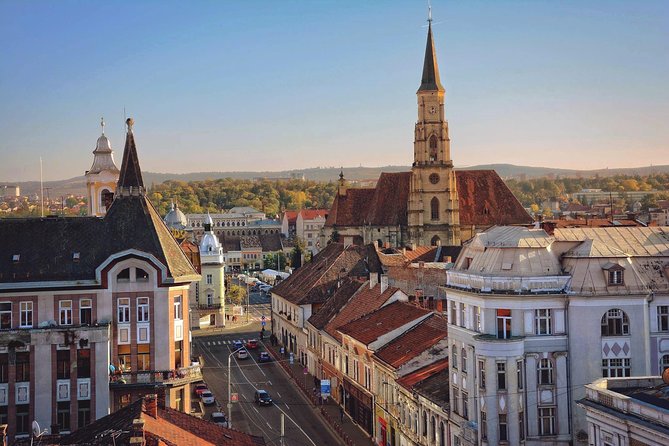
Cluj’s city tour includes St. Michael’s Gothic Cathedral, Banffy Palace, the former mayor’s hall, and Mirror Street. These sights give you a quick introduction to the city’s architecture and cultural mix. The tour does not leave much spare time for independent exploration, so treat Cluj as a focused stop rather than a full city break.
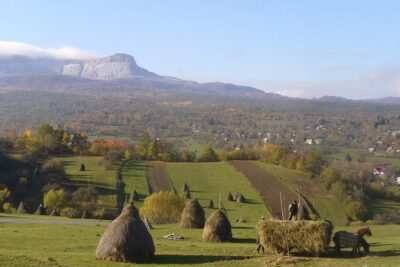
The journey north to Maramureș is one of the most meaningful parts of the route. The region is known for traditional wooden houses and communities that have kept older customs alive. You visit Breb, where the experience moves beyond looking at buildings from the road.
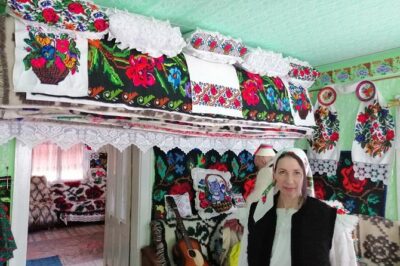
In Breb, you take a short walk, enter an authentic house, meet local people, and eat fresh regional products with fruity liqueurs. The appeal is direct and human: you see how a traditional home functions and taste food connected to the local garden and household.
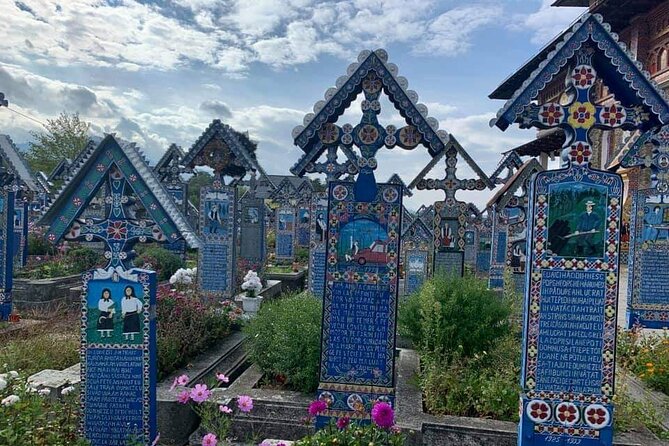
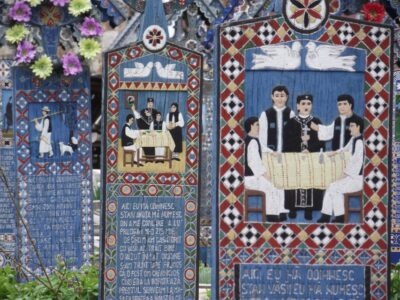
The day finishes near Sighetu Marmației at Săpînța’s Merry Cemetery. Brightly painted wooden crosses carry humorous poems about the people buried there. The cemetery’s wit may surprise you, but that is precisely why it is memorable. It presents death through local storytelling, personality, and humor rather than solemn uniformity.
That evening includes a traditional Romanian dinner and folk show. It is one of the more arranged parts of the trip, so it will suit you if you want an easy introduction to local music and food. If you prefer only unplanned encounters, this may feel more packaged than the Breb visit.
Wooden churches and Târgu Mureș
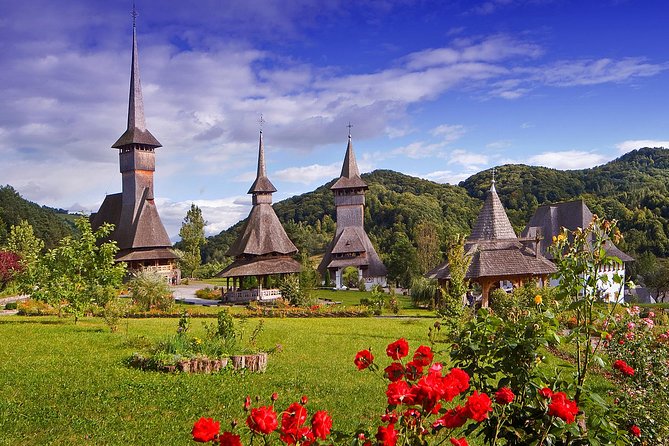
Day five focuses on the wooden churches of Poienile Izei and Bârsana, both part of a UNESCO World Heritage Site. These churches show how local builders used wood for religious architecture and decoration, creating structures that feel closely tied to the surrounding communities.
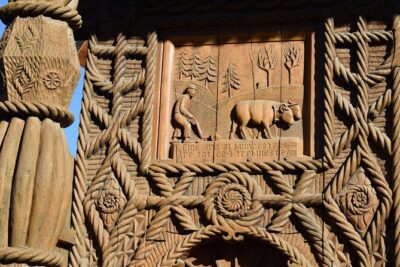
Bârsana is also known for its large Orthodox architectural ensemble. You visit a local woodcarving artisan and watch a presentation of the craft before having time to buy handmade souvenirs. This is a useful stop for understanding that the wooden buildings are not merely preserved museum pieces. Woodworking remains part of local culture.
Food is central to the day. You taste products made in the area, including dishes based on homegrown produce. The schedule includes one lunch with traditional local products, while other meals are at your own expense. Ask your guide how much time is allowed for meals, since the day combines rural visits with a transfer to Târgu Mureș.
Târgu Mureș is recognized for its ethnic and cultural variety. The overnight location gives the route a practical midpoint before you return toward the better-known fortified towns of southern Transylvania.
Biertan and Sighișoara, two different medieval moods
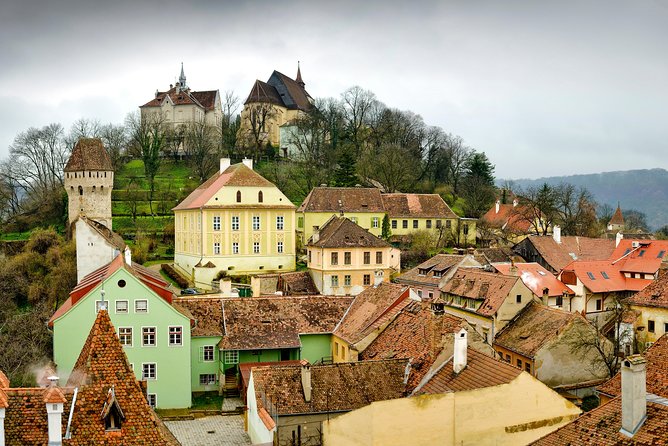
Biertan introduces you to the fortified church tradition of Transylvania’s Saxon communities. Its large sixteenth-century church is surrounded by defensive structures and is now a UNESCO site. The setting makes clear why churches in this region were built to protect communities as well as serve them.
Sighișoara is more immediately atmospheric. It is the only inhabited medieval fortress listed as a UNESCO World Heritage Site, and its cobbled streets rise toward the Clock Tower. From the tower, you can look over the town, while the interior museum covers medieval weapons and includes a torture chamber.
You then climb 300 wooden steps to the Church-on-the-Hill. That climb is manageable for many people, but it is not a minor detail if you have knee, balance, or mobility concerns. The tour requires a moderate level of physical fitness, and this is one of the clearest examples why.
Viscri changes the mood again. The village is known for its traditional houses and for a restored home associated with King Charles III, formerly the Prince of Wales. Your horse-drawn carriage ride offers a slow way to see the village, followed by a visit with local people and homemade cake.
I especially like this stop because it gives you time to notice small details in the village instead of rushing from one major monument to another. Still, the visit is guided and scheduled, not a free afternoon for wandering wherever you please.
Brașov, Bran Castle, and the royal road to Bucharest
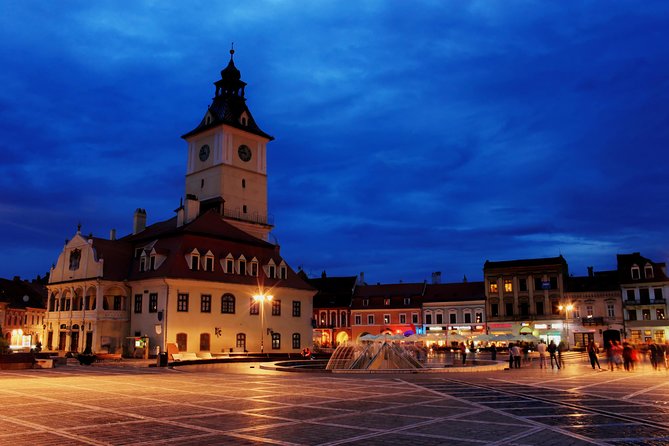
Brașov sits at the foot of the Carpathian Mountains and brings the medieval city portion of the trip to a strong close. The walking tour includes Council Square, the Black Church, and one of the world’s narrowest streets. The center is compact, but expect more walking on old paving stones.
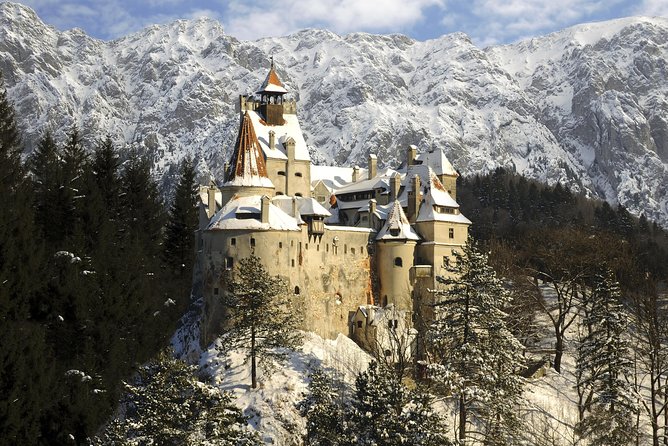
Bran Castle is the tour’s most famous name. Its position on a 60-meter cliff and its connection with the Dracula legend make it an easy crowd-pleaser. The historic building itself is more important than the vampire story, but the folklore adds a layer of fun and explains the castle’s fame.
You should keep expectations in check. A visit to Bran is not a journey into a literal Dracula setting. It is a medieval castle tour shaped by later legend, with striking views and a memorable location.
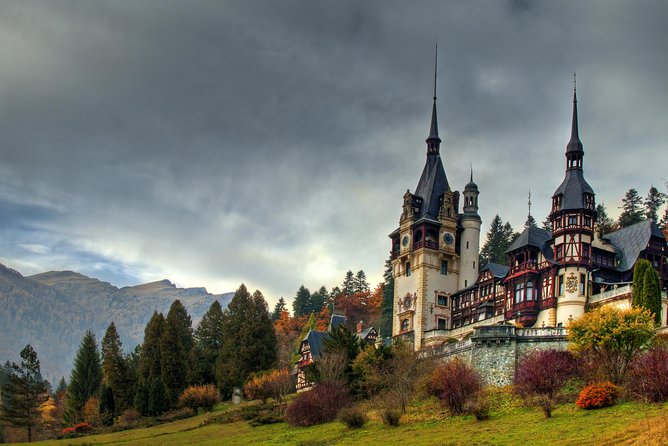
The final major stop is Sinaia, a mountain resort associated with Romania’s royal family. You visit Sinaia Monastery before continuing to Peleș Castle, built by Romania’s first king, Carol I of Hohenzollern.
Peleș is the better choice if you want royal history and elaborate interiors. Bran delivers legend and medieval atmosphere. Together, they make a satisfying pair because they show two very different reasons castles attract attention.
You return to Bucharest in the evening and spend the final night there. Day eight is mainly breakfast, checkout, and the scheduled airport transfer, so do not plan a full sightseeing day before your flight.
Hotels, transport, meals, and physical effort
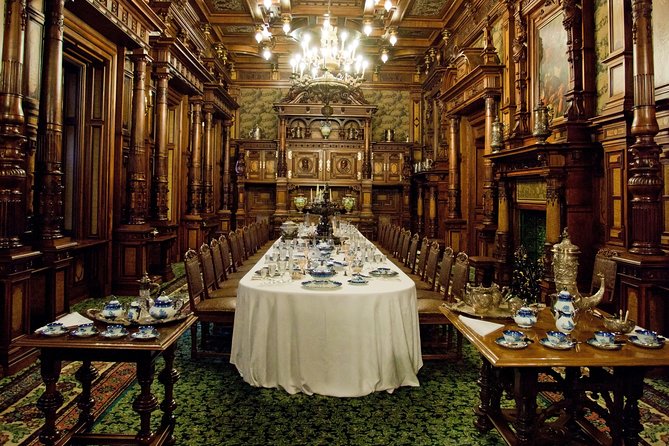
Seven nights of centrally located hotel accommodation are included, with stays in the cities listed along the route. The exact hotel names are not provided, so you should ask about them if room style, air conditioning, elevator access, or location matters to you.
Transport is by modern car or minivan. That is far more practical than trying to reach Breb, Viscri, the monasteries, and the fortified churches independently. The tradeoff is time on the road. Six-hour touring days can feel longer once driving, walks, meals, and monument visits are added.
Breakfast is included. The package also includes one traditional lunch, one folk-show dinner, and the horse-drawn carriage ride. Other meals, health insurance, flights, and some entrance fees are not included. The schedule marks admission tickets as included on each day, while the general conditions exclude entrance fees to monuments other than those included, so ask for a written list of covered admissions.
The tour starts at 9:00 a.m. Airport pickup and drop-off are included. Children must travel with an adult, and the child rate is €25 less than the adult rate when the child joins at least two paying adults.
The price is easiest to justify for couples or friends who value private transport and a guide who stays with the group. Solo visitors pay a single supplement, so the cost becomes less attractive unless you place a high value on having the route arranged for you.
Who should book this tour?
I would choose this tour if you have eight days, want a broad first look at Romania, and prefer a guide to handle rural transport and historical context. It is particularly well suited to couples, families with older children, and small groups of friends who enjoy castles, churches, food, and old towns in equal measure.
You should be comfortable with frequent hotel changes, long drives, uneven streets, stairs, and a moderate amount of walking. The route is not designed for a slow, stay-put holiday. It is also not ideal if you want several unplanned days in Bucharest, Cluj, or Brașov.
The strongest reasons to book are the maximum group size of six, the mix of famous landmarks and rural visits, and the inclusion of Maramureș. Many Romania tours focus almost entirely on Bran and Brașov. This one gives you wooden churches, traditional homes, craftwork, and local meals as well.
I would confirm three things before paying: the Palace of the Parliament replacement, the seasonal Cozia or Transfăgărășan plan, and the complete list of entrance fees included. Cancellation terms are strict close to departure, with a full refund available when you cancel at least six full days in advance.
FAQ
How long is the Classic Romania Tour?
The tour lasts approximately eight days and includes seven nights of accommodation.
Where does the tour begin and end?
It begins in Bucharest and ends with an airport transfer from Bucharest after checkout on day eight.
What is the maximum group size?
The tour has a maximum of six participants.
Is airport transportation included?
Yes. Airport pickup and drop-off are included.
What type of transportation is used?
Transportation is provided in a modern car or minivan with an English-speaking professional guide.
Is the Palace of the Parliament included?
The Palace of the Parliament is currently closed until June. The planned visit is replaced by Spring Palace during that period.
Are meals included?
Breakfast is included, along with one lunch featuring traditional local products and one traditional dinner with a folk show. Other meals are not included.
What physical fitness level is required?
A moderate level of physical fitness is recommended. The route includes walking on old streets and a climb of 300 wooden steps to the Church-on-the-Hill in Sighișoara.
More Maramures Tours in Bucharest
- A Journey Back in Time: Countryside from Transylvania and Maramures – 15 Days
★ 5.0 · 7 reviews - Your rendez-vous with Europe’s past: time-travel to Maramures, Transylvania
★ 5.0 · 6 reviews - Maramures best, full day tour from Cluj
★ 5.0 · 33 reviews - From Cluj-Napoca: Maramures Day Tour
★ 5.0 · 19 reviews
Just added around Bucharest
- Winery touring & private wine tasting – one day private tour★ 5.0 · 3 reviews
- Village Museum Bucharest Guided Tour★ 5.0 · 6 reviews
- Bucharest: Dealu Mare Winery Private Trip with Wine Tasting★ 4.9 · 6 reviews
- Transylvania Tour: Dracula’s Castle, Peles Palace & Brasov★ 5.0 · 19 reviews
- Discover Medieval Transylvania Small Group Tour – 7 days★ 5.0 · 4 reviews
- Bucharest Airport Transfer To Constanta Mamaia★ 5.0 · 3 reviews
- Airport Henri Coanda (Otopeni) to Bucharest – Private Transfer – Driver★ 5.0 · 5 reviews
- Gems of Transilvania: Brasov,Sighisoara,Sibiu,Viscri and more★ 5.0 · 6 reviews
Maramures Tours, compared.
Two days tour to Maramures: local experiences and culture
Read our review →
A Journey Back in Time: Countryside from Transylvania and Maramures – 15 Days
Read our review →
Your rendez-vous with Europe’s past: time-travel to Maramures, Transylvania
Read our review →
Browse the lists this tour appears in