
Reviewed · WALKING TOURS
Cluj-Napoca Walking City Tour
Cluj-Napoca reveals itself best on foot, where a Gothic church, Baroque theatre, old merchant streets, and Romanian, Hungarian, and Saxon details sit close together. This two-hour walk gives you a useful first look at the city without burying you in dates.
I like the small group of no more than 10 and the way the route moves through Cluj chronologically. I also like the final viewpoint, which may include Fireman Tower, giving you a clear sense of the city after seeing its center at street level. The main drawback is that two hours goes quickly, so this is an introduction rather than a full examination of every museum or landmark.
In This Review
- Key points to know before booking
- Why this is a smart first look at Cluj-Napoca
- Starting beside the Franciscan Church in Museum Square
- Banffy Palace and Cluj’s art connection
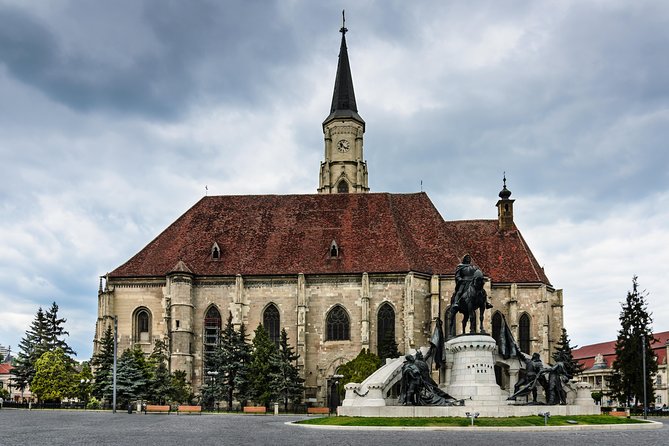
- Union Square and the Gothic presence of St. Michael’s Church
- Old streets, mixed influences, and stories with some humor
- The Baroque theatre and the city’s later cultural layer
- Fireman Tower and the final view across Cluj
- What the $62 price means
- Who will get the most from this walk
- Timing, cancellations, and practical planning
- Should you book the Cluj-Napoca Walking City Tour?
- FAQ
- Where does the Cluj-Napoca Walking City Tour meet?
- How long does the tour last?
- What language is the tour conducted in?
- How many people can join the group?
- What landmarks are included?
- Is the National Art Museum admission included?
- Are meals included?
- What should I bring?
- Can I cancel for a full refund?
Key points to know before booking
- Museum Square begins the story: Start beside the Franciscan Church and the city’s art museum in one of Cluj’s most atmospheric public spaces.
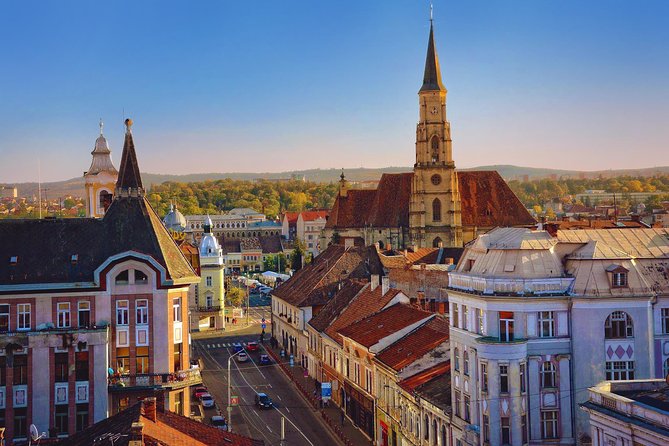
- St. Michael’s Church is the visual centerpiece: See one of the city’s defining Gothic buildings in Union Square.
- Banffy Palace adds art and architecture: The Baroque palace houses the National Art Museum.
- Three cultural influences appear together: Romanian, Hungarian, and Saxon traditions shape the streets, buildings, and stories.
- A viewpoint closes the walk: The route ends with a broad look across Cluj, including Fireman Tower on the experience described by one participant.
- English and small-group format: A live English-speaking guide leads up to 10 people, leaving more room for questions than a large coach tour.
Why this is a smart first look at Cluj-Napoca
Cluj-Napoca can feel confusing when you first arrive. Its center is compact, but the city carries several cultural identities at once. Hungarian and Saxon architectural traces sit beside Romanian institutions, newer cafés, art spaces, and university life. A guide helps you read those layers instead of simply passing a handsome building and taking a photograph.
This tour is built around that idea. You walk from one historic area to another while the guide explains how the city changed over time. The route does not treat Cluj as a row of isolated sights. It connects churches, squares, palaces, theatres, and side streets into one story.
I particularly like the use of visual material during the walk. Old photographs and other images can make changes in the city easier to understand, especially when a building has been altered or its purpose has shifted. That sort of context is more useful than a string of construction dates.
The group limit matters, too. With a maximum of 10 people, you should be able to hear the English-speaking guide clearly and ask a question without having to compete with a crowd. The experience remains a walking tour, not a private tour, so the guide’s attention is shared, but the size is still friendly and manageable.
A few more Cluj Napoca trips to weigh up
- Cluj-Napoca: 2.5-Hour Guided Walking Tour
★ 4.8 · 104 reviews - Cluj-Napoca: 2.5-Hour Guided Walking Tour
★ 4.5 · 29 reviews - Cluj-Napoca Walking City Tour
★ 4.5 · 16 reviews
Starting beside the Franciscan Church in Museum Square
The meeting point is in front of the Obelisk. From there, the walk begins around Museum Square, a fitting place to start because several parts of Cluj’s cultural story meet here.
The Franciscan Church gives the square an immediate sense of age and ceremony. Nearby, Banffy Palace houses the National Art Museum, linking the old city’s architecture with Romania’s art collections. You should expect to view these places from the outside as part of the walking route rather than spend extended time inside museum galleries.
This opening section is useful for getting your bearings. The guide points out the character of the streets and explains what you are seeing, rather than sending you off with a list of names. Pay attention to the building façades, the shape of the square, and the mix of people moving through it. The attraction here is not one single object. It is the way the square brings religious, artistic, and civic life together.
Museum Square also sets the tone for the tour’s cultural range. Cluj is not presented as belonging to only one tradition. The guide interprets Romanian, Hungarian, and Saxon influences as part of the city’s changing identity, which gives the early part of the walk more depth.
Banffy Palace and Cluj’s art connection
Banffy Palace is one of the tour’s important stops. Its Baroque design gives you a strong contrast with the Gothic church you see later, while its role as home to the National Art Museum adds a modern cultural purpose to an older building.
You will not have time during this two-hour route to treat the museum as a separate visit. That is an important distinction. If you want to examine the art collection properly, plan a return visit on your own. On the tour, the palace works mainly as an architectural and historical landmark.
I like this approach for a first walk because it shows how old buildings continue to serve the city. The palace is not just a pretty façade from the past. It remains connected to Cluj’s cultural life through the museum.
The guide’s commentary should also help you compare architectural styles as you go. Rather than seeing Baroque and Gothic as labels to memorize, you get a chance to notice how each style affects the feeling of a square or street. The visual aids are especially helpful here.
Union Square and the Gothic presence of St. Michael’s Church
The route continues toward Union Square, where St. Michael’s Church provides the tour’s clearest Gothic landmark. Its scale and vertical lines make it a powerful focal point in the center of Cluj.
This is the sort of stop where a guide adds real value. You can admire a Gothic church without knowing anything about the city around it, but the tour places the building within Cluj’s wider story. The guide explains the architectural style and connects it to the communities and periods that shaped the city.
Expect time for observation and explanation rather than a long interior visit. The supplied details do not promise a special church entry or extended time inside, so you should book this experience for the city walk and interpretation, not as a dedicated church tour.
Union Square also shows how Cluj functions today. Historical buildings share space with daily city life, and that mixture is part of the appeal. The tour aims to show both the formal monuments and the smaller details that give the old center its personality.
Same mountains, a completely different day out:
- Curly Tour – Day trip from Cluj 🙂
★ 5.0 · 330 reviews - Cluj: Turda Salt Mine, Corvin Castle, Alba Carolina Tour
★ 4.8 · 184 reviews - Turda salt mine 4h tour from Cluj
★ 5.0 · 73 reviews - Turda Salt Mine, Corvin Castle and Alba Fortress from Cluj
★ 5.0 · 65 reviews
Old streets, mixed influences, and stories with some humor
The best part of this walk may be the movement between major landmarks. On the old streets, the guide points out details you could easily miss on your own and explains how Romanian, Hungarian, and Saxon influences appear in architecture and local culture.
That mix gives Cluj a different feel from a city presented through one national story. The route recognizes a more complicated past, including periods of tension and an unsettled history. You get a clearer sense of why names, styles, and traditions may overlap.
The human stories matter as much as the buildings. The tour brings in people from the past and present, along with anecdotes that keep the explanations from becoming a lecture. Catalin, one guide associated with this experience, was praised for clear explanations, funny historical stories, and a warm, helpful manner. Adrian was also singled out for giving an engaging introduction to Cluj in its cultural and historical setting while pointing out small local details.
Guide quality can never be guaranteed in advance, but those names suggest the kind of delivery you may encounter: informed, personal, and open to questions. One previous participant also described the guide as attentive to individual interests. That is useful if you prefer a conversation over a fixed speech.
The visual material is another practical strength. When the guide shows how a street or building looked at another point in time, you can better understand what has changed. You are not expected to remember every date. You are being given a way to look at Cluj with more awareness.
The Baroque theatre and the city’s later cultural layer
The Cluj National Theatre marks another change in the route. Its Baroque style gives you a different architectural reference point after the Gothic church and older central streets.
The theatre helps explain how new cultural institutions were added as Cluj grew and changed. The tour moves through the city in chronological order, so the building is part of a wider explanation about later developments rather than an isolated photo stop.
As with Banffy Palace, you should not expect a performance or backstage visit. The value lies in seeing the building in context and understanding how it fits into the city’s cultural life.
I find this kind of comparison especially useful for travelers who are not architecture specialists. You do not need to arrive knowing the difference between every style. By the end, you have seen several contrasting examples close together and heard why they matter.
Fireman Tower and the final view across Cluj
The route finishes at a location with a notable view over the city. Fireman Tower is identified with this experience and offers a bird’s-eye look at Cluj, making it a satisfying way to end the walk.
A viewpoint gives you something that street-level sightseeing cannot. After walking through squares and narrow streets, you can see how the center fits together. It also helps you remember the route: the church, palace, theatre, and old streets become part of one mental map.
The view is also a useful reality check. Cluj is not only a historic center. It is a modern city with a strong cultural pulse, and the high point lets you take in that broader setting.
Access can depend on the exact location and conditions on the day, so do not treat the viewpoint as a promise of an extensive tower climb unless the guide confirms it. The key benefit is the final city outlook, not a long visit at the tower.
What the $62 price means
At $62 per person, this is not the cheapest way to walk around Cluj. You are paying for a two-hour guided experience, an English-speaking professional, the small group limit, and a route designed to connect the city’s major cultural sights.
The price makes the most sense if you are visiting Cluj for the first time and want context quickly. A self-guided walk can cover many of the same streets for little or no cost, but you would need to research the architecture, identify the cultural influences, and build the route yourself. You would also miss the local anecdotes and visual comparisons.
The value is weaker if you already know Cluj well or plan to spend several days studying its museums and buildings independently. In that case, you may prefer to put the money toward museum admission or a longer specialist tour.
Meals are not included, and photography fees are not included. Since the experience lasts two hours, eat before or after rather than expecting a food break during the walk. Bring comfortable shoes. The tour is short, but the old-town route still requires steady walking.
Who will get the most from this walk
I would recommend this tour to you if:
- You have only recently arrived in Cluj-Napoca.
- You want an overview before visiting museums on your own.
- You enjoy architecture but prefer plain explanations to academic lectures.
- You want to understand the Romanian, Hungarian, and Saxon strands of the city.
- You value a small group and the chance to ask questions.
- You want a viewpoint to help orient yourself.
It should also suit solo visitors and couples who want a structured first afternoon or morning. The English language and limited group size make it easy to follow, even if you know little about Romanian history.
This is less suitable if you use a wheelchair, since the experience is specifically marked as unsuitable for wheelchair users. Pets are not allowed. Anyone with limited walking ability should check the route details before paying.
Timing, cancellations, and practical planning
The advertised duration is two hours, and starting times vary, so check availability for your chosen date. Meet the guide in front of the Obelisk, and allow a little extra time to locate the meeting point in Museum Square.
You can cancel up to 24 hours before the tour for a full refund. The reserve-now, pay-later option also gives you some flexibility while your plans are still changing.
Comfortable shoes are the one stated packing essential. That advice is worth taking seriously: this is a walking route through the historic center, with no transport included and no promise of long seated breaks.
Should you book the Cluj-Napoca Walking City Tour?
Book it if you want a well-shaped introduction to Cluj rather than a simple list of monuments. The strongest reasons are the small group, the city-wide cultural explanation, the contrast between St. Michael’s Church, Banffy Palace, and the National Theatre, and the closing viewpoint.
The main limitation is the fixed two-hour format. You will see and understand a lot, but you will not explore the museum collections in depth or spend long inside every landmark. I would use this tour early in a Cluj visit, then return to the places that catch your attention.
For a first-time visitor who wants the city to make sense quickly, the $62 fee is reasonable if the guide delivers the clear, engaging style associated with Adrian and Catalin. For an independent walker on a tight budget, the same route can be attempted alone, but you will give up the local stories, historical connections, and helpful orientation that make this experience worthwhile.
FAQ
Where does the Cluj-Napoca Walking City Tour meet?
Meet the English-speaking guide in front of the Obelisk in Museum Square.
How long does the tour last?
The walking tour lasts two hours.
What language is the tour conducted in?
The tour is conducted in English by a live professional guide.
How many people can join the group?
The group is limited to 10 participants.
What landmarks are included?
The route includes Museum Square, the Franciscan Church, Banffy Palace and the National Art Museum, St. Michael’s Church, the Cluj National Theatre, the old town streets, and a location with a city view.
Is the National Art Museum admission included?
No museum admission is listed as included. Banffy Palace, which houses the National Art Museum, is part of the walking route.
Are meals included?
No. Meals are not included in the price.
What should I bring?
Bring comfortable shoes suitable for a two-hour city walk.
Can I cancel for a full refund?
Yes. You can cancel up to 24 hours in advance for a full refund.
Just added around Cluj Napoca
- Turda Salt Mine, Gorge & Rimetea Village (private from Cluj)★ 5.0 · 5 reviews
- Private tour to Turda Salt Mine, Rimetea and Alba Iulia★ 4.8 · 5 reviews
- Turda salt mine and Corvin Castle day tour from Cluj★ 5.0 · 9 reviews
- Two days tour to Bucovina & UNESCO Painted Monasteries★ 5.0 · 3 reviews
- CLUJ ADVENTURE TOUR ! ZIP LINE and HIKE★ 5.0 · 15 reviews
- Turda Gorge, salt mine and Rimetea village private tour★ 5.0 · 12 reviews
- Discover Apuseni Mountains – Scarita Summit,Sipote Waterfall and Dumesti Village★ 5.0 · 17 reviews
- Snowshoeing Fun Tour from Cluj Napoca★ 4.5 · 7 reviews
Walking Tours, compared.
Ghost Stories & Romanian Mythology Walking Tour
Read our review →
Walking Tour- Delightful Bucharest (Highlights, Stories, Sights)
Read our review →
4h Bucharest Private Tour (2h by Car and 2h Walking in Old Town)
Read our review →
Browse the lists this tour appears in