
Reviewed · WALKING TOURS
Cluj: Private City Walking Tour
Cluj’s story unfolds in a compact walk from Museum Square to the Orthodox Cathedral, with medieval walls, royal history, churches, and café life packed into two hours. I like the route’s variety, especially the contrast between the old streets and modern university city. I also like the private format, which lets you ask questions and shape the walk to your interests.
The main consideration is price: at $68 per person, this is not the cheapest way to see Cluj. You are paying for a private English-speaking guide rather than entry tickets or food, so the value depends on how much personal attention and historical context you want.
In This Review
- Key points about the Cluj private walk
- Starting beside the Carolina Obelisk in Museum Square
- Museum Square and the oldest part of Cluj
- The oldest civilian house on the way to Union Square
- Union Square and the Matthias Corvinus Statue
- Following the old 15th-century defense wall
- Cluj’s many Christian traditions
- Ending at the Assumption Cathedral
- How much value do you get for $68?
- Who should book this private Cluj tour?
- Practical details before you go
- Should you book the Cluj private walking tour?
- FAQ
- Where does the Cluj private walking tour begin?
- Where does the tour finish?
- How long does the walking tour last?
- Is the tour private?
- What language is the tour conducted in?
- Are meals and drinks included?
- Are entry tickets included?
Key points about the Cluj private walk
- Museum Square begins the story: Meet at the Carolina Obelisk in the city’s oldest area, where summer terraces add a relaxed, bohemian feel.
- Matthias Corvinus anchors the medieval tour: The famous statue opens the door to stories about one of Cluj’s best-known historical figures.
- Old defenses still survive: You’ll see fragments of the 15th-century city wall near the former edge of medieval Cluj.
- Religious history gets proper attention: Roman Catholic, Greek Catholic, Unitarian, Lutheran, Calvinist, and Orthodox traditions all appear along the route.
- The tour is private and adjustable: Guide Joseph has tailored walks to personal interests, and another guide has suggested lunch places after showing the city’s main sights.
- It ends at a major landmark: The Assumption Cathedral gives the walk a clear finish near the heart of Cluj.
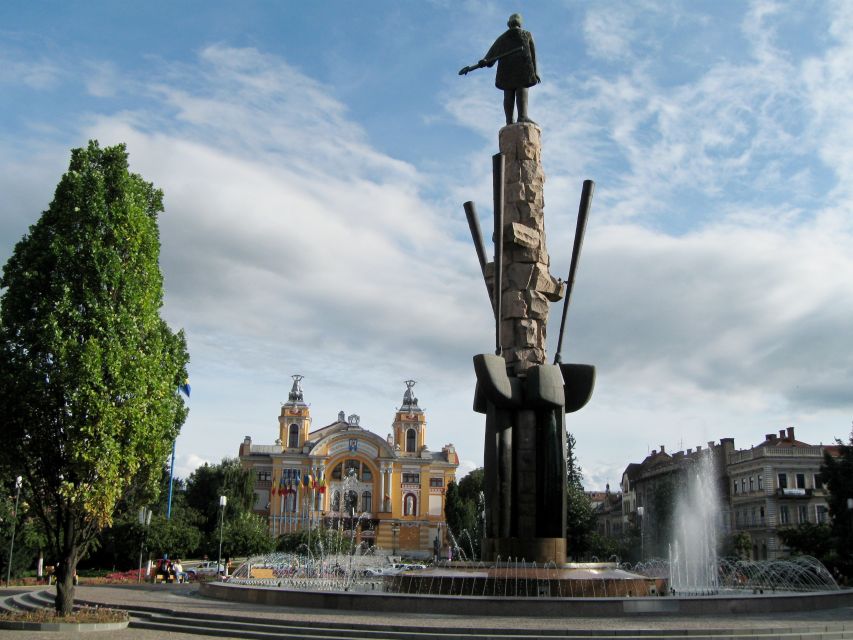
Starting beside the Carolina Obelisk in Museum Square
Your walk begins at Piața Muzeului 4, in front of the Carolina Obelisk. This is a sensible meeting point because Museum Square sits in the oldest part of Cluj and gives you an immediate feel for the city’s layered past.
The square changes character with the season. In summer, its terraces bring tables, color, and a young café crowd. That atmosphere matters because Cluj is not only a historic center preserved for sightseeing. It is also a working university city with a lively social scene.
The Carolina Obelisk itself helps set the historical tone. From here, you are close to the old urban core, so the guide can explain the medieval city without first spending half the tour on transport. That is one of the practical strengths of a walking tour in Cluj: the important sights are close enough to connect on foot.
You should arrive in comfortable shoes. The tour lasts two hours and takes place rain or shine, so bring suitable clothing as well. There is no meal or drink included, though the summer terraces in Museum Square make this an easy place to pause before or after the walk.
A few more Cluj Napoca trips to weigh up
- Cluj-Napoca: 2.5-Hour Guided Walking Tour
★ 4.8 · 104 reviews - Cluj-Napoca: 2.5-Hour Guided Walking Tour
★ 4.5 · 29 reviews - Cluj-Napoca Walking City Tour
★ 4.5 · 16 reviews
Museum Square and the oldest part of Cluj
Museum Square is more than a pretty opening scene. It introduces the older scale of Cluj, where the streets and buildings feel closer together than in the newer parts of town.
Your guide can use this area to explain how the city developed and how its modern identity grew around the medieval center. The supplied route description promises both history and practical stories about living in Cluj, which should make the walk more useful than a simple list of dates and buildings.
I especially like this early part of the route because it gives you context before the larger monuments appear. You are not simply arriving at a famous statue and taking a photograph. You are first getting a sense of where the medieval city began and how the center functions today.
The private format is important here. With only your own group and an English-speaking guide, you can ask about local life, architecture, food, university culture, or the city’s different religious communities. Joseph, one of the named guides associated with the tour, has been described as friendly and accommodating, and he has adjusted the walk to suit individual interests.
The oldest civilian house on the way to Union Square
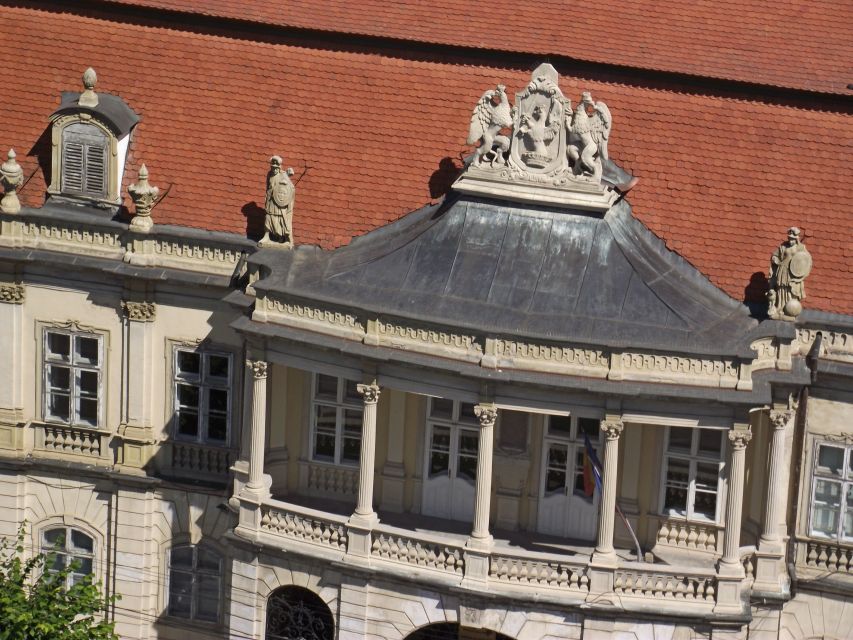
From Museum Square, the route continues toward Union Square, with a stop at the oldest and best-preserved civilian house in Cluj. This is the kind of stop that can easily be missed if you only follow the city’s largest landmarks.
A civilian house tells a different story from a church or monument. It brings the medieval city down to human scale, showing where ordinary urban life took place and how much of the historic center survives beyond its grand public buildings.
The description does not provide the house’s name or an interior admission plan, so treat this as an exterior stop unless your guide tells you otherwise. Entry tickets are not included in the tour price, and the experience does not promise indoor visits.
This is also where the route begins to balance famous sights with lesser-known corners. That balance received particularly strong praise in the available feedback, with one four-star assessment calling the walk a good way to see both Cluj’s main sights and less familiar places. For a first visit, that mix is more useful than spending every minute at the most photographed locations.
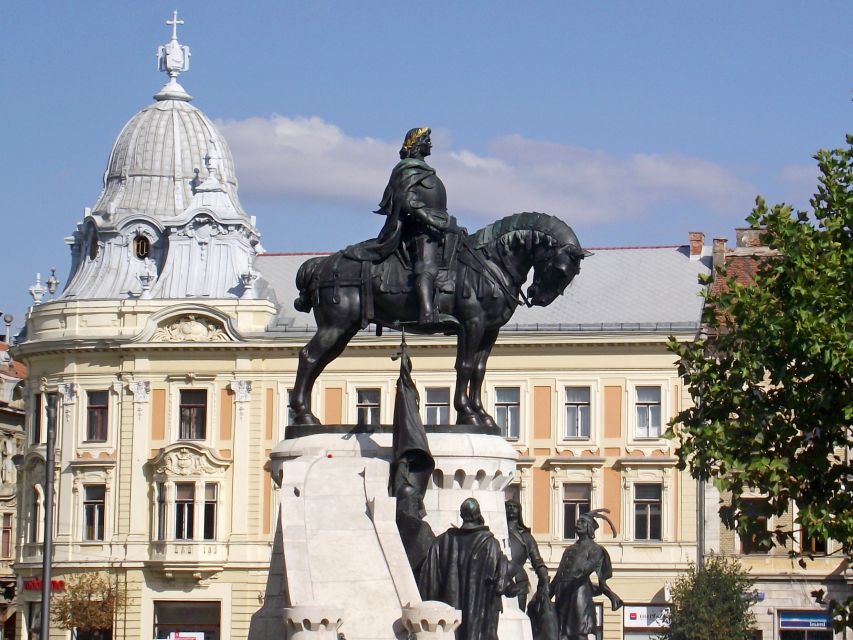
Union Square and the Matthias Corvinus Statue
Union Square is the grand central pause in the walk. Here you encounter Cluj’s best-known landmark, the Matthias Corvinus Statue, which gives the guide a natural opening for medieval history and stories connected to the king’s life.
The statue is not just a decorative centerpiece. It links Cluj to the wider political world of medieval Central Europe and gives you a person to follow through the historical explanation. Good guiding should make the monument easier to remember, and this stop appears designed to do exactly that.
Expect the guide to spend time on the stories surrounding Matthias Corvinus rather than rushing straight to the next church. If you enjoy history, this may be the strongest part of the walk. If you prefer architecture or local life, tell your guide early so the private format can work better for you.
Union Square also provides a useful contrast with Museum Square. Museum Square feels smaller and more intimate, while Union Square offers a broader civic setting and a clearer sense of Cluj’s importance. You get both kinds of urban space without leaving the central area.
Same mountains, a completely different day out:
- Curly Tour – Day trip from Cluj 🙂
★ 5.0 · 330 reviews - Cluj: Turda Salt Mine, Corvin Castle, Alba Carolina Tour
★ 4.8 · 184 reviews - Turda salt mine 4h tour from Cluj
★ 5.0 · 73 reviews - Turda Salt Mine, Corvin Castle and Alba Fortress from Cluj
★ 5.0 · 65 reviews
Following the old 15th-century defense wall
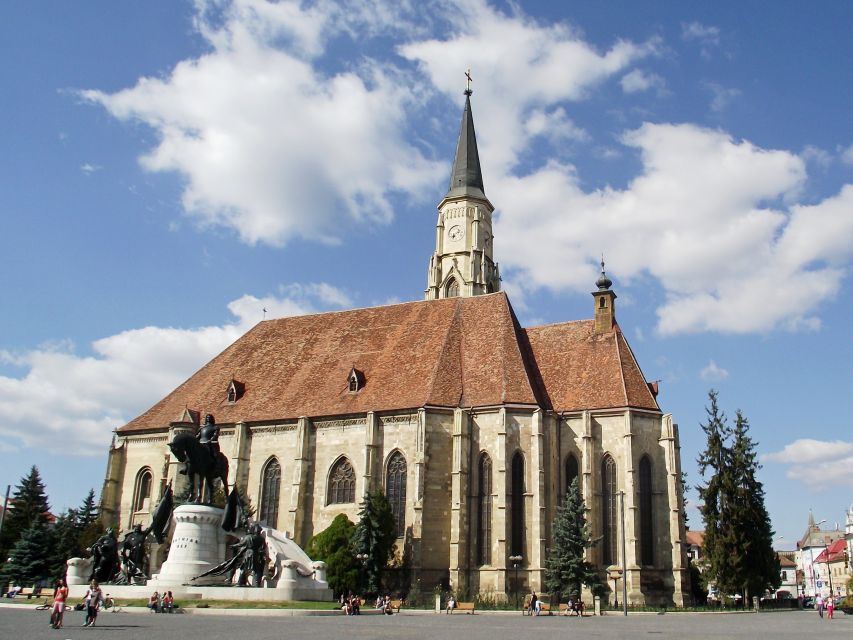
After Union Square, the walk heads toward the former outskirts of the medieval city. You’ll see several remaining fragments of the 15th-century defense wall.
Do not expect a complete fortification or a large castle complex. These are fragments, and that is precisely why a guide adds value. Without explanation, a surviving piece of wall can look like an ordinary old structure. With context, it shows where the medieval city ended and how Cluj was protected.
This portion of the tour should appeal to travelers who like urban archaeology. The wall fragments connect the monuments in the center to the practical needs of the old town: boundaries, defense, and controlled access.
The route also reaches the headquarters of the second-largest university in Romania. The supplied information does not name the university, but its inclusion helps explain modern Cluj. The city is not frozen in its medieval past. Its university presence is part of the reason for the youthful, active atmosphere you notice in the center.
That connection between old walls and a major university is one of the walk’s more useful ideas. You see how the city’s past and present share the same streets.
Cluj’s many Christian traditions
One of the more substantial themes is religion. Along the route, the guide discusses Roman Catholic, Greek Catholic, Unitarian, Lutheran, and Calvinist traditions before the tour ends at the Orthodox Cathedral.
For a two-hour walk, this is a lot of ground to cover. The advantage is that you get a clearer picture of Cluj as a city shaped by several religious communities, not one single tradition. The possible drawback is that the religious section may feel dense if you prefer a lighter sightseeing pace.
The private setting helps. You can ask for a simpler explanation, request more detail, or focus on the buildings that interest you most. You can also ask how these traditions fit into the city’s history and present-day life, though the exact depth will depend on your guide and your questions.
Because entry tickets are not included, plan on seeing the religious buildings from the outside unless an interior visit is available and you choose to pay separately. The activity guarantees the guide’s services, not admission to attractions.
Ending at the Assumption Cathedral
The walk finishes at the Assumption Cathedral, also known as the Orthodox Cathedral. Ending here gives the route a clear final landmark and completes the religious theme introduced earlier.
This final stop also provides a useful visual and cultural contrast with the other traditions discussed along the way. You finish not with a vague return to the starting point, but at a major building that helps tie together the city’s religious and architectural story.
The ending point can be practical for the rest of your day. Since the tour begins and ends at different central locations, you may find it convenient to continue exploring on foot afterward. The guide can also be a useful source for lunch ideas. One previous four-star assessment specifically noted that the guide suggested places to eat after the walk, though lunch itself is not part of the activity.
How much value do you get for $68?
At $68 per person, the tour makes the most sense for couples, families, or small private groups who want a personal introduction to Cluj. You receive two hours with an English-speaking guide, but no food, drinks, or entry tickets are included.
For a solo visitor, the price may feel high for a two-hour walk. For a private group, the cost can be easier to justify because you are not joining a large public tour and can ask for explanations suited to your interests.
The value comes from the route’s range. In two hours, you cover the oldest part of town, Museum Square, Union Square, the Matthias Corvinus Statue, a historic civilian house, sections of the old wall, the university area, several Christian traditions, and the Orthodox Cathedral.
That is a full schedule. You should not expect a slow architectural study of every building or long interior visits. Think of this as a well-organized first look that gives you enough background to explore Cluj more confidently afterward.
The available score is 4.4 from four ratings, including two five-star assessments and one four-star assessment. The strongest praise centers on historical context, friendly guiding, flexibility, and the ability to see both famous sights and less familiar corners. Those are the areas where the tour appears to offer its best return.
Who should book this private Cluj tour?
I would choose this walk if you are visiting Cluj for the first time and want the city’s main story explained in plain English. It is also a good match if you like asking questions, have a particular interest in medieval history, or want help connecting the city’s religious and university identities.
It suits people who prefer walking to riding between sights. The route stays in central Cluj, but you should still wear comfortable shoes and be ready for outdoor conditions.
Families and small groups may appreciate the private format because the guide can adjust the pace and focus. History-minded visitors will likely get the most from the Matthias Corvinus and city-wall sections, while food-focused visitors may value the chance to ask for lunch suggestions at the end.
You may want to skip it if you prefer independent wandering, dislike fixed two-hour walks, or want included admissions and meals. You should also keep expectations realistic: this is a guided city introduction, not a full museum tour or a day-long historical program.
Practical details before you go
Meet at the Carolina Obelisk in Museum Square, at Piața Muzeului 4. The tour is private, lasts two hours, and is conducted in English by a live guide.
It operates rain or shine, so check the forecast and dress for the conditions. Comfortable shoes are specifically recommended. Meals, drinks, personal expenses, and entry tickets are not included.
The tour is wheelchair accessible. You can cancel up to 24 hours before the start for a full refund, and the reserve-now, pay-later option lets you keep your plans flexible.
Should you book the Cluj private walking tour?
Book it if you want a focused first introduction to Cluj with a real person who can add context, answer questions, and adjust the emphasis. The combination of medieval streets, Matthias Corvinus, old defenses, university life, and several religious traditions gives you a useful picture of the city in just two hours.
At $68 per person, it is best value for a private group or for anyone who places a high value on personal guiding. If you are content to photograph the main square and explore alone, the cost may not suit you. If you want to understand what you are seeing, especially beyond the obvious landmarks, this is a sensible way to begin.
FAQ
Where does the Cluj private walking tour begin?
It begins in front of the Carolina Obelisk in Museum Square, at Piața Muzeului 4.
Where does the tour finish?
The tour finishes at the Assumption Cathedral.
How long does the walking tour last?
The tour lasts two hours.
Is the tour private?
Yes. It is offered for a private group.
What language is the tour conducted in?
The live tour guide conducts the experience in English.
Are meals and drinks included?
No. Meals and drinks are not included, and lunch is specifically excluded.
Are entry tickets included?
No. Entry tickets and personal expenses are not included in the price.
Just added around Cluj Napoca
- Turda Salt Mine, Gorge & Rimetea Village (private from Cluj)★ 5.0 · 5 reviews
- Private tour to Turda Salt Mine, Rimetea and Alba Iulia★ 4.8 · 5 reviews
- Turda salt mine and Corvin Castle day tour from Cluj★ 5.0 · 9 reviews
- CLUJ ADVENTURE TOUR ! ZIP LINE and HIKE★ 5.0 · 15 reviews
- Two days tour to Bucovina & UNESCO Painted Monasteries★ 5.0 · 3 reviews
- Snowshoeing Fun Tour from Cluj Napoca★ 4.5 · 7 reviews
- Turda Gorge, salt mine and Rimetea village private tour★ 5.0 · 12 reviews
- Discover Apuseni Mountains – Scarita Summit,Sipote Waterfall and Dumesti Village★ 5.0 · 17 reviews
Walking Tours, compared.
Ghost Stories & Romanian Mythology Walking Tour
Read our review →
Walking Tour- Delightful Bucharest (Highlights, Stories, Sights)
Read our review →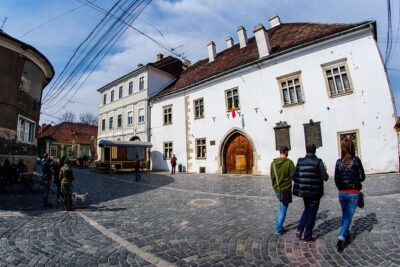

4h Bucharest Private Tour (2h by Car and 2h Walking in Old Town)
Read our review →
Browse the lists this tour appears in