
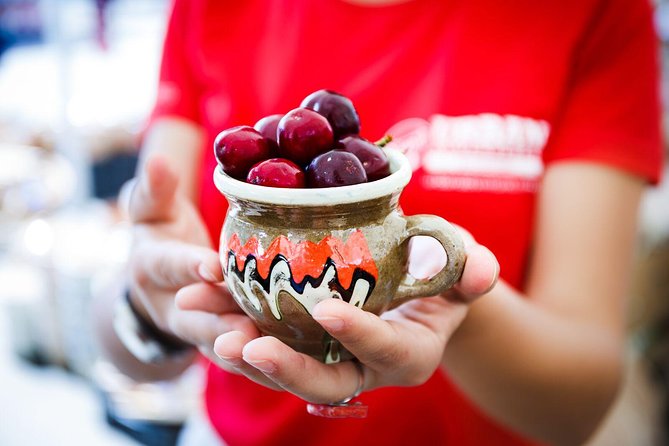
Reviewed · FOOD & DRINK
Taste Bucharest: A Food Lover’s Tour of Markets & Neighbourhoods
Bucharest reveals itself best over a plate of local food, and this tour takes you well beyond the polished center. You walk through old neighborhoods, ride a tram toward Obor Market, and taste the Romania of cheese counters, grilled mici, pickles, cured meats, fresh produce, and neighborhood cafés. I like the food-market route and the way the tour connects eating with Bucharest’s political and architectural past.
I also like the small group size, capped at 12, and the range of guides who lead it, including Angelica, Alex, Bogdan, Mihaela, Julian, Elena, and Andreea. They bring different personalities, but the strongest pattern is clear: warm conversation, good English, and plenty of local background. The main consideration is that this is not a tour built around steaming bowls of soup or cabbage rolls. Much of the food is cold peasant fare, and the nearly 6 kilometers of walking can feel substantial.
In This Review
- Key points to know before booking
- Why this Bucharest food tour feels different
- Starting at the National Theatre and the 1989 Revolution
- Strada Batiștei and the old American embassy
- Batiștei Church and Romanian Orthodox heritage
- The Armenian Quarter and Bucharest’s oldest documented house
- Riding the tram along Calea Moșilor
- Obor Market: the heart of the experience
- What you actually eat and drink
- The guide can make or break the day
- Is $102.79 a fair price?
- Who should book this tour?
- Final call: book for the route, not only the menu
- FAQ
- How long does the Bucharest food tour last?
- Where does the tour begin?
- Where does the tour end?
- How much walking is involved?
- What food is usually included?
- What drinks are included?
- Can dietary restrictions be accommodated?
Key points to know before booking
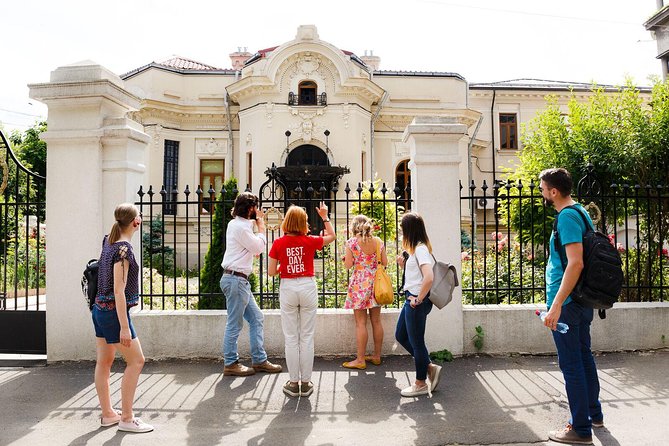
- Obor Market is the main event: You finish at one of Bucharest’s best places for produce, sausages, pickles, deli food, and everyday local life.
- The tasting menu is generous: Expect cheeses, spreads, smoked meat, bacon, cracklings, sausage, seasonal produce, mici, a Wallachian doughnut, and drinks.
- History comes before lunch: The first half covers the Romanian Revolution, Neo-Romanian architecture, the Armenian Quarter, and Communist-era Bucharest.
- A tram ride adds real city texture: Public transport carries you from central streets toward the Obor area, making this more than a standard restaurant crawl.
- Plan for active walking: The route covers about 6 kilometers on foot, with a short tram journey and several standing stops.
- Small groups improve the experience: With no more than 12 people, you can ask questions and get personal food and sightseeing advice.
Why this Bucharest food tour feels different
Many city food tours move from restaurant to restaurant in a compact central district. This one has a wider reach. You begin near the National Theatre, then move through older streets and neighborhoods before taking public transport to Obor. Food is the thread, but the city itself gets equal billing.
That structure matters in Bucharest. The center can give you grand boulevards and monumental buildings, but local markets show how people actually shop and eat. Here, you see both sides. The early stops help you place Bucharest in time, while the market gives you a close look at daily life.
The tour lasts about five hours and is offered in English. Its 98 percent recommendation rate and 4.9 rating from 689 reviews point to a very strong experience, particularly for people who value an engaging guide as much as the menu. Guides such as Angelica and Julian are praised for humor and energy, while Alex is noted for tracking down extra market items and helping the group order at busy food stops.
You should know that the route and food can change with the season and what is available that day. That is normal for a market-based tour, but it means you should treat the listed dishes as a likely guide rather than a fixed menu.
A few more Bucharest trips to weigh up
- Street Food’n’Culture Tour
★ 5.0 · 209 reviews - Wine Tasting in Bucharest
★ 5.0 · 183 reviews - Discover Bucharest: Private Highlights and Traditional Food Tour
★ 5.0 · 86 reviews
Starting at the National Theatre and the 1989 Revolution
The meeting point is the Ion Luca Caragiale National Theatre on Bulevardul Nicolae Bălcescu 2. The opening stop lasts about 15 minutes, and the subject is serious: the theatre’s role in the Romanian Revolution and the street fighting that helped shape modern Bucharest.
This is a smart place to begin because you immediately get political context rather than a generic orientation talk. The guide explains how the surrounding streets fit into the events of 1989, giving you a better sense of why Bucharest can feel both grand and scarred.
Do not expect a long indoor theatre visit. Admission is free, and the focus is on the building’s place in the city and its connection to the revolution. If you have little background on Communist Romania, listen closely here. It helps explain many of the contrasts you see later, from pre-Communist houses to broad Communist-era roads and public buildings.
Strada Batiștei and the old American embassy
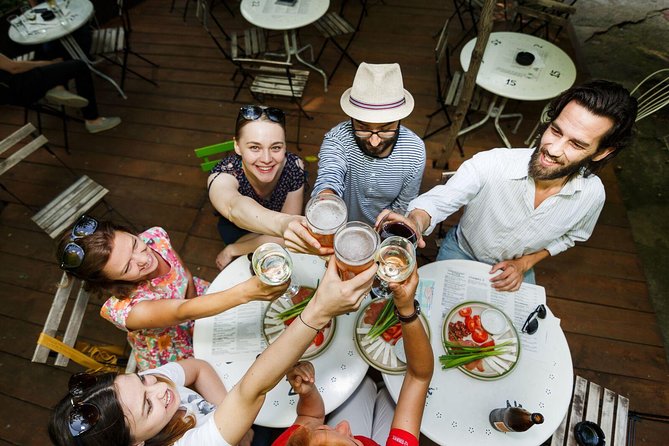
From the theatre, you walk to Strada Batiștei, a short stop of around 20 minutes. The guide discusses the former American embassy and the area’s 19th-century Neo-Romanian architecture.
This is one of the tour’s best features for people who enjoy architecture but do not want a formal building tour. Bucharest has a habit of hiding elegant details in ordinary-looking streets. Look for decorative façades, changing rooflines, and the mixed condition of old buildings. The guide helps you notice the difference between the city’s older architecture and later Communist additions.
The route is not only about famous sights. It takes you through a part of Bucharest that you might easily pass by on your own. Several people praise the chance to reach neighborhoods they would not have visited without local direction. That is real value, especially if you have only a short stay in the city.
Batiștei Church and Romanian Orthodox heritage
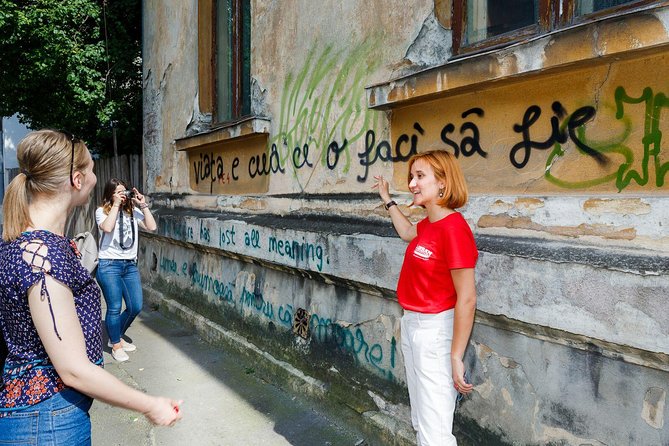
The next stop is Batiștei Church at Strada Batiștei 19. You spend about 15 minutes learning about the church’s background and architecture.
This is a brief stop, but it adds another layer to the morning. Romanian Orthodox churches can be easy to miss amid traffic and apartment blocks, and a local guide can point out details that a quick walk would leave unexplained. The church also fits the route’s larger theme: Bucharest is a city of overlapping communities, religions, architectural styles, and political eras.
Keep your expectations realistic. The stop is a short exterior-focused history lesson, not a long church visit. Its value comes from the connection to the neighborhood and from the guide’s explanation.
Same mountains, a completely different day out:
- Bucharest: Dracula’s Castle, Peles Castle, & Brasov Old Town
★ 4.5 · 17,858 reviews - Bucharest: Dracula Castle, Peles Castle & Brasov Old Town
★ 4.6 · 10,891 reviews - Bucharest: Dracula’s Castle, Peleș Castle & Brașov Day Trip
★ 4.5 · 5,919 reviews - Bucharest: Palace of Parliament Tickets and Guide
★ 4.3 · 3,182 reviews
The Armenian Quarter and Bucharest’s oldest documented house
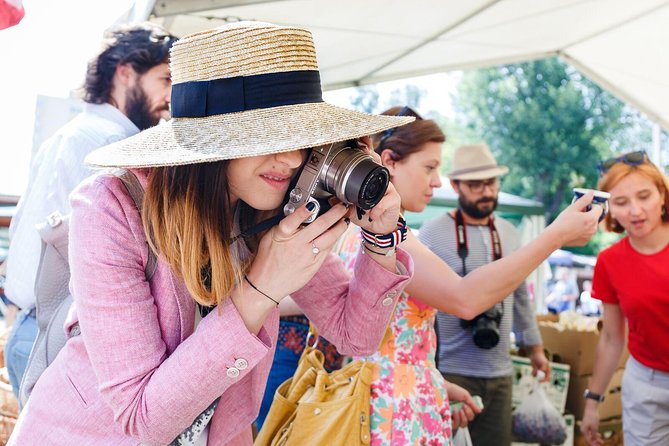
The Armenian Church leads you into Bucharest’s Armenian Quarter, where you spend about an hour. This is the longest cultural stop before the market, and it is one of the places where the tour moves furthest from a simple food outing.
The area is known for varied architecture and for Bucharest’s oldest documented house. That makes this section especially useful if you want more than bites and drinks. You get a glimpse of how different communities helped shape the capital, while the guide points out buildings and streets that may otherwise seem like background scenery.
Several guides receive strong praise for making this historical material friendly rather than stiff. Andreea is noted for explaining both Romanian history and architecture in clear, approachable English. Mihaela is praised for combining local knowledge with warmth and humor. The guide you get will shape the tone, but the format leaves room for questions and conversation.
The possible downside is time. One person found the history section too long compared with the food portion. If you want nonstop tasting, this may test your patience. If you like knowing who built, lived in, and changed the neighborhoods you visit, the hour earns its place.
Riding the tram along Calea Moșilor
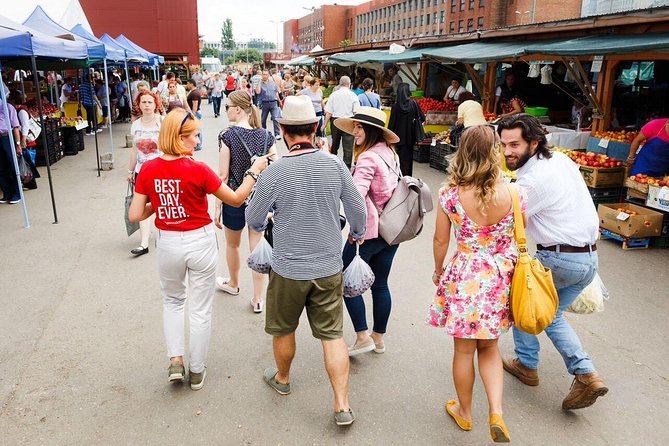
Next comes a short tram ride along Calea Moșilor, lasting around 20 minutes. The ride moves you toward Communist-era Bucharest and the Obor area.
I like this part because it turns the transfer into part of the tour. You are not sealed inside a private vehicle, watching the city pass behind glass. You use the same public transport network that locals use, and the changing streets give you a practical feel for Bucharest’s size and contrasts.
Calea Moșilor also helps mark the shift from the central historic districts to a more everyday part of the city. The ride is not a sightseeing cruise, and you should expect ordinary urban views rather than a string of major monuments. That is precisely the point. This tour gives you a taste of lived-in Bucharest, not just the postcard version.
Because the route uses public transport, wear comfortable shoes and be ready to stay with the group. The tram ride is short, but the full day remains active.
Obor Market: the heart of the experience
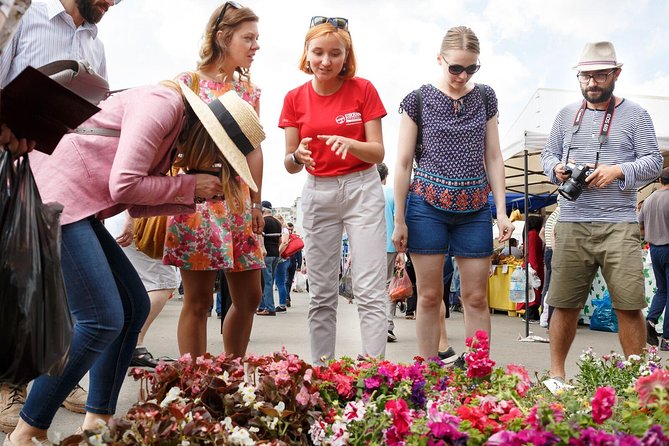
You spend about one hour and 40 minutes at Piata Obor, which is the tour’s main food stop. Obor is a large market filled with produce, traditional foods, household goods, and busy food counters. It is noisy, practical, and full of smells and color.
Your guide helps you understand the market rather than simply leading you through it. You may see seasonal fruit, vegetables, pickles, deli items, and traditional products. Guides have also bought fresh produce to add to the group’s tasting, and one guide helped visitors track down small tuica cups and extra brandy to take home.
The market section is where the small group matters most. With up to 12 people, the guide can explain unfamiliar items, answer questions, and keep the group moving without losing everyone in the crowd. You also have a better chance to ask where locals shop or what to look for during the rest of your Romania trip.
The final food stop is often at Terasa Obor or a similar local eatery. Here you usually taste mici, Romania’s famous skinless grilled sausages, served with mustard. Mici are simple but memorable: smoky, juicy, and built for casual eating. The sausages are one of the most consistently praised parts of the menu.
You may also receive a peasant platter with aubergine dip, zacusca, whipped beans, fish roe, telemea and burduf cheeses, sausages, smoked bacon, cracklings, red onion, tomatoes, and toast. The cheese selection can include cow, sheep, and goat varieties. Seasonal additions may include wild strawberries, wild garlic, spicy pickles, watermelon, or grapes.
This is not refined restaurant food. It is the food of a market table and a family spread. You get salty, smoky, sour, creamy, fresh, and sometimes sharply flavored bites. For many people, that variety is the best reason to book.
What you actually eat and drink
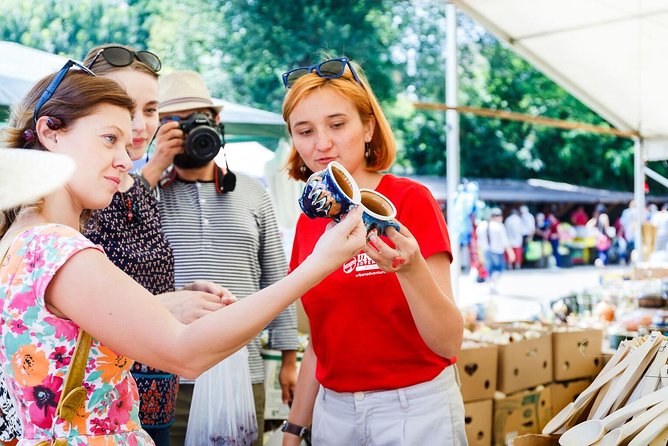
The tour includes the food and drink samples, so you do not need to budget separately for the planned tastings. The menu changes, but you can usually expect several food stops rather than one large meal.
The cold dishes are central. The aubergine dip and zacusca bring soft, smoky flavors. Whipped beans and fish roe add variety, while telemea and burduf cheeses give you a useful introduction to Romanian dairy traditions. Cured meats, bacon, cracklings, and sausages make the platter filling.
You also get a seasonal produce tasting. This is an important detail because it keeps the menu tied to the market. In summer, that might mean watermelon or grapes. At another time, you might find wild garlic, pickles, or berries. The exact selection depends on what is fresh and available.
The mici are the main hot item listed, followed by a sweet Wallachian doughnut. The doughnut is a popular ending, and several people describe it as a highlight. It gives the tour a simple, satisfying finish after the salty food and beer.
Drinks usually include a shot of tuica, Romanian fruit brandy, plus up to three beers. Nonalcoholic choices include soft drinks, coffee, or tea. If you do not drink alcohol, notify the guide or choose the alternatives. If you like tasting local drinks, the tuica adds a distinctly Romanian note, but it can be strong, so pace yourself.
One important warning: do not book this expecting cabbage rolls, soup, or a full hot-food menu. A past participant found the food less traditional than expected for precisely that reason. The tour description points toward platters, market foods, mici, produce, and a doughnut, so you should judge it on those terms.
The guide can make or break the day
The strongest part of this experience is its human side. Angelica is praised for explaining each dish while filling the walking sections with Bucharest history. Julian is described as funny, quick with a joke, and good at keeping a group together. Bogdan receives praise for clear English and his ability to connect food with Romanian culture.
Alex is particularly good at turning the market into an interactive stop. He has bought fresh vegetables for the next tasting, helped locate traditional cups, and guided his group straight to a table for mici instead of leaving them to face a long line. Andreea is a strong choice if you want architecture, history, and practical suggestions for the rest of your trip.
You cannot choose the guide in advance from the information provided, so expect variation in style. Some guides may spend more time on history, while others may keep the food moving. The small group makes it easier to tell your guide what interests you.
Is $102.79 a fair price?
At $102.79 per person, this is not a bargain food crawl. The value comes from the combination of a five-hour guided route, included tastings, local drinks, public transport, market access, and cultural context.
If you visited Obor on your own, you could spend less on food. You would also need to work out what to order, find the best counters, understand the market, and connect the area to Bucharest’s older neighborhoods. The tour saves you that effort and gives you a local guide for the full route.
I think the price makes sense for a first visit, especially if you have limited time or want an easy introduction to Romanian food. It is less compelling for independent eaters who already know Obor, speak Romanian, or prefer choosing every dish themselves.
The included food is described as generous, and some people found it filling enough to turn down later samples. That helps the value. Still, extra food and drinks are not included, and tips for the guide are separate.
Who should book this tour?
Book it if you want a food and culture day, not just a list of restaurant stops. It suits first-time visitors, curious eaters, architecture fans, and anyone who wants to see a working market and less central neighborhoods.
It is also a good fit for solo visitors who want company without joining a huge group. The maximum of 12 keeps the experience personal, and the tram ride adds a little independence to the day.
You should think twice if you dislike walking, prefer a fixed menu, or want classic hot dishes such as soup and cabbage rolls. The route covers about 6 kilometers on foot, and food offerings change with the season.
Tell the operator about allergies, vegetarian or vegan needs, gluten intolerance, or other dietary restrictions at least 24 hours ahead. Accommodation is possible, but choices may be limited. Free cancellation is available up to 24 hours before the start time, which gives you useful flexibility.
Final call: book for the route, not only the menu
I recommend Taste Bucharest for the way it links food with streets, transport, architecture, and local routines. The best moments are likely to be the Obor market, the mici, the cheese and cured-meat platter, the tuica, and the chance to follow a guide such as Angelica, Alex, Julian, or Andreea through parts of the city you might miss alone.
Go in expecting a generous tasting of market foods rather than a parade of hot Romanian classics. Wear good walking shoes, arrive hungry, and leave room for the doughnut. If that sounds like your kind of Bucharest, the $102.79 price buys a useful and tasty introduction to the city.
FAQ
How long does the Bucharest food tour last?
The experience lasts approximately five hours.
Where does the tour begin?
It begins at the Ion Luca Caragiale National Theatre, Bulevardul Nicolae Bălcescu 2, Bucharest.
Where does the tour end?
The tour ends at Piata Sf. Gheorghe, near Saint George Square and Unirea Square.
How much walking is involved?
You walk approximately 6 kilometers and also use Bucharest public transportation, including a short tram ride.
What food is usually included?
You can usually taste a peasant platter with dips, spreads, cheeses, sausages, smoked bacon, cracklings, vegetables, and toast. The tour may also include seasonal produce, mici with mustard, and a Wallachian doughnut.
What drinks are included?
Typical drink samples include a shot of tuica and up to three beers. Soft drinks, coffee, and tea are available as nonalcoholic alternatives.
Can dietary restrictions be accommodated?
You should notify the operator at least 24 hours in advance about allergies, sensitivities, vegetarian or vegan needs, or gluten intolerance. Accommodation is attempted, but choices may be limited.
Just added around Bucharest
- Village Museum Bucharest Guided Tour★ 5.0 · 6 reviews
- Bucharest: Dealu Mare Winery Private Trip with Wine Tasting★ 4.9 · 6 reviews
- Winery touring & private wine tasting – one day private tour★ 5.0 · 3 reviews
- Transylvania Tour: Dracula’s Castle, Peles Palace & Brasov★ 5.0 · 19 reviews
- Discover Medieval Transylvania Small Group Tour – 7 days★ 5.0 · 4 reviews
- Bucharest Airport Transfer To Constanta Mamaia★ 5.0 · 3 reviews
- Airport Henri Coanda (Otopeni) to Bucharest – Private Transfer – Driver★ 5.0 · 5 reviews
- Gems of Transilvania: Brasov,Sighisoara,Sibiu,Viscri and more★ 5.0 · 6 reviews
Food & Drink, compared.
Half-Day Private Food and Wine Walking Tour Oradea Romania
Read our review →
Private Bucharest: History & Food with Traditional Meal
Read our review →
Traditions in Bucharest: Village Museum and Wine Tasting Tour
Read our review →
Browse the lists this tour appears in