
Reviewed · PAINTED MONASTERIES TOURS
Day trip from Iasi to the UNESCO Painted Monasteries in Bucovina
Bucovina’s painted monasteries are not ordinary church stops. Their outer walls carry huge biblical scenes in colors that have survived centuries of rain, snow, and sun. On this 12-hour private trip from Iasi, you visit Voronet, Moldovita, and Sucevita with an English-speaking guide who can explain what the frescoes mean rather than leaving you to guess.
I like the small maximum of seven people, which gives you a far more personal day than a large coach tour. I also like the included hotel or airport pickup, bottled water, transport, and entrance fees. The main drawback is the long road time: you spend a full day out, and lunch costs extra at about €15 per person.
In This Review
- Key points to know before booking
- Why these monasteries are worth a long day from Iasi
- Voronet and the famous blue walls
- Moldovita’s painted Bible in color
- Sucevita and its remarkable green pigment
- Marginea and the black pottery tradition
- What the private vehicle changes
- The guide can make or break the fresco visits
- Lunch, timing, and the real cost
- Who will get the most from this day
- My call: book it for access, context, and convenience
- FAQ
- How long is the day trip from Iasi?
- Where does pickup take place?
- Which monasteries are included?
- Is transportation included?
- Is an English-speaking guide included?
- How many people can join the tour?
- Are entrance fees included?
- Is lunch included?
- Can I cancel for a refund?
Key points to know before booking
- Three UNESCO-listed churches: Visit Voronet, Moldovita, and Sucevita, with about one hour at each monastery.
- Private transport from Iasi: Pickup and return are included from any hotel in Iasi, with airport pickup also offered.
- Guides praised by name: Nicu, also spelled Niku in one account, Mihai, Iulian, George, and Florin have all been singled out for clear explanations and careful driving.
- Marginea pottery stop: See local craftsmen produce black pottery using traditional methods.
- Small group size: The vehicle carries no more than seven people, helping the day feel personal.
- Check the exact schedule: The main route lists Sucevita, while one description also refers to Humor. Confirm the stops when booking.
Why these monasteries are worth a long day from Iasi
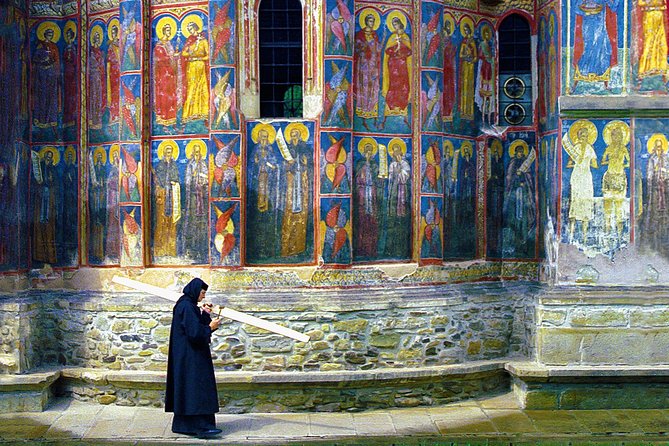
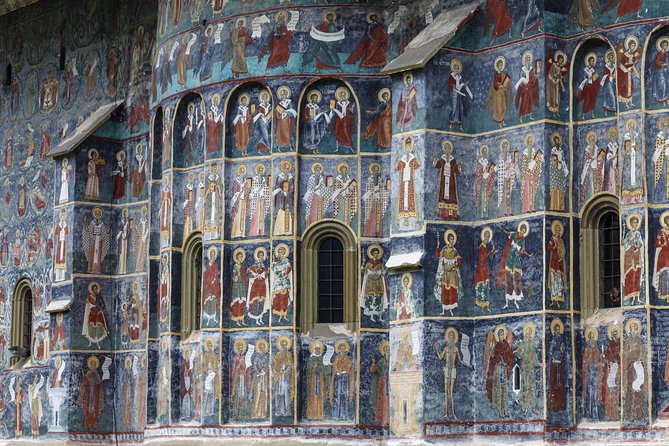
The Bucovina churches reward attention. At first, you may simply see bright walls covered with figures. Then a guide points out the order of the scenes, the unusual details, and the way local beliefs shaped the art. The frescoes were not just decoration. For many country people who could not read, these pictures explained Bible stories and the basic teachings of Christianity.
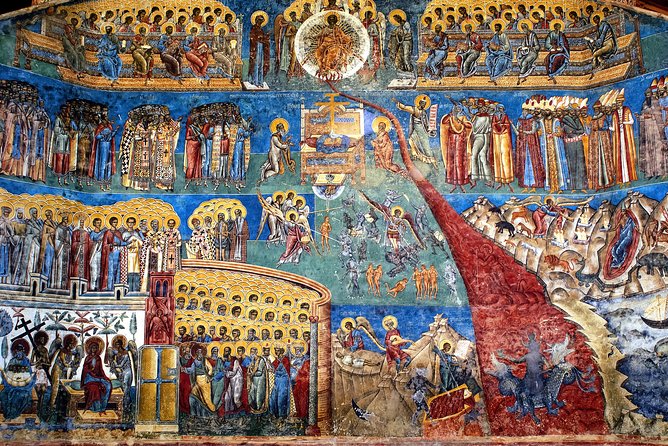
That makes a guided visit especially useful. At Voronet, the scenes are presented almost like a moving picture of Christian history. They combine Orthodox ideas with Eastern influences and local folk beliefs. You can look at the walls on your own, but a good explanation turns a crowded-looking surface into a story you can follow.
The churches also give you a strong sense of place. The route passes through the Bucovina area, where small communities and rural scenes form part of the day. One account specifically mentions seeing horses and carts near the monasteries. That detail matters because the visit is not limited to isolated monuments. You also get a look at the region around them.
More painted monasteries tours in Romania:
- Bucovina Painted Monasteries Day Tour
★ 5.0 · 83 reviews - 1-Day Bucovina Painted Monasteries tour from Suceava – English
★ 5.0 · 33 reviews - Half Day Tour to Bucovina Painted Monasteries
★ 5.0 · 6 reviews
Voronet and the famous blue walls
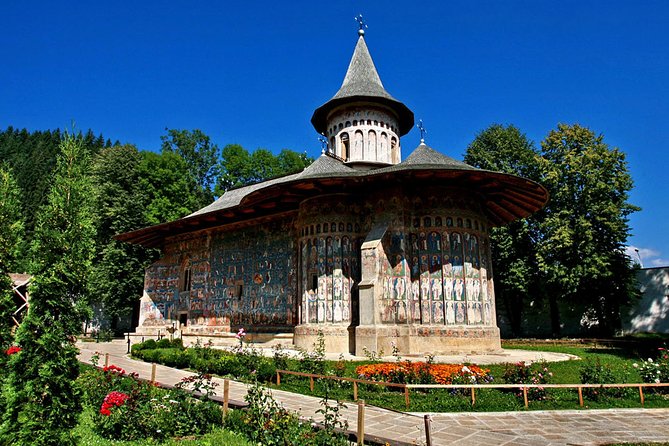
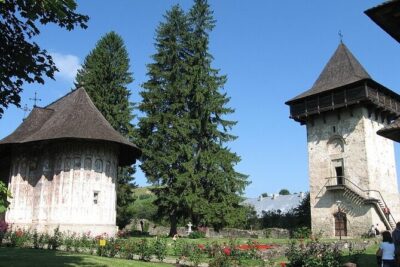
Your first listed stop is Voronet Monastery, reached after the morning pickup from Iasi. The church was built in 1488 in an astonishing three months, three weeks, and three days. That short construction period is one of the facts your guide can use to set the scene before you study the paintings.
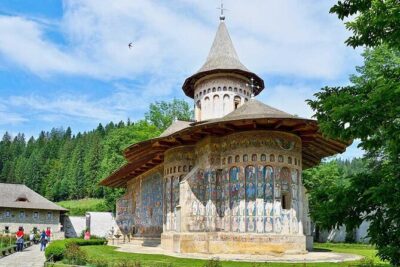
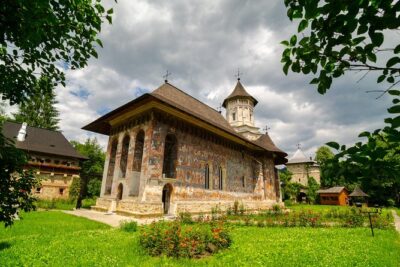
Voronet is famous for the lasting color of its exterior murals. The precise ingredients used in the paint remain a mystery, and the pigments have held their strength despite harsh weather over many centuries. The blue shade is the feature most associated with Voronet, though the walls contain far more than one memorable color.
Plan on about an hour here. That is enough time for a guided look at the exterior and interior, though you will need to keep moving if you want to examine every section closely. I would listen to the explanation first, then use the remaining minutes to return to the details that catch your eye.
The art does not follow a modern gallery layout. Scenes cover the church in broad bands, with people, symbols, and episodes arranged for public teaching. Your guide can help you understand the sequence and the local touches that make the paintings different from a standard Byzantine image program.
Moldovita’s painted Bible in color
Moldovita Monastery dates from 1532 to 1537 and was added to UNESCO’s list in 1993. Like Voronet, its murals turn the church exterior into a large visual lesson. The paintings show biblical scenes, but they also connect those stories to the community and the events that shaped the region.
I find Moldovita valuable as a second stop because it gives you a point of comparison. After Voronet, you begin to notice how each church uses its walls differently. The subject matter may overlap, but the color choices, arrangement, and local references create a separate mood.
You get roughly one hour at Moldovita. That timing works well for a first visit, especially with a guide. Without help, you could spend the hour taking photographs without understanding the larger story. With explanation, you can pay attention to how the frescoes served people who had no access to books or formal religious teaching.
The stop also shows why this route works better as a private or very small-group outing. If you want to ask about a particular scene, a guide can give you room to do so. Guides named Iulian, George, Mihai, and Nicu have been praised for being helpful, clear, and considerate, although the assigned guide can vary.
Sucevita and its remarkable green pigment
Sucevita is described as the newest of the painted monasteries on this route. It entered UNESCO’s heritage list in 1993 and combines Moldavian design with Gothic and Byzantine influences.
The mural color that defines Sucevita is green. It was produced through an old method using natural pigments, and the shade gives the church a different character from Voronet and Moldovita. Seeing all three in one day helps you notice these differences instead of treating the churches as repeat visits.
Again, allow about an hour. The church is not simply a final tick on a sightseeing list. It completes the visual progression of the day: Voronet is associated with its famous blue, Moldovita gives you another full set of biblical scenes tied to community life, and Sucevita offers its green-dominated walls and mixed architectural influences.
The schedule information also includes a reference to Humor Monastery in the tour highlights, while the detailed stop list names Sucevita. That is worth checking before departure. You should confirm whether the route includes Humor instead of, or in addition to, Sucevita, since a 12-hour day may not allow every stop without changes.
A few more Romania trips to weigh up
- Bucharest: Dracula’s Castle, Peleș Castle & Brașov Day Trip
★ 4.5 · 5,919 reviews - Bucharest: Day Trip to Dracula Castle, Peles Castle & Brașov
★ 4.4 · 3,049 reviews - Dracula’s Castle, Peles Castle and Brasov Day Trip from Bucharest
★ 4.5 · 1,804 reviews - Small-Group Day Trip to Dracula’s Castle, Brasov and Peles Castle
★ 4.5 · 935 reviews
Marginea and the black pottery tradition
The monastery visits are the main reason to book, but the stop in Marginea adds a useful change of pace. Here you learn how local craftsmen produce black pottery.
This is a practical cultural stop rather than another grand monument. You see an active craft tradition and gain a better sense of the region’s everyday culture. After hours spent studying painted walls, watching pottery production gives the day some variety.
The supplied details do not promise a purchase, a workshop, or a hands-on pottery session, so I would treat this as a demonstration and learning stop. If you hope to buy something, ask your guide what is available on the day. Personal expenses are not included.
What the private vehicle changes
The private format is one of the strongest reasons to consider this trip from Iasi. Pickup begins at 8:00 a.m. from any hotel in Iasi, and hotel or airport return is included. You do not need to arrange a separate connection to the monasteries or find your way back after a long day.
The group limit is seven people. That is small enough for easier conversation, quicker departures, and more flexibility than a large sightseeing bus. It also lets you ask your guide to repeat a point or explain a fresco in more detail.
The vehicle is described as modern, with bottled water included. A careful driver matters here because the trip covers a long route in a single day. Mihai was praised for responsible driving and good conversation, while George was noted for considerate service and safe driving. Those comments suggest that the driving portion is treated as part of the experience, not just dead time between stops.
Still, private does not mean short. You should expect a full day away from Iasi, with three monastery visits and the Marginea stop fitted into approximately 12 hours. If you prefer slow museum visits, long meals, or time for unplanned wandering, this schedule may feel tight.
The guide can make or break the fresco visits
The paintings are the heart of the day, and the guide’s role is important. A guide who only points out the buildings will leave much of the value on the walls. A guide who explains the scenes, pigments, religious ideas, and Moldavia’s past can make the churches far easier to read.
Several guide names appear in the tour’s feedback: Nicu, also written as Niku, Mihai, Iulian, George, and Florin. Nicu received especially strong praise for combining driving with detailed background about Moldavia and Bucovina. One account also described Florin as funny and informative during the monastery visits.
You cannot necessarily request a particular guide, but you can ask when booking. The activity may be operated by a multilingual guide, and English is the stated language offered. If precise English explanations are important to you, confirm the guide arrangement in advance.
The private format also gives you a better chance to shape the conversation. Ask about the meaning of a scene, the difference between the churches, or the way natural pigments were made. You will get more from the visit if you treat the guide as an interpreter, not only a driver.
Lunch, timing, and the real cost
The price is listed at $244.57 per person. That is not a low-cost sightseeing day, but the comparison should be made with the full package rather than the admission tickets alone.
You are paying for private transport from Iasi, an English-speaking guide, hotel or airport pickup and return, bottled water, and entrance fees. The small group limit adds value if you care about personal attention. The day also reaches a part of Romania that is not a quick side trip from central Iasi.
Lunch is not included and is estimated at about €15 per person. Personal purchases, including anything connected with the pottery stop, are also extra. I would carry some cash, though the supplied information does not specify payment methods at lunch or shops.
The tour is booked on average 34 days ahead, which suggests that early planning is sensible, especially if your dates in Iasi are fixed. Confirmation is provided at booking. Free cancellation is available up to 24 hours before the local start time. A cancellation made later is not refundable, and poor weather can lead to a new date or a full refund.
Who will get the most from this day
I would choose this trip if you are staying in Iasi and want to see Bucovina without managing a complicated transport plan. It suits you particularly well if religious art, medieval architecture, and regional culture are higher priorities than free time.
It also works for families and mixed-age groups because most people can participate and only a small amount of walking is required. Children must be accompanied by an adult, and the child rate applies only when the child shares with two paying adults.
You should think twice if you dislike long road journeys or if three one-hour monastery visits feel too structured. The route is ambitious. Its strength is the number of important sites covered in one day, but that same efficiency limits the time available at each place.
The tour is offered in English, though a multilingual guide may operate it. Most people can take part, but the information provided does not give detailed accessibility specifications, so ask before booking if you have mobility needs beyond a small amount of walking.
My call: book it for access, context, and convenience
I would book this trip if Bucovina is a priority and you have only one day from Iasi. The three monasteries are the main draw, but the private vehicle and guide add practical value. You get the freedom of a small group, included admissions, and a person who can explain why the frescoes matter.
The best reason to go is not simply that the churches are UNESCO listed. It is that the paintings still communicate stories across centuries, and the guide can help you see how art, faith, local customs, and community life meet on the walls.
Before paying, confirm the exact monastery schedule, particularly the reference to Humor alongside the detailed route naming Sucevita. If you are comfortable with a long day, an extra lunch cost, and a fast-moving schedule, this is a strong way to reach Bucovina from Iasi.
FAQ
How long is the day trip from Iasi?
The experience lasts approximately 12 hours. Pickup begins at 8:00 a.m.
Where does pickup take place?
Pickup is offered from any hotel in Iasi. Hotel and airport pickup and drop-off are included.
Which monasteries are included?
The detailed route includes Voronet, Moldovita, and Sucevita. The tour highlights also refer to Humor, so you should confirm the exact stops when booking.
Is transportation included?
Yes. Transportation is provided in a modern vehicle, with private hotel or airport pickup and return.
Is an English-speaking guide included?
Yes. An English-speaking guide is included, although the activity may sometimes be operated by a multilingual guide.
How many people can join the tour?
The maximum group size is seven people.
Are entrance fees included?
Yes. Entrance fees to the listed monastery visits are included.
Is lunch included?
No. Lunch is not included and costs approximately €15 per person.
Can I cancel for a refund?
You can cancel at least 24 hours before the local start time for a full refund. Cancellations or changes made less than 24 hours before departure are not accepted for a refund. If poor weather causes the operator to cancel, you can receive a different date or a full refund.
Just added around Romania
- Village Museum Bucharest Guided Tour★ 5.0 · 6 reviews
- Bucharest: Dealu Mare Winery Private Trip with Wine Tasting★ 4.9 · 6 reviews
- Winery touring & private wine tasting – one day private tour★ 5.0 · 3 reviews
- Turda Salt Mine, Gorge & Rimetea Village (private from Cluj)★ 5.0 · 5 reviews
- Private tour to Turda Salt Mine, Rimetea and Alba Iulia★ 4.8 · 5 reviews
- PRIVATE 4-5h speedboat tour to the village Mila23★ 5.0 · 3 reviews
- Transylvania Tour: Dracula’s Castle, Peles Palace & Brasov★ 5.0 · 19 reviews
- Turda salt mine and Corvin Castle day tour from Cluj★ 5.0 · 9 reviews
Painted Monasteries Tours, compared.
1-Day Bucovina Painted Monasteries tour from Suceava – English
Read our review →
11-Day Romania Tour from Bucharest with Transylvania & Bucovina
Read our review →
Bucovina Painted Monasteries & Transylvania Tour: 4-Day Private
Read our review →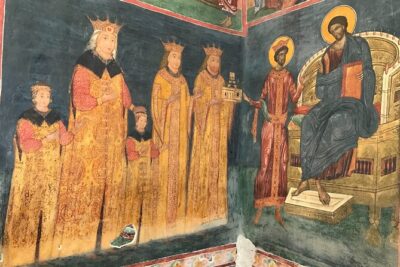

Two days tour to Bucovina & UNESCO Painted Monasteries
Read our review →Browse the lists this tour appears in