

Reviewed · PAINTED MONASTERIES TOURS
Transylvania & Bucovina Private Tour – 6 days
Romania’s best surprise on this six-day route is the sharp change of mood from one region to the next. You move from royal castles and Saxon fortified towns in Transylvania to the painted monasteries of Bucovina, with Red Lake and Bicaz Gorges filling the long middle stretch. The painted churches are the tour’s special prize, especially if you want more than the usual Dracula circuit.
I like the privacy and the sensible route. You travel with your own group, have transport and hotels arranged, and can focus on the guide’s stories instead of road planning. I also like the human scale of the stops, from village pottery in Marginea to the old passages and towers of Sighisoara. The main drawback is pace: six days cover a lot of ground, and the transfer to Bucovina and the return to Bucharest make for long days in the vehicle.
In This Review
- Key points at a glance
- Why this route is more than a Dracula tour
- Day one: Sinaia’s monastery, Peles Castle, and Brasov
- Day two: Bran Castle, Rasnov Fortress, and Sibiu
- Day three: Biertan, Sighisoara, and Saxon Transylvania
- Day four: Red Lake and the dramatic Bicaz Gorges
- Day five: Bucovina’s painted monasteries
- Day six: Neamt Monastery, the fortress, and the return to Bucharest
- The private format and guide quality
- What the $1,419.55 price really covers
- Who should book this six-day journey?
- Should you book it?
- FAQ
- Where does the tour begin?
- How long does the tour last?
- Is this a private tour?
- What accommodation is included?
- Are breakfasts included?
- Are lunch and dinner included?
- Are entrance fees included?
- Which UNESCO sites are included?
- Is the tour suitable for all fitness levels?
Key points at a glance
- Five hotel nights: You stay in 3-star or 4-star accommodation, with breakfast included.
- A private Romanian route: Only your group participates, with hotel pickup and drop-off.
- Two very different regions: Transylvania brings castles and medieval towns, while Bucovina brings UNESCO painted monasteries.
- A strong guide can shape the trip: Gabriel is specifically associated with this experience, and the tour calls for a professional guide.
- Mountain scenery on the way east: Red Lake and Bicaz Gorges break up the transfer between Sighisoara and Voronet.
- Budget for extras: Entrance fees, photo fees, lunch, and dinner are not included in the $1,419.55 price.
Why this route is more than a Dracula tour
Bran Castle gets the headlines, but this journey is really about Romania’s variety. You see the polished royal world of Sinaia, the defensive towns built by Transylvanian Saxons, and the monasteries of Moldavia, where exterior walls carry painted religious scenes.
That mix gives the tour real value for anyone short on time. On your own, arranging six days across these regions means comparing hotels, finding transport, and working out which roads and monuments fit together. Here, the route is laid out for you, and a private guide can explain the links between places rather than simply dropping you at a ticket office.
The experience is priced at $1,419.55 per person. That is not a budget bus tour, but it covers five nights, private transport, a professional guide, hotel pickup and drop-off, breakfast, and fuel. You still pay for admissions, photo fees, lunches, and dinners, so you should add those costs before deciding. For a private six-day journey covering this much of Romania, the price may make sense for couples, families, or small groups that value convenience and control.
The start is early at 7:30 a.m. That helps you fit in the first day’s sights, but you should be ready for a full schedule. A moderate level of fitness is required, and several visits involve walking through historic centers, uphill areas, towers, fortresses, or uneven old streets.
More Transylvania Tours in Bucharest
- Transylvania and Dracula Castle Full Day Tour from Bucharest
★ 4.5 · 1,589 reviews - Castles of Transylvania: Private Day Trip from Bucharest
★ 4.5 · 248 reviews - 2-Day Medieval Transylvania with Brasov,Sibiu and Sighisoara Tour from Bucharest
★ 4.5 · 145 reviews
Day one: Sinaia’s monastery, Peles Castle, and Brasov
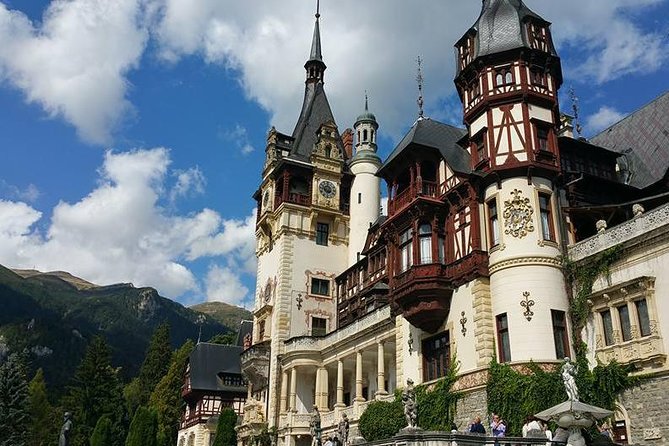
The first day moves north from Bucharest to Sinaia, where the Orthodox Monastery provides a quieter opening than the more famous castle nearby. The monastery connects the trip to Romania’s religious life and gives you an early look at the country’s mixture of Orthodox tradition and royal history.
Peles Castle is the day’s major draw. Its setting in the Carpathians and its royal interiors make it one of Romania’s most memorable historic buildings. The tour places it before Brasov, so you reach the city with a sense of how monarchy, religion, and mountain resort culture fit into the country’s past.
In Brasov, you explore a compact old city framed by defensive works. The Black Church is the key interior and exterior landmark, while the Citadel of Brasov, Ecaterina’s Gate, and the White and Black Towers help you read the city as a fortified settlement rather than just a pretty square.
The route also includes the Blacksmiths, Weavers, Ropemakers, and Drapers bastions. These names are useful clues: the defenses were tied to the guilds and trades that shaped medieval urban life. You get more from the walk if you pay attention to how the walls, gates, towers, and narrow streets connect.
You spend the night in Brasov. This is a good first base because the city provides a proper evening stop after a busy sightseeing day, though the exact hotel is not specified. Ask about twin or double beds when booking, especially if your group has particular room needs.
Day two: Bran Castle, Rasnov Fortress, and Sibiu
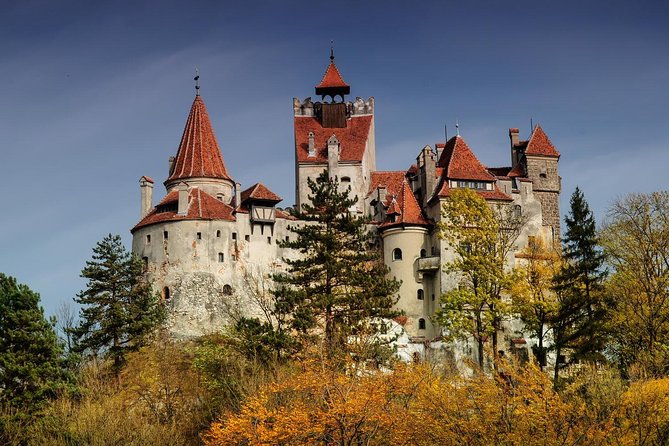
Bran Castle is marketed worldwide as Dracula’s Castle, but its real appeal is the building itself and the way the legend has shaped modern Romania. The visit is best approached with a clear distinction between popular fiction and the country’s actual history. The castle gives you the atmosphere people expect, while the guide can help place the Dracula story in context.
Rasnov Fortress adds a different type of defensive site. Instead of a royal residence, you see a stronghold positioned high above the town. Its location helps explain why fortified places mattered in this region, where communities needed protection from raids and shifting political threats.
The second half of the day takes you to Sibiu, one of Transylvania’s most attractive historic cities. Its highlights include the Evangelical Church, the Holy Trinity Orthodox Cathedral, the Bridge of Lies, the historic center, and the Stairs Passage.
Sibiu’s character comes from the overlap of German-speaking Saxon, Romanian, and central European influences. The Brukenthal Museum and the city’s towers and bastions add depth if you want more than a quick photo stop. Since the itinerary includes both a tour and accommodation in Sibiu, you should have time to notice the city’s architecture at walking speed.
This is another full day, with multiple stops and a transfer. I would wear shoes suited to cobbled streets and keep the day’s essentials in a small bag rather than relying on access to the main luggage.
Day three: Biertan, Sighisoara, and Saxon Transylvania
Biertan Fortified Church takes you into a village setting. Its UNESCO status reflects the importance of Transylvania’s fortified churches, which served both religious and defensive purposes. The planned walk through the village matters because it shows the settlement pattern around the church, not just the monument itself.
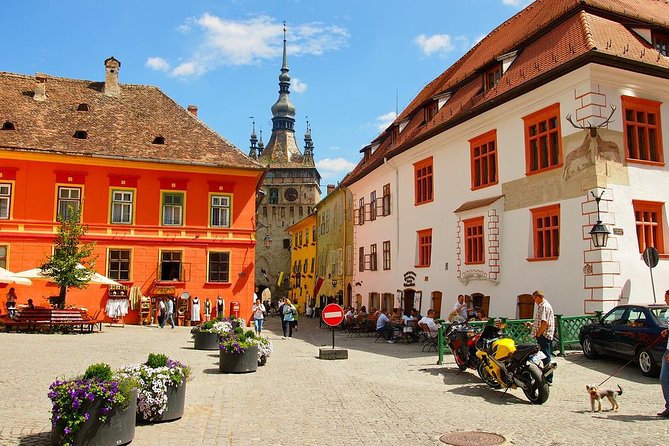
Sighisoara then brings you to one of the route’s strongest historic centers. The Clock Tower and History Museum provide the main orientation point, while the Church on the Hill and the covered pupils roofed stairways show how the town developed around steep terrain.
The House of Dracula connects the old town to the Vlad Tepes legend. Again, the useful approach is to treat the Dracula material as part of Romania’s modern storytelling, not as a complete account of the country’s past. The German cemetery adds another layer to Sighisoara’s Saxon identity.
Sighisoara is a place where you should slow down when possible. Look up at the tower, walk the passages, and notice the relationship between the lower town and the hilltop church. The old streets can be steep, so this day is less comfortable for anyone who has difficulty with inclines or steps.
The tour includes accommodation in Sighisoara. With five nights spread across Brasov, Sibiu, Sighisoara, and Voronet, you avoid returning to the same base each evening, but you also repack often. That is the normal tradeoff for a point-to-point route.
Same mountains, a completely different day out:
- Bucharest: Dracula’s Castle, Peles Castle, & Brasov Old Town
★ 4.5 · 17,858 reviews - Bucharest: Dracula Castle, Peles Castle & Brasov Old Town
★ 4.6 · 10,891 reviews - Bucharest: Dracula’s Castle, Peleș Castle & Brașov Day Trip
★ 4.5 · 5,919 reviews - Bucharest: Palace of Parliament Tickets and Guide
★ 4.3 · 3,182 reviews
Day four: Red Lake and the dramatic Bicaz Gorges
Day four is the major transfer toward Bucovina. It is also one of the most scenic driving days, with stops at Red Lake and Bicaz Gorges.
Red Lake is Romania’s largest natural mountain lake. The description of it as a natural storage dam lake hints at its unusual formation, and its setting gives you a break from medieval streets and church interiors. Treat this as a scenery stop rather than expecting a long activity program.
Bicaz Gorges is the more dramatic roadside experience. The road twists uphill through a three-mile gorge cut between limestone cliffs that rise as high as 1,000 feet. From the vehicle, you get the scale of the route, while any stops allow you to take in the narrow rock walls and mountain road.
This day deserves realistic expectations. You are moving between regions, so much of the day is spent in transportation. The payoff is that you reach Voronet without having to arrange a separate connection across Romania. If you dislike long drives, ask for the expected timing before booking, since the supplied schedule gives the stops but not exact travel hours.
Voronet becomes your base for the next two nights. That is helpful because day five returns to the same accommodation after a circuit of monasteries and craft villages.
Day five: Bucovina’s painted monasteries
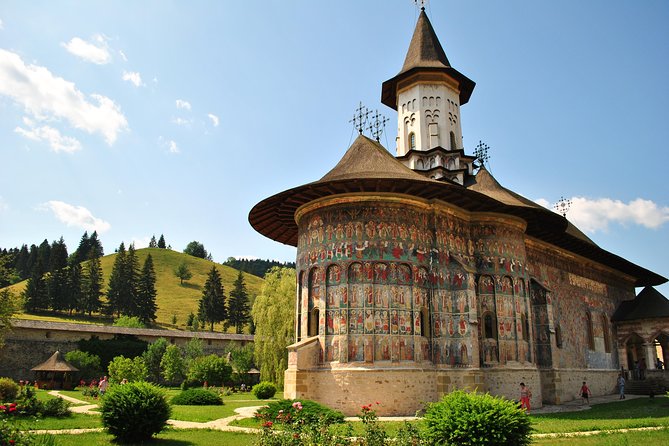
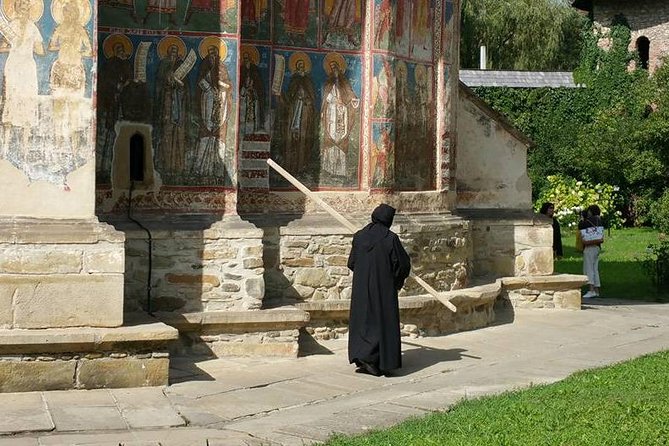
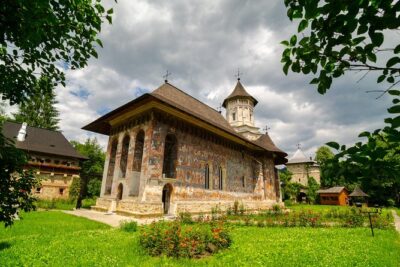
This is the day that sets the tour apart from a standard Transylvania itinerary. Voronet Monastery, Humor Monastery, Sucevita Monastery, and Moldovita Monastery are UNESCO-listed painted monasteries, and their exterior walls are the main reason to make the long trip into Bucovina.
The paintings are not simply decoration. They present religious scenes on the outside of the churches, making the buildings important works of art and teaching as well as places of worship. You do not need to be an expert to appreciate them, but a good guide can help you understand what you are looking at and why the monasteries matter.
Voronet is the first monastery on the day’s route and gives you an early introduction to the style. Humor, Sucevita, and Moldovita then show how the tradition varies from one site to another. Seeing several is worthwhile because you can compare colors, compositions, settings, and architectural details instead of treating one church as an isolated stop.
The Painted Eggs Museum adds a more personal, decorative side to Bucovina’s culture. It pairs well with the monasteries because it shows how local artistic traditions extend beyond large religious buildings.
Lunch is planned during the day, but lunch itself is not included in the tour price. The same applies to dinner throughout the trip. You should carry some flexibility in your food budget, since the route may not always leave you much time to choose a restaurant independently.
Marginea village introduces black pottery workshops. This stop is valuable because it brings you into a living craft tradition rather than keeping the day entirely focused on monuments. You can see how local identity is expressed through handmade objects, although the information provided does not promise a demonstration length or shopping requirement.
The day ends back at Voronet. It is a packed sightseeing schedule, but the repeated base makes it easier than changing hotels after each monastery.
Day six: Neamt Monastery, the fortress, and the return to Bucharest

The final day begins with Neamt Monastery, one of Romania’s oldest and most important religious settlements, founded in the 12th century. Its high walls and defense tower give it a fortress-like appearance, reflecting a period when religious centers also needed protection.
Neamt Fortress in Targu Neamt provides the day’s main defensive site. Built high on a rocky hill and overlooking the town, it played a major role in protecting the region from raids for almost six centuries. The climb and historic setting make this another stop where moderate fitness matters.
These final visits balance the painted monasteries from day five. You see both the spiritual side of Moldavia and the military pressures that shaped its buildings and settlements.
Afterward, the vehicle transfers you back to Bucharest for drop-off at your hotel. The return is a substantial final leg, so do not plan an important flight or fixed evening event without allowing plenty of extra time. The tour ends with hotel drop-off, not an airport transfer specifically described in the information provided.
The private format and guide quality
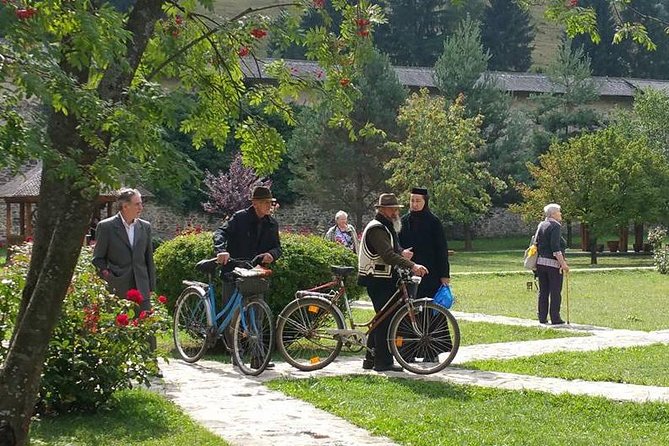
The private setup is the tour’s practical advantage. Only your group participates, so you avoid a large coach schedule and can experience the route with a guide focused on your party. Pickup and drop-off are included, which removes the need to find a meeting point each morning.
A guide named Gabriel is associated with the experience. He is described as especially strong on Romanian history, culture, and language, and as eager to share that knowledge. That matters on a route where the important details are not always obvious: a church’s defensive purpose, a guild tower’s name, or the difference between Dracula folklore and documented history.
The tour also uses a professional guide as part of the included service. Since the exact guide may depend on availability, you should not assume Gabriel will lead every departure. Still, the emphasis on guiding is encouraging, because this itinerary gains much of its value from explanation.
You should advise the operator of dietary requirements when booking and state your preference for twin or double beds. Confirmation is provided at booking, and the tour is non-refundable and cannot be changed for any reason, so book only when your dates are firm.
What the $1,419.55 price really covers
For six days, the per-person price includes:
- Private round-trip transportation
- Hotel pickup and drop-off
- A professional guide
- Five nights in 3-star or 4-star hotels
- Breakfast
- Fuel surcharge
It excludes entrance fees and photo fees, plus lunch and dinner. That distinction is important because the itinerary includes many castles, museums, churches, fortresses, and monastery sites. The final cost will be higher than the advertised amount.
I see the price as paying for time and coordination as much as for transport. You are not just buying admission to Bran Castle or Peles Castle. You are paying to connect Bucharest, Transylvania, the Bicaz mountain route, Bucovina, and the return south without managing each hotel and transfer yourself.
The value is strongest for a private group that can share the experience and split some costs indirectly through the per-person arrangement. Solo visitors may find the price harder to justify, while a couple or family may appreciate the privacy and fixed route. Group discounts are offered, though the exact discount is not specified.
Who should book this six-day journey?
I would choose this tour if you want to see both famous Transylvanian sights and the Bucovina monasteries in one trip. It suits you if planning long road connections sounds tiring, if you want a private guide, and if you prefer a steady sequence of included hotels rather than returning to Bucharest each night.
It is also a good match if you care about cultural variety. The route includes royal architecture, Orthodox monasteries, Saxon towns, defensive towers, village crafts, mountain roads, and UNESCO sites. You get more than a single theme.
I would hesitate if you want slow mornings, long meals, or several free afternoons. This is a tightly packed route with early starts and long transfers. You should also think twice if steep streets, fortress approaches, or repeated walking tours are difficult for you.
Should you book it?
Book it if your priority is coverage, privacy, and historical context in a short Romanian holiday. The Bucovina section is the deciding factor: many tours stop with Bran and Brasov, but this one carries you east to the painted monasteries, Marginea pottery, Red Lake, and Bicaz Gorges.
Skip it if you would rather build your own relaxed itinerary or if the extra admission and meal costs will stretch your budget. For the right person, this is a strong route with a rare balance of famous sights and less familiar places, provided you accept the long driving days.
FAQ
Where does the tour begin?
The tour begins in Bucharest, Romania, with hotel pickup offered. The stated start time is 7:30 a.m.
How long does the tour last?
The tour lasts approximately six days and includes five nights of accommodation.
Is this a private tour?
Yes. Only your group participates in the activity.
What accommodation is included?
Five nights in 3-star or 4-star hotels are included. You can advise the operator if you prefer twin beds or a double bed.
Are breakfasts included?
Yes. Breakfast is included with the accommodation.
Are lunch and dinner included?
No. Lunch and dinner are not included in the tour price.
Are entrance fees included?
No. Entrance fees and photo fees are paid separately.
Which UNESCO sites are included?
The route includes Biertan Fortified Church, Sighisoara, Voronet Monastery, Humor Monastery, Sucevita Monastery, and Moldovita Monastery.
Is the tour suitable for all fitness levels?
The tour calls for a moderate level of physical fitness. You should expect walking in historic centers and visits to sites that may involve hills, steps, or uneven surfaces.
More 6-Day Experiences in Bucharest
- 6 Days Private Tour in Romania Spectacular Places from Bucharest
★ 5.0 · 9 reviews - Private 6-Day Dracula Tour in Transylvania from Bucharest
★ 5.0 · 4 reviews - 6 Days Transylvania and Bukovina Small Group Tour from Bucharest
★ 4.5 · 3 reviews
More Painted Monasteries Tours in Bucharest
- Bucovina Painted Monasteries & Transylvania Tour: 4-Day Private
★ 5.0 · 6 reviews - 11-Day Romania Tour from Bucharest with Transylvania & Bucovina
★ 5.0 · 6 reviews - Bucovina Painted Monasteries Day Tour
★ 5.0 · 83 reviews - 1-Day Bucovina Painted Monasteries tour from Suceava – English
★ 5.0 · 33 reviews
Just added around Bucharest
- Village Museum Bucharest Guided Tour★ 5.0 · 6 reviews
- Bucharest: Dealu Mare Winery Private Trip with Wine Tasting★ 4.9 · 6 reviews
- Winery touring & private wine tasting – one day private tour★ 5.0 · 3 reviews
- Transylvania Tour: Dracula’s Castle, Peles Palace & Brasov★ 5.0 · 19 reviews
- Discover Medieval Transylvania Small Group Tour – 7 days★ 5.0 · 4 reviews
- Bucharest Airport Transfer To Constanta Mamaia★ 5.0 · 3 reviews
- Airport Henri Coanda (Otopeni) to Bucharest – Private Transfer – Driver★ 5.0 · 5 reviews
- Gems of Transilvania: Brasov,Sighisoara,Sibiu,Viscri and more★ 5.0 · 6 reviews
Painted Monasteries Tours, compared.
1-Day Bucovina Painted Monasteries tour from Suceava – English
Read our review →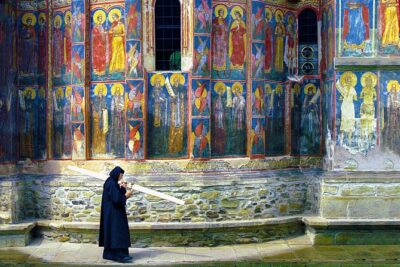
Day trip from Iasi to the UNESCO Painted Monasteries in Bucovina
Read our review →
11-Day Romania Tour from Bucharest with Transylvania & Bucovina
Read our review →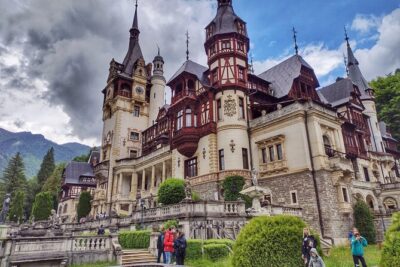
Bucovina Painted Monasteries & Transylvania Tour: 4-Day Private
Read our review →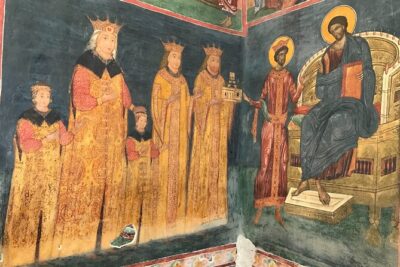
Two days tour to Bucovina & UNESCO Painted Monasteries
Read our review →Browse the lists this tour appears in