
Reviewed · DRACULA & BRAN CASTLE TOURS
8h Bucharest Communism Tour – Best of Bucharest with Dracula’s Tomb
Bucharest’s past can feel hard to grasp from a quick city walk. This private tour puts the story in front of you, from the enormous Palace of Parliament and the site of the 1989 revolution to Ceaușescu’s private home and the island monastery linked with Dracula.
I like the mix of political history and everyday Romanian culture, especially the Village Museum’s old wooden houses and churches. I also like the private format: you travel with only your own group, with hotel pickup, a dedicated vehicle, and a guide who can adjust the pace. The main drawback is the packed schedule. Entrance fees are extra, and the long drive to Snagov means some stops may feel brisk.
In This Review
- Key points to know before booking
- Bucharest through the lens of communism
- The Palace of Parliament: power built in concrete
- The Village Museum: Romania before the capital’s grand schemes
- Calea Victoriei: royal buildings beside revolutionary power
- Revolution Square and the end of Ceaușescu’s rule
- Snagov Monastery and the Dracula connection
- Ceaușescu Mansion: private life behind closed doors
- How the private transport affects the day
- Is $297.38 per person a fair price?
- Who will get the most from this Bucharest day?
- Should you book the 8-hour Bucharest tour?
- FAQ
- How long does the Bucharest tour last?
- Is hotel pickup included?
- Is this a private tour?
- Are entrance tickets included?
- Is food included?
- How far is Snagov Monastery from Bucharest?
- Can I cancel for a full refund?
Key points to know before booking
- The Palace of Parliament takes center stage: Allow about two hours for Bucharest’s vast former People’s House, though admission is not included.
- Snagov adds a surprising Dracula connection: The monastery sits on an island about 40 minutes outside Bucharest and is linked with the tomb of Vlad the Impaler.
- You get both dictatorship and daily life: The Village Museum shows traditional homes, mills, and wooden churches from across Romania.
- The private vehicle makes a long day easier: Hotel pickup and drop-off, fuel, and facility fees are included.
- The guides are a major part of the experience: Nicolas and Răzvan are named as guides, with praise for their history knowledge, humor, flexibility, and clean air-conditioned vehicle.
- Budget for several separate admissions: Tickets for the Palace of Parliament, Snagov Monastery, and Ceaușescu Mansion are not included, and food and drinks are also extra.
Bucharest through the lens of communism
This is not a standard highlights tour with a quick photo stop at a church and a shopping street. Its main theme is how Nicolae Ceaușescu’s communist rule reshaped Bucharest, while also showing what life looked like before and beyond the dictatorship.
You will see the grand public face of power, the private comforts reserved for the ruling family, and the streets where the regime finally collapsed in December 1989. The result is a useful first look at Romania’s recent past, particularly if you want context before exploring the city on your own.
The day is private, so you are not tied to the needs of a large coach group. That matters in Bucharest, where traffic can eat into sightseeing time. A good guide can explain what you are passing while driving and decide where to spend extra minutes if a subject catches your interest.
Guides associated with the experience include Nicolas and Răzvan. Nicolas is described as friendly, funny, flexible, and well informed about Bucharest. Răzvan is also praised for careful attention and for sharing practical ideas about what to see on later days. Ask who will guide your booking, since the personality and background of the guide will shape the day.
More Dracula & Bran Castle Tours in Bucharest
- Bucharest: Dracula’s Castle, Peles Castle, & Brasov Old Town
★ 4.5 · 17,858 reviews - Bucharest: Dracula Castle, Peles Castle & Brasov Old Town
★ 4.6 · 10,891 reviews - Bucharest: Dracula’s Castle, Peleș Castle & Brașov Day Trip
★ 4.5 · 5,919 reviews
The Palace of Parliament: power built in concrete
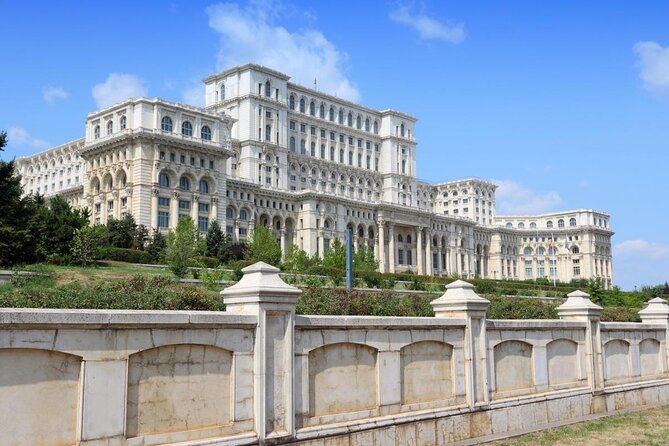
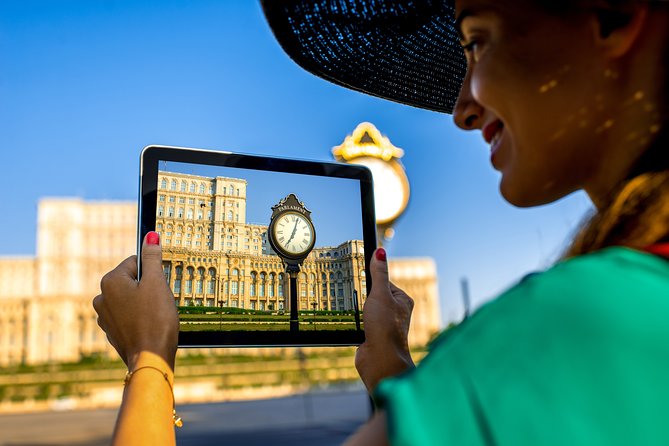
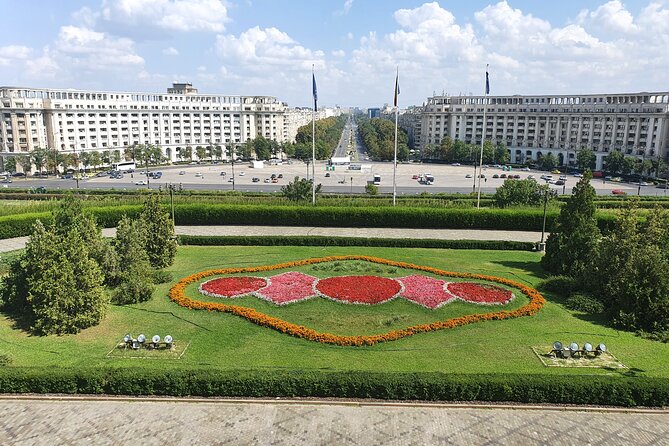
Start with the building once called the People’s House, now known as the Palace of Parliament. It is one of the largest administrative buildings in the world, second only to the Pentagon in the description used for this tour. That scale is the point: the building was meant to display the power of the state and the authority of one man.
Inside, you can expect grand halls, oversized rooms, and an atmosphere that feels more ceremonial than useful. The building’s size makes the human cost of the project easier to discuss. Large sections of Bucharest were demolished to make room for it, and its scale reflects the waste and personal ambition tied to Ceaușescu’s rule.
You will have about two hours here, making it the longest scheduled stop. That gives you time to take in the architecture instead of treating the palace as a quick exterior photo. Admission is not included, so confirm the current ticket cost and entry conditions before setting your budget.
The palace can be emotionally and physically imposing. Some people will find the repetition of halls and official rooms tiring, especially after a long drive or early start. I still consider it essential for this particular tour because the building makes the subject of authoritarian excess impossible to ignore.
The Village Museum: Romania before the capital’s grand schemes
The National Village Museum offers a sharp change of mood. Instead of concrete, marble, and political symbolism, you see traditional houses brought together from different parts of Romania.
The collection includes homes built from wood, adobe, stone, and other local materials. You can also see familiar rural features such as mills and wooden churches. Your guide can explain how these buildings fit into village life, including practical, social, and spiritual customs.
This stop gives the tour balance. Communist Bucharest is only one part of Romania’s story, and the museum helps you see the traditions that existed long before Ceaușescu and continued despite political change.
The museum is also a good place to slow down. The schedule does not specify a separate duration for this stop, so your exact time here may depend on traffic, opening conditions, and the pace of the rest of the day. If rural architecture interests you, tell your guide early. A private tour gives you a better chance of shaping the visit than a fixed group outing.
Calea Victoriei: royal buildings beside revolutionary power
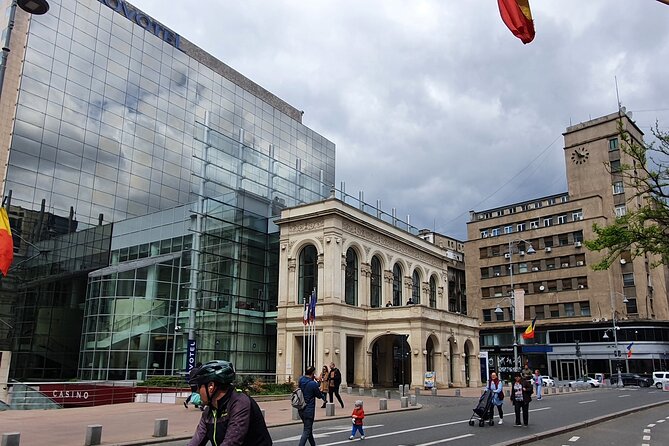
Calea Victoriei is Bucharest’s historic central avenue, and the tour uses it to show the city’s sharp political contrasts. Along the route, you may see the Royal Palace on one side and the former Central Committee of the Romanian Communist Party near Revolution Square on the other.
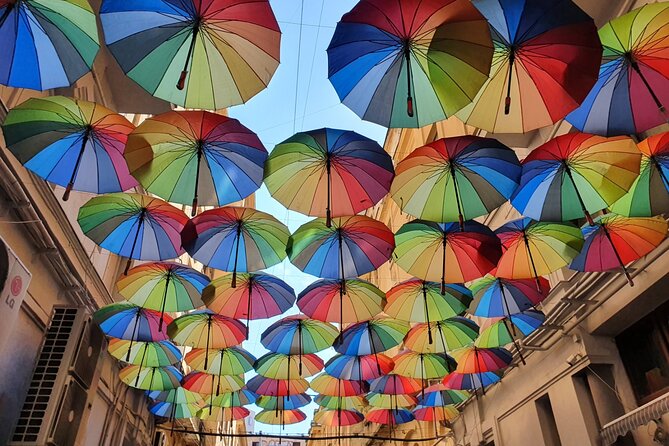
That physical contrast is more useful than a long lecture. The avenue brings together monarchy, religion, culture, commerce, and communist government in a compact part of the city. You may pass old Orthodox churches, museums, theaters, casinos, restaurants, music shops, tea shops, stores, and gift shops.
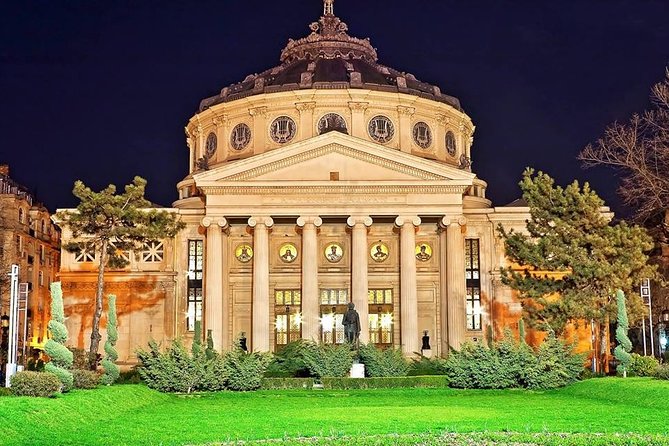
The route also includes major architectural sights such as the Romanian Athenaeum, the CEC Palace, and the National History Museum. The scheduled visit lasts about 45 minutes, with no admission fee listed for this portion.
You should think of Calea Victoriei as a guided orientation rather than a full museum visit. Forty-five minutes is enough to understand the street and note places you might return to, but not enough to explore every building. I like that arrangement because it keeps the day moving while giving you a useful list for later.
Same mountains, a completely different day out:
- Bucharest: Palace of Parliament Tickets and Guide
★ 4.3 · 3,182 reviews - Bucharest: Day Trip to Dracula Castle, Peles Castle & Brașov
★ 4.4 · 3,049 reviews - Bucharest to Dracula Castle, Peles Castle and Brasov Guided Tour
★ 4.5 · 2,933 reviews - Bucharest: Palace of Parliament Tickets and Guided Tour
★ 4.4 · 1,877 reviews
Revolution Square and the end of Ceaușescu’s rule
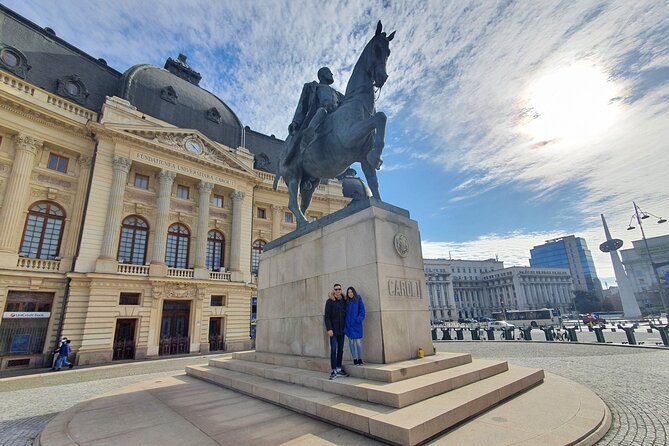
Revolution Square is the emotional center of the communist section. Here you connect the buildings and streets with the events of December 1989, when public resistance brought Ceaușescu’s rule to an end.
The former Central Committee building is especially important. From there, Ceaușescu fled by helicopter as the revolution spread. Your guide can place the escape within the larger story of the regime’s final days, including the questions that followed about state security, personal wealth, and the fate of the dictator’s fortune.
The stop is planned for about 30 minutes and is free to enter. It is not a place to rush through without listening. The value comes from understanding what happened in this exact part of the city, not from collecting another landmark photograph.
The subject is heavy. Romania’s 1989 revolution involved sacrifice and violence, and a short stop cannot cover every argument about what happened. Still, the square gives you a clear anchor for the political story begun at the Palace of Parliament.
Snagov Monastery and the Dracula connection
After the city sights, the tour makes a trip to Snagov Monastery, about 40 minutes outside Bucharest. The monastery is on an island, which gives this part of the day a different feel from the broad avenues and government buildings.
The attraction here is the tomb associated with Dracula, more precisely the burial tradition connected with Vlad the Impaler, the historical figure who helped inspire the Dracula legend. The tour presents the monastery as a surprise stop, so it adds a measure of folklore to an otherwise serious day.
Plan on about an hour at Snagov, with admission not included. The travel time matters. You are giving up roughly 80 minutes of driving to visit a site outside the capital, so this stop will appeal most if you enjoy the Dracula story or want a break from urban sightseeing.
The connection is best treated with a little care. Dracula is a literary and popular culture figure, while Vlad the Impaler was a real ruler with a separate historical identity. A good guide can help you separate fact, legend, and tourism without taking the fun out of the visit.
Because the monastery is on an island, weather and site conditions can affect the practical experience. The supplied details do not promise a specific boat arrangement or interior access, so ask about current entry conditions when you book.
Ceaușescu Mansion: private life behind closed doors

The Ceaușescu Mansion, also called the Spring Palace, was the private residence of Nicolae and Elena Ceaușescu and their children from 1965 until 1989. The house was built in the mid-1960s and enlarged between 1970 and 1972.
This is where the public image of austerity collides with the family’s private surroundings. The mansion helps you consider the gap between the sacrifices expected from ordinary Romanians and the comfort enjoyed by the ruling family.
The architecture, interiors, gardens, and furniture were planned as a complete setting. Aron Grimberg-Solari designed the residence, while Robert Woll worked on the architecture, furniture, and landscaping, with Teodosiu handling the gardens. Those details make the visit more than a look at an old house. You can see how a private world was built to support status and control.
You have about one hour and 20 minutes here, with admission extra. That is enough time for a proper visit, but it also adds another indoor stop after the Palace of Parliament. If you prefer a lighter sightseeing day, the combination may feel demanding. If you want to understand how the Ceaușescus lived, this is one of the most revealing parts of the tour.
How the private transport affects the day
Hotel pickup and drop-off are included, along with a private vehicle, driver-guide, local guide, fuel surcharge, and facility fees. You do not need to organize separate taxis for the palace, central Bucharest, the mansion, and Snagov.
The vehicle matters most because Snagov lies outside the city. One guide described the vehicle as new, clean, air-conditioned, and comfortable, with large windows. That is useful on a full eight-hour outing, particularly when the day includes several drives.
The tour is private, meaning only your group participates. You can ask questions without worrying about holding up strangers, and you can tell the guide if you need a short pause. Flexibility is one of the clearest reasons to choose this over a cheaper large-group sightseeing bus.
Do not expect every stop to receive equal time. The Palace and mansion are substantial visits, while Calea Victoriei and Revolution Square are shorter. Snagov adds travel time. Your guide will need to keep the schedule moving, and traffic in Bucharest can affect the order or length of stops.
Is $297.38 per person a fair price?
At $297.38 per person, this is not a budget city tour. The value depends heavily on group size. For two people, the total is a major expense. For a larger group sharing the private vehicle and guide, the cost becomes easier to justify, particularly if you would otherwise pay for several taxis and separate guiding.
The price includes transport, hotel pickup and drop-off, a driver-guide, a local guide, fuel, and facility fees. It does not include entrance tickets, food, or drinks. You should add admission costs for the Palace of Parliament, Snagov Monastery, and Ceaușescu Mansion before deciding.
I see the strongest value in the time saved and the amount of context provided. You are not just being driven to six disconnected locations. The stops form a story about power, tradition, revolution, and private privilege.
Still, the price may not make sense if you only want a general Bucharest introduction. You could visit some central sights independently for less. Choose this tour when the communist era, Ceaușescu, and the Dracula connection are central to your plans.
Who will get the most from this Bucharest day?
I would recommend it to first-time visitors who want a structured introduction to Bucharest and Romania’s recent past. It also suits families or groups of friends who prefer a private vehicle and want to ask plenty of questions.
History fans will get the most from the Palace of Parliament, Revolution Square, and Ceaușescu Mansion. Architecture fans should enjoy the contrast between traditional rural buildings, royal-era Calea Victoriei, and communist monumental design.
The tour also works for people with only one full day in Bucharest. It covers a lot, including a short trip outside the capital. The tradeoff is pace. You will see many places, but you will not have hours to linger at each one.
It may be less suitable if you want a relaxed food-focused day, long museum visits, or lots of free time. Food and drinks are not included, and the schedule leaves little room for an unplanned restaurant stop unless your guide can adjust the day.
Free cancellation is available up to 24 hours before the start time for a full refund. Changes or cancellations made less than 24 hours before the start are not accepted for a refund. Confirmation is provided at booking, service animals are allowed, and the tour states that most people can participate.
Should you book the 8-hour Bucharest tour?
Book it if you want one private day that ties Bucharest’s communist landmarks to the city’s older traditions and adds a Dracula-related monastery outside town. The strongest reasons are the guide-led context, private transport, and the chance to see places that would be awkward to combine on your own.
Before paying, confirm the guide’s name, the current entrance fees, and how the Snagov visit is handled. If your group is large enough to share the cost, the $297.38 per-person price is easier to defend. If you are traveling alone or as a couple, compare the total with shorter private tours.
This is a serious history tour with a touch of legend, not a light city sampler. If that combination sounds right, it gives you a clear and memorable way to understand Bucharest.
FAQ
How long does the Bucharest tour last?
The experience lasts approximately eight hours.
Is hotel pickup included?
Yes. Hotel pickup and drop-off are included.
Is this a private tour?
Yes. Only your group participates in the private tour or activity.
Are entrance tickets included?
No. Entrance tickets are not included. This applies to the listed stops where admission is required, including the Palace of Parliament, Snagov Monastery, and Ceaușescu Mansion.
Is food included?
No. Food and drinks are not included in the price.
How far is Snagov Monastery from Bucharest?
Snagov Monastery is about 40 minutes outside Bucharest. It is located on an island and is associated with Dracula’s tomb.
Can I cancel for a full refund?
Yes, if you cancel at least 24 hours before the experience start time. Cancellations or changes made less than 24 hours before the start are not accepted for a refund.
More Communism & Ceausescu Tours in Bucharest
- The Real tour of Communism
★ 5.0 · 666 reviews - Life under Communism
★ 5.0 · 358 reviews - 3-Hour Guided Tour of Communist Bucharest
★ 4.9 · 303 reviews - Bucharest Essential Tour: Old Town, Calea Victoriei & Communism
★ 5.0 · 142 reviews
Just added around Bucharest
- Village Museum Bucharest Guided Tour★ 5.0 · 6 reviews
- Bucharest: Dealu Mare Winery Private Trip with Wine Tasting★ 4.9 · 6 reviews
- Winery touring & private wine tasting – one day private tour★ 5.0 · 3 reviews
- Transylvania Tour: Dracula’s Castle, Peles Palace & Brasov★ 5.0 · 19 reviews
- Discover Medieval Transylvania Small Group Tour – 7 days★ 5.0 · 4 reviews
- Bucharest Airport Transfer To Constanta Mamaia★ 5.0 · 3 reviews
- Airport Henri Coanda (Otopeni) to Bucharest – Private Transfer – Driver★ 5.0 · 5 reviews
- Gems of Transilvania: Brasov,Sighisoara,Sibiu,Viscri and more★ 5.0 · 6 reviews
Dracula & Bran Castle Tours, compared.
Dracula’s Castle, Peles Castle, & Brasov Old Town
Read our review →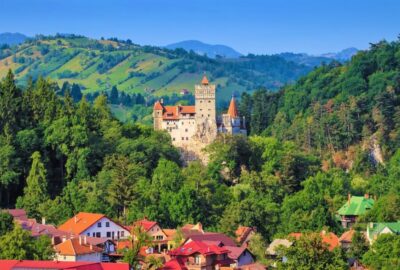
Dracula Castle, Peles Castle & Brasov Old Town
Read our review →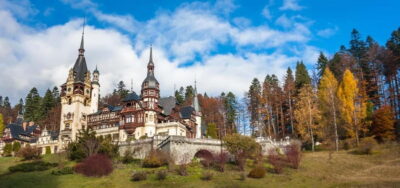
Dracula’s Castle, Peleș Castle & Brașov Day Trip
Read our review →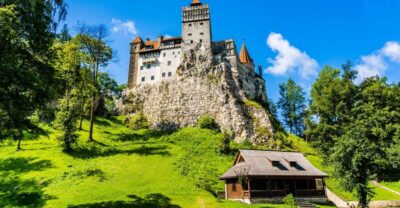
Day Trip to Dracula Castle, Peles Castle & Brașov
Read our review →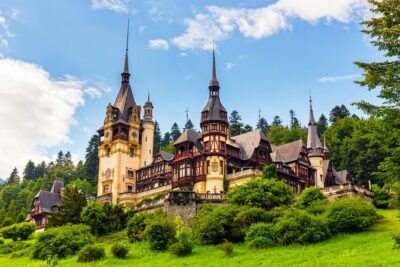
Bucharest to Dracula Castle, Peles Castle and Brasov Guided Tour
Read our review →
Dracula’s Castle, Peles Castle and Brasov Day Trip from Bucharest
Read our review →
Transylvania and Dracula Castle Full Day Tour from Bucharest
Read our review →
Browse the lists this tour appears in