
Reviewed · COMMUNISM & CEAUSESCU TOURS
Bucharest Essential Tour: Old Town, Calea Victoriei & Communism
Bucharest’s story changes block by block, from royal elegance to communist hardship and the lively lanes of Old Town. This 2.5-hour walking tour gives you that full arc, with stops at Revolution Square, Calea Victoriei, the Romanian Athenaeum, and Manuc’s Inn. It is a smart way to get your bearings before exploring alone.
I like the easy central route and the guide’s focus on stories, not just building names. I also like the small maximum group of 12, which leaves room for questions and personal tips. Guides including Stefania, Laura, Dana, Maria, Stefan, and Ioan have been praised for clear storytelling, extra historical photos, patience, and good restaurant advice.
The main consideration is that this is a walking tour with several outdoor stops, so poor weather can affect the schedule. The Romanian Athenaeum is viewed from the outside unless you arrange admission yourself, and food or drinks are not included.
In This Review
- Key points at a glance
- Why this short Bucharest walk works
- Starting near the Romanian Athenaeum
- Carol I, the palace, and Romania’s royal chapter
- Revolution Square and the cost of communist rule
- Calea Victoriei and Bucharest’s grand façades
- Old Town, Vlad Dracula, and the city’s trading past
- What the guides do best
- Price, group size, and practical value
- Who should book this tour?
- Should you book the Bucharest Essential Tour?
- FAQ
- How long is the Bucharest Essential Tour?
- What language is the tour offered in?
- Where does the tour start?
- Where does the tour finish?
- Is admission to the Romanian Athenaeum included?
- What is included in the price?
- How many people can join the tour?
- Is the tour accessible by public transportation?
- What happens if the weather is poor or the tour does not meet its minimum group size?
Key points at a glance
- Romanian Athenaeum: See Bucharest’s most admired concert hall and hear why it matters to the city.
- Revolution Square: Connect royal Romania, communist rule, food rationing, and the bloody events of December 1989.
- Calea Victoriei: Walk the old royal avenue past Belle Époque buildings such as CEC Palace and Grand Hôtel du Boulevard.
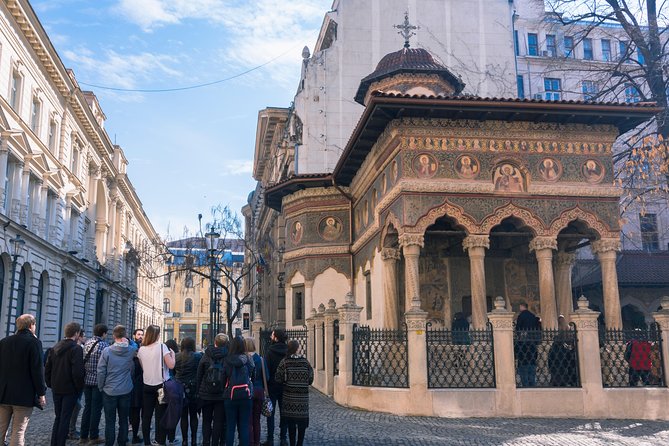
- Old Town finale: Find Vlad Dracula’s former court, Stavropoleos Monastery, Villacrosse Passage, and Manuc’s Inn.
- Personal guidance: Ask for local tips, restaurant ideas, and help with photos from guides such as Laura, Stefania, or Ioan.
- Small group format: The maximum is 12 people, with private personalized arrangements also possible.
Why this short Bucharest walk works
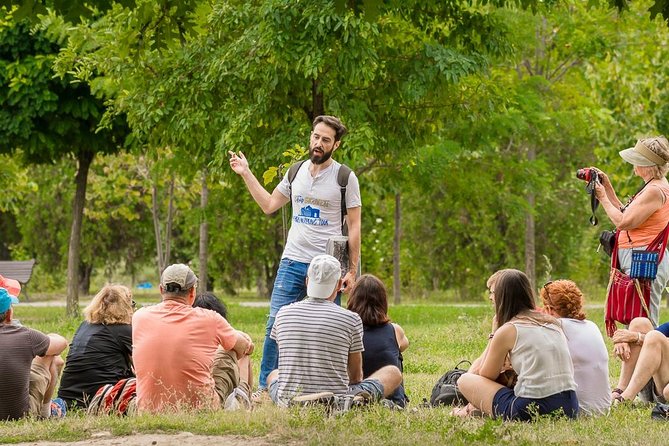
At $24.20 per person, this tour is priced as an affordable introduction rather than a full-day city program. You get two and a half hours with an English-speaking guide, a central route, a Bucharest map, and context that is difficult to gather by simply walking from monument to monument.
The route covers a useful spread of Bucharest. You see royal buildings, national institutions, communist-era political history, and the older commercial quarter. That range matters because Bucharest can seem confusing at first. Its architecture does not tell one simple story, and the guide helps you connect the different periods.
I would book this early in your stay. The guide’s advice can help you decide where to eat, what to visit next, and how to understand the city’s streets. The tour is often booked well ahead, with an average booking lead time of 37 days, so last-minute availability may not always be reliable.
The experience is listed as a group tour with a maximum of 12 people, but its private personalized format also allows a more tailored outing in some cases. One person arranged a private tour after finding they were the only booking that day. That flexibility is worth asking about if you want a quieter pace or have specific interests.
More communism & ceausescu tours in Bucharest:
- The Real tour of Communism
★ 5.0 · 666 reviews - Life under Communism
★ 5.0 · 358 reviews - 3-Hour Guided Tour of Communist Bucharest
★ 4.9 · 303 reviews
Starting near the Romanian Athenaeum
The meeting point is at Strada Benjamin Franklin 8, close to the center and easy to reach by public transport. The first major stop is the Ateneul Roman, or Romanian Athenaeum, where you spend about 15 minutes learning why this concert hall is often treated as Bucharest’s most beautiful building.
The tour does not include admission, so expect an exterior explanation unless you separately arrange entry. That is still useful because the building gives the guide a natural way to discuss Bucharest’s artistic and civic ambitions.
Keep your camera ready here. The itinerary is built around frequent stops and photo opportunities, rather than a nonstop march. That makes the walk easier for most people, especially if you prefer time to look up at façades instead of trying to keep up with a moving group.
Carol I, the palace, and Romania’s royal chapter
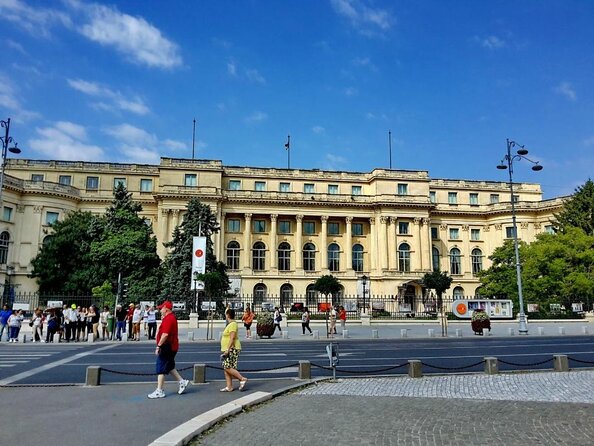
Near the equestrian statue of Carol I, the guide explains the first king of Romania, the former Royal Palace, and the impressive University Library. This 15-minute stop adds a political layer to the architecture around you.
Carol I’s statue is not just a monument to photograph. It introduces the story of Romania’s monarchy and the country’s effort to define itself as a modern European state. The surrounding buildings help you see how power, education, and national identity were expressed in the capital.
This is one of the places where a guide adds real value. A plaque can give you a name and a date, but it cannot easily explain how the monarchy fits into the later history of the city. The tour keeps that connection in view as it moves toward Revolution Square.
Revolution Square and the cost of communist rule
Allow about 30 minutes at Piata Revolutiei, or Revolution Square. This is the emotional center of the tour, where the guide lays out daily life under Nicolae Ceaușescu’s totalitarian government.
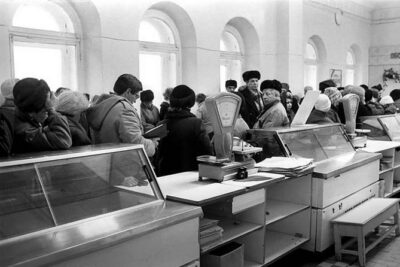
You hear about state control, hunger, food rations, and the way the regime affected ordinary residents. The discussion also includes the government’s claimed achievements, so the story is not reduced to a single slogan. The guide uses images from the period to make the events easier to follow.
The focus then turns to the December 1989 revolution and Ceaușescu’s downfall. Here, Bucharest’s transition from dictatorship to democratic Romania becomes a physical story, tied to the square around you rather than treated as a distant history lesson.
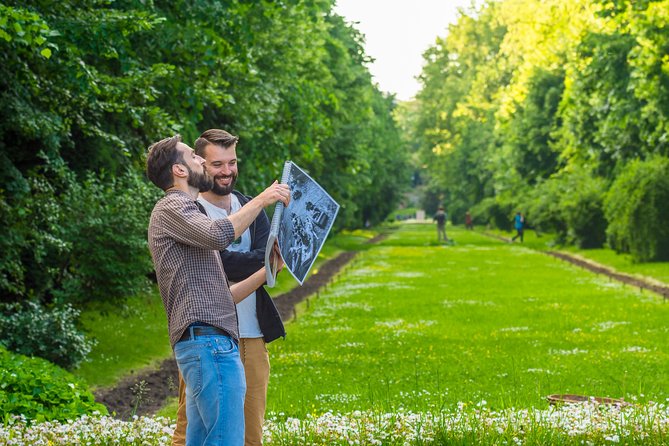
I especially value the use of historical photographs. Several guides have brought extra images, which can help you compare past scenes with the buildings in front of you. Laura has been praised for carrying large photographs and using them to explain people and events. That kind of visual aid is helpful if you do not already know the period.
This stop can be serious and unsettling. If you want only light sightseeing, the subject may feel heavy. If you want to understand modern Romania, though, it is essential. The guide’s role is to explain both the political system and its effect on everyday life.
Same mountains, a completely different day out:
- Bucharest: Dracula’s Castle, Peles Castle, & Brasov Old Town
★ 4.5 · 17,858 reviews - Bucharest: Dracula Castle, Peles Castle & Brasov Old Town
★ 4.6 · 10,891 reviews - Bucharest: Dracula’s Castle, Peleș Castle & Brașov Day Trip
★ 4.5 · 5,919 reviews - Bucharest: Palace of Parliament Tickets and Guide
★ 4.3 · 3,182 reviews
Calea Victoriei and Bucharest’s grand façades
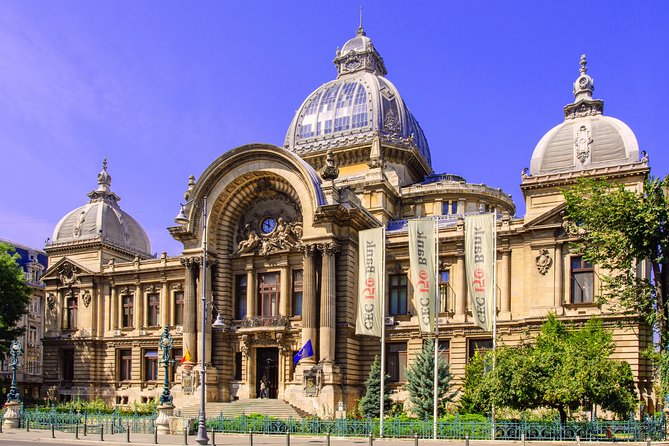
The walk continues along Calea Victoriei, the avenue associated with royal processions and daily strolls by the country’s upper class. You can admire buildings including CEC Palace, Grand Hôtel du Boulevard, and the University Library during roughly 30 minutes on this section.
This is where Bucharest’s old nickname as a city of elegant avenues begins to make sense. The architecture mixes grand European styles with the marks of later political and economic change. You get time to look at the façades, but the guide also explains what the avenue meant socially and politically.
The route is not an architectural survey of every building. It is a focused walk through a few important examples. That keeps the pace manageable, though anyone wanting extensive interior visits or detailed architectural analysis will need a separate tour.
Calea Victoriei is also a good place to ask practical questions. The guides are encouraged to offer advice on what to do after the walk, and several have prepared lists of places to try. One guide even added a stop for treats at a well-known bakery, although you should not assume that every departure includes this.
Old Town, Vlad Dracula, and the city’s trading past
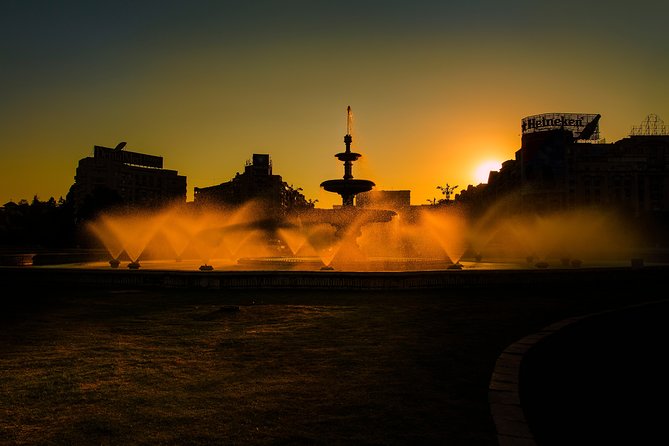
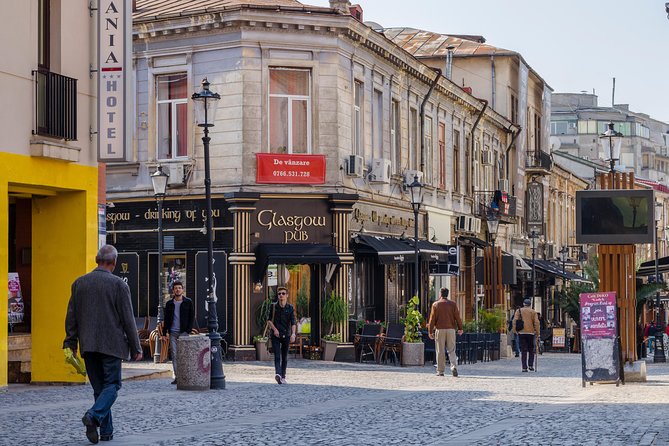
The Old Town section takes about an hour and gives the tour its most varied collection of sights. Here you follow the story of Vlad Dracula and see the remains associated with his former fortress or court.
The Dracula connection is handled as part of Bucharest’s past, not as a separate fantasy attraction. You learn about the city’s most gruesome historical figure and the forgotten traces linked to him. The stop offers a useful reminder that the popular Dracula story and Romania’s actual medieval history are related, but not identical.
Nearby, Manuc’s Inn shows Bucharest as a meeting place between East and West. This former caravanserai was a commercial settlement where merchants could stay and trade. It helps explain how the city developed through movement, commerce, and cultural contact.
The Old Town route also includes the National Bank of Romania, Stavropoleos Monastery, and Villacrosse Passage. Each adds a different note. The bank points to finance and state power, the monastery offers a quieter religious setting, and Villacrosse Passage brings in the city’s café and commercial culture.
The area is lively, but the tour is not simply a pub crawl. You are looking at how Bucharest evolved through its buildings and street plan. You also finish at Hanul lui Manuc, or Manuc’s Inn, on Strada Franceză 62. This is close to Piata Unirii, making it a practical place to continue walking, find food, or connect with public transportation.
What the guides do best
The strongest part of this experience is the human explanation. Stefania is praised for bringing buildings and statues to life, answering detailed questions, and making the city feel personal. Laura is noted for historical photographs, flexibility with walking needs, and extra suggestions for the rest of your visit.
Dana is described as warm, energetic, and able to make the past enjoyable without losing the serious parts. Maria has been praised for explaining both the city’s history and its present-day character. Stefan is known for linking surprising facts and broader context into a clear narrative, while Ioan has been remembered for his friendly manner and willingness to take photographs.
You should not expect every departure to have the same guide, but the repeated strength is clear: the experience depends on storytelling. Ask questions as you go. A small group gives you a better chance to discuss Romania’s monarchy, communism, religion, food, or current city life.
The guides also seem willing to adapt. If you have walking concerns, say so at the start. The route is described as easy, and one guide was especially accommodating about pace and mobility needs. Still, it remains a walking tour with outdoor stops, so comfortable shoes are sensible.
Price, group size, and practical value
The $24.20 cost is fair for a central walking tour lasting around two and a half hours. You are paying for a local English-speaking guide, interpretation at several major sites, a map, and the time saved by having the city’s story arranged in a sensible sequence.
The tour does not include lunch, coffee, tea, or admission to the Romanian Athenaeum. That keeps the price down, but budget separately if you want refreshments or an interior visit. The Old Town ending gives you plenty of options afterward, though the tour itself does not provide a meal stop as a standard inclusion.
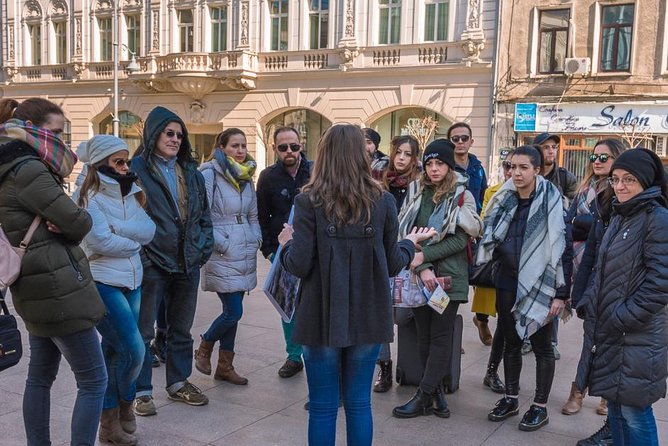
A maximum of 12 people is a useful middle ground. You get more interaction than on a large coach outing, but you may not receive the same level of personal attention as on a fully private tour. If your date has very few bookings, ask whether a private format is possible.
The tour is offered in English and uses a mobile ticket. Confirmation arrives when you book. Service animals are allowed, and the route is near public transportation. Most people can participate, but the operator requires good weather and a minimum number of bookings. If weather or the minimum group size causes cancellation, you are offered another date or a full refund.
Free cancellation is available up to 24 hours before the start time. Cancel later than that, and the amount paid is not refunded. The same 24-hour rule applies to changes.
Who should book this tour?
I would choose this for a first visit to Bucharest, especially if you want history explained in plain language rather than a long list of dates. It suits couples, solo visitors, families with older children, and small groups who want a gentle introduction before exploring the city independently.
It is also a good match if you are interested in the contrast between monarchy and communism. The route makes that shift visible through statues, royal buildings, Revolution Square, and the Old Town’s older commercial quarter.
You may want something else if your priority is entering several museums or landmarks. The tour is mainly outdoors, and the Romanian Athenaeum admission is not included. It also may not suit you if rain or cold would spoil a two-and-a-half-hour walk.
Should you book the Bucharest Essential Tour?
Book it if you want a clear first look at Bucharest’s central story and value a guide who can explain difficult history with warmth and humor. The route covers more than pretty façades: it addresses food shortages, political control, the 1989 revolution, royal Romania, Vlad Dracula, and the city’s trading past.
The best use of this tour is early in your stay. Start with it, note the guide’s restaurant and sightseeing suggestions, then return to the places that catch your interest. At $24.20, it offers a practical introduction without taking up a whole day.
FAQ
How long is the Bucharest Essential Tour?
The tour lasts approximately 2 hours and 30 minutes.
What language is the tour offered in?
The tour is offered in English.
Where does the tour start?
The meeting point is Strada Benjamin Franklin 8, 030167 București, Romania.
Where does the tour finish?
The tour ends at Strada Franceză 62, at Hanul lui Manuc, or Manuc’s Inn, in the Old Town. The location is close to Piata Unirii.
Is admission to the Romanian Athenaeum included?
No. Admission to the Romanian Athenaeum is not included.
What is included in the price?
A tourist map of Bucharest is included. Lunch, coffee, and tea are not included.
How many people can join the tour?
The activity has a maximum of 12 people. A private personalized tour may also be possible in some circumstances.
Is the tour accessible by public transportation?
Yes. The meeting and route areas are near public transportation.
What happens if the weather is poor or the tour does not meet its minimum group size?
You will be offered a different date or experience, or a full refund. Free cancellation is also available if you cancel at least 24 hours before the start time.
Just added around Bucharest
- Village Museum Bucharest Guided Tour★ 5.0 · 6 reviews
- Bucharest: Dealu Mare Winery Private Trip with Wine Tasting★ 4.9 · 6 reviews
- Winery touring & private wine tasting – one day private tour★ 5.0 · 3 reviews
- Transylvania Tour: Dracula’s Castle, Peles Palace & Brasov★ 5.0 · 19 reviews
- Discover Medieval Transylvania Small Group Tour – 7 days★ 5.0 · 4 reviews
- Bucharest Airport Transfer To Constanta Mamaia★ 5.0 · 3 reviews
- Airport Henri Coanda (Otopeni) to Bucharest – Private Transfer – Driver★ 5.0 · 5 reviews
- Gems of Transilvania: Brasov,Sighisoara,Sibiu,Viscri and more★ 5.0 · 6 reviews
Communism & Ceausescu Tours, compared.
Communism in Bucharest – Landmarks, Museum & Communist Appetizers
Read our review →
Museum of Communism Ticket with Communist Coffee
Read our review →
Dinner+Tour at Museum of Communism after closing
Read our review →Browse the lists this tour appears in