
Reviewed · TIMISOARA TOURS
Weekly Guided Tour in English – Tuesday, Thursday, Saturday
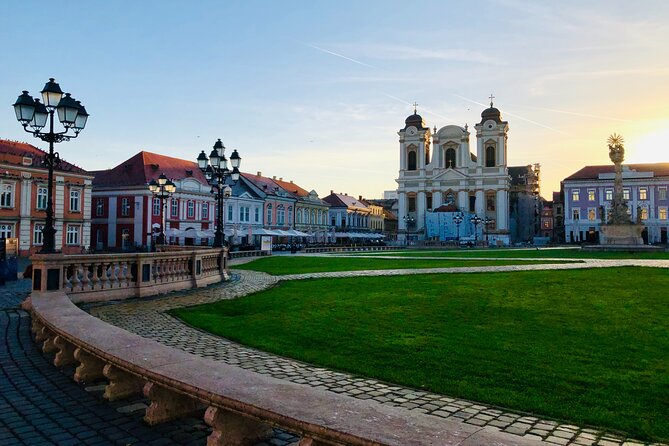
Timisoara’s story comes together on foot, from the last surviving castle of Huniade to the square where Romania’s 1989 Revolution began. This two-hour walk links the city’s medieval, Ottoman, imperial, and communist-era chapters instead of treating the old center as a collection of pretty facades.
I like the small group limit of 15, which gives a guide room to answer questions and keep the pace human. I also like the way the route mixes major sights with less obvious details, including Ottoman-era changes and the statue in Liberty Square. The main consideration is that stops are short, usually 15 to 20 minutes, so this is an orientation walk rather than a detailed interior visit.
In This Review
- Key points at a glance
- A two-hour introduction to Timisoara’s many pasts
- Huniade Castle and the opening chapter
- Liberty Square and the Ottoman chapter
- Saint George Square and a second look at the past
- Maria Theresia Bastion and the former fortress
- Unirii Square, Timisoara’s grandest setting
- Returning to Liberty Square for buildings and a statue
- Victory Square and the Romanian Revolution of 1989
- What $24.14 buys you
- Who should book this city walk?
- Should you book the Timisoara City Tours walk?
- FAQ
- When does the tour start?
- On which days does the tour operate?
- Where is the meeting point?
- How long does the tour last?
- What language is the tour offered in?
- How large is the group?
- Are admission tickets included?
- Is the tour accessible by public transportation?
- What is the cancellation policy?
Key points at a glance
- Seven stops in about two hours: The route covers Huniade Castle, Liberty Square, Saint George Square, Maria Theresia Bastion, Unirii Square, Liberty Square again, and Victory Square.
- A clear historical timeline: You move from castle building and Ottoman rule to the former fortress, imperial architecture, and the 1989 anti-communist Revolution.
- English-speaking guides: Sergiu and Dan are named among the guides, and the tour is designed for explanations, questions, and local recommendations.
- A useful first-day walk: The meeting point at the Palace of Culture puts you in the city center from the start.
- No extra admission costs: The listed stops have no admission charge, so the $24.14 price pays mainly for the guide and the small-group format.
- Easy booking terms: Confirmation comes at booking, and cancellation is free up to 24 hours before the 10:30 a.m. start.
A two-hour introduction to Timisoara’s many pasts
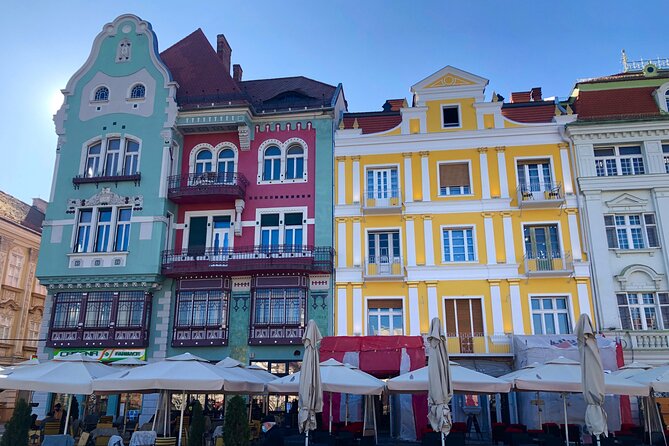
This is the kind of city walk that helps you read Timisoara. The city center has grand squares, church towers, fortress remains, statues, and large public spaces, but the details can blur together without a local guide to explain how each period changed the city.
The route gives you a broad timeline. You begin with Huniade Castle, move into the Ottoman period at Liberty Square and Saint George Square, then reach Maria Theresia Bastion and the later development of the city. Unirii Square brings the grandest architecture, while Victory Square closes the story with twentieth-century events and the Romanian Revolution of 1989.
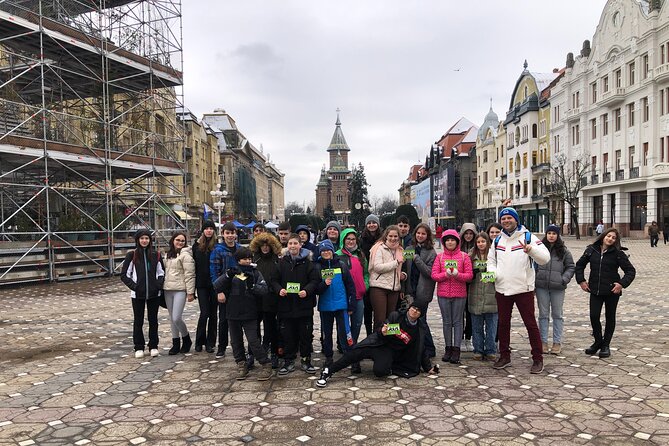
You meet at 10:30 a.m. at the Palace of Culture, on Strada Mărășești 2. That central location is practical if you are staying near the old town or using public transportation. The walk is about two hours, and the group can include no more than 15 people. That is large enough to provide a lively mix of questions, but small enough that a guide should not need to shout across a crowd.
Guides named in the feedback include Sergiu and Dan. Sergiu is praised for setting a good pace, explaining the city clearly, and helping people with practical needs. Dan is also noted for keeping the group involved and offering a lunch recommendation. Those details matter because a city walk is not just about dates. A good guide helps you decide where to eat and what deserves another look later.
A few more Timisoara trips to weigh up
- Timisoara: Guided Walking Tour
★ 4.9 · 38 reviews - Timisoara: Private Walking Tour with a Local Guide
★ 4.5 · 5 reviews - Bucharest: Palace of Parliament Tickets and Guide
★ 4.3 · 3,182 reviews
Huniade Castle and the opening chapter

The first stop is Huniade Castle, with about 15 minutes set aside. The key detail here is that the site has had three different castles built on it. The last one, completed in 1856, is the structure still standing today.
That fact gives the opening stop more weight than a quick photo opportunity. You are not simply looking at an old building. You are hearing how the same place changed through successive building campaigns and periods of Timisoara’s past.
The stop is free, and the short timing keeps the tour moving. I would not expect an extended architectural study or a long indoor visit from this format. Instead, use the castle as the first marker in the city’s timeline, then keep the larger story in mind as you walk toward the central squares.
Liberty Square and the Ottoman chapter
Liberty Square receives two separate parts of the walk, which is useful. The first visit focuses on Ottoman rule: how long Timisoara was under Ottoman control, what happened during that period, and what became of buildings associated with it.
For many people, this is one of the most valuable parts of the tour. Timisoara’s center can look strongly European and imperial at first glance, so it helps to have a guide point out the layers that are less obvious today. The Ottoman period is not treated as a loose side note. It is used to explain why the city developed as it did and how later building campaigns changed the center.
You have roughly 15 minutes here at first, followed by another 20 minutes later in the route. That repeated visit means you do not need to absorb every detail at once. The second stop returns to other buildings and the statue in the middle of the square, giving the space a broader reading.
The drawback is that revisiting the same square may feel repetitive if you prefer a straight-line route. For me, the tradeoff is sensible because Liberty Square has more than one story to tell, and the two visits separate the Ottoman discussion from the later architectural and civic details.
Saint George Square and a second look at the past
The walk continues to Piața Sfântul Gheorghe for about 15 minutes. Here, the guide carries the Ottoman story forward while also discussing Saint George.
This stop appears designed to connect religious and political history. You get another view of what remained from earlier periods, along with the significance of the square’s name and saint. It is a compact stop, so you should expect a focused explanation rather than a full tour of every building around the square.
I like this part of the route because it prevents the Ottoman period from being reduced to one square and one date. You move through more than one place and hear how the era affected the city in different settings. If you enjoy urban history, these links are often more useful than a long list of isolated facts.
Same mountains, a completely different day out:
- The Classic Tour of Timisoara
★ 5.0 · 154 reviews - Timisoara All in One – Walking and Tram Tour
★ 5.0 · 72 reviews - Day trip to Corvin Castle and Sibiu (and back) from Timisoara
★ 5.0 · 30 reviews - Timișoara Highlights – Walking Tour
★ 5.0 · 28 reviews
Maria Theresia Bastion and the former fortress
At Maria Theresia Bastion, the tour shifts forward in time. About 20 minutes are devoted to the only remaining piece of Timisoara’s former fortress, followed by an explanation of what happened after Ottoman rule.
This is a strong physical point in the itinerary. A fortress remnant gives you something solid to picture while the guide explains the city’s later changes. Without that context, a surviving section of wall or bastion can seem disconnected from the broad streets and squares around it. Here, it becomes part of a story about the city after the Ottoman period.
The bastion also helps break up the sequence of squares. You are not spending the entire walk in open civic spaces. The route includes a remaining defensive structure, which adds variety and gives the history a clearer shape.
Again, the admission is free. The 20-minute timing should be enough for an introduction and questions, but not for a detailed examination of every part of the structure. If military architecture is your main interest, you may want to allow extra time afterward to look around on your own, though the tour data does not promise a longer visit.
Unirii Square, Timisoara’s grandest setting
Unirii Square gets about 20 minutes and is presented as the city’s most beautiful square. It is also one of the route’s main architectural stops, with several notable buildings and their own stories.
This is probably the point where the visual side of Timisoara becomes most obvious. You have the pleasure of a large historic square, but the guide gives you reasons to look beyond the overall view. Listen for the explanations of the individual buildings and how they fit into the city’s development.
I value stops like this because they make architecture easier to remember. Instead of walking past a row of attractive facades without context, you get a framework for comparing them. The tour does not list interior admissions here, and the stop is free, so plan on an outdoor explanation rather than a museum-style visit.
Twenty minutes is a good compromise. You have time to take in the square and hear the main points, but not enough to cover every building in depth. If you take photographs, do it early so you are not trying to catch up while the guide is speaking.
Returning to Liberty Square for buildings and a statue
The second Liberty Square stop lasts about 20 minutes. This time, the focus shifts to additional buildings and the statue located at the center of the square.
The repeated stop is worth noting before you book. Some people prefer a route that never doubles back. Others appreciate the chance to understand one public space in stages. Since the first visit covers Ottoman history and the second examines other structures and the central statue, the design has a clear purpose rather than simply retracing steps.
This is also a chance to ask a follow-up question. After hearing about the square’s past earlier in the walk, you may find that the buildings make more sense on the second explanation. The guide can also tie the square back to the other sites you have already seen.
Victory Square and the Romanian Revolution of 1989
The listed final stop is Piata Victoriei, or Victory Square, with about 15 minutes devoted to the twentieth-century square and the Romanian Revolution of 1989 against the communist regime.
This gives the tour a useful ending. You do not finish with architecture alone. You reach a place tied to a major modern political change and hear how Timisoara fits into Romania’s break with communism.
The shorter time here means the Revolution discussion will be an introduction. Still, it is an important subject to include in a city tour. Timisoara is not presented as a city trapped in medieval or imperial history. The route reaches living memory and shows that the city’s story continued into the late twentieth century.
There is one practical detail to clarify before setting out. The tour information names Victory Square as the ending point, while the meeting details say the activity ends back at the meeting point at the Palace of Culture. Ask the provider, Timisoara City Tours, which ending applies on your chosen date. That small check will help if you have a train, meal, or another booking afterward.
What $24.14 buys you
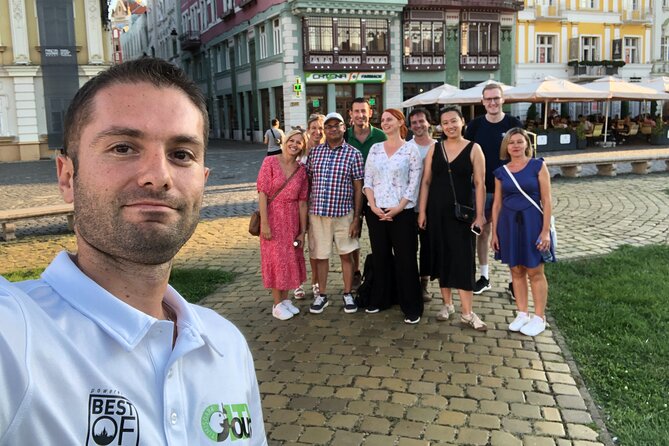
At $24.14 per person, the price is reasonable if you want a guided introduction rather than a self-guided walk. The listed sights do not require admission fees, so the cost mainly covers the professional English-speaking guide, the planning of the route, and the small-group setting.
You are paying for interpretation, not tickets. That distinction matters. If you only want to see the squares and take photographs, you can walk through much of the center on your own. If you want someone to explain Ottoman rule, the fortress remains, the buildings around Unirii Square, and the 1989 Revolution in one connected route, the fee offers better value.
The group cap of 15 improves that value. A guide can keep the party together without making the walk feel like a procession. You also have a better chance of asking about a building, a statue, or a lunch stop.
The tour runs on Tuesday, Thursday, and Saturday, starting at 10:30 a.m. That schedule gives you useful options, but it is not a daily tour. Book ahead if your time in Timisoara is fixed. The average booking lead time is eight days, so I would not assume a last-minute place during a busy visit.
Who should book this city walk?
I would choose this tour for a first visit to Timisoara, especially if I had only a day or two to get oriented. The route covers the central landmarks and gives you a timeline you can use for independent exploring afterward.
It also suits visitors who enjoy history but do not want a formal museum lecture. The guide moves between squares, a castle, a bastion, statues, and modern political history. The short stops keep the pace active.
This is a good fit for solo visitors and couples who want company without joining a huge group. It can also work for families, since the route changes location often, though the amount of historical explanation may suit older children better than very young ones.
You should think twice if you want extensive time inside buildings, a very slow photography walk, or a specialist tour devoted only to architecture, military history, or the Revolution. This experience gives you a broad city story in two hours, not an in-depth visit to each site.
The practical conditions are friendly. Confirmation is issued at booking, the tour is near public transportation, service animals are allowed, and most people can participate. Souvenirs and personal expenses are not included. Cancellation is free up to 24 hours before the local start time, but changes or cancellations inside that window are not accepted for a refund.
Should you book the Timisoara City Tours walk?
Book it if you want a clear, efficient introduction to Timisoara with an English-speaking guide and a group no larger than 15. The strongest reasons are the connected historical story, the repeated but purposeful look at Liberty Square, and the inclusion of the 1989 Revolution alongside older landmarks.
The $24.14 cost makes sense when you value explanation and local direction. Sergiu’s careful pacing and practical help, along with Dan’s local lunch suggestion and effort to keep the group involved, suggest a guide-led experience with useful human touches.
Just keep your expectations in line. You will see many important places, but each receives only 15 to 20 minutes. Confirm the final meeting location because the details give both Victory Square and the Palace of Culture as the endpoint. If that suits your schedule, this is a strong first walk through Timisoara.
FAQ
When does the tour start?
The tour starts at 10:30 a.m.
On which days does the tour operate?
It operates weekly on Tuesday, Thursday, and Saturday.
Where is the meeting point?
The listed meeting point is the Palace of Culture, Strada Mărășești 2, Timișoara 050104, Romania.
How long does the tour last?
The tour lasts approximately two hours.
What language is the tour offered in?
The tour is offered in English and includes a professional English-speaking guide.
How large is the group?
The group has a maximum of 15 travelers.
Are admission tickets included?
The listed stops have no admission charge, and the tour does not list separate entrance tickets. Souvenirs and personal expenses are not included.
Is the tour accessible by public transportation?
Yes. The meeting point is near public transportation.
What is the cancellation policy?
You can cancel for a full refund up to 24 hours before the local start time. Cancellations or changes made less than 24 hours before the start are not accepted for a refund.
Just added around Timisoara
- Bite your way through Timisoara – Timisoara’s Street Food Tour★ 5.0 · 14 reviews
- The Grand Tour of Communist Ages at Timisoara★ 5.0 · 17 reviews
- The Jewish Heritage Tour of Timisoara★ 5.0 · 9 reviews
- Timisoara Downtown Dream Tour★ 5.0 · 5 reviews
- Ecumenical Tour of Timisoara★ 5.0 · 15 reviews
- Nera Gorge National Park – Private Day Tour from Timisoara★ 4.5 · 4 reviews
- One Day in Transylvania – Departure from Timisoara★ 5.0 · 16 reviews
- Day Trip to Turda Salt Mine and Corvin Castle from Timisoara★ 5.0 · 10 reviews
Timisoara Tours, compared.
Day trip to Corvin Castle and Sibiu (and back) from Timisoara
Read our review →


One Day in Transylvania – Departure from Timisoara
Read our review →
Browse the lists this tour appears in