
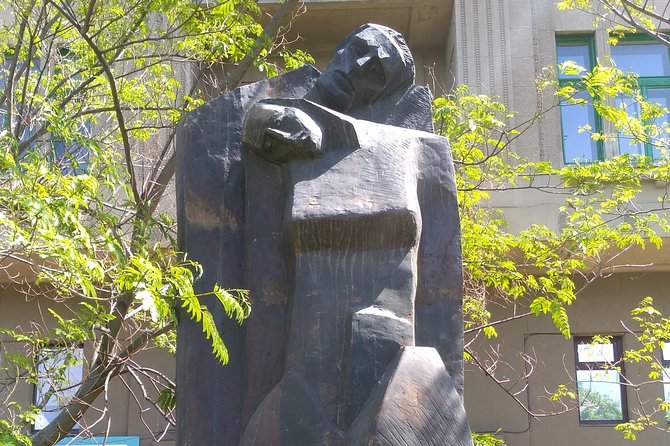
Reviewed · COMMUNISM & CEAUSESCU TOURS
The Grand Tour of Communist Ages at Timisoara
Timisoara’s communist past is not locked away in a single museum. It is spread through housing districts, church steps, tram routes, public squares, and ordinary household objects. This tour connects those pieces, then follows the city’s road to the 1989 Revolution.
I like the small maximum of 10 people, which gives you room to ask questions, and I like the practical vehicle transport between sites. You cover more ground than you could on foot. Guides Dan and Ludovic are especially strong on the political story and on the everyday realities of the period.
The main consideration is the tour’s subject. This is not a light sightseeing ride. You will hear about surveillance, shortages, political control, and people killed during the Revolution. Also, the advertised price of $66.08 is fair for a private-feeling small group, but it is more than a basic walking tour.
In This Review
- Key points to know before booking
- Why Timisoara’s communist story works best as a moving tour
- Șagului: reading communist planning in an ordinary neighborhood
- Muzeul Consumatorului Comunist: communism through household objects
- The Reformed Church: where the December 1989 revolt began
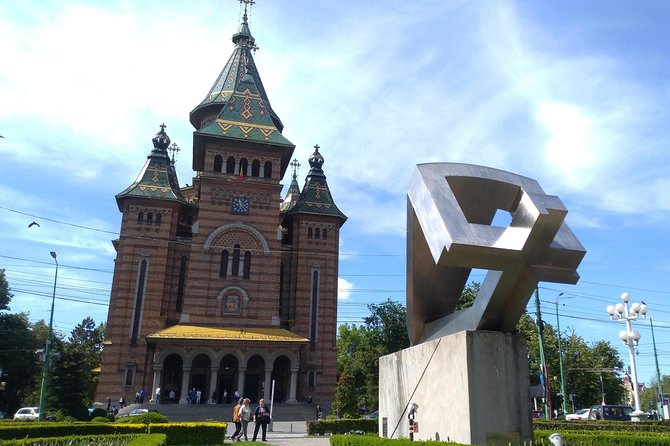
- Timisoara Orthodox Cathedral: bullet holes and the cost of protest
- Piața Victoriei: from Opera Square to Victory Square
- What the guide adds to the experience
- Price, pace, and practical value
- Who will get the most from this Timisoara tour
- Should you book it?
- FAQ
- How long does the Grand Tour of Communist Ages last?
- What time does the tour begin?
- Where does the tour start?
- Where does the tour end?
- What language is the tour offered in?
- How many people can join the tour?
- Does the tour use transportation between sites?
- Is admission to the listed stops included?
- Is the tour suitable for most people?
- Can I cancel for a full refund?
Key points to know before booking
- Start with everyday communist life in Șagului, a residential district that shows how the system shaped ordinary neighborhoods.
- Handle Romanian-made household objects at the Muzeul Consumatorului Comunist, a private collection that makes the period feel personal.
- Follow the first moments of the 1989 uprising at the Reformed Church, where a protest spread into open resistance.
- See bullet holes at the Orthodox Cathedral and Piața Victoriei, physical traces of the violence that ended the regime.
- Travel between at least eight communist-era sights by vehicle, making this more efficient than a walking-only history tour.
- Expect a serious, question-friendly guide, with Dan and Ludovic praised for clear explanations and strong command of Romanian history.
Why Timisoara’s communist story works best as a moving tour
I like this experience because it treats communism as more than a political chapter. You see the places where people lived, shopped, worshiped, protested, and died. That range matters. A lecture can explain the Communist Party, but a neighborhood and a bullet-marked building show what the system felt like on the ground.
The tour lasts about three to four hours and begins at 3:00 pm. It starts at the Three Holy Hierarchs Metropolitan Cathedral on Bulevardul Regele Ferdinand I and ends at Piața Victoriei. The route is designed to move through several parts of Timisoara rather than keep you in the historic center.
That format saves your feet and your time. Timisoara is pleasant to walk, but the communist-era story is not confined to postcard streets. The vehicle lets you reach Șagului and then return to the central Revolution sites without spending much of the afternoon navigating between them.
The group limit of 10 is another real advantage. A topic this detailed works better when you can ask why the regime gained power, how daily life changed, or what happened in December 1989. Dan is described as thorough and ready for questions, while Ludovic is praised for making the period clear and connecting the sites in a logical order.
More communism & ceausescu tours in Timisoara:
- Timisoara: Grand Communism Tour
★ 4.9 · 13 reviews - The Real tour of Communism
★ 5.0 · 666 reviews - Life under Communism
★ 5.0 · 358 reviews
Șagului: reading communist planning in an ordinary neighborhood
The first major stop is Șagului, where you spend about two hours. This is the longest part of the experience, and it gives the tour its strongest sense of place.
Rather than rushing from monument to monument, you spend time looking at a neighborhood shaped by the communist period. The focus is on how people lived during those years. That can include the physical setting of a planned residential district and the wider social conditions that shaped daily routines.
The value here is ordinary detail. Political history often becomes a list of leaders and dates. Șagului shifts the focus to housing and community life. You begin to understand that communism was not only something announced from government offices. It reached into where people lived and how the city was organized.
This stop also gives you time to ask questions. If you have read about Nicolae Ceausescu but are less clear about what his policies meant for families, workers, or young people, this is a good place to ask. The long visit suggests that the guide will not treat the neighborhood as a quick photo stop.
There is one practical point to keep in mind: two hours in a residential area may feel slow if you want a rapid list of famous sights. I see that as a benefit for anyone who wants context, but less so for someone interested only in central Timisoara landmarks.
Muzeul Consumatorului Comunist: communism through household objects
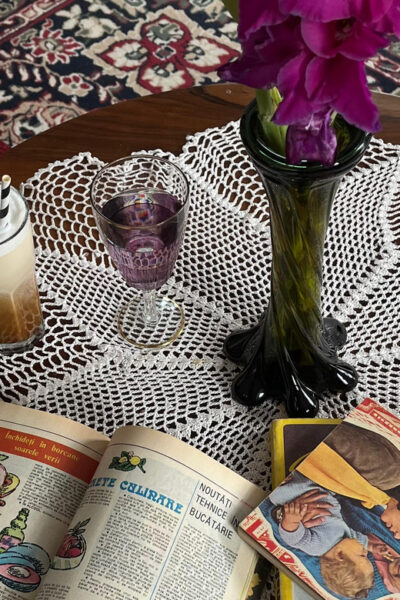
The Muzeul Consumatorului Comunist, or Communist Consumer Museum, takes about 30 minutes. Admission is included, and the collection is a private group of objects made in Romania during the communist era.
This is one of the tour’s most memorable ideas. Household items can explain a period in a way that official buildings often cannot. They show what was produced, what people used, and how material life changed under the regime.
The visit also covers the beginning of communist rule in Romania. You learn how the Communist Party was installed and how its power developed. That political introduction gives the objects a useful frame. Instead of seeing them as old curiosities, you can consider what they reveal about industry, consumption, state control, and ordinary expectations.
I would pay close attention here if you are visiting with a teenager or an adult who grew up outside Romania. One review describes joining the tour so a daughter raised abroad could understand the world her parent knew. The parent also learned new information because the regime had distorted reality during their youth. That is an important warning: personal memories are valuable, but they may not tell the whole story.
The museum is short, so do not expect a full-day museum visit. Its strength is the combination of objects and explanation. The guide helps connect a toaster, appliance, toy, or other Romanian-made item to the larger story of scarcity, state production, and political control.
The Reformed Church: where the December 1989 revolt began
The Reformed Church is scheduled for about 15 minutes, but its importance is much greater than the clock suggests. This is the place tied to the first events of December 15 and 16, 1989, when resistance in Timisoara began to gather force.
The guide explains how the protest grew around the church. One striking detail concerns the afternoon of December 16, when a young man stopped a tram and a friend climbed aboard to shout a call for Ceausescu to leave power. That small act captures the sudden change from private fear to public defiance.
You do not need a large monument to understand a revolution. Here, a church, a tram, and a few brave decisions become part of the story. The stop helps explain why Timisoara became the first Romanian city to break openly with the communist regime.
The visit is brief, so listen closely. This is a stop where the guide’s storytelling matters more than the amount of time spent on site. Dan and Ludovic are both praised for explaining the sequence of events and the wider political setting, which is useful because the 1989 Revolution can otherwise seem to erupt without warning.
Same mountains, a completely different day out:
- The Classic Tour of Timisoara
★ 5.0 · 154 reviews - Weekly Guided Tour in English – Tuesday, Thursday, Saturday
★ 5.0 · 84 reviews - Timisoara All in One – Walking and Tram Tour
★ 5.0 · 72 reviews - Timisoara: Guided Walking Tour
★ 4.9 · 38 reviews
Timisoara Orthodox Cathedral: bullet holes and the cost of protest
The Timisoara Orthodox Cathedral is another short stop, about 10 minutes. Here, the subject turns from protest to violence.
Several young people were killed while protesting on the cathedral steps after the Army opened fire without warning. You can see some of the bullet holes. Those marks give the Revolution a physical presence that a timeline cannot match.
I find this kind of stop valuable because it asks you to pause. The cathedral is not merely a grand religious building in the city center. It is also a place where people gathered and where the government’s response became deadly.
The limited time is appropriate for the site, but the subject is heavy. You will want to give the guide your full attention and allow a little quiet time afterward. This is not a stop built around entering a grand interior or taking a scenic photograph. It is about recognizing what happened outside.
Piața Victoriei: from Opera Square to Victory Square
The tour ends at Piața Victoriei, where you spend about 10 minutes. Before the Revolution, the square was known as Opera Square. After Timisoara was declared the first city in Romania free of communism on December 20, it became Victory Square.
The guide explains how roughly 150,000 people gathered there and shouted victory. That scale helps you understand why the square became such a powerful symbol. The tour also points out bullet holes on buildings around the square, adding another visible trace of the fighting.
Ending here makes good sense. The route moves from the structures of communist life to the places where the system began to crack, then finishes at the public space where Timisoara claimed freedom. Your tour concludes in a central area, so you can continue exploring Timisoara afterward.
Piața Victoriei is also a useful place to reflect on the difference between a city’s official name and its lived memory. Opera Square belonged to the earlier civic identity. Victory Square records the political turning point of December 1989.
What the guide adds to the experience
The guide is the heart of this tour. The stops are meaningful, but their connection is not always obvious if you visit alone. You need someone to explain how the Communist Party took power, how its rule developed, how daily life was shaped, and why the revolt began in Timisoara.
Dan is described as an excellent historian who can answer detailed questions. Ludovic is praised for being passionate, highly educated, and for arranging the city route well. Since the guide assigned to your departure may vary, you should view those names as examples of the people associated with the experience, not a guarantee of who will lead your group.
The personal angle is especially useful. A person who lived through communism may remember shortages or fear, but the regime also controlled information and reshaped public memory. The tour can help you place family stories beside a broader account of Romanian politics.
I would come ready to ask questions. Useful subjects include how the Communist Party took control, how the regime affected ordinary life, why Timisoara became the starting point of the Revolution, and what happened during the days of December 1989. A small group makes that exchange easier than a large bus tour.
Price, pace, and practical value
At $66.08 per person, this is not the cheapest way to see Timisoara. Still, the price includes a three to four hour guided experience, vehicle transport between locations, and a group capped at 10 people. The private consumer museum is also part of the route, with no separate admission charge listed for the stops.
I see the price as reasonable if you value interpretation and efficiency. You are not paying just to be driven around. You are paying for a connected explanation of a difficult subject, plus access to places that make the story concrete.
The tour is offered in English and is booked, on average, 11 days ahead. That does not guarantee that every date will sell out, but it is a good reason to reserve before arriving in Timisoara, especially if your schedule is tight. Group discounts are available, which may improve the value if you are booking with family or friends.
Most people can participate, and service animals are allowed. The route is near public transportation, although the experience itself uses a comfortable vehicle between locations. Confirmation is sent within 48 hours of booking, subject to availability.
The tour starts at 3:00 pm at the Three Holy Hierarchs Metropolitan Cathedral and ends at Piața Victoriei. Check the exact meeting point carefully because the start and the cathedral stop have closely related names. You should also arrive early enough to identify the correct cathedral before the group leaves.
Free cancellation is available up to 24 hours before the start time for a full refund. Changes or cancellations made less than 24 hours before the start are not accepted for a refund.
Who will get the most from this Timisoara tour
I would recommend it first to anyone with a serious interest in Romanian history, communism, or the 1989 Revolution. It is also a strong choice for a parent who wants to explain the period to a teenager or adult child raised outside Romania.
The tour suits you if you prefer places with a clear story over a long list of standard attractions. It also works well if you have only a short stay in Timisoara and want to reach several sites without spending the whole afternoon walking between them.
You may want a different activity if you are looking for architecture, food, nightlife, or a relaxed introduction to the city. The subject is serious, and several stops focus on death and political violence. It is best paired with time afterward for a meal, a quiet walk, or another less demanding activity.
The tour is also a good choice for repeat visitors. If you have already seen Timisoara’s central squares, this route adds another layer to familiar places. Piața Victoriei becomes more than a central meeting point, and the cathedral area becomes part of the story of Romania’s political change.
Should you book it?
Book this tour if you want to understand how Timisoara moved from communist control to open revolt. The strongest features are the long visit in Șagului, the unusual household collection, the tram story at the Reformed Church, and the bullet holes at the cathedral and Piața Victoriei.
I would especially choose it for the small group and the guides’ clear, question-friendly approach. Skip it only if your main goal is a light city tour or if three to four hours on a difficult political subject sounds like too much. For an English-speaking visitor who wants the real story behind Timisoara’s Revolution, the $66.08 price offers solid value.
FAQ
How long does the Grand Tour of Communist Ages last?
The experience lasts approximately three to four hours.
What time does the tour begin?
The tour begins at 3:00 pm.
Where does the tour start?
It starts at the Three Holy Hierarchs Metropolitan Cathedral on Bulevardul Regele Ferdinand I in Timisoara, Romania.
Where does the tour end?
The tour ends at Piața Victoriei.
What language is the tour offered in?
The tour is offered in English.
How many people can join the tour?
The maximum group size is 10 people.
Does the tour use transportation between sites?
Yes. You travel between locations in a comfortable vehicle.
Is admission to the listed stops included?
Admission is listed as free for the stops provided, including the Muzeul Consumatorului Comunist.
Is the tour suitable for most people?
Most people can participate. Service animals are allowed, and the tour is near public transportation.
Can I cancel for a full refund?
Yes. You can cancel at least 24 hours before the local start time for a full refund. Cancellations or changes made less than 24 hours before the start are not accepted for a refund.
Just added around Timisoara
- Bite your way through Timisoara – Timisoara’s Street Food Tour★ 5.0 · 14 reviews
- The Jewish Heritage Tour of Timisoara★ 5.0 · 9 reviews
- Timisoara Downtown Dream Tour★ 5.0 · 5 reviews
- Ecumenical Tour of Timisoara★ 5.0 · 15 reviews
- Nera Gorge National Park – Private Day Tour from Timisoara★ 4.5 · 4 reviews
- One Day in Transylvania – Departure from Timisoara★ 5.0 · 16 reviews
- Day Trip to Turda Salt Mine and Corvin Castle from Timisoara★ 5.0 · 10 reviews
- Timisoara: Private Walking Tour with a Local Guide★ 4.5 · 5 reviews
Communism & Ceausescu Tours, compared.
Communism in Bucharest – Landmarks, Museum & Communist Appetizers
Read our review →
Museum of Communism Ticket with Communist Coffee
Read our review →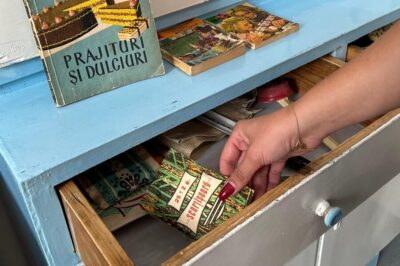
Dinner+Tour at Museum of Communism after closing
Read our review →Browse the lists this tour appears in