
Reviewed · WALKING TOURS
Timișoara Highlights – Walking Tour
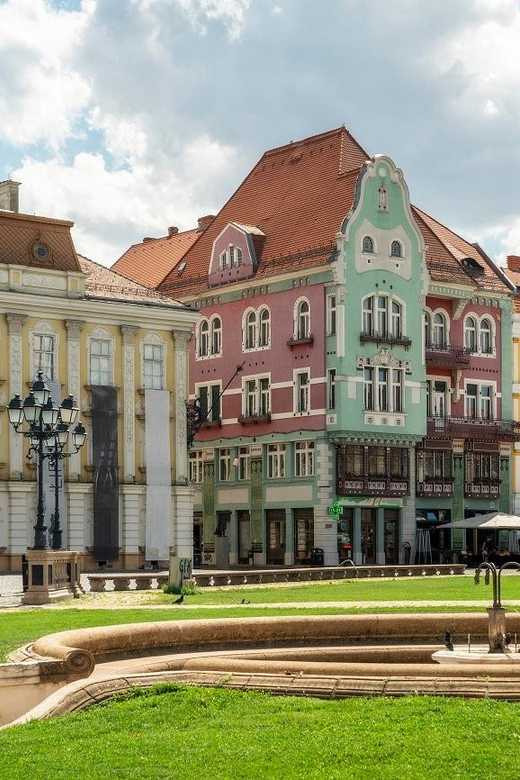
Timișoara’s center is a history lesson you can walk through, with Ottoman rule, Habsburg rebuilding, Jewish heritage, and the 1989 Revolution all packed into a manageable route. Guide Armand Iftode Mihai brings these chapters together with facts, local legends, and a healthy bit of humor.
I like the tour’s clear route from the city’s oldest building to Victory Square, and I like that it focuses on places you can see without adding museum tickets. The private format also gives you room to ask questions, including the sort of practical questions that help you enjoy the rest of your stay.
The main consideration is simple: two hours on foot is still two hours on foot. Older people and very young children should be comfortable walking, and comfortable shoes matter. The tour is wheelchair accessible, but anyone with limited stamina should think about the pace before booking.
In This Review
- Key points to know before you book
- Why this compact Timișoara walk works
- Starting at Timișoara’s oldest building
- Liberty Square and the Ottoman chapter
- Saint George Square and the human side of history
- Old city walls and the Habsburg era
- Union Square and the synagogue
- Returning to Liberty Square, then reaching Victory Square
- Armand’s guiding style and language options
- What $35 buys you in practical terms
- Who will enjoy this walk most
- Should you book Timișoara Highlights?
- FAQ
- How long does the Timișoara Highlights Walking Tour last?
- What language is the tour offered in?
- Is this a private tour?
- Does the price include museum admission?
- Where does the tour visit?
- Is the tour suitable for children?
- Can I cancel or pay later?
Key points to know before you book
- Armand leads in English, German, or Romanian, with a style that mixes solid facts and local stories.
- The route covers several eras, from Ottoman Timișoara to the Habsburg period and the 1989 Revolution.
- You begin at the city’s oldest building and finish in Victory Square, giving the walk a strong sense of direction.
- No museums are entered, so the $35 price includes the city-center walk without extra admission costs.
- Families can fit comfortably into the experience, with Armand praised for answering children’s questions in a clear, age-appropriate way.
- The private-group format is useful if you want to pause, ask questions, or set the tone for your own party.
Why this compact Timișoara walk works
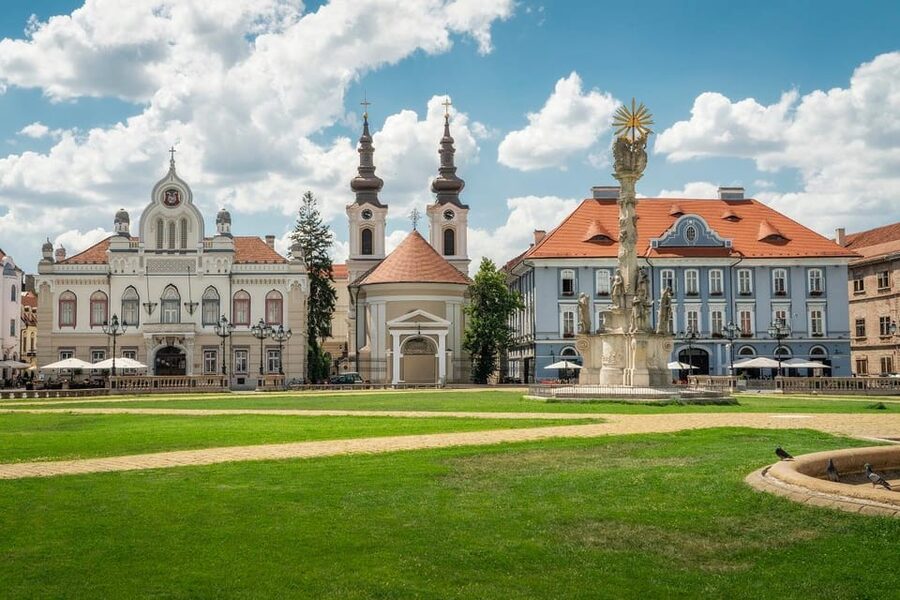
Timișoara can look easy to understand at first glance. The central squares are close together, the streets are pleasant for walking, and the main sights do not require a full day to visit. But the city’s story is layered. Different rulers, communities, and languages have left marks beside one another.
This tour gives you a framework for reading those marks. You move through the old center while hearing how Ottoman, Habsburg, Romanian, German, Hungarian, Serbian, and Jewish influences shaped the city over roughly seven centuries. The point is not simply to collect pretty squares. It is to understand why Timișoara feels culturally mixed and why its past cannot be reduced to one national story.
The guide’s role matters here. Armand is described as using both historical facts and local legends, which is a good fit for a walking tour. Dates and rulers can blur together. A story about a person, a building, or an unusual local custom often gives the information a hook.
The tour is also designed as a private experience. That usually means your group can ask more questions than it could on a large scheduled walk, though the supplied information does not specify the maximum group size. If you are curious about architecture, language, politics, or daily life, you can use the two hours to steer some of the conversation in that direction.
A few more Timisoara trips to weigh up
- Timisoara All in One – Walking and Tram Tour
★ 5.0 · 72 reviews - Timisoara: Guided Walking Tour
★ 4.9 · 38 reviews - Timisoara: Classic Walking Tour
★ 5.0 · 26 reviews
Starting at Timișoara’s oldest building
The meeting point is the city’s oldest building, which gives the walk an immediate sense of place. You do not begin with a long introduction in an anonymous square. You begin beside a physical survivor from Timișoara’s early story.
The building itself is important, but the larger value is the starting context. From here, Armand can introduce the city as a meeting point of cultures and changing powers. That makes the later stops easier to follow. Instead of hearing isolated facts about several squares, you get a line running through the whole walk.
The opening section is likely best for getting your bearings. You will hear about the languages used in Timișoara over the past 700 years and the groups that passed through or settled here. The tour description opens with greetings in German, Romanian, Hungarian, and Croatian, a small but effective way to show how many cultural voices belong to the city’s story.
Expect the guide to explain rather than rush. Armand’s approach, based on the supplied information, includes answering questions from both adults and children. One particularly useful point is that a 13-year-old was able to ask questions and receive answers suited to his age. That suggests families do not need to worry that the tour will become a lecture aimed only at specialists.
Liberty Square and the Ottoman chapter
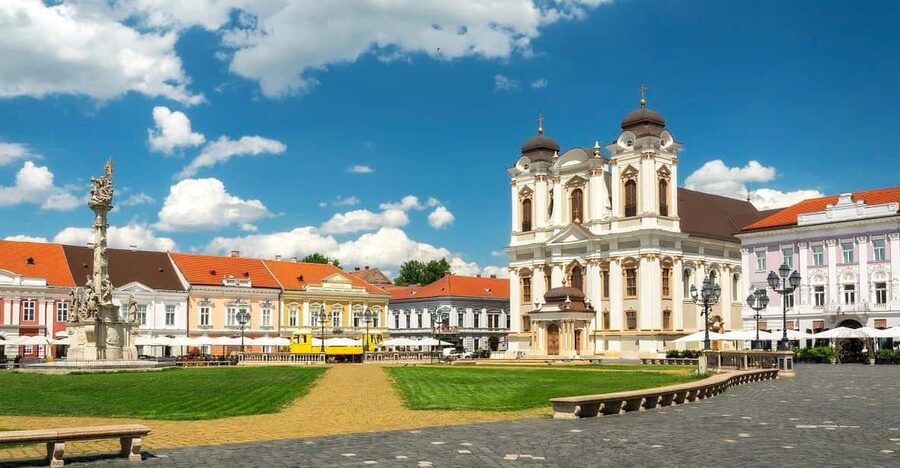
The short walk to Liberty Square introduces what Timișoara was like during the Ottoman period. This is one of the tour’s strongest choices because it places a major political era in a visible public setting rather than treating it as a footnote.
You can expect an explanation of the Ottoman presence and its effect on the city. The supplied details do not specify every building or story covered here, so you should not book expecting a fixed list of interior visits. The emphasis is on the square, the surrounding center, and the way the guide connects the visible setting to past conquests and changes in power.
Liberty Square also returns later in the route, after the synagogue visit. That repeated appearance can help you see the place in two ways: first as part of the Ottoman story, and later as a link in the walk toward the 1989 Revolution. A good guide can make a familiar square feel different once you know what happened around it.
The drawback is that this is an outdoor history experience. You will not enter museums, and no extra tickets are needed. That keeps the price clean, but if you want artifacts, detailed exhibitions, or long indoor explanations, this is not the right format.
Saint George Square and the human side of history
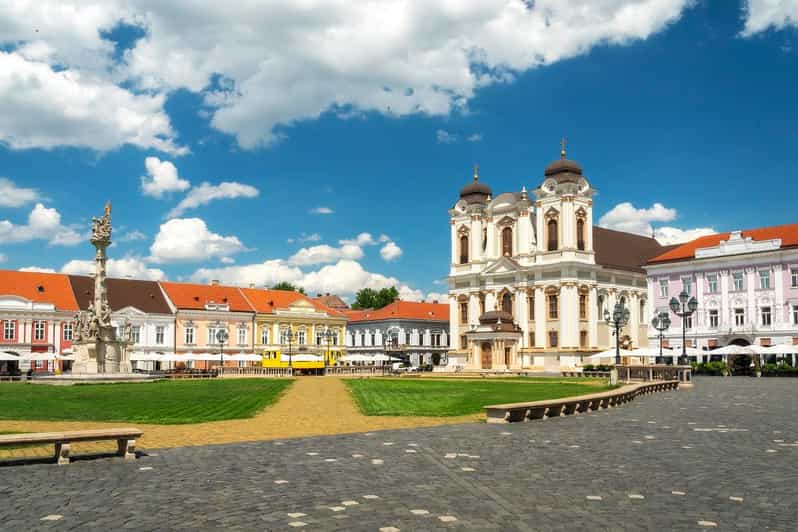
Saint George Square is used for fun facts and stories about personalities. This section should provide a welcome change of pace after the broader discussion of empires and conquests.
I like this kind of stop because it gives a city tour a human scale. Political history tells you who ruled. Personal stories help you understand how a city was lived in, remembered, and talked about. The precise personalities and anecdotes are not listed in the tour details, so the content may vary with Armand’s presentation and your questions.
The reports of his style point to a balance between information and humor. That matters during a two-hour walk. A guide who only recites dates can lose you quickly, while a guide who tells only entertaining stories may leave you without a useful picture of the city. Here, the stated aim is to combine facts, legends, and personalities.
This is also a good place to ask questions about the city’s mixed culture. You can ask Armand to explain how different communities fit into the wider story, or to clarify a name, language, or period that catches your attention. Since the group is private, your questions do not have to wait behind a large crowd.
Same mountains, a completely different day out:
- The Classic Tour of Timisoara
★ 5.0 · 154 reviews - Weekly Guided Tour in English – Tuesday, Thursday, Saturday
★ 5.0 · 84 reviews - Day trip to Corvin Castle and Sibiu (and back) from Timisoara
★ 5.0 · 30 reviews - Danube Gorge & Banat Waterfalls
★ 5.0 · 27 reviews
Old city walls and the Habsburg era
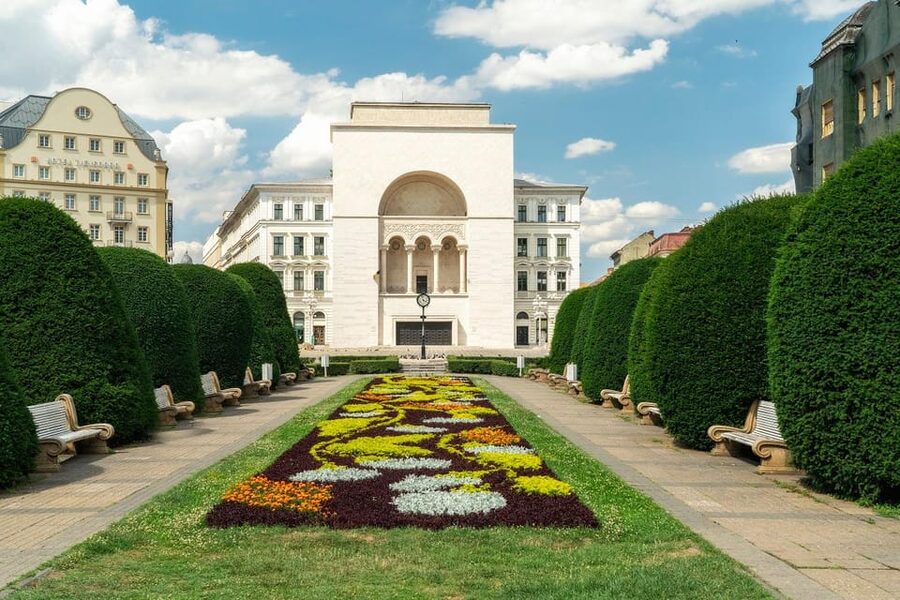
The route then reaches the old city walls and the Habsburg period. This is where the tour shifts from conquest to rebuilding and urban change.
Old defenses are useful teaching tools. They show that the city was not always an open collection of squares and streets. Walls define an earlier idea of Timișoara, one shaped by military needs and imperial control. At this point, you can connect the physical remains with the explanation of what changed under the Habsburgs.
The tour does not promise entry into fortifications or museums. You will see the old walls as part of the city-center walk. That is enough for many people, especially if your main goal is a readable introduction rather than a specialist study of military architecture.
The Habsburg section should also help explain why Timișoara has such a broad cultural frame. The city’s past includes more than a succession of rulers. It includes changes in administration, population, language, architecture, and public life. Armand’s ability to explain these links is one of the reasons this tour works better than simply walking from one photo stop to another.
Union Square and the synagogue
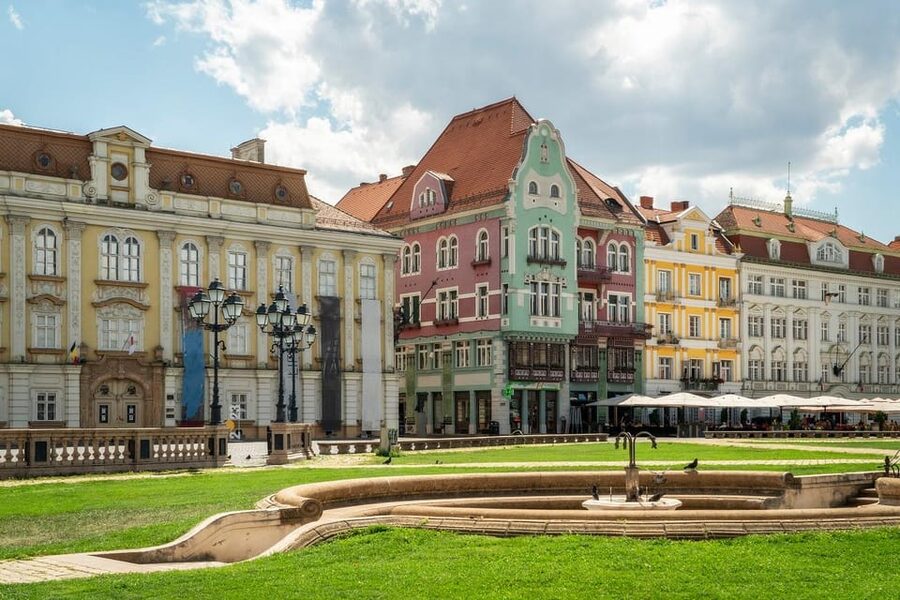
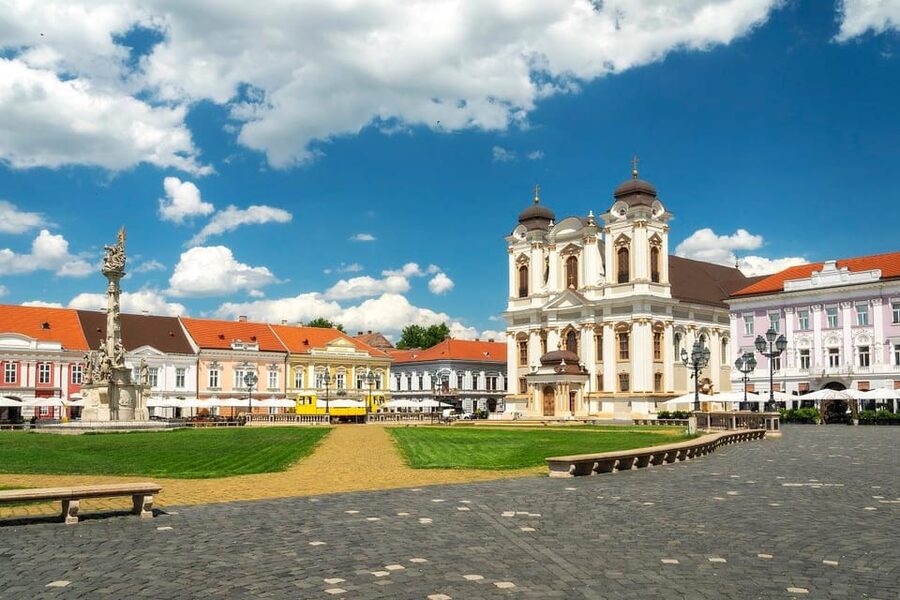
A short walk brings you to Union Square, one of the central spaces in the tour. The square gives you another chance to see how the city’s different eras sit close together.
The route also includes the synagogue. This is a valuable inclusion because Jewish heritage can be missed on a general city walk, especially when the focus is placed only on imperial and revolutionary events. The synagogue adds a community story to the larger account of Timișoara.
The information provided does not say that you enter the synagogue, so you should expect to see it from the walking route rather than take an interior visit. That distinction is worth keeping in mind when comparing this tour with a specialized religious or architectural tour.
For me, the synagogue stop strengthens the tour’s central idea: Timișoara has been shaped by several communities, not just by whichever government held power at a particular moment. You get a more complete sense of the city when political history and cultural history are presented together.
Returning to Liberty Square, then reaching Victory Square
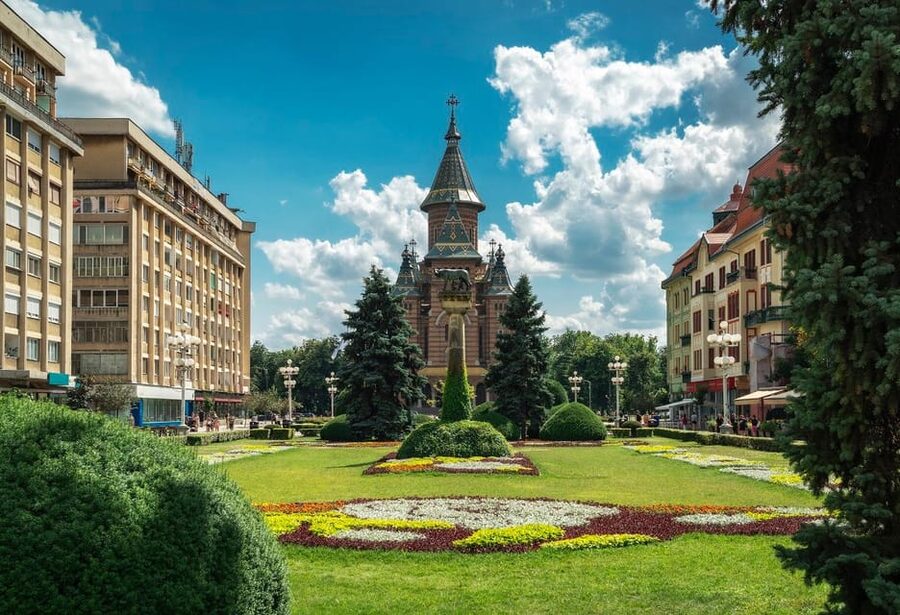
After Union Square and the synagogue, the route returns to Liberty Square before moving to Victory Square. The return is not wasted ground. It brings the Ottoman-era discussion back into the wider story and helps the walk feel like a connected circuit rather than a string of unrelated stops.
Victory Square provides the final major chapter: the 1989 Revolution. This is likely the most emotionally weighty part of the tour. The subject is recent enough to remain vivid, and it explains an important turning point in Romania’s modern history.
The guide’s treatment of the Revolution has received especially strong praise. Armand’s stories about 1989 were singled out as a special part of the experience, and his explanations worked well for a family that included a 13-year-old. That tells you something useful about tone. The subject is serious, but it is presented in a way that can remain clear and engaging for younger listeners.
Victory Square also makes a fitting endpoint because it links the city’s older political changes with a modern fight for freedom. You finish not only with a picture of medieval or imperial Timișoara, but with an understanding of why the city matters in Romania’s recent past.
Armand’s guiding style and language options
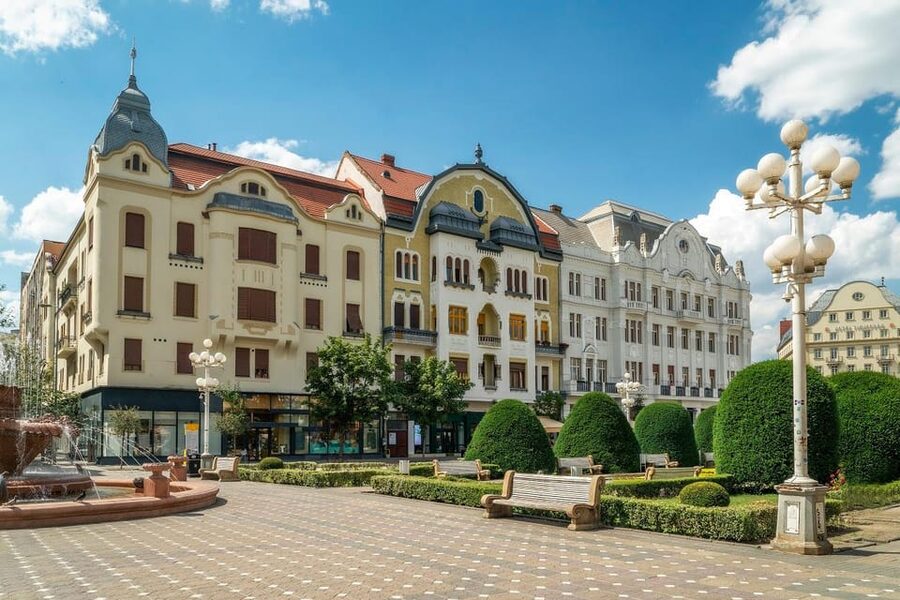
Armand is the named guide for this experience, and the strongest praise centers on his delivery. He is described as combining history with legends, humor, and practical answers. His German is reported as excellent, and the tour is also available in English and Romanian.
That language choice can make a real difference. Historical terms and local names are easier to follow when the guide can explain them in the language that feels most natural to you. If your group includes different language preferences, confirm the language arrangement when booking.
His style appears to suit several types of groups. Families can ask questions without feeling that the material is too advanced. Adults interested in architecture can focus on details that may be easy to miss. People with practical questions about spending time in Timișoara can also use the guide as a local source during the walk.
Do not expect a formal museum lecture. This is a spoken, outdoor tour shaped by movement and conversation. That makes it lively, but it also means the amount of detail depends partly on the pace and your group’s interests.
What $35 buys you in practical terms
At $35 per person, the tour is reasonably priced if you want a private introduction to the center with a live guide. The fee covers the two-hour walking experience, and you do not need to add museum admission or other entrance tickets.
The value comes from the connections Armand provides. You could walk through the same squares alone, but you would need to research the Ottoman period, the Habsburg walls, the synagogue, the city’s languages, and the 1989 Revolution separately. The tour gives you one organized explanation and leaves you with a better sense of what to notice afterward.
It is less useful if you prefer to spend two hours inside museums or explore at your own pace without a fixed route. No museum entries are included, and the experience is centered on the city center rather than on a broad visit around Timiș County.
Free cancellation up to 24 hours before the start gives you some flexibility, and you can reserve now and pay later. The duration is fixed at two hours, with starting times based on availability. These details are helpful if you are building a tight schedule around other Timișoara plans.
Who will enjoy this walk most
I would recommend it first to anyone visiting Timișoara for the first time. The route gives you a useful map of the central sights and explains why the city’s public spaces matter.
It is also a strong choice for families with school-age children and teenagers. The material covers conquests and revolutions, but Armand’s way of answering younger questions suggests that the walk can stay accessible without becoming childish.
History fans will appreciate the range of periods. In two hours, you move from the city’s oldest building through Ottoman and Habsburg chapters, then into Jewish heritage and the 1989 Revolution. You will not receive an exhaustive account of each era, but you will get a firm structure for further exploring.
The tour suits German-speaking groups especially well, given the praise for Armand’s German. English and Romanian speakers have those options too.
The main mismatch is for anyone who cannot comfortably walk for two hours. All are welcome, and the tour is wheelchair accessible, but the description still asks you to make sure older people and very young children can manage the walking time. Bring comfortable shoes, and consider the weather since the tour takes place outdoors.
Should you book Timișoara Highlights?
Book this tour if you want a focused, private introduction to Timișoara with a guide who can connect several eras instead of presenting isolated sights. Armand’s mix of facts, stories, humor, and clear answers is the main reason to choose it.
It is especially worthwhile early in your visit, when the route can give meaning to the squares and buildings you will pass again later. Families, German-speaking groups, and anyone curious about the 1989 Revolution should find the format particularly useful.
Skip it if you want museum interiors, a long architectural study, or a completely unstructured walk. For most visitors who can manage two hours on foot, $35 buys a practical and personable introduction to one of Romania’s most layered city centers.
FAQ
How long does the Timișoara Highlights Walking Tour last?
The tour lasts two hours.
What language is the tour offered in?
The live guide can conduct the tour in German, English, or Romanian.
Is this a private tour?
Yes. The experience is offered for a private group.
Does the price include museum admission?
No museums are entered during the walk. The price covers walking around the city center, and no extra tickets are necessary.
Where does the tour visit?
The route begins at Timișoara’s oldest building, continues through Liberty Square, Saint George Square, the old city walls, Union Square, and the synagogue, then returns to Liberty Square and finishes in Victory Square.
Is the tour suitable for children?
Children are welcome, and the guide has answered questions from a 13-year-old in a clear, age-appropriate way. Everyone joining should be comfortable walking for two hours.
Can I cancel or pay later?
You can cancel up to 24 hours before the tour for a full refund. You can also reserve your place and pay later.
Just added around Timisoara
- Bite your way through Timisoara – Timisoara’s Street Food Tour★ 5.0 · 14 reviews
- The Grand Tour of Communist Ages at Timisoara★ 5.0 · 17 reviews
- The Jewish Heritage Tour of Timisoara★ 5.0 · 9 reviews
- Timisoara Downtown Dream Tour★ 5.0 · 5 reviews
- Ecumenical Tour of Timisoara★ 5.0 · 15 reviews
- Nera Gorge National Park – Private Day Tour from Timisoara★ 4.5 · 4 reviews
- One Day in Transylvania – Departure from Timisoara★ 5.0 · 16 reviews
- Day Trip to Turda Salt Mine and Corvin Castle from Timisoara★ 5.0 · 10 reviews
Walking Tours, compared.
Ghost Stories & Romanian Mythology Walking Tour
Read our review →
Walking Tour- Delightful Bucharest (Highlights, Stories, Sights)
Read our review →

4h Bucharest Private Tour (2h by Car and 2h Walking in Old Town)
Read our review →
Browse the lists this tour appears in