
Reviewed · WALKING TOURS
Timisoara: Classic Walking Tour
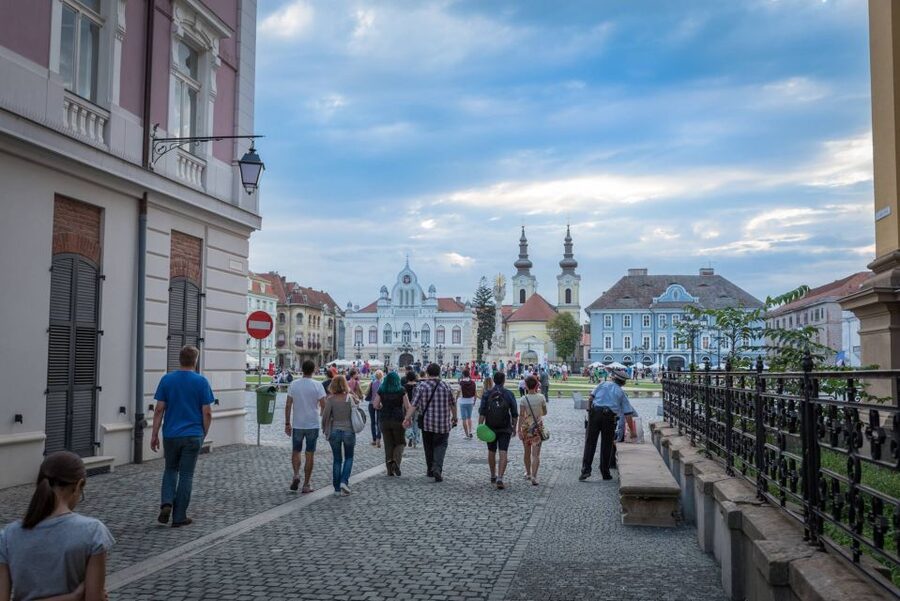
Timișoara’s story changes sharply from one street to the next. This two-hour private walk connects the city’s Turkish past, Austrian rebuild, early modern inventions, and 1989 anti-communist revolution in one clear route. I like the opening look at Romania today, and I like the way the guide ties dates to ordinary life. The one drawback is that two hours goes quickly, so you may not enter every major church or cover every corner of the center.
I especially like the personal tone promised here. Guides such as Armand and Alex Muntean have led memorable walks, with Alex noted for explaining the Banat region well and adjusting his storytelling for children. If seeing the Three Hierarchs Cathedral matters to you, ask about it early, since it is not listed as a guaranteed stop.
In This Review
- Key points to know before you book
- Starting at the tourist information center
- From the Mongol invasion to Turkish Timișoara
- The Austrian rebuild and the city you see today
- Trams, electric lights, and a modern city
- Hearing about the 1989 revolution
- The guide makes the difference
- What the private format is worth at $42
- Who will enjoy this walk most
- Small planning tips that matter
- Should you book the Timișoara Classic Walking Tour?
- FAQ
- How long does the Timișoara Classic Walking Tour last?
- How much does the tour cost?
- Where does the tour meet?
- Is the tour private?
- Which languages are available?
- Can I cancel the tour or pay later?
Key points to know before you book
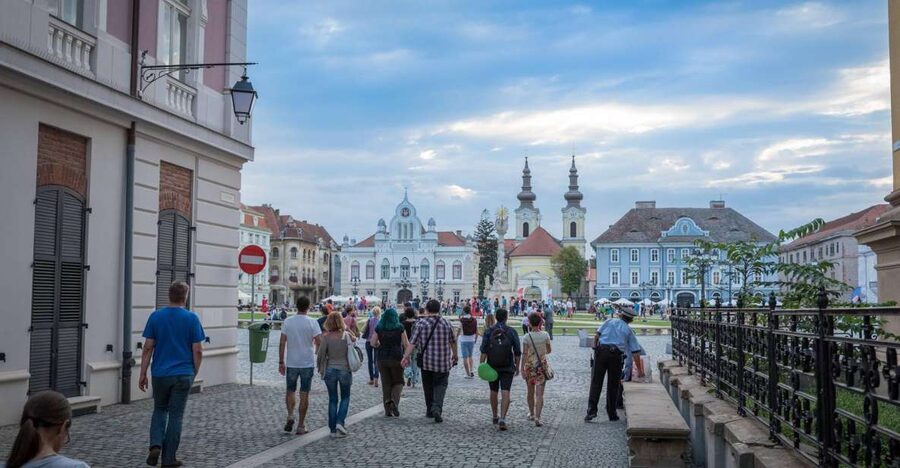
- A private two-hour walk: You get a guide for your own group rather than joining a large public crowd.
- A city shaped by three powers: The route links the Mongol invasion, Turkish occupation, and Austrian imperial rebuilding.
- Practical Romanian context: The introduction covers Romania today and how society has changed over recent decades.
- Early urban technology: Hear how Timișoara developed one of the first trams and continental Europe’s first electric street lighting.
- English or Romanian guiding: Choose between the two stated tour languages.
- Flexible booking: You can cancel up to 24 hours before the start for a full refund, and reserve without paying immediately.
Starting at the tourist information center
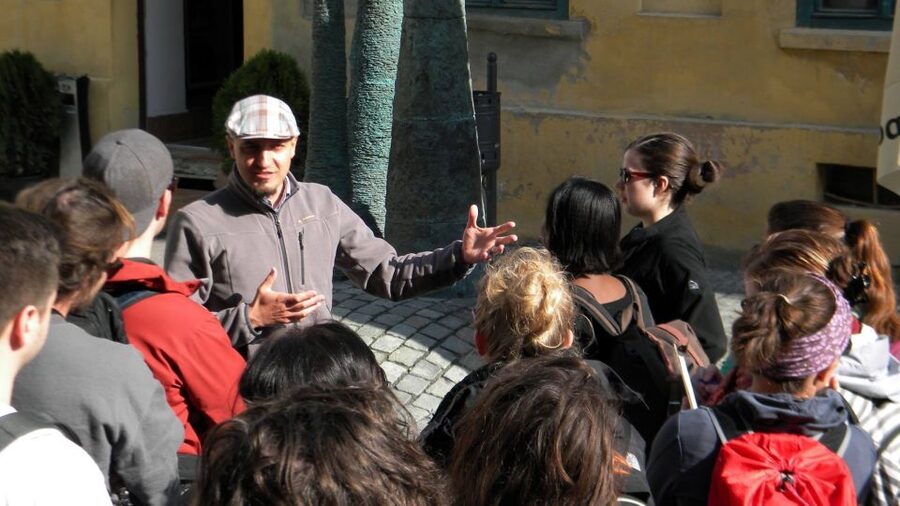
The meeting point is in front of the tourist information center, a sensible place to begin if you are new to Timișoara. You should arrive with comfortable shoes and a little water, since the experience is entirely on foot and includes two hours of standing and walking.
The opening is not just a quick name-and-date introduction. You first get a basic picture of Romania’s current situation, then the guide places Timișoara inside the wider story of the country. That matters because the city’s past is not a straight line. It has been shaped by invasion, Ottoman rule, Habsburg planning, modernization, and resistance to communism.
I like this approach for a first morning in town. You can ask questions before the route gets moving, and you get a frame for the details that follow. If you are visiting Romania for the first time, this introduction should help you understand why local identity, political change, and the Banat region matter so much here.
Because this is a private group, the pace can be more personal than on a standard public walk. You can stop to ask about a building, request a little more explanation, or tell the guide what interests you most. The tradeoff is simple: the quality of the experience depends heavily on the guide assigned to your date.
A few more Timisoara trips to weigh up
- Timisoara All in One – Walking and Tram Tour
★ 5.0 · 72 reviews - Timisoara: Guided Walking Tour
★ 4.9 · 38 reviews - Timișoara Highlights – Walking Tour
★ 5.0 · 28 reviews
From the Mongol invasion to Turkish Timișoara
The historical story begins centuries ago with the Mongol invasion. You will not get a full medieval history course in two hours, but this opening gives you a useful sense of how exposed the region was to outside powers and military upheaval.
The route then moves into the years of Turkish occupation. This is one of the most interesting parts of the walk because the city you see today does not immediately reveal that Ottoman layer. Your guide points out where the Turkish public bath, bazaar, and Central Mosque once stood.
Those lost sites are valuable precisely because they are no longer obvious. A bath, market, or mosque was not just a monument. Each one tells you how people used the city, where commerce happened, and how religious and social life was organized. Looking at the modern streets while imagining those earlier buildings helps you read Timișoara as a place that has been repeatedly remade.
Do not expect the Turkish buildings to survive as a complete historic quarter. The point is to understand the traces and absences. You are learning how to see a city’s past even when the original structure has disappeared.
The Austrian rebuild and the city you see today
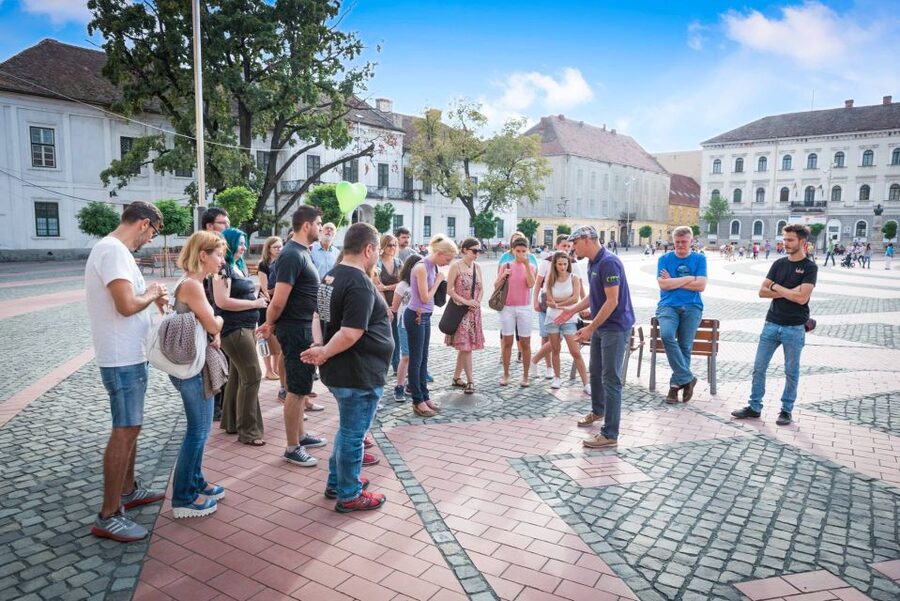
The biggest turn in the walk comes when Austrian imperial troops conquered Timișoara at the start of the 18th century. The city was rebuilt on a major scale. Medieval wooden buildings disappeared, new streets and houses were laid out, and a fortification system was established.
This period explains much of Timișoara’s ordered central character. The city was not simply repaired after conquest. It was redesigned. Your guide can connect the street plan and surviving buildings to that wider rebuilding project, giving you a clearer reason for the city’s architectural appearance.
I find this kind of explanation more useful than a string of isolated building facts. You learn why the city looks the way it does, not just who occupied a particular house. It also shows how political power can change daily movement, construction, defense, and trade all at once.
The fortifications are especially helpful for understanding scale. Even if you are not an architecture enthusiast, the idea of a planned defensive city gives shape to the walk. It turns streets into evidence of military planning and imperial control.
The tour description does not promise entry into every major interior. That is worth keeping in mind if you want an in-depth church or museum visit. This is primarily a city walk, with the guide’s explanations doing much of the work.
Trams, electric lights, and a modern city
Timișoara’s story is not limited to conquest and old walls. The tour also covers the city’s role in early urban technology. You hear how one of the first trams in the world connected suburbs with the center.
That detail has real practical meaning. A tram line changes who can reach the city, how workers commute, and how the suburbs relate to the center. It is a small piece of transport history with a direct link to ordinary life.
You also learn that Timișoara was the first place in continental Europe to use electric street lighting. This is the sort of fact that can sound like a trivia question until the guide explains what it meant. Electric lights altered the feel and safety of streets after dark, and they signaled that the city was taking part in a new age of urban development.
These details give the walk a welcome change of pace. The route moves from vanished Ottoman buildings and Austrian fortifications to public transport and modern infrastructure. I like that balance. You are not asked to admire only old stone. You also see Timișoara as a place that experimented with new ways to connect and light its population.
Same mountains, a completely different day out:
- The Classic Tour of Timisoara
★ 5.0 · 154 reviews - Weekly Guided Tour in English – Tuesday, Thursday, Saturday
★ 5.0 · 84 reviews - Day trip to Corvin Castle and Sibiu (and back) from Timisoara
★ 5.0 · 30 reviews - Danube Gorge & Banat Waterfalls
★ 5.0 · 27 reviews
Hearing about the 1989 revolution
The final historical reach is contemporary Romania and the revolution against the communist regime. Timișoara played an important role in that change, and the tour places the city’s recent past alongside its older layers.
This part is especially useful because communist history can feel abstract when presented only through national dates. A local guide can explain how the city experienced the period and how society changed afterward. The stated focus on life in Romania gives you a chance to ask what it feels like to live there now, not just what happened in a textbook.
The tour will not provide an exhaustive political history in the time available. Instead, you should expect a guided outline with stories, anecdotes, and room for conversation. That is a good fit if you want context before exploring more deeply on your own.
I would pay attention to how the guide links the 1989 events to present-day life. The value is not only in knowing that a revolution happened. It is in understanding how recent that change is and why it still matters to people living in Romania.
The guide makes the difference
A two-hour walking tour rises or falls on the person leading it. The strongest praise for this experience focuses on friendly, engaging guides who enjoy showing the city and tell stories rather than reciting dates.
Armand has been singled out for making the walk personal with city stories and personal anecdotes. Alex Muntean has been praised for his command of the Banat region, clear storytelling, and ability to include children in the conversation. Those details suggest the best version of this tour is warm and flexible rather than formal.
You may not get the same guide on every date, so I would not book it expecting one specific person unless the provider confirms that in advance. Still, the private format gives the guide room to adapt. Families can ask for simpler explanations, history fans can linger over the Austrian period, and first-time visitors can focus on modern Romania.
The languages are English and Romanian. If you speak Romanian, you can choose that option. If not, the English version makes the tour accessible to international visitors who want more than a self-guided walk.
What the private format is worth at $42
At $42 per person, this is not the cheapest way to see Timișoara. The price makes more sense if you value a private guide, a focused introduction, and the chance to ask questions along the way.
For a solo visitor or couple, $42 can feel like a fair investment if this is your first time in the city and you want a strong orientation. You are paying for interpretation, not transport or admission tickets. The walking tour itself is included, and the main product is the guide’s ability to connect scattered facts into a useful story.
For a larger private group, the value may improve because the cost is charged per person while everyone gets the same tailored experience. Still, you should compare the total cost with a group tour if you are watching your budget closely.
The two-hour length is another part of the value calculation. It is long enough to cover a broad historical arc without taking up an entire day. You can schedule it near the start of your stay, then use the guide’s suggestions and explanations to plan your own return visits.
The short duration also creates limits. You will hear about many periods, but you will not study each one in detail. If you want long interior visits, extensive photography stops, or a full architectural survey, you may need extra time on your own.
Who will enjoy this walk most
I would recommend this experience to first-time visitors who want to understand Timișoara before exploring it independently. It is also a good choice for people who prefer conversation and local perspective over reading plaques and following a printed map.
Families may find it suitable because the guide can adjust explanations for children. Alex Muntean has been noted for doing exactly that, although your assigned guide may be different.
History fans will appreciate the range. You move from Mongol invasion and Turkish rule to Habsburg reconstruction, public transport, electric lighting, and the communist-era revolution. That is a lot of ground in two hours, but it gives you several paths to follow later.
This may be less suitable if you want a slow photography walk or guaranteed access to specific interiors. The Three Hierarchs Cathedral, for example, was suggested as a possible addition, but it is not confirmed as part of the route. Ask before booking if that building is a priority.
Small planning tips that matter
Wear shoes suited to city walking. The tour lasts two hours and includes a full outdoor route, so comfort will matter more than dressing up.
Meet in front of the tourist information center and check the starting time when you book, since several start times may be available. The tour is offered as a private group experience, which means you should have a chance to discuss your interests with the guide at the start.
You can reserve now and pay later, which helps if your schedule is still shifting. Free cancellation is available up to 24 hours before the tour for a full refund. These terms are useful in a city itinerary where train connections and hotel plans may change.
If the Three Hierarchs Cathedral, Ottoman remains, or the 1989 revolution matters most to you, say so at the beginning. A private walk is most valuable when you help the guide aim the conversation toward what you actually want to understand.
Should you book the Timișoara Classic Walking Tour?
Book it if you want a friendly private introduction to Timișoara that joins the city’s old and recent past. The strongest reasons are the local storytelling, the clear historical sweep, and the chance to ask about Romanian life today.
At $42, it is best viewed as an orientation tour rather than a full sightseeing day. You will not see every interior or explore every period in depth, but you will leave with a much better sense of why Timișoara looks and feels the way it does.
I would choose it early in a Timișoara visit, especially if you like to return to places after learning their story. Ask about the Cathedral of the Three Hierarchs before the walk begins, arrive ready to walk, and let the guide know whether you prefer history, architecture, or contemporary life. For those priorities, this is a solid and personal way to meet the city.
FAQ
How long does the Timișoara Classic Walking Tour last?
The tour lasts two hours. Starting times vary, so check availability when booking.
How much does the tour cost?
The listed price is $42 per person.
Where does the tour meet?
Meet in front of the tourist information center.
Is the tour private?
Yes. The experience is offered for a private group.
Which languages are available?
The live guide is available in English or Romanian.
Can I cancel the tour or pay later?
You can cancel up to 24 hours in advance for a full refund. You can also reserve your spot and pay later, so no payment is required immediately.
Just added around Timisoara
- Bite your way through Timisoara – Timisoara’s Street Food Tour★ 5.0 · 14 reviews
- The Grand Tour of Communist Ages at Timisoara★ 5.0 · 17 reviews
- The Jewish Heritage Tour of Timisoara★ 5.0 · 9 reviews
- Timisoara Downtown Dream Tour★ 5.0 · 5 reviews
- Ecumenical Tour of Timisoara★ 5.0 · 15 reviews
- Nera Gorge National Park – Private Day Tour from Timisoara★ 4.5 · 4 reviews
- One Day in Transylvania – Departure from Timisoara★ 5.0 · 16 reviews
- Day Trip to Turda Salt Mine and Corvin Castle from Timisoara★ 5.0 · 10 reviews
Walking Tours, compared.

Ghost Stories & Romanian Mythology Walking Tour
Read our review →
Walking Tour- Delightful Bucharest (Highlights, Stories, Sights)
Read our review →

4h Bucharest Private Tour (2h by Car and 2h Walking in Old Town)
Read our review →
Browse the lists this tour appears in