
Reviewed · TIMISOARA TOURS
Timisoara Dream Tour in Elisabetin Neighborhood
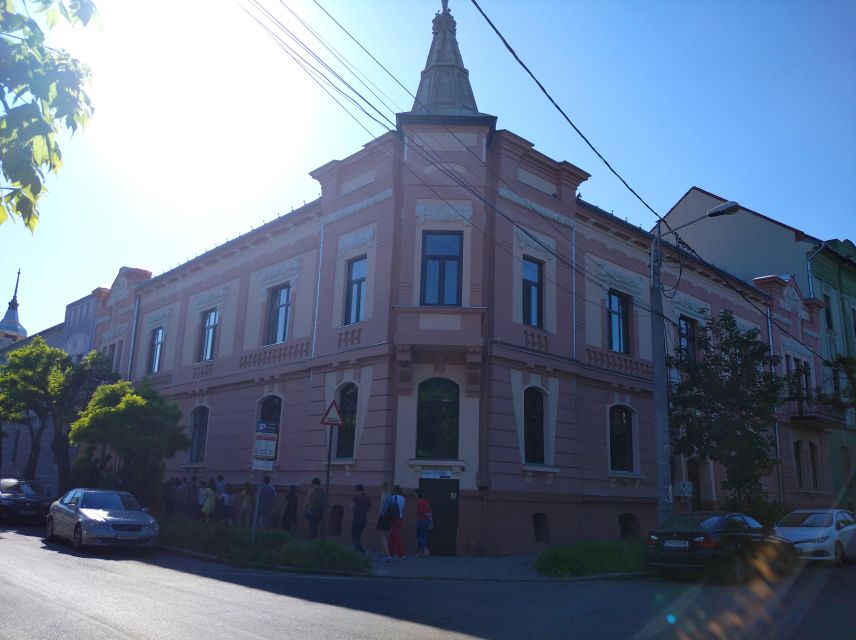
Elisabetin gives you a different face of Timișoara: quiet streets, elegant Secession buildings, old churches, and the setting where the 1989 Romanian Revolution began. This is not a quick monument checklist. It is a slow walk through a residential quarter shaped by architects, religious communities, and more than a century of city life.
I like the way the tour links Art Nouveau architecture with real events, especially the story of the Revolution near Saint Mary Square. I also like the route’s finish in Bălcescu Square, where the Catholic church and former monastery add a strong architectural finale. The main consideration is simple: this is a walking tour in all weather, so comfortable shoes and a rain layer matter.
In This Review
- Key points to know before you book
- Why Elisabetin is worth your time
- Starting at Mocioni Square
- Saint Mary Square and the 1989 Revolution
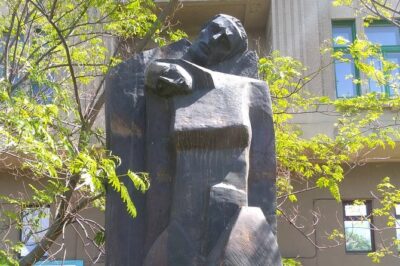
- Plevnei Square and the Doja statue
- Gheorghe Doja Street and residential Elisabetin
- Carmen Sylva Park and Laszlo Szekely
- Mihai Viteazu Boulevard and the Faculty of Mechanics
- Bălcescu Square provides the finish
- What the $30 price gets you
- Practical details that affect the experience
- Who should book this walk
- Should you book the Timisoara Dream Tour?
- FAQ
- Where does the Timisoara Dream Tour begin?
- Where does the tour end?
- How long does the tour last?
- How much does the tour cost?
- Which languages are available?
- How do I identify the guide?
- Does the tour visit the place where the 1989 Romanian Revolution began?
- What architecture will I see?
- Are food and drinks included?
- Can I bring luggage or a large bag?
Key points to know before you book
- The route begins at Mocioni Square and ends at Bălcescu Square, crossing much of Elisabetin on foot.
- Saint Mary Square connects the neighborhood to the 1989 Romanian Revolution, one of the tour’s most important history stops.
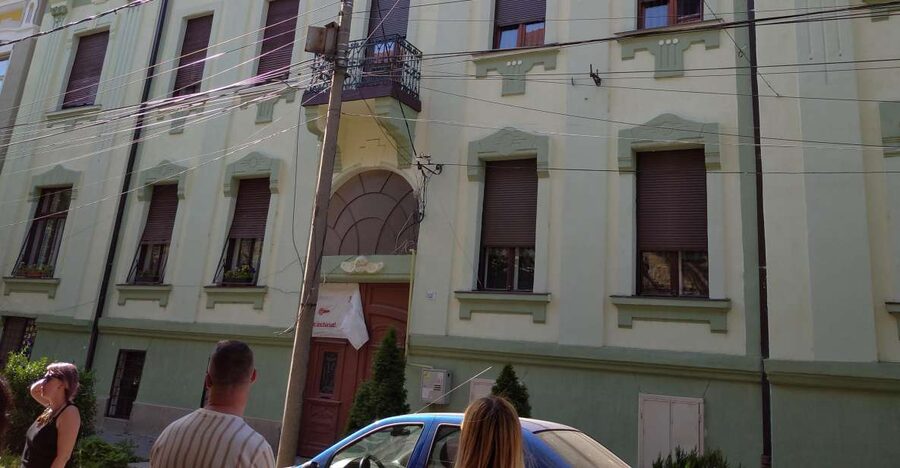
- Plevnei Square and Gheorghe Doja Street offer the best Art Nouveau focus, with decorated facades and civic landmarks.
- Carmen Sylva Park adds statues, greenery, and a newer Greek Catholic church to the architectural walk.
- The tour lasts 2.5 hours and costs $30 per person, a fair price if you want context rather than only photographs.
- A red coat identifies the guide, and the tour is offered in Romanian, English, and French.
Why Elisabetin is worth your time
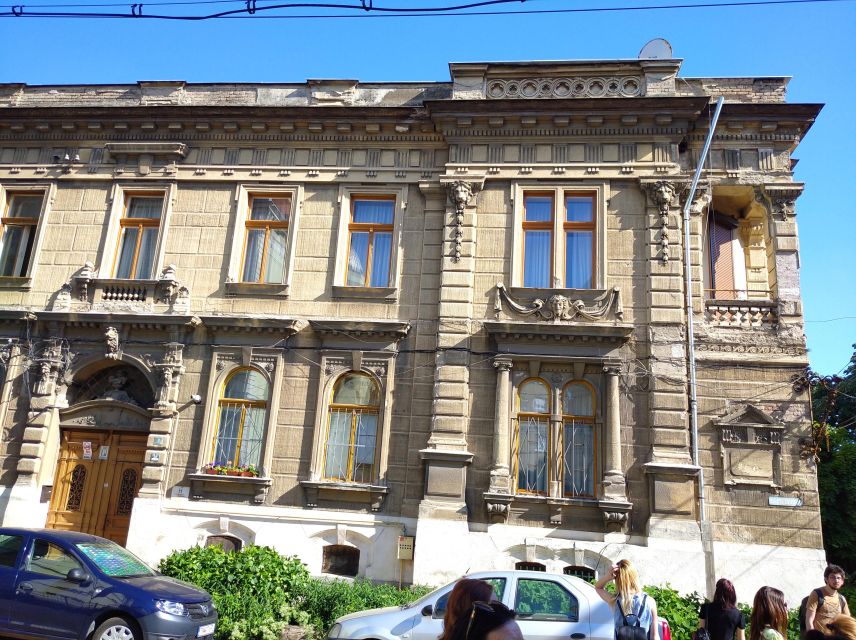
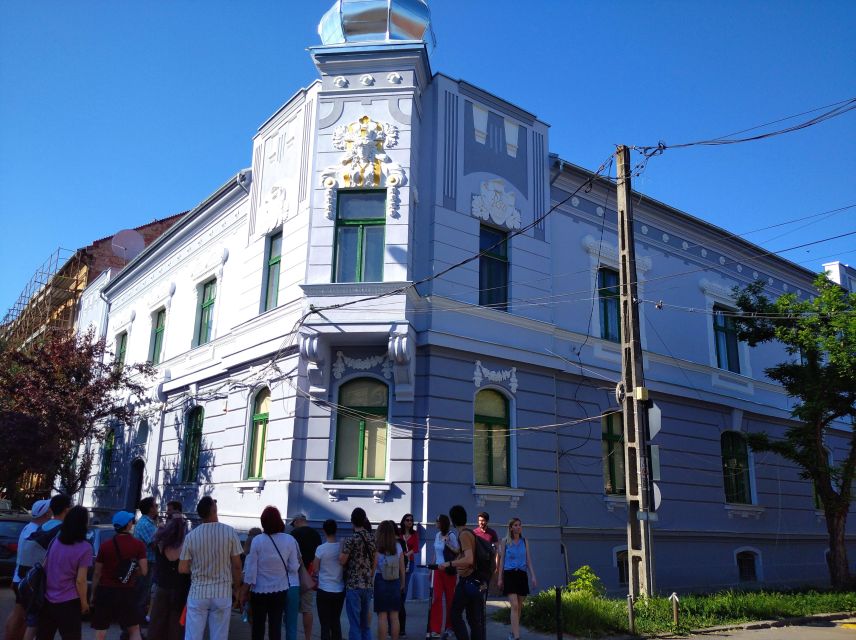
Timișoara is often introduced through its grand central squares, Habsburg-era facades, and broad pedestrian streets. Elisabetin gives you another way to understand the city. It is a residential neighborhood, but not a plain one. Its streets are lined with buildings decorated in the Art Nouveau and Secession styles, architectural movements known for curved lines, floral details, bold shapes, and carefully designed entrances.
I find this kind of district especially rewarding because the buildings are part of daily life. You are not only looking at preserved monuments behind barriers. You are walking past apartment buildings, churches, squares, and streets that still function as part of the city.
The neighborhood also carries political weight. Near the Protestant church in Saint Mary Square, a protest in 1989 helped begin the Romanian Revolution. The tour uses that location to connect architecture with modern Romanian history. That pairing gives the walk more substance than a simple lesson in decorative facades.
Other Timisoara days worth putting on the list:
- The Classic Tour of Timisoara
★ 5.0 · 154 reviews - Weekly Guided Tour in English – Tuesday, Thursday, Saturday
★ 5.0 · 84 reviews - Timisoara All in One – Walking and Tram Tour
★ 5.0 · 72 reviews
Starting at Mocioni Square
The meeting point is Mocioni Square, also called Alexandru Mocioni Square. The guide wears a red coat, which should make the meeting easier in a busy urban setting. From here, the tour begins its move through Elisabetin, with about 20 minutes devoted to each listed stop.
Mocioni Square is a useful starting place because it helps you get oriented before moving into the neighborhood. Your guide introduces the area and sets up the story of how Elisabetin developed. You will hear about neighborhood life around the end of the 19th century, when the district was taking shape as a refined residential part of Timișoara.
This opening is also a good moment to ask questions. The tour is led live in Romanian, English, or French, so you can choose the language that lets you follow architectural terms and historical details most comfortably.
Saint Mary Square and the 1989 Revolution
The next stop is Saint Mary Square, or Piața Sfânta Maria. This is one of the most meaningful points on the route because the Romanian Revolution of 1989 began nearby, close to the Protestant church.
The guide explains the local story behind the protests and places the events in the setting of the neighborhood. That setting matters. Instead of hearing about the Revolution as a distant national event, you are standing in the square where people gathered and history began to shift.
I like this stop because it gives Elisabetin a human scale. The square is not presented only as an architectural space. It becomes a place connected to courage, uncertainty, and public action. If you have already visited Timișoara’s central sights, this stop adds a different layer to the city.
The tour also returns to life in Elisabetin more than 130 years ago. You hear how the neighborhood functioned and how people lived here at the end of the 19th century. The details help you read the buildings that come next.
Plevnei Square and the Doja statue
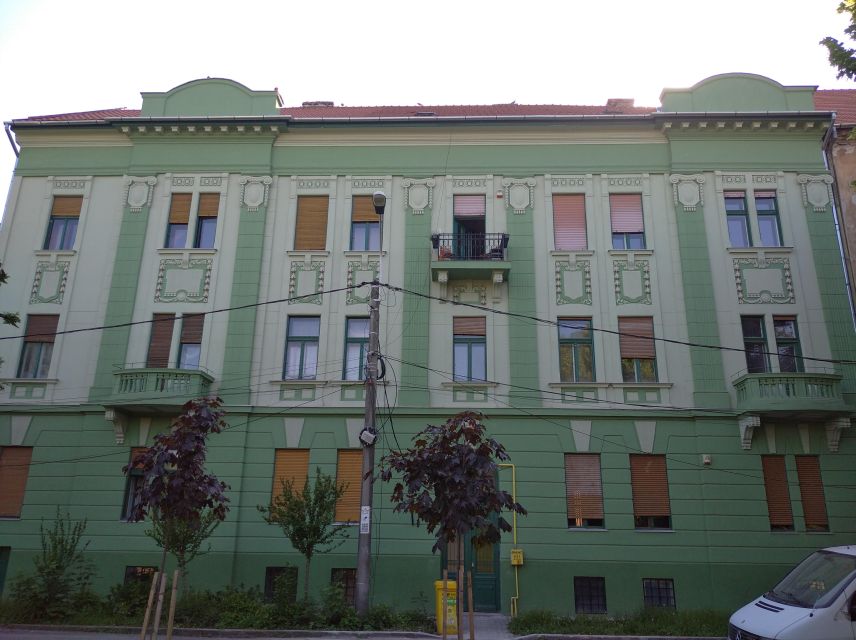
Plevnei Square is the tour’s first strong architectural pause. Buildings around the square are decorated in the Art Nouveau style, making this a good place to slow down and examine facades rather than simply walk past them.
At the center of the square is a statue of Gheorghe Doja. The monument gives the space a clear focal point, while the surrounding buildings show how Secession design shaped the neighborhood’s appearance. Your guide points out details that are easy to miss when you are walking alone.
This is where the tour’s value becomes clear. You can take photographs without knowing why one doorway, roofline, or facade matters. With a guide, you get a way to read those details and connect them to the period when Elisabetin was developing.
Plevnei Square is also a practical stop for anyone interested in architecture but not looking for a formal museum visit. The city itself is the exhibit, and the walk keeps you moving.
Same mountains, a completely different day out:
- Timisoara: Guided Walking Tour
★ 4.9 · 38 reviews - Day trip to Corvin Castle and Sibiu (and back) from Timisoara
★ 5.0 · 30 reviews - Timișoara Highlights – Walking Tour
★ 5.0 · 28 reviews - Danube Gorge & Banat Waterfalls
★ 5.0 · 27 reviews
Gheorghe Doja Street and residential Elisabetin
From Plevnei Square, the group follows Gheorghe Doja Street. This main artery brings the tour back to the everyday side of Elisabetin, where interesting buildings appear along a working city street rather than inside a single monumental square.
The guide draws attention to notable facades and explains how the architecture fits into the neighborhood’s wider story. I appreciate this part of the route because it shows that Elisabetin is not made up of isolated highlights. The style continues through the streets, with one building leading your eye toward the next.
Do not expect every minute to bring a famous landmark. Some of the pleasure comes from looking closely at ordinary urban details. You might find decorative elements, unusual proportions, or well-designed corners that would pass unnoticed without someone explaining what to look for.
The 20-minute timing at each stop keeps the tour moving, though the actual pace will include walking between locations. Plan for a steady two and a half hours rather than seven completely separate talks.
Carmen Sylva Park and Laszlo Szekely
Carmen Sylva Park offers a change of pace. After several urban streets and squares, the route reaches a park with a newer Greek Catholic church and a statue of Laszlo Szekely.
Szekely was the chief architect associated with the creation of modern Timișoara. His statue gives the tour a useful personal link to the city’s architecture. You are not only seeing buildings from a design period. You are also learning about one of the figures connected with the city’s modern form.
The Greek Catholic church adds another religious and architectural point of interest. The tour does not treat churches as isolated photo stops. Instead, they are part of the neighborhood’s social and visual character.
Carmen Sylva Park may be one of the more comfortable sections of the walk, particularly if you want a short break from dense streets. Still, this is a guided walking tour, not a park visit with free time built in, so listen while walking and keep your expectations focused on the commentary.
Mihai Viteazu Boulevard and the Faculty of Mechanics
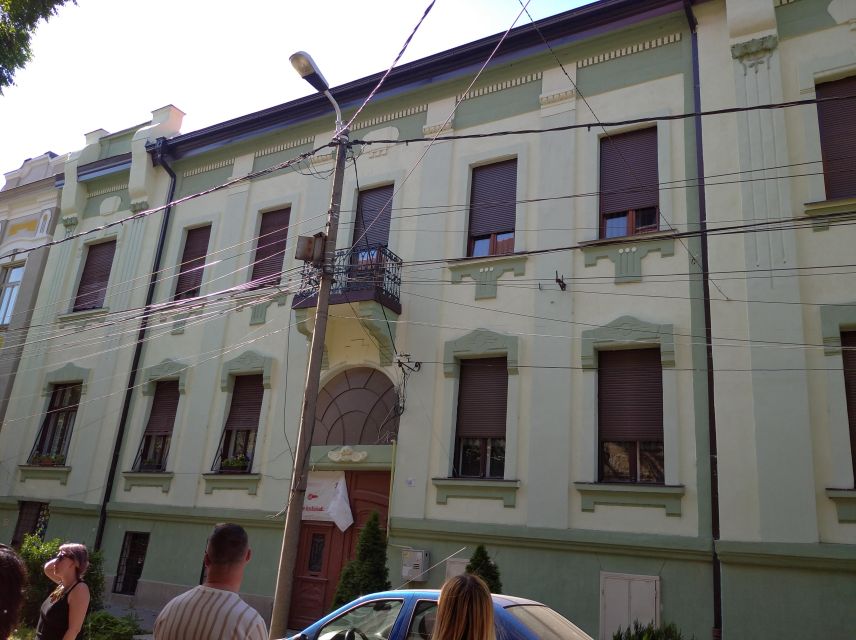
The route continues toward Mihai Viteazu Boulevard, where you admire representative buildings and the Faculty of Mechanics. This section broadens the architectural picture beyond the smaller residential streets.
The faculty adds an institutional building to the route, giving you a chance to compare academic architecture with the houses and apartment buildings seen earlier. The guide helps tie these parts together, showing how different types of buildings contribute to the look of the district.
For me, this is the kind of stop that makes a neighborhood walk worthwhile. A city is not only its churches and decorated homes. Schools, faculties, public buildings, and transport routes also reveal how the city grew and what it valued.
The boulevard may feel more open and urban than the earlier squares. That contrast is useful. It reminds you that Elisabetin is both a historic quarter and a living part of Timișoara.
Bălcescu Square provides the finish
The tour ends in Nicolae Bălcescu Square, commonly called Bălcescu Square. Here you admire the Catholic church and the building of the monastery, two landmarks that give the final section a strong religious and architectural focus.
The square works well as an ending because it brings together several themes from the walk: faith communities, historic construction, public space, and the changing character of Timișoara. You also see representative buildings on Mihai Viteazu Street and part of Tudor Vladimirescu Street before the tour finishes.
Because the route ends in a public square, you are left in a useful part of the neighborhood rather than returned to the starting point. The experience is best planned as one part of a day in Timișoara, with the finish serving as a natural point from which to continue exploring on your own.
What the $30 price gets you
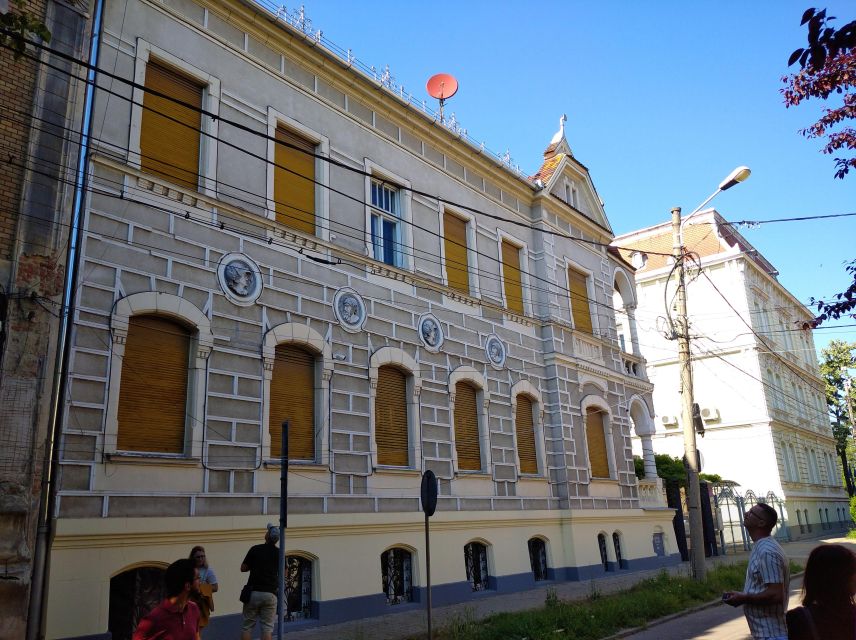
At $30 per person, this is priced as an accessible small-area walking experience rather than a full-day city tour. You are paying for two and a half hours of guided explanation across several parts of Elisabetin, not for food, transport, or admission to a major attraction.
The tour includes flyers with useful information. Those handouts may help you remember building names and historical points after the walk, although the supplied details do not specify their exact length or format.
I consider the price reasonable if you care about context. On your own, you can walk through the same streets for free, but you may miss the connection between the Revolution, the neighborhood’s older life, the Secession facades, and the architects who shaped modern Timișoara.
The value is lower if you only want a fast photo walk or prefer to explore silently. The tour has a fixed route and live commentary, so it suits you best when you want someone to explain what you are seeing.
Practical details that affect the experience
The tour lasts 2.5 hours and takes place rain or shine. That means you should check the forecast, but not assume bad weather will cancel the walk. Wear shoes suited to city walking and bring protection from rain or sun as needed.
Food and drinks are not included. There is no meal break listed, so have water and any needed snack before the tour begins. Large bags and luggage are not allowed, which is important if you are arriving directly from a train station or hotel changeover.
The guide is identified by a red coat. The available languages are Romanian, English, and French. Guide names are not provided, so you should not expect to request a particular person when booking.
Free cancellation is available up to 24 hours before the start time for a full refund. You can also reserve now and pay later, which helps if your Timișoara plans are still shifting.
Who should book this walk
I would choose this tour if you have already seen the central landmarks and want a quieter district with more local texture. It also suits anyone interested in Art Nouveau, religious architecture, urban design, or the 1989 Revolution.
It is a good choice for first-time visitors who want to understand how Timișoara extends beyond its central squares. The route gives you a framework for later independent walks, especially if you want to return to photograph buildings or spend more time in Carmen Sylva Park.
History-minded visitors will get the most from the Saint Mary Square section. Architecture fans will likely focus on Plevnei Square, Gheorghe Doja Street, and the buildings around Mihai Viteazu Boulevard.
I would hesitate only if you dislike walking in uncertain weather, have large luggage with you, or want a tour centered on food and indoor attractions. Those needs are outside this experience.
Should you book the Timisoara Dream Tour?
Book it if you want a clear introduction to Elisabetin, especially its Art Nouveau buildings and connection to the 1989 Revolution. The route is reasonably priced, covers several distinct locations, and gives you stories that are hard to pick up from facades alone.
Skip it if you have very limited time in Timișoara and want only the best-known central sights. For everyone else, this is a useful two and a half hours in a refined neighborhood that many independent walks would pass by.
FAQ
Where does the Timisoara Dream Tour begin?
The tour begins at Mocioni Square, also known as Piața Alexandru Mocioni.
Where does the tour end?
The tour ends at Piața Nicolae Bălcescu, also called Bălcescu Square.
How long does the tour last?
The tour lasts 2.5 hours.
How much does the tour cost?
The listed price is $30 per person.
Which languages are available?
The live guide can lead the tour in Romanian, English, or French.
How do I identify the guide?
The guide will be wearing a red coat.
Does the tour visit the place where the 1989 Romanian Revolution began?
The tour visits Saint Mary Square and discusses the Romanian Revolution, which began nearby near the Protestant church.
What architecture will I see?
You will see Art Nouveau and Secession-style buildings in Elisabetin, including buildings around Plevnei Square, Gheorghe Doja Street, Mihai Viteazu Boulevard, and Bălcescu Square.
Are food and drinks included?
No. Food and drinks are not included.
Can I bring luggage or a large bag?
No. Luggage and large bags are not allowed on the tour.
Just added around Timisoara
- Bite your way through Timisoara – Timisoara’s Street Food Tour★ 5.0 · 14 reviews
- The Grand Tour of Communist Ages at Timisoara★ 5.0 · 17 reviews
- The Jewish Heritage Tour of Timisoara★ 5.0 · 9 reviews
- Timisoara Downtown Dream Tour★ 5.0 · 5 reviews
- Nera Gorge National Park – Private Day Tour from Timisoara★ 4.5 · 4 reviews
- One Day in Transylvania – Departure from Timisoara★ 5.0 · 16 reviews
- Ecumenical Tour of Timisoara★ 5.0 · 15 reviews
- Day Trip to Turda Salt Mine and Corvin Castle from Timisoara★ 5.0 · 10 reviews
Timisoara Tours, compared.
Weekly Guided Tour in English – Tuesday, Thursday, Saturday
Read our review →
Day trip to Corvin Castle and Sibiu (and back) from Timisoara
Read our review →

One Day in Transylvania – Departure from Timisoara
Read our review →Browse the lists this tour appears in