
Reviewed · COMMUNISM & CEAUSESCU TOURS
6h Bucharest Communism Private Tour – Ceausescu Mainson
Bucharest’s communist past is easiest to grasp when you see both the regime’s giant public projects and the private world of its rulers. This six to seven-hour private tour links the Palace of Parliament with Revolution Square and the Ceaușescu family home, giving you a clear route through Romania’s final communist decades.
I like the private car and flexible schedule, especially for families or small groups that want to adjust the pace. I also like the contrast between Ceaușescu’s monumental building projects and the modest rural traditions shown at the Village Museum. The main drawback is cost: at $197.81 per person, the tour is a serious outlay, and attraction tickets are extra.
In This Review
- Key points to know before booking
- Why this tour works for understanding communist Bucharest
- Starting at the Palace of Parliament
- The Village Museum and a different Romanian story
- Calea Victoriei and Bucharest’s mixed architectural identity
- Revolution Square and December 1989
- Inside the Ceaușescu family home
- The Patriarchal Cathedral and the religious side of Bucharest
- Nicolas and the private guiding style
- What the $197.81 price really buys you
- Who should book this experience
- Practical details before you go
- Should you book the Bucharest Communism Private Tour?
- FAQ
- How long does the Bucharest Communism Private Tour last?
- Is the tour private?
- Is transportation included?
- Are entrance fees included?
- Is pickup available?
- Can I cancel for a full refund?
Key points to know before booking
- The Palace of Parliament takes center stage: Allow about two hours to see one of the world’s largest administrative buildings and discuss the human cost behind it.
- Ceaușescu Mansion reveals private excess: The former family residence shows how the country’s rulers lived from 1965 to 1989.
- Revolution Square connects the history to December 1989: This is where Romania’s communist story reached its breaking point.
- A private vehicle keeps the day practical: Gasoline, parking, road tolls, and taxes are included, and your group rides alone.
- Nicolas may be your guide: Feedback about Nicolas describes a friendly, polite, professional manner and a willingness to personalize the day.
- Tickets are not included: The listed extra cost is about 20 euros per person for the attractions, with the Palace of Parliament entrance also excluded.
Why this tour works for understanding communist Bucharest
A city tour about communism can easily become a parade of gray buildings and dates. This one has a better shape. It begins with the regime’s public face, moves through central Bucharest and the 1989 Revolution, then ends at the home of Nicolae and Elena Ceaușescu.
That sequence matters. You first see how power reshaped the city, then where resistance appeared, and finally how the ruling family lived behind the official slogans. The Village Museum and Patriarchal Cathedral add two useful contrasts: older Romanian rural life and the continuing role of Orthodox Christianity.
You are not simply checking off monuments. You are comparing different ideas of Romania: the traditional village, the French-influenced boulevard, the totalitarian capital, the revolutionary city, and the religious center.
The private format is especially useful here. You can ask why a building was created, how the Revolution unfolded, or how the Ceaușescus used space in their home. A fixed group tour often has to keep moving. Here, the guide can make reasonable changes after the tour begins.
More communism & ceausescu tours in Bucharest:
- The Real tour of Communism
★ 5.0 · 666 reviews - Life under Communism
★ 5.0 · 358 reviews - 3-Hour Guided Tour of Communist Bucharest
★ 4.9 · 303 reviews
Starting at the Palace of Parliament
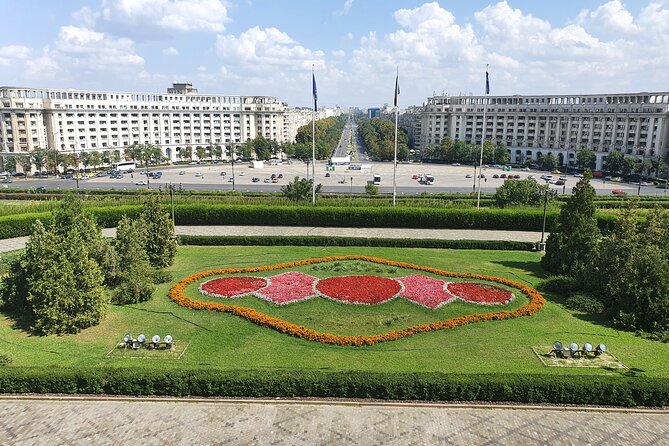
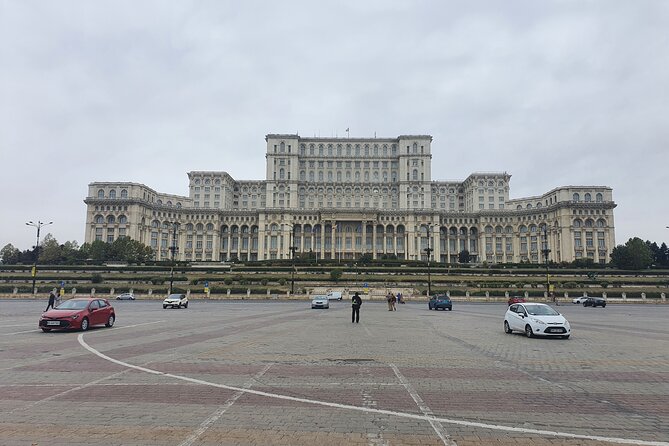
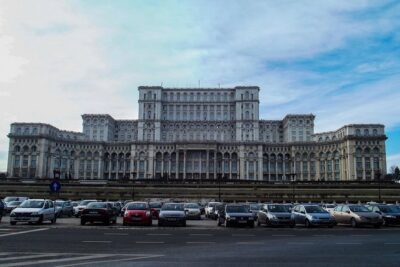
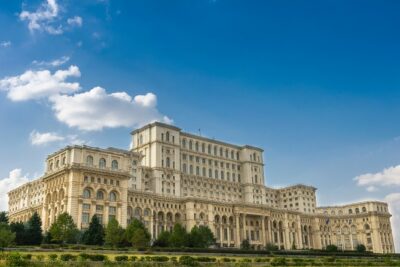
The Palace of Parliament, also called the People’s House, is the tour’s largest visual shock. The building is the second-largest administrative building in the world after the Pentagon, and its sheer scale is difficult to understand from photographs.
Your visit is scheduled for about two hours, which gives the guide time to explain more than its size. The important question is not only how large the building is, but why it was built. The palace represents Nicolae Ceaușescu’s megalomania, the demands of a totalitarian state, and the damage caused when a leader’s vision overrides ordinary life.
The building’s scale can feel almost absurd. Grand rooms and vast corridors were created while many Romanian citizens dealt with shortages and strict state control. That contrast is the point. You see how architecture became a political tool, designed to project authority and obedience.
The admission ticket is not included, so you should budget for that separately. The provided cost estimate says entrance fees for the attractions come to about 20 euros per person, but you should confirm the current amount when booking because attraction prices can change.
A practical note: the Palace of Parliament is not just a photo stop. If you want the historical explanation to sink in, use the full time here. The building is impressive, but the guide’s account of what it meant for Bucharest is more valuable than a quick look at the grand interiors.
The Village Museum and a different Romanian story
After the Palace of Parliament, the National Village Museum offers a sharp change of mood. The Dimitrie Gusti National Village Museum presents Romanian village traditions in one place, with houses and other elements of rural life arranged as an open-air collection.
The visit lasts about an hour. You will see how villagers built practical, sustainable surroundings using local traditions and modest resources. That makes this stop more than a pleasant walk among old buildings. It gives you a picture of a Romania that existed outside Ceaușescu’s monumental capital.
I like this contrast because it prevents the tour from treating communism as the whole story of the country. The village setting points to older social and spiritual patterns, where daily life was tied closely to the surrounding environment.
The museum’s admission fee is also extra. Since the tour already includes several paid sights, keep a little room in your budget for entrances. The private vehicle is useful here because the route connects a large number of stops without asking you to manage public transport between them.
You may find this stop less intense than the Palace of Parliament or Revolution Square. That is not a weakness. It gives the day a pause and helps you compare official state power with ordinary domestic life.
Calea Victoriei and Bucharest’s mixed architectural identity
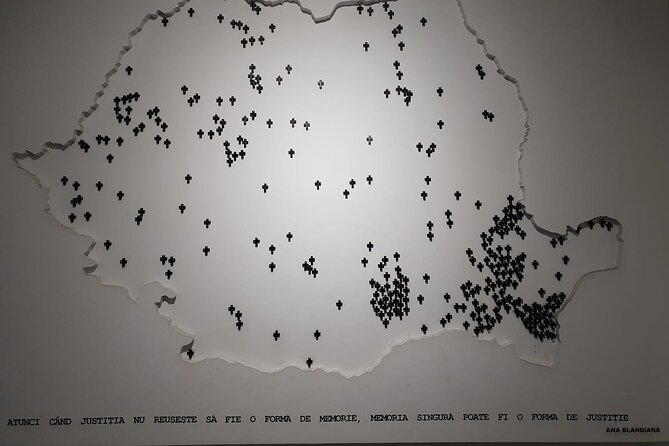
Calea Victoriei brings you back into the city center. The boulevard includes communist-era buildings, but it also offers French-influenced architecture that reflects Bucharest’s earlier identity.
The scheduled visit lasts about 45 minutes, and there is no admission fee. This is a street-level stop rather than a museum visit, so the guide’s explanation makes a real difference. You can look at the buildings as part of the city’s changing political story instead of seeing them as unrelated architecture.
The boulevard helps explain why Bucharest can feel visually inconsistent. Older European styles sit near structures associated with communist planning and later redevelopment. That mixture is not a flaw to be smoothed over. It is part of the city’s character.
This is also one of the places where flexibility can help. If you want more time for photographs or questions, a private group may be able to adjust the balance of the day. The advertised schedule is approximate, with the full experience lasting six to seven hours.
A few more Bucharest trips to weigh up
- Castles of Transylvania: Private Day Trip from Bucharest
★ 4.5 · 248 reviews - Dracula’s Castle, Peles Castle and Brasov – Private Day Trip from Bucharest
★ 5.0 · 211 reviews - Best of Bucharest | Private Walking Tour
★ 5.0 · 199 reviews - Bucharest Panoramic Sightseeing – Private City Tour
★ 5.0 · 128 reviews
Revolution Square and December 1989
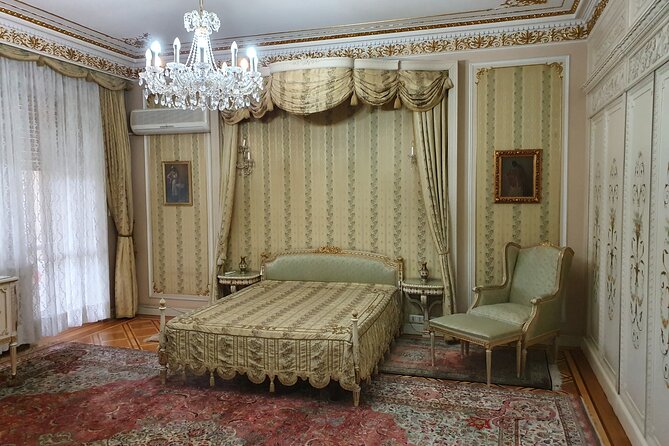
Revolution Square is one of the most important political locations in Bucharest. The 45-minute visit focuses on the Romanian Revolution of December 1989, when Ceaușescu’s rule came to an end.
This stop gives the tour its emotional center. The Palace of Parliament shows the regime at the height of its power. Revolution Square shows that power breaking apart in public.
You should expect the guide to connect the surrounding buildings and open space with the events of 1989. The location is free to visit, but its meaning is not simple. A good explanation matters because the Revolution involved fear, confusion, public protest, and a rapid change in power.
For me, this stop is one of the strongest reasons to book the tour. You are not only learning about an old political system. You are standing in a place tied to a modern turning point that shaped the Romania you see today.
Inside the Ceaușescu family home
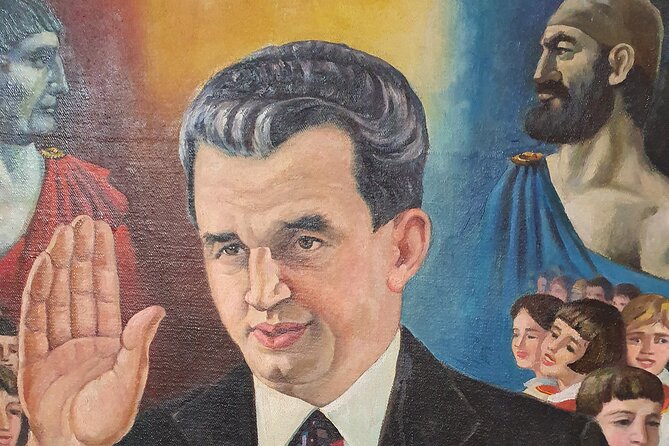
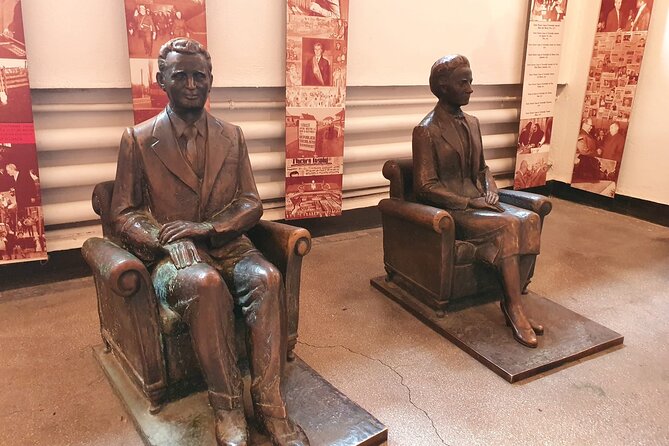
The Ceaușescu Mansion was the private residence of Nicolae and Elena Ceaușescu and their children, Nicu, Zoia, and Valentin, from 1965 until 1989. The scheduled visit lasts about 90 minutes.
This house provides a useful counterpoint to the Palace of Parliament. There, the regime presented itself through public grandeur. Here, you see the setting reserved for the ruling family.
The mansion can help you understand the gap between the official image of communist equality and the privileges enjoyed by the country’s leaders. Rooms, furnishings, and domestic spaces can make political history feel more immediate than a speech or timeline.
The entrance fee is not included. Since this is one of the main paid attractions, check the total entrance cost before you commit. The supplied price estimate of about 20 euros per person covers the listed attractions, but the exact charges may vary.
I would allow the full 90 minutes if you have an interest in political history. You can ask how the family’s residence fits with the public image of austerity and sacrifice. That private setting is one of the most revealing parts of the day.
The Patriarchal Cathedral and the religious side of Bucharest
The Romanian Orthodox Patriarchal Cathedral sits on Dealul Mitropoliei and functions as both a religious and civic landmark. The visit is planned for about 45 minutes, with admission not included.
Because it is an active cathedral, it remains part of daily religious life in Bucharest. Major Orthodox observances take place here, including Palm Sunday events. The cathedral is also known for its a cappella choir, a practice found across Orthodox worship.
This stop widens the tour beyond politics and architecture. Communism attempted to control public life, yet religious institutions and traditions remain an important part of Romania’s identity. The cathedral gives you a chance to consider that continuity.
You should remember that this is a working place of worship, not only a sightseeing attraction. The timing and access may depend on religious services or observances, and the tour data does not promise a particular interior visit. Treat it as a meaningful landmark with a religious function, rather than a guaranteed museum-style stop.
Nicolas and the private guiding style
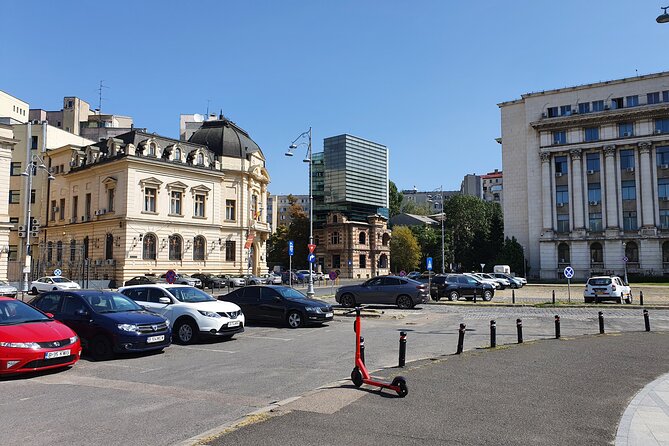
If Nicolas is assigned to your booking, you can expect a licensed English-speaking guide and driver throughout the day. The feedback connected with his tours describes him as friendly, polite, professional, and natural in his manner.
Those qualities matter on a subject as heavy as dictatorship. A guide who can explain difficult events without turning the day into a lecture will make the stops easier to absorb. Nicolas has also been associated with tailoring tours for families and small groups, which fits the flexible private format.
The car or minibus is reserved for you and your friends or family. All vehicle expenses are included, including fuel, parking, road tolls, and taxes. That removes the need to arrange separate transfers between the six locations.
The exact vehicle type depends on group needs, described as either a private car or tourism minibus. The tour is not shared with other groups. Most people can participate, and service animals are allowed.
The schedule remains fairly full. Six stops across six to seven hours means you will spend much of the day moving, looking, and listening. If you prefer long museum visits or a very slow pace, discuss priorities with the guide before departure.
What the $197.81 price really buys you
At $197.81 per person, this tour is not a bargain for a solo visitor. It becomes easier to justify for a private group that values door-to-door transport, personal questions, and control over the pace.
The price includes a private vehicle, a licensed English-speaking guide and driver, fuel, parking, road tolls, and taxes. Those inclusions matter in Bucharest because the itinerary spreads across several parts of the city.
You still pay for attraction entrances, and food and drinks are not included. The stated estimate for tourist attraction fees is about 20 euros per person. Add that amount when comparing this experience with a lower-priced city tour.
The strongest value comes from the combination of several major sights in one day. A cheaper option may cover central Bucharest, but it may not combine the Palace of Parliament, Village Museum, Ceaușescu Mansion, Revolution Square, and the Patriarchal Cathedral with a private guide.
Group discounts are offered, so the per-person cost may look better for a family or larger party. Since the tour is private, you are paying partly for convenience and control, not just for admission to buildings.
Who should book this experience
I would recommend this tour to you if Romania’s communist period is a main reason for visiting Bucharest. It suits first-time visitors who want the city’s political story explained in context rather than assembled from disconnected stops.
It is also a good fit for families, friends, or couples who prefer a private vehicle and do not want to share a guide. The flexible itinerary can help if your group wants to spend more time at the Palace of Parliament or Ceaușescu Mansion and less time elsewhere.
You should think twice if your priority is low cost. The base price is high, and admission tickets are extra. You should also consider the subject matter. Much of the day deals with dictatorship, political control, revolution, and inequality, so this is not a light sightseeing loop.
The Village Museum and cathedral provide balance, but the main focus remains Romania under communism. For that reason, it works best when you are ready to ask questions and compare the public and private sides of the period.
Practical details before you go
Pickup is offered, and the tour operates with your group alone. Confirmation is provided at booking, and the route can be changed with flexibility even after the tour starts, subject to what can reasonably fit into the day.
Public transportation is nearby, but you will not need to rely on it for the planned route because transportation is included. Food and drinks are not part of the package, so plan for your own refreshments during the long outing.
Free cancellation is available if you cancel at least 24 hours before the local start time. Cancellations inside that 24-hour window are not refunded, and changes made within that period are not accepted.
Should you book the Bucharest Communism Private Tour?
Book it if you want a focused, private explanation of Bucharest’s communist era and you value a guide who can adjust the day to your interests. The strongest stops are the Palace of Parliament, Revolution Square, and Ceaușescu Mansion, while the Village Museum and Patriarchal Cathedral add needed context.
Skip it if you are comparing tours mainly by price or if you want a relaxed day with only one or two sights. At $197.81 per person plus entrance fees, it earns its cost through private transport, a full-day route, and personal guiding. For a small group that wants the story of Ceaușescu’s Romania told in a clear sequence, it is a strong choice.
FAQ
How long does the Bucharest Communism Private Tour last?
The tour lasts approximately six to seven hours. The listed visits include the Palace of Parliament, Village Museum, Calea Victoriei, Revolution Square, Ceaușescu Mansion, and the Patriarchal Cathedral.
Is the tour private?
Yes. The car or minibus is reserved for you and your friends or family, and no other group participates.
Is transportation included?
Yes. A private car or tourism minibus is included, along with gasoline, parking, road tolls, and taxes.
Are entrance fees included?
No. Entrance fees are extra. The stated estimate is about 20 euros per person for all tourist attractions, and the Palace of Parliament entrance is also excluded.
Is pickup available?
Yes. Pickup is offered as part of the experience.
Can I cancel for a full refund?
Yes, if you cancel at least 24 hours before the experience begins. Cancellations made less than 24 hours before the start time are not refunded.
Just added around Bucharest
- Bucharest: Dealu Mare Winery Private Trip with Wine Tasting★ 4.9 · 6 reviews
- Winery touring & private wine tasting – one day private tour★ 5.0 · 3 reviews
- Village Museum Bucharest Guided Tour★ 5.0 · 6 reviews
- Transylvania Tour: Dracula’s Castle, Peles Palace & Brasov★ 5.0 · 19 reviews
- Discover Medieval Transylvania Small Group Tour – 7 days★ 5.0 · 4 reviews
- Bucharest Airport Transfer To Constanta Mamaia★ 5.0 · 3 reviews
- Airport Henri Coanda (Otopeni) to Bucharest – Private Transfer – Driver★ 5.0 · 5 reviews
- Gems of Transilvania: Brasov,Sighisoara,Sibiu,Viscri and more★ 5.0 · 6 reviews
Communism & Ceausescu Tours, compared.
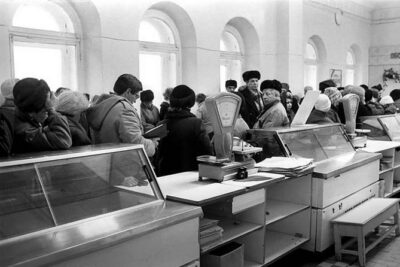
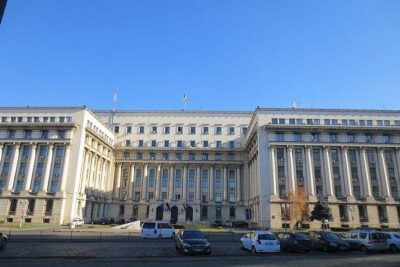
Communism in Bucharest – Landmarks, Museum & Communist Appetizers
Read our review →
Museum of Communism Ticket with Communist Coffee
Read our review →
Dinner+Tour at Museum of Communism after closing
Read our review →Browse the lists this tour appears in