
Reviewed · COMMUNISM & CEAUSESCU TOURS
Bucharest Under Communism: Life, Terror & Hope
Bucharest’s communist past is easiest to understand on foot, where grand avenues, hidden churches, protest sites, and oversized buildings tell the story together. This tour follows that path from Unirii Square to Revolution Square, linking Nicolae Ceaușescu’s grand plans with the shortages and fear that shaped daily life.
I like the tour’s clear route through major landmarks, especially the way it connects the Palace of the Parliament to the streets where people resisted the regime. I also like the human scale: guides such as Laura and Tamar use photographs, anecdotes, and personal stories to explain more than dates and political slogans.
The main consideration is walking time. The experience is listed at about three and a half hours, and several stops involve standing outdoors while listening. Palace of the Parliament entry is not included, so you view the building from different angles rather than touring its interior.
In This Review
- Key points to know before booking
- Why communist Bucharest makes a strong walking subject
- Starting at Unirii Square and Victory of Socialism Boulevard
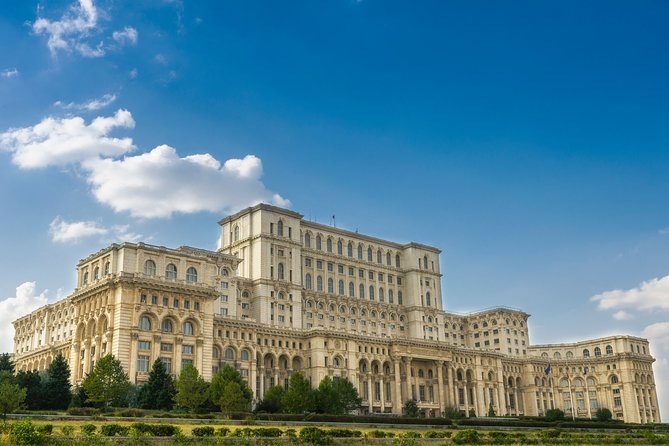
- Reading the Palace of the Parliament from the outside
- Mihai Voda Monastery and the churches that survived
- Revolution Square and Ceaușescu’s final speech
- University’s Square and the price of protest
- Guides, stories, and the value of a small group
- Is $23.22 good value for three and a half hours?
- Who should book this Bucharest history walk?
- Should you book it?
- FAQ
- Where does the tour begin?
- What time does the tour start?
- Where does the tour end?
- How long does the experience last?
- Is Palace of the Parliament admission included?
- What places are visited?
- How many people can join?
- Can I cancel for a full refund?
Key points to know before booking
- See Ceaușescu’s grand plan at Unirii Square: The fountains and broad former Victory of Socialism Boulevard show the scale of the dictator’s vision.
- Understand the cost of the Palace of the Parliament: You learn how forced labor, material shortages, and state spending shaped the building and the city around it.
- Find a medieval church behind communist blocks: Mihai Voda Monastery offers a sharp contrast to the demolition and rebuilding of the communist period.
- Stand where the 1989 Revolution unfolded: Revolution Square connects Ceaușescu’s final speech with the protests that ended his rule.
- Hear history presented with visual aids: Guides including Laura and Tamar use old photographs and anecdotes to make streets and buildings easier to read.
- Pay about $23.22 for a long, focused walk: The price is fair if you want context at each stop rather than a quick photo tour.
Why communist Bucharest makes a strong walking subject
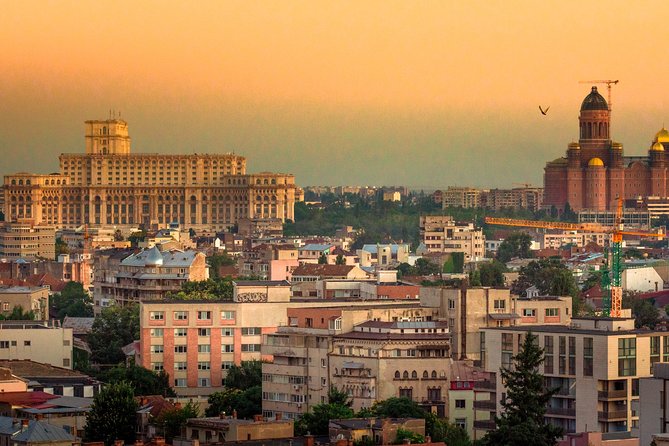
Bucharest can look confusing at first. A medieval church may sit beside a concrete apartment block. A grand boulevard can lead to a building that consumed enormous public resources while families struggled to find food, fuel, and basic goods. This tour helps you read those contrasts.
The subject is not limited to Ceaușescu. You also hear how Romania moved from monarchy into communist rule, how the party controlled religion and public space, and how ordinary life changed during the 45 years of communism. That wider frame matters because the city’s architecture alone cannot explain the fear and frustration behind it.
I especially value the focus on daily life. Political history can feel distant, but shortages and state control are easier to grasp when they are tied to homes, churches, streets, and familiar city spaces. The guides are also prepared to answer questions, which helps if you want to compare Romania with other communist countries.
The walk is presented as private and personalized, with a maximum of 15 people. That is small enough for questions and conversation, though you should not assume it will always be a one-to-one experience.
More communism & ceausescu tours in Bucharest:
- The Real tour of Communism
★ 5.0 · 666 reviews - Life under Communism
★ 5.0 · 358 reviews - 3-Hour Guided Tour of Communist Bucharest
★ 4.9 · 303 reviews
Starting at Unirii Square and Victory of Socialism Boulevard
The tour begins at Piața Sfântul Anton 64, near the center of Bucharest, at 4:00 pm. From there, the first major stop is Unirii Square, or Piața Unirii, a sensible place to begin because it shows the physical scale of late communist planning.
Unirii Square was designed during the final phase of Romanian communism. Its fountains and open space lead your eye toward the former Victory of Socialism Boulevard, now Unirii Boulevard. The avenue was built to create a grand approach to the dictator’s planned center of power.
This is where the tour’s main idea becomes visible: architecture was used to project authority. The broad road and monumental scale were not simply city improvements. They were part of a political image, designed to place the state and its leader above the older fabric of Bucharest.
You get about 30 minutes here. That is enough time to look at the fountains, understand the boulevard’s purpose, and hear how the area changed under Ceaușescu. It is also a useful opening because you can see the city as a planned stage before learning what happened behind that image.
Reading the Palace of the Parliament from the outside
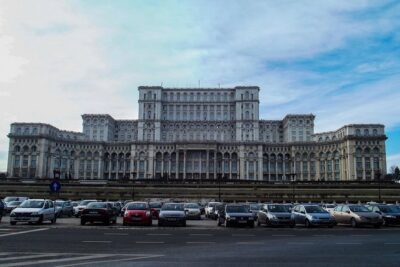
The Palace of the Parliament receives about an hour, making it the longest stop on the route. Admission is not included, and the itinerary focuses on viewing the building from different angles and hearing how it was built.
The numbers alone are startling. It is described as the second-largest building in the world after the Pentagon and the most expensive administrative building. Those facts explain its size, but the guide’s job is to show you the human cost behind them.
During the 1980s, Romania’s people endured severe shortages while vast amounts of money, material, and labor went into the project. The palace became a symbol of Ceaușescu’s megalomania, but it also reveals how the communist state made decisions without public consent.
The best part of this stop is the contrast between appearance and reality. From outside, the palace suggests power and permanence. The story behind it is one of sacrifice, coercion, and a city reshaped to satisfy one leader’s vision.
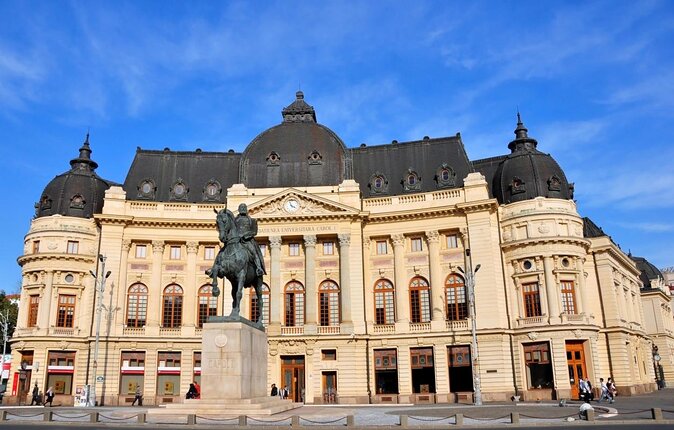
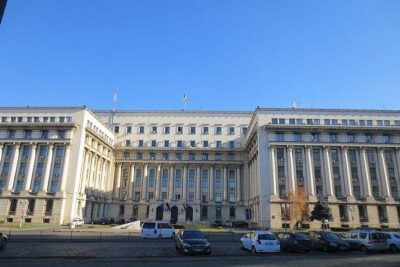
Across from the palace, you also see the Academia Romana building. It was intended for Elena Ceaușescu, Nicolae’s wife, and its large scale and similar style show that the grand building program extended beyond one structure.
Since there is no interior visit included, this tour is not the right choice if you want to see the palace’s halls and rooms. For a communist-era city walk, though, the exterior discussion gives you the context needed to understand why the building remains so controversial.
Mihai Voda Monastery and the churches that survived
After the palace, the walk turns toward Mihai Voda Monastery. This stop lasts about 30 minutes and provides one of the route’s most striking changes in mood.
Mihai Voda Church dates from the Middle Ages and survived the communist demolition campaigns. Its presence helps you picture what Bucharest looked like before large sections of the city were cleared and rebuilt.
The church is also a useful way to understand the regime’s approach to religion. Some churches were destroyed, while others survived in surprising ways. Churches hidden behind utilitarian buildings became a curious result of the period, with older religious sites concealed from the main streets.
That concealment says a great deal without requiring a long lecture. The buildings were not only places of worship. They were reminders of an older Romania, and the effort to hide or remove them reflected the party’s wish to control public memory.
I like this stop because it breaks up the monumental architecture. After the huge avenues and the palace, a surviving medieval church brings the story back to human scale. It also keeps the tour from presenting communism as only a story of concrete and government offices.
Same mountains, a completely different day out:
- Bucharest: Dracula’s Castle, Peles Castle, & Brasov Old Town
★ 4.5 · 17,858 reviews - Bucharest: Dracula Castle, Peles Castle & Brasov Old Town
★ 4.6 · 10,891 reviews - Bucharest: Dracula’s Castle, Peleș Castle & Brașov Day Trip
★ 4.5 · 5,919 reviews - Bucharest: Palace of Parliament Tickets and Guide
★ 4.3 · 3,182 reviews
Revolution Square and Ceaușescu’s final speech
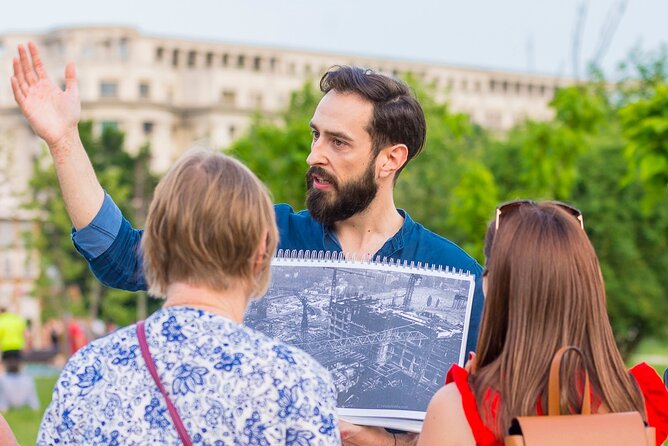
Revolution Square, or Piața Revoluției, is the emotional center of the walk. You spend about an hour here, examining the place where communist power began to crack and finally ended during the 1989 Revolution.
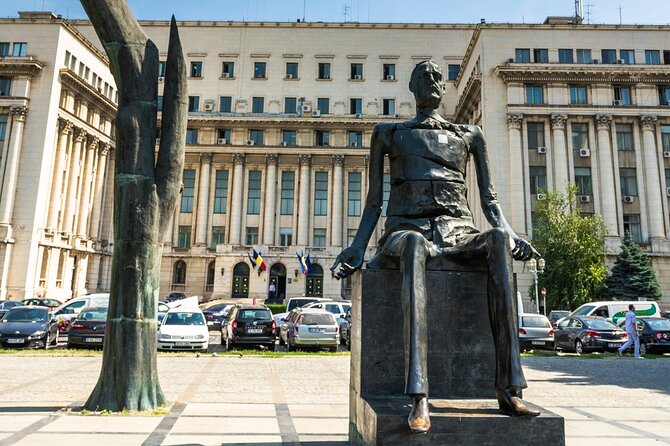
The square includes the former building that housed Ceaușescu’s office and the balcony where he gave his final speech. You learn how the speech began as a carefully managed public appearance, then turned into a moment of panic when the crowd stopped responding as expected.
The setting makes the political shift easier to grasp. A leader who had controlled public life for decades suddenly faced open rejection in front of the cameras and the people gathered below. From here, the tour explains the first mass demonstrations in Bucharest and the violence directed at those who challenged totalitarian rule.
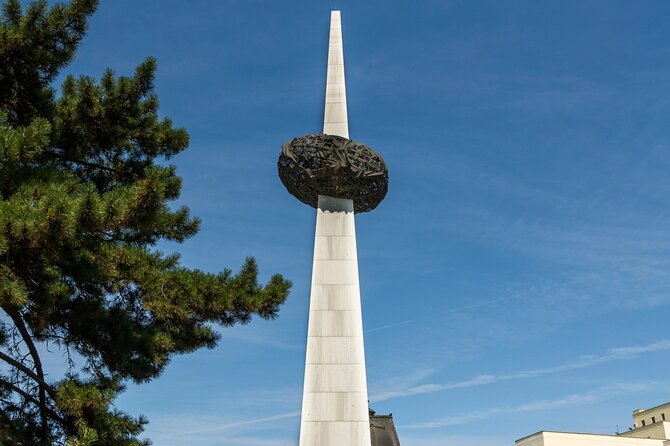
You also hear about the monument dedicated to the victims and the difficult aftermath of the Revolution. The end of Ceaușescu’s rule did not instantly settle every question. The story includes confusion, loss, and the uncertain move from socialism to democracy.
This is a stop where a good guide matters. Laura is described as having a history degree and using additional photographs to fit the pieces together. Tamar is also praised for mixing factual detail with anecdotes and for answering questions. You should expect the guide to do more than point out a balcony. The goal is to connect a physical place with the fear and courage attached to it.
University’s Square and the price of protest
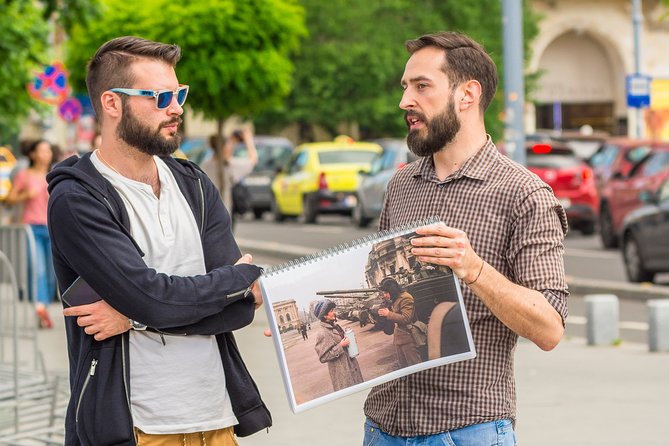
The final stop is University’s Square, another important site of the 1989 protests. The square became a center of opposition, with large demonstrations demanding a free society.
The account of hundreds being massacred here gives the stop a grave weight. It is not just a place for a final group photo. It is where the tour examines the danger faced by people who continued to protest after the old order began to weaken.
The walk ends at Revolution Square, which is about five minutes from Bucharest’s Old Town. That makes the finish convenient if you plan to continue with dinner or an evening walk. It also means the route ends near a lively part of the city after dealing with difficult material.
The tour is not designed to soften the past. Terror, repression, shortages, and death are part of the story. At the same time, the focus on hope and democratic change gives the route a clear arc. You begin with an authoritarian vision written into the city and finish with people demanding the right to shape their own future.
Guides, stories, and the value of a small group
The strongest feature of this experience is the guide-led explanation. Laura receives repeated praise for her clear English, warmth, historical background, and ability to answer detailed questions. Tamar is also described as well prepared, engaging, and good at combining facts with personal anecdotes.
Those details matter because this is not a route where the buildings explain everything by themselves. Without context, Unirii Square is just a fountain plaza, the palace is just a huge government building, and Revolution Square is just another central square.
The use of historical photographs is especially helpful. Old images can show demolished neighborhoods, earlier street scenes, or the appearance of a landmark during the communist period. They let you compare the current city with the one that Ceaușescu tried to replace.
The small maximum group of 15 should make it easier to hear and ask questions. Some groups may be much smaller, but that is not guaranteed. The private-tour description suggests a personal approach, while the group limit indicates that other people may join.
A break at Bucharest’s oldest cake store has also been included on some versions of the experience. Since this is not listed as a formal stop, treat it as a possible extra rather than a promise. If it happens, it adds a welcome local pause to a serious afternoon.
Is $23.22 good value for three and a half hours?
At $23.22 per person, the tour offers solid value for a focused history walk. You are paying for roughly three and a half hours of guiding, five substantial stops, and an explanation of Bucharest’s modern political past.
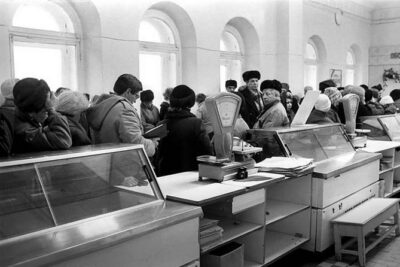
The value is strongest if you are new to Romania or want a firm framework for understanding the capital. You will cover the monarchy-to-communism transition, Ceaușescu’s rule, the social cost of his building projects, religious repression, the 1989 protests, and the move toward democracy.
The price does not include admission to the Palace of the Parliament. That is important if you were expecting an interior tour. This experience is best judged as an outdoor walking tour with serious historical commentary, not as a palace visit.
You should also budget for time and energy. The route lasts about three hours and 30 minutes, and most of it is on foot. Comfortable shoes and attention to the weather will make a difference, especially because the experience requires good weather and may be rescheduled or refunded if conditions are poor.
Who should book this Bucharest history walk?
I would choose this tour if you want to understand the city beyond its Old Town and grand facades. It suits first-time visitors, people interested in twentieth-century European history, and anyone curious about how dictatorship changes ordinary urban life.
It is also a strong choice for Romanians who know the broad outline but want more detail about Bucharest’s buildings and protest sites. The route connects national events with specific streets, churches, squares, and offices, which can reveal details even to someone familiar with the capital.
You may want something else if you mainly want interior access to the Palace of the Parliament, a short two-hour orientation, or a relaxed sightseeing walk with little political discussion. This is a serious subject, and the route spends real time on repression and loss.
The meeting point is in central Bucharest and near public transportation. Most people can take part, and service animals are allowed. Confirmation arrives at booking, and free cancellation is available up to 24 hours before the 4:00 pm start. If you cancel later, the payment is not refunded, and poor weather may lead to a new date or full refund.
Should you book it?
Book this tour if you want the story behind Bucharest’s communist architecture, not just photographs of it. The route is well planned, the price is modest for the time involved, and guides such as Laura and Tamar bring useful visual material and personal detail to places that can otherwise feel hard to read.
I would make it an early activity in your Bucharest visit. By the end, you will have a clearer sense of why the palace is admired and disliked, why hidden churches matter, and why Revolution Square carries such weight. Just arrive ready to walk, listen, and spend an afternoon with Romania’s difficult past.
FAQ
Where does the tour begin?
The tour begins at Piața Sfântul Anton 64, București 030167, Romania.
What time does the tour start?
The scheduled start time is 4:00 pm.
Where does the tour end?
The tour ends at Revolution Square, Piața Revoluției, Bucharest. The square is about five minutes from the Old Town.
How long does the experience last?
The advertised duration is approximately 3 hours and 30 minutes.
Is Palace of the Parliament admission included?
No. Admission to the Palace of the Parliament is not included. The tour covers views of the building from different angles and explains its history.
What places are visited?
The route includes Unirii Square, the Palace of the Parliament, Mihai Voda Monastery, Revolution Square, and University’s Square.
How many people can join?
The activity has a maximum group size of 15 people. It is also described as a private, personalized experience.
Can I cancel for a full refund?
Yes, if you cancel at least 24 hours before the experience start time. Cancellations made less than 24 hours in advance are not refunded, and changes within that period are not accepted. If poor weather causes the tour to be canceled, you will be offered another date or a full refund.
Just added around Bucharest
- Village Museum Bucharest Guided Tour★ 5.0 · 6 reviews
- Bucharest: Dealu Mare Winery Private Trip with Wine Tasting★ 4.9 · 6 reviews
- Winery touring & private wine tasting – one day private tour★ 5.0 · 3 reviews
- Transylvania Tour: Dracula’s Castle, Peles Palace & Brasov★ 5.0 · 19 reviews
- Discover Medieval Transylvania Small Group Tour – 7 days★ 5.0 · 4 reviews
- Bucharest Airport Transfer To Constanta Mamaia★ 5.0 · 3 reviews
- Airport Henri Coanda (Otopeni) to Bucharest – Private Transfer – Driver★ 5.0 · 5 reviews
- Gems of Transilvania: Brasov,Sighisoara,Sibiu,Viscri and more★ 5.0 · 6 reviews
Communism & Ceausescu Tours, compared.
Communism in Bucharest – Landmarks, Museum & Communist Appetizers
Read our review →

Museum of Communism Ticket with Communist Coffee
Read our review →
Dinner+Tour at Museum of Communism after closing
Read our review →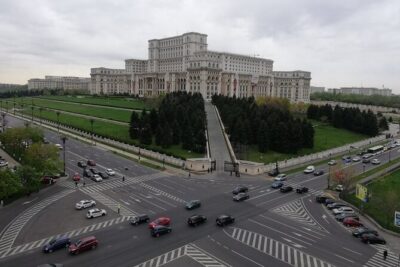
Contrasts of Communism – Small Group Walking Tour in Bucharest
Read our review →Browse the lists this tour appears in