
Reviewed · COMMUNISM & CEAUSESCU TOURS
Communism in Bucharest – Landmarks, Museum & Communist Appetizers
Ceaușescu’s Bucharest is best understood on foot, where oversized boulevards, vanished neighborhoods, and revolution sites sit close together. This three-hour walk links the Palace of Parliament with the places where communist power cracked in December 1989, then ends in a small museum filled with everyday objects.
I like the small-group format, which gives guides room to explain difficult subjects and answer questions. I also like the museum stop, where you can try on period clothing and eat a communist-era snack rather than simply look at monuments. The main drawback is that you do not enter the Palace of Parliament, and the political history can feel dense if you prefer a light sightseeing walk.
In This Review
- Key points before you book
- What this Bucharest communist tour is really about
- The Palace of Parliament and Ceaușescu’s impossible plan
- Manastirea Antim, a survivor of demolition
- Bloc 6 and the boulevard built for display
- Revolution Square and Ceaușescu’s final speech
- University of Bucharest and the unfinished road to democracy
- A small museum with clothes, coffee, and communist-era snacks
- How the guides shape the experience
- Is $48.37 a fair price?
- Timing, meeting point, and practical details
- Who should book this walk?
- Should you book Communism in Bucharest?
- FAQ
- How long does the Communism in Bucharest tour last?
- Where does the tour begin?
- Where does the tour end?
- Do you enter the Palace of Parliament?
- What is included in the museum visit?
- Is food or coffee included?
- What is the maximum group size?
- Can I cancel for a full refund?
Key points before you book
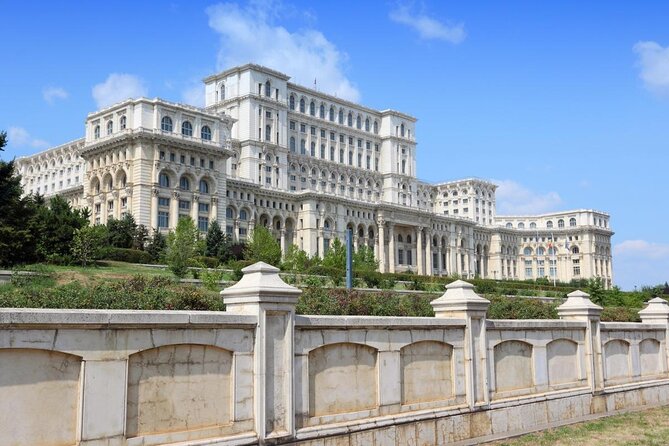
- The Palace of Parliament is viewed from outside, with the tour focusing on Ceaușescu’s plans and the cost of building them.
- Manastirea Antim survived the demolition campaign, while another part of Bucharest was moved to make way for the dictator’s grand design.
- Revolution Square and University Square connect the walk to Ceaușescu’s final speech and the events of December 1989.
- The museum is hands-on, with clothing to try, household exhibits, communist coffee, and one sweet or salty snack.
- Guides add personal detail, with Ali, Maria, and Gabriela, also called Gabi, specifically praised for clear explanations and personal stories.
- The walk ends at Revolution Square, not back at the starting point, so plan your next stop from there.
What this Bucharest communist tour is really about
This is not simply a list of large buildings and dates. The walk tries to show how political power changed the shape of Bucharest, then how ordinary people pushed back.
You begin at Bulevardul Unirii 1-3 at 10:00 in the morning. From there, the route heads toward the Palace of Parliament and continues through old religious and civic areas before finishing at Revolution Square. The route is on foot, and the pace includes several short stops rather than one long lecture.
The subject can be grim. Ceaușescu’s regime brought strict control, shortages, surveillance, and a building program that reshaped central Bucharest. A good guide has to explain both the grand scale of the project and its human cost. Ali, Maria, and Gabriela have each been singled out for being clear, friendly, professional, and good at explaining the subject to families and children.
The group is advertised as no more than 15 people, while the booking details also list a maximum of eight. That inconsistency is worth checking when you reserve. Either way, this is intended to be a small-group walk rather than a large city procession, and that matters when you want to ask about sensitive or complicated parts of Romania’s past.
More communism & ceausescu tours in Bucharest:
- The Real tour of Communism
★ 5.0 · 666 reviews - Life under Communism
★ 5.0 · 358 reviews - 3-Hour Guided Tour of Communist Bucharest
★ 4.9 · 303 reviews
The Palace of Parliament and Ceaușescu’s impossible plan
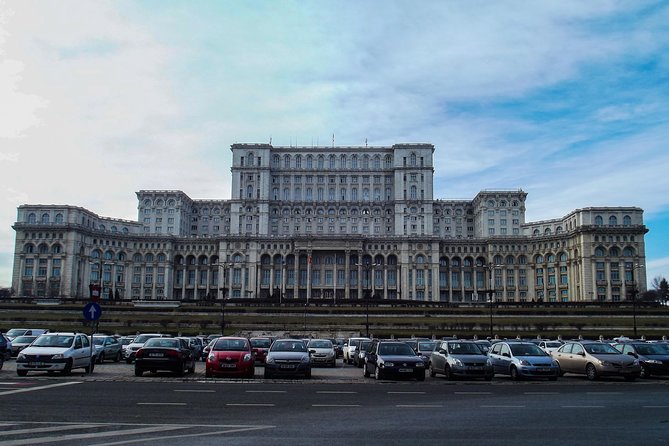
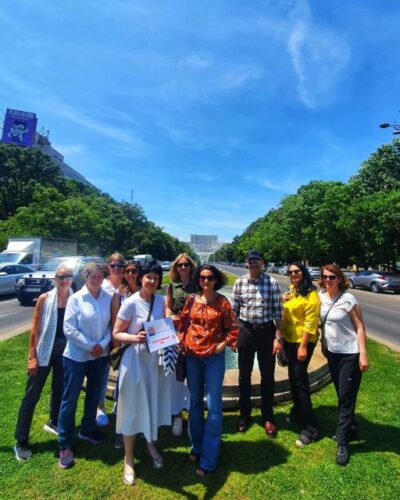
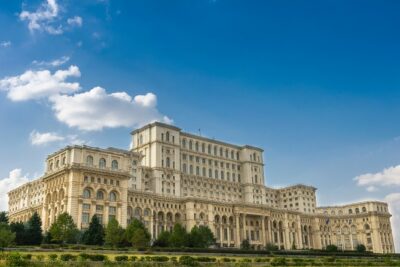
The opening stop gives you about 20 minutes outside the Palace of Parliament. You will hear why it was built, how the project took shape, and what Ceaușescu wanted the building and surrounding boulevard to say about his rule.
The building is the visual center of this part of Bucharest. Its scale is the point. The surrounding avenues were planned to project authority, order, and power, with the palace at the heart of the scheme. Your guide explains the thinking behind that plan, along with the less comfortable question of what had to disappear to make room for it.
You do not go inside the Palace of Parliament on this tour. That is the most important limitation at the first stop. If you want an interior visit, you need to arrange that separately, but the exterior discussion still provides a useful introduction to the rest of the walk.
I find the outside setting valuable because you can see the relationship between the palace, the boulevard, and the city around it. This is not an isolated monument. It is part of a deliberate reshaping of Bucharest, and the tour helps you read that plan.
The stop lasts only about 20 minutes, so expect a focused explanation rather than every architectural detail. Wear comfortable shoes and listen for the story of the city that was removed or altered to fulfill one leader’s vision.
Manastirea Antim, a survivor of demolition
The next stop is Manastirea Antim, an 18th-century monastery. It offers a sharp contrast with the massive government architecture nearby.
The monastery survived the demolition carried out during the communist period. That fact alone makes it an important stop, but the guide also explains that another part of the city was moved entirely to serve the dictator’s building plans. The contrast is striking: one religious site remained, while other structures were treated as obstacles to be shifted or erased.
You have about 15 minutes here. That is enough for context and a look at the site, but not a full religious architecture tour. The monastery is included as part of the larger story of forced change, not as a separate art-history visit.
This stop also helps prevent the tour from becoming a parade of communist monuments. You get a glimpse of the older Bucharest that existed before the regime’s major building schemes. For me, that makes the political story easier to understand because you can see what the new city was built over and around.
Bloc 6 and the boulevard built for display
The stop at Bloc 6 lasts about 10 minutes and focuses on the boulevard constructed in front of the Palace of Parliament. The guide uses this section to explain the secrets and purpose of the broad avenue.
Do not expect a long architectural visit. This is a quick urban-planning stop, but it adds an important piece to the puzzle. The boulevard was not just a road for traffic. It formed part of the stage set for Ceaușescu’s version of Bucharest, directing attention toward the palace and making the city feel ordered around it.
Short stops such as this are useful because they keep the walk moving. The tradeoff is that you will not spend much time at any single building. If you enjoy detailed architecture, photography, or long museum visits, the pace may feel brisk. If you want the main story in three hours, the structure works well.
A few more Bucharest trips to weigh up
- Bucharest: Museum of Senses Entry Ticket
★ 4.2 · 364 reviews - Bucharest: Entry ticket at the Museum of Communism
★ 4.6 · 57 reviews - Bucharest: Museum of Communism Ticket with Communist Coffee
★ 4.6 · 52 reviews - Bucharest: Dinner+Tour at Museum of Communism after closing
★ 4.9 · 46 reviews
Revolution Square and Ceaușescu’s final speech
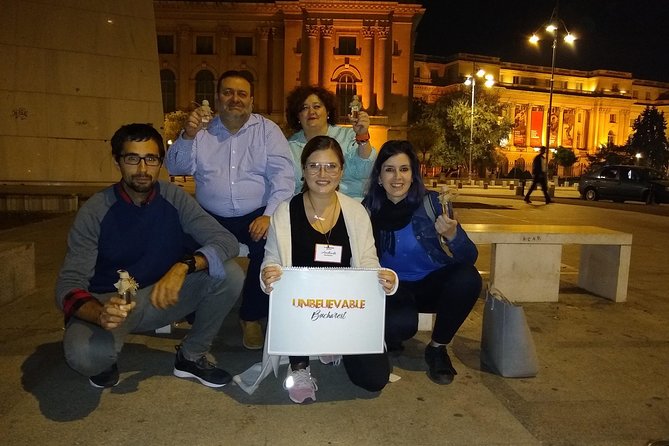
Revolution Square is the emotional center of the walk. You spend about 20 minutes here, learning about Ceaușescu’s last speech and the beginning of the Bucharest uprising on December 21, 1989.
This is where the tour shifts from construction and control to collapse. The square connects the final public appearance of the regime with the events that followed. Your guide explains how the revolution began in Bucharest and why this location remains tied to the end of communist rule.
I would pay close attention here to the sequence of events rather than trying to memorize every date. The value of the stop is the setting. You are standing in a civic space where official power was displayed, then challenged.
The walk does not treat the revolution as a distant textbook event. Guides can add personal stories, and Gabriela, also called Gabi, is specifically praised for sharing her own experiences and making the subject more personal. That sort of first-hand perspective can give the stop more weight, especially for visitors who know the broad outline but not the Romanian details.
University of Bucharest and the unfinished road to democracy
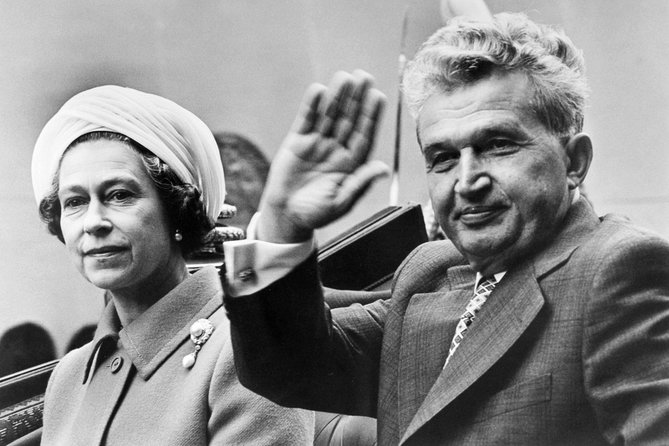
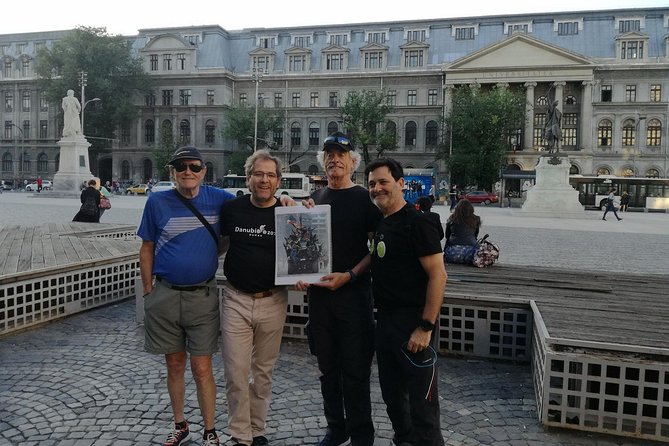
The tour continues to the small square beside the University of Bucharest. The square carries the name 21 December 1989 because much of the Romanian revolution took place here.
This stop lasts about 15 minutes and moves beyond the fall of Ceaușescu. The guide discusses post-communist Romania, the mistakes made on the way toward democracy, and the problems that followed the revolution. That makes the tour more useful than a simple before-and-after story.
Romania’s change did not end when the old regime fell. The walk gives you a chance to ask what happened next and why a new political system did not instantly solve every problem. For families, this section may need a little extra explanation, but Maria has been praised for making the communist history understandable for children.
The University setting also brings the subject back to ordinary civic life. This is not only a story about palaces and politicians. It is about students, public squares, protests, and the way people use city spaces when they want change.
A small museum with clothes, coffee, and communist-era snacks
The final stop is the Communism Museum of Bucharest, also called Undeva in Comunism. You spend about 40 minutes inside, making it the longest single stop of the tour.
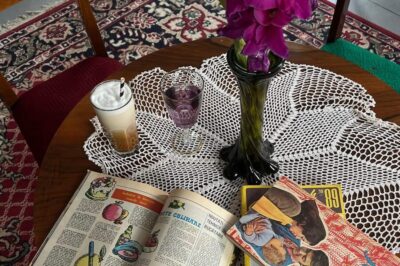
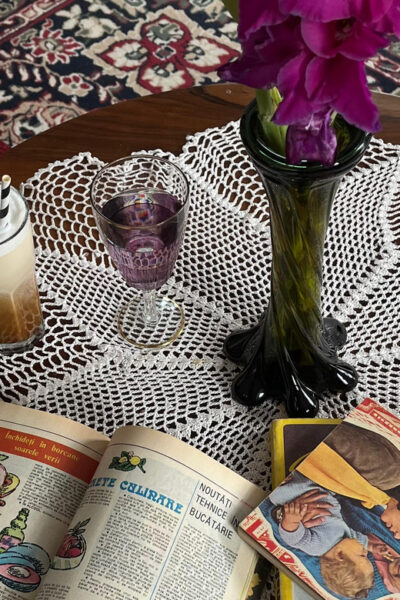
The museum is interactive. You can handle or examine exhibits, try on clothes, and sit in a living-room setting while having communist coffee and a popular snack. The snack may be sweet or salty, depending on what is available. Other drinks are not included.
This part gives the tour a more domestic scale. The Palace of Parliament explains the regime from above, while the museum suggests what daily life felt like inside an ordinary home. Household objects and clothing can make the period easier to picture than dates and political slogans alone.
The museum is small, so do not expect a huge national collection. Its strength is the personal scale and the chance to interact with the displays. A family can use the clothing and objects to start questions about how people lived, what they had access to, and how much the state shaped daily routines.
I especially like that the snack is built into the visit. It is a modest detail, but food can make a history lesson stick. Keep your expectations sensible: this is a themed communist-era snack, not a full meal, and availability determines whether you receive something sweet or salty.
The museum is also where the included admission matters most. The ticket is covered, and the visit includes skip-the-line entry. Since the museum stop is only about 40 minutes, not having to deal with a separate admission process helps keep the route on schedule.
How the guides shape the experience
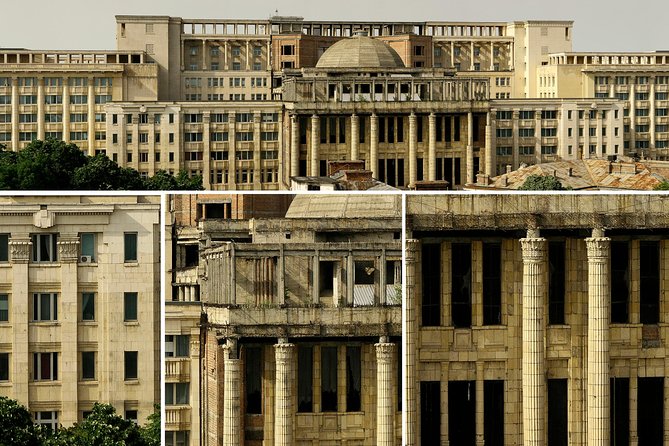
The guide is central to this tour. The subject includes authoritarian politics, demolition, revolution, and post-communist problems, so a flat presentation would make the walk tiring.
The guides named in the feedback are Ali, Maria, and Gabriela, or Gabi. Ali is praised for setting a comfortable pace while explaining the subject clearly. Maria is noted for adapting the material for children. Gabi adds personal stories and a sense of humor without losing the serious side of the history.
That range is useful if you are choosing this for a mixed group. Children may connect with the clothes and museum objects, while adults may prefer the political background and personal accounts. The tour appears to work best when you ask questions, since the small group makes conversation easier.
The pace is another advantage. Each outdoor stop lasts between 10 and 20 minutes, followed by a longer museum visit. You get enough time to orient yourself without spending the whole morning in one square.
Is $48.37 a fair price?
At $48.37 per person, this is not the cheapest way to see Bucharest’s major sights. The price makes more sense if you want interpretation, a structured route, museum entry, and a small-group setting rather than only a self-guided walk.
The fee includes an English-speaking guide, all taxes and fees, admission to the Communism Museum, skip-the-line entry, communist coffee, and one snack. It does not include drinks beyond the coffee, guide gratuity, or hotel pickup and drop-off unless you select a transfer option.
The Palace of Parliament is seen from outside, so the value does not come from an interior palace ticket. It comes from connecting six stops into one story and having someone explain the details that are easy to miss on your own.
I would call the price reasonable for visitors who are seriously interested in Romania’s communist period. If you only want landmark photos, it may feel expensive. If you want to understand why the city looks the way it does and how Bucharest moved through the 1989 revolution, the included guide and museum make the cost easier to justify.
Timing, meeting point, and practical details
The walk begins at Bulevardul Unirii 1-3 in Bucharest at 10:00 a.m. It ends at Revolution Square, so you finish in a central area rather than returning to the start. That is helpful if you plan to continue sightseeing from there.
The tour lasts about three hours. The stop times add up to roughly two hours, leaving time for walking, explanations, and transitions between sites. Plan on being outdoors for much of the morning, with a longer indoor stop at the museum.
Most people can take part, and the tour is near public transportation. Service animals are allowed. The activity requires at least two people to operate, and you need to book at least 12 hours ahead.
Free cancellation is available if you cancel at least 24 hours before the start time. Changes or cancellations inside that period are not accepted for a refund. The tour also depends on suitable weather and a minimum number of participants. If the operator cancels for either reason, you are offered another date or experience, or a full refund.
The tour is offered in English. Group discounts may be available, which could help if you are booking for a family or several friends.
Who should book this walk?
I would recommend it to first-time visitors who want a clear introduction to Bucharest’s communist past. It also suits anyone interested in urban planning, political history, the 1989 revolution, or the way ordinary life changed under dictatorship.
Families can make good use of it, especially because the museum includes objects and clothes rather than only written displays. Maria’s ability to explain the subject to children is a useful point in its favor, but parents should still consider whether their children can manage a serious history walk lasting three hours.
This is less suitable if you want to enter the Palace of Parliament, spend a long time inside each site, or focus on medieval and royal Bucharest. It is also not a food tour. The snack and coffee add character, but they are a small part of the program.
Should you book Communism in Bucharest?
Book this tour if you want context more than checklists. The Palace of Parliament, Revolution Square, University Square, and Manastirea Antim become connected pieces of one story, and the museum gives that story a human scale.
Skip it if your main goal is an interior visit to the palace or a relaxed stroll with little political discussion. For everyone else, the combination of a small group, strong English-language guiding, a hands-on museum, communist coffee, and a snack makes this a useful three-hour introduction to modern Bucharest.
FAQ
How long does the Communism in Bucharest tour last?
The tour lasts approximately three hours, including the walking route and the museum visit.
Where does the tour begin?
The meeting point is Bulevardul Unirii 1-3, București 040101, Romania. The start time is 10:00 a.m.
Where does the tour end?
The tour ends at Revolution Square, also called Piața Revoluției, in Bucharest.
Do you enter the Palace of Parliament?
No. The tour discusses the Palace of Parliament from outside and does not include entry into the building.
What is included in the museum visit?
Admission to the Communism Museum of Bucharest is included, along with skip-the-line entry. You can interact with exhibits and try on clothing at the museum.
Is food or coffee included?
Yes. The tour includes communist coffee and one popular communist-era snack. The snack may be sweet or salty, depending on availability. Other drinks are not included.
What is the maximum group size?
The tour information describes a maximum of 15 people, while the additional booking details also list a maximum of eight. Confirm the current group limit when booking.
Can I cancel for a full refund?
Yes, if you cancel at least 24 hours before the experience start time. Cancellations or changes made less than 24 hours before the start are not refunded.
Just added around Bucharest
- Village Museum Bucharest Guided Tour★ 5.0 · 6 reviews
- Bucharest: Dealu Mare Winery Private Trip with Wine Tasting★ 4.9 · 6 reviews
- Winery touring & private wine tasting – one day private tour★ 5.0 · 3 reviews
- Transylvania Tour: Dracula’s Castle, Peles Palace & Brasov★ 5.0 · 19 reviews
- Discover Medieval Transylvania Small Group Tour – 7 days★ 5.0 · 4 reviews
- Bucharest Airport Transfer To Constanta Mamaia★ 5.0 · 3 reviews
- Airport Henri Coanda (Otopeni) to Bucharest – Private Transfer – Driver★ 5.0 · 5 reviews
- Gems of Transilvania: Brasov,Sighisoara,Sibiu,Viscri and more★ 5.0 · 6 reviews
Communism & Ceausescu Tours, compared.
Museum of Communism Ticket with Communist Coffee
Read our review →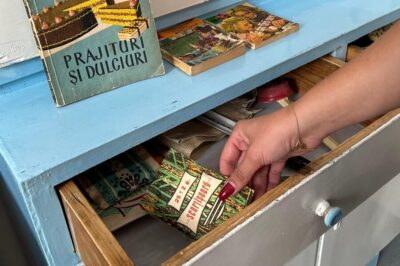
Dinner+Tour at Museum of Communism after closing
Read our review →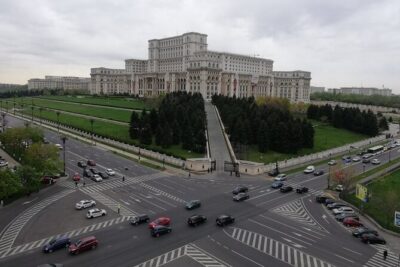
Contrasts of Communism – Small Group Walking Tour in Bucharest
Read our review →Browse the lists this tour appears in