
Reviewed · COMMUNISM & CEAUSESCU TOURS
Bucharest Communist Bike Tour
Bucharest’s communist past is easiest to grasp when you move through the city itself. This four-hour bike tour links old political centers, grand state projects, unfinished monuments, and the places tied to Nicolae Ceaușescu’s fall. Instead of treating the Palace of Parliament as a stand-alone photo stop, it places that building inside the larger story of how Romania changed.
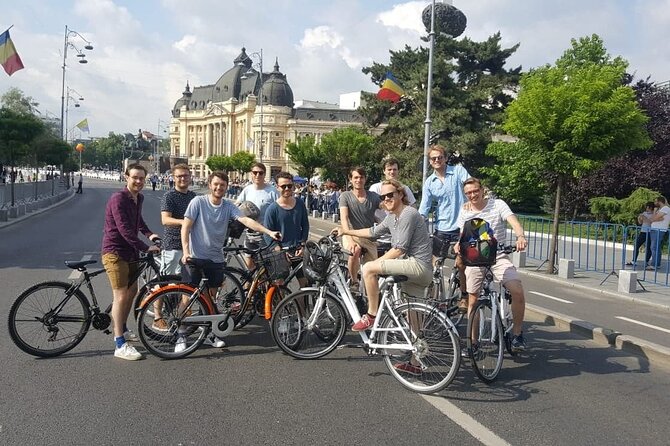
I like the private format, since your group can focus on questions without being folded into a large crowd. I also like the route’s sharp contrasts, from the Old City and Patriarchal Cathedral to Casa Radio, an unfinished communist project. The main consideration is that the tour is about historical explanation as much as cycling, so anyone seeking a fast ride with little commentary may find the pace slow.
In This Review
- Key points to know before booking
- Why a bike is a smart way to read Bucharest
- Starting at CEC Palace and the Old City
- Patriarchal Cathedral and the first communist power play
- The Palace of Parliament and communist grand ambition
- Bragadiru Palace and the old city’s sharp contrast
- National College of Defence and the story of liberation
- Casa Radio, an unfinished museum of communist history
- Piața Revoluției and the fall of Ceaușescu
- What the guide adds to the ride
- Price, timing, and practical value
- Who should book this Bucharest bike tour?
- FAQ
- How long does the Bucharest Communist Bike Tour last?
- Where does the tour start?
- What time does the morning tour begin?
- Is an afternoon tour available?
- Where does the tour end?
- Is this a private tour?
- Is food or drink included?
- Can children join the tour?
- Should you book it?
Key points to know before booking
- Seven meaningful stops: The route covers the Old City, Patriarchal Cathedral, Palace of Parliament, Bragadiru Palace, National College of Defence, Casa Radio, and Piața Revoluției.
- A private four-hour outing: Only your group takes part, which makes it easier to ask about Romania’s political past.
- Alex may lead your tour: The named guide in the available feedback is Alex, praised for his enthusiasm and clear command of Romanian history.
- A useful way to connect distant sights: Cycling helps you transfer between landmarks without spending the whole morning in a vehicle.
- Morning or afternoon planning: The listed morning start is 9:30 am, while an afternoon choice is also offered.
- Bring your own refreshments: Food and drinks are not included, so plan ahead for a four-hour activity.
Why a bike is a smart way to read Bucharest
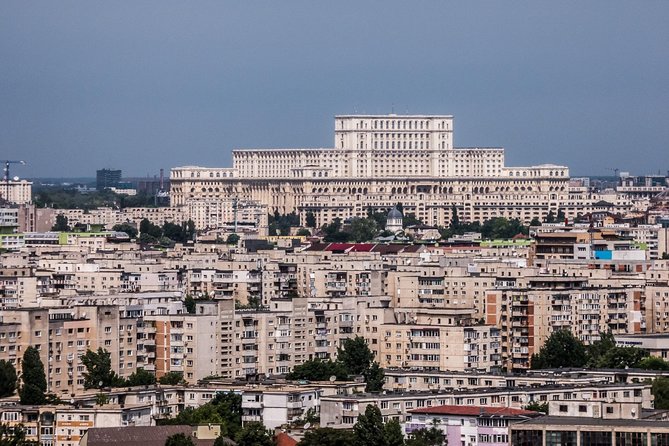
Bucharest can feel spread out when you try to connect its old center with the monumental districts shaped by communism. On foot, the distance between major sights can eat up much of your day. By bike, you spend more time looking at the city and less time arranging transfers.
The bike is not the point of the tour in the way it might be on a countryside cycling trip. You are using it as a practical link between historic sites. That makes this a good fit if you want a city tour with movement, but do not want a physically demanding all-day ride.
The route lasts about four hours. That is enough time for context at each stop, but not so much that the subject becomes a full academic lecture. You will want to allow the whole morning or afternoon, since the value comes from the connections between places rather than from rushing through a checklist.
The private setup matters. Only your own group participates, and that gives the guide room to adjust explanations to your interests. If one person in your group wants more detail about communist architecture, the 1989 revolution, or the earlier political story, you can ask without holding up a large party.
More communism & ceausescu tours in Bucharest:
- The Real tour of Communism
★ 5.0 · 666 reviews - Life under Communism
★ 5.0 · 358 reviews - 3-Hour Guided Tour of Communist Bucharest
★ 4.9 · 303 reviews
Starting at CEC Palace and the Old City
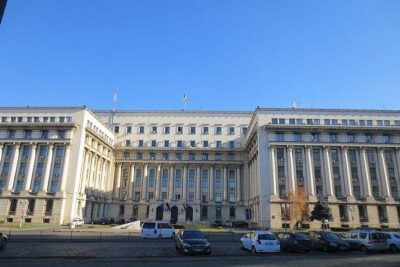
The tour begins at Strada Operetei 12, near the Old City center. The first stop is CEC Palace, officially Palatul CEC, where the guide sets up the political and social world that existed before the communists took power.
This opening is important because Romania’s communist period did not begin in a vacuum. The Old City helps you see the earlier order before the tour moves into the government buildings and grand schemes of the communist era. A forty-minute stop gives this part of the story proper weight.
You will not be charged an admission fee at the listed stops. The focus is on seeing the buildings and public spaces from outside while your guide explains their place in Bucharest’s story. That keeps the tour moving and avoids spending the entire outing indoors.
I would pay close attention here, even if your main interest is communist architecture. The first stop supplies the comparison needed for the rest of the route. Without it, the later buildings can seem like isolated oddities instead of parts of a deliberate political transformation.
Patriarchal Cathedral and the first communist power play
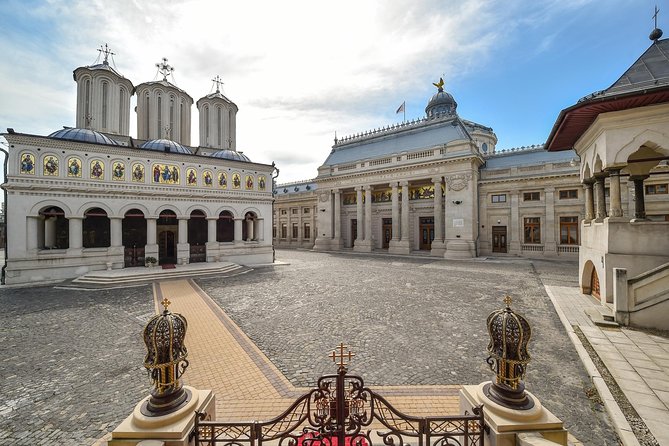
The next stop is the Patriarchal Cathedral, Catedrala Patriarhală, on a shorter fifteen-minute visit. Here the guide discusses Romania’s first Parliament and the first communist attempt to take power.
This is a compact stop, so do not expect an extended church visit. Its purpose is political context. The cathedral and surrounding area help show how religious, civic, and political institutions occupied the same central ground.
For you, this stop works best as a bridge between the old order and the communist takeover. The guide’s explanation should help clarify that the change was a struggle for power, not simply an overnight switch from one style of architecture to another.
The stop is free, like the others listed on the route. If you need extensive time inside religious buildings, this tour does not promise that. Its strength is the wider story told from several connected sites.
The Palace of Parliament and communist grand ambition
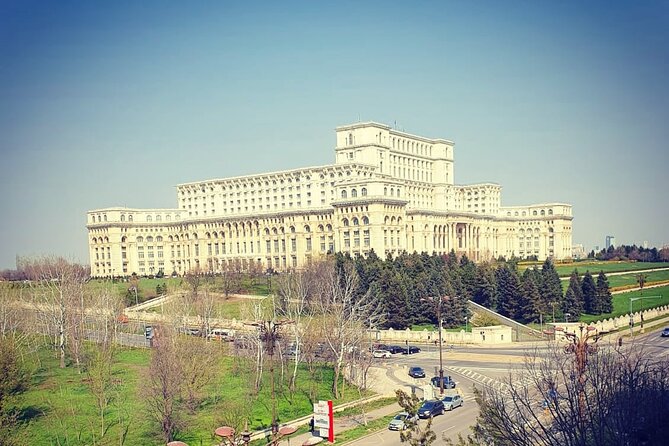
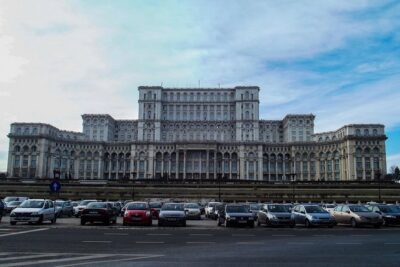
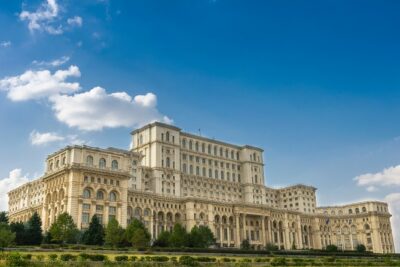
The Palace of Parliament is the route’s best-known landmark and its clearest example of communist excess. The tour treats it as Ceaușescu’s last megalomaniac project, a building designed to express state power on a vast scale.
The scheduled stop is about fifteen minutes. That is enough for an exterior look and an explanation of why the building matters, but it is not an interior tour. This distinction is worth noting before you book. If you want to visit the inside, you will need to arrange that separately.
The building is most useful here as part of a sequence. First you see the social and political order before communism, then the early power struggle, and then the late regime’s giant statement in stone. The progression gives the Palace of Parliament more meaning than a quick photograph can provide.
I like that the route does not treat size as the whole story. The building represents a government trying to reshape the capital and display its control. You also get a sense of the human cost and political pressure behind such an enormous project through the guide’s explanation, although the exact level of detail can vary with your questions.
A few more Bucharest trips to weigh up
- Bucharest: Half Day Bike Tour
★ 4.9 · 379 reviews - Bucharest Half a Day Bike Tour
★ 5.0 · 325 reviews - Bucharest: 2-Hour City Highlights Bike Tour
★ 4.8 · 269 reviews - Bucharest Highlights Bike Tour
★ 5.0 · 102 reviews
Bragadiru Palace and the old city’s sharp contrast
Bragadiru Palace receives only five minutes, making it a quick visual stop. Its value is the contrast between an older social order and the new communist one.
This is a good example of why the bike format helps. You can pause at a building, hear the point, and move on before the route loses momentum. A five-minute stop would not justify a special trip on its own, but it fits neatly into a connected city route.
The palace gives the tour another architectural comparison. Instead of viewing communist buildings in isolation, you see how they replaced, challenged, or reinterpreted earlier forms of wealth and public life. That comparison is one of the more useful parts of the day for anyone trying to understand Bucharest beyond its headline monument.
Do not expect a long stop or a full architectural survey here. The guide uses Bragadiru Palace as a short, pointed example. Its role is to sharpen the contrast, not to dominate the tour.
National College of Defence and the story of liberation
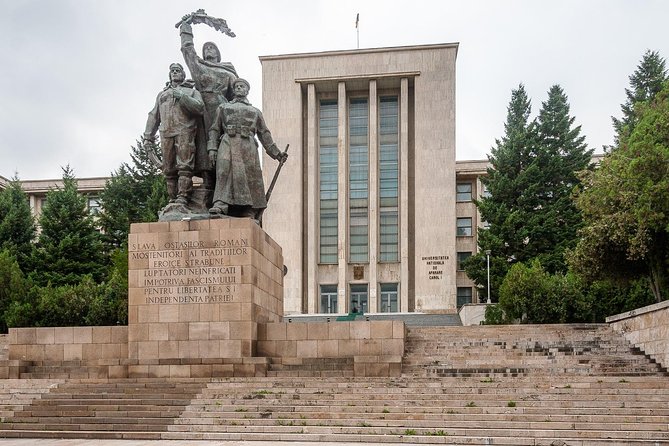
At the National College of Defence, the tour spends about twenty minutes on a more political subject: the idea of a counterfactual history, the role of the Russian army, and the communist movement presented as a liberating force from a fascist government.
This is one of the route’s more challenging stops because it deals with competing political narratives. A good explanation here should help you separate official claims from the complicated events behind them. The point is not just to name buildings, but to ask how governments justify a change in power.
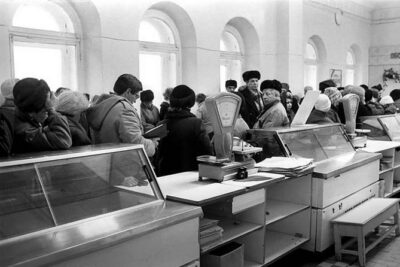
For you, this section adds needed balance. Communist history can easily be reduced to a list of dictators, demolitions, and gray apartment blocks. This stop points to the arguments used to win support and the way liberation language shaped public memory.
The wording of the subject suggests that the guide may present an alternative view of what could have happened. I would use this as a chance to ask direct questions. The private format is useful here, since political history often raises more questions than a fixed group script can handle.
Casa Radio, an unfinished museum of communist history
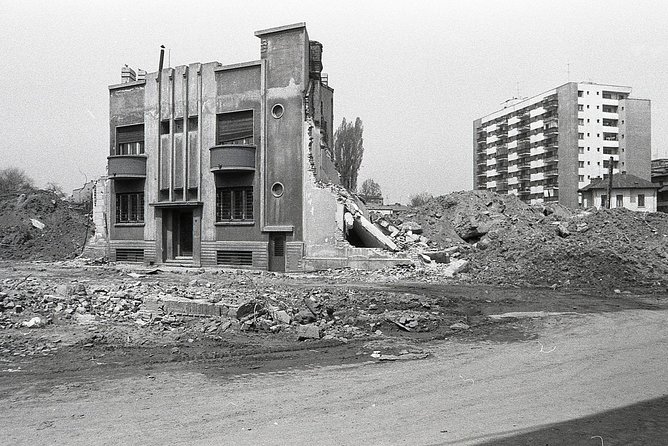
Casa Radio is one of the route’s most unusual stops. The project was intended to become the world’s largest museum of communist history, but it remained unfinished.
You spend about ten minutes here. The building’s incomplete state gives you a physical way to think about the limits of the regime’s plans. Grand promises could be announced, construction could begin, and yet the final result might remain an empty shell or stalled project.
This stop also prevents the tour from becoming a parade of completed monuments. An unfinished building can tell you as much about political ambition as a finished palace. Casa Radio shows the gap between propaganda and practical results.
The visit is brief, and there is no listed admission. Think of it as a stop for explanation and observation rather than an indoor museum visit. If you prefer polished landmarks, it may seem less immediately rewarding. If you enjoy seeing the remains of unrealized plans, it is one of the most distinctive parts of the route.
Piața Revoluției and the fall of Ceaușescu
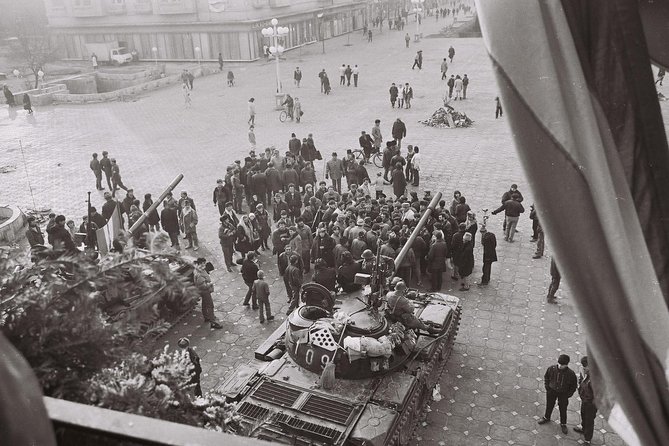
The final major stop is Piața Revoluției, Revolution Square. The tour allows about thirty minutes here to discuss the fall of the communist system and the end of Ceaușescu’s regime.
This is where the route’s earlier chapters come together. You have seen the pre-communist city, the first attempt to seize power, the late regime’s monumental ambition, and the political stories used to defend it. Revolution Square brings the narrative to its breaking point.
A half-hour is a sensible amount of time. The square is not simply a place to take a picture. It is where the guide can explain how public opposition, political crisis, and the end of the regime are tied to this central space.
I would save some of your best questions for this stop. Ask the guide to connect the fall of Ceaușescu with the buildings you saw earlier. The tour’s strongest feature is its chronological structure, and the square is the place to test whether that structure has made the period easier to understand.
What the guide adds to the ride
The guide is the key reason to choose this tour instead of riding between the same sites on your own. The route covers familiar landmarks, but the political links are less obvious when you see them without explanation.
Alex is the guide specifically named in the available feedback. He is described as enthusiastic about Romania’s history, and that energy matters on a subject that can become heavy. A guide who explains why a building exists, rather than simply naming it, can turn a routine city ride into a useful lesson.
You should still take an active role. Ask about the sequence of events, the intended audience for communist propaganda, and the contrast between official plans and unfinished projects. Since this is a private activity, your questions can shape the level of detail.
A planned break in the shade was also part of one reported outing. That is a welcome detail for a four-hour ride, especially in warm weather, though you should not assume that every pause will have the same timing. The route includes several outdoor stops, so comfortable clothing and water make sense.
Price, timing, and practical value
At $54.13 per person, this is not the cheapest way to see Bucharest’s central sights. The price makes more sense if you value a private guide, a set route, and historical interpretation rather than simply wanting transportation by bicycle.
A standard sightseeing ride might show you the Palace of Parliament and Revolution Square. This tour adds the Old City, Patriarchal Cathedral, Bragadiru Palace, National College of Defence, and Casa Radio, then explains how the sites relate. That wider frame is the main reason to pay for it.
Group discounts may improve the value for a larger party. Since only your group participates, the cost can also feel more reasonable if you are splitting the attention of one guide among several people. Food and drinks are not included, so budget for your own refreshments.
The listed meeting time is 9:30 am at Strada Operetei 12, Bucharest 030167. An afternoon option is also offered, though the supplied details do not give a specific afternoon departure time. Confirm that time when booking if you need to fit the tour around another activity.
Confirmation is sent at booking. The meeting point is near public transportation, and the activity returns to the same place. Most people can take part, but children must be accompanied by an adult.
Free cancellation is available if you cancel at least 24 hours before the local start time. Changes or cancellations inside that window are not refunded, and the operator requires a minimum number of participants. If the minimum is not reached, you are offered another date or activity, or a full refund.
Who should book this Bucharest bike tour?
I would choose this tour if you want Bucharest’s communist period explained through real places instead of a museum display alone. It suits first-time visitors who want a strong orientation to the city’s political story, as well as history-minded people who enjoy comparing old buildings with state-built monuments.
It also works well for small private groups, couples, and families with older children who can manage a four-hour outing. The cycling helps cover ground, but the emphasis remains on stops and commentary rather than speed.
You may want another option if you need an interior visit to the Palace of Parliament, a short one-hour overview, or a ride focused mainly on exercise. The brief stop lengths at Bragadiru Palace, Casa Radio, and the Palace of Parliament mean you are seeing the route from the outside and listening to the story.
The strongest reasons to book are the private guide, the clear political timeline, and the mix of famous and less familiar sites. The main tradeoff is price: you are paying for interpretation and convenience, not admissions, meals, or an intense cycling challenge.
FAQ
How long does the Bucharest Communist Bike Tour last?
The tour lasts approximately four hours.
Where does the tour start?
It starts at Strada Operetei 12, București 030167, Romania.
What time does the morning tour begin?
The listed morning start time is 9:30 am.
Is an afternoon tour available?
Yes. The experience is offered in the morning or afternoon, though the supplied details only specify the 9:30 am morning start.
Where does the tour end?
The activity ends back at the meeting point.
Is this a private tour?
Yes. Only your group takes part in the activity.
Is food or drink included?
No. Food and drinks are not included.
Can children join the tour?
Yes, but children must be accompanied by an adult.
Should you book it?
Book this tour if you want a focused explanation of how communism reshaped Bucharest and you like moving between sites by bike. Alex’s enthusiastic approach, the private format, and the route from CEC Palace to Revolution Square give you more than a quick look at the Palace of Parliament.
Skip it if you want a self-guided ride, a long indoor visit, or a low-cost way to photograph monuments. For most history-minded visitors, though, the four-hour route offers a useful balance of movement, context, and access to places you might otherwise pass without understanding.
Just added around Bucharest
- Village Museum Bucharest Guided Tour★ 5.0 · 6 reviews
- Bucharest: Dealu Mare Winery Private Trip with Wine Tasting★ 4.9 · 6 reviews
- Winery touring & private wine tasting – one day private tour★ 5.0 · 3 reviews
- Transylvania Tour: Dracula’s Castle, Peles Palace & Brasov★ 5.0 · 19 reviews
- Discover Medieval Transylvania Small Group Tour – 7 days★ 5.0 · 4 reviews
- Bucharest Airport Transfer To Constanta Mamaia★ 5.0 · 3 reviews
- Airport Henri Coanda (Otopeni) to Bucharest – Private Transfer – Driver★ 5.0 · 5 reviews
- Gems of Transilvania: Brasov,Sighisoara,Sibiu,Viscri and more★ 5.0 · 6 reviews
Communism & Ceausescu Tours, compared.
Communism in Bucharest – Landmarks, Museum & Communist Appetizers
Read our review →

Museum of Communism Ticket with Communist Coffee
Read our review →
Dinner+Tour at Museum of Communism after closing
Read our review →Browse the lists this tour appears in