
Reviewed · COMMUNISM & CEAUSESCU TOURS
Bucharest: Private Communist Tour in a Romanian Vintage Car
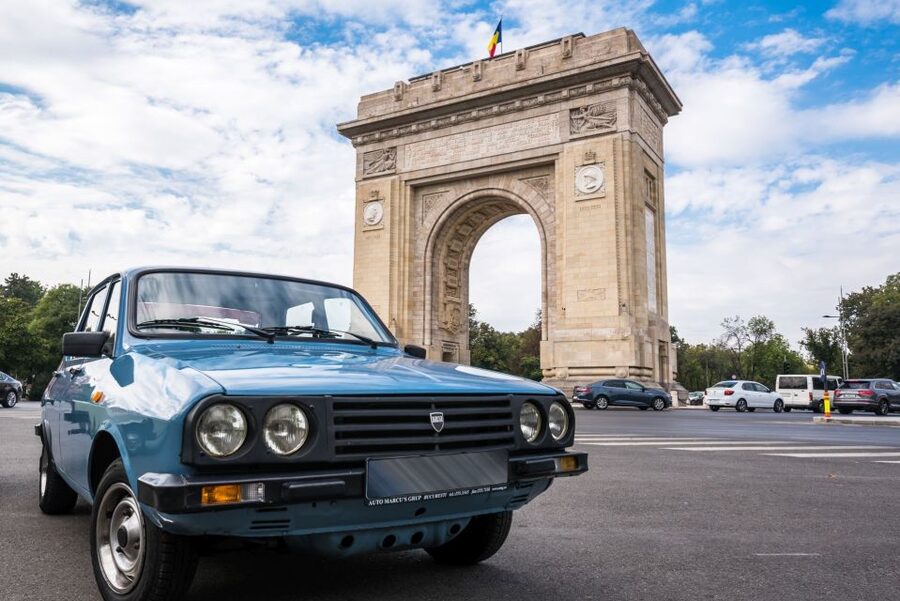
Bucharest makes an unusual kind of sightseeing vehicle: a fully restored Dacia 1310, the boxy Romanian car that carried families through the 1970s and 1980s. On this private circuit, you cover about 30 kilometers, stop at major communist-era landmarks, and see locals wave as the old car rolls by. I like the mix of big sights and personal stories, especially when guides such as Cătălin, Dan, or Șerban explain what daily life felt like under the regime. I also like that you can ride with a private driver or take the wheel yourself.
The main consideration is comfort and pace. This is a vintage car, not a modern touring van, and the route includes several stops rather than long visits inside museums. Children under 10, pregnant women, people with back problems, and wheelchair users should choose another way to see Bucharest.
In This Review
- Key points before you book
- Why the Dacia 1310 changes the tour
- Revolution Square and the end of Ceaușescu’s rule
- Casa Radio and the unfinished face of communism
- The fountains and Academia Română
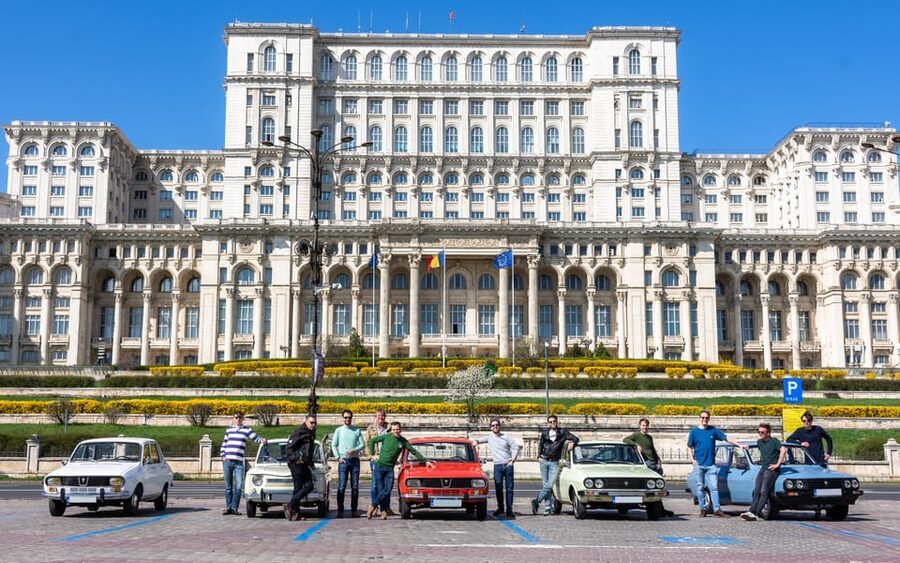
- The Palace of Parliament and the price of grand plans
- Casa Ceaușescu and the personal side of power
- Casa Presei and the machinery of information
- What the guides add to the drive
- Self-driving, comfort, and practical limits
- Is $124 per person good value?
- Who should book this Dacia tour?
- FAQ
- How long does the Bucharest vintage car tour last?
- What car will I ride in?
- Can I drive the Dacia myself?
- Is hotel pickup included?
- What language is the tour offered in?
- Who should not take this tour?
- Should you book it?
Key points before you book
- A real Dacia 1310: Ride in an authentic Romanian classic car, with one recent account describing the vehicle as a 1977 model.
- A communist-era route: See Revolution Square, the Palace of Parliament, Casa Ceaușescu, Casa Radio, Academia Română, and Casa Presei.
- Private attention: Your group is private, with up to three people per car and an English-speaking guide.
- Self-driving option: You may drive the Dacia yourself if you provide a valid driving license.
- Hotel pickup included: The tour begins and ends at your Bucharest hotel.
- A story-led experience: Guides use local knowledge and, in some cases, personal experience to explain life before and after 1989.
Why the Dacia 1310 changes the tour
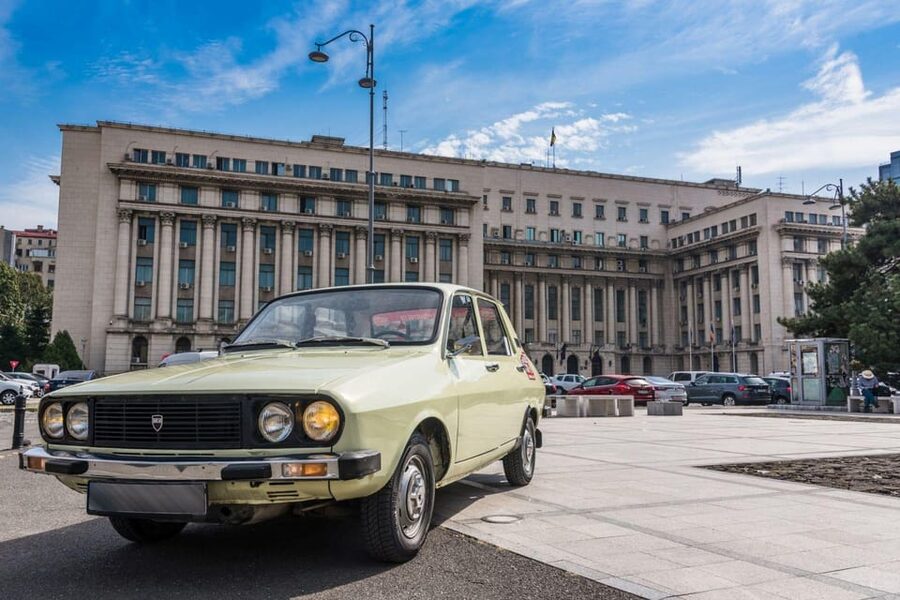
You can see Bucharest’s communist buildings in many ways. A standard walking tour gives you close views, while a large bus keeps you comfortable but anonymous. The Dacia 1310 does something different: it makes the vehicle part of the history lesson.
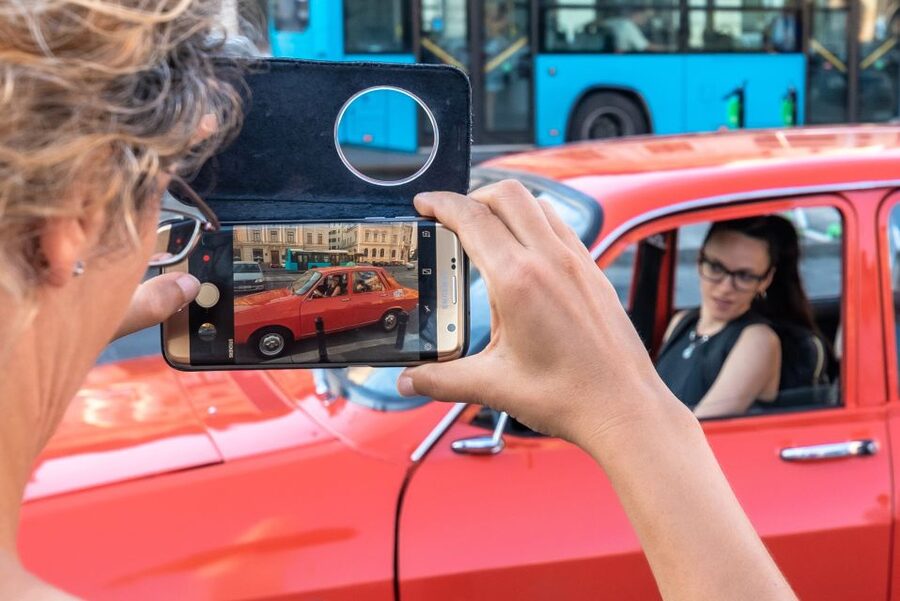
The car was a familiar sight in communist Romania, when owning a vehicle could feel like a major achievement. Today, it attracts attention. People on the street may wave, and the car turns a simple drive into a small public event. That sounds like a minor detail, but it helps you notice how strongly old objects still connect with local memory.
The Dacia is also useful for this particular route. Bucharest’s communist architecture is spread across broad avenues and large civic spaces. Driving lets you connect those places without spending the whole day walking between them. You can get out for photographs, hear the guide’s explanation, then continue to the next part of the story.
Do not expect luxury. The car has been fully restored, and one account describes it as more comfortable than expected, but it remains a roughly 35-year-old Romanian vehicle according to the tour information. If you have back trouble or prefer a soft, quiet ride, take that seriously.
The group size is another strong point. With three people per car, you are not listening to a guide from the back row of a coach. You can ask questions, control the pace of conversation, and receive explanations tailored to your interests.
More communism & ceausescu tours in Bucharest:
- The Real tour of Communism
★ 5.0 · 666 reviews - Life under Communism
★ 5.0 · 358 reviews - 3-Hour Guided Tour of Communist Bucharest
★ 4.9 · 303 reviews
Revolution Square and the end of Ceaușescu’s rule
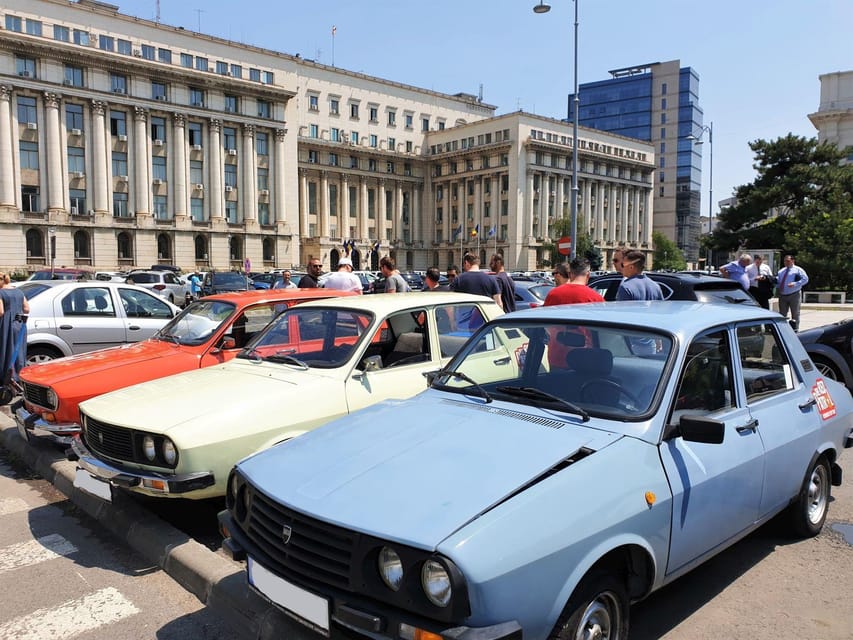
The tour’s longest scheduled stop is Revolution Square, with about 30 minutes for photographs, sightseeing, and guided explanation. This is the right place to begin because it links Bucharest’s grand public image with the moment that image broke apart.
Your guide can point out the former Romanian Communist Party headquarters and explain the role of the square during the December 1989 uprising. The stop is not just about taking a picture of a famous building. It helps you understand how power was displayed in central Bucharest and how quickly that display could turn into protest.
Allow yourself time to look around instead of treating the stop as a quick photo break. The square contains several important structures and memorials, and the guide’s commentary gives them meaning. The exact amount of detail may depend on your guide and your questions, but the private format makes it easier to ask about the revolution, state control, or ordinary life during the communist period.
This stop also shows one limitation of the tour. You are mainly seeing places from outside, so anyone wanting a full museum visit will need to plan that separately. The experience is about the city as a historical setting, not a series of long indoor admissions.
Casa Radio and the unfinished face of communism
The short stop at Casa Radio lasts about 10 minutes. That may sound brief, but this building is a useful example of the unfinished or repurposed projects left by the communist period.
The structure is tied to the sweeping urban plans of Nicolae Ceaușescu’s government. It gives you a chance to consider what happens when a state tries to reshape a capital on a huge scale, then loses power before all its plans are completed.
This is one of the less familiar stops on the route, which is part of its value. You are not simply ticking off Bucharest’s best-known monument. You are seeing a piece of the city that helps explain the costs and disruptions behind the grand avenues.
The stop is mostly visual and explanatory. If you want a long, close architectural inspection, 10 minutes may feel short. Still, the Dacia makes it easy to include places that would be awkward to reach on a compact walking route.
The fountains and Academia Română

A stop at Fântână, or the fountains, adds another view of the capital’s formal public spaces. The planned boulevards and fountains were designed to frame state power and create a sense of order and scale.
Your guide can connect the fountains with the major avenue built during Ceaușescu’s redevelopment of Bucharest. The official name, Victoria Socialismului Boulevard, is an important part of the story. It was intended as the Romanian version of a grand ceremonial avenue, sometimes compared with the Champs-Élysées because of its width and ambition.
The tour also calls at Academia Română for about 15 minutes. This stop broadens the subject beyond government buildings. It gives you a chance to see how education, culture, and national identity fit into the public image of the communist state.
These shorter stops work best if you enjoy context more than formal entry tickets. You will hear how buildings and avenues were used, then have time for photographs before moving on. The private car keeps the route flowing, although traffic and the size of Bucharest can affect the exact rhythm.
A few more Bucharest trips to weigh up
- Castles of Transylvania: Private Day Trip from Bucharest
★ 4.5 · 248 reviews - Dracula’s Castle, Peles Castle and Brasov – Private Day Trip from Bucharest
★ 5.0 · 211 reviews - Best of Bucharest | Private Walking Tour
★ 5.0 · 199 reviews - Bucharest Panoramic Sightseeing – Private City Tour
★ 5.0 · 128 reviews
The Palace of Parliament and the price of grand plans
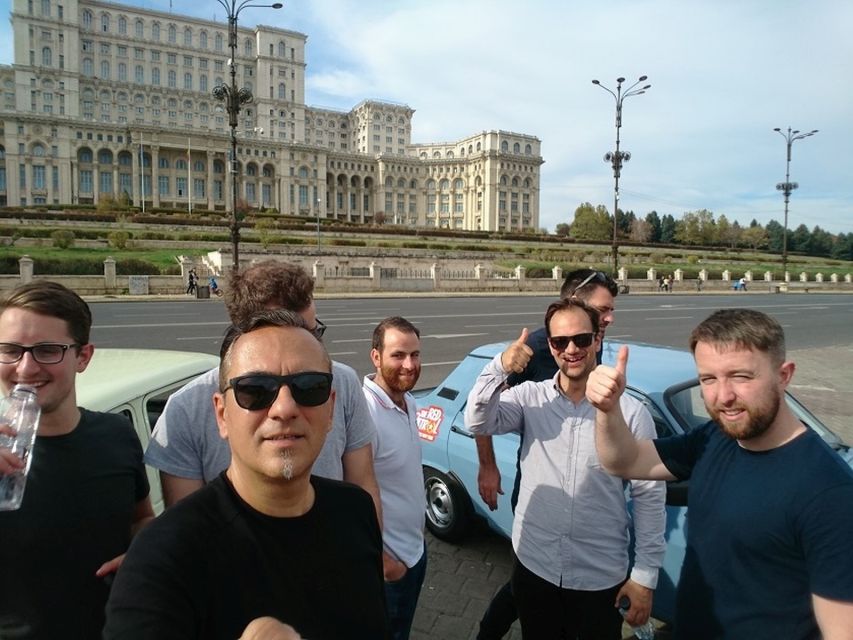
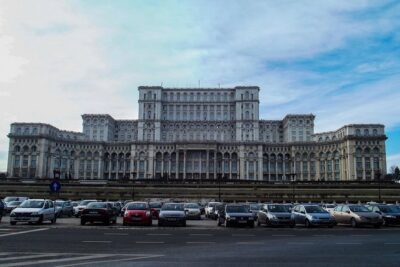
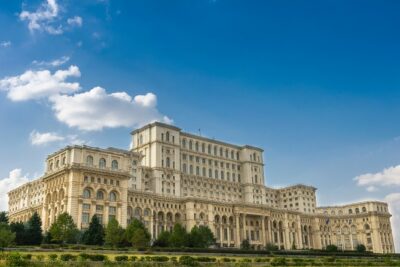
The Palace of Parliament, also known as Casa Poporului, receives about 20 minutes. It is the route’s biggest architectural sight and the place where Ceaușescu’s vision becomes impossible to miss.
The building is enormous, but the useful part of the stop is not simply its size. The palace represents the human and urban cost of creating a monumental center of power. Entire sections of Bucharest were cleared for the project, and the broad approach roads were planned to frame the building and official ceremonies.
From outside, you can understand the scale better by standing back and looking along the avenue. Your guide can explain how the building fits into the wider program of demolition and reconstruction. The drive along Victoria Socialismului Boulevard matters here because the palace was never meant to be viewed as an isolated structure. It was part of a carefully staged axis.
The 20-minute visit is enough for a guided exterior stop and photographs, but it is not a substitute for an interior tour. If entering the Palace of Parliament is a priority, arrange that as a separate activity and check its requirements. This experience gives you the wider city context, which an interior visit alone cannot provide.
Casa Ceaușescu and the personal side of power
The stop at Casa Ceaușescu lasts about 25 minutes, including a break, photographs, and guided sightseeing. This changes the focus from public monuments to the private world of Romania’s former leader and his family.
The contrast is useful. At the Palace of Parliament, you see the regime’s official scale. At Casa Ceaușescu, you can consider how that power was expressed in domestic life. The guide’s stories help connect the public image with the habits, privileges, and restrictions of the period.
This is also where a guide with lived experience can add the most. Several guides connected with the tour, including Cătălin, Dan, and Șerban, have been praised for explaining communist-era life in clear, personal terms. You may hear about shortages, social rules, work, housing, or the way people understood state propaganda. The exact conversation will vary, but the private format gives you room to ask the questions that interest you.
The 25-minute stop includes a break, so it is a practical pause in the middle of a fairly full circuit. If you want a lengthy house tour, it may feel limited. Think of it as a focused stop that anchors the guide’s larger account of the period.
Casa Presei and the machinery of information
The final major stop is Casa Presei, or the House of the Free Press, with about 20 minutes for photographs and explanation. The name itself is loaded with irony. Under communist rule, the press was not free in the modern sense, and the building reflects the connection between architecture, media, and political control.
Your guide can explain how the building functioned within the state system and why it was given such a grand public presence. Along with the Communist Party headquarters and the Palace of Parliament, it helps you see how the regime shaped both government and information.
This stop gives the route a strong closing note. You have moved from political power at Revolution Square to monumental planning, private privilege, and finally the control of public messages. The sites are not random points on a map. Together, they form a readable route through the former state’s priorities.
Again, most of the value comes from the explanation and the exterior views. The tour does not promise extended interior visits at every stop, so you should book it for interpretation, photographs, and citywide connections.
What the guides add to the drive
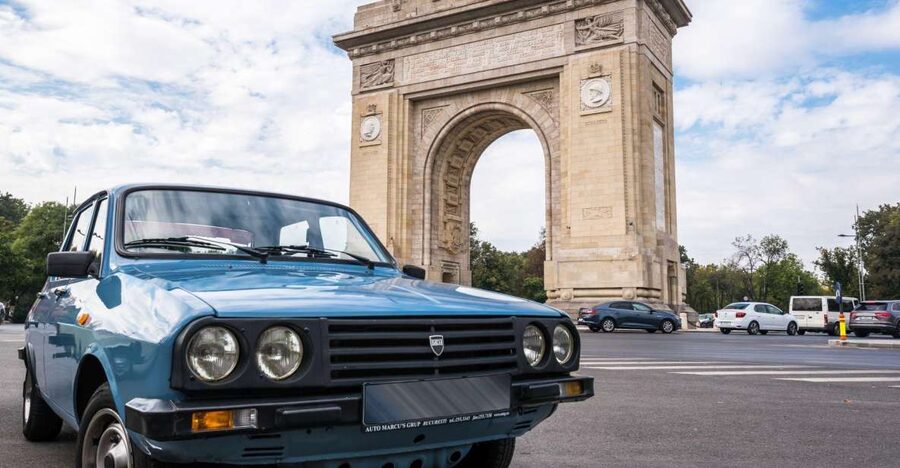
The car is the hook, but the guide determines how much you take away. The strongest accounts describe guides who are friendly, clear, and able to explain both Romanian history before and after communism. One guide used personal experience to give a vivid sense of daily life in Bucharest during the period.
That personal angle matters because communist history can become a list of dates and buildings. You want to know what the system felt like in ordinary terms: how people traveled, what they could buy, how information moved, and how the city changed after 1989. A guide who can connect those questions to the streets outside the window makes the drive far more useful.
The tour is offered in English. Some past guide combinations included Dan and Șerban, while Cătălin has also led guests from hotel pickup through the city. You cannot assume a particular guide will be assigned, but you can expect a live private guide rather than an audio recording.
The supplied tour newspaper and personalized gift are small extras, but they suit the theme. Water in the car is included, while food and drinks beyond that are not. One past account also refers to tasting traditional Romanian food, but that is not part of the stated inclusions, so do not book this tour expecting a food stop.
Self-driving, comfort, and practical limits
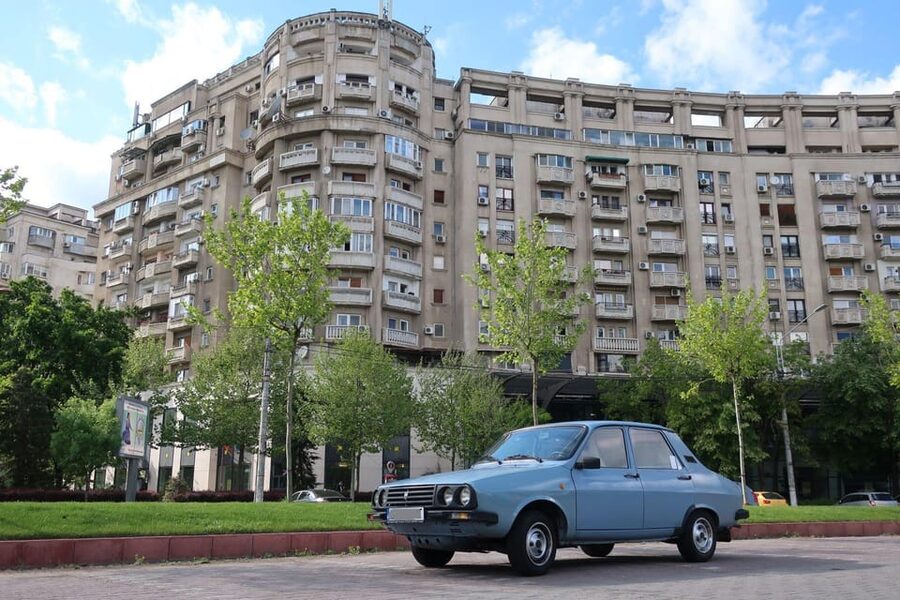
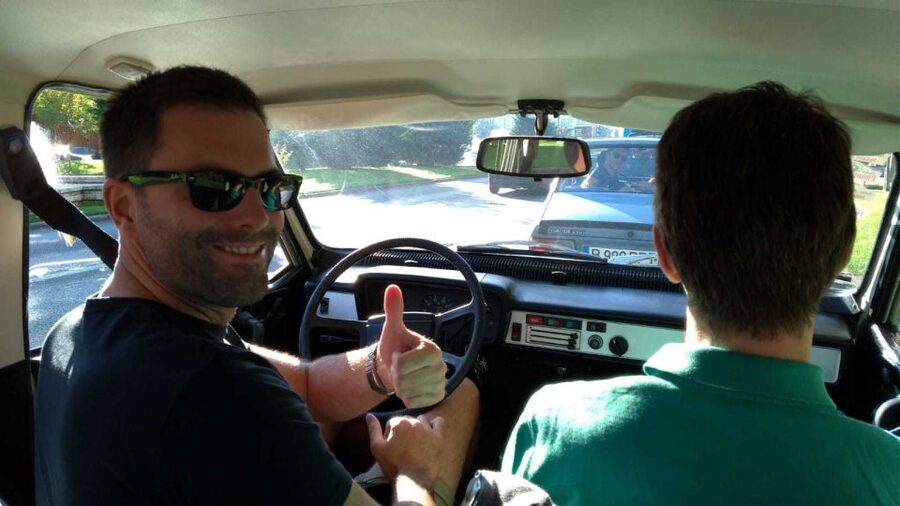
You can choose to sit back with a private driver or drive the Dacia yourself. If you select self-driving, bring a valid driving license and provide it on the day of the tour.
Self-driving adds a memorable layer, especially if you enjoy old cars and want to feel how a Romanian classic handles. It also brings responsibility. You need to be comfortable driving in Bucharest traffic and handling a vintage vehicle, and the operator must confirm the arrangement in advance.
The route lasts 200 minutes, or about 3 hours and 20 minutes. The main description also calls it a 3.5-hour tour, while the included transport is described as 2.5 to 3 hours within the guided circuit. In practice, plan on roughly three and a half hours from pickup to return, with the exact driving and stop times shaped by traffic and the day’s schedule.
Pickup and drop-off at your Bucharest hotel are included. Tours run daily at 10:00 AM, 2:00 PM, and 8:00 PM, with booking at least 48 hours ahead. The evening departure could make for an atmospheric look at the boulevards, but the 10:00 AM or 2:00 PM option may be better if clear daylight photographs matter most.
The tour is not suitable for children under 10, pregnant women, people with back problems, or wheelchair users. Those limits are especially worth noting because the car is old and the route involves getting in and out at several stops.
Is $124 per person good value?
At $124 per person, this is not the cheapest way to see Bucharest’s main landmarks. You are paying for a private group, a specialist vehicle, hotel transportation, a live guide, and a carefully chosen historical route rather than simply paying for a ride across town.
For two or three people sharing the car, the price makes more sense. You receive direct attention, the freedom to ask questions, and a rare chance to ride in an authentic Dacia 1310. The personalized gift, tour newspaper, and bottled water add a little comfort, but they are not the reason to book.
The value is strongest if communist-era Bucharest is one of your main interests. You will see several important sites in one outing and hear how they connect. It is also a good choice if you have limited time and want hotel pickup instead of working out several separate taxi or public transport trips.
The value is weaker if you mainly want interiors, extensive walking, or a broad survey of medieval and modern Bucharest. This route concentrates on the communist period and its physical remains. You should pair it with a separate exploration of the city’s older quarters if you want a fuller picture of Bucharest.
Who should book this Dacia tour?
I would choose this experience for a first visit if you want history explained while you get your bearings. The route covers a lot of ground without turning into a generic bus circuit, and the private setting makes it easy to focus on the subjects you care about.
It suits couples, friends, and small families with older children. Car enthusiasts will enjoy the Dacia itself, while history-minded visitors will appreciate the connection between streets, buildings, and lived experience. The tour also works well for anyone who wants an unusual photograph and a story to go with it.
I would hesitate if you dislike attention. The car is part of the fun, but people may look and wave as you pass. I would also skip it if you need step-free access, have back problems, or want a very quiet and modern vehicle.
Bring your driving license if you booked self-driving, keep some flexibility around the stop times, and wear shoes that make getting in and out easy. Since food is not included, eat beforehand or plan your meal after the tour.
FAQ
How long does the Bucharest vintage car tour last?
The activity lasts 200 minutes, or about 3 hours and 20 minutes. The tour description also presents it as a 3.5-hour experience, including hotel pickup and drop-off.
What car will I ride in?
You will ride in a fully restored Romanian Dacia 1310, an authentic communist-era classic car. One past account identifies the car as a 1977 model.
Can I drive the Dacia myself?
Yes. Self-driving is available, but you must bring a valid driving license and provide it on the date of the tour.
Is hotel pickup included?
Yes. Pickup and drop-off at your hotel in Bucharest are included.
What language is the tour offered in?
The live tour guide language is English.
Who should not take this tour?
The tour is not suitable for children under 10, pregnant women, people with back problems, or wheelchair users.
Should you book it?
Book this tour if you want Bucharest’s communist past explained through the actual streets where it unfolded, and if riding in a restored Dacia sounds as appealing as seeing the Palace of Parliament. The private format, small car, hotel pickup, and guides such as Cătălin, Dan, and Șerban give it a personal feel that a standard city bus cannot match.
Skip it if you want long indoor visits, modern-car comfort, or a tour centered on Bucharest’s older churches and historic streets. For the right visitor, though, the Dacia is more than transport. It is the opening chapter of the story.
Just added around Bucharest
- Village Museum Bucharest Guided Tour★ 5.0 · 6 reviews
- Bucharest: Dealu Mare Winery Private Trip with Wine Tasting★ 4.9 · 6 reviews
- Winery touring & private wine tasting – one day private tour★ 5.0 · 3 reviews
- Transylvania Tour: Dracula’s Castle, Peles Palace & Brasov★ 5.0 · 19 reviews
- Discover Medieval Transylvania Small Group Tour – 7 days★ 5.0 · 4 reviews
- Bucharest Airport Transfer To Constanta Mamaia★ 5.0 · 3 reviews
- Airport Henri Coanda (Otopeni) to Bucharest – Private Transfer – Driver★ 5.0 · 5 reviews
- Gems of Transilvania: Brasov,Sighisoara,Sibiu,Viscri and more★ 5.0 · 6 reviews
Communism & Ceausescu Tours, compared.

Communism in Bucharest – Landmarks, Museum & Communist Appetizers
Read our review →
Museum of Communism Ticket with Communist Coffee
Read our review →
Dinner+Tour at Museum of Communism after closing
Read our review →Browse the lists this tour appears in