
Reviewed · COMMUNISM & CEAUSESCU TOURS
Contrasts of Communism – Small Group Walking Tour in Bucharest
Bucharest’s communist story is not confined to one grand building. It unfolds in the square where Nicolae Ceausescu gave his last speech, the cemetery where young people killed in 1989 are remembered, and the gray apartment blocks now brightened by street art. This small-group walking tour connects those places with the personal stories that make them matter.
I like the mix of famous sights and ordinary districts, and I like the way Elena uses old photographs to show how Bucharest changed. The metro and public bus also make this feel like a city experience, not a sightseeing loop. The trade-off is simple: three hours includes a fair amount of walking, standing, and public transport, so you should arrive ready to move.
In This Review
- Key points to know before booking
- Why Bucharest’s communist story works best on foot
- Revolution Square and Ceausescu’s last speech
- University’s Square and the meaning of KM0
- A metro and bus ride into everyday Bucharest
- The Heroes’ Cemetery and the human cost of 1989
- Carol Park and a monument from the communist era
- The Palace of Parliament and Ceausescu’s final project
- Unirii Boulevard and the grand finale
- How Elena’s guiding style shapes the experience
- Small group size, walking effort, and pace
- Is $42.05 a fair price?
- Who should book this Bucharest tour?
- My take: book it for context, not just monuments
- FAQ
- How long does the Contrasts of Communism tour last?
- Where does the tour begin?
- Where does the tour end?
- How many people can join the tour?
- Is the Palace of Parliament admission included?
- Is the tour offered in English?
- What happens if the weather is poor?
Key points to know before booking
- The 1989 revolution anchors the tour: Revolution Square, University’s Square, and the Heroes’ Cemetery put Romania’s recent past in real places.
- You leave the central sights: A metro and public bus ride take you to a working-class area most visitors would likely miss.
- Elena brings history to life: Her explanations include personal family context, political background, and historic photographs.
- The group is capped at eight people: That gives you room to ask questions and hear the guide clearly.
- The Palace of Parliament is viewed from outside: The admission ticket is not included, and the tour does not promise an interior visit.
- Comfortable shoes matter: The pace is relaxed, but the route involves several hours on foot and a moderate level of physical fitness.
Why Bucharest’s communist story works best on foot
A bus ride past Bucharest’s monumental buildings can show you scale, but it rarely explains what those buildings meant to people. This tour takes a more grounded route. You walk through major political spaces, then ride public transport into a typical neighborhood and finish among monuments built by two very different regimes.
That contrast gives the experience its purpose. You see the polished symbols of power, the plain apartment blocks built for workers, the marks left by the 1989 uprising, and the grand urban plan Ceausescu forced onto the city.
Elena’s approach is a major part of the experience. She has a political science background and explains Romania’s communist period in clear English. Her style is conversational rather than a string of dates. You can ask about the dictatorship, the revolution, daily life, the cult of personality, or the political climate today.
She also uses historic photographs during the walk. That small touch helps you compare a square or building as it looks now with the same place during the communist period or the revolution. If you learn best through stories and visual clues, this will be more useful than a standard architectural tour.
More communism & ceausescu tours in Bucharest:
- The Real tour of Communism
★ 5.0 · 666 reviews - Life under Communism
★ 5.0 · 358 reviews - 3-Hour Guided Tour of Communist Bucharest
★ 4.9 · 303 reviews
Revolution Square and Ceausescu’s last speech
The tour begins near Strada Boteanu and moves to Revolution Square, one of the most important political spaces in modern Romania. This is where Ceausescu delivered his final public speech in 1989, shortly before his regime collapsed.
You will not simply hear that the speech happened here. The point is to understand the scene: a leader trying to hold control in public, a crowd beginning to turn against him, and a dictatorship losing its grip in full view of the nation.
The square also helps explain how power was displayed in Bucharest. The setting includes major state and cultural buildings, so your guide can connect the political story to the city around you. You may begin to see Bucharest less as a collection of separate monuments and more as a place shaped by command, fear, protest, and later attempts at remembrance.
Plan for about 30 minutes here. It is enough time to get the main story and ask questions without turning the opening into a long lecture.
University’s Square and the meaning of KM0
Next comes University’s Square, described as KM0 of Romanian freedom of speech. It was also a place where people died for liberty on December 21, 1989.
This stop shifts the focus from the dictator to the people who challenged him. That matters because the 1989 revolution can otherwise become a neat political story with a beginning and an end. In reality, it involved fear, confusion, courage, violence, and competing ideas about what should happen next.
Elena also uses this point to discuss Romania’s present political climate. That connection gives the tour more value than a simple memorial walk. You begin to consider how a country carries the effects of dictatorship after the statues come down and the political slogans change.
You will spend about 30 minutes here. The square is central and easy to reach, but its importance is not always obvious if you pass through alone. A guide helps you know where to look and which events changed the meaning of the place.
A metro and bus ride into everyday Bucharest
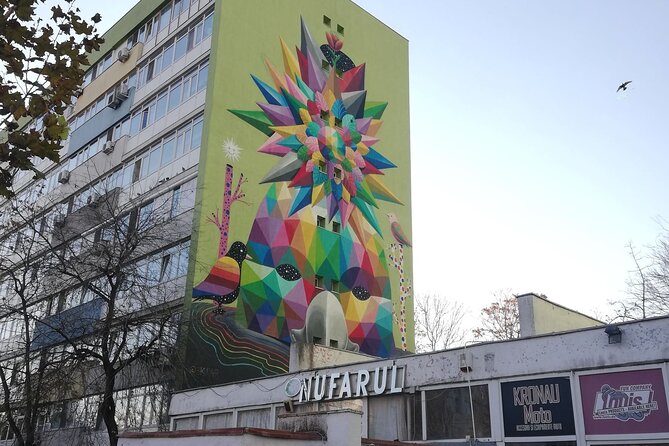
One of the best features of this tour is the decision to use public transportation. You leave the central monuments and travel to Eroii Revolutiei, entering a working-class neighborhood shaped by the communist building programs of the 1970s.
The ride is not filler between attractions. It helps you see how Bucharest works beyond its historic core. You pass from ceremonial spaces into an area of gray communist apartment blocks, the sort of housing that defined daily life for many residents.
At Eroii Revolutiei, the focus turns to how these districts are changing. Colorful street art now appears against the concrete blocks, creating a sharp visual contrast between the old building stock and newer forms of expression.
You spend about 15 minutes at this stop, so do not expect a long neighborhood walk. Instead, treat it as a useful pause in the larger story. The public transport segment also adds a practical benefit: you learn how to move around Bucharest using the same systems local residents use.
Exact transport arrangements can vary, and the tour information does not state that fares are included in the price. If that detail matters to you, ask when booking.
A few more Bucharest trips to weigh up
- Bucharest: City Highlights Guided Walking Tour
★ 4.9 · 1,482 reviews - Bucharest Highlights Walking Tour
★ 5.0 · 469 reviews - Bucharest: Ghost Stories & Romanian Mythology Walking Tour
★ 4.9 · 287 reviews - Bucharest: Guided Walking Tour with Romanian Snack
★ 4.9 · 228 reviews
The Heroes’ Cemetery and the human cost of 1989
The Memorial Cemetery at Cimitirul Eroilor Revolutiei is a quieter, more personal stop. Here, you walk along the paths among the graves of people killed during the 1989 revolution.
After the political drama of Revolution Square and University’s Square, the cemetery slows the pace. It gives the story names, family connections, and individual lives. You are no longer thinking only about the fall of a government. You are thinking about the people who paid for change.
This is one of the places where Elena’s use of personal stories is especially useful. Her own family lived through the communist period, and she can discuss its effect on ordinary Romanian life from a local point of view. She does not present the period as an abstract chapter from a textbook.
Allow about 30 minutes here. The setting is quiet and reflective, so it suits people who want historical context rather than a fast series of photo stops. If you prefer light entertainment on holiday, this section may feel serious. That is also its strength.
Carol Park and a monument from the communist era
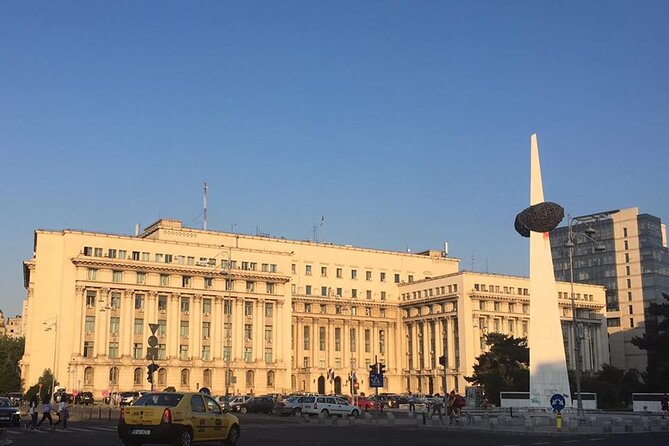
Parcul Carol I brings a different kind of contrast. The park sits on one of Bucharest’s higher hills, giving you a broad view across the city. It is a welcome change after the cemetery and the central squares.
You will see the Monument of the Heroes for the Freedom of the Motherland. Its original purpose was to honor communist party leaders, which makes it an important example of how public monuments can serve political power.
The monument is worth discussing because it shows that communist symbolism was not limited to apartment blocks and government offices. Parks, hills, avenues, and memorials were also used to shape public memory.
The stop lasts around 30 minutes. The hill adds some effort, but the view gives the walk a physical reward. You should still wear shoes suited to uneven paths and expect to stand outdoors.
The Palace of Parliament and Ceausescu’s final project
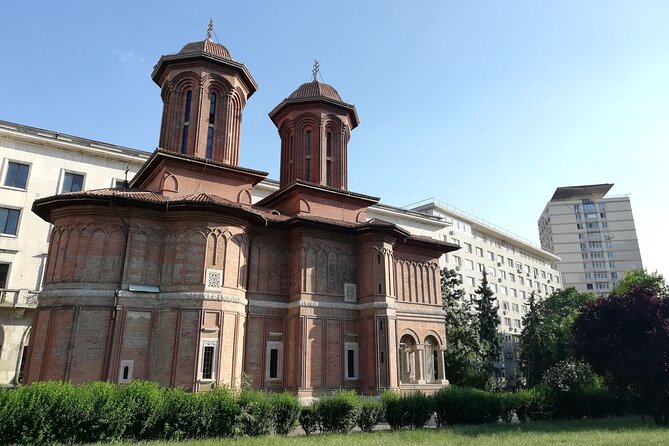
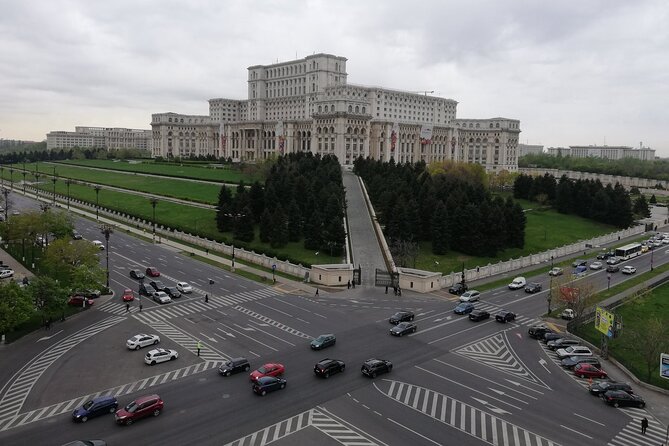
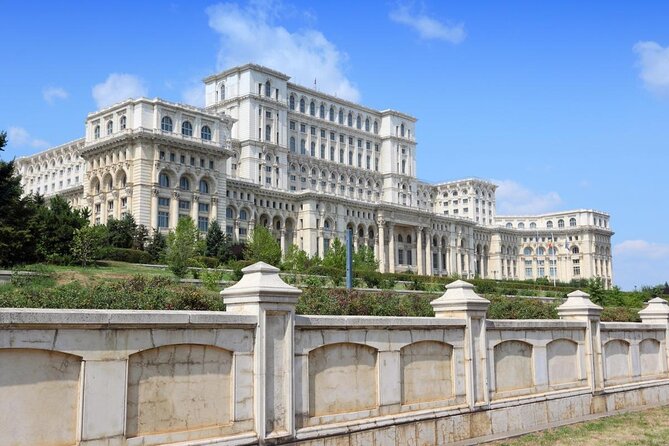
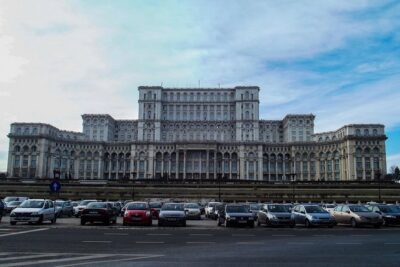
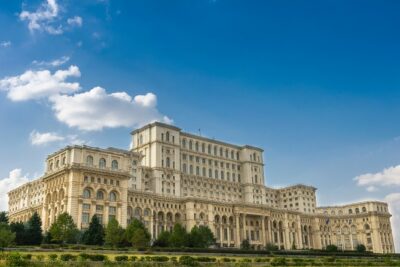
The tour then returns toward central Bucharest for the Palace of Parliament, the huge administrative building associated with Ceausescu’s final years in power.
You stand outside and consider the scale of the project. The building is commonly described as the second-largest administrative building in the world, and it represents Ceausescu’s taste for monumental control. Its size becomes more meaningful when placed beside the shortages and restrictions that shaped everyday life under his rule.
This is not just an architectural photo stop. It shows how a government can use construction to display authority and reshape a capital. The building also helps explain the broad avenues and cleared spaces around it.
The planned time here is about 30 minutes. Admission is not included, and this experience does not promise entry. If you want to tour the interior, treat that as a separate plan and check availability for the date of your visit.
Even from outside, the stop works well because the guide supplies the political context. Without that context, you may see only a very large building. With it, you can understand why the project remains one of the most debated symbols of modern Bucharest.
Unirii Boulevard and the grand finale
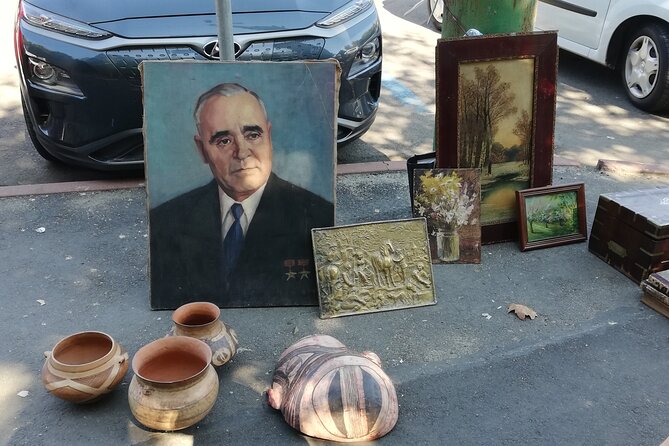
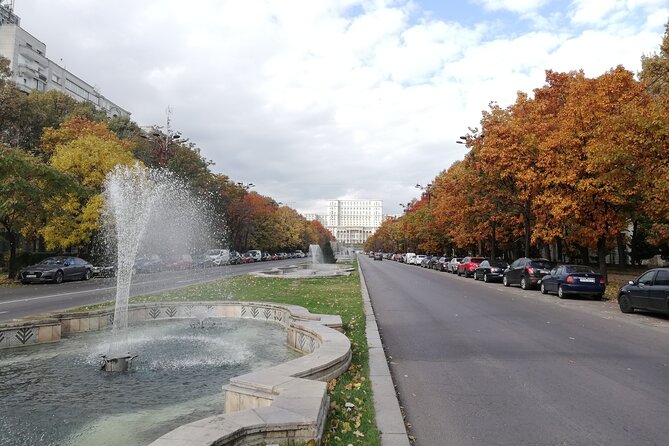
The final stop is along Bulevardul Unirii, near the dancing fountains. This broad boulevard was designed partly as a showpiece for visiting world leaders, with the scale and formal layout meant to impress and humble those passing through.
It is a fitting ending because the boulevard brings together several themes from the tour: power, display, urban planning, and the use of public space to shape behavior. The fountains provide a more theatrical finish than the cemetery or University’s Square, but the political meaning remains close to the surface.
The tour ends at Bulevardul Unirii 25, near the Palace of Parliament and Bucharest’s Old Town. That is useful for the rest of your day. You can continue sightseeing, find a meal, or return to your accommodation without needing to cross the city again.
The last stop lasts about 15 minutes. Think of it as a final explanation and orientation point rather than another major museum visit.
How Elena’s guiding style shapes the experience
The strongest reason to choose this tour is the guide. Elena explains the subject with warmth and patience, and she leaves room for questions. You are not expected to absorb a fixed speech and move on.
That matters with communism, a subject that can become either too political or too vague. Elena connects the large events to daily life, family experience, and the cult of personality. Her own mother’s experience has helped her explain how the system affected Romanian families, not just government offices.
Her historic photographs add a useful visual layer. You can see how familiar locations looked during the communist period and the revolution, which makes the past easier to picture.
Several accounts also describe her as helpful beyond the scheduled route, including suggestions for traditional Romanian restaurants and other things to do in Bucharest. Those recommendations are not the main product, but they are a welcome benefit when you are building the rest of your visit.
The experience is offered in English. One account also describes a guide named Martha, so if the specific guide matters to you, confirm the guide’s name at booking. Most of the supplied detail points to Elena as the regular host.
Small group size, walking effort, and pace
The maximum group size is eight people. That is a good limit for city walking because you can hear the guide at street corners and ask questions without holding up a large crowd.
The pace is described as relaxed rather than rushed, with time for rest stops and conversation. Still, you should not mistake relaxed for effortless. The route includes several walking sections, outdoor stops, a hill in Carol Park, and public transport connections.
A moderate level of physical fitness is recommended. Eat breakfast before you begin, especially if you are taking the morning departure. Bring water and dress for the forecast, since the tour depends on good weather.
The mobile ticket is convenient, and the meeting point is at Boteca13, 3 Strada Boteanu. The tour ends at Bulevardul Unirii 25. Service animals are allowed, and the starting area is near public transportation.
Is $42.05 a fair price?
At $42.05 per person, this is not the cheapest way to spend three hours in Bucharest. It is also more than a basic free walking tour, though the subject matter and small group size make the comparison imperfect.
The value comes from the structure. You visit seven locations, travel beyond the central district, use public transport, hear local interpretation, and see historic photographs. Most of the stops have no admission charge, so you are paying mainly for the guide’s time, planning, and ability to connect places that would otherwise feel unrelated.
I think the price is fair if you want to understand modern Romania rather than simply photograph its major buildings. It is less compelling if you only want a quick introduction to Bucharest’s architecture or a relaxed stroll with little discussion.
The tour is especially good early in your stay. It gives you a framework for later visits to the Palace of Parliament, Old Town, and the city’s communist-era districts. You will notice more once you understand why those spaces were built and how residents experienced them.
Who should book this Bucharest tour?
I would choose this experience if you are interested in 20th-century European history, political change, memorials, or everyday life under dictatorship. It also suits solo visitors who want a small social setting without committing to a large group.
You do not need prior knowledge of Romanian communism. Elena’s explanations begin with the basic story and then add detail as questions arise.
The tour is also a good fit if you prefer local transport and ordinary neighborhoods to a polished sightseeing route. The metro and bus ride gives you a more practical feel for Bucharest, while the street art and apartment blocks show how old parts of the city are being reused.
I would think twice if you have limited mobility, dislike outdoor walking, or want to spend the full three hours inside museums. The Palace of Parliament is viewed from outside, and all listed admissions are free except that no interior ticket is included.
Free cancellation is available up to 24 hours before the start time. Changes made inside that window are not accepted, and poor weather can lead to a new date or a full refund.
My take: book it for context, not just monuments
Book this tour if you want Bucharest to make more sense. The route moves from Ceausescu’s final speech to the graves of revolution victims, from gray housing blocks to street art, and from communist monuments to the oversized Palace of Parliament.
The best part is the connection between places. You are not just collecting sights. You are learning how power was shown, how people resisted, and how the city still carries that past.
For $42.05, the small group and personal guidance make the experience worthwhile, especially at the start of a Bucharest visit. Bring good shoes, eat first, and allow yourself time to ask questions. If you do, this can become the historical foundation for everything else you see in Romania’s capital.
FAQ
How long does the Contrasts of Communism tour last?
The tour lasts approximately three hours.
Where does the tour begin?
The meeting point is Boteca13 at 3 Strada Boteanu, Bucharest 010027, Romania.
Where does the tour end?
The tour ends at Bulevardul Unirii 25, near the Palace of Parliament and Bucharest’s Old Town.
How many people can join the tour?
The group has a maximum of eight participants.
Is the Palace of Parliament admission included?
No. The tour includes an exterior stop at the Palace of Parliament, but admission is not included.
Is the tour offered in English?
Yes. The activity is offered in English and uses a mobile ticket.
What happens if the weather is poor?
The tour requires good weather. If it is canceled because of poor weather, you will be offered another date or a full refund. You can also cancel for a full refund up to 24 hours before the start time.
Just added around Bucharest
- Bucharest: Dealu Mare Winery Private Trip with Wine Tasting★ 4.9 · 6 reviews
- Winery touring & private wine tasting – one day private tour★ 5.0 · 3 reviews
- Village Museum Bucharest Guided Tour★ 5.0 · 6 reviews
- Transylvania Tour: Dracula’s Castle, Peles Palace & Brasov★ 5.0 · 19 reviews
- Discover Medieval Transylvania Small Group Tour – 7 days★ 5.0 · 4 reviews
- Bucharest Airport Transfer To Constanta Mamaia★ 5.0 · 3 reviews
- Airport Henri Coanda (Otopeni) to Bucharest – Private Transfer – Driver★ 5.0 · 5 reviews
- Gems of Transilvania: Brasov,Sighisoara,Sibiu,Viscri and more★ 5.0 · 6 reviews
Communism & Ceausescu Tours, compared.
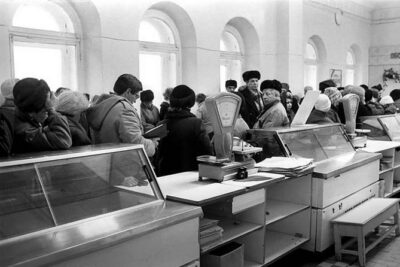
Communism in Bucharest – Landmarks, Museum & Communist Appetizers
Read our review →

Museum of Communism Ticket with Communist Coffee
Read our review →
Dinner+Tour at Museum of Communism after closing
Read our review →Browse the lists this tour appears in