
Reviewed · COMMUNISM & CEAUSESCU TOURS
Communist Era Bucharest Tour
Bucharest’s Communist past is easiest to understand on foot, where grand boulevards, oversized government buildings, and Revolution Square reveal how power reshaped the city. This private three-hour tour connects those places with personal stories about ordinary life under Nicolae Ceaușescu.
I like the private format, which lets you ask direct questions and adjust the conversation to your interests. I also like the guides’ personal connection to the period. Alina and Claire have shared childhood memories of Communist Romania, giving the political story a human scale.
The main consideration is pace. You cover a lot of ground in about three hours, mostly outdoors, and one traveler found the guide difficult to understand. The tour also presents more than one view of Communist life, which may not suit you if you want a firmly condemnatory account.
In This Review
- Key points before you book
- Why Communist Bucharest makes sense on foot
- Starting at Manuc’s Inn and Piața Unirii
- Bulevardul Unirii and Ceaușescu’s grand scale
- Parliament Palace, a building made for power
- Victoria Avenue and the everyday city
- Banks, University Square, and the Intercontinental
- Revolution Square and the final speech
- Iuliu Maniu and the Memorial of Rebirth
- The final historic building and gardens
- What the private format adds
- Timing, walking, and value at $30.72
- Should you book the Communist Era Bucharest Tour?
- FAQ
- How long does the Communist Era Bucharest Tour last?
- How much does the tour cost?
- Is the tour private?
- Is the tour offered in English?
- Where does the tour begin?
- Is hotel pickup available?
- Does the tour enter Parliament Palace?
- Can I cancel for a full refund?
Key points before you book
- Personal stories from Communist Romania: Guides such as Alina and Claire explain both official history and everyday life under the regime.
- A private walk for $30.72 per person: Your group has the guide to itself, making questions and schedule adjustments easier.
- Major landmarks in one route: See Parliament Palace, Revolution Square, the former Communist party headquarters, University Square, and key banks and boulevards.
- Morning or afternoon choice: You can fit the tour around other Bucharest plans.
- Hotel pickup may be available: The guide can meet you at a centrally located hotel, or you can start at Manuc’s Inn in the Old Town.
- Expect a serious walking tour: Comfortable shoes and moderate physical fitness are recommended.
Why Communist Bucharest makes sense on foot
The most useful thing about this experience is the way it links buildings to lived experience. Communist architecture can look like a collection of big, stern blocks if you see it without context. Here, the streets become evidence of a political system that altered Bucharest’s scale, traffic patterns, old neighborhoods, public spaces, and daily routines.
The route also covers more than Ceaușescu’s final years. Guides put the Communist period beside Romania’s royal past, the interwar years, the Communist takeover, and the 1989 Revolution. That wider frame matters. You get a clearer sense of what changed, what survived, and why the city still carries political memories in its streets.
A private tour is particularly useful for this subject. You can ask about food shortages, school, religion, housing, work, propaganda, or the Revolution without worrying about holding up a large group. The guide can also spend more time on Parliament Palace, Revolution Square, or personal stories if one subject catches your attention.
The tour is offered in English and costs $30.72 per person. At that price, the value comes less from paid admissions and more from the guide’s interpretation. Nearly all the listed stops are outdoor sights with no admission charge, so you are paying for a focused local guide, hotel pickup when arranged, and three hours of historical explanation.
More communism & ceausescu tours in Bucharest:
- The Real tour of Communism
★ 5.0 · 666 reviews - Life under Communism
★ 5.0 · 358 reviews - 3-Hour Guided Tour of Communist Bucharest
★ 4.9 · 303 reviews
Starting at Manuc’s Inn and Piața Unirii
The usual meeting point is outside the main entrance of Manuc’s Inn, at 62 Strada Franceză in Bucharest’s Old Centre. Pickup is also offered from a centrally located hotel. Starting here gives you a practical transition from the old city into the planned Communist center.
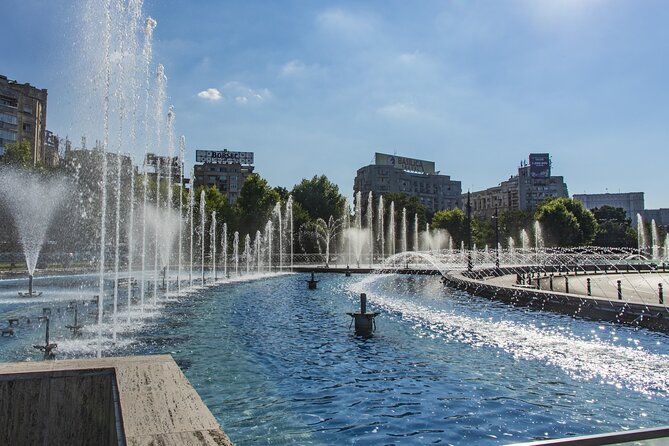
Piața Unirii is the first major stop. The square became part of Bucharest’s Communist modernization program, which reshaped this section of the city through wide roads and large-scale construction. Today, it is a modern city center with restored Unirii fountains, but the space still reflects the planning decisions made during the Communist era.
You spend about 10 minutes here. That is enough for an introduction and photographs, but not a long architectural study. I would listen closely at this first stop because the guide begins explaining how Communist planning worked: clear space, control movement, create imposing public vistas, and replace older urban patterns when they stood in the way.
The fountains are a pleasant reminder that the tour is not only about grim buildings. Bucharest has renovated parts of its public realm, and Piața Unirii now feels more useful and social than it did during the years when it was tied to state planning. The contrast between the square’s current life and its original political purpose is part of the lesson.
Bulevardul Unirii and Ceaușescu’s grand scale
From Piața Unirii, the route follows Bulevardul Unirii, once called the Boulevard of Socialist Victory. The nickname Champs-Élysées of Bucharest tells you exactly what Ceaușescu wanted: a grand ceremonial axis leading toward the enormous Parliament Palace.
The boulevard includes 17 artesian fountains, decorated around the four seasons. You stop for about five minutes, so this is a quick orientation rather than a leisurely fountain visit. Look along the road toward the government district and notice the scale. The width is not accidental. It was designed for spectacle, official processions, and a strong visual statement of state power.
This section helps explain why Parliament Palace can feel disconnected from older Bucharest. The broad avenue and monumental buildings were planned as a single political composition. Human-scale streets, older homes, churches, and established neighborhoods could be removed or altered to make room for it.
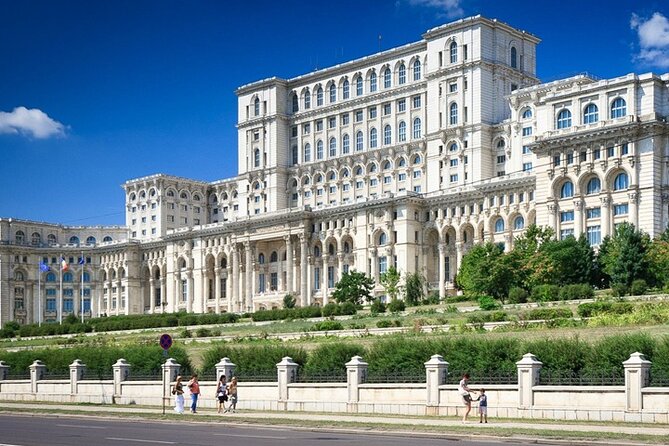
The guide’s explanation is more useful than simply hearing that the building is large. You learn why the project mattered to Ceaușescu and how its size expressed authority. The palace is described as the heaviest building in the world, an unusual fact that gives the site an immediate physical hook.
The itinerary focuses on seeing Parliament Palace and hearing its story. It does not promise an interior visit, so do not book this tour expecting a palace admission or a full building tour. The exterior view and the political history are the main points here.
Parliament Palace, a building made for power
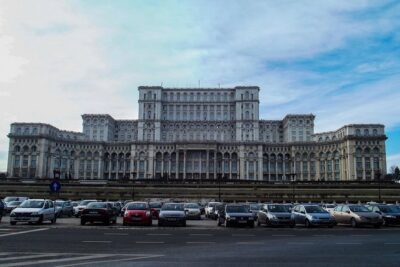
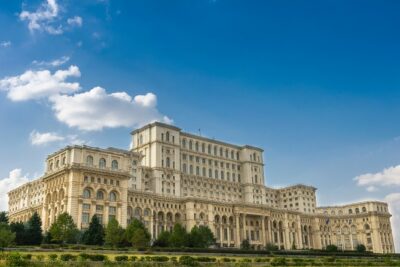
Casa Poporului, or the House of the People, dominates central Bucharest. Its official name carried a message of public ownership, yet the project is closely tied to Ceaușescu’s personal rule and to the drastic rebuilding of the city around it.
The building is best understood as both architecture and political evidence. Its massive presence shows the regime’s appetite for scale, while the surrounding boulevards show how the city was reorganized to frame it. The guide explains the building’s unusual weight and its place in Ceaușescu’s modernization campaign.
You may find this stop especially useful if you have already seen photographs of the palace but lack the larger story. The guide connects the building to the neighborhoods and institutions affected by the rebuilding program. That prevents the visit from becoming a simple contest about whether the palace is impressive or ugly.
Because the route is private, you can ask the practical questions that often make political history clearer. How did the project affect ordinary families? What did people think of the grand construction during shortages? How did the building’s meaning change after 1989? The exact conversation depends on your guide, but the private setting gives you room to ask.
Same mountains, a completely different day out:
- Bucharest: Dracula’s Castle, Peles Castle, & Brasov Old Town
★ 4.5 · 17,858 reviews - Bucharest: Dracula Castle, Peles Castle & Brasov Old Town
★ 4.6 · 10,891 reviews - Bucharest: Dracula’s Castle, Peleș Castle & Brașov Day Trip
★ 4.5 · 5,919 reviews - Bucharest: Palace of Parliament Tickets and Guide
★ 4.3 · 3,182 reviews
Victoria Avenue and the everyday city
The tour then takes you along part of Victoria Avenue. This is a useful change of mood. Instead of seeing only the most imposing Communist projects, you look at a central street lined with shops and hear how the area functioned during the Communist period.
Victoria Avenue allows the guide to explain daily life beside official architecture. A city is not only its government buildings. It is also shops, banks, hotels, offices, sidewalks, and the small routines people maintain under a large political system.
The stop is especially valuable when the guide brings in personal experience. Alina and Claire have been praised for explaining what life was like as children and adolescents during Communist rule, not only for listing dates and political decisions. That may include discussion of both restrictions and ordinary pleasures, rather than presenting the period as a single, simple memory.
One caution is that personal interpretation can vary. One account found the presentation less negative than other explanations of Ceaușescu’s rule, while another praised the guide for presenting positive and negative sides with clear judgment. Go ready to ask questions and compare viewpoints. The tour is more useful when you treat it as an informed conversation, not a single official verdict.
Banks, University Square, and the Intercontinental
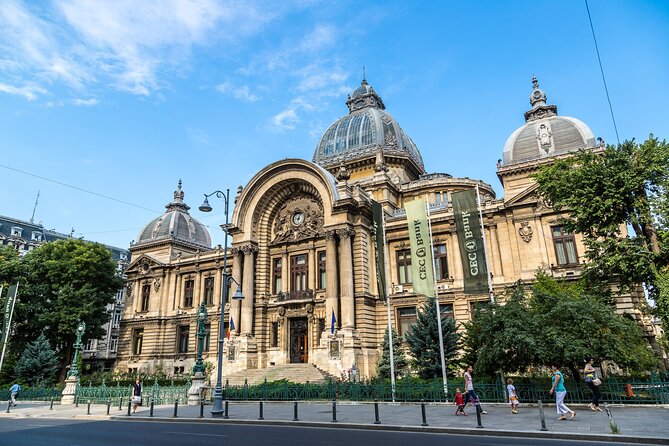
Several shorter stops fill out the central Bucharest picture. You see CEC Bank, described as the bank of the people during the Communist years, then Romania’s National Bank, whose history reaches beyond the Communist period.
These banking buildings help broaden the tour. They show how financial institutions fit into the state system and how older national institutions continued to matter through changing political eras. The guide also explains the buildings’ histories, so you are not merely passing handsome facades.
At University Square, the tour covers the oldest and largest university in Bucharest and the nearby Intercontinental Hotel. The hotel opened in 1971, making it a clear marker of the era. Its presence gives you a sense of how Communist Bucharest could combine strict political control with modern public buildings and international-facing hotels.
You also pass the National Theatre of Bucharest. The building has undergone several design changes in its relatively short history, making it a good example of how public architecture can shift with political taste and changing city plans.
These stops are brief, but they keep the tour from focusing only on Ceaușescu’s palace. You see the city as a working capital, with education, finance, theater, hotels, and shopping streets all shaped by the same political period in different ways.
Revolution Square and the final speech
Piața Revoluției is the emotional center of the tour. This is where the 1989 Revolution began, and the square contains several places tied to the collapse of Communist rule.
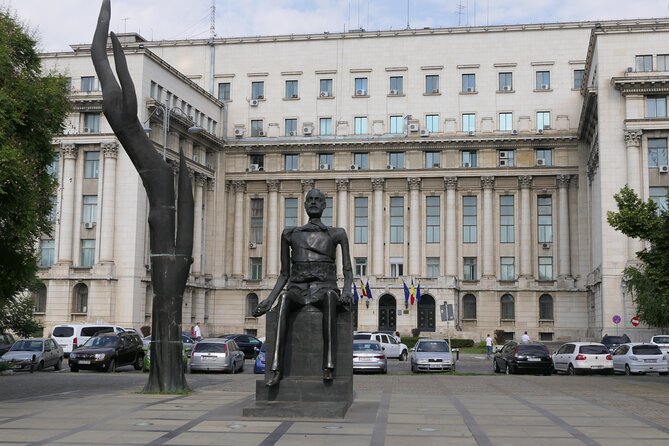
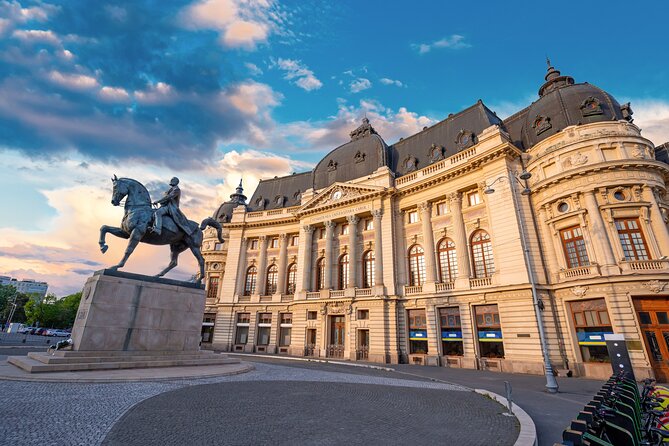
The most important sight is the balcony where Ceaușescu delivered his final speech. From here, his authority visibly began to fail as the crowd reacted against him. The former Communist party headquarters is nearby, along with the University Library, King Carol I’s equestrian statue, and other monuments and public buildings.
You have about 10 minutes at the square, with time for photographs and a focused explanation. Since the site contains several landmarks close together, listen for the sequence of events. The power of the square comes from understanding how quickly a familiar political scene turned into a national uprising.
This is also where the guide’s tone matters most. A good explanation needs to cover the event without turning it into a theatrical performance. The strongest accounts of this tour have been praised for combining national facts with personal memories and for encouraging questions about what people experienced at the time.
Revolution Square can feel visually confusing at first. There is a lot to see, and the political meaning is not always obvious from the buildings alone. That is exactly why this guided stop earns its place. You leave with a better sense of which structures mattered and why the square remains central to modern Romanian memory.
Iuliu Maniu and the Memorial of Rebirth
A short stop at the statue of Iuliu Maniu introduces an earlier part of Romania’s political struggle. Maniu served three times as prime minister and opposed the early Communist years. His statue provides a face and name for resistance to the new system, rather than leaving the story centered only on Ceaușescu.
The stop lasts about five minutes. It is brief, but it helps you understand that Communist rule did not begin with a blank slate. Romania had political figures, parties, and competing ideas before the regime took firm control.
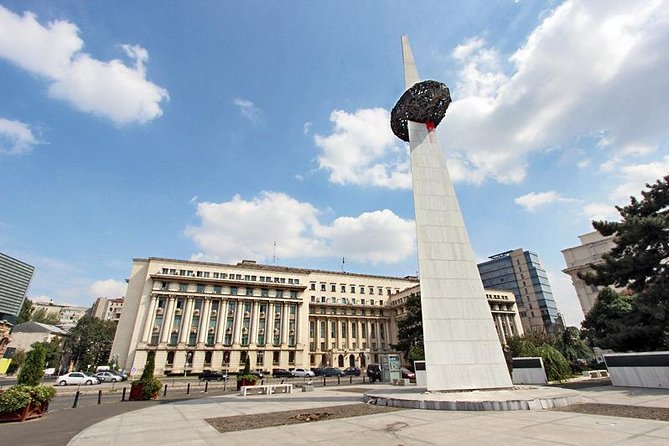
Nearby, the 25-meter Memorial of Rebirth commemorates the struggles and victims of the Christmas 1989 Revolution. The monument is one of Bucharest’s most debated modern memorials, though the supplied tour details do not promise a long discussion of its design. You will hear what it commemorates and have time for photographs.
The memorial works best after Revolution Square. First you see the location of the uprising and the collapse of Ceaușescu’s public authority. Then you see a monument dedicated to the cost of that change. The sequence gives the final part of the tour a clear emotional and historical shape.
The final historic building and gardens
The route includes one more site described as a building created for the people of Bucharest by the people of Bucharest more than 100 years ago. It has beautiful gardens and a striking historic building, with good photo opportunities.
The supplied details do not identify the site by name, so I would treat it as a pleasant final stop rather than plan your day around a specific interior visit. Its older architecture and gardens offer a useful visual counterpoint to the Communist avenues and monumental blocks seen earlier.
That contrast is one of the tour’s quiet strengths. Bucharest is not only a Communist capital. It contains royal, pre-Communist, interwar, and post-1989 layers, often within a short walk. Seeing an older public building at the end helps place Communist planning inside the longer story of the city.
The tour ends back at the meeting point. If you are dropped at your hotel, confirm the arrangement when booking, since pickup is offered for centrally located hotels rather than stated as a citywide service.
What the private format adds
The private setup is the strongest practical feature. Only your group takes part, so the guide can adjust the discussion and answer personal questions. Several accounts describe guides staying longer when conversation continued, sometimes well beyond the planned three hours.
That extra time should not be assumed, but it shows why this format can work well for people who like discussion. You can ask for more detail about family life, religious practice, shortages, education, propaganda, the Revolution, or Romania today.
Alina is repeatedly described as animated, thorough, and open to questions. Claire is also described as warm, passionate, and able to connect personal memories with national events. The guide assigned to your tour may vary, so these names should be treated as examples rather than a guarantee.
The one clear caution is communication style. One person found the guide difficult to understand, despite receiving a large amount of information. If clear spoken English is especially important to you, use the private format to ask for clarification, slow the pace, or repeat a point.
Timing, walking, and value at $30.72
The tour lasts about three hours, with morning and afternoon departures. That makes it easy to place on a first or second day in Bucharest. A morning tour can give you useful bearings for later independent walks, while an afternoon tour may fit better after a relaxed Old Town start.
You should wear comfortable walking shoes. A moderate level of physical fitness is recommended, and the experience takes place largely outdoors while moving between central sights. No special mobility details are provided, so ask the provider if you need a more precise assessment of the walking route.
At $30.72 per person, the price is fair for a private English-language tour, especially if two or more people share the guide. A solo visitor pays more for the privilege of having a personal conversation, but the arrangement can still be worthwhile if Communist history is your main interest.
The price does not appear to include admission to Parliament Palace or other paid interiors. Most named stops are free outdoor visits. Think of this as a guided city walk with historical interpretation, not an attraction package.
The tour has a 4.8 rating from 24 reviews, with 92 percent recommending it. That is a strong signal, but the small number of ratings means you should focus on fit. This is best for someone who wants context, conversation, and personal testimony. It is less suitable if you prefer a fast sightseeing loop, long interior visits, or a single strongly stated political interpretation.
Should you book the Communist Era Bucharest Tour?
Book it if you want Bucharest’s Communist period explained through streets, buildings, and personal memory. The route covers the city’s biggest symbols, from Bulevardul Unirii and Parliament Palace to Revolution Square, while also making room for banks, hotels, universities, theaters, and ordinary urban life.
I would especially recommend it early in your Bucharest stay. The guide can help you understand why the city looks as it does, and the private format gives you a chance to ask questions that are hard to answer from a guidebook.
Skip it if you want a long visit inside Parliament Palace, a large group tour with a fixed script, or a tour that condemns every aspect of Communist life without qualification. For everyone else, this is a reasonably priced, thoughtful walk through one of Europe’s most complicated recent chapters.
FAQ
How long does the Communist Era Bucharest Tour last?
The tour lasts approximately three hours. Some tours may run longer if the conversation continues, but the planned duration is about three hours.
How much does the tour cost?
The listed price is $30.72 per person.
Is the tour private?
Yes. This is a private activity, and only your group participates.
Is the tour offered in English?
Yes. The tour is offered in English and includes a mobile ticket.
Where does the tour begin?
The main meeting point is outside the main entrance of Manuc’s Inn, Hanul lui Manuc, at 62 Strada Franceză in Bucharest’s Old Centre.
Is hotel pickup available?
Pickup is offered from centrally located hotels. You may also meet the guide at Manuc’s Inn.
Does the tour enter Parliament Palace?
The tour includes Parliament Palace as a landmark and explains its history, but the provided details do not state that an interior admission is included.
Can I cancel for a full refund?
Yes. You can cancel at least 24 hours before the experience start time for a full refund. Cancellations or changes made less than 24 hours before the start time are not accepted for a refund.
Just added around Bucharest
- Village Museum Bucharest Guided Tour★ 5.0 · 6 reviews
- Bucharest: Dealu Mare Winery Private Trip with Wine Tasting★ 4.9 · 6 reviews
- Winery touring & private wine tasting – one day private tour★ 5.0 · 3 reviews
- Transylvania Tour: Dracula’s Castle, Peles Palace & Brasov★ 5.0 · 19 reviews
- Discover Medieval Transylvania Small Group Tour – 7 days★ 5.0 · 4 reviews
- Bucharest Airport Transfer To Constanta Mamaia★ 5.0 · 3 reviews
- Airport Henri Coanda (Otopeni) to Bucharest – Private Transfer – Driver★ 5.0 · 5 reviews
- Gems of Transilvania: Brasov,Sighisoara,Sibiu,Viscri and more★ 5.0 · 6 reviews
Communism & Ceausescu Tours, compared.
Communism in Bucharest – Landmarks, Museum & Communist Appetizers
Read our review →
Museum of Communism Ticket with Communist Coffee
Read our review →
Dinner+Tour at Museum of Communism after closing
Read our review →Browse the lists this tour appears in