
Reviewed · COMMUNISM & CEAUSESCU TOURS
Private Walking Tour of Communist Bucharest
The most striking part of this tour is the clash between old Bucharest and Nicolae Ceausescu’s grand Communist project. In one day, you move from the Atheneum and royal monuments to the Palace of the People, a building so large that its scale is hard to grasp from photographs alone. Revolution Square gives the day its human focus, tying grand politics to the violent events of December 1989.
I like the private format, since you can shape the day around your interests instead of following a fixed group schedule. I also like the guide’s academic background in political science and tourism. Guides named Laura and Diana have led this experience, and the strongest feedback points to clear explanations, friendly service, and guides who know their way around Bucharest well.
The main drawback is the long seven-hour schedule. Several stops involve walking and standing, and admission to the Atheneum and Palace of Parliament is not included. Hotel pickup is offered only for groups of up to three people, so larger parties need to meet in Bucharest.
In This Review
- Key points at a glance
- What this private Bucharest tour is really about
- University’s Square and the opening story of 1989
- Revolution Square, where two Bucharests meet
- The Romanian Atheneum and the royal side of the city
- Ceausescu Mansion and the private world of the dictator
- The Palace of Parliament and Ceausescu’s oversized vision
- Constitution Square and the planned Communist center
- Antim Monastery and a church spared from demolition
- Mihai Voda Monastery and the cost of reshaping Bucharest
- Lunch and the rhythm of a seven-hour day
- Guides, group size, and the private advantage
- Who should book this tour?
- Practical details before you reserve
- Should you book the Communist Bucharest tour?
- FAQ
- How long is the Private Walking Tour of Communist Bucharest?
- Is this a private tour?
- Is hotel pickup included?
- What is the price of the tour?
- Are food and drinks included?
- Are admission fees included?
- Do I need to bring a passport?
- How physically demanding is the experience?
- Can I cancel for a full refund?
Key points at a glance
- Communist Bucharest in one full day: See political squares, Ceausescu’s former home, the Palace of Parliament, and buildings connected to the 1989 revolution.
- A genuinely private experience: Only your group takes part, with room to adjust the route to your interests.
- Strong guide-led context: Guides with political science and tourism training explain how Communist rule changed Romania.
- The Palace of Parliament is the centerpiece: Expect a major visit lasting about 90 minutes, with entry fees paid separately.
- The tour links destruction and survival: Antim Monastery and Mihai Voda Monastery show what escaped Ceausescu’s demolition plans.
- Plan for a full day: The start is at 8:30 a.m., lunch is taken in a city-center restaurant, and the tour returns to its meeting point.
What this private Bucharest tour is really about
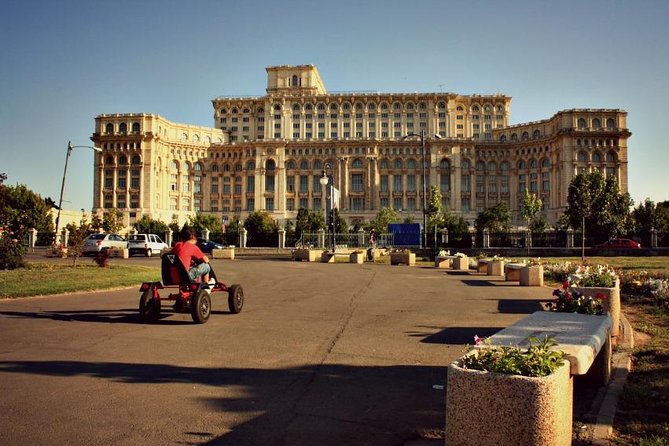
This is not simply a walk past Communist-era buildings. It is a tour about power, memory, and the physical cost of political ambition. Bucharest can feel confusing at first because royal monuments, Orthodox churches, grand nineteenth-century buildings, Socialist blocks, and modern traffic all sit close together. A guide helps you connect those pieces.
The tour is led by a local guide with degrees in political science and tourism. That matters here. The subject is not just architecture. You will hear about the rise and fall of the Communist Party, Ceausescu’s rule, the building of the new civic center, and the December 1989 uprising.
Because the tour is private, you can ask for more political background, more architecture, or more detail about everyday life under Communism. The route is broad, covering central squares, former state buildings, a dictator’s residence, religious sites, and the huge parliamentary complex.
At $92.19 per person, the price makes the most sense if you value a private guide and a full day of transport between scattered sights. The cost does not include food, drinks, taxes, or all admission fees, so you should allow extra money for the Palace of Parliament and possibly the Atheneum. For a larger group, available group discounts may improve the value.
More communism & ceausescu tours in Bucharest:
- The Real tour of Communism
★ 5.0 · 666 reviews - Life under Communism
★ 5.0 · 358 reviews - 3-Hour Guided Tour of Communist Bucharest
★ 4.9 · 303 reviews
University’s Square and the opening story of 1989
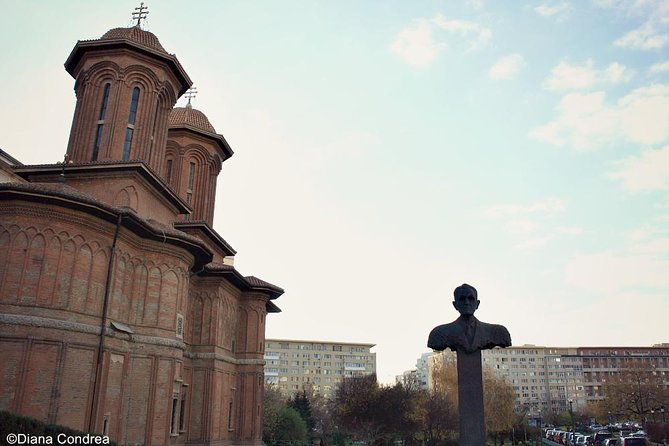
The tour begins at University’s Square, one of Bucharest’s key memorial spaces connected with the December 1989 revolution. You get about 30 minutes here, which is enough for an introduction to the events that brought down Communist rule and for questions about what happened in the city.
This stop works well at the start because it gives the rest of the day a clear purpose. Instead of treating Communist Bucharest as a collection of oversized buildings, you begin with the political crisis that ended the system.
Do not expect a museum visit here. Admission is free, and the experience depends on your guide’s explanation and the visible setting. If you want dates, names, and political detail, this is the time to ask. The square also sits near Revolution Square, so the two locations fit naturally into one opening section of the tour.
Revolution Square, where two Bucharests meet
Revolution Square brings together two very different periods of Romanian history. The area reflects the country’s royal past, while also recalling the Communist dictatorship and the violence of December 1989.
You spend roughly 30 minutes here. That is enough time to take in the main buildings and hear how the space changed meaning during the revolution. The square is especially useful for understanding how public architecture can become political theater. Places built to project order can become scenes of fear, protest, and sudden change.
I would pay close attention to the guide’s explanation rather than rushing to take photographs. The value of this stop is the connection between the buildings and the events that took place around them. It is also one of the best points in the day for asking what changed after 1989 and what did not.
The Romanian Atheneum and the royal side of the city
The Romanian Atheneum provides a sharp contrast to the Communist sites. This nineteenth-century concert hall is one of Bucharest’s best-known monuments and reflects the city’s love of classical music.
The concert hall contains a 75-meter fresco, an impressive interior feature that gives the building much of its visual appeal. The planned stop lasts about 30 minutes, but admission is not included. You should confirm with your guide how the visit will work on the day, since the information provided does not specify whether the tour enters the hall or views it from outside.
This stop matters because it prevents the day from becoming a single-theme march through Socialist architecture. You see the older cultural identity that Ceausescu’s civic center later pushed aside. The contrast makes the Communist redevelopment easier to understand.
A few more Bucharest trips to weigh up
- Bucharest: City Highlights Guided Walking Tour
★ 4.9 · 1,482 reviews - Bucharest Highlights Walking Tour
★ 5.0 · 469 reviews - Bucharest: Ghost Stories & Romanian Mythology Walking Tour
★ 4.9 · 287 reviews - Bucharest: Guided Walking Tour with Romanian Snack
★ 4.9 · 228 reviews
Ceausescu Mansion and the private world of the dictator
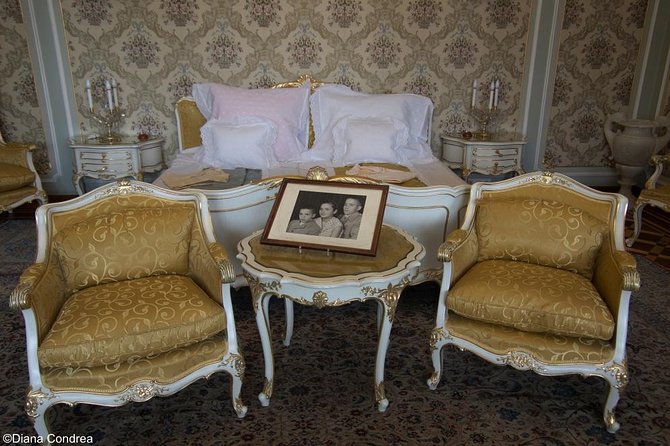
The former Ceausescu residence offers a more intimate look at Communist power. You spend about an hour here, examining the home associated with Nicolae Ceausescu and his family.
The mansion is valuable because it shifts the focus from public slogans and giant government buildings to private privilege. The Palace of Parliament shows how the regime wanted to present itself. The mansion helps you consider how its leaders lived behind that public image.
The tour information lists admission as free, though other fees are not included in the overall price. Since the visit is longer than the two square stops, you should expect time for a fuller explanation. Ask your guide to connect the house with the wider political system, rather than treating it as a stand-alone residence.
The Palace of Parliament and Ceausescu’s oversized vision
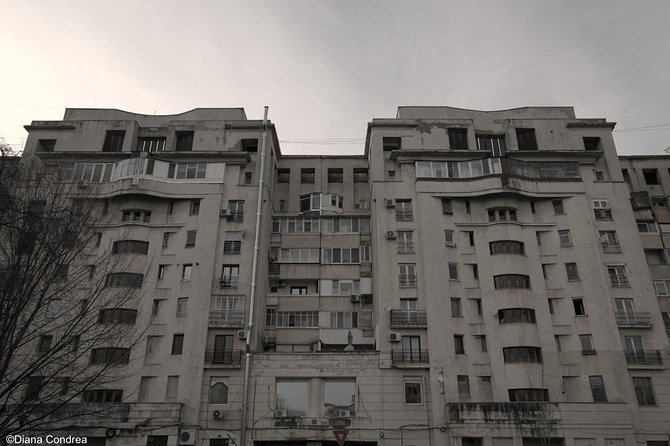
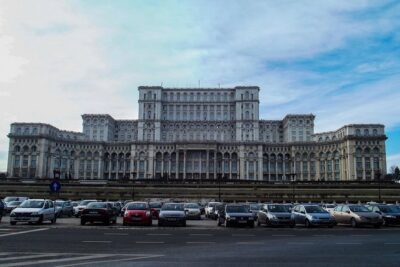
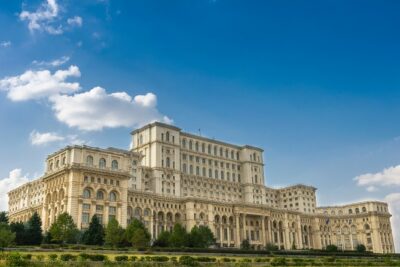
The Palace of Parliament, once called the House of the People, is the main event. It is Romania’s most famous Communist-era landmark and the second-largest administrative building in the world.
The figures are deliberately hard to imagine: more than 1,000 rooms, handmade decoration, about one million cubic meters of marble, and 3.5 tonnes of crystal. The building’s scale is the point. It was designed to project state power through sheer size and expense.
You have about 90 minutes here. Admission is not included, so plan for a separate entry fee. A current valid passport is required on the day, which is an important practical detail. Keep it with you even though this is a tour within Bucharest.
I find this visit most useful when you look beyond the spectacle. The building represents the forced reshaping of central Bucharest and the resources poured into one political project. Its grand rooms and expensive materials sit beside the harder questions: who paid for it, who was displaced, and why did Ceausescu want a civic center of this scale?
The Palace of Parliament is not a quick photo stop. The building is vast, and the scheduled 90 minutes gives you time to see more than an exterior facade. Still, your enjoyment will depend heavily on the guide’s explanation. Without context, marble and crystal can become a list of impressive numbers. With context, the building becomes a way to understand the logic of Ceausescu’s rule.
Constitution Square and the planned Communist center
Constitution Square sits at the heart of the Communist civic center. You spend about 20 minutes here, likely taking in the open space and its relationship to the Palace of Parliament.
The square helps you understand the scale of the redevelopment. Large open areas can make a city feel ceremonial rather than lived-in. That was part of the political message: the state needed room for official gatherings, control, and display.
This stop is brief, so it works best as a visual pause after the Palace. Use it to look back at the building and ask your guide about the wider neighborhood. The private format is useful here because you can spend a little more time on urban planning if that interests you, or move along if you prefer the human stories.
Antim Monastery and a church spared from demolition
Antim Monastery is one of the tour’s most important counterpoints to the Palace of Parliament. It is described as one of the churches saved from Communist demolitions after being moved from its original location.
You spend about 20 minutes here. That is not long, but the stop makes an essential point: Ceausescu’s redevelopment did not only change roads and government buildings. It threatened religious and historic structures as well.
The monastery gives you a quieter setting after the civic center. More importantly, it shows that preservation sometimes meant physically moving a church rather than leaving it untouched. Ask your guide to explain how the relocation worked and what it meant for the people connected with the site.
Mihai Voda Monastery and the cost of reshaping Bucharest
Mihai Voda Monastery tells a similar story. It is another church saved from Communist demolition by being moved from its original position.
Seeing both monasteries is useful because one example could feel like an odd exception. Together, the two stops show a wider pattern of survival, compromise, and loss. The churches were not simply protected in place. They were altered by the same redevelopment program that produced the Palace of Parliament.
Each monastery receives about 20 minutes. These are short visits, so I would not expect an extended religious or art-history tour. Their purpose is broader: they help you see what disappeared, what survived, and how Bucharest’s old fabric was forced to adapt.
Lunch and the rhythm of a seven-hour day
A midday break is planned at a city-center restaurant, but food and drinks are not included. Set aside time and money for your own lunch. The restaurant is a practical pause between major sites, not a separately described culinary experience.
Seven hours is a long time for a walking tour, even with private transport used on parts of the route. The route covers scattered areas, and you will spend time walking, standing, and touring interiors. A moderate level of physical fitness is recommended.
Wear comfortable shoes and bring water. The information does not specify how much of the route is walked or exactly when transport is used, so ask at the start if you need to manage your energy. The private format should make it easier to adjust the pace, but it does not remove the distance between the sights.
Guides, group size, and the private advantage
The experience is for your group only. That is the clearest reason to choose it over a standard city tour. You can ask direct questions, request more detail on the 1989 revolution, or shift attention toward architecture and religion.
Guides named Laura and Diana have led the tour. Laura has been praised for knowing the city well and giving a very informative day. Diana has also been singled out for clear explanations and a pleasant full-day experience. Another strong account described a guide who was so helpful and generous with time that the guide refused a tip at the end.
Those details suggest the human side of the tour is a major strength. Still, guide quality can vary from one departure to another, and you should not assume you will receive a particular guide unless the operator confirms it.
Hotel pickup is included for groups of no more than three people. Transport by private vehicle is used on some parts of the route. Larger groups may receive a discount, but they should check the pickup and meeting arrangements before booking.
Who should book this tour?
I would choose this tour if you want Bucharest’s Communist period explained through places rather than a textbook. It suits you especially well if you are interested in political history, dictatorship, urban planning, architecture, or the 1989 revolution.
It is also a good choice for first-time visitors who want to cover several distant sights in one day. A private vehicle on part of the route saves time, while a local guide can explain how the sites connect.
You may prefer a shorter tour if you want a relaxed morning or if large buildings and political history are not your main interests. The Palace of Parliament, mansion, squares, monasteries, and Atheneum create a full program. The day is designed for depth and range, not a light introduction.
Practical details before you reserve
The tour starts at 8:30 a.m. in Bucharest and ends back at the meeting point. Confirmation is sent within 48 hours of booking, subject to availability.
The advertised price is $92.19 per person. That includes a professional guide, private transport on some parts of the route, and hotel pickup for groups of up to three. It does not include food, drinks, all fees and taxes, or admission to the Atheneum and Palace of Parliament.
A current valid passport is required on the day of travel. The starting point is near public transportation, and the activity is private. You can cancel without penalty up to 24 hours before the start time, but cancellations or changes made later are not refunded or accepted.
Should you book the Communist Bucharest tour?
Book it if you want a serious, guide-led day that connects Bucharest’s squares, churches, royal monuments, and Communist megaprojects. The private setting, route flexibility, and strong feedback about guides such as Laura and Diana add real value to a subject that can otherwise feel difficult to grasp.
Before paying, check the extra admission costs, confirm pickup if your group has more than three people, and make sure seven hours suits your pace. If you are ready for a long day and want more than a few photographs of the Palace of Parliament, this tour offers a useful, human-scale way to understand Communist Bucharest.
FAQ
How long is the Private Walking Tour of Communist Bucharest?
The tour lasts approximately seven hours, beginning at 8:30 a.m. and ending back at the meeting point.
Is this a private tour?
Yes. Only your group participates in the activity.
Is hotel pickup included?
Hotel pickup is included for groups of up to three people. The tour also uses a private vehicle on some parts of the route.
What is the price of the tour?
The listed price is $92.19 per person. Group discounts may be available.
Are food and drinks included?
No. Food and drinks are not included. A lunch break is planned at a city-center restaurant.
Are admission fees included?
No. Admission to the Romanian Atheneum and Palace of Parliament is not included. The tour information also excludes all fees and taxes.
Do I need to bring a passport?
Yes. A current valid passport is required on the day of the tour.
How physically demanding is the experience?
You should have a moderate level of physical fitness. The day includes walking and several sightseeing stops, and it lasts about seven hours.
Can I cancel for a full refund?
Yes. You can cancel at least 24 hours before the local start time for a full refund. Cancellations or changes made less than 24 hours before the start time are not accepted.
Just added around Bucharest
- Village Museum Bucharest Guided Tour★ 5.0 · 6 reviews
- Bucharest: Dealu Mare Winery Private Trip with Wine Tasting★ 4.9 · 6 reviews
- Winery touring & private wine tasting – one day private tour★ 5.0 · 3 reviews
- Transylvania Tour: Dracula’s Castle, Peles Palace & Brasov★ 5.0 · 19 reviews
- Discover Medieval Transylvania Small Group Tour – 7 days★ 5.0 · 4 reviews
- Bucharest Airport Transfer To Constanta Mamaia★ 5.0 · 3 reviews
- Airport Henri Coanda (Otopeni) to Bucharest – Private Transfer – Driver★ 5.0 · 5 reviews
- Gems of Transilvania: Brasov,Sighisoara,Sibiu,Viscri and more★ 5.0 · 6 reviews
Communism & Ceausescu Tours, compared.
Communism in Bucharest – Landmarks, Museum & Communist Appetizers
Read our review →
Museum of Communism Ticket with Communist Coffee
Read our review →
Dinner+Tour at Museum of Communism after closing
Read our review →Browse the lists this tour appears in