
Reviewed · SNAGOV MONASTERY TOURS
Snagov Monastery, Ceaușescu Mansion, & Village Museum – 6h
Snagov Monastery is the surprise here: a small island reached about 40 minutes from Bucharest, with a tomb traditionally linked to Dracula. I like that this private tour pairs that atmospheric stop with the Ceaușescu Mansion, where Romania’s former dictator lived with his family, and the open-air Village Museum, which shows how ordinary Romanians once lived.
I also like the flexibility. You have a private car, a guide and driver, and room to adjust the day after it begins. The possible drawback is the packed schedule: six hours covers a lot, and the city portion may feel brisk if you want long museum visits or leisurely shopping.
In This Review
- Key points at a glance
- Why this tour works as a Bucharest overview
- The Village Museum: Romania in one open-air visit
- Snagov Monastery and the Dracula connection
- Inside the Spring Palace
- Calea Victoriei: Bucharest’s long urban story
- Revolution Square and the end of Ceaușescu’s rule
- Romanian Athenaeum, CEC Palace, and Parliament
- What the $254 price means
- Timing, comfort, and who should book
- Should you book this private six-hour tour?
- FAQ
- How long does the experience last?
- Is hotel pickup in Bucharest included?
- Is this a private tour?
- Which languages can the guide speak?
- Are entrance fees included in the price?
- Is food or drink included?
- Can the itinerary be changed during the tour?
Key points at a glance
- Snagov Monastery sits on an island: Expect a scenic trip outside Bucharest and a visit connected with the Dracula legend.
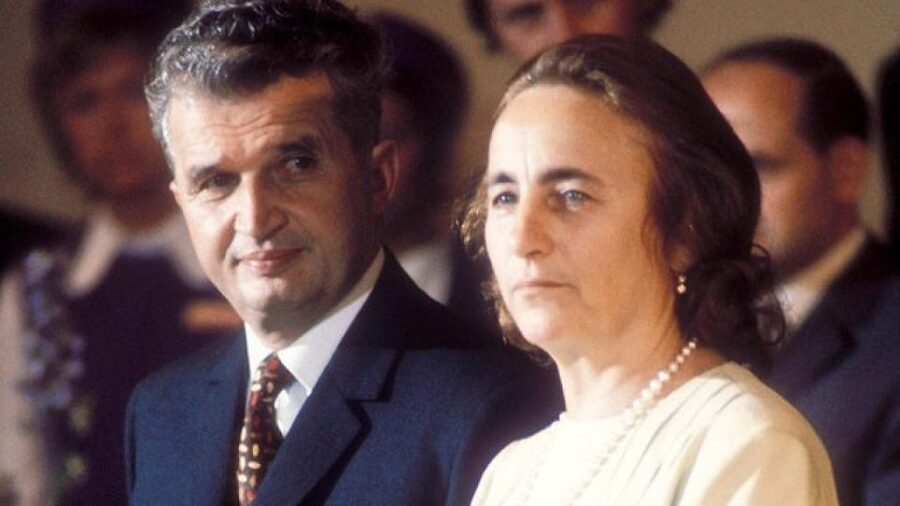
- Ceaușescu’s private world is on display: See the Spring Palace, used by Nicolae and Elena Ceaușescu and their children from 1965 to 1989.
- The Village Museum gives needed context: Traditional homes, mills, and wooden churches show rural life across Romania.
- Bucharest’s contrasts come quickly: Royal buildings, Communist-era power centers, churches, museums, shops, and grand 19th-century architecture all appear in one city walk.
- This is a true private tour: Your group travels alone, with a licensed guide and driver speaking one of six listed languages.
- The price buys convenience more than cheap sightseeing: At $254 per person, the tour makes most sense for families or small groups who value door-to-door transport and a flexible day.
Why this tour works as a Bucharest overview
This experience connects three very different versions of Romania. At the Village Museum, you see the country through traditional houses and working structures moved from rural areas. At the Ceaușescu Mansion, you see the protected life of a ruling family. In central Bucharest, you follow the city’s royal, Communist, religious, and commercial layers along Calea Victoriei and around Revolution Square.
That range is the main reason to consider the tour. You are not spending six hours on one narrow subject. Instead, you move from village traditions to dictatorship, then to the public spaces where Romania’s modern political story unfolded.
I would think of this as a strong first-day orientation, especially if you have limited time in Bucharest. It is less suited to someone who wants a slow museum day, a long lunch, or extended shopping. The schedule includes many stops, and some are clearly photo stops or short walks rather than full visits.
The private format changes the feel of the day. You do not share the car with strangers, and the driver holds a sign with your last name at pickup in Bucharest. The guide remains with you throughout and can speak English, French, Italian, Romanian, Spanish, or German.
More communism & ceausescu tours in Bucharest:
- The Real tour of Communism
★ 5.0 · 666 reviews - Life under Communism
★ 5.0 · 358 reviews - 3-Hour Guided Tour of Communist Bucharest
★ 4.9 · 303 reviews
The Village Museum: Romania in one open-air visit
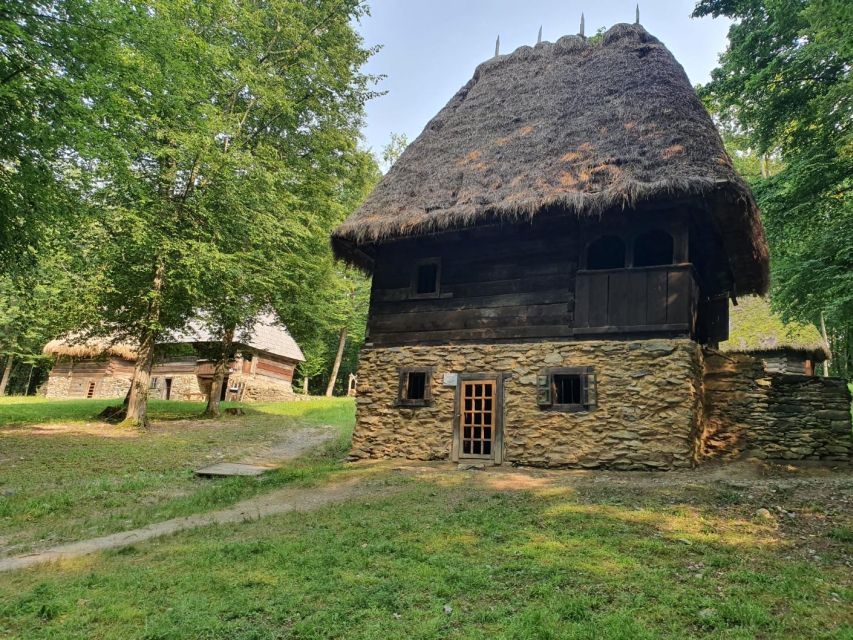
The Dimitrie Gusti National Village Museum is a smart opening stop because it gives you a quick sense of Romania beyond the capital. In one place, you see traditional houses from different parts of the country, built from wood, adobe, stone, and other local materials.
The buildings are the main attraction, but the guide helps turn them into more than a collection of old structures. You learn how Romanian villagers organized daily life around the home, work, community, and faith. Mills and wooden churches appear alongside smaller houses, giving you a view of both practical work and spiritual life.
I like this stop because it offers a useful counterpoint to Bucharest’s monumental buildings. Before you see the homes of a dictator and the grand avenues of the capital, you get a picture of the modest rural world that shaped Romanian identity for centuries.
The planned visit lasts about an hour. That is enough for an introduction and a walk through selected areas, but not enough for a slow inspection of every house. Wear comfortable shoes and keep your camera ready. The setting offers scenic views, but the value comes from the variety of buildings and the explanation provided by your guide.
Snagov Monastery and the Dracula connection
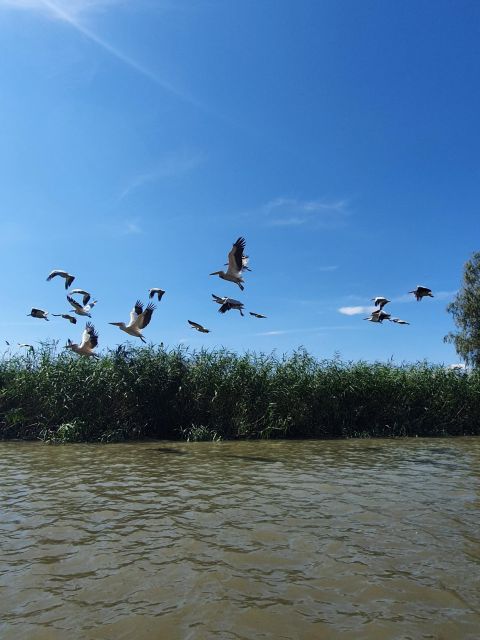
About 40 minutes outside Bucharest, Snagov Monastery brings a change of pace. The monastery is on an island, which gives the stop an unexpected sense of separation from the capital. The water and the short journey out of the city make this feel different from the urban sightseeing later in the day.
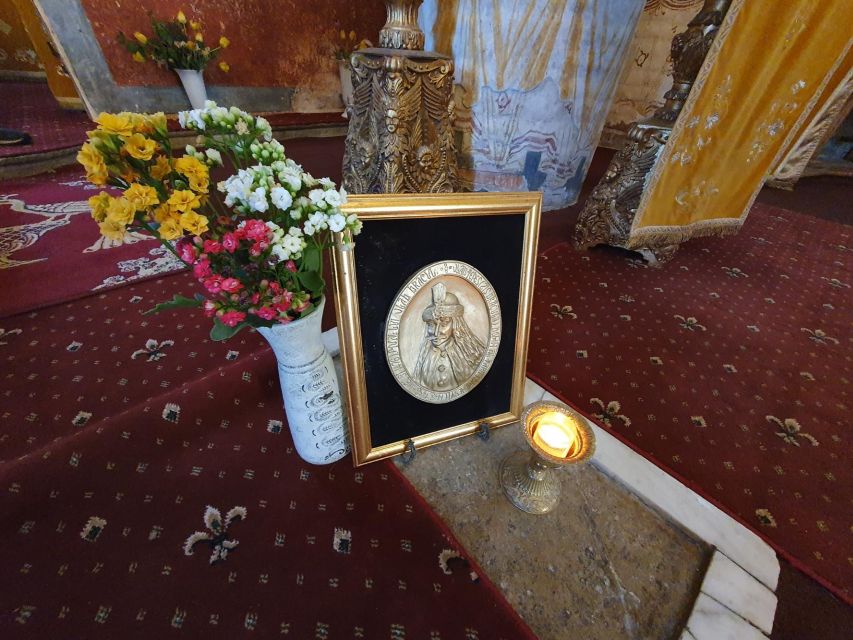
The site is promoted as the place of Dracula’s tomb, referring to the historical figure Vlad the Impaler and the later Dracula legend. That wording matters. You are visiting a location tied to the story and tradition surrounding Dracula, not stepping into a confirmed horror tale.
The itinerary allows about an hour here, including a guided visit, sightseeing, and photographs. I would treat the monastery as both a historical stop and a scenic pause. The island setting is the special part, while the Dracula connection gives the visit an easy hook for anyone interested in Romanian folklore and medieval history.
This stop also explains why a private vehicle is useful. Snagov is outside Bucharest, and the tour handles the road travel, parking, fuel, and tolls. You can enjoy the trip without working out your own transport connection.
Inside the Spring Palace

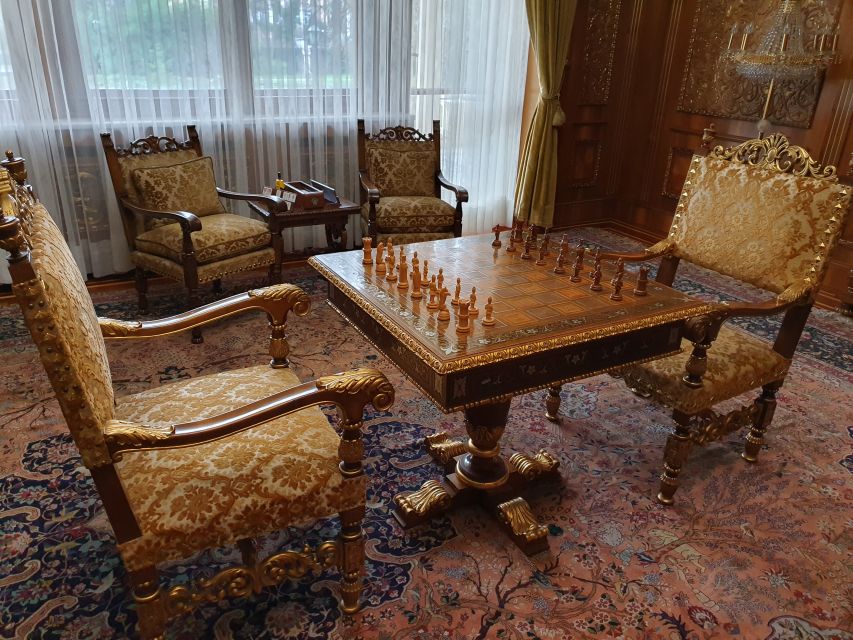
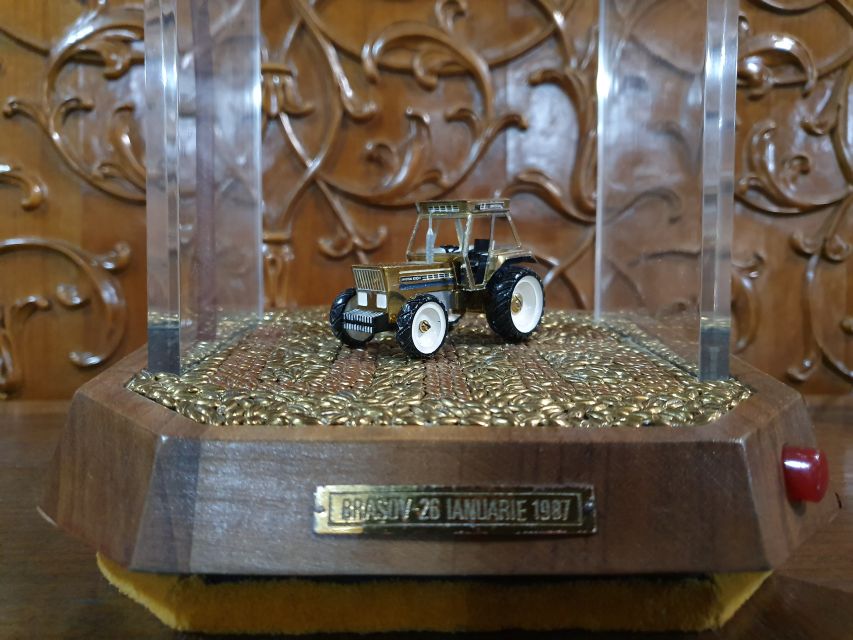
The Ceaușescu Mansion, also called the Spring Palace, was the private residence of Nicolae and Elena Ceaușescu and their children, Nicu, Zoia, and Valentin. The family used it for roughly a quarter of a century, from 1965 until the fall of the regime in 1989.
The house was built in the mid-1960s and enlarged between 1970 and 1972. Its design involved architect Aron Grimberg-Solari, while Robert Woll worked on the grounds and also designed much of the furniture. Those details help explain why the mansion is more than a political memorial. It is also a preserved domestic setting shaped around one family’s private life.
That contrast is the point. Outside the walls, Romanians lived under a tightly controlled Communist system with severe limits and shortages. Inside, the ruling family had a carefully designed residence with space, privacy, and comfort. A visit here lets you consider that gap without needing a long history lecture to understand its force.
The guided visit takes about an hour. You will walk through the house and hear about the family who lived there. The experience works best if you pay attention to the difference between a public political image and the private setting presented inside the mansion.
For me, this is one of the tour’s most useful stops because it adds a human scale to Ceaușescu’s rule. Revolution Square later shows the collapse of that rule in public. The mansion shows the protected household behind it.
More village museum tours in Bucharest:
- Palace of the Parliament, Village Museum & Ceaușescu Mansion
★ 4.9 · 31 reviews - Traditions in Bucharest: Village Museum and Wine Tasting Tour
★ 5.0 · 27 reviews - Private Bucharest city tour visit the Palace of the Parliament & Village Museum
★ 4.5 · 21 reviews - Traditions in Bucharest: Village Museum and Wine Tasting
★ 5.0 · 8 reviews
Calea Victoriei: Bucharest’s long urban story
Calea Victoriei is the city segment with the widest mix of sights. With your guide, you pass the Royal Palace on one side and the former Central Committee of the Romanian Communist Party near Revolution Square on the other. That physical contrast gives the street much of its meaning.
Along the way, you may see old Orthodox churches, museums, theaters, restaurants, tea shops, casinos, music stores, retail shops, and places selling souvenirs. The National History Museum, Romanian Athenaeum, and CEC Palace are among the major architectural and cultural sights connected with this route.
The planned time here is about an hour and a half, including sightseeing, guided walking, and some free time. This is the part of the day where you can stretch your legs and get a feel for central Bucharest. You may also have a chance to shop, though the timetable does not promise a long browsing session.
I like the way Calea Victoriei links the city’s polished public face with its difficult political past. Grand façades and cultural institutions sit close to places connected with Communist power. Your guide’s explanation is especially valuable here, since the same street can look decorative at first glance while carrying several layers of national history.
Revolution Square and the end of Ceaușescu’s rule
Revolution Square is a short stop of about 30 minutes, but it carries major weight. This is where the December 1989 Revolution began and where the former Central Committee building became a key setting in the fall of the dictatorship.
The tour connects the square with the moment Ceaușescu was removed from power. It also touches on the controversies around his fortune, state security, and offshore accounts. You get a public setting in which Romania’s political system changed through protest, sacrifice, and force.
The square is best approached with context rather than as a place to simply take photographs. Look at the buildings and listen to the sequence of events your guide describes. The short visit can still be powerful because the location links the grand scale of the state with the people who challenged it.
The route also refers to the Senate Palace and the building that housed the Communist Party’s Central Committee. You see the spaces connected with the final days of the regime, including the place from which Ceaușescu fled by helicopter.
Romanian Athenaeum, CEC Palace, and Parliament
The Romanian Athenaeum gives the tour another architectural turn. You visit it with the guide and have time to walk and see the building from the outside or within the scope of the scheduled stop. It is one of Bucharest’s major architectural landmarks and fits naturally into a route along the central avenues.
The CEC Palace follows with a shorter stop of about 15 minutes. This is a photo stop, brief visit, and walking break, so keep your expectations realistic. You will not have the same amount of time here as at the Village Museum or the mansion, but the building adds another striking piece to the city’s visual story.
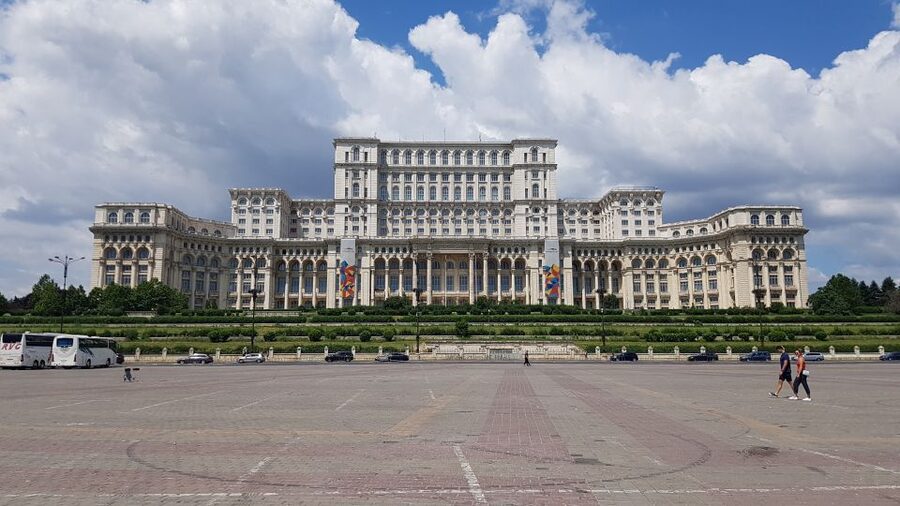
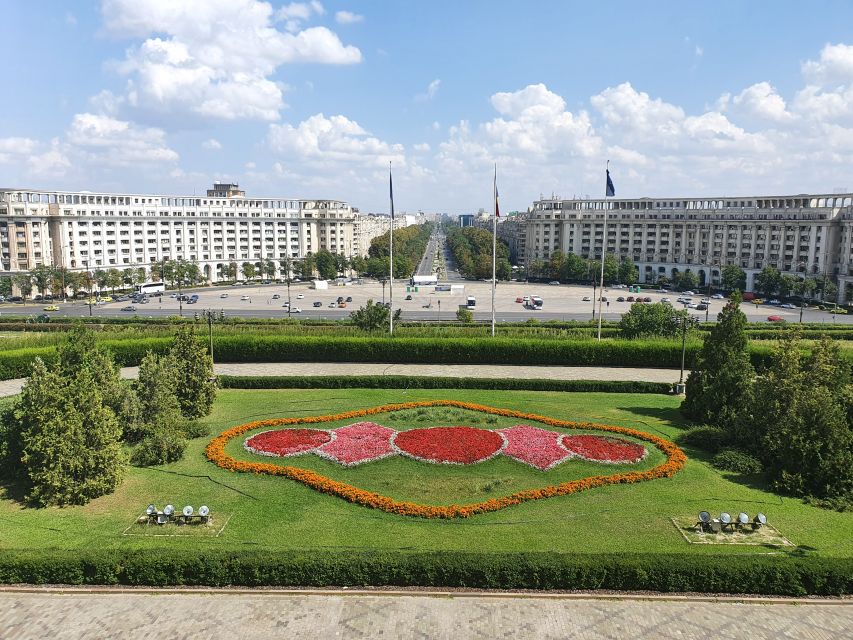
The Palace of the Parliament receives about 30 minutes. The schedule lists a photo stop, visit, guided sightseeing, and a walk. It is a large-scale reminder of Ceaușescu’s ambition and the physical mark left by his regime.
Because the total tour lasts six hours and includes the trip to Snagov, these central landmarks are handled efficiently. You should see this portion as a guided overview, not a full interior tour of every building. If one landmark matters most to you, ask about the day’s flexibility before setting out.
What the $254 price means
At $254 per person, this is not a budget sightseeing option. The value depends heavily on your group size and what you would otherwise need to arrange yourself.
The price includes a private tourism car or minibus for your party, a licensed guide and driver, fuel, parking, and road tolls. It also includes pickup in Bucharest and the ability to request changes to the itinerary even after the tour has started.
That package is useful for a family or small group that wants a private day without managing the drive to Snagov, city parking, and several separate visits. It is also helpful if your group needs a specific guiding language. The listed choices are English, French, Italian, Romanian, Spanish, and German.
Entrance fees are not included and are estimated at about 17 euros per person. Food and drinks are also separate. Add those costs when comparing the tour with a do-it-yourself day.
The price is harder to justify for a solo visitor or a couple focused mainly on central Bucharest. Much of the city route can be explored independently, and the six-hour format does not provide extended time at every stop. The strongest value comes from the private transport, the out-of-town monastery, and the guide’s ability to connect the stops.
Timing, comfort, and who should book
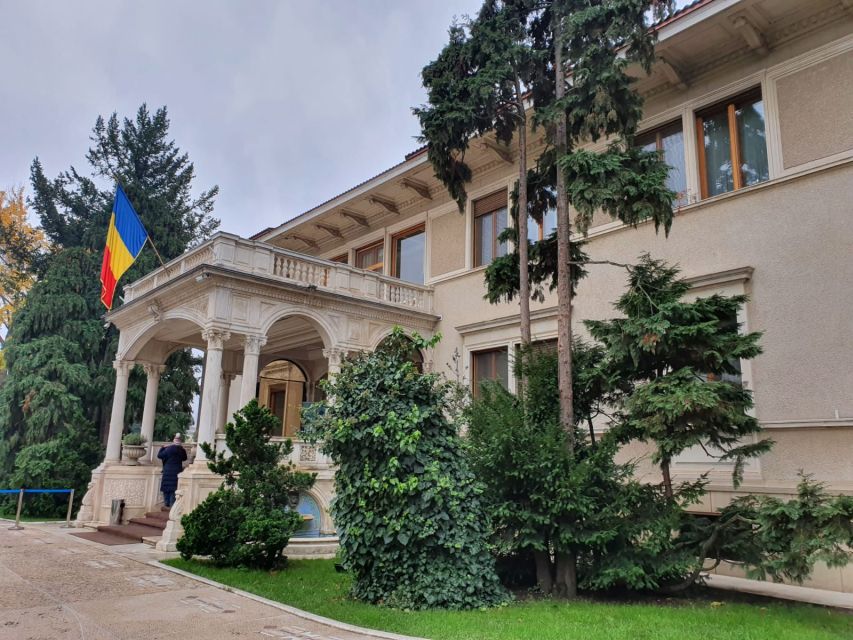
The tour begins with pickup in Bucharest and returns there after the sightseeing. The listed schedule includes the Village Museum, Snagov Monastery, the Ceaușescu Mansion, Calea Victoriei, Revolution Square, the Romanian Athenaeum, CEC Palace, the Palace of the Parliament, and additional Bucharest sightseeing.
That is a lot for one half-day. You should expect a steady pace and several short stops. The private vehicle makes the day easier, but traffic and time spent moving between places can affect how long you have at each location.
I would recommend it for:
- First-time visitors who want a broad introduction to Bucharest and nearby Ilfov
- Families or friends who prefer a private car and guide
- People interested in both rural traditions and Communist-era history
- Visitors curious about the Dracula story but who also want serious cultural sightseeing
- Anyone who values flexible language support and a door-to-door pickup
I would choose a slower plan instead if you want long museum visits, a relaxed meal, or extended time inside each landmark. This tour gives you range rather than depth.
The experience has received three verified five-star ratings, with praise centered on learning a great deal from the guide, smooth organization, and the strong contrast between Communist buildings, older art deco and baroque architecture, the lake setting, and the Dracula-linked monastery. Those are fair strengths to expect from the route itself. The guide’s role matters most at the political sites, where a few well-placed explanations can turn a quick stop into something memorable.
Cancellation is free up to 24 hours before departure, and you can reserve while paying later. Starting times depend on availability.
Should you book this private six-hour tour?
Book it if you want Bucharest explained through contrasts: village life and dictatorship, royal buildings and Communist power, city streets and an island monastery. The private vehicle and flexible itinerary make the $254 price easier to defend for a family or group, especially when you add the Snagov drive and included road costs.
Skip it if your priority is an unhurried central Bucharest visit. The schedule is full, and several landmarks receive only short visits. For the right person, though, this is an efficient way to see the capital’s major themes while adding one unusual excursion beyond the city.
FAQ
How long does the experience last?
The tour lasts six hours, with pickup and return in Bucharest.
Is hotel pickup in Bucharest included?
Pickup in Bucharest is included. The driver will hold a sign with your last name.
Is this a private tour?
Yes. You travel in a private car or minibus reserved for you and your friends or family.
Which languages can the guide speak?
The listed guide languages are Romanian, English, Italian, French, Spanish, and German.
Are entrance fees included in the price?
No. Entrance fees are separate and estimated at about 17 euros per person.
Is food or drink included?
No. Food and drinks are not included.
Can the itinerary be changed during the tour?
The experience includes flexibility for changes to the daily itinerary, including after the tour has started.
More Museums in Bucharest
- Bucharest: Museum of Senses Entry Ticket
★ 4.2 · 364 reviews - Communism in Bucharest – Landmarks, Museum & Communist Appetizers
★ 5.0 · 111 reviews - Bucharest: Entry ticket at the Museum of Communism
★ 4.6 · 57 reviews - Bucharest: Museum of Communism Ticket with Communist Coffee
★ 4.6 · 52 reviews
More Snagov Monastery Tours in Bucharest
- Small Group Tour to Mogosoaia Palace & Snagov Monastery
★ 4.4 · 41 reviews - Sacred Monasteries Private Tour: Snagov, Țigănești & Căldărușani
★ 5.0 · 32 reviews - Private Half Day Trip to Snagov Monastery & Mogosoaia
★ 4.1 · 29 reviews - Small Group Tour to Mogosoaia Palace and Snagov Monastery
★ 5.0 · 23 reviews
Just added around Bucharest
- Village Museum Bucharest Guided Tour★ 5.0 · 6 reviews
- Bucharest: Dealu Mare Winery Private Trip with Wine Tasting★ 4.9 · 6 reviews
- Winery touring & private wine tasting – one day private tour★ 5.0 · 3 reviews
- Transylvania Tour: Dracula’s Castle, Peles Palace & Brasov★ 5.0 · 19 reviews
- Discover Medieval Transylvania Small Group Tour – 7 days★ 5.0 · 4 reviews
- Bucharest Airport Transfer To Constanta Mamaia★ 5.0 · 3 reviews
- Airport Henri Coanda (Otopeni) to Bucharest – Private Transfer – Driver★ 5.0 · 5 reviews
- Gems of Transilvania: Brasov,Sighisoara,Sibiu,Viscri and more★ 5.0 · 6 reviews
Snagov Monastery Tours, compared.
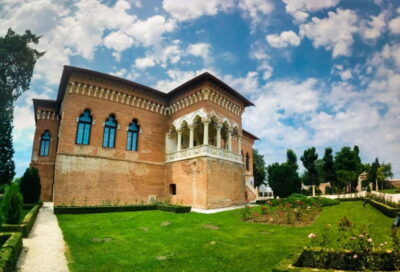
Small Group Tour to Mogosoaia Palace & Snagov Monastery
Read our review →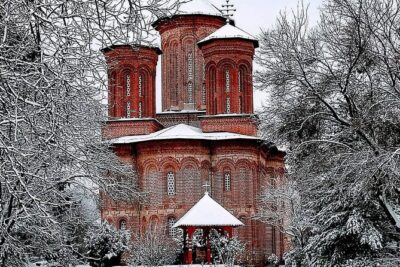
Sacred Monasteries Private Tour: Snagov, Țigănești & Căldărușani
Read our review →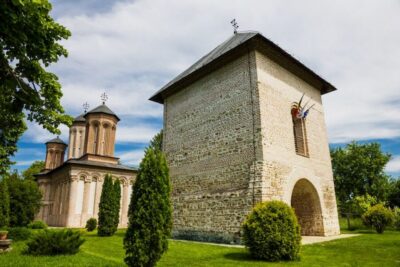
Private Half Day Trip to Snagov Monastery & Mogosoaia
Read our review →
Small Group Tour to Mogosoaia Palace and Snagov Monastery
Read our review →
Mogosoaia Palace & Snagov Monastery: Private tour from Bucharest
Read our review →
Private Half Day Trip to Snagov Monastery and Mogosoaia Palace from Bucharest
Read our review →
Private Half Day trip to Slanic Salt Mine and Snagov Monastery
Read our review →Browse the lists this tour appears in