
Reviewed · COMMUNISM & CEAUSESCU TOURS
Timisoara: Grand Communism Tour
Timișoara’s communist past comes into focus through the places where people resisted, suffered, and finally took to the streets. This 3.5-hour tour moves beyond the polished central squares to the SCARTZ club, a former Communist Party headquarters, the Reformed Hungarian Church, and the cemetery for those killed in the 1989 uprising.
I like the small group of no more than 10 people, which gives you room to ask questions. I also like the mix of political history and ordinary life, from Nicolae Ceaușescu’s rule to the apartment blocks and neighborhoods shaped by communism. The main consideration is price: at $70 per person, this is not a cheap city walk, and the 20 RON entrance fee for the Revolution Memorial is extra.
- SCARTZ’s Communist Customer Museum shows the everyday side of the regime through a basement collection.
- The Reformed Hungarian Church marks the place where Timișoara’s December 1989 uprising began.
- The Revolution Heroes Cemetery brings the final days of Ceaușescu’s rule close to home.
- Guides including Andrei, Sergiu, and Roberta explain the era in English or Romanian, sometimes adding family stories.
- Transportation between stops makes it easier to cover several outlying sites in one afternoon.
- The 10-person limit keeps the experience more personal than a large coach tour.
In This Review
- Why Timișoara’s communist story matters
- Starting at the Orthodox Cathedral
- SCARTZ and the Communist Customer Museum
- The resistance monuments of the 1950s and 1960s
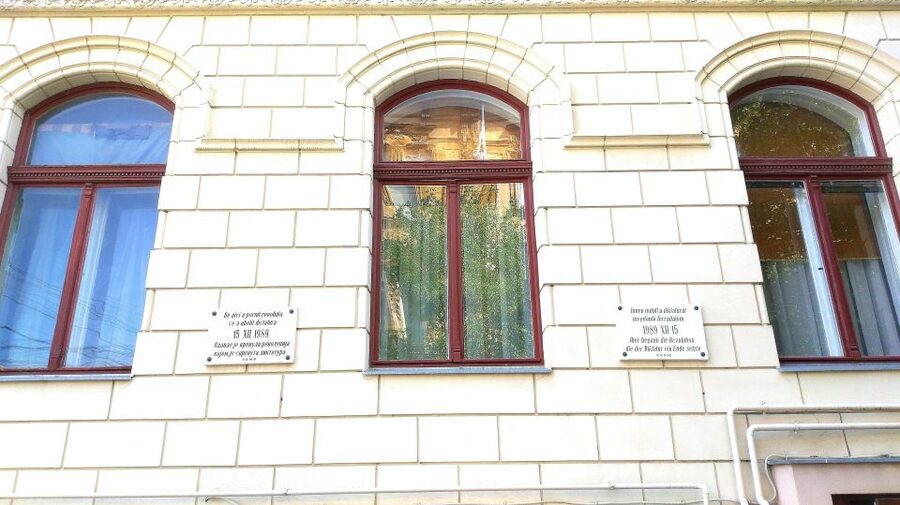
- The Reformed Hungarian Church and the first protest
- The former Communist Party headquarters
- The Revolution Heroes Cemetery
- The Revolution Memorial and the final chapter
- How the small group and transport affect the experience
- Is $70 a fair price?
- Who should book this Timișoara tour?
- Practical details before you go
- Should you book the Grand Communism Tour?
- FAQ
- How long does the Grand Communism Tour last?
- How much does the tour cost?
- Is the Revolution Memorial entrance included?
- Where does the tour meet?
- Is transportation included?
- What languages are available?
- How large is the group?
Why Timișoara’s communist story matters
Timișoara is best known for its elegant squares, restored buildings, and lively café life. Yet its modern identity is tied just as strongly to the events of December 1989, when protests here helped bring down Romania’s communist regime.
This tour gives you the political setting needed to understand those events. You hear about the roughly 50-year evolution that led Romania from postwar communism to the dictatorship of Nicolae Ceaușescu and, finally, to revolution.
That background matters because the 1989 uprising did not appear from nowhere. Decades of political control, shortages, surveillance, censorship, and pressure on ordinary families had built up. The tour connects the national story to specific corners of Timișoara, so you can see where major events happened instead of treating the revolution as a distant textbook episode.
I find that local history works best when it links public events to daily routines. Here, the guide explains not only who held power, but also how people lived under that system. Several guides have added personal or family stories, which can make the period easier to understand for anyone who did not grow up in communist Eastern Europe.
Starting at the Orthodox Cathedral
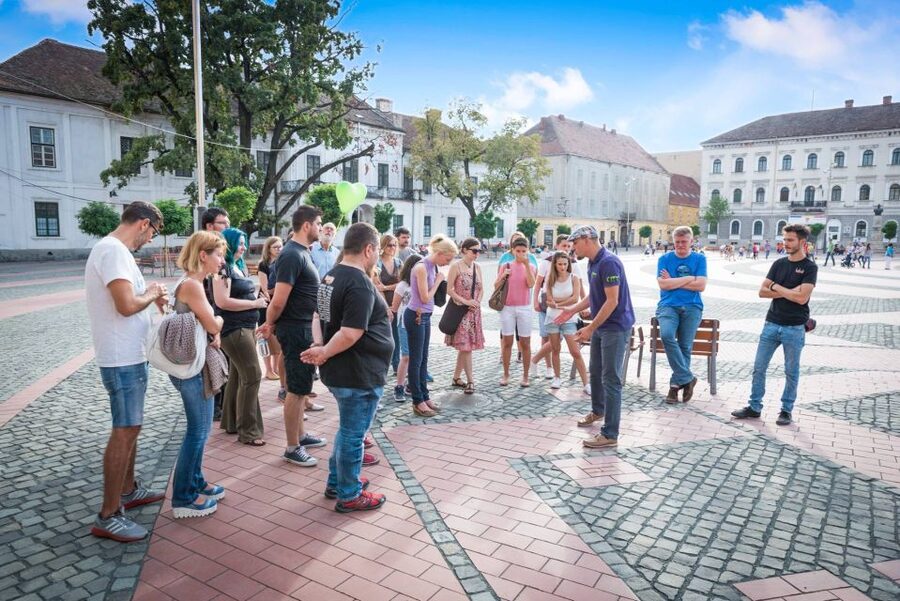
The meeting point is in front of Timișoara’s Orthodox Cathedral. This is a practical place to begin because it is easy to identify, and the church itself sits near the city’s central landmarks.
Your guide introduces the broad political story before taking you toward the first major stop. Do not expect a quick sightseeing circuit with only dates and names. The focus is on cause and effect: how communist rule developed, how Ceaușescu became the most notorious Romanian leader of the period, and why opposition became increasingly dangerous.
The language options are English and Romanian. Andrei has been praised for flawless English and a relaxed way of telling stories. Sergiu has also guided the tour in excellent Italian, while Roberta has been singled out for her clear explanations and personal connection to the subject.
Guide assignments can change, so you should not book on the assumption that one particular person will lead your group. Still, the range of strong guide feedback suggests that the experience depends on more than a fixed script. The guide’s ability to explain the past in human terms is a major part of the value.
More communism & ceausescu tours in Timisoara:
- The Grand Tour of Communist Ages at Timisoara
★ 5.0 · 17 reviews - The Real tour of Communism
★ 5.0 · 666 reviews - Life under Communism
★ 5.0 · 358 reviews
SCARTZ and the Communist Customer Museum
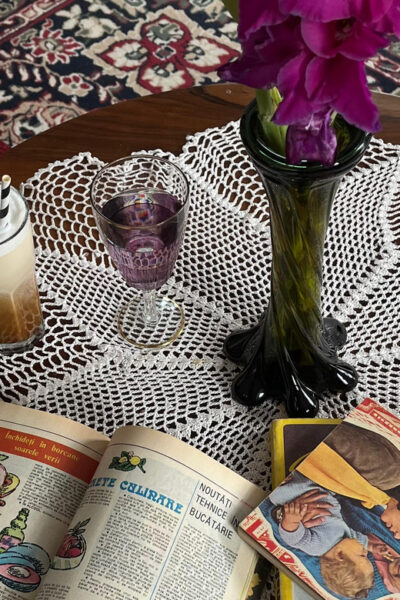
The first stop is the unusual SCARTZ club, described as a misfit venue rather than a formal museum building. In its basement, the Communist Customer Museum presents objects and details connected with everyday life under the regime.
This is one of the most useful parts of the tour for first-time visitors to Romania’s communist history. Political speeches can tell you what the government wanted people to believe. Household objects and consumer items help show what daily life actually felt like.
The museum gives the tour a more personal scale. Instead of only hearing about party structures and state power, you get a sense of what people bought, used, lacked, or had to make do with. The setting also feels less polished than a major state museum, which suits the subject. Communism was experienced in kitchens, shops, apartment blocks, schools, and workplaces, not only in official buildings.
The guide uses this stop to discuss Ceaușescu and the wider political system. Expect a spoken history lesson with anecdotes rather than a large collection requiring hours of independent study.
The drawback is that the museum is small and located in a club basement. If you prefer large museums with extensive displays and detailed labels, this stop may feel modest. Its strength is the guide’s explanation and the connection to ordinary life.
The resistance monuments of the 1950s and 1960s
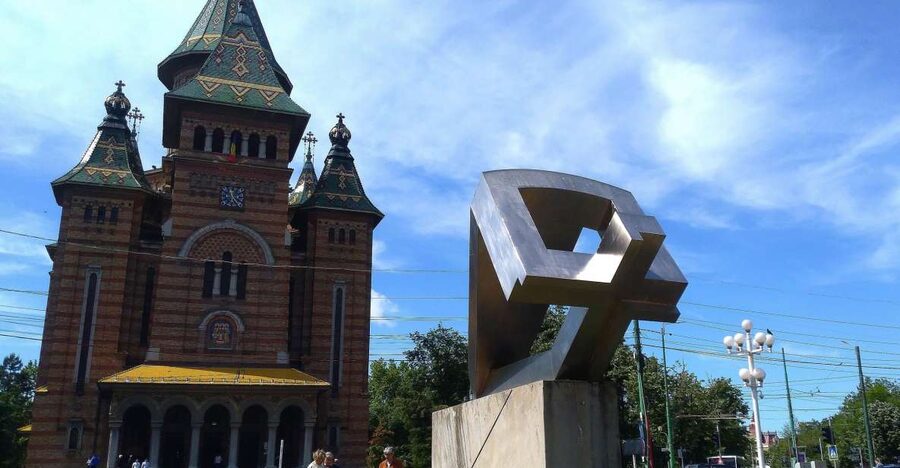
The next part focuses on the Anti-Communist Resistance Movement Monument. Here, the guide explains how Romanians opposed the communist authorities during the 1950s and 1960s.
This period is important because it shows that resistance began long before the famous revolution of 1989. Opposition could take different forms, and the consequences were harsh. The monument gives the discussion a physical location, helping you connect the story of repression and courage to a real place in Timișoara.
I appreciate this part of the route because it avoids a common mistake in communist-era tours: treating 1989 as the only important moment. The earlier resistance helps you see that public anger and private opposition had a much longer history.
The stop also adds balance. The tour is not only about the fall of one dictator. It examines the years of pressure that came before him and the people who challenged the system when doing so could ruin their lives or put them in serious danger.
Because the subject is painful, the pace and tone of the guide matter. Andrei’s easygoing style, noted alongside his strong command of English, appears well suited to difficult material. A calm presentation can make grim facts easier to absorb without making them feel theatrical.
The Reformed Hungarian Church and the first protest
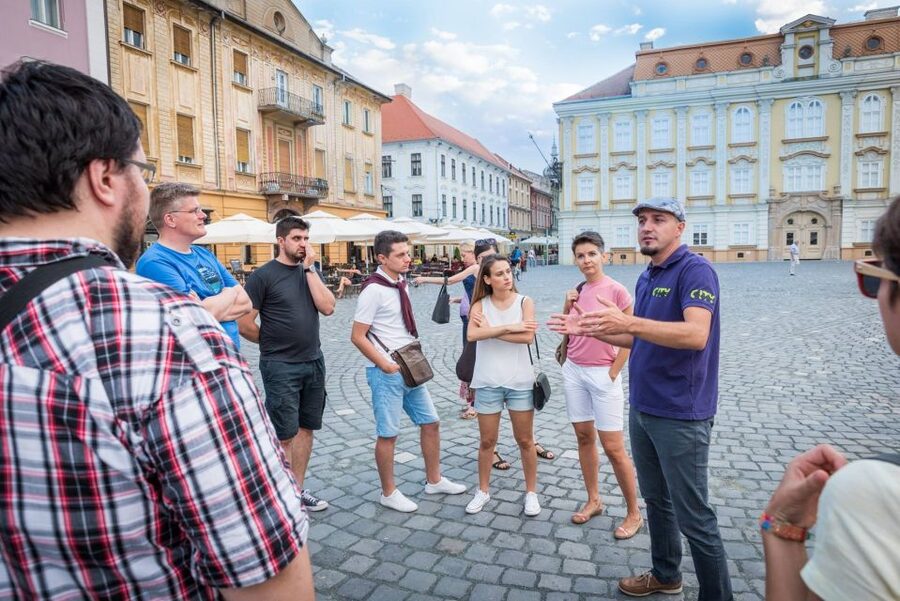
The Reformed Hungarian Church is the emotional center of the route. This is where the uprising began in December 1989.
The church’s importance gives the revolution a clear local starting point. You are not simply hearing that protests occurred in Timișoara. You are standing at the place where people gathered and events began to move beyond the control of the authorities.
The site also reminds you that Romania’s revolution involved community ties and ethnic identity as well as opposition to dictatorship. The tour identifies this church as the place where the uprising started, allowing the guide to explain how a local conflict grew into a larger anti-communist and anti-Ceaușist movement.
You should give this stop your full attention. The political story becomes more immediate here, and the next locations make more sense once you understand how the first demonstrations began.
The tour’s approach is especially useful if you have already seen Timișoara’s historic center but want to understand the city’s recent past. You may recognize the city as attractive and welcoming, yet this stop points to a time when gathering in public could carry great personal risk.
Same mountains, a completely different day out:
- The Classic Tour of Timisoara
★ 5.0 · 154 reviews - Weekly Guided Tour in English – Tuesday, Thursday, Saturday
★ 5.0 · 84 reviews - Timisoara All in One – Walking and Tram Tour
★ 5.0 · 72 reviews - Timisoara: Guided Walking Tour
★ 4.9 · 38 reviews
The former Communist Party headquarters
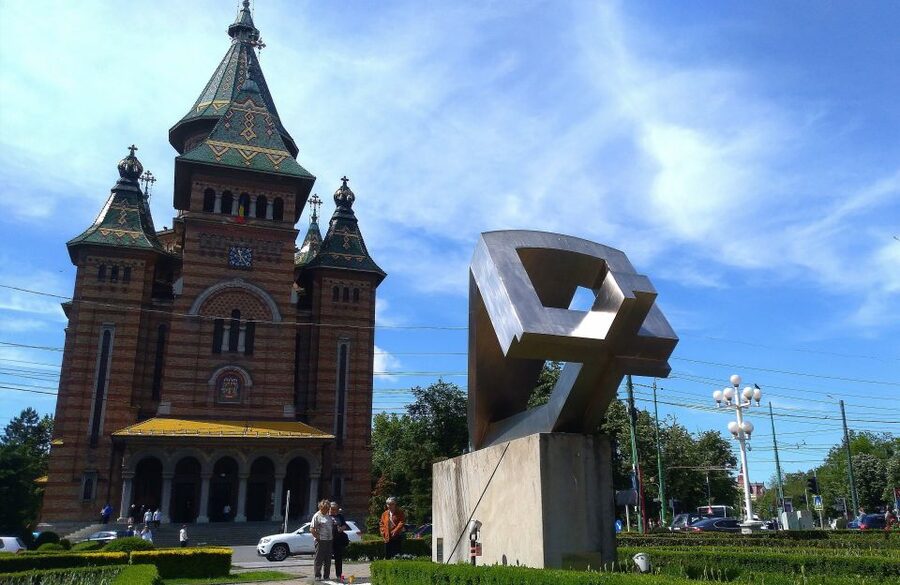
The route continues to the local headquarters of the former Communist Party. This stop shifts the focus from the people who protested to the machinery of power they faced.
A party headquarters can seem less visually dramatic than a cathedral or cemetery. Its value comes from what the guide explains there. You learn how local authority connected to the national regime and how official power shaped the city.
This is also where the tour’s political history and street-level story meet. The same city that held party offices also produced resistance. Moving between those two sides of Timișoara helps you understand the tension of the period.
I would not expect a preserved interior filled with original furnishings unless the guide specifically confirms it. The experience is about location, context, and storytelling. If you want a tour built around grand architecture, choose a standard city tour instead. If you want to understand how control operated, this is a useful stop.
The Revolution Heroes Cemetery
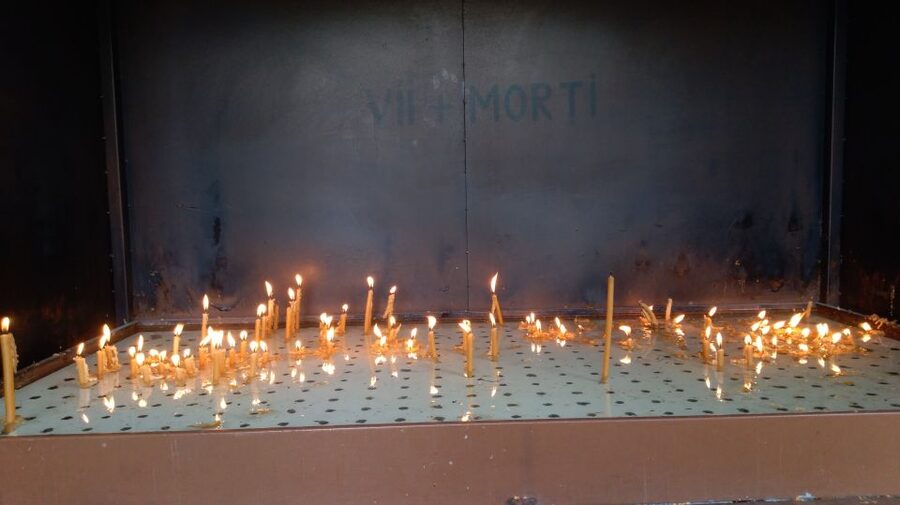
At the Cemetery of Revolution Heroes, the final events of the regime become personal. The cemetery honors people who died during the 1989 uprising and gives the guide a place to explain the violence and uncertainty surrounding the end of Ceaușescu’s rule.
This can be one of the most affecting stops because names and graves replace broad statistics. You can take in the cost paid by ordinary people while the guide explains how the final days unfolded.
The cemetery also keeps the tour from turning the revolution into a tidy victory story. Political change came with loss, confusion, and fear. The people remembered here were not abstract symbols. They were the human price of the events that changed Romania.
I like that the route includes both the place where protests began and the place where people who died are remembered. Together, those stops give you a fuller picture of the revolution: its first spark, its spread, and its cost.
You should be prepared for a serious mood at this point. This is not a stop to rush through for photographs. Listen to the guide and leave room for reflection.
The Revolution Memorial and the final chapter
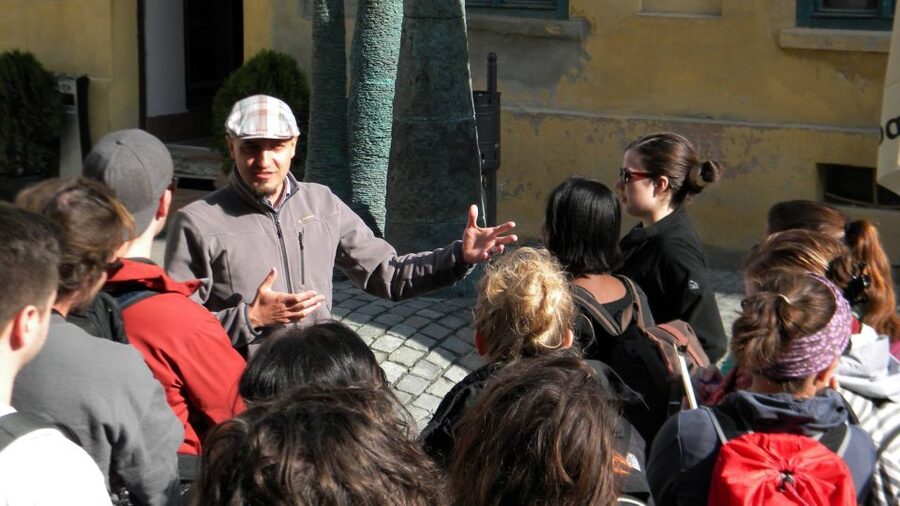
The tour ends at the Revolution Memorial of Timișoara. The memorial honors the brave people of the anti-Ceaușist revolution and connects the city’s uprising to the end of Ceaușescu’s regime across Romania.
An entrance fee of 20 RON is not included. That is a small extra cost, but you should carry enough Romanian currency or confirm current payment arrangements before setting out.
The memorial works well as the final stop because it gathers the story in one place. By the time you arrive, you have heard about the communist system, earlier resistance, the first protest at the Reformed Hungarian Church, the party headquarters, and those who died. The memorial gives that sequence a lasting point of focus.
Do not expect the memorial alone to explain everything. Its meaning depends heavily on the guide’s earlier context. That is why the tour is more useful than visiting the site without preparation, especially if Romania’s communist period is new to you.
The entrance fee also means the advertised price is not quite the full cost. It is still a minor addition, but the tour is already priced at $70, so budget-conscious visitors should include it when comparing options.
How the small group and transport affect the experience
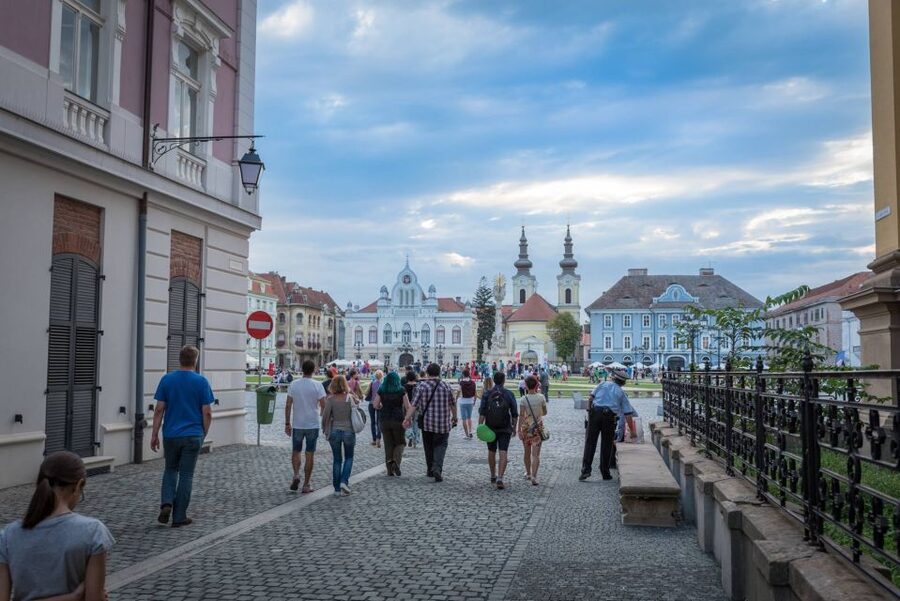
The group is limited to 10 participants, a good size for a history tour with serious subject matter. You can hear the guide more easily, ask questions, and follow the story without the stop-and-start feel of a large bus group.
Transportation between stops is included. That matters because the itinerary covers several different locations rather than keeping you in one compact square. You still get a sense of Timișoara beyond its most visited central streets, including areas where everyday housing and communist-era buildings shape the city.
Walking is part of the experience, but the provided information does not specify the exact amount. Wear sensible shoes, especially since the tour lasts 3.5 hours and includes a cemetery, monuments, churches, and museum space.
The small-group format is also helpful for personal stories. Guides such as Andrei have brought in family experiences, while other guides have drawn on their own connection to the period. That can make the past more understandable, but you should remember that personal memories are one perspective within a larger historical account.
Is $70 a fair price?
At $70 per person, this is a premium half-day experience for Timișoara. The value comes from the combination of a live guide, transport between stops, a carefully linked route, and access to the Communist Customer Museum. The group size also matters, since you are not paying for a large crowd experience.
The price makes more sense if you are genuinely interested in 20th-century history or if this is your main chance to understand Timișoara’s role in the 1989 Revolution. You cover several sites in one outing and receive the context needed to connect them.
It is less suitable if you want a cheap orientation walk or only a quick look at the city’s main sights. The route is focused, serious, and built around political history. You are paying for interpretation, not just transport or photo stops.
Remember to add 20 RON for the Revolution Memorial. Free cancellation up to 24 hours before the tour and the option to reserve now and pay later make the booking less risky if your schedule is still changing.
Who should book this Timișoara tour?
I would recommend it most strongly to:
- History-focused visitors who want more than medieval buildings and pretty squares.
- First-time visitors to Romania who need clear background on Ceaușescu and the 1989 Revolution.
- People interested in daily life under communism, not just political leaders.
- Visitors who prefer small groups and the chance to ask a guide direct questions.
- Anyone who has already seen central Timișoara and wants to reach places outside the usual sightseeing route.
It may not suit young children or anyone looking for a light, fast-paced city activity. The material includes repression, resistance, deaths, and dictatorship. The tone can be engaging and conversational, but the subject remains difficult.
Language should not be a major barrier for English speakers. The tour is offered in English and Romanian, and Andrei in particular has been praised for clear, fluent English. Sergiu has also guided in Italian, though you should confirm the language available for your chosen departure.
Practical details before you go
Meet in front of the Orthodox Cathedral. Check the start time when booking because availability can vary.
Allow the full 3.5 hours. This is not a short add-on between lunch and another reservation. You will visit several sites and need time for explanations, transport, and the memorial.
Bring water and comfortable shoes. The exact walking distance is not provided, but the route includes outdoor monuments, a cemetery, a church, and city neighborhoods.
Keep an open mind about the museum and memorial. Neither is presented as a giant attraction. Their importance comes from the guide’s storytelling and the role each site played in the larger sequence.
The overall rating is 4.9 from 13 reviews, with especially strong praise for guide quality, clear storytelling, unusual routes, and personal family accounts. Those strengths are central to the experience, but they also mean your enjoyment will depend on being willing to listen and engage with the history.
Should you book the Grand Communism Tour?
Book it if you want to understand why Timișoara matters in Romania’s modern history. The Reformed Hungarian Church, the Revolution Heroes Cemetery, and the Revolution Memorial give the 1989 uprising a strong local shape, while SCARTZ adds a useful look at everyday communist life.
I would skip it only if your priority is low-cost sightseeing or cheerful city highlights. At $70 plus the memorial fee, it is a considered purchase. For a small group, several stops, included transport, and guides such as Andrei, Sergiu, and Roberta bringing clear explanations and personal links to the era, it offers solid value to the right audience.
FAQ
How long does the Grand Communism Tour last?
The tour lasts 3.5 hours.
How much does the tour cost?
The listed price is $70 per person.
Is the Revolution Memorial entrance included?
No. Entry to the Revolution Memorial costs 20 RON and is not included in the tour price.
Where does the tour meet?
Meet in front of the Orthodox Cathedral in Timișoara.
Is transportation included?
Yes. Transportation between the tour stops is included.
What languages are available?
The tour is offered in English and Romanian.
How large is the group?
The tour is limited to 10 participants.
Just added around Timisoara
- Bite your way through Timisoara – Timisoara’s Street Food Tour★ 5.0 · 14 reviews
- The Jewish Heritage Tour of Timisoara★ 5.0 · 9 reviews
- Timisoara Downtown Dream Tour★ 5.0 · 5 reviews
- The Grand Tour of Communist Ages at Timisoara★ 5.0 · 17 reviews
- Ecumenical Tour of Timisoara★ 5.0 · 15 reviews
- Nera Gorge National Park – Private Day Tour from Timisoara★ 4.5 · 4 reviews
- One Day in Transylvania – Departure from Timisoara★ 5.0 · 16 reviews
- Day Trip to Turda Salt Mine and Corvin Castle from Timisoara★ 5.0 · 10 reviews
Communism & Ceausescu Tours, compared.

Communism in Bucharest – Landmarks, Museum & Communist Appetizers
Read our review →

Museum of Communism Ticket with Communist Coffee
Read our review →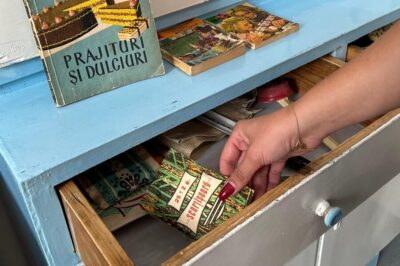
Dinner+Tour at Museum of Communism after closing
Read our review →Browse the lists this tour appears in